|
Dear Friends,
Thirty-four years after political strategist James Carville’s famous reminder that “The economy, stupid” should be the focus of Bill Clinton’s 1992 campaign, the economy is again emerging as a central concern for voters heading into the 2026 midterms. But current polling suggests the story is more complicated than a simple economic referendum. History also shows that since 1946, the president’s party has lost House seats in 18 of 20 midterm elections.
Economic concerns are also intertwined with views of President Trump. Nationally, his approval rating stood at 32% in the September 17–20 Reuters/Ipsos poll, while his approval among Republicans had fallen from 86% in January to 73%. His approval on handling the U.S. economy was 56% among Republicans, down from 80% in January, while his rating on cost of living had fallen from 70% to 44%. In Massachusetts, the September 23 UNH Bay State Poll found that nearly three-quarters of Massachusetts residents disapprove of Trump's job performance, a low point during his second term. In neighboring New Hampshire, two-thirds disapproved of Trump's handling of his job which is a record high for his two terms.
These top issues do not necessarily translate into who will turn out and vote in the November 3rd elections. However, they are a strong indication that voters in Massachusetts and New Hampshire are approaching the midterms with tremendous discontent with the president’s performance while at the same time concerns over the economy are high.
Massachusetts voters will also make decisions on nine binding statewide ballot questions including eliminating the exemption from the state public records law for the state legislature and Governor’s office and repealing the 2016 voter approved measure that legalized the sale of marijuana for adult recreational use.
Let’s talk about the issues that will motivate voters.
In a July survey of registered voters, the Pew Research Center found that 29% identified the economy as the issue they most wanted congressional candidates to discuss, including 15% who specifically cited cost of living and affordability. Immigration was cited by 7%, healthcare by 5%, and foreign policy by 4%. A more recent Reuters/Ipsos poll in August, strengthens the importance of household economics with 47% of registered voters saying cost of living would be the single most important factor in deciding their 2026 midterm vote.
Economic issues evident nationally are showing up in New England. A University of New Hampshire (UNH) survey in September, found that more than three-quarters of New Hampshire residents said their cost of living had increased over the previous year, with gasoline, groceries and energy among the areas where residents reported increases. More than three-quarters also expected tariffs to push prices higher, and a majority expected a recession within the next year.
Massachusetts is showing similar concerns about affordability. The latest Bay State Poll by UNH found that housing and cost of living are among the state's most important issues, while earlier polling found that most Bay Staters consider Massachusetts a good place to live but an unaffordable one.
“All politics is local” was a saying my father, Tip O’Neill, often used during his years in public office. He understood that, ultimately, people care most about how public policies affect their communities, their families and their everyday lives. Whether those policies motivate voters to move from having an opinion to actually casting a ballot won’t be known until the votes are counted on November 5th. Whatever the outcome, it’s important for registered voters to get out and exercise your right to vote and have a voice on what’s happening in your state and in this country.
Sincerely,
| | | | |
Lindsay Toghill
Vice President
| | |
With the formal legislative session now largely concluded, Beacon Hill has entered the final phase of the 2025–2026 legislative cycle. While the volume of legislation moving through the State House has narrowed considerably, a number of consequential policy and funding decisions remain unresolved. Conference committees are continuing negotiations on several major bills, while the November 3 statewide ballot will put nine significant policy questions directly before Massachusetts voters.
The next few months will be less about the volume of legislation and more about the outcome of a relatively concentrated set of high-impact negotiations. Changes to the Joint Legislative Rules for this session mean that the number of Conference Committees still in active discussion is higher than previous years.
Among the most significant matters still pending is comprehensive energy legislation addressing energy affordability, electric-sector policy, clean power and Massachusetts’ economic competitiveness. The outcome of negotiations could have implications for energy costs, infrastructure investment, clean-energy development and the broader regulatory environment.
A perennial session-ending piece is an Economic Development bond bill. This session’s iteration includes provisions addressing community development, economic opportunity, industry innovation, job creation and state investment. Given the package’s breadth, its final provisions could establish important economic and capital-investment priorities for the Commonwealth in the years ahead.
Limits on the expanding use of technology are also on the agenda. Conference Committees on both Data Privacy and a Social Media/Cell Phone ban for children remain unresolved. The proposed Massachusetts Consumer Data Privacy Act would create new requirements governing the collection, processing and use of consumer information while providing Massachusetts residents with additional rights concerning their personal data. The Social Media ban bills differ in their approach to securing the safety of youth in and out of school.
Health care remains another area of active negotiations. Conference committees are addressing legislation concerning workplace violence in health care settings and a separate effort to expand and strengthen primary care. Other pending legislation involves higher education and workforce development, including measures affecting higher-education policy, teacher benefits, and student learning and mental-health services.
The Legislature also has an environmental bond package before conference, potentially providing substantial funding for environmental protection, climate resilience and infrastructure. Additional conference matters address government transparency and public access, along with several more targeted policy issues.
Although formal sessions have ended, the Legislature can continue to act on legislation through informal sessions, particularly on matters that are not controversial. The possibility of late-session agreements means that one should not assume that the end of formal sessions represents the end of legislative activity.
One such piece, a final ‘closeout’ supplemental appropriations bill, was filed by Governor Maura Healey at the end of September. Designed to reconcile any remaining revenues or costs from the previous fiscal year, the bill is very policy-heavy. Some items, such as a cap on ticket resale prices, are included in other pending bills. Others, such as a temporary suspension of the gas tax, reflect the current economic environment. This bill will likely be passed before November, independent of action on Conference Committee bills.
The legislative agenda will play out alongside an unusually consequential statewide ballot. Massachusetts voters will decide nine binding statewide questions on November 3, covering a wide variety of issues including government transparency, elections, taxation, conservation, housing, cannabis and firearms policy.
Several questions could have broad implications beyond their immediate subject matter. A public-records proposal would expand the application of the state’s Public Records Law to most records held by the Legislature and Governor’s Office, subject to specified exemptions. This provision has been a key priority for State Auditor Diana DiZoglio, and the subject of a few lawsuits. Two election-related questions would change how Massachusetts conducts primaries and allow eligible residents to register or update their voter registration on Election Day.
Tax and fiscal policy will also be directly before voters. One proposal would establish a limit on annual state revenue growth tied to Massachusetts wage and salary growth and require excess revenue above the limit to be returned to taxpayers. Another would create a Natural Resource Conservation Fund supported by specified revenues associated with sporting goods, recreational vehicles and golf courses.
Housing and land-use policy will be addressed through a proposal concerning single-family homes on qualifying lots with public water and sewer access. Other questions would alter the Commonwealth’s recreational-marijuana laws and ask voters to approve or reject provisions of the 2024 firearms law.
The most important dynamic to watch is whether House and Senate negotiators can resolve differences on the major conference-committee bills before the legislative term concludes in January. At the same time, the November ballot could establish new statutory requirements or policy direction independent of the legislative process. The combination of late-session negotiations and the statewide ballot makes the remainder of 2026 an important period for monitoring developments and preparing for the policy environment that will emerge in 2027.
| | |
Jenn Krowchun
Vice President
| | |
Maddie McCullom
Associate Director
| | |
Luke Bellaud
Account Coordinator
| | |
Congress Departs for the Campaign Trail
With the November 3rd midterms less than a month away, Congress has left Washington for the final stretch of campaigning. Speaker Mike Johnson (R-LA-4) sent the House home early on September 16th, while the Senate stayed through the end of the month after vulnerable Republicans pressed Majority Leader John Thune (R-SD) to remain in session. Little major legislation passed in September. The main accomplishment was a continuing resolution (H.R.6500), approved by the House 370-48, that funds the government at FY2026 levels through December 11th. It also delays the administration's proposed rule giving the Office of Management and Budget political appointees more control over federal grant decisions and extends certain Department of Transportation and Federal Transit Administration surface transportation programs to the same date, though Democrats failed to secure an extension of the Infrastructure Investment and Jobs Act advance appropriations. The House also passed the Lindsey O. Graham Sanctioning Russia and Iran Act 262-159 before leaving, which pushed a Massie-forced impeachment vote on Defense Secretary Pete Hegseth past the election. In the Senate, the Protect College Sports Act (S.4668), which codifies athletes' Name, Image and Likeness (NIL) rights while tightening transfer and eligibility rules, passed 77-22 and heads to the House in November, while a Democratic war powers resolution to end the conflict with Iran failed 49-50. The House now stands at 219 Republicans to 214 Democrats after Democratic special election wins in California and Georgia, leaving Johnson only two votes to spare, while Sen. Mitch McConnell's (R-KY) return restored the Senate to a 53-47 split.
The Midterm Landscape
Democrats have strengthened their position as high gas prices, a weak economic outlook, and falling approval ratings for President Trump and congressional Republicans widen the playing field. Democrats are heavily favored to retake the House. Despite losing ground in mid-decade redistricting, largely due to the Virginia Supreme Court blocking that state's new map, they offset some Republican gains through court rulings in Utah and Missouri and California's referendum, and they are targeting narrow Trump districts in Pennsylvania, New York, Virginia, Iowa, and Nebraska. The Senate, once considered a longshot, is now firmly in play, with Democrats needing a net gain of four seats. Sen. Jon Ossoff (D-GA) and former Governor Roy Cooper in North Carolina have opened comfortable leads, Democrats are polling ahead in Michigan, New Hampshire, and Texas, and Ohio has become the most expensive race in the country. Maine remains a toss-up after Troy Jackson replaced Graham Platner as the Democratic nominee in the race against longtime Senator Susan Collins (R-ME), while Alaska and Iowa have emerged as genuine Democratic opportunities, with Kansas and Nebraska as longer shots.
Looking Ahead to the Lame Duck
When lawmakers return November 9th, the election results will shape the lame-duck agenda. If Democrats win one or both chambers, Republicans will likely move quickly to finish FY2027 appropriations rather than renegotiate with a Democratic majority, while retaining full control would ease that timeline. Other Republican priorities include passing the Protect College Sports Act in the House and attempting a third reconciliation bill, potentially focused on defense spending and SAVE America Act provisions. Should Democrats take control, leaders Rep. Hakeem Jeffries (D-NY-8), Rep. Katherine Clark (D-MA-5), and potentially Sen. Chuck Schumer (D-NY) will begin setting priorities and filling committee leadership, with an expected focus on oversight of the administration's handling of the Iran war and economic policy, reversing Medicaid cuts, and restoring enhanced ACA subsidies. With Election Day just weeks away, there is plenty left to play for as control of Congress remains very much up in the air.
| | |
Reach & Results | Federal Advocacy in New England
Federal advocacy doesn’t stop in Washington. This summer and early fall, O’Neill and Associates helped bring federal policymakers directly into our clients’ communities across New England, creating opportunities to showcase their work, strengthen relationships with members of Congress, and connect local priorities to the broader federal policy landscape. From election technology and wildlife conservation to public transportation and the manufacturing workforce, these engagements put our clients’ work directly in front of key federal decision makers.
| |
Congressman Neal and Governor Healey Join the MBTA to Celebrate Red Line Fleet Progress
This summer, the MBTA celebrated a critical milestone for its next generation of Red Line cars as Congressman Richard Neal (MA-1), Governor Maura Healey, Lieutenant Governor Kim Driscoll, and local leaders joined Transportation Secretary and MBTA General Manager Phil Eng at the CRRC MA facility in Springfield. The event marked the return of 140 workers who had been furloughed after railcar components were delayed at a U.S. port, underscoring the importance of the Springfield facility and its workforce to the MBTA’s ongoing fleet modernization efforts. Leaders toured the facility to see firsthand the incredible work underway to assemble the new Red Line cars that will help modernize and strengthen the MBTA’s fleet.
| | |
IFAW Welcomes Congressman Keating
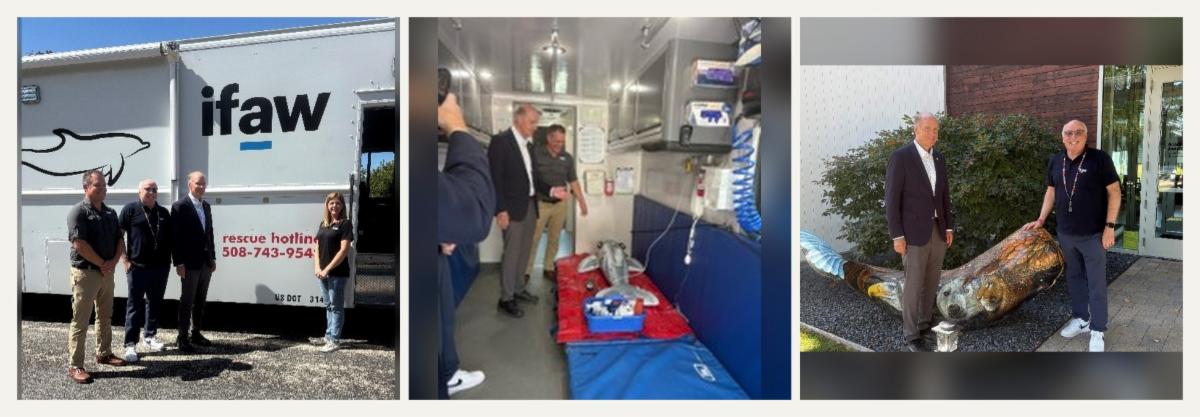
In September, the International Fund for Animal Welfare (IFAW) welcomed Congressman Bill Keating (MA-9) to its International Operations Center (IOC) on Cape Cod. During the visit, Congressman Keating got a firsthand look at IFAW’s on-the-ground conservation efforts in the district, including its Mobile Marine Animal Rescue “MOBY” truck. IFAW President & CEO Azzedine Downes also spoke with the Congressman about IFAW’s work in marine mammal rescue, right whale conservation, and combating international wildlife trafficking - highlighting the organization’s impact both at home and around the world.
| | |
Congresswoman Goodlander Visits Clear Ballot
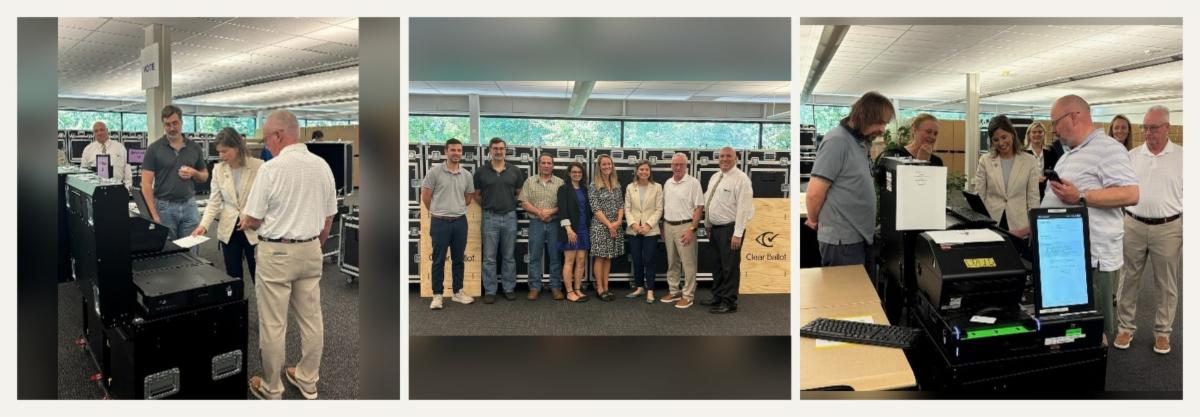
In August, Clear Ballot welcomed Congresswoman Maggie Goodlander (NH-1) to its Nashua, New Hampshire facility for a timely conversation on election technology and administration. The visit gave Congresswoman Goodlander a firsthand look at Clear Ballot’s manufacturing, testing, and operational capabilities, as well as how its election technology and post-election audit systems are developed and deployed nationwide.
| |
|
OA in the Community
All politics is local, and so are the best ways to give back. That is why supporting the work we do in the community is so important.
| | |
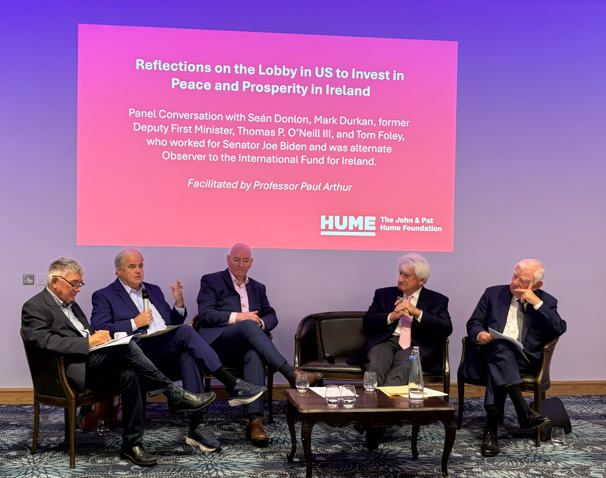
40 Years-Reflections on How an International Fund Can Support Peace and Prosperity
Tom O’Neill was recently invited to speak at the 40th Anniversary of the International Fund for Ireland at a seminar organized by the John and Pat Hume Foundation at Queens College in Belfast, Ireland. The 40th Anniversary of the Fund is an important opportunity to reflect on four decades of work for peace, reconciliation, and economic and social progress across Ireland. Established in 1986 by the British and Irish Governments, with foundational support from the United Sates and subsequently from other international partners, the Fund was created at time when communities in Northern Ireland and the border counties were living with the daily consequences of conflict and division.
Tom shared the extraordinary commitment of his father, Speaker Thomas P. “Tip” O’Neill, Jr. in bringing peace to Ireland. Tip O’Neill understood that American engagement could contribute not simply through political diplomacy, but through practical economic support for communities affected by conflict. Working with fellow members of the bipartisan “Four Horsemen”-Senator Edward Kennedy, Senator Daniel Patrick Moynihan and New York Governor Hugh Carey, O’Neill helped build sustained American support for a peaceful and political process. In his remarks at the International Fund for Ireland event, Tom O’Neill said, “On St. Patrick’s Day 1977, the four of them issued a joint statement, that in hindsight, was a turning point. They condemned the violence in Northern Ireland outright. They called on American to stop supporting it, meaning to stop funding the groups that funneled money and guns back across the Atlantic and instead called for a peaceful, negotiated settlement that protected the rights of every tradition on this island.
Following the 1985 Ango-Irish Agreement, Tip O’Neill and his colleagues helped fulfill the earlier American commitment to provide economic assistance, leading to the establishment of the International Fund for Ireland.
| Left to Right: Professor Paul Arthur, PHD, Program Director, Peace and Conflict Program, University of Ulster, Tom Foley, Foreign Policy Counsel to then Senator Biden in 1980, Mark Durkan, Former Deputy First Minister, Tom O'Neill, and Seán Donlon, former Irish Ambassador to the United States. | |
14th Annual Tip O'Neill Diaspora Awards
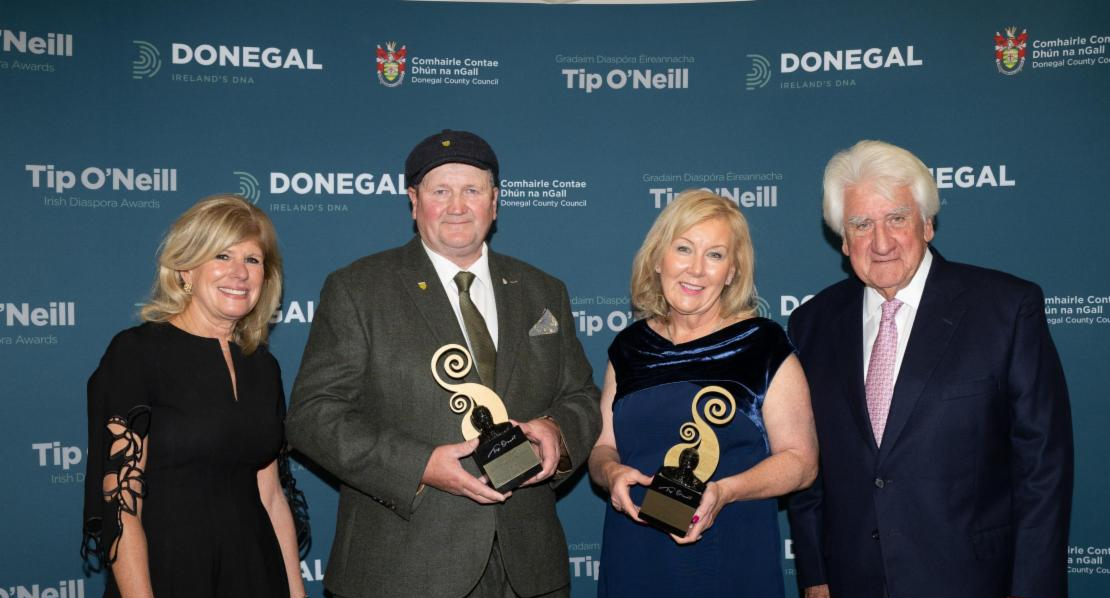
Tom and Shelly O’Neill celebrated the 14th annual Tip O’Neill Diaspora Awards at the Inishowen Gateway Hotel in Buncrana, Ireland. The Awards commemorates the legacy of Tip O’Neill , former Speaker of the U.S. House of Representatives, whose maternal grandmother hailed from Donegal. The Diaspora award was first initiated in 2012 as a means of commemorating the centenary of the birth of Tip O’Neill.
This year, the Donegal Diaspora Committee honored Kate Barton, Global CEO of Dentons, the worlds largest law firm, where she leads the firm’s international strategy, operations and growth. Recognized for her expertise in leadership, innovation and global strategy, Kate has guided major organizations through periods of significant transformation and expansion.
A granddaughter of Irish emigrants to Boston, Kate has spoken proudly of the values of resilience, humor and community that her Irish heritage has instilled throughout her professional and philanthropic life.
The Diaspora Committee also honored Brendan “Tiny” Vaughan, for his lifelong commitment to community, charity, and the Irish Disapora. Through decades of voluntary service, fundraising and community leadership, Brendan has embodied the generosity, pride, and enduring spirit of the Irish diaspora, while serving as a valued ambassador for Donegal around the world.
The Tip O’Neill Disapora serves as a bridge between Ireland and its global community, enforcing the bonds of kinship, culture and shared values.
| Left to Right: Shelly O'Neill, Brendan "Tiny" Vaughan, Kate Barton, Tom O'Neill. | |
Scouting America Cape Cod and Islands Council
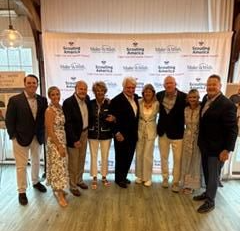
Scouting America Cape Cod and Islands Council recently honored Tom and Shelly O’Neill for their dedication to public service and their lasting impact to the Cape Cod community. Scouting America Cape and Islands Council focuses on keeping Scouting available for children across Cape Cod, Martha’s Vineyard, and Nantucket. The program prepares young people for lives of impact and purpose. Together, Tom and Shelly have supported numerous charitable initiatives focused on children, families, veterans, healthcare, and community organizations across the Cape. Their commitment to giving reflects a deep belief in service, compassion, and strengthening opportunities for future generations.
| | Left to Right: Paul McCormick Jr, Event Chair at Scouting America Cape Cod and Islands, Molly McCormick, John McPhee, Linda McPhee, Tom O’Neill, Shelly O’Neill, George McLaughlin, Charlene McLaughlin, John Terrio, Auctioneer at Auction Knights | |
Cape Cod Speaker Series
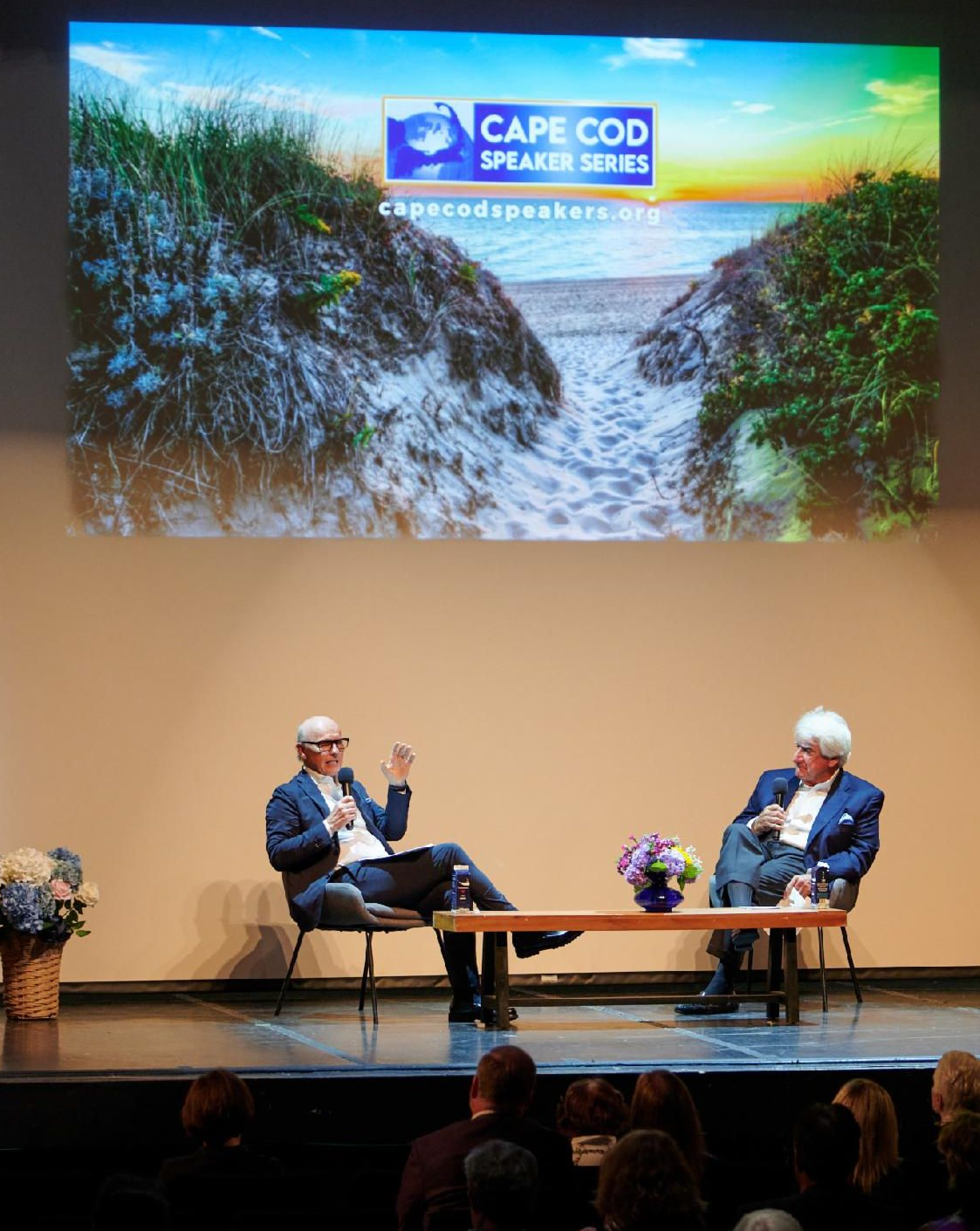
In August, Tom O’Neill moderated a discussion with David McCourt hosted by the Cape Cod Speaker Series at Cape Cod Community College. David McCourt is an Emmy Award-winning television producer, pioneering telecommunications entrepreneur, author and philanthropist. The discussion focused on David’s latest PBS documentary, AMERIGO: The Search for the American Dream and what the “American Dream” means in the United States as the country celebrates its 250th anniversary of independence in 2026.
Produced by David McCourt, the documentary follows his travels across all 50 U.S. states, gathering perspectives from more than 1,000 everyday Americans-workers, teachers, immigrants, veterans, artists, entrepreneurs, families and community leaders.
| | Left to Right: David McCourt, Tom O'Neill | | |
The Champions for Children Fundraiser at Polar Park
On September 10th, The CASA Project of Worcester County held their annual Champions for Children Fundraiser at Polar Park. Massachusetts Attorney General Andrea Joy Campbell provided keynote remarks. In attendance was O’Neill and Associates Executive Vice President Ben Josephson who has advocated on behalf of CASA programs in Massachusetts for over 20 years. Court Appointed Special Advocates are volunteer guardian ad litem who represent juveniles in the foster care system. Their work is vital to ensuring vulnerable children have strong representation and support.
| | |
RISE Community Fund Supports a School in County Donegal, Ireland
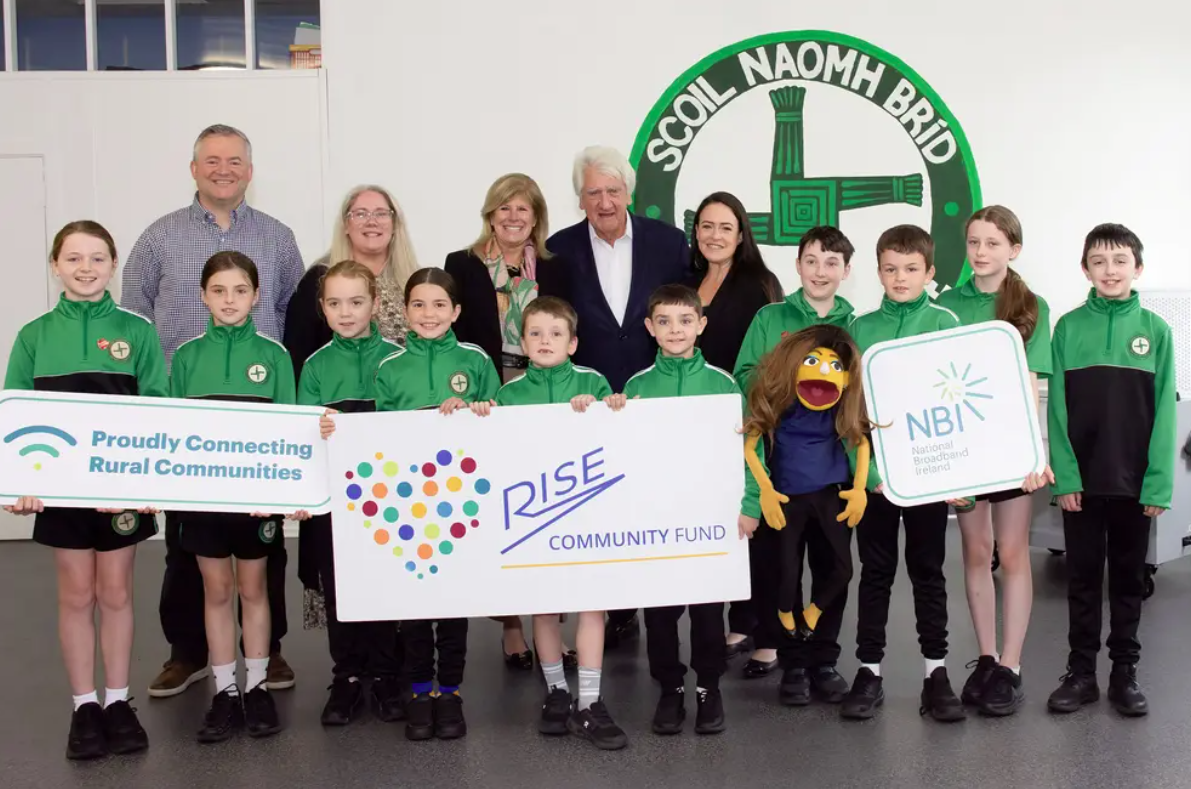
On September 24th, Tom and Shelly O'Neill presented a grant to the Scoil Naomh Bríd in Muff, County Donegal from the RISE Community Fund.
Tom and Shelly serve on the RISE Board in Ireland, an organization that aims to improve digital learning and maximize the benefits of high-speed, broadband connectivity in rural schools by supporting technology investments.
RISE was founded by David McCourt, Chairman of National Broadband Ireland (NBI) which supports the non-profit. NBI and its partners are already making strides for digital connectivity in rural communities. This grant will be used to purchase additional Chromebooks and a transport cart for the devices.
| | Left to Right: Principal Gary Foster; Karen McNally, Deputy Principal; Shelly and Tom O’Neill from the RISE Community Fund; Tara Collins, Chief Marketing Officer, NBI; and students from Scoil Naomh Bríd. Photography by Martina McLaughlin | | |
FAN EXPO Boston
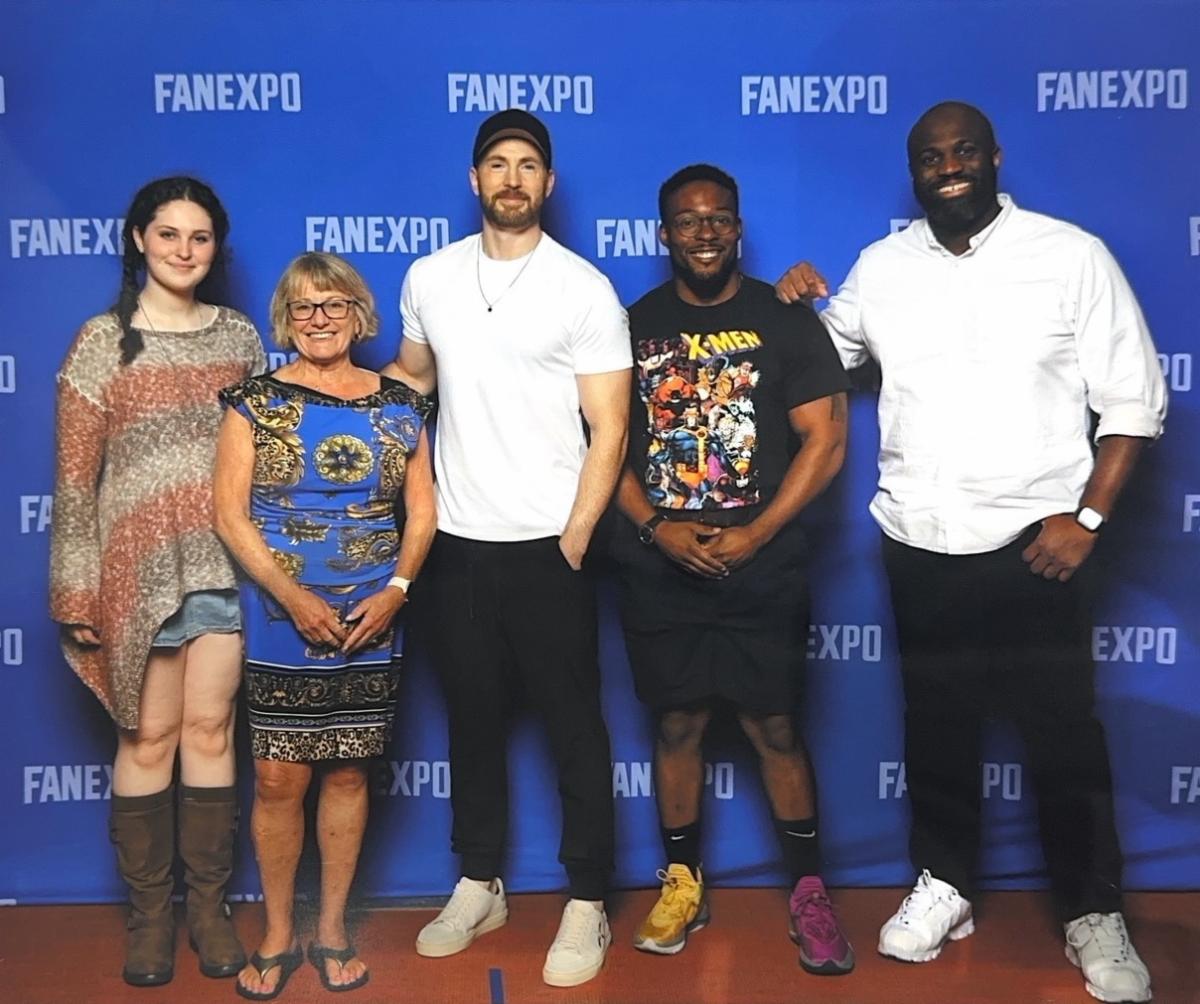
It was truly a Superhero’s welcome home for actor Chris Evans at FAN EXPO Boston 2026. Evans portrayed Steve Rogers/Captain America in 11 Marvel Studios films and is set to reprise the role in the highly anticipated Avengers: Doomsday to be released in December 2026. Evans' appearance at FAN EXPO Boston was a full-circle moment that celebrates both his incredible journey and the city that shaped him. Born in Boston and raised in Sudbury, Massachusetts, Evans launched his career in community theater before becoming one of the most accomplished actors in film and television. Seven Letter once again represented FAN EXPO Boston as the event’s PR Team which managed media relations for the 3-day pop culture extravaganza August 7-9, 2026.
| | Left to Right: Quinn Earle, Ann Murphy, Chris Evans, Lance Madden, Macsonny Onyechefule | | |
Battle of Bay Golf Tournament
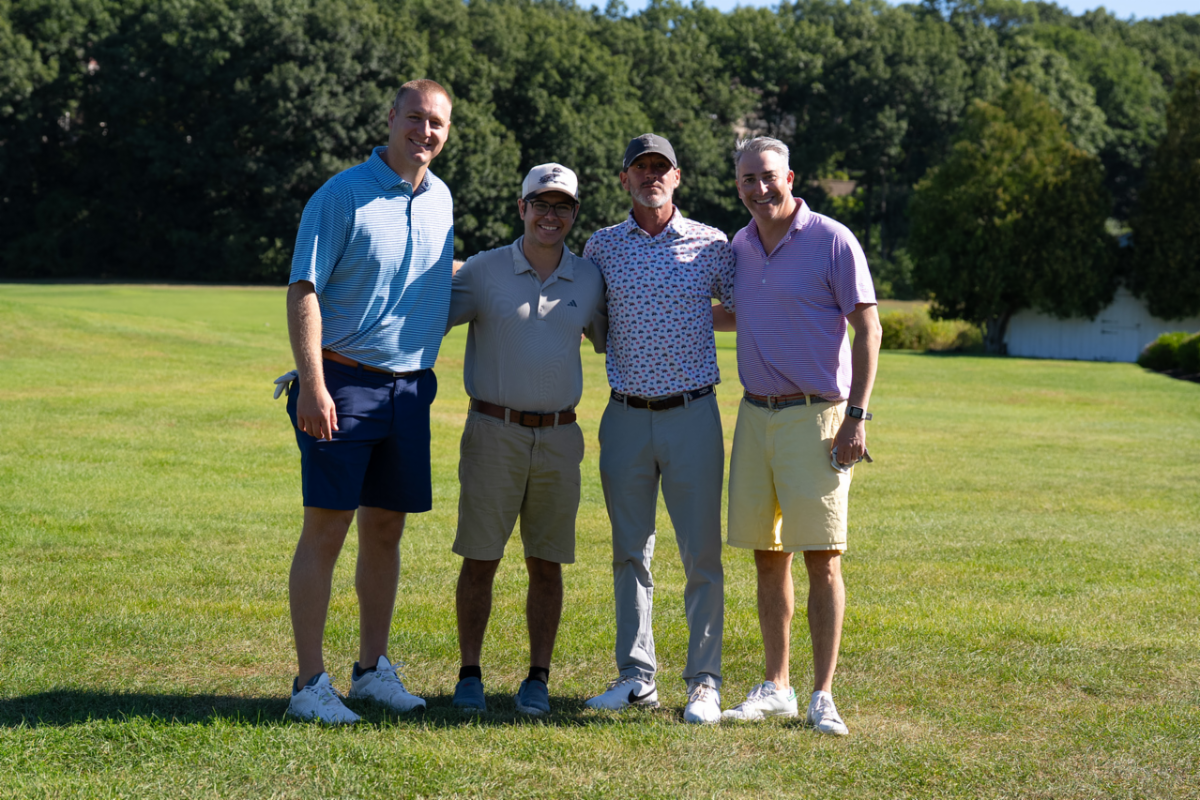
The annual Battle for the Bay golf tournament benefiting the Charlestown YMCA, a beloved community tradition, celebrated its sixth successful year this August. The event, sponsored by O'Neill and Associates, took place at Ferncroft Country Club in Middleton, MA. Over 130 golfers from the greater Boston area participated in this friendly competition between the Charlestown and East Boston YMCAs. The tournament raised $70,000, which will be used to support vital youth and teen programs in both neighborhoods. The Battle for the Bay remains a cornerstone of the local community calendar, fostering camaraderie, promoting healthy living, and making a lasting impact on the lives of young people.
| | Left to Right: Mike Badjo, Phil Wettengel, Ryan Coleman, Ben Josephson | | |
Tinlin Family Golf Tournament
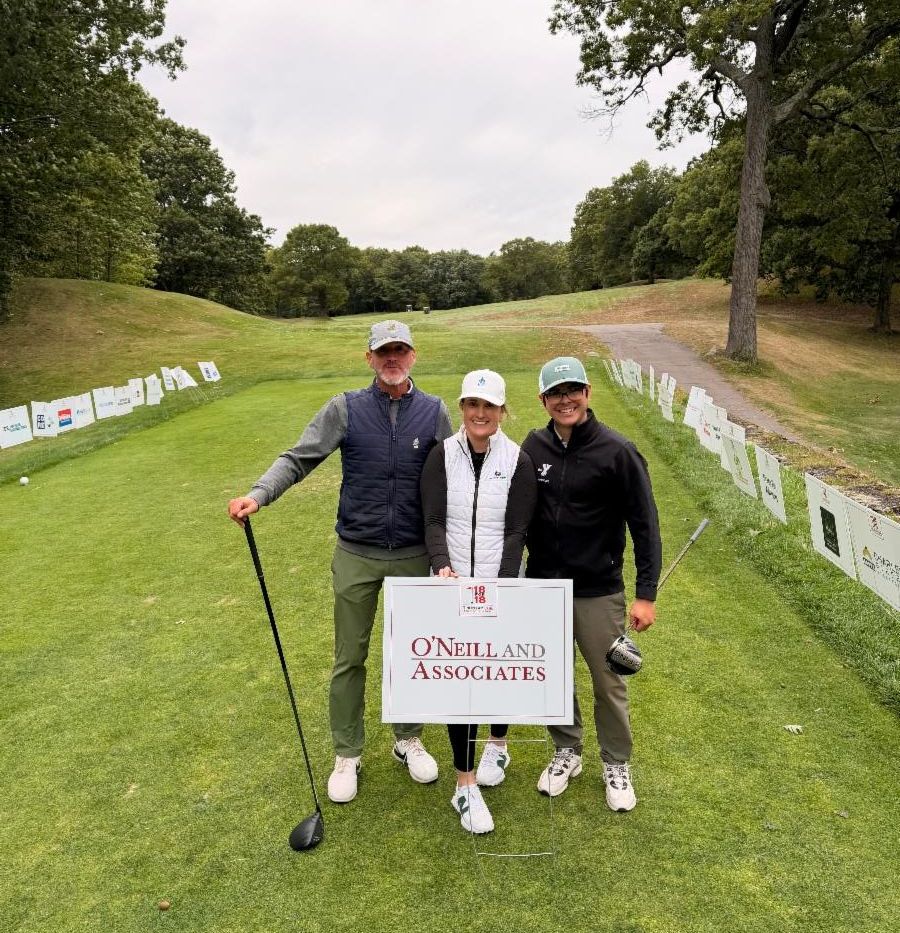
Ryan Coleman, Jamison O'Neill, and Phil Wettengel participated in the 8th Annual Brain Aneurysm Foundation Tinlin Family Golf Tournament in September. Proceeds from the event support the Brain Aneurysm Foundation’s efforts to raise awareness of symptoms and risk factors, provide information, and advance research to improve patient outcomes.
| | Left to Right: Ryan Coleman, Jamison O'Neill, Phil Wettengel | | |
Seven Letter Welcomes Greg Honan
Our public relations partner, Seven Letter, welcomed Greg Honan to its Boston office as Managing Director. Honan has extensive experience in both local and federal government communications, working at Boston City Hall as Deputy Chief of Communications for Mayor Michelle Wu, and in the Biden White House where he served as Director of Message Planning and Special Assistant to the President, and as Chief of Staff to the White House Communications Director. He began his career at the Harvard Kennedy School advising the late David Gergen, former CNN Senior Political Analyst and Professor of Public Service. Honan holds a B.A. in Political Science from Elon University and a Master's Degree in Public Policy from the Harvard Kennedy School.
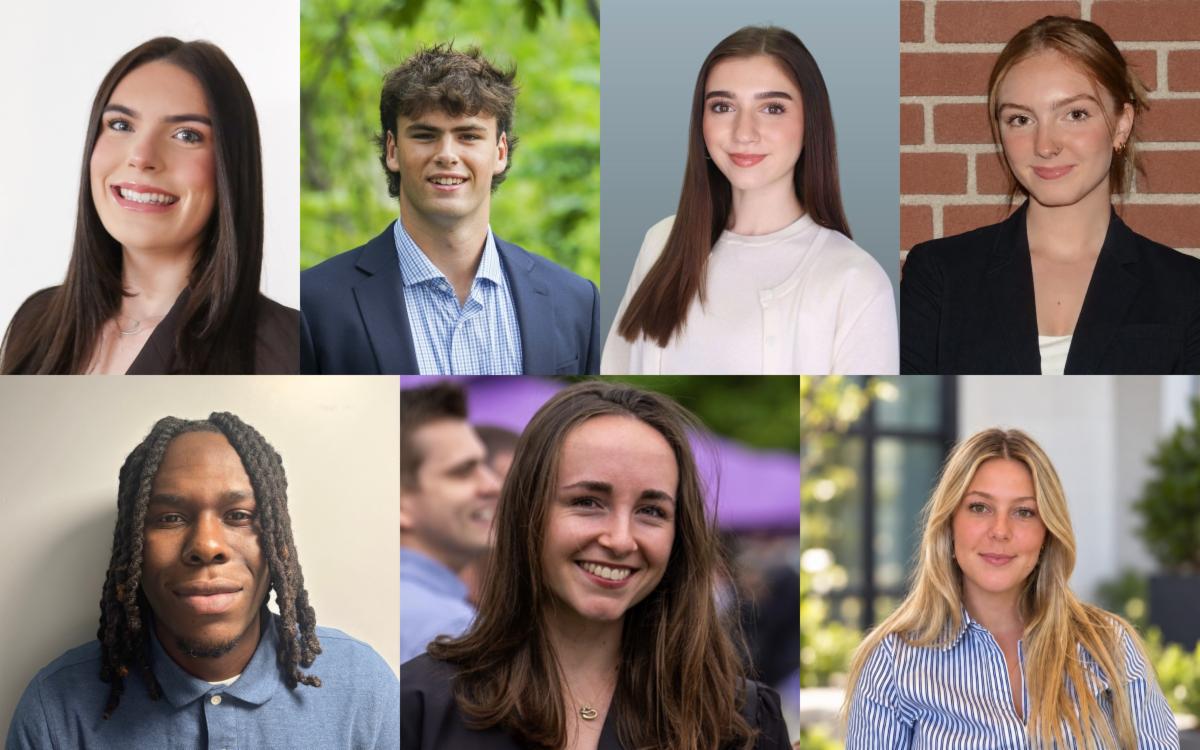
| | From Left to Right: Amanda Nusbaum, Andrew Tringe, Emily Russo, Madelyn Murray, Kevin Jean, Carolyn Fortin, Anna Grolleman | | |
O’Neill and Associates is pleased to introduce our fall interns:
Amanda Nusbaum, a senior at Bentley University studying International Affairs
Andrew Tringe, a senior at Brandeis University studying Business with a minor in Finance and Legal Studies
Emily Russo, a junior at Boston College studying History
Madelyn Murray, a senior at Suffolk University studying Political Science
Kevin Jean, a senior at University of Massachusetts Lowell studying Criminal Justice
Amanda, Andrew, Emily, Madelyn, and Kevin are mentored by OA’s government relations team who works on federal, state and local issues for our clients.
Carolyn Fortin is a postgrad from Williams College studying Political Economy. Anna Grolleman is a postgrad from University of Amsterdam studying Cognition, Language, and Communication, specializing in Psychology, with a minor in Economics. They are the Seven Letter Fellows who works with the Seven Letter public relations team in Boston.
Over the past 25+ years O’Neill and Associates has mentored hundreds of college students who have gone on to a wide range of careers in both the public and private sectors.
| | | | |