RETIREMENT SECURITY MATTERS
A forum for retirement innovation information sharing focused on
states, supporters, and service providers.
|
|
Greetings! welcome!
to Retirement Security Matters – where we talk about retirement readiness innovation by states, supporters, and service providers.
What's new this week:
- We talk with NEST's Will Sandbrook about universal workplace savings, emergency savings and the progress of NEST in the UK
- States' legislative updates: Colorado, Missouri, New York, South Carolina, Tennessee, and Wisconsin
- Program states rollout updates for CalSavers, Connecticut, Illinois, Maryland, New Jersey, and Vermont
- Updates from NAST
- And, pix of the week! Scroll to enjoy.
View as Webpage. Comments or content suggestions?
Yes please!
. Have something about your program you’d like to share? We are all ears.
|
Global Scene - What Does it Mean?
|
|
 |
Will Sandbrook, Executive Director, NEST Insight Unit
|
|
|
|
This week we carry forward the theme of global defined contribution – taking a look at insights from one of the newer programs that bears a kinship to retirement savings innovation in the US. With us as a guide is
Will Sandbrook
, Executive Director of the NEST Insight Unit at NEST - the National Employment Savings Trust. Will’s been on the scene since 2009.
Backstory. We won’t cover all the history, but in 2008 the UK passed a significant
pensions act aimed at increasing workplace retirement plan coverage. The act created country-wide automatic enrollment for 33 million workers, about half of whom were not previously covered by retirement plans. Workers retain the ability to opt out of retirement savings, but all employers must offer or facilitate a retirement savings plan.
|
|
|
|
The Act also established the
National Employment Savings Trust (NEST, for short) as a public provider for employers who didn’t have or choose a private sector provider. NEST took its first contributions in 2011. As of June 2020, the NEST program is serving 9.2 million savers who have accumulated over $11.8 billion toward their retirements.
Let’s get to it. We hit Will with 5 quick questions. He’s a wealth of information, so you’ll find a more complete view of our conversation
here - and this story is continued below.
|
|
States Innovation - Active Legislation
|
|
This week we capture some fresh activity and do a clean up round on some pre-pandemic progress.
|
|
Colorado (workforce 2.6 million) – Is there a new state program in the offing? *Congratulations* to Treasurer Dave Young, Policy Director Leah Marvin-Riley and the Colorado Secure Savings Plan Board - Colorado’s retirement security legislation
passed the legislature on June 13 and is now on its way to the Governor for signature. The legislation includes an appropriation to help get the program off the ground – lack of funding has been a challenge in some other states. Want a little more #backstory? We talk with the Treasurer
here.
|
|
Missouri (workforce 2.8 million) –
HB 1432, read in on January 8, 2020, is moving again. It was referred to the Committee on Higher Education on May 15. The bill would establish a secure choice savings program in the state.
|
|
New York State (workforce 9.2 million) – NYS has a legislation in place allowing it to establish a program, but the program would be voluntary for employers. That creates a challenge in that it may not effectively accomplish broad-based workplace coverage. NYS has
legislation active that would correct for this. On Feb 12 the legislation was amended and recommitted to the Governmental Employees Committee.
|
|
South Carolina (workforce 2.3 million) added a dozen sponsors to its
MEP bill in February.
|
|
Wisconsin’s
(workforce 2.6 million) retirement security task force is active – meeting in
January
, and again in
April
to get the perspectives of business owners and experts in the field, and to assess the impact of COVID-19 on retirement security in the state.
|
|
Program States in Rollout Mode
|
|
There’s a lot going on – take in some highlights.
|
|
The
Connecticut
Retirement Security Authority is holding off on its June 19 meeting while it finalizes some elements it is working on. The Authority is expected to meet again
in July
.
|
|
Illinois Secure Choice
published its
May metrics
. Since year end, facilitating employers are up by 50%, funded accounts are up by 40%, and the program’s assets have nearly doubled. The program’s board meets next on
|
|
MarylandSaves’ investments and program administration RFP closed on
April 30. The program is in due diligence with bidders, with the potential for a board recommendation and decision in July.
|
|
New Jersey
– with its bill signed in March of 2019 but no clear funding allocated, it’s taken New Jersey some time to consider next steps. This
January
and
February
, however, they did begin recommending board members for appointment to the New Jersey Secure Choice Savings Board.
|
|
Vermont’s
Green Mountain Secure Retirement Plan
is “in the end zone”, finalizing a contract with TAG Resources for management of its MEP program. The state intends to implement later in the summer of 2020.
|
|
States Speak! NAST TMTS - This Week+
|
|
We spoke with
Vermont
,
Pennsylvania
,
Oregon
,
Illinois
, and
Colorado
at NAST TMTS on June 10.
If you are registered,
you can hear more about our conversation with these legislating and implementing states
here or by accessing the recording in your app
.
If you're not registered, this link may not work for you.
Pennsylvania 17:53
Colorado 31:00
Vermont 40:28
Illinois 44:01
Oregon 55:45
NAST’s Retirement Security series continues, featuring
New Mexico – whose bill passed in February – and many more experts at the June 17, 24 and July 2 sessions.
Repeat: If you’re looking for a great place where you can go deep and learn a lot about states’ innovation, and more, the
Treasury Management Training Symposium (TMTS)
offered by the National Association of State Treasurers is the place for you. The cost is $350 or $550 depending on whether you’re a member. But at that rate you’ll get 70 hours of livestreaming content between now and August, with an opportunity to engage, ask your own questions, meet people, and access all the content afterward.
Register here
.
|
|
[continued]
GLOBAL SCENE – WHAT DOES IT MEAN
|
|
Will, remind us – what are some of the key characteristics of NEST and its peers
A couple of things worth noting. Our legislation covers all employers – down to one employee. That gave us a big leap forward with regard to workplace coverage. We looked at alternatives, but in the UK automatic enrollment with savings at the “point of paycheck” made the most sense. Second, in our system employer matching contributions are compulsory. Automated savings started at the 2% level – 1% each contributed by the employer and the saver. We had our first auto-increase in 2018, bumping savings up to 5% (2% employer and 3% employee). In 2019 we auto-increased to 8% (3% employers and 5% employees).
Wow – those are meaningful changes – what’s the impact been on participation?
I can share good news on this. First of all, we’ve been fortunate to have very high participation rates over time – with overall NEST opt out rates of around 7.7%. We were pleased to see participation was even better than originally forecast. It’s worth noting that covered workers include those are at least 22 years old, making at least £10,000 (about $12,500). So, we do naturally exclude from automatic enrollment those in the lowest earning categories.
We did find that as we escalated, opt out rates rose. Initially the rate for new enrollees hovered around 6%. In the first round of savings increases, they went up very slightly, to just above 6%. In this round they rose a bit more, to about 9.5%. But participation rates are still over 90% - much higher than was forecast pre-launch. This is also something we are keeping an eye on. We’ve got a
great piece on program auto-enrollment and auto-increase experience for anyone who would like to know more.
You’ve got some other very interesting work afoot – tell us more
The UK is different than the US in that retirement savings are essentially locked up until age 55, except in cases of extreme ill health. We don’t have the same type of during-career access that US programs offer, such as loans and withdrawals. But we know people have hardships that call for emergency savings. So we are exploring the use of retirement-adjacent
sidecar savings accounts. You’ve got some experimentation like this starting in the US as well. By the way, the pandemic is going to give us some comparative data across countries, as well. In a few years we’ll be able to assess what it means when you can (US), or can’t (UK), access your retirement savings for an emergency like a COVID-related job loss. It’s an interesting trade-off of short and long term priorities.
So no two countries take the same approach, but we have very similar challenges
It’s true. One challenge all countries face is this idea of Universal Workplace Coverage – and there are a range of approaches. In fact, I believe there is no one “right” answer. The reality is that countries looking to make improvements will be reforming something that’s already there – no-one gets a white sheet of paper. But there are emerging best practices and approaches that appear to have more, and less, impact on coverage, savings, and retirement income sufficiency.
We’ve just taken a closer look at this, comparing the systems of a number of countries across key dimensions. Our goal here is to help leaders begin to think through excellence in design, and what it might mean in their circumstances.
Will Sandbrook, thank you so much
– your experience gives us a lot to think about as we work on expanding retirement security in the US.
Readers, interested in more? You’ll find useful information at
NEST
and the
NEST Insight Unit
. You can also reach out to
Will Sandbrook
directly.
|
|
... Phew! Give me some pix of the week please!
|
|
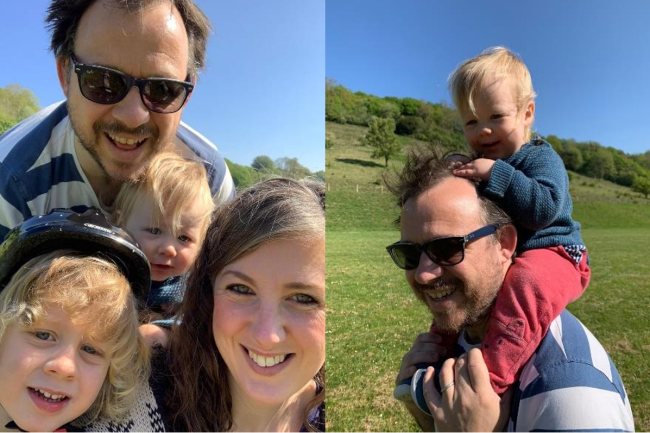
We asked Will Sandbrook how quarantine is treating him. Looks like the family time is a silver lining – have you ever seen a better-looking foursome? That looks like some English countryside goodness right there.
|
|
|
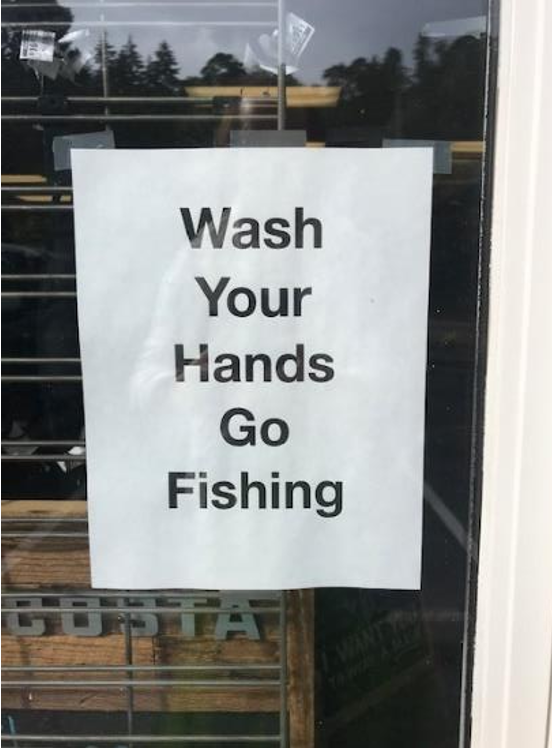
Wondering what to do as you come out of your own quarantine? Here’s a suggestion:
|
|
|
|
... so much better than what you might have been doing before, right?
|
|
|
On your first trip for a haircut you may go a little crazy:
|
|
You may enjoy your first big excursion out of the house on Flag Day, into the Willamette Valley to the Berry Barn where these gems are at their peak. And you might end the day at a newly-discovered winery, a safe six+ feet away from everyone else.
|
|
If your consciousness has been raised, you may take a moment to make a sign, and stand with it in the rain, raising a little more awareness and considering how to be part of the solution. Much love.
|
|
That's a wrap, folks
♥♥♥
If you like this piece, please stick with us. We’ll be back in about two weeks. If you don’t like it, please unsubscribe. Comments for us? Please
let us know. Want your own subscription? Request one
here. All information shared is from public sources or used with express permission.
|
|
|
|
|
|
|