Vista This!
Providing Solutions for a Healthier Outlook


"A flower does not think of competing with the flower next to it. It just blooms."


-Zen Shin

Visit Our Website
800.834.2310

How Personalized Benefits Can Attract And Retain Top Employees

In today's competitive labor market, attracting and retaining talented employees is a major concern and challenge for businesses worldwide.


Gone are the days when a one-size-fits-all benefits package would suffice. The modern employee seeks more than just a paycheck; they are in pursuit of a role that offers a personalized benefits package that aligns with their individual needs, lifestyle, and career aspirations.


This paradigm shift has made personalized benefits a cornerstone strategy for companies aiming to attract and retain the best talent.


When many think of benefits, health insurance is often the first thing that comes to mind. And it’s a significant benefit – nearly 153 million people are covered by employer-sponsored insurance, according to research from KFF. But, health insurance is just one part of the employer benefit equation.


Today’s employees are looking for more personalized benefits packages that demonstrate an employer’s commitment to helping them achieve their personal and professional goals. Companies that offer customized benefits will be able to attract top talent and keep them on their teams for years to come.


What Are Personalized Benefits?


Personalized benefits transcend conventional health insurance offerings, retirement plans, and paid time off. They are tailored to cater to the multifaceted aspects of an employee's life, encompassing flexible working hours, remote work opportunities, professional development programs, wellness initiatives, financial planning services, and even pet insurance.


This approach acknowledges that employees are not a monolith but individuals with unique circumstances, goals, and challenges. "The future of work is all about flexibility and empowering employees to shape their own experiences," says Brandy Burch, co-founder and CEO of benefitbay, an end-to-end solution that enables employers to offer personalized benefits for the modern workforce. This sentiment underscores the importance of personalized benefits in creating a work environment that values and supports individuality.


The appeal of personalized benefits lies in their ability to adapt to employees’ needs at different stages of their lives. For example, younger employees might prioritize professional development opportunities and student loan repayment assistance, while older employees may value retirement planning services and health care options that include coverage for dependents.


Personalization can also extend to rewards programs that highlight employees who have gone above and beyond expectations. Whether through benefits or rewards, “today’s workers need a much more customized experience to feel appreciated and valued for what they do,” reports Deloitte.


The Argument For Personalization


The rise of remote work has amplified the need for benefits that support a flexible and often non-traditional work arrangement. The COVID-19 pandemic accelerated this trend, with many employees experiencing the benefits of remote work first-hand. “It’s a benefit to be able to reside in a lower-cost-of-living locale while earning the income one would in a more expensive one,” states Raj Choudhury in Harvard Business Review. Of course, this is only true if companies don’t adjust wages based on where an employee lives.

Read More Here

Courtesy: forbes.com

Health Insurance Networks

Healthy(ish) Recipes!

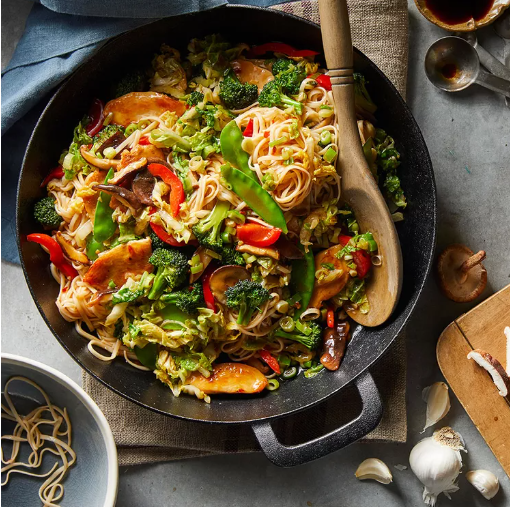
Cabbage Lo Mein

Jam-packed with a colorful medley of vegetables, this classic noodle dish relies on a bold sesame-soy sauce to tie all the flavors and textures together.


Ingredients


  • 2 tablespoons plus 2 teaspoons sesame oil, divided
  • 3 tablespoons reduced-sodium soy sauce
  • ¼ teaspoon crushed red pepper
  • 12 ounces boneless, skinless chicken breast, cut into 1/4-inch slices
  • 8 ounces lo mein noodles
  • 1 teaspoon chile-garlic sauce
  • 3 tablespoons vegetable oil, divided
  • 5 ounces mushrooms, thinly sliced
  • 4 cloves garlic, minced
  • 2 tablespoons chopped fresh ginger
  • 1 bunch scallions, thinly sliced
  • 2 cups small broccoli florets (about 1 large crown)
  • 1 red bell pepper, sliced
  • 1 cup snow peas, halved
  • 4 ½ cups thinly sliced napa cabbage (1/2 head)
  • ¾ cup unsalted chicken broth
  • 1 teaspoon cornstarch


Directions


  1. Combine 2 tablespoons sesame oil, soy sauce and crushed red pepper in a large bowl. Add chicken, toss to coat, and set aside.
  2. Bring a large pot of water to a boil. Cook noodles in the boiling water according to package directions. Drain, transfer to a large bowl and toss with the remaining 2 teaspoons sesame oil and chile-garlic sauce. Set aside.
  3. Heat 1 tablespoon vegetable oil in a large skillet or wok over medium-high heat until shimmering. Add mushrooms and cook until juices are released and the mushrooms are golden and tender, 4 to 5 minutes. Stir in garlic, ginger and scallions and cook until fragrant, 1 minute. Transfer to a medium bowl.
  4. Add 1 tablespoon vegetable oil to the pan and heat over medium-high heat until shimmering. Add broccoli, bell pepper, and snow peas. Cook until tender-crisp, 2 to 3 minutes. Stir in cabbage and cook until wilted, 2 minutes. Transfer to the bowl with the mushroom mixture.
  5. Heat the remaining 1 tablespoon vegetable oil in the pan over medium-high heat. Add the reserved chicken, leaving the sauce in the bowl. Sauté the chicken until cooked through, 2 to 3 minutes. Meanwhile, add broth and cornstarch to the reserved sauce and whisk to combine. Add the sauce to the pan with the chicken; simmer until thickened, 1 to 2 minutes.
  6. Add the vegetable mixture to the pan and toss to combine. Transfer the chicken and vegetables to the bowl with the noodles and toss to combine.


Nutrition Facts (per serving)

  • 414 Calories
  • 23g Fat
  • 27g Carbs
  • 26g Protein


Courtesy: eatingwell.com

Email Us and Let Us Know How it Was

March is National Nutrition Month

Are Dietitians and Nutritionists Covered by Insurance?


The decision to seek professional support for nutrition, body image, or overall wellness is an exciting step forward in your health journey. 


You want to hire the right person. Someone with qualifications and experience who can provide you with the best possible care, and who fits your schedule and financial situation. 


One of the best things you can do is to seek out services that are covered by your insurance provider.


This will completely alleviate the pressure of having to pay out-of-pocket and will allow you to focus your attention on improving your health and happiness.


But in order to select the best service for you, you’ll need to know which services are covered by insurance and what differences exist between nutritionists and registered dietitians. 


Nutritionist vs. Dietitian: What’s The Difference?


Chances are you’ve heard of a nutritionist and dietitian and assumed they were the same thing. 

They may be used interchangeably, but there is a difference between them and it’s important to understand what those differences mean for you and your wellness journey. 


The primary difference is that a registered dietitian is board-certified and legally permitted to treat medical conditions and offer nutritional counseling.


This isn’t necessarily the case for nutritionists.


Depending on the state in which they operate, nutritionists may not be held accountable by a regulatory body and can declare themselves a nutritionist without any formal training or certification. 


This isn’t the case for registered dietitians (RDs) who must hold a bachelor’s degree or equivalent and meet the accreditation standards of the Academy of Nutrition and Dietetics. 


The accreditation process for registered dietitians is a lengthy one, requiring each applicant to complete an ACEND-accredited supervised practicum, pass the Commission on Dietetic Registration's dietetic registration exam, and to successfully obtain a state license.


Are Dietitians Covered by Insurance?


The short answer is yes, the majority of insurance plans do cover services from registered dietitians (RDs), including major names like Blue Cross Blue Shield, Medicare, United Healthcare, and Aetna. 

Of course, you’ll still need to confirm with your insurance provider, as individual coverage plans can vary. 

You can review the information package provided to you when you signed up for your insurance plan, or you can contact your provider directly to inquire about dietitian insurance coverage.

Find a dietitian covered by insurance - all without having to leave your home. Get started with Nourish today.


If you’ve been diagnosed with a medical condition that requires nutritional counseling, it can help get insurance approval if they know your International Classification of Diseases code (also known as your ICD code). 


Your physician can provide you with your code.


Have it on hand when you inquire about coverage, as it will help your insurance company determine what types of coverage you qualify for.

Read More Here!

Courtesy: usenourish.com

QUESTION ON THE MONTH
COURTESY:

Question


A remote employee told us they were injured at home during their workday. What are our responsibilities?


Answer


When an employee informs you that they were injured while working from home, take the claim seriously and follow your usual procedure for a workplace injury. Here are the steps we recommend:


  • Thank them for letting you know about the injury and ask if they need medical attention. If necessary, help them get it. Their health and safety should be your first priority.
  • Have the employee complete a workers’ compensation claim form, which can be obtained from your carrier. The carrier should be notified as soon as possible.
  • Check for any recordkeeping or reporting requirements that you may be subject to under OSHA.
  • Keep a copy of the employee’s claim form and any other supporting documentation.
  • Talk to the employee about what happened to determine if there is a way you can help prevent this kind of injury in the future. For instance, if they tripped over a computer cord, maybe the cords can be bundled and arranged in a safer location.


This Q&A does not constitute legal advice and does not address state or local law.

No Mineral Account & Need More Information? Click HERE

Playa Vista Insurance Services, Inc.

8726 S. Sepulveda Ste. 612

Los Angeles, CA 90045

(800) 834-2310

Contact Us
Facebook  Twitter  Instagram