Happy New Year
By Tony Weller
|
|
“Happy New Year.” What a terrific idea. Let’s ponder what it means. If everything in our world is hunky dory or ever were, maybe the expression would be Happy Same Year. That Happy New Year has held its position suggests that each past year we believed something might be better in the next. Have we been brazen to hope for improvement and the new? The word new stands in polar contrast to old. We wish one another Happy New Year and, much with happy and all with new, we hail change for the better, aka progress. Newness and improvement are progressive ideas, not resembling stasis. Who would resist the idea of a Happy New Year? It encourages happy progress. It is an essentially progressive sentiment.
The American Heritage Dictionary defines progressive as “moving forward, advancing”. It defines conservative as “tending to oppose change” which is rejection of change and progress. Merriam Webster’s Collegiate defines conservative with the familiar and annoyingly circular, “of or relating to a philosophy of conservatism.” Which the reader may follow to Conservatism: “principles and policies of a conservative party.” After Merriam Webster’s hall of semantic mirrors, under conservative, we finally find, “tending or disposed to maintain existing views, conditions or institutions.” While under Conservatism we conclude with “the tendency to prefer an existing or traditional situation to change.” In Merriam Webster, for Progressive, we find, “of, relating to, or characterized by progress.” with “making use of, or interested in new ideas, findings or opportunities.”
Happy New Year is clearly progressive, even liberal.
So a Happy forward-hoping New Year to all! Remember seven day work weeks? Remember litter in the streets? Remember Jim Crow and hanger abortions? Remember learning something by the effort of a teacher when your own faith or motivation was lacking? How about yucky medicine that made you feel better? We do not always know what is best for our welfare and our happiness and some situations’ outcomes will be delayed in their effects. Remember Rachel Carson’s Silent Spring? Liberal sensibilities deepened environmental concern, improved social freedoms, aided education and permitted science to flourish. All while conservative foot-draggers protested.
Admitting that Conservative has variable definitions always tied to the power of dominant culture, we can still deem the idea regressive in that it places respect and compliance of extant principles over progress. By nature, the conservative eye rejects change. Astute observers seek to understand the causes of events. I might respect the idea of conservatism if I couldn’t trace so many contemporary problems to stubborn adherence to beliefs and principles that prevent cultures from the changes we must embrace, at our present juncture, simply to keep earth habitable. Climate change, wealth inequity, bigotry, population growth, resource depletion, and pollution. Conservatives offer no solutions whatsoever to these problems.
I’m sorry if your best security is remembered from the past. We can’t go back and live then. So far, time moves forward and future potential must be understood in realistic terms. All the well intentioned energy of the world will do no good if our problems are misapprehended. Will we defend the ideologies and beliefs that brought us to our present state or may we shed combative baggage and envision a future built on our best collective wisdom? Let us learn from the past, stand in the present, and move progressively toward the future. Ancestors can’t help us now.
Happy New Year. Go, citizen!
|
|
Collectors’ Book Salons
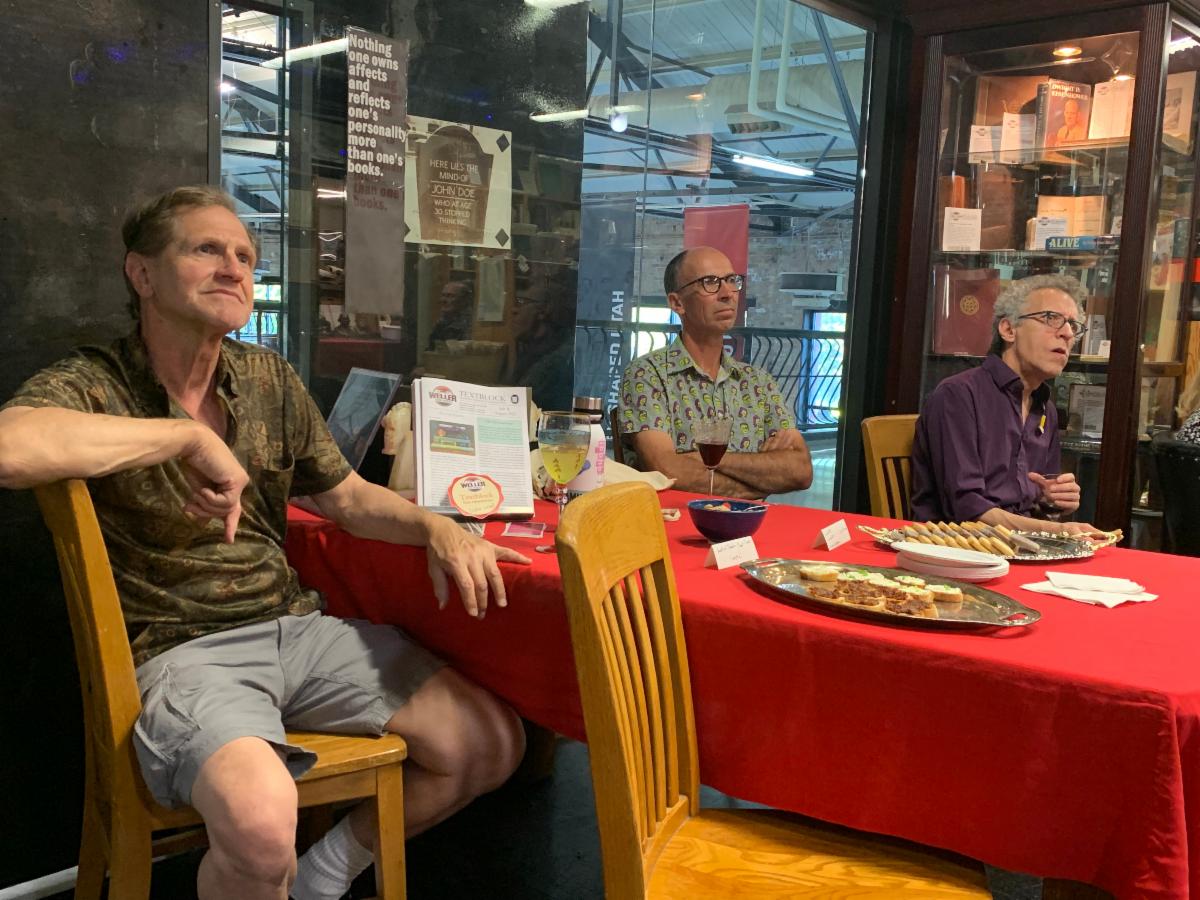
Hello unusual readers. Welcome to the New Year, a Happy and progressive year, much more beautiful and hopeful than the what-we’ve-always-had and are unwilling-to-change year, but a better year. Our Collectors’ Book Salons bring unique readers together for friendship and to share affection for books. We have hosted almost 90 of them since 2012. We begin each new year with a group event. The first salon of 2023 will occur on Friday, January 27th. This year we are asking guests to select and share a valuable book that contains beautiful writing. Value? Beauty? You must navigate these abstracts by yourself. In the January salon, we’ll take turns showing our valuable and beautiful books.
In February, Weller Book Works bookseller and buyer Frank Pester will carry the Collector’s Chat with a presentation about John Wesley Powell and the care of books. Frank has worked most of his life in books. He has worked in Weller Book Works since 1997 and splits his time presently between us and the University of Utah’s Conservation Department. He will lead the Collector’s Chat, possibly with a collaborator, at the Collectors’ Book Salon on February 24th.
Join us on the last Friday of the month for smart comradery with fellow book enthusiasts. No telling what they’ll be like, but then you too are hard to scrutinize. Next two salons: January 27th and February 24th. We start at 6:30. Remember your January assignment!
|
|
Rare Books
By Tony Weller
|
|
Albert Richard Riedel was born in Germany in 1911. He immigrated to Utah as an LDS convert. Riedel performed translations in the LDS Church, and later founded the Paracelsus Research Society which became Paracelsus College. And he became Frater Albertus Spagyricus, though he was usually just Frater Albertus. He died in 1984. As a generalist, I cannot claim deep knowledge in his Alchemical works but if my experience in bookselling reveals much, I believe he may have been the best known alchemist working in the 20th century. His works have been published in German, English, French, Spanish and Portuguese. Weller Book Works recently acquired a number of his works.
|
|
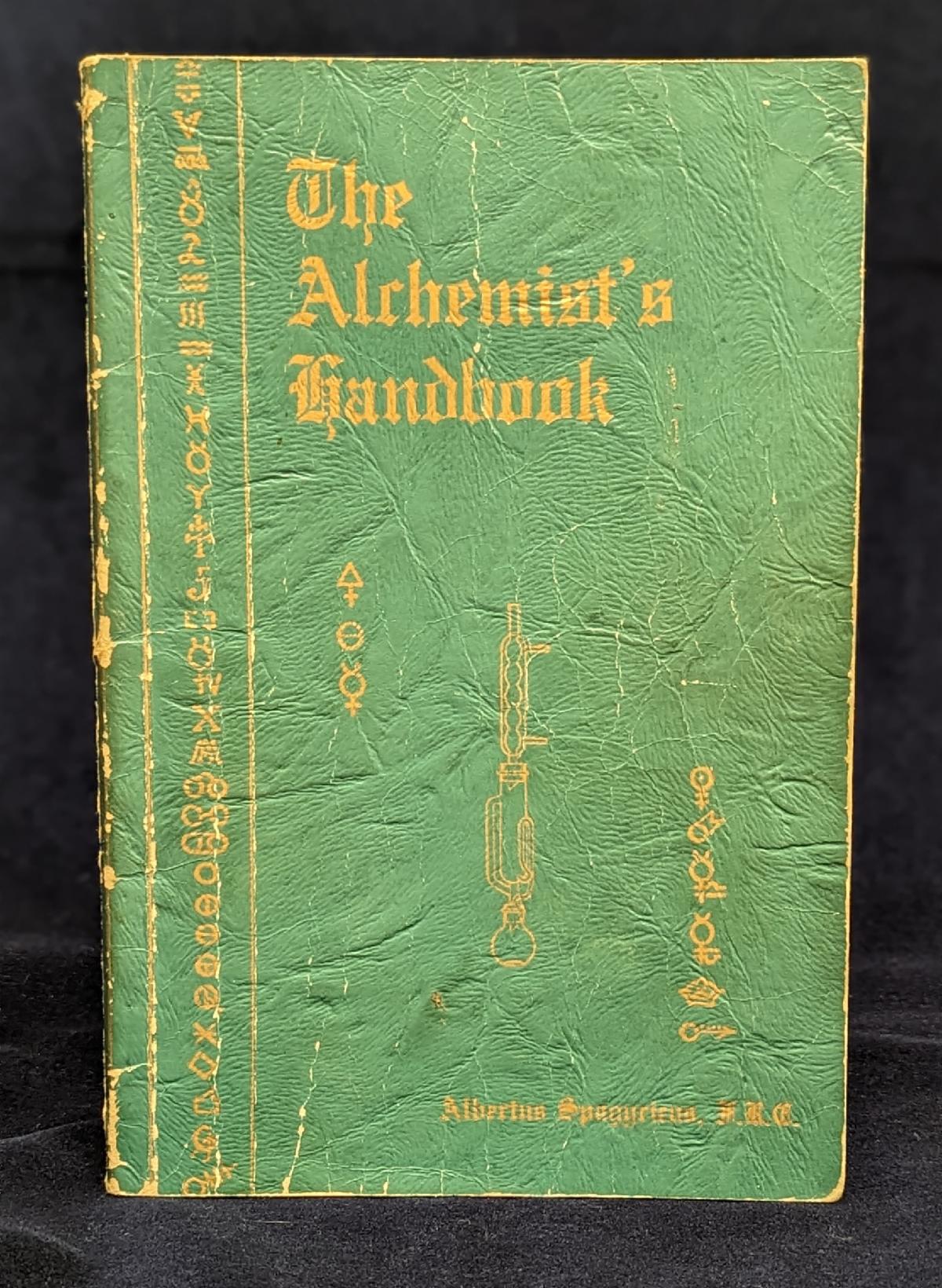
One of the 500 copies of the 1960 Alchemist’s Handbook. Green textured paper wraps with gold lettering. A bit rubbed and bumped but stable. Copy #448. $200
|
|
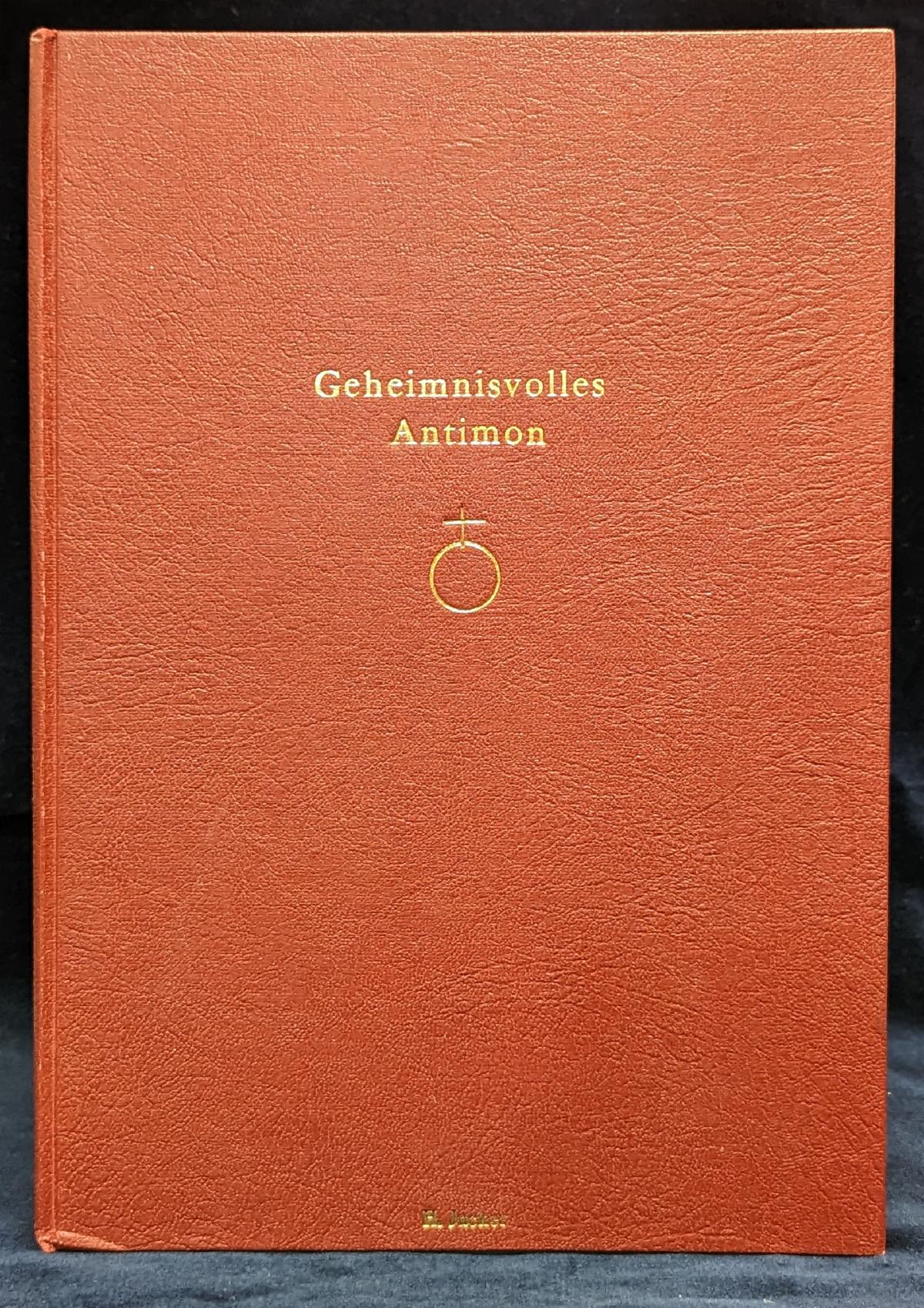
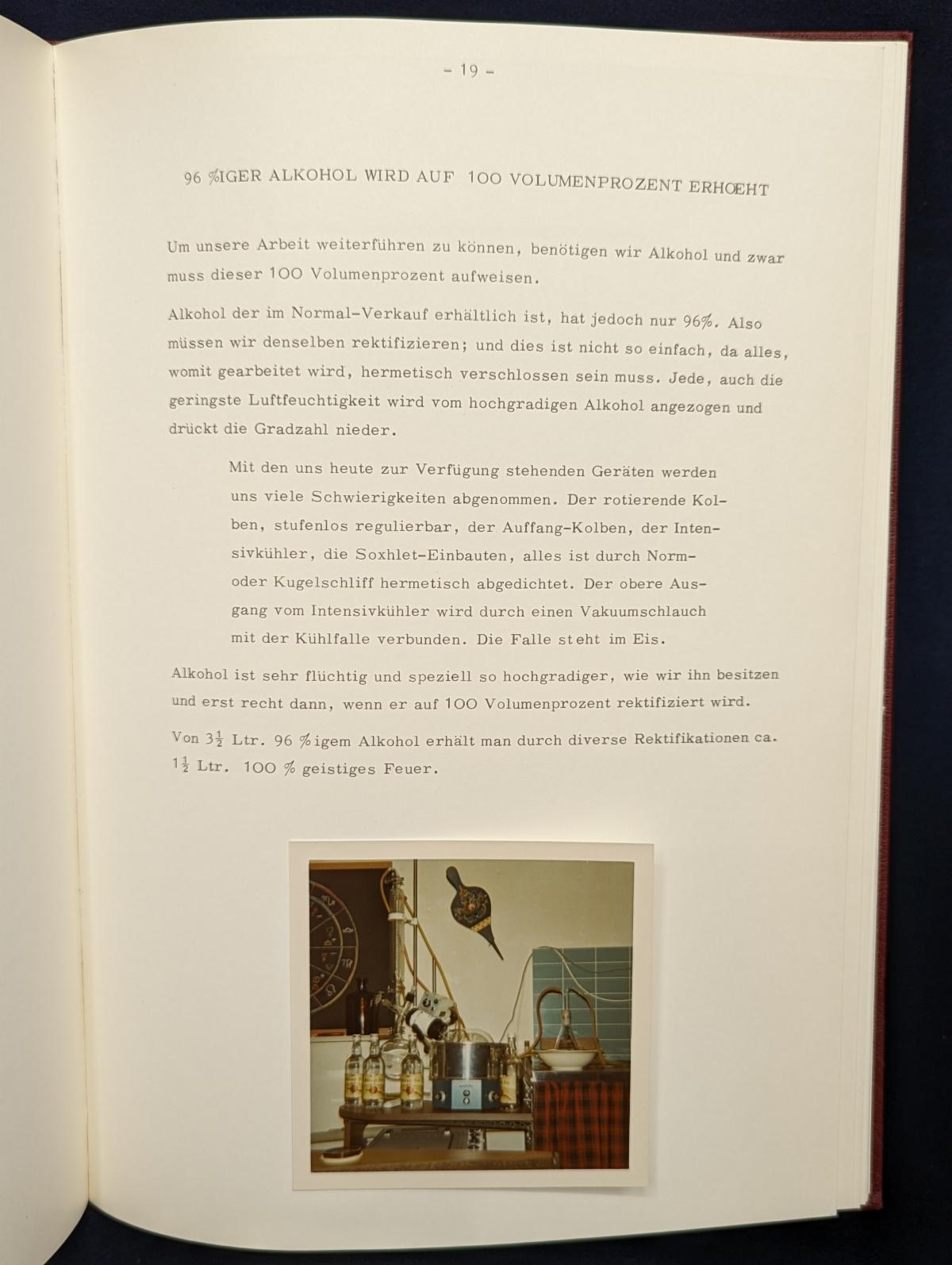
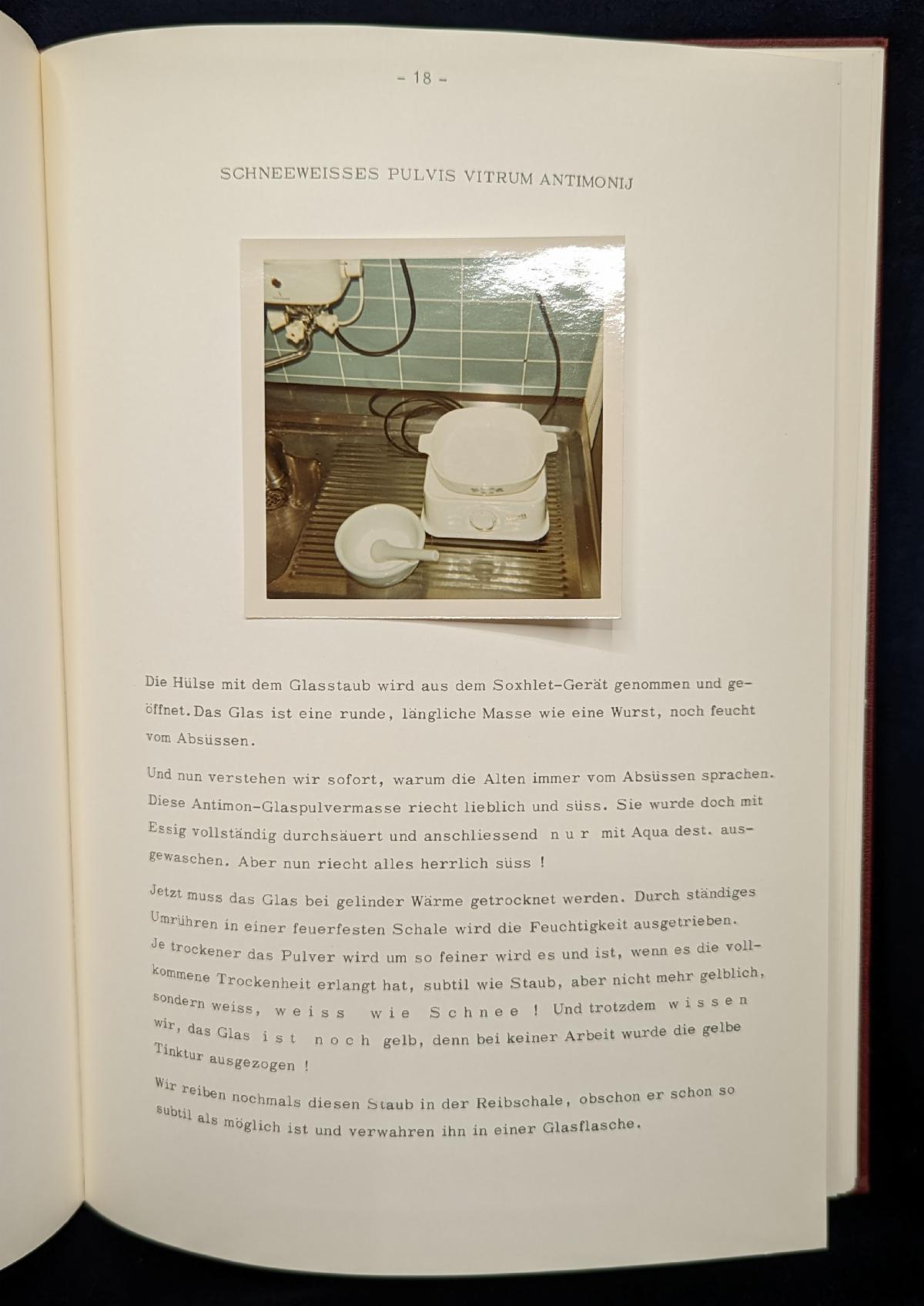
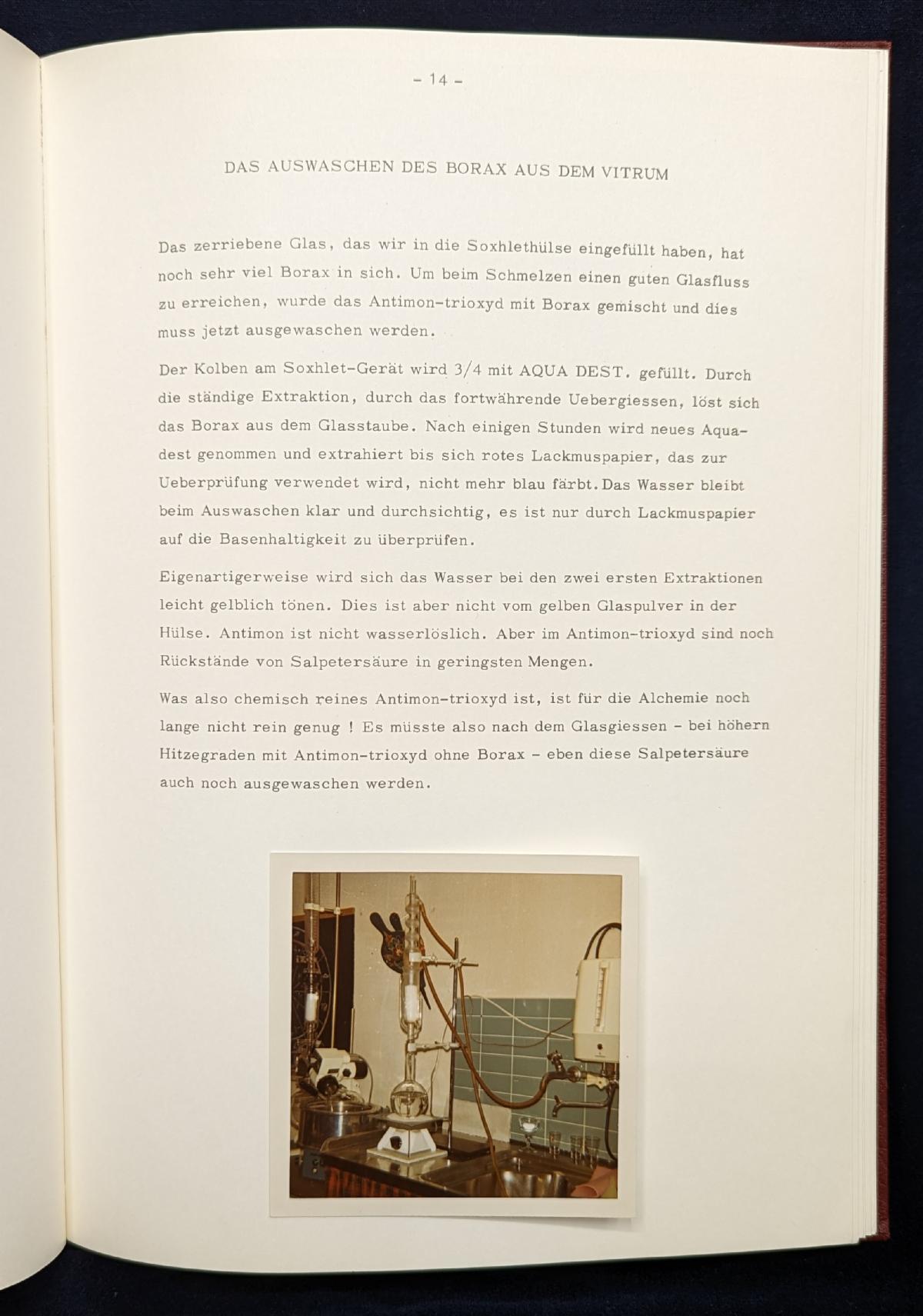
Rare 1969 Zurich folio by Hugo Jucker, Sulphuris Antimonij ex Vitro Extractio per Spiritum Vini, a German manual with 25 mounted original photographs of Frater Albertus’ laboratory, equipment and person. $1000
|
|
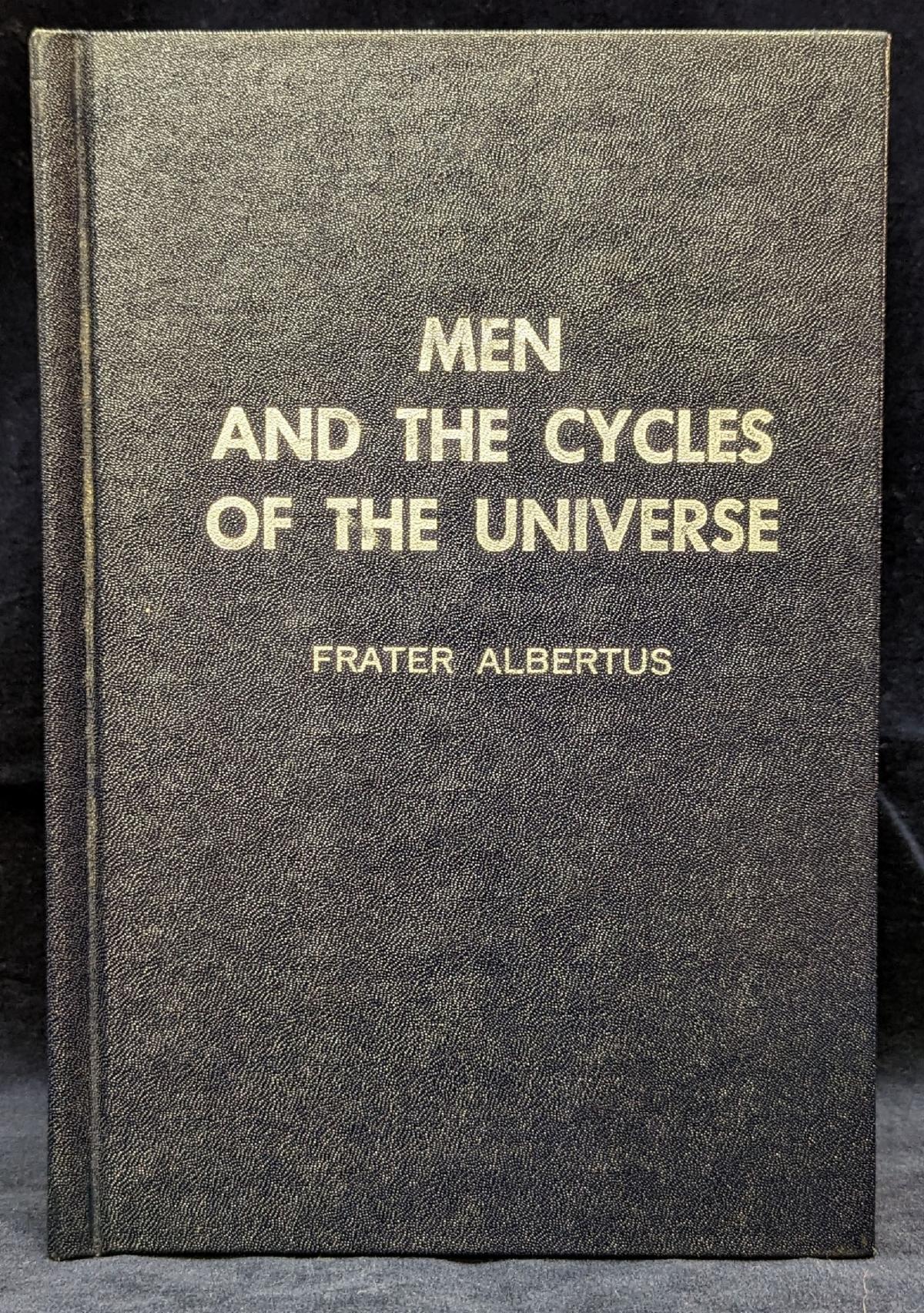
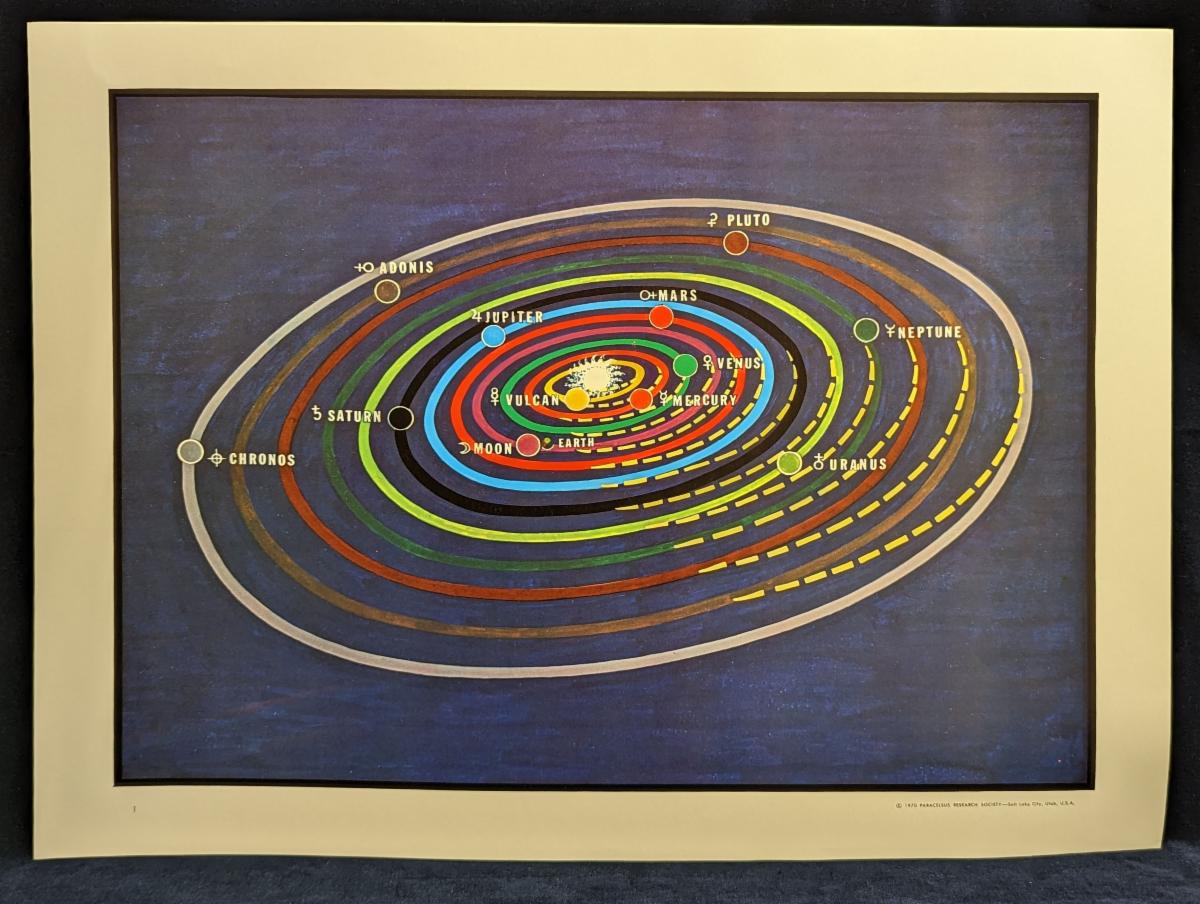
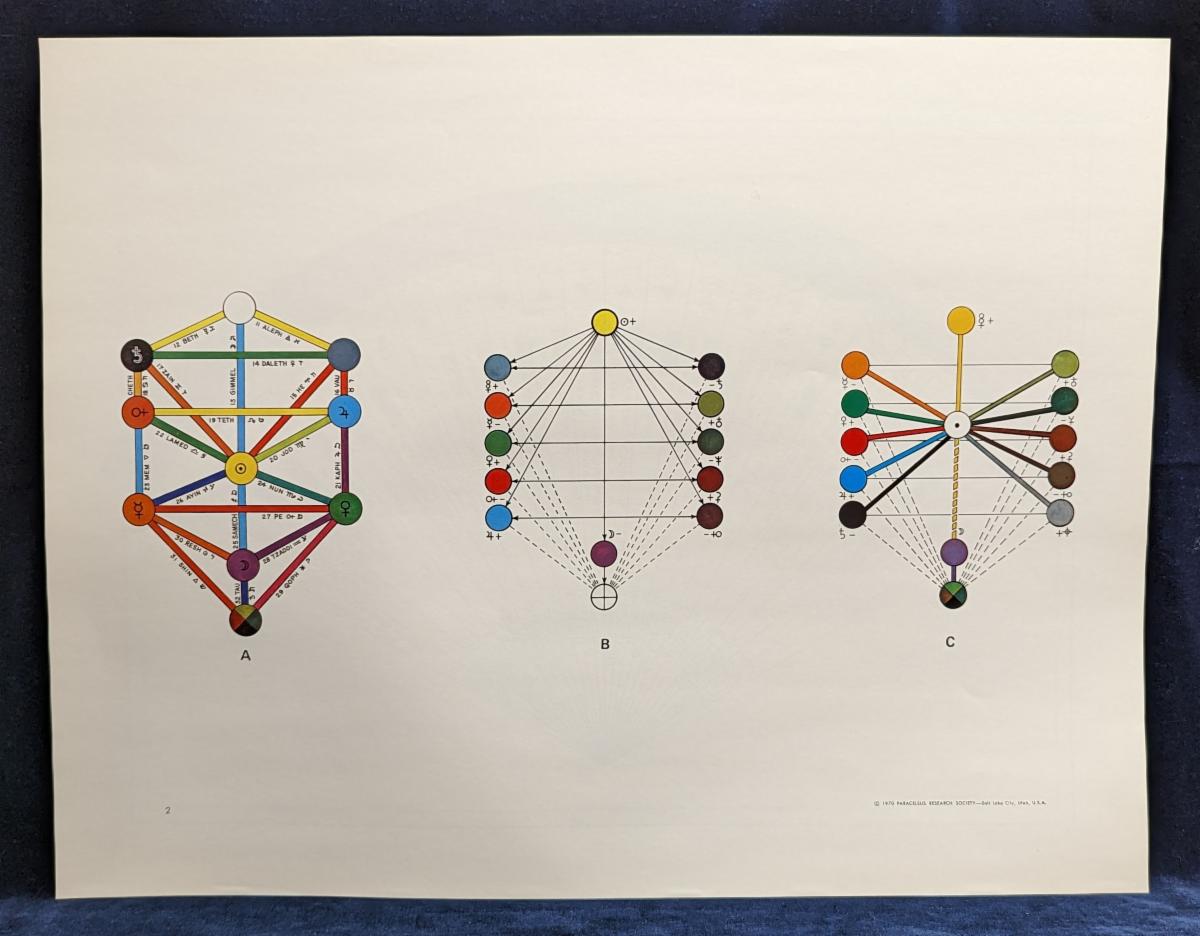
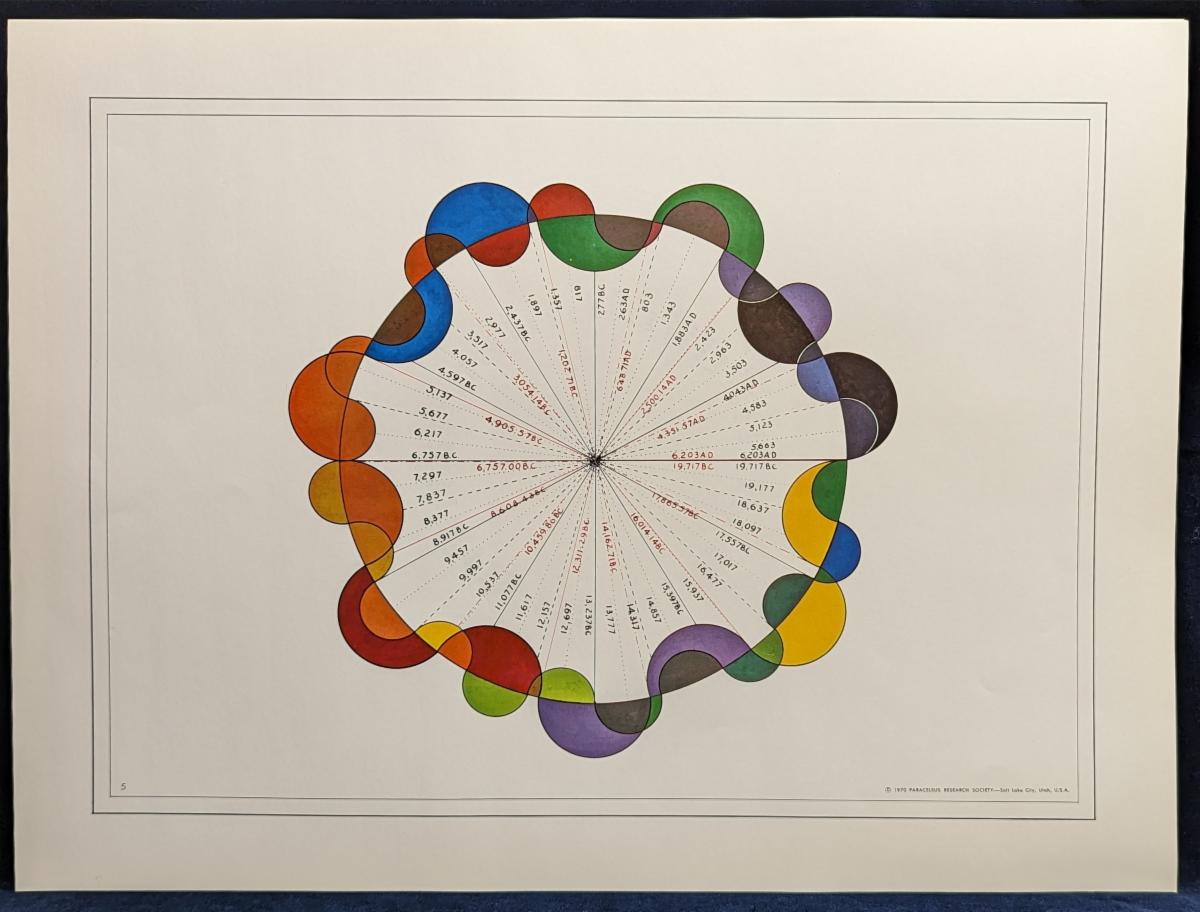
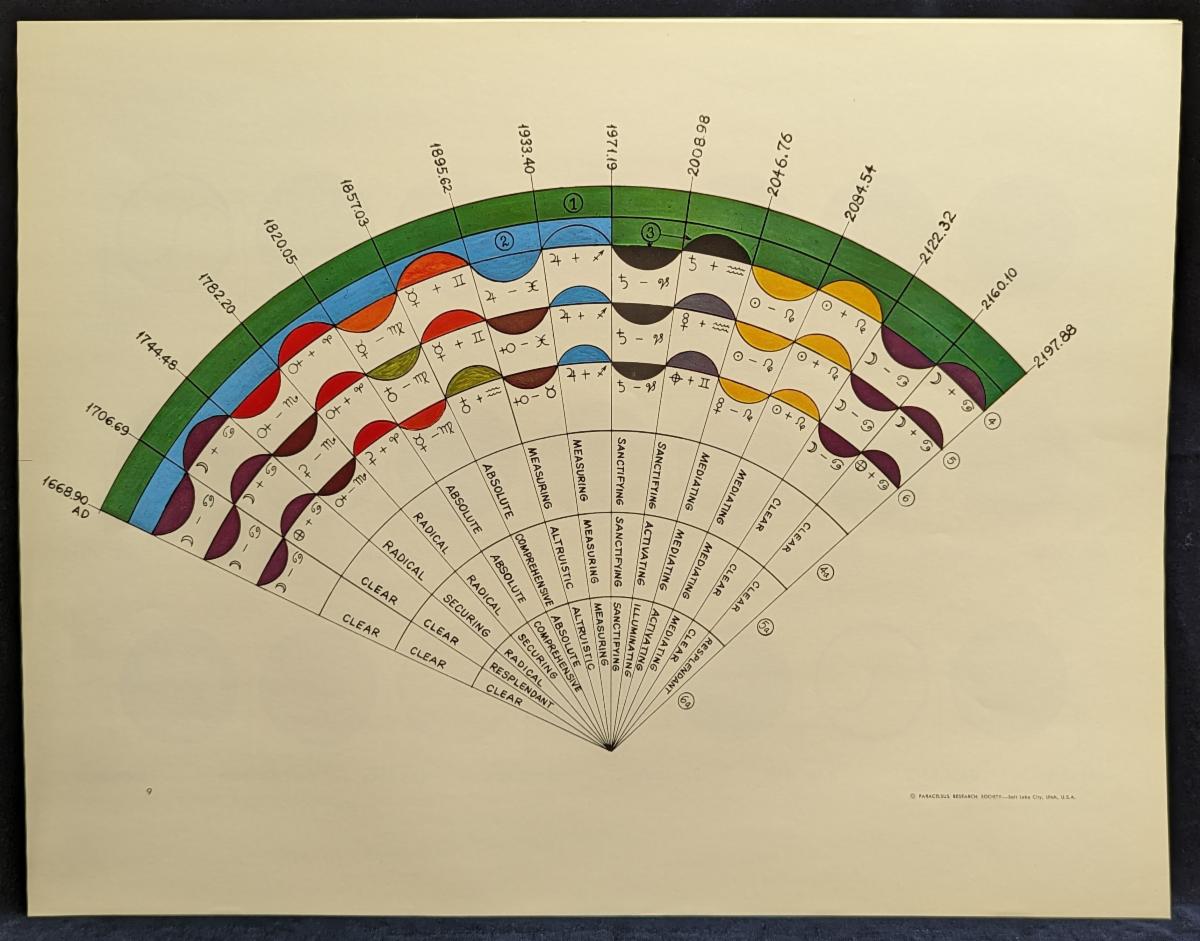
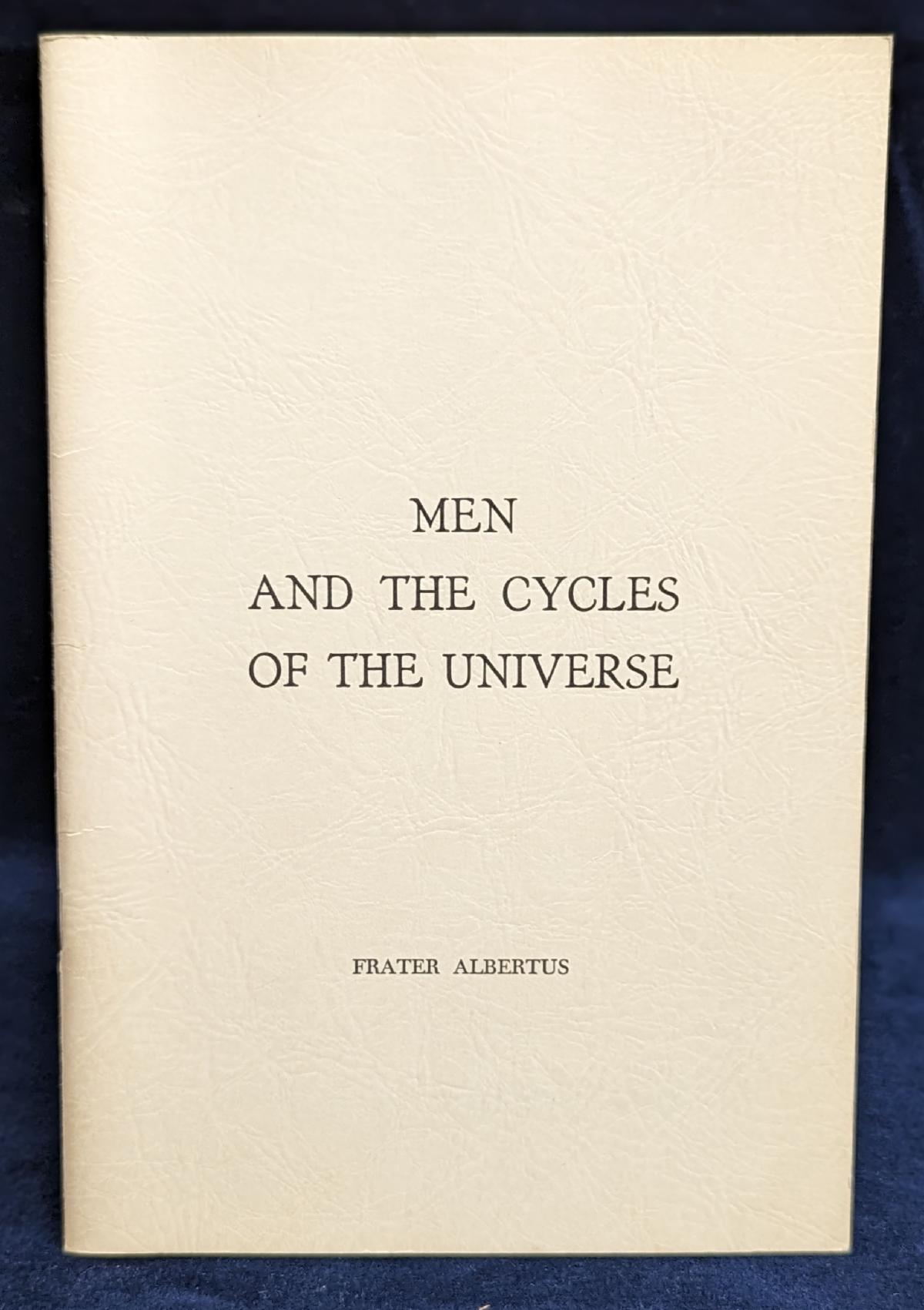
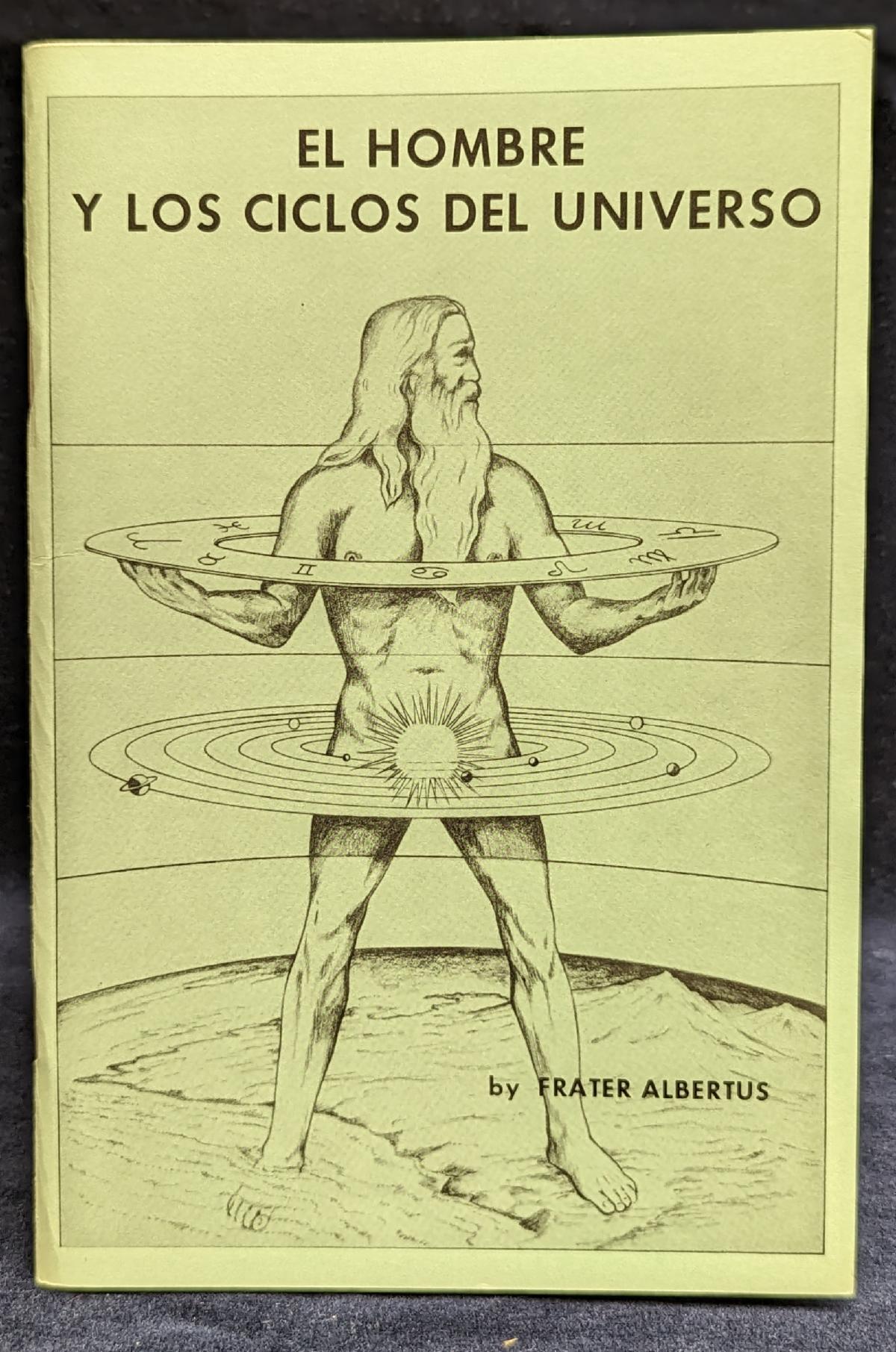
The hardcover copy of Men and the Cycles of the Universe with the full suite of ten color charts measuring 22 x 17 inches. Bright and pretty. The book is inscribed from Albertus to his sister in the year of publication, 1970. $900. We have more sets with the book in paperback for $750 and one in Spanish for $750 also.
|
|
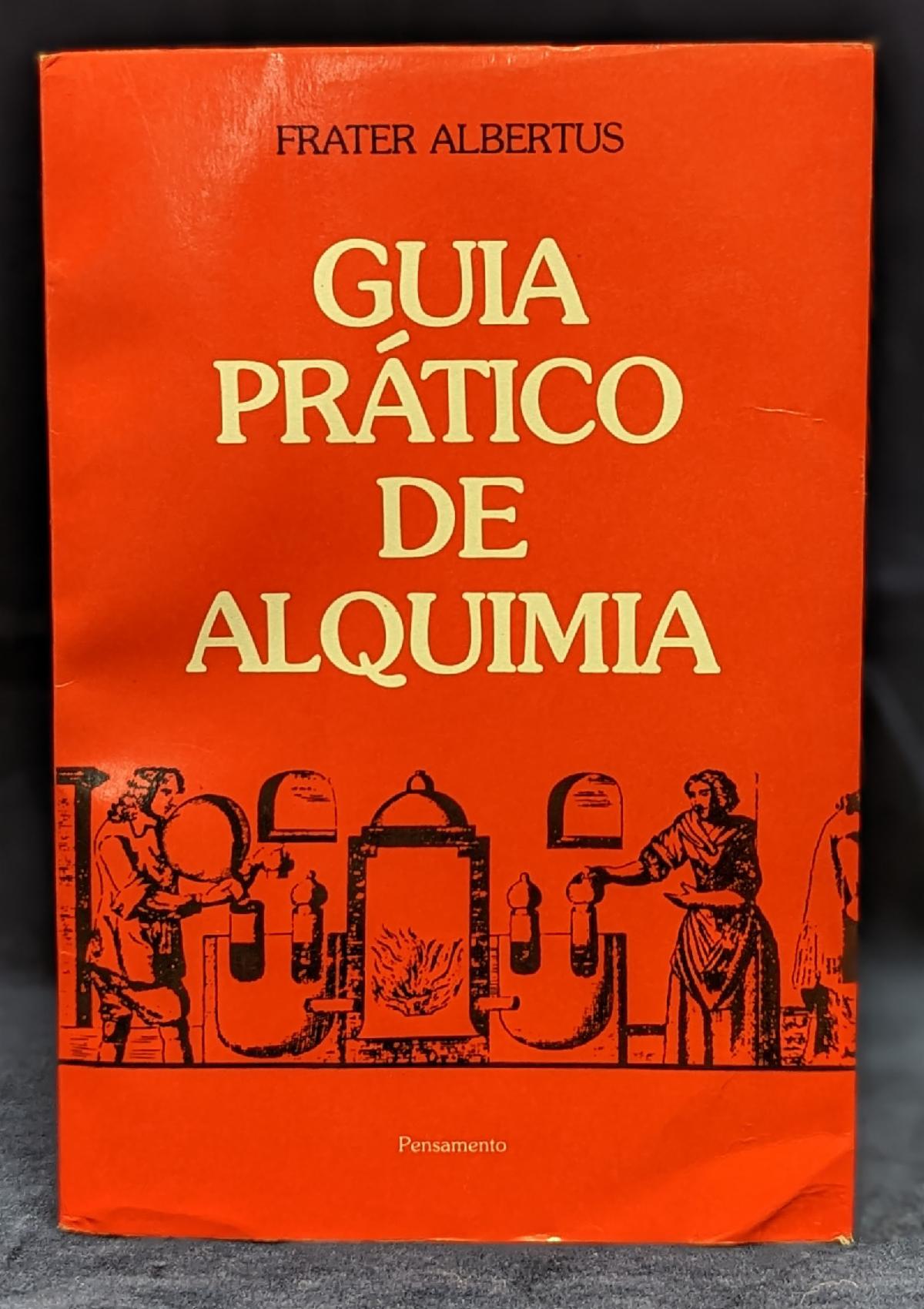
A 1974 Portuguese edition, Guia Prático de Alquimia, in paperback with flaps. $35
|
|
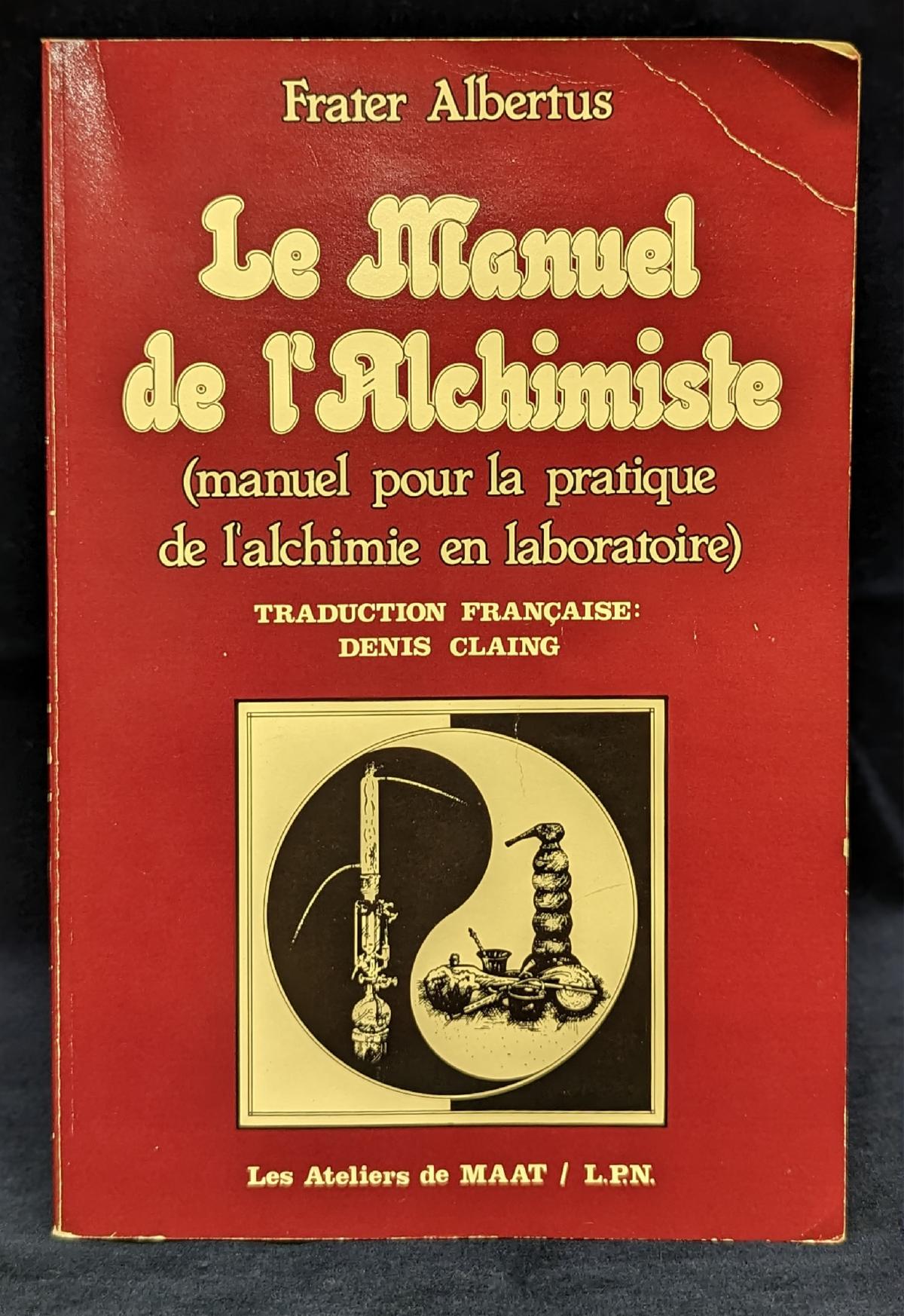
The 1980 French edition, Le Manuel de l’Alchimiste, in a paperback with bumped and creased edges. $35
|
|
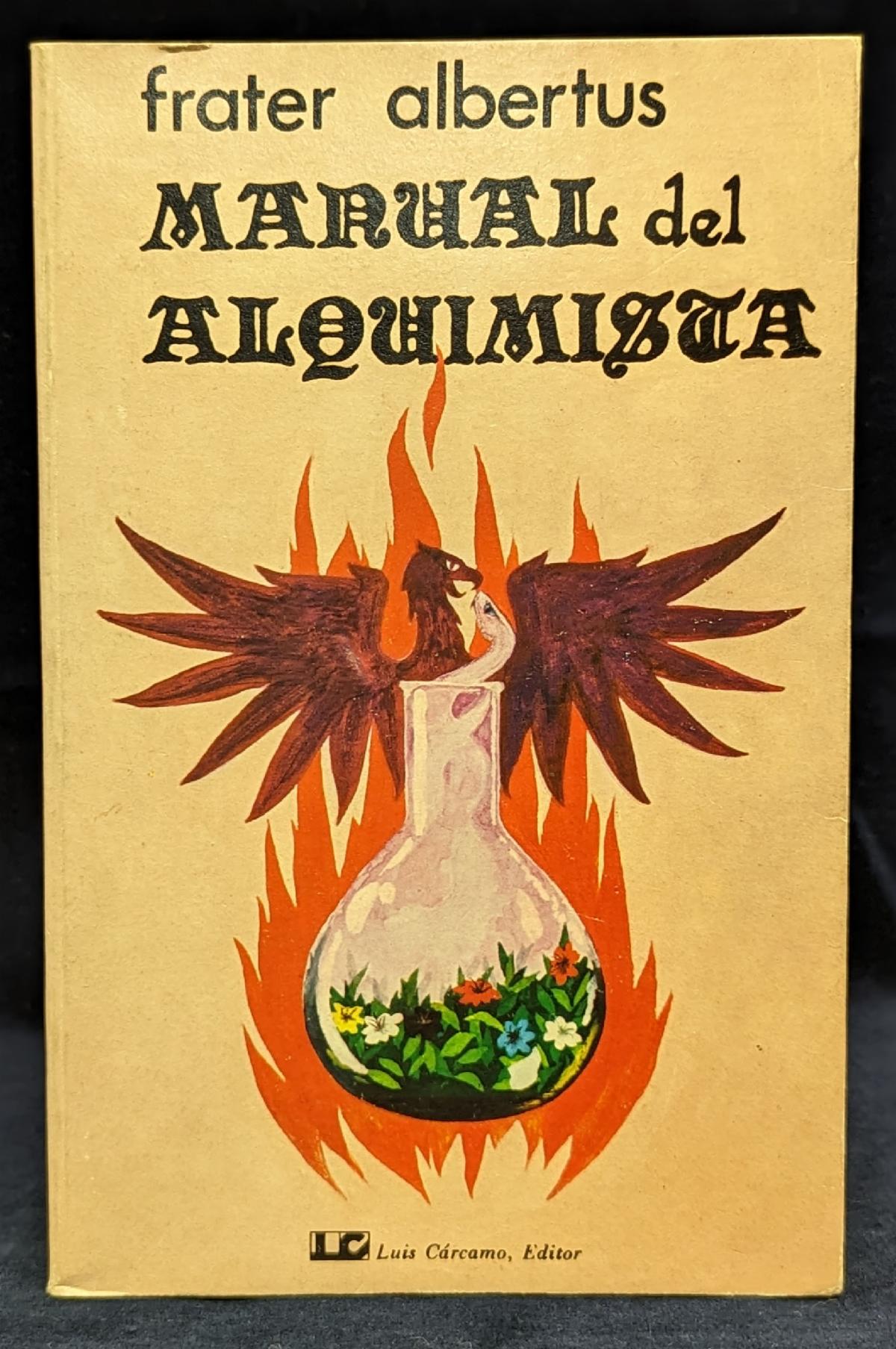
The Spanish edition of Manual del Alquismista, 1980. A sturdy paperback with flaps. $25
|
|
Von Eins Bis Zehn: Das Geheimnis der Zahlen (The Secrets of Numbers). Eine Abhandlung über die Entsehung und die Weiterentwicklung der ursprünglichsten physikalischen was published in a paperback with flaps in Germany in 1973. Translated into German by Siegfried Karsten. $75
|
|
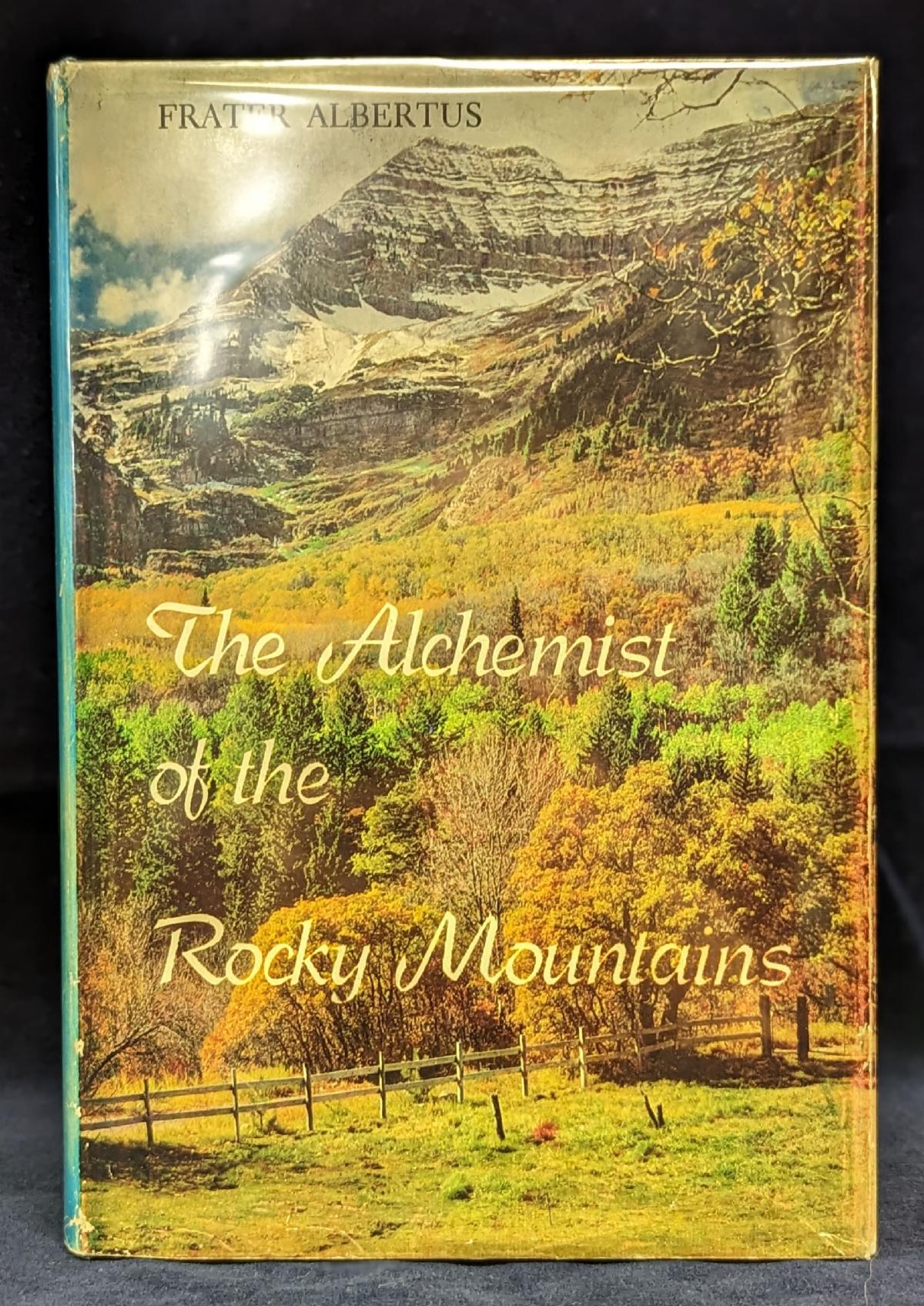
We have a nice dust-jacketed copy of Frater Albertus’ 1976 book, one of his most popular and accessible, The Alchemist of the Rocky Mountains, a survey of alchemical thought in the form of a story. $250
|
|
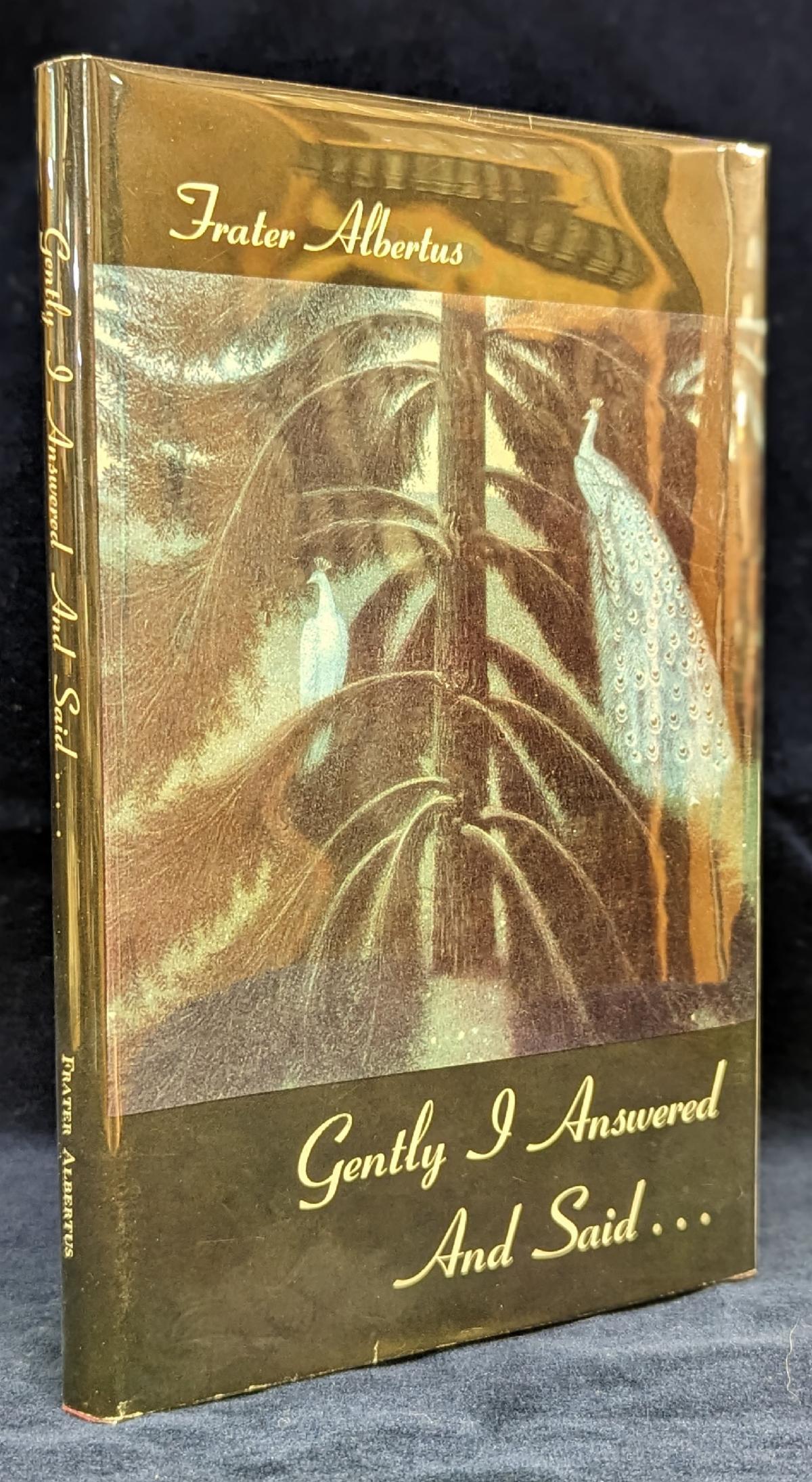
In 1978, Gently I Answered and Said…, philosophy in the manner of a conversation. A very good jacketed copy for $200
|
|
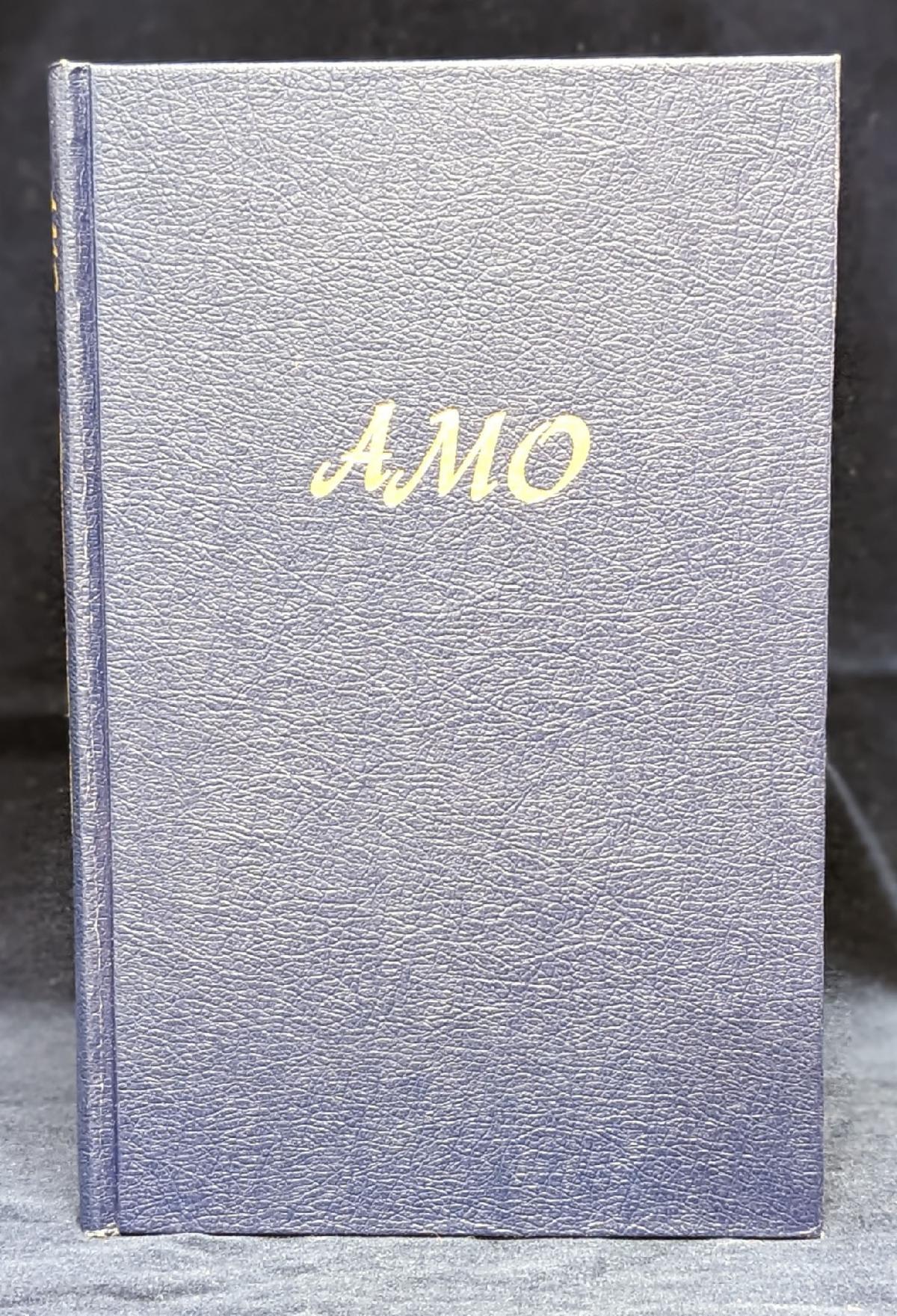
In 1983 Albertus’ Paracelsus College published Amo: A first hand report from an initiate into one of the designated places of the Great White Brotherhood on the roof of the world. Frater Albertus wrote the introduction to this purportedly translated work. Its origins are deliberately obscure. The first chapter belabors the necessity of the anonymity of the book’s author, a nameless German hermit living in southwestern Montana in the 1940s. In Amo, translated by Robert Firmage in 1983, the hermit revealed wisdom and secrets he claims to have received from an unnamed Indian hermit. The trail gets fainter as all of the German hermit’s words pass through an unnamed Contributions Editor of a German magazine. $100
|
|
Receive 20% off when you purchase during January & February
|
|
Picador
Paperback
Sale price $14.40
To erect a monument to memory sometimes obscures the very thing it is meant to memorialize. Sometimes conscious forgetting is the best way to remember. A Primer for Forgetting is not an argument but is deeply compelling. From the start, Hyde transparently eschews formal organization and presents his ideas piecemeal. He also tells us this book is latent fruit. The result is an intuitive lace, with plenty of interstitial space to contemplate. His stream of association is clear and erudite, it has rich sources and it flows into various pools of reflection. We are presented with poignant examples from ancient to contemporary, his personal story and cultural spheres. I fell in love with this book because Hyde touches on, cites, and quotes a good sampling of my favorites: Marcel Proust, Gary Snyder, Paul Bowles, the ancients.
Here are some things I gleaned from this book, in no order of importance. Remembering and forgetting are conscious acts most useful to us when they are understood to be interlinked, not binary or mutually exclusive. The practice of forgetting is not erasure. The truth is inborn and must be un-hidden. There are some things that must be remembered, we must not forget them; but the enforcement of that memory can sometimes incite its original violence. Fearing loss can overwhelm and cloud our perception, dis-enabling future memory. Over-concerning ourselves with the document can detract from the direct experience that will firmly implant itself in our minds, only needing a taste, or smell, or some small association for the brain to reveal it, intact, instantaneously.
|
|
Bookseller Recommendations |
|
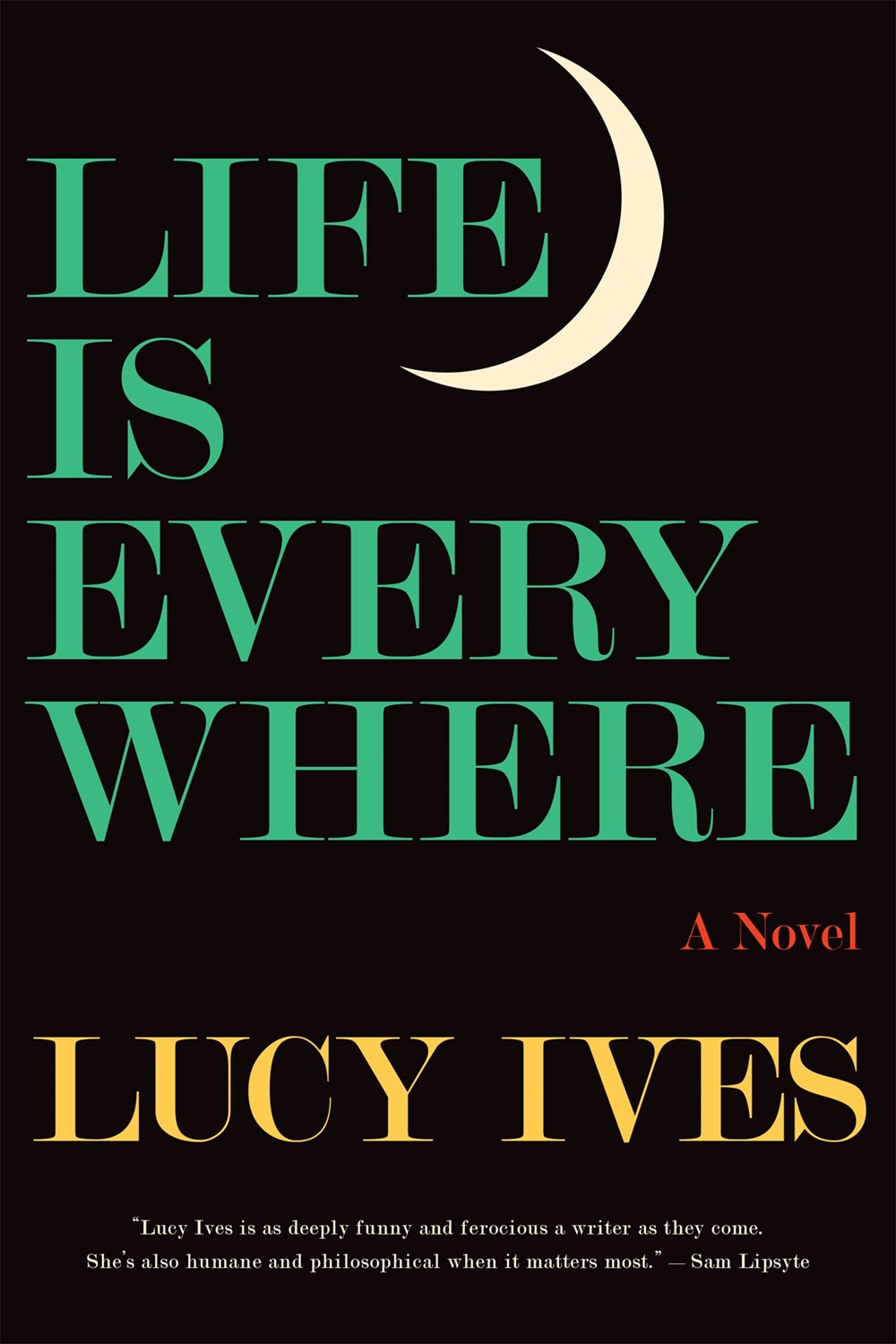
Life is Everywhere
By Lucy Ives
Graywolf Press
Paperback $18.00
Review by José Knighton
Even more than travel, a novel is all about the journey and not the destination. Otherwise, why bother with the tangle of paragraphs? The nested narratives that compromise Life Is Everywhere present an absolutely captivating and unpredictable journey. For instance: the book opens with a hilarious, anti-Wikipedia history of botulism beginning with an edict from a Byzantine emperor. But, where Wikipedia would offer a botox-paralized compromise of history, Lucy Ives’ version is pumped full of enlivening irony that unfolds, eventually, on a send up of academia, with a cold-souled prof getting a botox treatment to make her even less emotionally available.
The opening parody/parable isn’t just a preface, but a red herring: for the novel’s protagonist isn’t Faith Ewer, the botoxed prof, but one of her distressed students. It is Erin Adamo who will be our travel guide throughout Ives’ novel. Some of her story comes through direct narrative, but much of it is relayed by way of the manuscripts of a supposedly fictional novella and a novel written by Erin and carried in her tote bag. The first is a tale of a tormented childhood, the second a story of the dissolution of a marriage: both are, obviously, thinly-veiled autofiction. Also burdening Erin’s tote bag is a monograph by another prof, Roger Herbsweet, who is caught in a potentially career-ending scandal involving an unidentified female student, as well as an obscure, French language novella that Herbsweet is obsessed with. Erin may be the protagonist, but Herbsweet's enigmatic scandal is the axis around which Ives’ novel revolves.
Though most of Life Is Everywhere’s dramatic tension is self-inflicted by Erin, that doesn’t make her (or the reader’s) journey any less compelling, or the scandal at the book’s core any less of a mystery. As the Pynchonesque gravity of Erin’s saga exponentially increases, sweeping readers up in a narrative avalanche of byzantine complexity, her world shrinks to a locked library study room where she binge-translates that French novella and uncovers the surprising source of Herbsweet’s public shaming.
|
|
Snow Stories
By Bess Hayes
|
|
I love winter. And there’s something especially unique to the months following the chaos of the holidays. The energy lulls in overcast skies and still-dark evenings. Even the bitter cold is sweetened by wearing many layers and tromping through snow or staying inside under blankets with good books.
I don’t want to escape the cold through books—I want to embrace the chill outside by immersing myself in written snow and ice. Maybe it has something to do with childhood memories of jumping into piles of snow, sledding down hills, and lobbing snowballs at my brothers. And, after all that play, reading.
Maybe it’s because I’m cynical about drought and climate change, or maybe the snow makes me particularly nostalgic, but I’ve been thinking about some favorite snowy childhood stories recently. These stories taught me early that snow can be both gentle and dangerous, something magical and something very real. Mostly they taught me to love snow and these few cold months.
Here are a few children's books that are perfect for this period of long, dark evenings. Read them alone or with young folk. Maybe they’ll become classics for you, too.
|
|
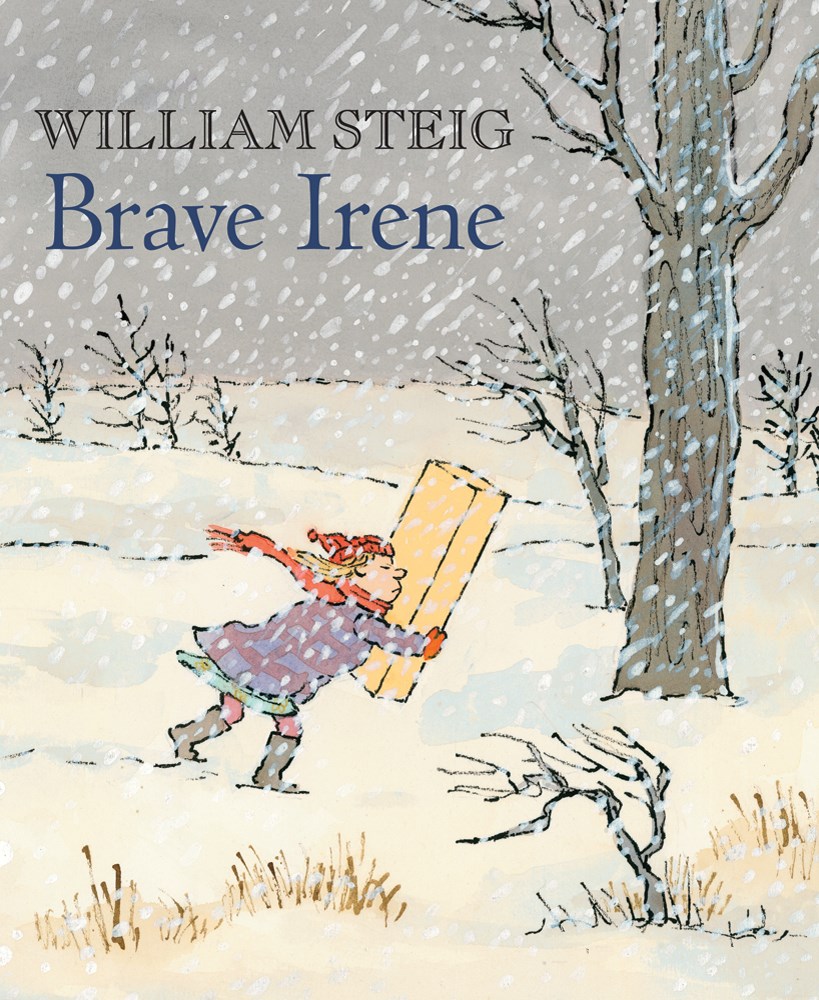
By William Steig
Paperback $8.99
In this story, Irene braves a snowstorm to deliver her dressmaker mother’s gown to the duchess at the palace. “But I love snow,” Irene tells her worried mother before setting out. Steig’s immersive illustrations show how Irene’s snowy walk soon turns into a battle with the squalling, yodeling wind. The language likewise captures Irene’s frustration as she struggles through the heavy snowfall and gusting wind. I grew up with this story, and, decades later, still picture Steig’s illustrations when I think of blizzards.
|
|
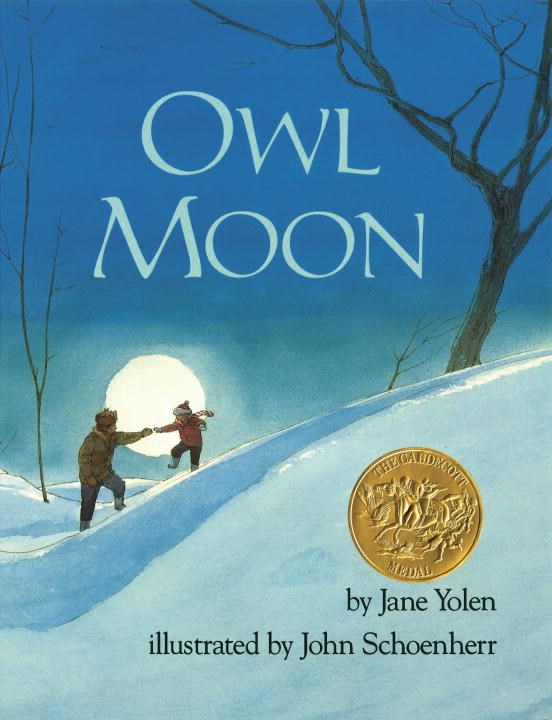
By Jane Yolen
Hardcover $18.99
Where Brave Irene showcases the brutality of winter storms, Owl Moon idealizes the quiet stillness of fallen snow at night. “If you go owling you have to be quiet,” says our young narrator. The only noises are the crunching of boots in the snow and the pa’s occasional owl calls. The illustrations full of cool tones and shadows cast by the moon emphasize the bitter cold, yet make me long for a similar experience.
|
|
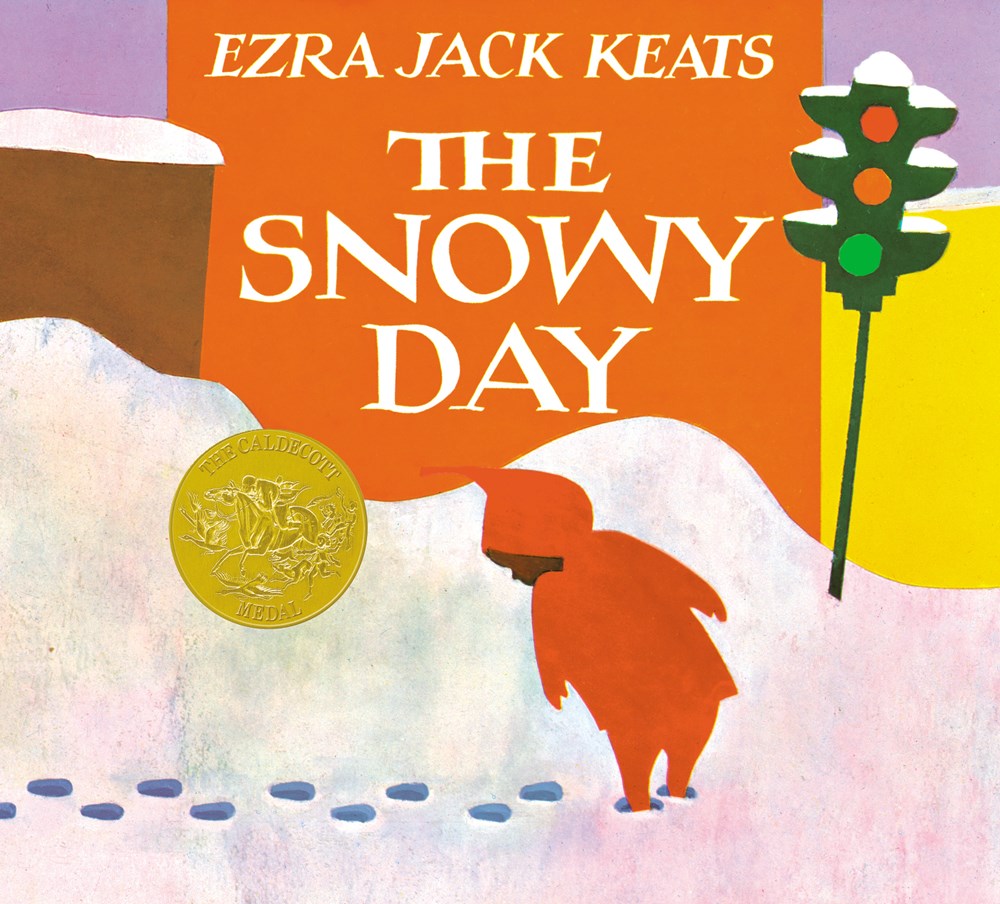
By Ezra Jack Keats
Paperback $7.99
I love this simple classic recounting Peter’s day playing in the snow: making tracks, building a snowman, climbing hills. Keats’s vibrant illustrations, composed mostly of simple silhouettes, welcome readers into the snowy city. Peter’s surroundings—neighbors and stoplights and buildings—are familiar and so different from the remote environments of the previous two stories. This is a joyful, snowy romp, reminiscent of my own memories.
|
|
Click here for our January events newsletter.
And, as always, view our events calendar to see all of our upcoming events.
We host both virtual and in-person events, and we look forward to seeing you soon.
|
|
Come visit us!
SUNDAY 12-5
MONDAY-THURSDAY 10-8
FRIDAY & SATURDAY 10-9
|
|
Can't make it to the store?
Support your local indie from home!
Order by phone or online, then pick up at the store or the curb! We also ship!
|
|
Give us a call at 801-328-2586.
Browse our entire inventory of new, used and rare books on Biblio.com.
|
|
Thanks for supporting your local, independent bookstore!
Store hours: Sunday 12PM-5 PM | Monday-Thursday 10AM-8 PM | Friday & Saturday 10 AM-9 PM
|
|
|
|
|
|
|