|
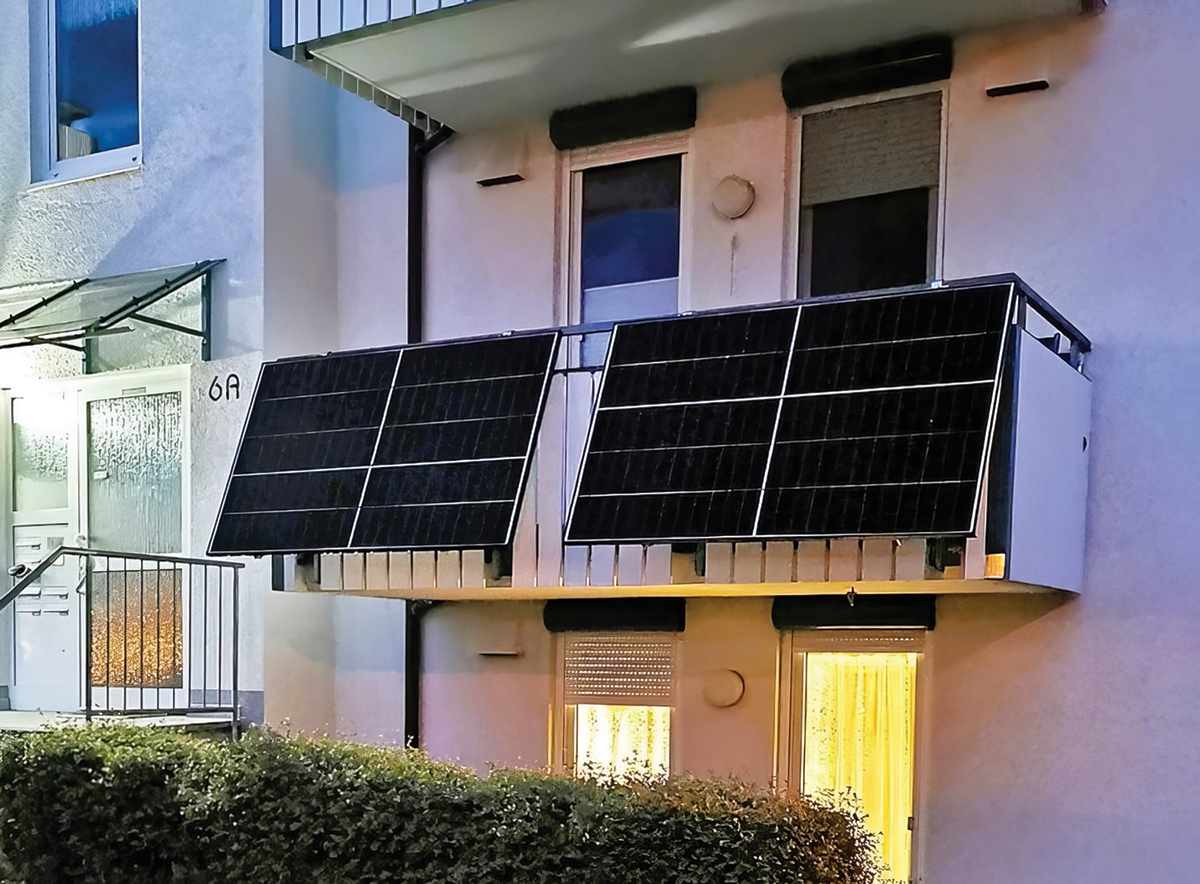
You may have heard about plug-in solar or balcony solar. The appeal is immediate: small panels that plug into a standard wall outlet and start generating electricity — no installer, no permit, no roof access required, and relatively affordable. PBS NewsHour did a segment on it back in December, pointing out that plug-in solar has been widely embraced in Germany, where more than three million households already have these kinds of systems; the image here is of a balcony solar installation in Tauberbischofsheim, Germany (© Andek/Wikimedia Commons). Dave Roberts also covered it in one of his Volts podcasts earlier this year. A growing number of people in the US — particularly renters and condo owners locked out of traditional rooftop solar — are paying attention. So are their state legislators.
The idea is simple and genuinely compelling. A typical system — one to three panels rated up to 1,200 watts — mounts on a balcony railing (or to a structure in a patio in the backyard) and plugs into an outdoor outlet. It won't power your home, but it can meaningfully offset what you pull from the grid for everyday loads like a refrigerator or a few lights. With PSE rates rising, every little bit helps.
Third Act, the national climate advocacy organization founded by Bill McKibben, has made plug-in solar one of its top legislative priorities for 2026 — and the Bainbridge chapter is among those actively exploring the potential of this technology. As Third Act's Campaigns Director Michael Richardson put it, plug-in solar "adds a basic technology to complement residential rooftop solar and utility-scale solar as the most affordable, most reliable, and most expeditious sources for generating electricity."
The national legislative picture is moving faster than most people realize. Utah became the first state to fully legalize plug-in solar in March 2025. Maine, Virginia, Colorado, Connecticut, and Maryland have since followed, and New York's legislature passed the SUNNY Act on May 28 — it now awaits Governor Hochul's signature. Lawmakers in 29 states and Washington DC have now introduced similar bills.
Here in Washington, House Bill 2296 was introduced in the 2026 session but did not pass. It would have prevented HOAs and landlords from banning plug-in systems while setting a 1,200-watt limit per meter. PSE raised concerns during legislative testimony. Advocates expect to introduce new legislation in the 2027-2028 biennium.
Several of the initial safety concerns have now been addressed, including a UL 3700 certification standard for plug-in solar, published in January 2026 by UL Solutions, the century-old nonprofit behind the familiar UL safety mark on consumer products. The standard was developed specifically because plug-in solar is unique: unlike a toaster or a lamp, it both consumes and generates power through a standard outlet, requiring new safety protocols. Third Act Washington notes “By this fall, consumers should be able to buy plug-and-play systems compliant with UL3700. This certification ensures kits automatically cut power in less than a second if unplugged and stop sending power during an outage, protecting utility workers from shock.”
For Bainbridge renters, condo owners, and anyone who can't do rooftop solar, plug-in could eventually be an affordable way to decrease what they are pulling from the grid. Word on the street is that there will be a demo of a plug-in solar system at this year's Rotary Auction in the garden department; there may also be one set up at one of the booths at the July 4th celebration in Winslow. Members of the Solar Collective will be in the vicinity. Come track us down to get a closer look. And we will keep close tabs on safety benchmarks, legislation, and new products. Watch this space.
|