News and information to help journalists serve the public and stay safe.
|
|
The nation’s leading journalism and press freedom organizations today called on law enforcement, mayors and governors across the country to halt the unprecedented assault against journalists in the field covering the protests for social justice.
The following open letter to police nationwide was signed by 18 organizations including:
|
|
More than
three dozen cities have imposed curfew orders
, many without explicit exceptions for news gathering functions, increasing the possibility that journalists could be targeted by police while covering the protests that have erupted nationwide.
It was unclear how many had exemptions for news media, though a spot check of some cities,
such as Cleveland
, showed that journalists had to compel government officials to win access to curfew zones.
In cities with a curfew exemption, what should journalists do to avoid arrest or confrontation with police? If threatened with arrest for a curfew violation, what should journalists do?
Moon
: We are currently advising journalists to adhere to the same guidelines for covering protests in general. Here are some resources, including a
guide
and
tip sheet
.
Some tips from those resources include: finding an attorney ahead of the protest should an on-site situation sour; setting a timer on your phone to remind you to assess the situation; recording any interaction with police; and not consenting if asked for your photos, recordings or notes.
Remember, The Fourth Amendment protects you from unreasonable searches and seizures, so have a statement along the lines of “I’m a journalist, and my equipment and its contents belong to my company. If you want to access it, you will first need to contact their attorney” ready in case your materials are searched.
When cities have ordered curfews without journalism exemptions and journalists get charged, do those charges as a rule typically hold up in court?
Moon
: Thus far, we are not aware of any instances where a curfew order without a media exemption was challenged in court. But we think that a general curfew order that doesn't exempt the press raises significant First Amendment concerns and are working to put out additional resources on this topic.
Do journalists have any legal recourse when they have been hit by police fired projectiles — rubber bullets, flash bang devices, beanbags, pepper bullets and other so-called "less-lethal" weapons?
Moon
: It would largely depend on the specific facts of the case. But, generally, a journalist targeted by law enforcement in the course of legitimate newsgathering (like, documenting policy activity in public places) may be able to recover damages under
42 USC § 1983
(the section of the U.S. Code permitting civil lawsuits for deprivation of rights).
|
|
|
The past three days of protests in cities across the United States have contributed to a concentrated spike in attacks on journalists.
But journalists have covered social upheaval and unrest throughout the history of the U.S., and hostility toward them is hardly new.
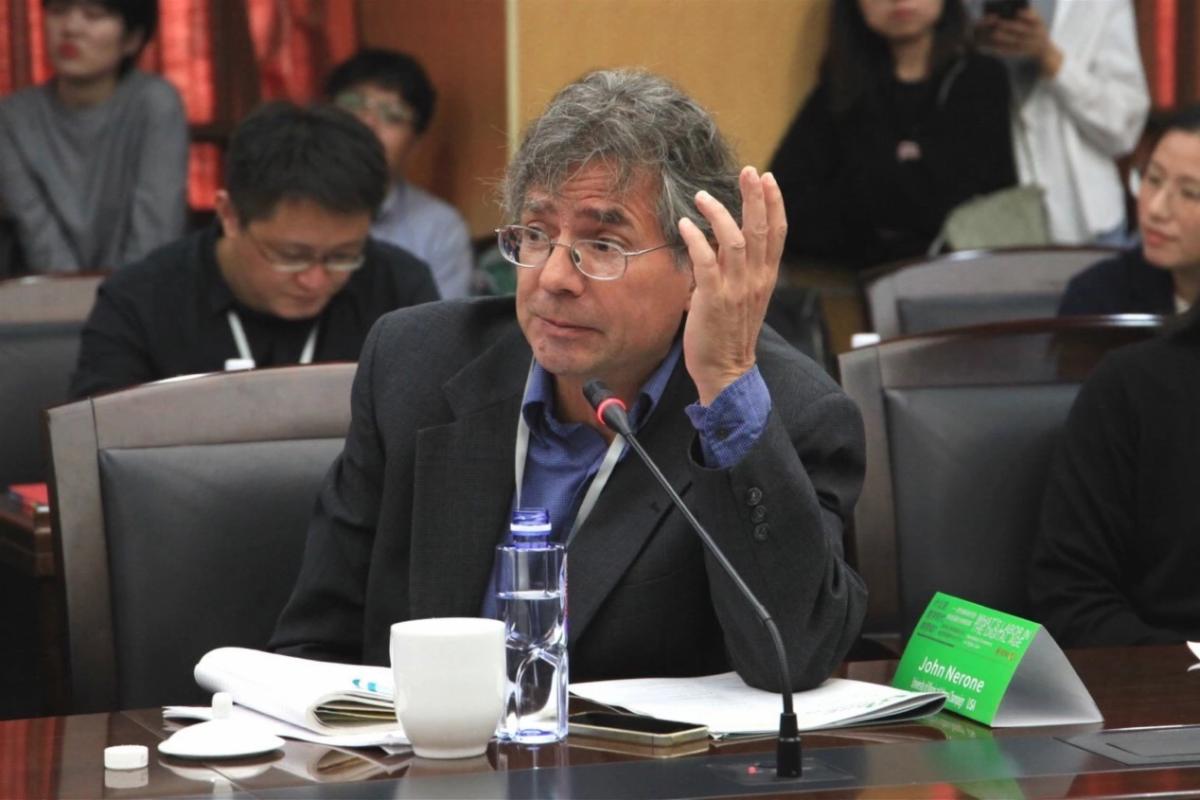
John Nerone
(pictured)
,
author of
Violence Against the Press: Policing the Public Sphere in US History
, has identified more 100 attacks by anti-abolition mobs against publications that opposed slavery.
Nerone finds similarities between the targeting of journalists today and the civil rights movement of the 1960s. He sees a thread connecting them both.
“Hostility is never pleasant, but journalists should recognize it as a feature, not a bug, of their current situation,” he said in an email.
We reached out to Nerone, professor emeritus of journalism at the University of Illinois, to help us place the assaults against journalists and the arrests in a larger, historical context.
Based on your study of history, what is a likely outcome of this period of anti-press sentiment?
Nerone
:
There's a disconnect between how journalists think of press freedom and how ordinary citizens think of it. Journalists think of it as the property of news organizations, who exercise freedom of the press on behalf of the people by providing objective reporting and a neutral forum for competing positions. Ordinary people in the US have never really embraced that position, judging by actions, rhetoric, and polling. They believe in freedom of the press, but think the news media use it for their own purposes — some say commercial gain, some say covert political objectives — and want non-journalists to be able to exercise freedom of the press, too.
What's interesting about today's situation is that there is another layer of mediation between news organizations and people, namely the platforms, and that this is both a layer of control — algorithmic control at least — and a layer of interaction...It was always the case that people disliked the news media but liked their own newspaper; that dynamic is now exponentially increased...
The ultimate outcome might be a zero-sum attitude toward freedom of the press, where more freedom for you is less freedom for me.
What precedent is there for blaming the press for social unrest? What effect does it have?
Nerone
:
The obvious historical parallel is the Civil Rights era. Southern resisters believed that "troublemakers" had gamed the national media, and that unrest in the south was a result of this collaboration between activists and journalists...In the past week's events, the incidents of performing for the media have far outnumbered those of attacking the media, and, just as in the 1950s and 1960s, there is a feeling that the disturbances are the result of outside agitation.
Tangentially, one should note that the disturbances this week would not have occurred without media of a different sort — videos taken by bystanders, uploaded to social media and going viral.
|
|
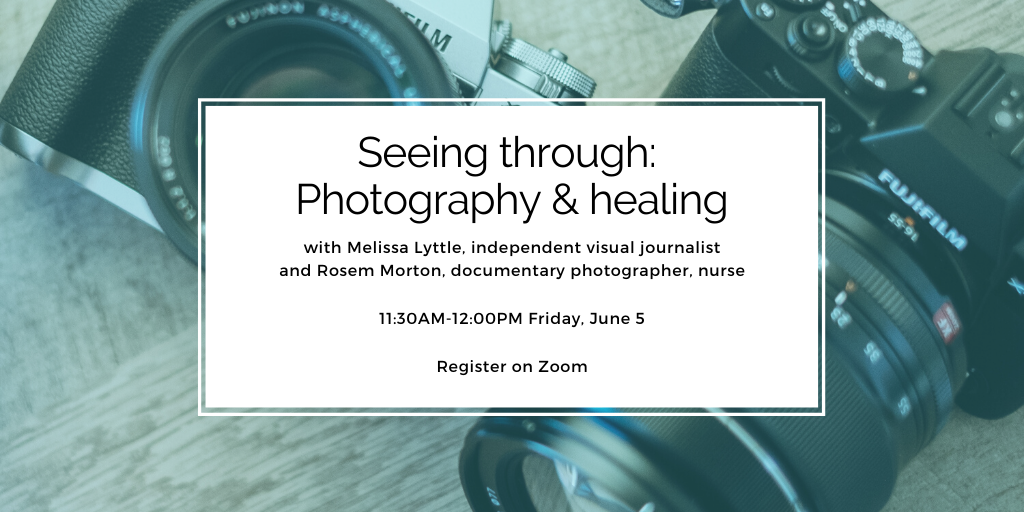
Images take us into hospitals, grocery stores, even empty spaces to show us the impact of coronavirus on the people and places affected by the pandemic. Award-winning independent photojournalist
Melissa Lyttle
and documentary photographer
Rosem Morton
,
who is also a nurse
, will talk about photography, trauma, and healing.
|
|
Guiding a team through
physical and emotional crises
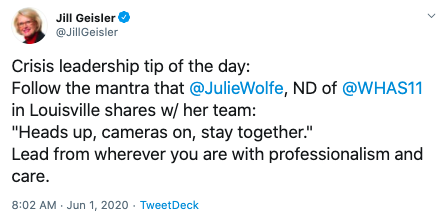
is part of any leader’s challenge. When an incendiary device came through the window of her Louisville, KY, newsroom this weekend, WHAS News Director Julie Wolfe
sprang to action
to ensure her team’s security. Then she praised those who helped.
Advice from
Jill Geisler
, Bill Plante Chair in Leadership & Media Integrity, Loyola University Chicago, Freedom Forum Fellow in Women’s Leadership
|
|
|
The National Press Club Journalism Institute is spotlighting
the next generation of journalists
, students graduating from college or Master’s programs this spring into
a challenging job market
, in hopes they’ll meet future bosses and colleagues here who will reach out and support them in building journalism’s future together.
School
: American University
Location
: Washington, D.C.
Currently
: Social Media Editor, Foreign Policy
Previously
: Intern, U.S. House of Representatives; Video Producer, World Bank
What's been your best moment in journalism?
What's the wackiest story you've worked on?
Kimball
:
The wackiest story I worked on was a video story about
Washington, D.C.'s burgeoning drag king scene
(Yes, drag kings, not queens!). What started off as a story about D.C.'s underreported queer night life turned into a story on the importance of uplifting the stories of folks who identify across the gender spectrum.
|
|
One free way to get support is through an
Employee Assistance Program
. These work-based services are voluntary, confidential and can offer short-term counseling for an employee who may have a personal or work-related problem.
EAP counselors have experience
assisting those affected by grief, stress, psychological disorders, substance abuse, work-life balance, health concerns and more. They also can guide organizations on ways to prevent or cope with workplace trauma and other emergency response situations.
To find out more about how an EAP might help you, contact your Human Resources rep.
|
|
This newsletter is written & edited by the National Press Club Journalism Institute staff: Beth Francesco, Holly Butcher Grant, Jim Kuhnhenn, and Julie Moos.
Send us your questions and suggestions
for topics to cover.
|
|
|
|
|
|
|