March 20, 2026

Facebook  Instagram  LinkedIn  X

With the House on furlough this week, all eyes were on the Senate as it continued debate on the hemp regulations bill. After a lengthy debate lasting past midnight Wednesday, the chamber failed to advance the bill by a vote of 15-25. However, on Thursday a compromise was reached, and the Senate voted in favor of a procedural move that allowed them to give the bill a second reading.  


The Senate also briefly debated the South Carolina Department of Transportation (SCDOT) modernization bill Thursday before quickly adopting two amendments, giving the bill third reading and sending it to the House.  


Finally, the Senate Finance Committee advanced three bills of interest to counties to the floor, and a Senate Judiciary subcommittee continued hearing testimony on one of the data center bills. 


These and other bills of interest are detailed below. 

Upcoming Action Item


Municipal Capital Project Sales Tax


S. 866 would enact the “Municipal Tax Relief Act,” authorizing a municipality located wholly or partially in a county that does not impose a 1% sales tax to impose a 1% municipal sales tax, subject to a referendum. At least 20% of the revenue must be used for property tax relief with the remaining revenue available to be used for transportation, infrastructure, parking lots or garages, core local government services, administration buildings, civic centers, police stations, fire stations, or any combination of the above projects. The tax could be imposed for up to eight years and can be reimposed for up to an additional seven years.  


Status: SCAC’s policy position is to oppose such legislation. The Senate Finance Committee gave the bill a favorable report, and S. 866 is pending second reading on the Senate calendar. 


Cities already help decide which projects are funded by a countywide sales tax. However, there are no provisions in this bill for county participation. Unincorporated area residents who pay sales tax within the city get no vote on the projects being funded by the potential municipal capital projects sales tax. Also, if a municipal sales tax was adopted, the likelihood of getting a countywide sales tax would significantly decrease while the municipal tax is imposed. This could significantly hinder a county’s ability to raise sufficient funds to keep up with growth and fund much needed infrastructure projects.  


S. 866 would create a disincentive for municipalities to support the reimposition of a countywide sales tax that they would otherwise support. The bill could be up for debate on the Senate floor next week. If you have concerns about this bill, please contact your senators and ask them to oppose S. 866! 

State House Sound Bites

“I just want to make sure there’s nothing in here that’s going to require counties to accept roads into their system unless they reach an agreement with DOT.”

– Sen. Brad Hutto of Orangeburg County while discussing the SCDOT modernization bill.  


“That’s correct. There must be mutual consent for a county or municipality to take a state road.” 

–Sen. Sean Bennett of Dorchester County 

Bills of Direct Interest to Counties

Revenue, Finance and Economic Development

SCDOT Modernization 


During last week’s debate of S. 831, the comprehensive SCDOT modernization bill, the Senate adopted—at SCAC’s request—the committee amendment clarifying that the transfer of roads from SCDOT to counties must be agreed to by mutual consent (an SCAC policy position) and removing the requirement that any roads transferred to counties always be maintained in good condition under SCDOT’s standards. The amendment also creates a pothole remediation program, to allow residents to report potholes to SCDOT through a mobile app or website and directs $15 million from the General Fund to pay for this program. Lastly, the amendment exempts certain purchases for road construction projects from the procurement code. 


Status: The Senate adopted an amendment to abolish the current county transportation committees (CTCs) and require the legislative delegation to appoint the members. The legislative delegation may devolve the authority to appoint the members of the committees to the governing body of the county, but the devolution may be reversed by resolution at any time. The Senate also adopted an amendment that if local money is used to fund a project to improve the state highway system and is on the SCDOT priority list, SCDOT must reprioritize the next project within that county that is also on the priority list. The Senate then gave S. 831 a third reading, sending it to the House. 


If your county council serves as your CTC, the amendment above might compromise the composition of your committee. If you are concerned about the above amendment, please reach out to your House members.  


Auditor Qualifications 


S. 98, an SCAC policy position, would require that to be eligible to serve or continue to serve as the county auditor, a person must: 

  1. be a citizen of the United States and of South Carolina; 
  2. be a qualified elector of the applicable county; 
  3. have: 

a) a four-year bachelor's degree in accounting, finance, or economics from an accredited post-secondary institution; or 

b) at least four years' experience: 

i) in the field of accounting or auditing; 

ii) as an employee in an auditor office in this state; or 

iii) as an auditor in South Carolina. 


Status: The Senate Finance Committee adopted a subcommittee amendment, requested by SCAC and many county auditors, to add a grandfather clause and require each auditor to complete a 40-hour training program each year or risk forfeiting their salary supplement. The bill is pending second reading on the Senate floor. 


Treasurer Qualifications 


S. 97, an SCAC policy position, would require that to be eligible to serve or continue to serve as the county treasurer, a person must: 

  1. be a citizen of the United States and of South Carolina; 
  2. be a qualified elector of the applicable county; 
  3. have: 

a) a four-year bachelor's degree in accounting, finance, business administration, or economics from an accredited post-secondary institution; or 

(b) at least four years' experience: 

i) in the field of accounting, financial management, financial reporting, budgeting, or economics; 

ii) as an employee in a treasurer office in this state; or 

iii) as a treasurer in South Carolina. 


Status: The Senate Finance Committee adopted a subcommittee amendment, requested by SCAC and many county treasurers, to add a grandfather clause and require each treasurer to complete a 40-hour training program each year or risk forfeiting their salary supplement. The bill is pending second reading on the Senate floor. 


Tax Conformity  


H. 3368 would conform the state tax code with any changes to the federal tax code and update the reference year to 2025, to include overtime pay and certain bonus pay from gross income.  


Status: The Senate Finance Committee gave H. 3368 a favorable report, and the bill is pending second reading on the Senate calendar. 


American and South Carolina Flags 


H. 3514 would require state departments, agencies, institutions, or political subdivisions, including school districts to only purchase United States and South Carolina flags that are 100% manufactured or produced in the United States. Entities may continue to use the previously purchased flags until a replacement flag is necessary. 


Status: The Senate Finance Committee gave H. 3514 a favorable report, and the bill is pending second reading on the Senate calendar. 

Land Use, Natural Resources and Transportation

Data Centers


S. 902 would create a regulatory framework under the Public Service Commission for permitting and siting requirements that data centers must meet to locate in South Carolina.  


Status: A Senate Judiciary subcommittee continued hearing testimony for S. 902 on Tuesday. The subcommittee heard from energy producers and stakeholders concerned about water usage; however, no action was taken on the bill. Please contact SCAC staff if you would like to speak at future data center meetings. 


Roadside Markets


H. 5097 would allow a roadside market where a farmer sells to the public products produced on their farm without being subject to local government stormwater regulations, stormwater permitting requirements, and local building codes. This includes permitting, inspection, and construction requirements otherwise applicable to commercial or retail structures. The House adopted an amendment requested by SCAC and the Municipal Association of South Carolina to require farmers to operate the roadside market on property that they own or lease and to provide immunity to counties and cities in the event an injury to person or property occurs at a market that is exempt from inspection or permitting.  


Status: At a Senate Judiciary subcommittee meeting, SCAC thanked the sponsor of the bill for working with us on the immunity amendment but relayed that we still have concerns over the bill. The subcommittee gave the bill a favorable report, and the bill will be on the next full committee’s agenda. 


Protection of Monuments and Memorials 


S. 508 would prohibit a local government from relocating, removing or disturbing certain monuments and memorials. Any county or municipality that violates the prohibition would lose all disbursements from the Local Government Fund (LGF) until the violation is corrected. Last week, a Senate Finance subcommittee amended the bill to remove the LGF penalty and narrow where monuments can be put back or transferred. 


Status: The Senate Finance Committee adopted the subcommittee amendment and a technical amendment before giving the bill a favorable report, as amended. S. 508 is pending second reading on the Senate calendar. 


Utility Relocation During Transportation Projects 


H. 3768 would extend the sunset provisions relating to transportation improvement projects in Act 36 of 2019 from July 1, 2026, to July 1, 2031. This act sets forth a system of cost-sharing for relocating utilities during transportation projects. 


Status: The Senate Finance Committee gave H. 3768 a favorable report, and the bill is pending second reading on the Senate calendar. 


HOA Changes 


S. 903 would require certain homeowners' association documents to be subject to Section 30-5-30. This is an SCAC policy position.  


Status: A Senate Judiciary subcommittee gave S. 903 a favorable report after noting that work needs to be done on the bill before full committee.  

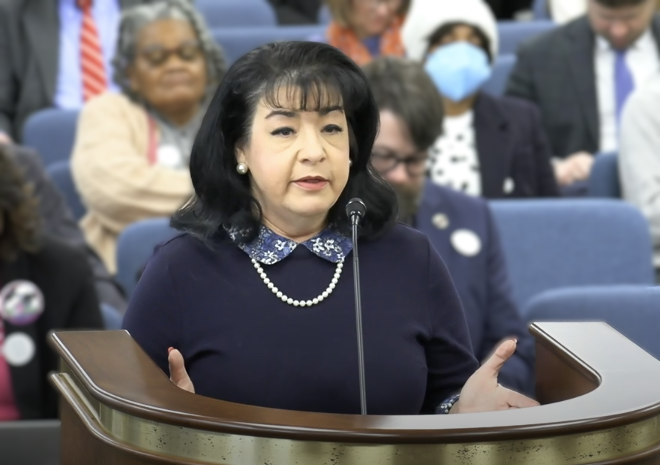
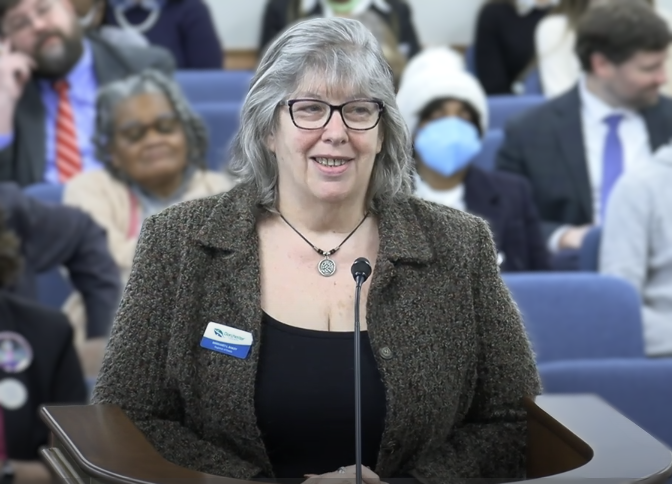
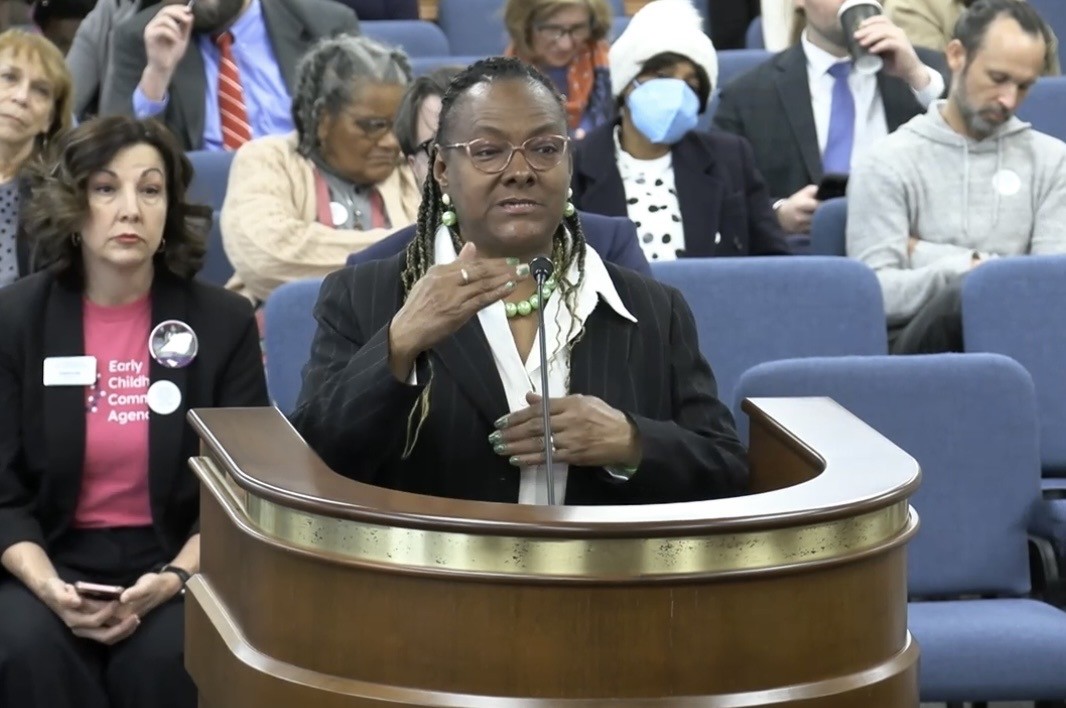
Aiken County Register of Deeds Julie Stutts and Dorchester County Register of Deeds Margaret Bailey testify at a Senate Judiciary subcommittee hearing on a bill about home owners' association documents.

Coastal Permitting 


H. 3931 would set timelines for the South Carolina Department of Environmental Services (DES) to act on certain permit applications within the coastal zone and critical areas. Under the bill, DES must act on a permit application within 90 days after the request is determined by the department to be administratively and technically complete. Additionally, if DES requests additional technical information from the applicant, the request must be made within 15 days after the conclusion of the public notice period. DES also could hire a qualified third-party or independent engineer to assist the department in processing permit applications in coastal zones. 


Status: The Senate Medical Affairs Committee gave H. 3931 a favorable report as amended, and the bill is pending second reading on the Senate calendar. 

Public Safety, Judicial and Corrections

Interference with Critical Service Workers 


S. 808 would classify the harassment or threat of a worker restoring critical services during a state of emergency (electric and gas, water and sewer, road and highway repair, telephone or cell, satellite or internet, or other services necessary for home and commercial properties) as a misdemeanor and tampering with an electric utility system or assault or endangerment of a worker restoring critical services as a felony.  


Status: The Senate adopted the committee amendment to remove other services necessary for home and commercial properties from the list of critical services and gave the bill a second reading on Tuesday, and it is pending third reading on the Senate calendar  


Medical/Mental Health Patient Transport 


S. 299 would extend the transportation deadline for a mentally ill individual to three days after conditions are deemed safe for transport, in the case of a natural disaster or some other life-threatening condition. The bill also would allow a friend or relative to transport a mentally ill patient based on circumstances. Finally, the bill would provide immunity from civil liability for a law enforcement officer, an emergency medical technician, the certifying physician or a third party meeting the minimum standards of the Department of Behavioral Health and Developmental Disabilities. 


Status: The Senate Medical Affairs Committee carried over S. 299 for additional work regarding the minimum standards that must be met to qualify for immunity under the bill. 


Seizure First Aid Pamphlets 


S. 935 would require state agencies and branches, counties, and other political subdivisions to post a pamphlet on rendering seizure first aid to those who have suffered a seizure in the workplace. The Department of Public Health must create this informational pamphlet and post it on its website for use by the above agencies. 


Status: The Senate Medical Affairs Committee gave S. 935 a favorable report, and the bill is pending second reading on the Senate calendar. 


Ejectment of Squatters  


H. 3387 would provide a procedure to eject someone who illegally occupies another person’s home, commonly known as squatting. It would allow the lawful owner of the property to file a petition with the clerk of court or chief magistrate of the county in which the property is located. The bill would allow the property owner to request a sheriff’s presence while they change the locks and remove the squatters’ belongings. The sheriff could charge a reasonable fee for this service. The bill would provide immunity to the sheriff for any damage or destruction of the squatters’ property. A person who is wrongfully removed under these provisions would be able to bring a civil action to regain access to the property and be awarded damages and court costs. The bill also would allow an authorized agent or personal representative of the property to file the petition for ejectment and permit a constable to enforce an ejectment order.  


Status: After testimony from several county clerks of court, a Senate Judiciary subcommittee amended the bill to remove the clerks of court from the ejection process and gave the bill a favorable report. H. 3387 will be on the next full committee’s agenda. 

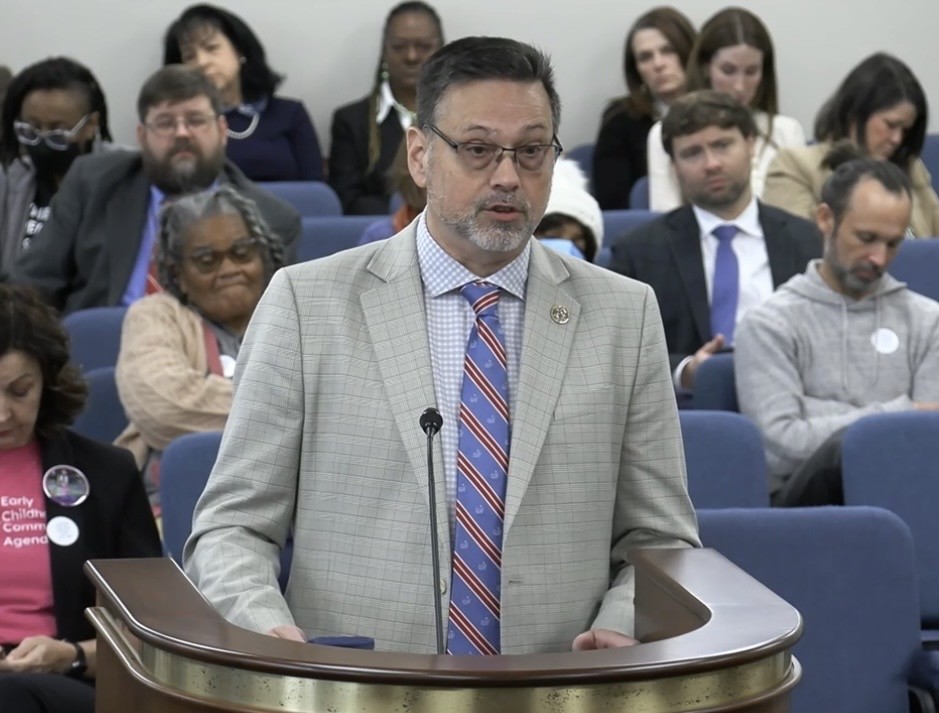
Edgefield County Clerk of Court and Register of Deeds Charles Reel and McCormick County Clerk of Court and Register of Deeds Gwendolyn Chiles testify at a Senate Judiciary subcommittee hearing on a bill about the process of ejecting squatters from property. Other county officials who attended the hearing included Lexington County Register of Deeds Tina Guerry and Union County Clerk of Court Stephanie Kitchens.

County Government and Intergovernmental Relations

Hemp-Derived Products 


H. 3924 would make it unlawful for a person under 21 to possess or consume hemp-cannabinoid (hemp) products, such as gelatin chewables (gummies) and drinks. The bill bans on-premise consumption of hemp products at bars and restaurants. The bill also sets out requirements for manufacturers and wholesalers of hemp products operating in South Carolina.  


The Senate adopted several amendments on Wednesday including one to provide that hemp beverages that contain 5 milligrams or less of THC concentration in a single serving in a 12-ounce container will be treated in the same manner as beer and wine and may be sold at retail establishments, excluding those retailers with the primary purpose of selling tobacco products. Hemp beverages that contain between five and 10 milligrams and hemp gummies with up to 10 milligrams of THC concentration (maximum of four chewables per package) will be treated in the same manner as alcoholic liquor and must be sold at liquor stores. Another amendment makes it unlawful for a retailer to deliver hemp beverages directly to a person’s residence. An additional amendment makes it unlawful for individuals to drive a motor vehicle with the presence of five or more nanograms per milliliter of delta-9 THC or THC analogue in their blood and sets out penalties for violations.  


Finally, an amendment requires a law enforcement officer who is Class 1-LE certified in South Carolina to complete Continuing Law Enforcement Education Credits in drug impairment recognition each year of a three-year recertification period. 


Status: On Thursday, senators proposed an in-depth compromise agreement in a last-ditch effort to

advance the bill. In addition to the above outlined provisions, the Thursday amendment, among other things:  

  • Outlines the application process for retailers to get a permit to sell hemp beverages and hemp gummies; and 
  • Allows local governments to hold a referendum for allowing retail stores to sell the five milligram or less hemp drinks on Sundays. 


The Senate then gave H. 3924 a second reading, and the bill is pending third reading on the Senate calendar. 


Joint System Governance 


S. 829 would allow joint water and wastewater systems to use weighted voting, create member- or governor-appointed commissions with county legislative delegation recommendations, and add a governor-appointed tie-breaking commissioner when needed. The bill also would establish eligibility and conflict of interest rules, require automatic forfeiture for disqualifications or certain convictions, and allow commissions to adjust as new members join. The bill also would permit system reconstitution while protecting existing contracts and strengthening bond security by extending member payment obligations to match the term of issued debt. A Senate Judiciary subcommittee adopted an amendment to centralize financial authority at the commission level to make it easier for a governor-appointed board to issue bonds without local government approval. 


Status: The Senate adopted the committee amendment and gave S. 829 second and third readings, sending the bill to the House. 


American Heroes Bingo 


H. 4137  would create a new class of bingo license, Class G, for veterans’ organizations operating an American Heroes Bingo Game, which costs $1,000 per license. This bill also creates guidelines for the American Heroes Bingo Game and adds definitions. This bill specifies that 15% of the monthly net hold derived from American Heroes Bingo, which is total revenue paid by players less any prizes, must be paid to the Veterans’ Trust Fund. In addition, 10% percent of the monthly net hold must be distributed equally to the South Carolina state headquarters of the American Legion, Veterans of Foreign Wars, and Disabled American Veterans. Other chartered Veterans’ Service Organizations with membership over 4,000 also may submit a claim for the proceeds from American Heroes Bingo.  


Status: The Senate Finance Committee recommitted the bill to subcommittee over concerns from several members. 


Hospital Beds 


S. 958 would create building and fire code exceptions for the placement of hospital beds in hallways during emergencies.  


Status: The Senate Medical Affairs Committee gave S. 958 a favorable report, and the bill is pending second reading on the Senate calendar.  


Rural Emergency Hospitals 


S. 895 would include within the definition of “hospital” all hospitals that convert to rural emergency hospitals for purposes of the State Health Facility Licensure Act and Medicare reimbursement. These hospitals provide outpatient/emergency services but do not maintain inpatient units. 


Status: The Senate Medical Affairs Committee gave S. 895 a favorable report, and the bill is pending second reading on the Senate calendar. 

Other Statewide Bills of Interest

Underground Storage Tank Laws/Pipelines 


S. 893 would align federal and state standards and provide clear, consistent criteria for identifying and counting the underground storage tanks subject to oversight by DES. The bill also would increase the maximum reimbursement for qualifying cleanup costs resulting from a petroleum release from an underground storage tank from $1 million to $2 million and restore $1 million to the State Underground Petroleum Environmental Response Bank (SUPERB) financial responsibility fund, commonly known as the cleanup fund. In addition, the bill would change the annual renewal fee and add a member to the SUPERB Advisory Committee, requiring that the appointee be an underground storage tank owner. The Senate Medical Affairs Committee adopted a technical amendment and gave S. 893 a favorable report as amended. The bill is pending second reading on the Senate calendar. 

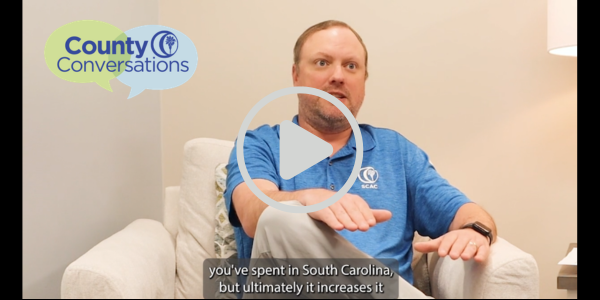
County Conversations: Catch Analysis of the House Budget

In our newest County Conversations video, Governmental Affairs Director Owen McBride walks through how the House version of the state budget impacts counties and highlights the other bills that matter most to you.


Our team is hard at work at the State House tracking legislation, protecting county interests and keeping you informed every step of the way.

Newly Introduced Legislation

See below links for summaries of legislation introduced or ratified this week.


Senate Bills


Ratifications


View/Download Full Text for Newly-Introduced Legislation


You can also go to www.scstatehouse.gov and click on "Legislation," then "Introduced Legislation."


Note: If you would like to offer comments to the SCAC staff, please call us toll-free at 1-800-922-6081, fax to (803) 252-0379, or send an email.

X Share This Email
LinkedIn Share This Email