Weekly Digest Number 39 - September 27, 2022 |
|
Welcome to the RWU Rail & Labor News! This news bulletin is produced and emailed out each Tuesday morning. We hope you find each week's news and information useful. If so, please share with co-workers, friends, and colleagues. If you like, you can sign them up to get all the news from RWU HERE. Or forward them the link. Note: If you read over this news bulletin each week, you will be sure to never miss the important news of what is going on in the railroad world from a worker's perspective!
|
|
(Editor's Note: This article and another further down are from Jordan Barab, who formerly served as the OSHA Deputy Assistant Secretary of Labor for Occupational Safety & Health. Barab spoke at the RWU Convention in Chicago in 2018. He does the excellent worker safety blog called Confined Space, a newsletter of workplace Safety and Labor Issues.)
|
|
Does this seem like a good way to attract loyal, dedicated, satisfied workers?
Come work for the railroad. It’s a great job, decent pay. Hours may be a bit long. You’ll spend weeks at a time away from home in cheap motels and miss important family events, kids sports games, birthdays, recitals and vacations, weddings and funerals. You can get called up at any time, so don’t even try to make plans. Stay healthy because you’ll be punished or even fired for an unexpected medical event. Also, great pension…if you live that long.
Aaron Hiles, a locomotive engineer, told his wife he “felt different,” though he couldn’t say exactly how. He made an appointment to see a doctor, his family said. But then his employer, BNSF, one of the largest freight rail carriers in the nation, unexpectedly called him into work.
Failing to show up would invite penalties under a new attendance system BNSF had adopted just a few months earlier, a policy that unions have decried as the strictest in the nation. So Hiles, 51, delayed his doctor’s visit, his family said, and went into work.
A few weeks later, on June 16, Hiles suffered a heart attack and died in an engine room on a BNSF freight train somewhere between Kansas City, Mo., and Fort Madison, Iowa — a tragedy that helped fuel a labor standoff that last week nearly shut down the U.S. economy.
It was the railroads’ cruel attendance policies that almost led to a nationwide rail strike last week before a last-minute tentative agreement was reached with President Biden’s intervention.
And as Hiles’s death showed, the policy isn’t just stressful, it can also be deadly.
“This policy is pretty cruel. Everybody is worried about points,” said Joel Dixon, a BNSF conductor and Hiles’s best friend of more than two decades. “It’s always a question whether Aaron would still be around if he made that doctor’s appointment. Him and I talked every day. We were brothers.”
The rail companies defend their policies arguing that they are “committed to working with employees when ‘extenuating circumstances’ arise but that the points-based policies are necessary to keep the trains running during a challenging worker crunch.
Points-based attendance policies date to 2020, when Union Pacific, one of the country’s largest carriers, rolled out new rules to help ensure staffing during the pandemic. Under these policies, employees are granted a certain number of points, which are deducted when they miss a request to come into work or call out of work unexpectedly. If their point totals fall too low, penalties can apply, up to and including termination.
BNSF adopted its own points-based attendance policy in February 2022. Unions called BNSF’s policy “the worst and most egregious attendance policy ever adopted by any rail carrier. BNSF said that the policy was implemented to “incentivize consistent and reliable attendance” amid increased demand for smooth-running services. Employees can gain points by agreeing to be on call for 14 days straight.
Just missing a phone call from BNSF to come into work results in a 15-point deduction, BNSF confirmed. Many conductors and engineers live in rural parts of the country with limited cell service. Once called, workers have 90 minutes to two hours to report to work, regardless of the time of day and how far they live from their station. Failing to show up for work on weekends, holidays and other “high impact” days, such as Super Bowl Sunday and Mother’s Day, result in the largest deductions.
Remember that these are the same companies who argue that the best way to ensure worker safety is to illegally punish them when they get injured on the job. In 2015, for example, OSHA fined Union Pacific Railroad $350,000 for disciplining a locomotive engineer for reporting workplace injury. Since 2001, the company had faced more than 200 whistleblower complaints nationwide.
|
|
(Editor's Note: You certainly will never see the mainstream corporate press - CNN, Fox, NBC, etc - print such an article, one that suggests the industry - rather than its exploited and exhausted workers - would be to blame if a railroad shutdown had taken place.) |
|
Railroad Companies Almost Inflicted an Economic Disaster on the U.S. |
|
What was missing from these headlines? The actual reason for the conflict between railroad workers and their employers. The potential strike or lockout was not because of any dispute over pay, but because of inhumane attendance policies that currently mean railroad engineers and conductors are either working or “on call” 90 percent of the time. When they’re on call, they can be summoned to work on two hours’ notice or less, and then may be away from home for days at a time. Workers report that they have no sick days, paid or unpaid. If they have to take time off unexpectedly, even because of illness, they lose points in a convoluted, points-based attendance system. That means workers are at risk of being disciplined or fired for getting sick, going to a doctor’s appointment or a family funeral, or for any other absence that can’t be planned far in advance.
As railroad worker Hugh Sawyer told the American Prospect, this meant that on his 65th birthday this year, he got home at 7:30 in the morning after working 12 hours the day before, slept for five hours, and then spent the day refreshing his computer to see if he was being called back to work. Another worker, describing the onerous requirements for scheduling off-time in advance, wrote on Facebook, “How do you schedule a funeral in October if it’s only February?” He also noted that he gets 30 days fully off for the entire year, no weekends. And the wife of an engineer told Vice, “They go to work sick, they miss funerals of loved ones, they miss final goodbyes to parents on hospice, they miss holidays, birthdays, all of it.”
|
|
(Editor's Note: As mentioned above, this article is also from Jordan Barab who formerly served as the OSHA Deputy Assistant Secretary of Labor for Occupational Safety & Health.) |
|
And we have an agreement….
I was over at the Department of Labor building yesterday and there were paper signs taped up all over the 2nd (Executive) floor directing outside visitors to various hard-to-find conference rooms. For those who can read the tea leaves in the Frances Perkins building, this was a sure sign that there were unfamiliar people in the building attending a whole lot of meetings, or in this case, negotiations. And indeed, the visitors were the rail unions and the rail company overlords who were feverishly meeting in an attempt to reach a last minute settlement that would avoid a crippling nationwide rail strike.
Pending ratification of the agreement by union members, the negotiations seem to have borne fruit, although is too early to tell whether the agreement reached last night will be enough to satisfy union members when they go to the polls to vote on the agreement. According to the Washington Post, “Union leaders had pushed for 15 days of paid sick leave, but the proposed deal landed on just one day. The White House and union leaders emphasized that the agreement wins concessions that removes penalties for missing time due to an illness or medical emergency.” But in any case, there is no doubt that finally, after years of negotiations, workers’ concerns seem to have been heard. But will it be enough for ratification?
And what lessons have we learned so far from this affair?
Bad Reporting and Good Reporting
One good thing about the frenzy of anticipation over the last few days is that, in addition to news articles that focused only on the political and economic implications of a strike, a few writers (in addition to the Confined Space team) emerged that covered the actual issues that were important to rail workers, and even some interviews with workers themselves.
|
|
(Editor's Note: RWU has not issued a call to Vote No on the TAs of the operating craft unions as of yet because it remains unclear was agreed to at this time. See next article. Like the others, RWU will weigh the pros and cons of these as more info comes available. And like anybody at that time, we may suggest a Yes or No vote, or choose to remain neutral.) |
|
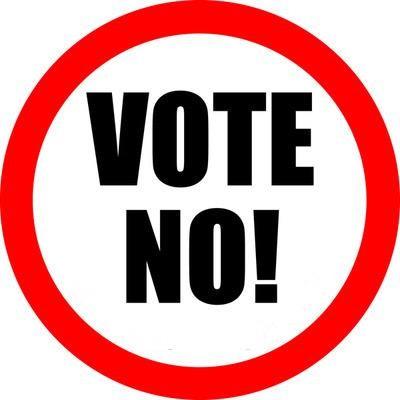
RWU Continues to Urge Rail Workers to Vote No! on PEB-Based Contracts |
|
On August 31st, after a 2 week review of the PEB #250, and after a survey revealed the degree of discontent among the rank and file, RWU opted to urge our fellow workers to Vote No on contracts that were based strictly upon the recommendations of the PEB, as we see this as a concessionary contract, especially given the circumstances. This was supposed to be our time to win something for a change. Conditions were in our favor, and then came the PEB.
|
|
Vote on Rail Labor Deal Awaits Final Contract Language |
|
WASHINGTON — Ratification of the tentative agreement between railroads and a dozen unions remains in limbo while final contact language is being formalized, according to a message from one of the operating unions to its members.
A final version of the tentative agreement not expected until sometime this week at the earliest, the International Association of Sheet Metal, Air, Rail, and Transportation Workers-Transportation Division (SMART-TD) said in its Friday message.
“Anyone who states that they have seen a final copy of the TA [tentative agreement], have a copy of the final TA, or knows the final contents of the agreement is not being truthful,” the union wrote. “The final documents have not been fully reviewed by both parties’ legal counsel as is required before it can be presented to the SMART-TD District 1 General Chairpersons, nor has it been distributed to officers or membership.” Information will be released to members following that presentation to chairpersons, according to the statement.
The website Labor Notes reports two unions, the Brotherhood of Maintenance of Way Employes Division and the Brotherhood of Railroad Signalmen, are prepared to mail ballots and begin voting as of Tuesday, Sept. 20, with a vote count scheduled for Oct. 10.
|
|
(Editor's Note: Our good friends at Teamsters for Democratic Union - TDU - penned this piece.) |
|
Taking on the Bosses' Blame Game: Rail Edition |
|
Whenever a strike is on the table, Corporate America reaches for the same PR playbook. They tell the public how union members are overpaid and a strike would devastate the economy. We can beat these tactics. Here’s how.
For the past week the national press has been sounding the alarm bell that a rail strike would be an economic disaster, costing $2 billion a day. Here are three lessons Teamster members can take from how rail workers fought back.
1. Take Your Issues to the Public
Rail workers built their leverage by taking their issues to the public. They exposed the insane scheduling, work hours, and attendance policies that make it impossible for them to lead normal lives or take time off when they’re sick or have a family emergency.
2. Put the Blame Where it Belongs
Rail workers made sure the public knew about the the carriers’ record profits. They put the blame where it belongs–on the companies–for risking a disruption to the economy instead of negotiating a fair contract.
3. Be Ready to Strike
Rail workers stood united and ready to fight. The Railway Labor Act interferes with union members’ right to strike in the rail and airline industries. This is an important obstacle Teamsters at UPS won’t have to deal with next year.
|
|
(Editor's Note: If the contracts with train and engine service unions are agreed to as written, it seems unlikely that the staffing crisis will ease anytime soon. Shippers could be in for a nasty next couple of years as a result. If they were not mostly powerful anti-union/anti-worker employers in their own right, the shippers should be on the side of the trainmen and engineers!) |
|
Shippers Want Rail Service Reform Even if Unions Ratify Contracts |
|
While rail shippers are greatly relieved that last week’s potential strike was averted after two of the biggest rail unions reached a tentative agreement with U.S. freight railroads for a new contract, shippers are still wary about whether ratification of the agreements will improve service.
“I don’t want everybody to think now that we’ve solved this labor issue, we’re done,” Rob Benedict, vice president of petrochemicals and midstream for the American Fuel & Petrochemical Manufacturers, told FreightWaves. “The issues that we’re feeling based on PSR [precision scheduled railroading, an operating method used by the Class I railroads to streamline operations] are going to remain even with a new deal there.
“There have been a lot of rail shippers coming out and saying, ‘Great that we solved this and we’re glad, but the work’s not done and we’re still in the middle of a supply chain crisis.’”
One of the big concerns is whether the tentative agreements will be enough to retain the existing unionized workforce, some of whom feel that PSR has stretched them too thin.
Another is whether the railroads will be able to find all the additional workers necessary to ensure network capacity and meet service needs. That could be a challenge, not only because of the difficulty in finding qualified workers but also because of work-life balance issues that the labor negotiations spotlighted. The tentative agreements have started to address those lifestyle issues through adjustments in attendance and sick leave policy, but some railroaders question whether more needs to be done.
|
|
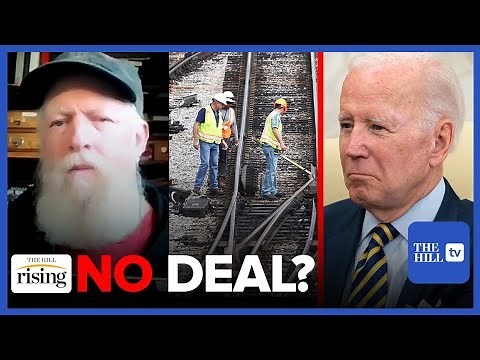
(Editor's Note: RWU Organizer Ron Kaminkow and The Real News Chief Max Alvarez join the co-hosts of The Hill's Rising morning show last Tuesday to chat about the TA and the wave of rail worker discontent.)
|
|
Biden's Railroad Worker Agreement DOOMED? Union Organizer Calls Proposal 'DISINGENUOUS'
|
|
Editor-in-chief of The Real News, Max Alvarez, and general secretary at Rail Workers United, Ron Kaminkow, discuss whether a rail strike has been truly averted. #Railroad #Union #Strike About Rising: Rising is a weekday morning show with bipartisan hosts that breaks the mold of morning TV by taking viewers inside the halls of Washington power ...
|
|
(Editor's Note: All of the stupid, short-sighted things that PSR has wreaked upon the industry - 3 mile long trains, mass layoffs and job cuts, exhausted crews, sidelined locomotives, limited industrial switches, differed maintenance and lots more - will hopefully soon be reversed, like we are seeing with the reopening of a number of vital hump yards.) |
|
Major Shipper Says Reopening of Hump Yards has Helped Improve Rail Service |
|
PITTSBURGH — Service on the big four U.S. Class I railroads is improving slowly but remains uneven amid ongoing and sporadic crew shortages, shippers said this week at the North East Association of Rail Shippers conference.
One thing that’s helped improve service is the resumption of hump operations at several yards over the past few months, says Eric Monger, vice president of KBX Rail, the logistics arm of the Koch Industries conglomerate. KBX ships more than 180,000 carloads annually of everything from lumber and toilet paper to diesel fuel and anhydrous ammonia.
“Bringing these operations back online has really helped to move freight, and I’m thankful to the Class I’s for being able to do that,” Monger says. “I know that putting cars over the hump in manifest service is certainly not as glamorous as things like intermodal or unit trains.”
But carload is here to stay, Monger says, due in part to interest in onshoring or near-shoring of manufacturing from China and elsewhere in Asia.
Norfolk Southern resumed hump operations at its yards in Macon, Ga., and Bellevue, Ohio, this summer as part of its updated operating plan. Union Pacific has reopened the eastbound hump at Bailey Yard in North Platte, Neb., and resumed hump operations at Davidson Yard in Fort Worth while construction is under way on an intermodal terminal expansion at its yard in West Colton, Calif.
The railroads had idled the humps as part of their shifts to operating models based on the principles of Precision Scheduled Railroading. NS has said volume changes justified reopening the humps, a move that also helps free up yard crews for use elsewhere.
Railroads need to transform yard concepts to help make service more resilient when disruptions hit, Monger says. One would be classification yard innovation that would maintain their throughput as volume levels fluctuate. “We say it’s either a hump yard or it’s a flat switching yard,” he says. “Well, why can’t it be both? Let’s figure that out.”
|
|
(Editor's Note: UK rail workers plan to turn up the heat. They have carried out a successful strike wave this summer with broad labor and public support. Other workers in other unions and sectors are inspired by the rail workers' actions and are calling for actions of their own, possibly in coordination as a generalized strike of millions.) |
|
Strikes Could Bring UK Railways to a Standstill |
|
London (CNN Business)Labor unions in the United Kingdom offered the country a brief respite from a wave of strike action during the period of national mourning for the late Queen Elizabeth II.
Now, one day after the monarch's funeral, strikes are back on as workers press their claims for better pay and conditions and annual inflation hovers around 10%.
Earlier this month, rail and postal worker unions paused plans to walk out over demands for higher pay in the wake of the Queen's death.
The National Union of Rail, Maritime and Transport Workers (RMT) said Tuesday that more than 40,000 workers spanning 14 train operators and Network Rail, the owner of the national railway infrastructure, would strike for 24 hours starting on October 1 in a dispute over pay, job security and conditions.
The RMT said the action — which will coincide with separate strikes by other rail staff and bus workers — would bring Britain's railways to an "effective standstill."
"Transport workers are joining a wave of strike action on October 1st, sending a clear message to the government and employers that working people will not accept continued attacks on pay and working conditions at a time when big business profits are at an all-time high," RMT general secretary Mick Lynch said in a statement.
Since June, RMT members have walked out for a total of six days over the same demands, joining thousands of UK workers — including journalists, lawyers and call center workers — who have downed tools as they struggle with the worst cost-of-living crisis in decades. Average wages have failed to keep pace with soaring consumer price inflation, which stood at 9.9% in the year to August.
More strikes could be on the way this fall, threatening unprecedented disruption across a range of industries. Teachers, doctors and nurses are set to vote on strike action in the coming weeks. More unions could even coordinate their walkouts. Unite and Unison — the country's biggest unions with 2.7 million members in total — are calling for others to join them in synchronized action.
|
|
(Editor's Note: It is certainly debatable if 0.5% represents a "surge." We would speculate that part of these positive sounding figures could be the result of existing employees hanging in there to collect their backpay lump sums - take the money and run - once the contract is signed and the backpay delivered. Time will tell on that one ...) |
|
Class Is Log U.S. Employment Surge for August |
|
Class Is employed 117,014 workers in the United States as of mid-August, a 0.52% increase from July’s employment level and a 2.26% increase year over year, according to Surface Transportation Board data.
All but one out of six employment categories registered month-to-month increases. They were: transportation (train and engine), up 1.05% to 48,760 workers; transportation (other than train and engine), up 0.96% to 4,716; executives, officials and staff assistants, up 0.79% to 7,900; maintenance of equipment and stores, up 0.5% to 17,410; and maintenance of way and structures, up 0.07% to 28,437.
The one category that logged a month-to-month decrease was professional and administrative, which fell 1.15% to 9,791 employees.
Year over year, five of the six categories posted increases: executives, officials and staff assistants, up 8.65%; transportation (train and engine), up 3.5%; transportation (other than train and engine), up 1.22%; maintenance of equipment and stores, up 1.19%; and maintenance of way and structures, up 0.36%.
As of mid-August, the workforce for each Class I in the United States was: BNSF Railway Co., 35,572 people; Union Pacific Railroad, 32,604; Norfolk Southern Railway, 19,070; CSX, 17,675; CN, 6,333; Kansas City Southern, 2,913; and Soo Line (part of Canadian Pacific), 2,847.
|
|
(Editor's Note: Even the coal companies - long the rail industry's bread and butter - are squawking about the lousy service. Coal?! That's right. Volume is up 3.5% year-over-year. And as we know, the rail industry can no longer respond to such "dramatic" increases in demand upon their fragile PSR systems. We are moving less freight overall compared to 16 years ago - and way less coal - and this tiny uptick in traffic is causing the Class One's a lot of difficulty. Pathetic...) |
|
Coal Mining Companies Complain About Rail Service, Particularly in the East |
|
WASHINGTON — The trade group representing coal mining operators has asked federal regulators to take action regarding erratic rail service, particularly in the east on CSX Transportation and Norfolk Southern.
“While mines are running full speed ahead, the same cannot be said for rail, and our members desperately need relief,” the mining association said.
Empty CSX and NS hopper trains arrive hours or days late, one customer said in a National Mining Association survey. Some mining companies have brought in third parties to handle switching and loading of trains at their facilities.
“It is critical for the Board to further hold Class I railroads accountable and to provide additional relief. The NMA urges the Board to take additional action to confront these ongoing service problems that cripple the U.S. supply chains,” the association wrote.
READ MORE HERE ...
|
|
Norfolk Southern Train Derails in Southern Illinois
No injuries reported as 26 cars derail
|
|
ALBERS, Ill. — Twenty-six cars of a Norfolk Southern train derailed Monday morning between the towns of Albers and New Baden, leading to an extensive response from authorities that included a hazardous-materials team as a precautionary measure. No injuries were reported.
The Belleville News-Democrat reports the derailment was reported at 11:22 a.m., leading a response from the Clinton County Sheriff’s Office, Clin-Clair Fire Department, New Baden Emergency Services, St. Clair County hazmat team, and police departments in Albers, New Baden, and Trenton, Ill.
|
|
|
|
|
|
|