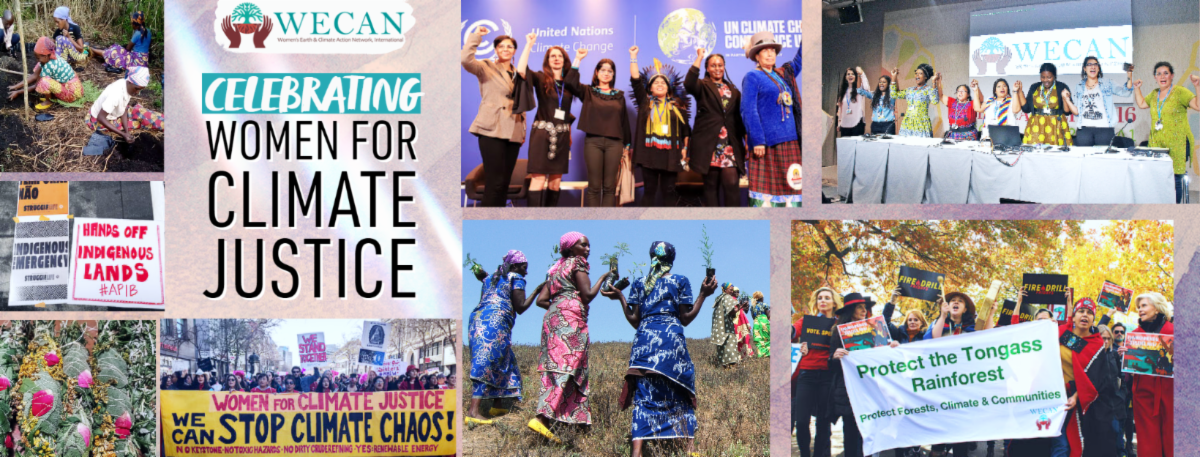
Please join WECAN in celebrating International Women's Day and Women's History Month — connect with us this month, and every month, as we uplift and honor women and feminists around the world!
While the interlocking systems of capitalism, patriarchy, racism, and colonization persist in fueling conflicts and harming communities, we are consistently buoyed by the abundant power and solutions of women, feminists, and gender diverse leaders rising for climate action and justice, and organizing for people and planet.
Last week, the most recent report by the Intergovernmental Panel on Climate Change (IPCC) was released, outlining the threats facing biodiverse ecosystems worldwide and increasing stresses for frontline communities. As we know from many studies, due to entrenched gender inequality globally, this contributes to increased harm for women. In response, Osprey Orielle Lake, WECAN Executive Director, commented:
|
|
“The reality of the escalating climate crisis has been illustrated in harrowing detail in the most recent contributions published by the IPCC. Millions of lives are at risk, further demanding that governments respond urgently to science, end their dependence on fossil fuels and false solutions, and take immediate action. We must listen to frontline women leaders and their communities, who are not only experiencing the worst impacts of climate change right now, but who also carry knowledge and expertise necessary for real climate action, solutions and adaptation grounded in justice, human and Indigenous rights, and the protection of vital biodiverse regions. Governments and the international community must claim a climate emergency and respect the natural laws of the Earth. There is no adaptation outside of the laws of Nature.” |
|
The IPCC report details a calamitous future that is the end result of relentless fossil fuel expansion under an extractive economy, unfettered corporate and financial greed, and government inaction. Tragically, we have seen in recent weeks how the fossil fuel industry is not only a leading contributor to climate change but is also a central driver of ongoing conflicts.
The fossil fuel industry is one of the central engines of war, imperialism, and capitalism, funding and fueling (literally and metaphorically) ongoing conflicts and violence. Amongst years of geo-political tension at play, it is also important to highlight that the Putin-led invasion of Ukraine is being funded by fossil fuels.
We are outraged and heartbroken by the ongoing destruction of our communities and nature in the name of profit and political power positioning. We stand in solidarity with the Ukrainian people and with Russians who are protesting the invasion, and all those worldwide who are experiencing war and conflict in their home countries. Imperialism, militarism, and authoritarianism have no place in a world that prioritizes the rights and humanity of our communities and the protection of Mother Earth. Our hearts are with all people globally whose lands are under attack.
For long-lasting, structural change, it is essential to collectively recognize, understand, and transform the dominant social constructs that are at the root of environmental degradation and interconnected injustices.
Women are leading the way in this effort for transformation, and they constitute the backbone of global movements, actively challenging old paradigms of patriarchy, colonization, imperialism, militarism, racism, and capitalism while uniting across borders to build a healthy and livable future. Uplifting women’s and feminist leadership and solutions could not be more important at this vital juncture for humanity.
In honor of International Women's Day, WECAN is celebrating women's climate leadership by releasing a new video uplifting the voices and solutions of women and gender diverse leaders fighting for a just climate future. Please continue in this newsletter to learn more and view the video!
We welcome you to join us in particularly supporting women land defenders who put their bodies on the line everyday for human rights, democracy, forests, rivers, wildlife, traditional territories, and the global climate. We also send our deep appreciation to all who are uniting for climate justice.
Please explore our newsletter to read WECAN's full responses to the new IPCC report and the invasion of Ukraine, as well as updates, events, and actions from WECAN programs and campaigns.
|
|
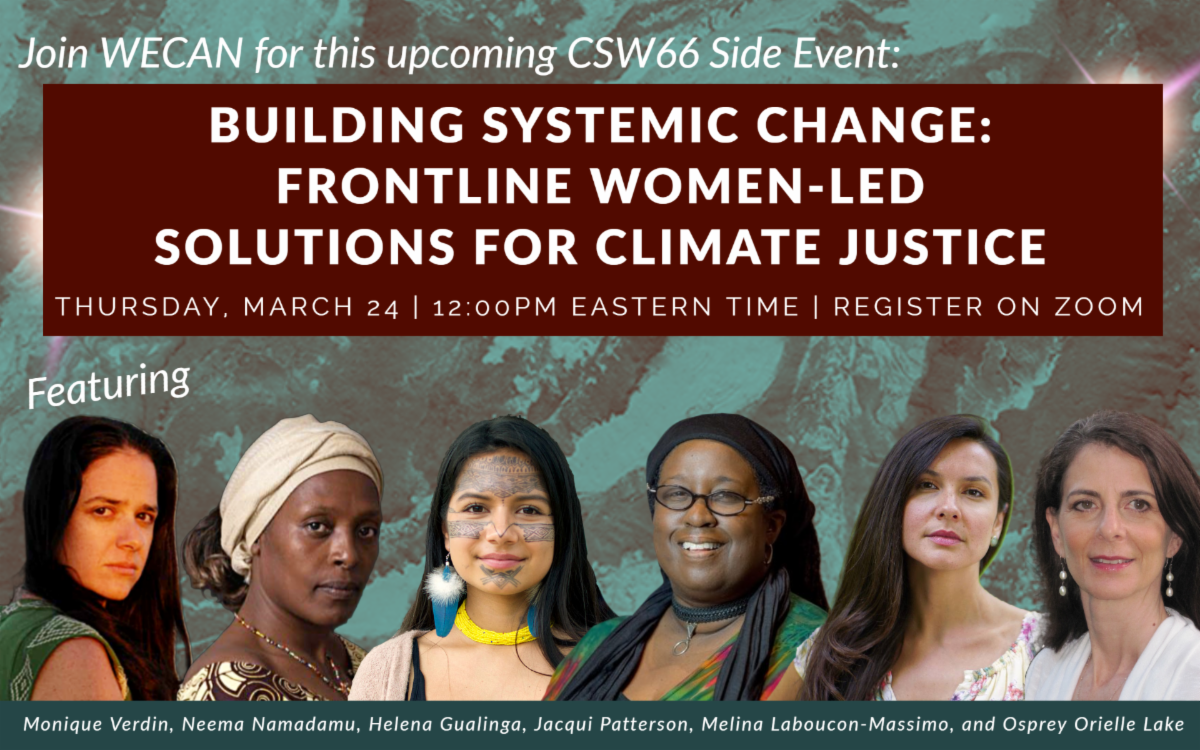
Join us on March 24th for a Virtual WECAN Event!
Building Systemic Change:
Frontline Women-Led Solutions for Climate Justice
|
|
Building Systemic Change:
Frontline Women-Led Solutions for Climate Justice
Thursday March 24, 2022
12:00pm Eastern Time
**Please check your time zone to coordinate**
|
|
At this moment of colliding crises, it is vital to build a foundation of deep systemic change. We are at a turning point, and it is now more than ever that we must strengthen our commitment to the vision and world we seek — together.
During this event Indigenous, Black, Brown, and frontline women leaders and global advocates will address multiple interlocking crises, and present a diverse array of visions, projects, policy frameworks and strategies based in a climate justice framework, including forest and biodiversity protection, Indigenous rights, food sovereignty, protection of women land defenders, and community-led solutions. The voices, analysis and leadership of global women, feminist and gender diverse leaders are critical to the years ahead, as we work collectively and urgently to build the resilient and just future we know is possible.
Confirmed speakers include: Neema Namadamu, Founder, Synergy of Congolese Women’s Associations (SAFECO), and WECAN Democratic Republic of Congo Coordinator; Monique Verdin (Houma Nation), Director, The Land Memory Bank & Seed Exchange, and WECAN Indigenous Food Sovereignty Program Coordinator; Jacqui Patterson, Founder and Executive Director, The Chisholm Legacy Project; Melina Laboucan-Massimo (Lubicon Cree), Director of Healing Justice, Indigenous Climate Action, and Founder, Sacred Earth Solar; Helena Gualinga (Kichwa), Environmental and Indigenous Rights Defender, WECAN Young Women Project Lead; with moderation and comments by Osprey Orielle Lake, WECAN Executive Director.
|
|
WATCH THE VIDEO
Women Rising for Climate Justice
and Future Generations
|
|
In honor of International Women's Day, March 8th, WECAN is excited to release, "Women Rising for Climate Justice and Future Generations" !
Watch the video by clicking the image or buttons below!
|
|
As the climate crisis escalates, and social inequities persist, women worldwide are rising for climate justice and future generations.
WECAN is delivering a call to action, demanding governments declare a climate emergency. We are challenging governments, financial institutions, and corporations to stop extractive and exploitative practices, and rapidly pivot towards a Just Transition. We will never stop fighting for our beautiful Mother Earth.
Please be welcome to share the video with your networks and community using this link. |
|
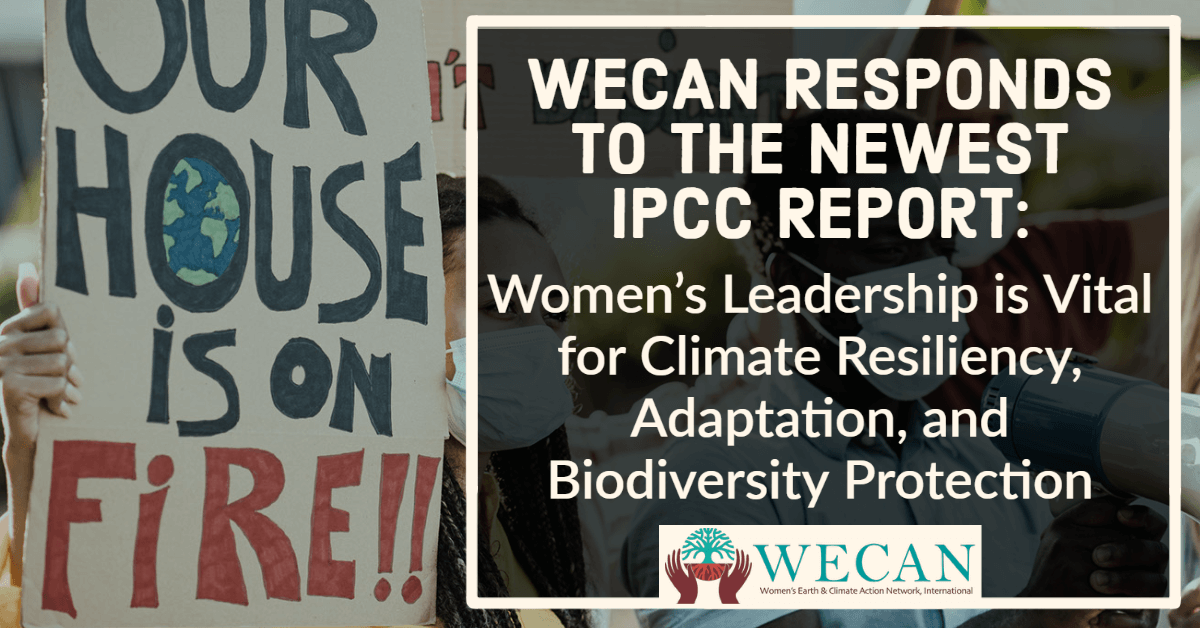
WECAN Responds to the Newest IPCC Report |
|
On February 28, the Intergovernmental Panel on Climate Change (IPCC) Working Group II published its contribution to the upcoming Sixth Assessment Report, synthesizing climate impacts, adaptation and vulnerability for communities, ecosystems, and regions worldwide.
The IPCC is widely regarded as the most comprehensive and authoritative body of scientific research on climate change to date. The report by IPCC Working Group II highlights the necessity of climate adaptation and the reality of frontline communities globally who are and will be most affected by the impacts of climate change. Additionally, the report documents the threats facing biodiverse ecosystems that could collapse as global warming rapidly advances toward 1.5 degrees above pre-industrial levels.
"The science is clear, we are beyond the tipping point. Climate change is impacting the lives of every single person and all living beings on this planet— nowhere is safe.
As explicitly stated in the Working Group II contribution to the IPCC Sixth Assessment, we are at a juncture in which climate adaptation must be addressed. Climate change is here in full force, and avoiding the worst impacts requires investment in adaptation, which must be implemented immediately and equitably. We cannot turn back the harms that have already been done.
Historically, wealthy countries, primarily in the Global North, have contributed most to emissions leading to the climate crisis. Consequently, wealthy countries must pay their debt to the world— they have a financial obligation and responsibility to support global climate adaptation efforts, alongside loss and damage, both of which are sorely underfunded, and perpetually sidelined during global climate negotiations.
In addition to adaptation, countries must accelerate and strengthen climate mitigation plans that urgently cut emissions and keep global warming below 1.5 degrees, compared to pre-industrial levels. We no longer have time for false solutions or net-zero promises. The insistence by governments, corporations, and financial institutions that fossil fuel bridges, techno-fixes, and carbon offset schemes will save us, is only furthering the delay of actual emissions reductions and climate mitigation. Continuing with insufficient regulations of the extractive fossil fuel economy and investment in false solutions only serves to further exploitation of the Earth and exacerbation of the climate crisis, all while people and ecosystems become collateral damage.
The report highlights the severity in which all communities and regions are being affected by the climate crisis, including low income communities and communities of color who are already experiencing the most catastrophic climate impacts. Within this context, we know from previous studies that Indigenous, Black and Brown women, and women from the Global South bear an even heavier burden from the impacts of climate change due to the interlocking effects of colonialism, racism, and gender inequity.
For long-lasting change, it is essential to collectively recognize, understand, and transform the dominant social constructs that are at the root of environmental degradation and interconnected injustices. Despite being disproportionately affected by climate change, women constitute the backbone of global movements, actively challenging old paradigms of patriarchy, colonization, imperialism, racism, and capitalism while uniting across borders to build a healthy and livable future.
The IPCC reports coming out this year are mapping, in devastating detail, a calamitous future that is the end result of relentless fossil fuel expansion under an extractive economy, unfettered corporate and financial greed, and government inaction. However, there is still time to turn the tide. To meet the urgency reflected by the IPCC reports, governments must declare a climate emergency, fund global climate adaptation and loss and damage, and commit to crosscutting climate policies that simultaneously prioritize social, racial, economic, and climate justice. There are no do-overs. We need our governments to step up and meet the demands of global climate justice movements— there is no time to lose and we can act now."
|
|
DRC Congo Women for Forests Update |
|
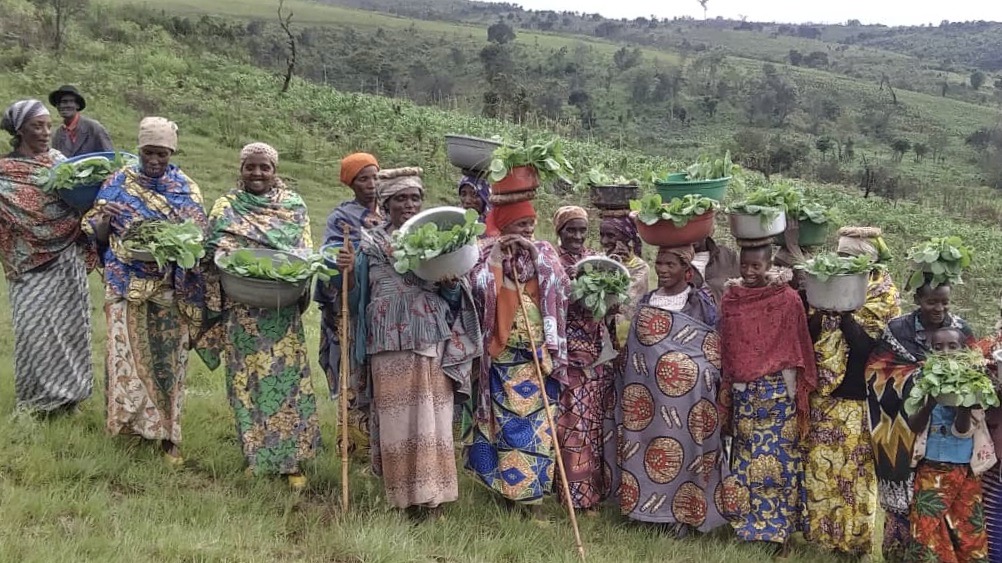
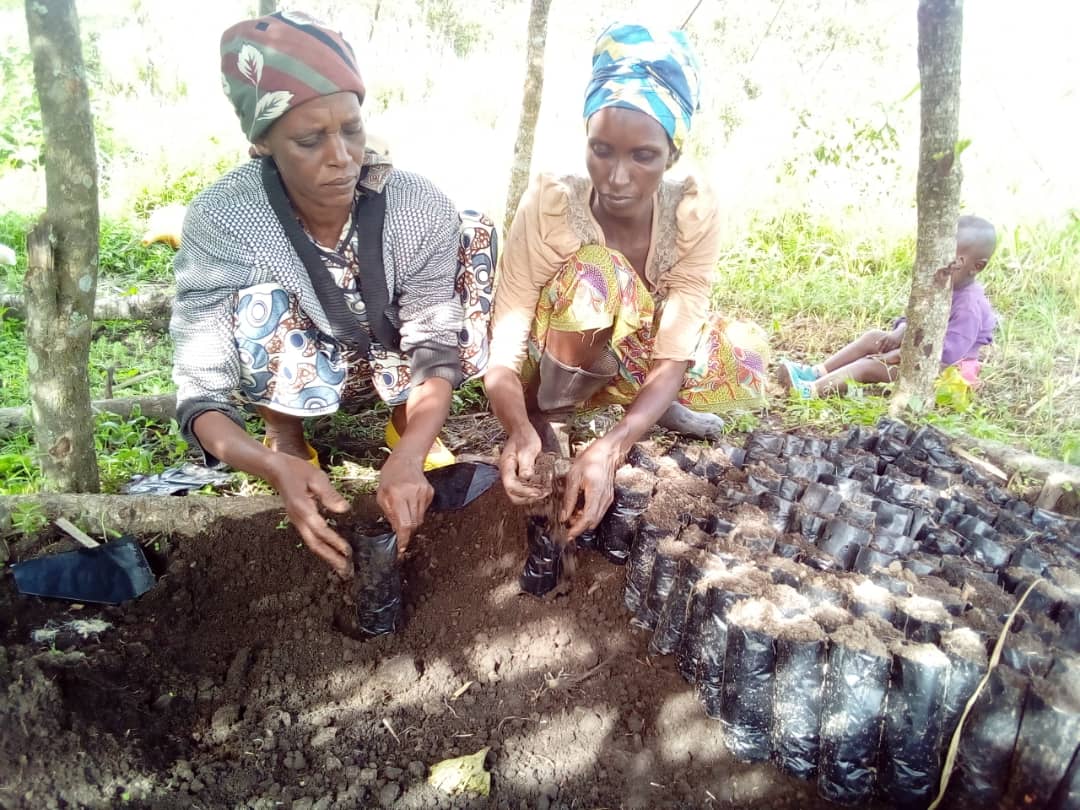
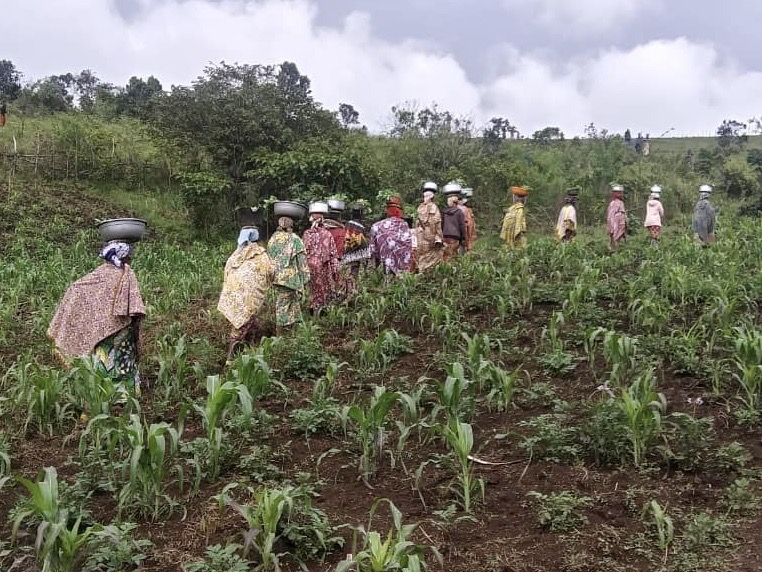
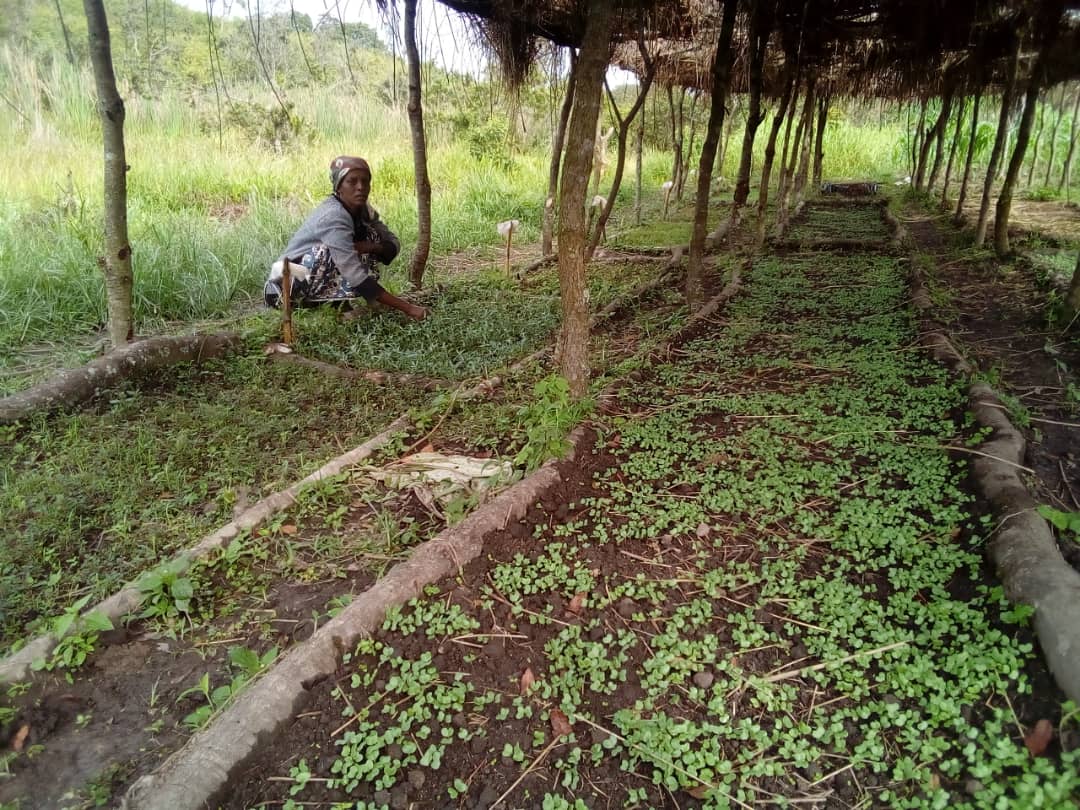
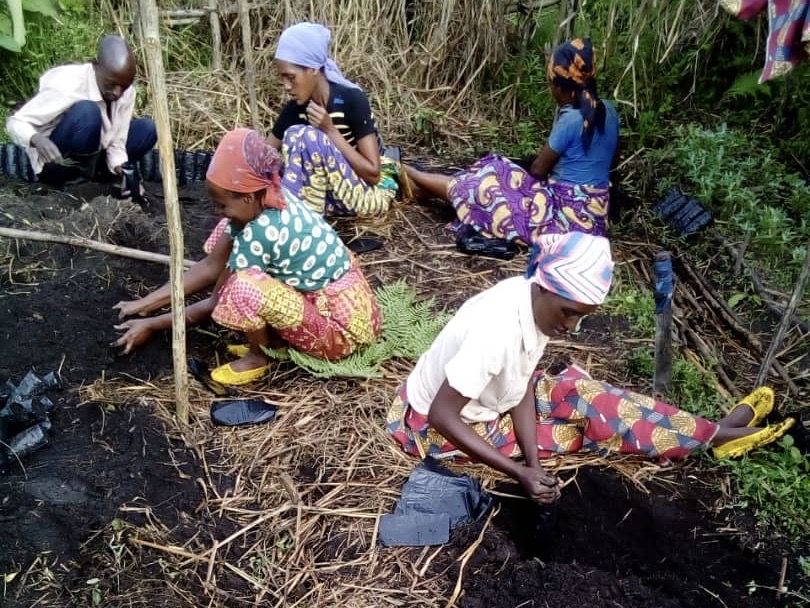
In the Democratic Republic of Congo, the WECAN Women for Forests program, led by WECAN DR Congo Coordinator Neema Namadamu, is in tree planting season, currently planting 80,000 trees!
The DRC Women for Forests program works with local women to protect and reforest the Itombwe Rainforest, an internationally recognized conservation area, which is home to an extraordinary biodiversity of plants and animals. We are working to protect 1.6 million acres of old-growth forest in the Congo Basin, while reforesting damaged lands.
Women foresters in the program are growing over 25 local tree varieties, as well as growing food to promote food sovereignty and security in their region. Please see below a few photos from the work this year. You can learn more about our ongoing program here. |
|
Solidarity with the Ukrainian People |
|
WECAN is heartbroken and outraged by the Putin-led invasion of Ukraine. We stand in solidarity with the Ukrainian people whose very lives and livelihoods are under attack as Russia continues bombing and assaulting communities across Ukraine.
Amongst years of geo-political tension at play, it is important to highlight that the Putin-led invasion of Ukraine is being funded by fossil fuels. Russia is the world’s second largest gas producer and third largest oil producer. In fact, oil companies like ExxonMobil have been some of Vladimir Putin’s closest partners, aiding and abetting his rise to power, which has enabled this egregious invasion of Ukraine. (More information about the connections between ExxonMobil and Putin here: https://bit.ly/3hf9eqc, https://cnn.it/3Hpxfp4 and https://bit.ly/3vhvbgq )
The fossil fuel industry is one of the central engines of war, imperialism, and capitalism, funding and fueling (literally and metaphorically) ongoing conflicts and violence towards communities, local ecosystems, and our global climate. This is why when we talk about climate justice, we also talk about ending militarism, securing human rights, and upholding sovereignty and transparent democracy. As long as fossil fuels remain a dominant part of the global economy, dictators and authoritarian leaders will continue to have the funds and power to wage wars and hurt people and planet. Between the escalating climate crisis and fossil fuel related wars, there could not be a more urgent time to immediately transition to regenerative, renewable, decentralized energy.
WECAN is honored to join over 450 organizations in calling on world governments to reject and ban the importation of Russian oil and gas, and to rapidly phase out all fossil fuels in the name of peace. Read the letter here: https://www.with-ukraine.org/
People, and all living beings, are not pawns or collateral for the extractive, capitalist economy or the political objectives of those in power. We are anti-war and anti-imperialist, and do not support wars or conflicts in any country. We stand in solidarity with the people of Ukraine, and the many Russian civilians taking action to oppose the invasion. We support the sovereignty and democracy of Ukraine and denounce the military invasion by the Russian government. Imperialism, militarism, and authoritarianism have no place in a world that prioritizes the rights and humanity of our communities and the protection of Mother Earth.
Please consider supporting the Ukrainian Women's Fund, which is mobilizing resources to support rapid response to women's rights and feminist groups based in Ukraine. Learn more here. |
|
Upcoming Workshops with Financial Institutions |
|
In March, WECAN is collaborating with BankTrack and other partners to host a series of workshops for the Equator Principles Association (EPA) focused on deforestation, fossil fuels, and divestment.
The EPA promotes and encourages the adoption and implementation of the Equator Principles, which provide a framework for financial institutions to identify, assess and manage environmental and social risks when financing Projects. 128 financial institutions in 38 countries have officially adopted the Equator Principles.
The upcoming workshops are designed to create open discussion to further progress useful knowledge exchange, enabling civil society organizations to articulate their expectations from EPA financial institutions based on the Equator Principles as the climate crisis escalates.
These workshops are a continuation of ongoing workshops and dialogue with the EPA facilitated by WECAN and BankTrack in 2021. WECAN is organizing frontline women to participate directly in these workshops to speak about their impacted communities.
|
|
WECAN Joins the Old-Growth Forest Coalition! |
|
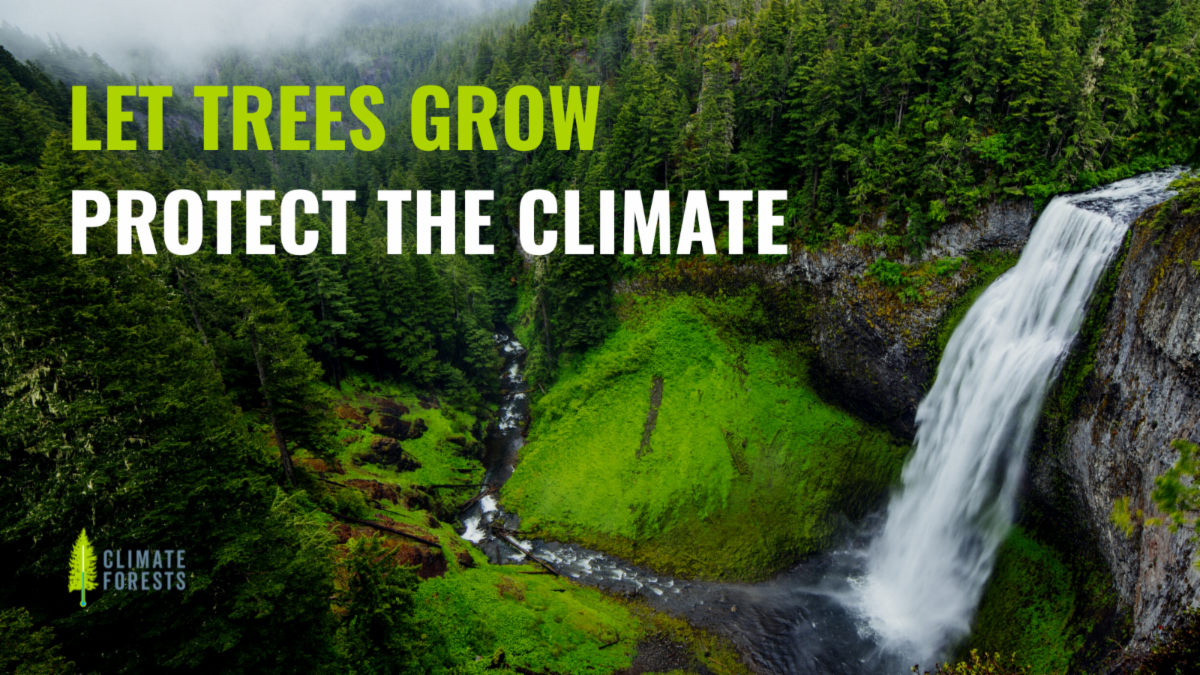
WECAN is honored to join over 75 groups calling on the Biden administration to take executive action to protect the mature trees and forests on federal lands in the United States that are most critical in the fight against climate change.
Mature and old growth forests are some of our most powerful climate solutions. But these forests are still being logged when they should be protected at important biodiverse ecosystems that support carbon sequestration, food sovereignty, wildlife habitat, and clean water. We need the Biden administration and all global leaders to understand that forest defense is climate defense!
|
|
Fossil Fuel Resistance Updates & Actions |
|
The movement to end the era of fossil fuels continues to grow. Worldwide, we are seeing communities rise to demand financial institutions stop financing fossil fuel extraction and infrastructure, and doing all that is possible to protect the lands, waters, and all we hold dear.
Please find below a few highlights and updates of recent fossil fuel resistance victories, and ways that you can take action to keep fossil fuels in the ground!
Celebrating the #NoDAPL legal victory
At the end of February, the U.S. Supreme Court refused to consider an appeal of a lawsuit over the Dakota Access Pipeline, meaning that an ongoing environmental review of the pipeline will continue! We give so much gratitude to the many Standing Rock tribal leaders and organizers who have kept this fight going in the courtrooms.
Six years in, the struggle remains ongoing as the movement to shutdown the Dakota Access Pipeline (DAPL), a $3.7 billion-dollar pipeline running from the Bakken shale basin to an export terminal in Illinois, continues forward. To learn more and stay up to date on the environmental review process, please visit the Standing Rock Sioux Tribe's website: https://standingrock.org/dapl-eis/
|
|
Join Customers for Climate Justice
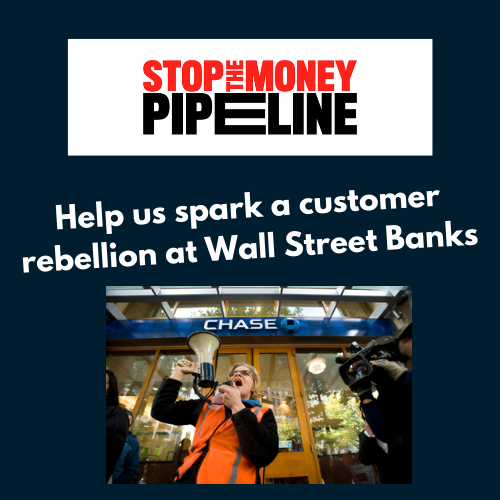
We invite you to join nearly 10,000 customers of Chase, Citibank, Wells Fargo and Bank of America in signing on to open letters to the CEOs demanding that these banks stop funding the fossil fuel industry.
Banks are using their customers’ money to fund fossil fuels, putting those very same customers’ livelihoods and communities in jeopardy. Yet, those very same banks claim to care about the concerns of their customers. That’s why customers have a special leverage to demand that their bank does better. Learn more and sign on here.
AIG Adopts a Coal, Tar Sands, and Arctic Policy
On March 1, AIG insurance released a policy that restricts insurance for coal, tar sands, and Arctic projects! AIG’s commitment makes it the first U.S. insurer to rule out insurance for Arctic energy exploration, which poses grave threats to Indigenous rights and local ecosystems. At least 12 insurers have restricted support for oil and gas drilling in the Arctic Refuge.
In response, Bernadette Demientieff, Executive Director of the Gwich’in Steering Committee stated, “Our lives and our sovereignty are non-negotiable. We will not allow the oil industry to destroy Iizhik Gwats’an Gwandaii Goodlit, the sacred place where life begins...We are grateful to AIG for stepping up as the first American insurance company to take a lead to protect our sacred lands. We appreciate the long-term vision necessary to set these policies in place so that our people will continue to have a cultural and spiritual connection to our lands, waters, and animals for generations to come." Read the full press statement from the Gwich’in Steering Committee here.
Build Back Fossil Free sends a Letter to Biden to Take Action on Fossil Fuels
Recently, WECAN joined over 1,000 organizations to send a letter to President Biden urging him to use executive authority to speed the end of the fossil fuel era, protect our communities from the climate emergency, and address the severe harms caused by fossil fuels. You can read the letter here.
Following the letter, the Build Back Fossil Free Coalition, of which WECAN is a member, hosted a digital rally uplifting the frontline leaders who are working tirelessly to halt fossil fuel projects across the country while demanding Biden keep fossil fuels in the ground. Watch a recording of the rally here. |
|
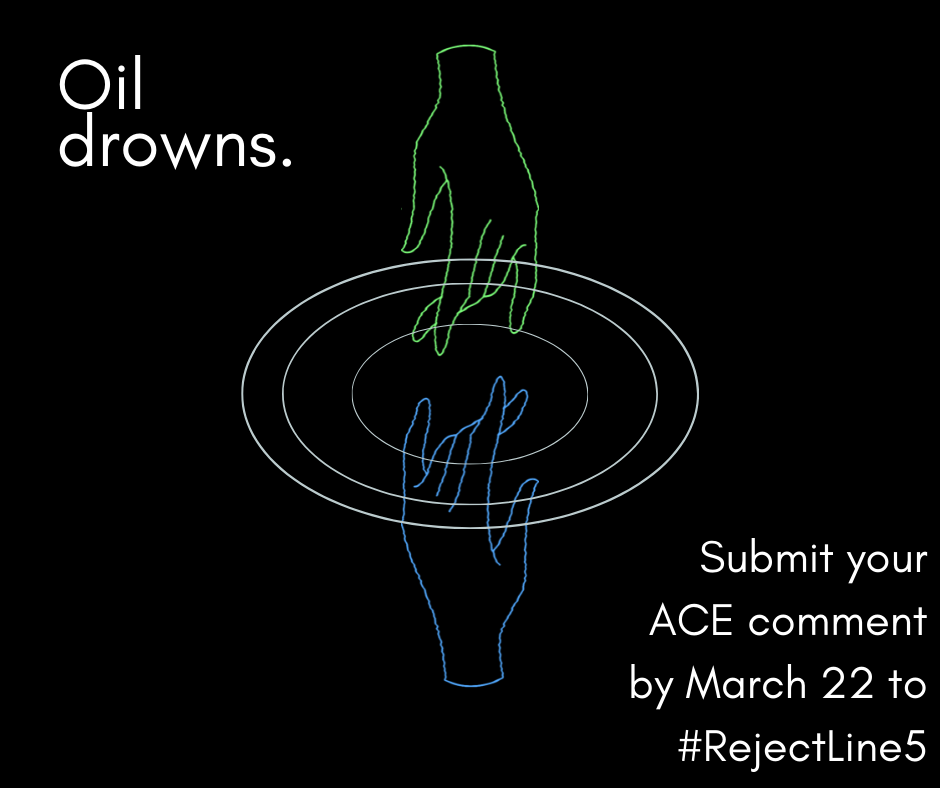
Submit a comment to Stop Line 5
Right now the U.S. Army Corps of Engineers is accepting public comments for a permit, requested by Enbridge, that would allow the company to fill wetlands and conduct horizontal directional drilling on the White River, a key part of Enbridge's proposed Line 5 pipeline.
The current Line 5 Pipeline, which is long past its lifespan, is pumping tar sands oil under expired permits. The proposed pipeline expansion and re-route would threaten local aquifers and waterways, Treaty Rights, and our global climate. Despite the Bad River Band of Lake Superior Chippewa’s request that Enbridge remove Line 5 and not build a new pipeline in the Bad River watershed, Enbridge has moved forward with their reroute just south of their reservation. This expansion is still within the watershed, and the risk to the treasured ecosystem remains. To learn more or find additional resources, visit tinyurl.com/rejectline5
Protect the Chaco Culture National Historical Park from Mining
The Greater Chaco Coalition is launching an online letter writing campaign to collect comments on the Bureau of Land Management’s proposed withdrawal of 351,479.97 acres of public land from future mineral leasing within approximately 10-miles of Chaco Culture National Historical Park, within the Greater Chaco Landscape, for a period of 20 years.
The Bureau of Land Management has initiated a 90-day public comment period on the mineral withdrawal within a 10-mile buffer of the Chaco Culture National Historical Park. Please join us in protecting Greater Chaco by submitting public comment before April 6, 2022 through this link: https://bit.ly/34x5wFa
There is widespread support for protecting cultural resources and public health across the Greater Chaco Landscape, but more oil and gas drilling continues to be approved. Over 91% of available public lands in the Greater Chaco region are already leased for oil and gas extraction. This reaffirms the impetus to re-center land management planning on the needs of impacted communities and Tribal Nations to whom this region is sacred, regardless of whether the proposed 10-mile buffer moves forward.
Shareholders Call on US Insurers to Stop Backing Fossil Fuel Expansion
In February, Investors in three major U.S. insurance companies, Chubb North America, Travelers Insurance, and The Hartford filed climate resolutions to stop insuring new fossil fuel projects. These resolutions represent the first time that shareholders have made a broad challenge to the insurance industry for its contributions to the climate crisis. Learn more about this ongoing advocacy work via the Insure Our Future press release here. WECAN is honored to be a member of the Insure Our Future coalition. |
|
Welcome WECAN's Newest Team Members |
|
Please join WECAN in celebrating and welcoming two new part-time staff to our team! We are honored and excited for Shruti Patil and Ashley Guardado to join WECAN as we continue our work to accelerate the global women's climate justice movement. Learn more about each of these wonderful leaders below. |
|
Ashley Guardado - Program Associate
Ashley Guardado is a queer Latina, activist, organizer and poet from a large blended family with roots in New York, Pennsylvania, Texas and Mexico. Because of her multicultural upbringing, intersectional movement building and justice work have always been an intrinsic part of her nature. Central to her work is the experience of directly witnessing the effects of environmental racism in her family and community in their hometown of Chester, Pennsylvania. As the first college graduate in her family, with an education from New York University and the City College of New York, her background in Social Work and International Relations have been integral in shaping her passions for organizing and resisting with intention and purpose through an equity lens. She has worked for organizations such as the Audre Lorde Project, Daytop Village, the United Nations, Amnesty International, and the Peoples Climate Movement. As the Program Associate for the Women’s Earth and Climate Action Network, she looks forward to collaborating with frontline women around the world united in resistance movements and climate solutions. In her freetime, you might find her in nature, moon-gazing, or spending time with loved ones as she navigates her personal journey of healing and transforming the generational wounds of assimilation.
|
|
Shruti Patil - Research & Policy Associate
Shruti Patil was born and raised in Austin, Texas, and is the daughter of Indian immigrants. Her passion for climate justice stems from her work in health policy and advocacy as environmental justice underbellies experiences of health, illness, and disability. She studied neuroscience and English literature at the University of Texas (UT) at Austin, and she has contributed to statewide legislation on heat-related deaths in Texas prisons as well as research on opioid addiction in the Rust Belt region. In the past, Shruti has worked for President Obama and the Texas Criminal Justice Coalition and was given numerous college awards for her work such as the Outstanding Student Award — awarded to the top two students of each UT graduating class. Since existing vulnerable communities will disproportionately feel the burden of climate instability, she views her life's goal as addressing health inequities through the lens of environmental justice and advocacy.
|
|
Please consider supporting WECAN as we continue to uplift the leadership and solutions of women and feminists worldwide fighting for climate justice and the defense of the planet for current and future generations. |
|
For the Earth and All Generations,
Women's Earth and Climate Action Network
(WECAN) International Team
|
|
S T A Y C O N N E C T E D |
|
|
|
|
|
|