Weekly Digest Number 4 - January 24th, 2023 |
|
Welcome to the RWU Rail & Labor News! This news bulletin is produced and emailed out each Tuesday morning. We hope you find each week's news and information useful. If so, please share with co-workers, friends, and colleagues. If you like, you can sign them up to get all the news from RWU HERE. Or forward them the link. Note: If you read over this news bulletin each week, you will be sure to never miss the important news of what is going on in the railroad world from a worker's perspective!
|
|
(Editor's Note: While we may have lost the battle, rail workers have had an invaluable opportunity to expose the rail carriers' game, to educate millions of our fellow citizens about the nature of the rail industry, and to forge alliances with other unions, workers and sectors of the population. We continue to move forward. Let's keep the momentum going! ) |
|
Here’s How Rail Workers Are Fighting On After Biden Blocked a National Strike
Politicians may have headed off their strike, but rail workers haven’t stopped organizing for paid sick leave and safe staffing.
|
|
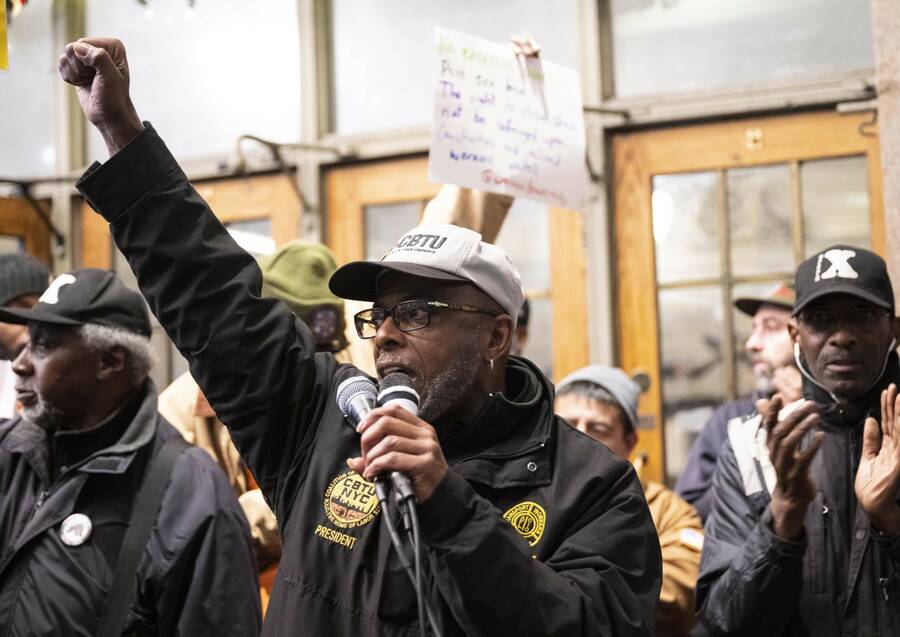
While the high-stakes labor dispute on U.S. freight railroads has receded from headlines since President Joe Biden and Congress imposed a new contract last month, rail workers are continuing their fight for dignity and better conditions — albeit without the threat of a national strike on the table.
“The American people should know that while this round of collective bargaining is over, the underlying issues facing the workforce and rail customers remain,” the AFL-CIO Transportation Trades Department said in a statement.
The major underlying issue remains precision scheduled railroading (PSR), the business model adopted in recent years by Class I rail carriers like Union Pacific, BNSF, Norfolk Southern and CSX. Designed to maximize shareholder profits by cutting costs to the bone, PSR has been blamed for a dramatic reduction in the freight rail workforce, increased supply-chain congestion and deteriorating safety — all while investors rake in record profits.
As a potential railroad strike loomed late last year, the absence of guaranteed paid sick leave in the rail industry came to symbolize the immense strain PSR puts on workers. Without sick leave, and with the railroads implementing draconian attendance policies to deal with understaffing, workers face discipline for missing work due to illness and have to burn through their vacation time if they or their family members get sick.
The tentative agreement between rail carriers and unions, brokered by Biden last September, did not include any guaranteed sick days — prompting a majority of the union rank and file to vote against ratifying the deal.
Late last year, when Biden called on Congress to override union democracy and impose the contract anyway, progressive Democrats attached a separate resolution mandating seven paid sick days, without the president’s public support. The measure passed in the House of Representatives, but failed in the Senate, where all but six Republicans voted against it.
|
|
(Editor's Note: The Class Ones - who have been hiring conductors like never before since so many are leaving and have to be immediately replaced - say they have not been cutting corners in the training process. This is ironic since, as every T&E worker in the country knows, they have been doing this for the last 30 years, as training periods have been drastically reduced along with actual "hands on" training time.)
|
|
FRA Letter Warns Rail Bosses of Enforcement Measures if Training Deficiencies are Not Resolved
Agency will take enforcement action if deficiencies aren’t corrected
|
|
WASHINGTON — The head of the Federal Railroad Administration has warned Class I railroads that it will take enforcement action if they don’t make recommended improvements to their engineer and conductor training and certification programs.
FRA Deputy Administrator Amit Bose addresses the American Short Line and Regional Railroad Association conference. David Lassen
“Some programs have been reviewed by FRA several times, and in some cases, the revisions to a program barely made incremental progress toward correcting the deficiencies that FRA took great care detailing in successive letters to the railroad,” Bose wrote.
“To encourage full compliance,” he adds, “please be advised that FRA is committed to pursuing enforcement action if a railroad’s resubmitted certification program continues to fail to address the deficiencies identified by FRA.”
Safety starts with properly trained crews and railroads meeting minimum training and qualification standards, he wrote.
|
|
(Editor's Note: Talk about Daniel and the Lion's Den! To expect the union and its members to cooperate in the Class One's plan to kill us is absurd. For the union to cooperate in this plan, where UP controls the selected subdivision for the test, one that is easily accessible at all points by highway, where UP has control over staffing and statistics, this simply provides the carrier with more smoke and mirrors with which to hang us.) |
|
Union Pacific, Rail Labor Remain in Mediation Over Ground-based Conductor Test Program
UP had sought to begin pilot program on Nebraska coal-hauling route
|
|
The union representing conductors has thus far refused to participate in a pilot program Union Pacific wants to run to test the concept of shifting conductors to ground-based positions, The Associated Press reports.
But UP remains in mediation with two SMART-TD committees and negotiations are ongoing about the proposed pilot program, railroad spokeswoman Robynn Tysver tells Trains News Wire. “We cannot move forward without it being agreed upon through collective bargaining,” she notes.
Positive train control has significantly reduced the conductor’s tasks out on the main line, UP says, and an expediter would be better able to handle troubleshooting and fixing mechanical problems en route.
“This job will be much better served by a truck-based approach, responding to planned or unplanned events dispatched from a central location around the railroad network. Union Pacific envisions a role where the expediter receives a call for service from an en route train, drives to that train in a truck, performs the requested service, and drives back to the … base of operations,” Doerr says. “Our data suggests in most cases this will take less time than having the on-board conductor attempt the same tasks.”
But union officials panned the idea at the FRA hearing, saying that having two people in the cab improves safety. They also have said that talk of one-person crews had made it harder for railroads to recruit and hire conductors.
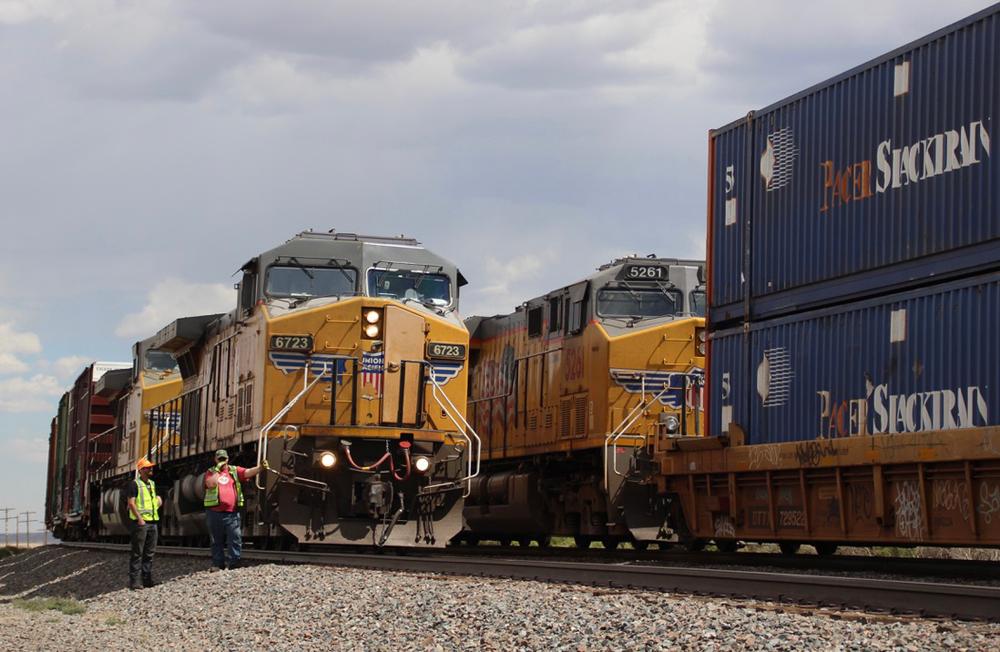
UP wants to first test the expediter concept on the South Morrill Subdivision, its coal-hauling route across western Nebraska that is paralleled by a state highway. Trains would continue to operate with an engineer and conductor during the pilot, and UP would measure the response times of expediters and conductors when a train encountered a problem.
|
|
(Editor's Note: This is not a surprising prediction. The post pandemic boom that has propped up internodal is long gone. Trucking pricing is declining, while the Class Ones insist on 40 cents on the dollar to protect their precious operating ratios, driving tens of thousands of boxes to the highways.) |
|
Rail Intermodal to ‘Struggle’ in 2023, Consulting firm says |
|
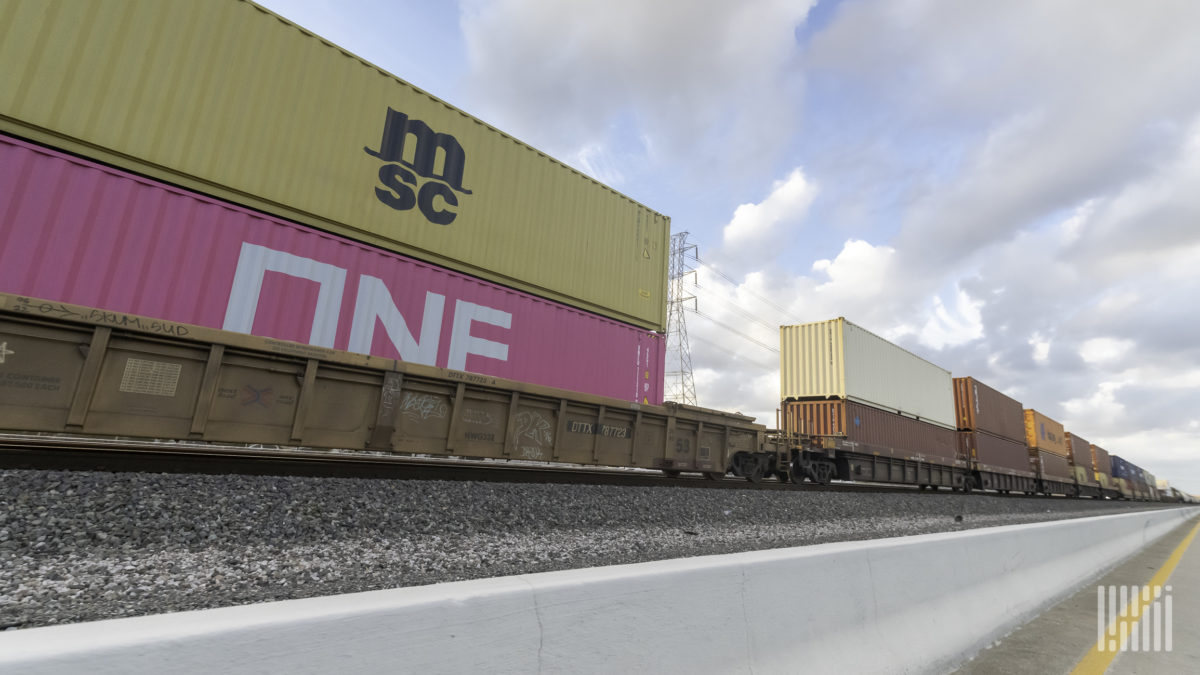
Consulting firm FTR Transportation Intelligence expects rail intermodal to face a tough year in 2023 amid weaker demand, a competitive truck market and a shift in U.S. port activity away from the West Coast to East and Gulf ports that utilize shorter inland hauls.
All of the rail intermodal segments — domestic and international — “are going to struggle” in 2023, said Todd Tranausky, FTR vice president for rail and intermodal, during a webinar last week.
Growth could happen in the fourth quarter amid peak season,Tranausky said: “There is light at the end of the tunnel, but it’s just a little bit further out.”
Intermodal’s ability to compete with trucks has steadily eroded since the second half of 2022, and that will persist through the middle point of this year, according to Tranausky. Rail intermodal could improve around that time frame, but the segment is still expected to be negatively positioned throughout ’23.
“Intermodal [will have] an uphill climb relative to truckload in terms of attracting volume, and this just piles on in addition to the port shifts [that call for more short-haul than long-haul movements],” Tranausky said.
That market environment favoring trucks could result in better pricing for rail shippers, but it remains to be seen how much the railroads are willing to respond to that pricing pressure, especially given higher operational costs following the new labor agreement, he said.
|
|
(Editor's Note: Despite being nixed by Republican Governor Scott Walker more than a decade ago, Wisconsin communities and politicians appear to be coming together around support for a more robust passenger train network linking the state. Their efforts could serve as a model for other states to propose similar statewide networks on existing trackage. But it is up to rail unions and citizens groups to forge the necessary coalition to0 see this through to fruition.) |
|
Local Leaders Take Initiative for Statewide Train Service in Wisconsin |
|
Just as hoped, local leaders from more than 20 municipalities in Wisconsin have started working with tools provided by the federal bipartisan infrastructure law.
Unlike previous support from Washington, the landmark 2021 Infrastructure Investment & Jobs Act encourages leaders at the local level to take initiative. Because so many Wisconsin communities have done this, it’s worth a closer look, to see the law in action at this early stage.
The bipartisan infrastructure law established a new Corridor Identification and Development Program: a planning framework to guide federal investment in passenger rail. The Federal Railroad Administration runs it, and last fall, the FRA invited communities throughout the country to make known their interest in new or improved passenger trains.
Wisconsin already has limited Amtrak service: between Milwaukee and Chicago, and once a day on a long-distance line between Chicago and Seattle. This leaves most of the state, however, with no passenger trains at all. But now, leaders from those communities—including Appleton, Eau Claire, Fond du Lac, Green Bay, Kaukauna, Madison, Menasha, Neenah, Oshkosh, Oconomowoc, Rock County (Janesville), and Watertown—are doing something about it. They have all responded to the FRA’s invitation, by submitting expressions of interest in passenger-train service. Wisconsin media outlets have widely covered this strong interest, and each submission (from all over the country, not just Wisconsin) takes the form of a comment on this federal site.
In addition to a planning framework, the bipartisan infrastructure law also provides up-front funding. The FRA can provide a total of 72 grants of $500,000 each, for early work. Agencies that want federal support this year can apply by March 20, 2023. Later stages of development will require a 20 percent match from other sources, but the federal government can provide 80 percent, from a pool of billions of dollars.
This timeline means that communities that want new or improved passenger-train service, like those in Wisconsin, can move forward now, while building support for later state investment in the plans that they develop.
|
|
(Editor's Note: This is good news for all Amtrak employees, especially those who are scattered across the country on Amtrak's skeletal "long distance" network. In addition, these trains offer employment prospects to freight railroad workers who are burned out and exhausted in freight terminals around the country who live in proximity to Amtrak crew bases such as Salt Lake City: Shelby, Montana; and Albuquerque, NM ) |
|
Amtrak Takes First Step to Reequip Long-Distance Network |
|
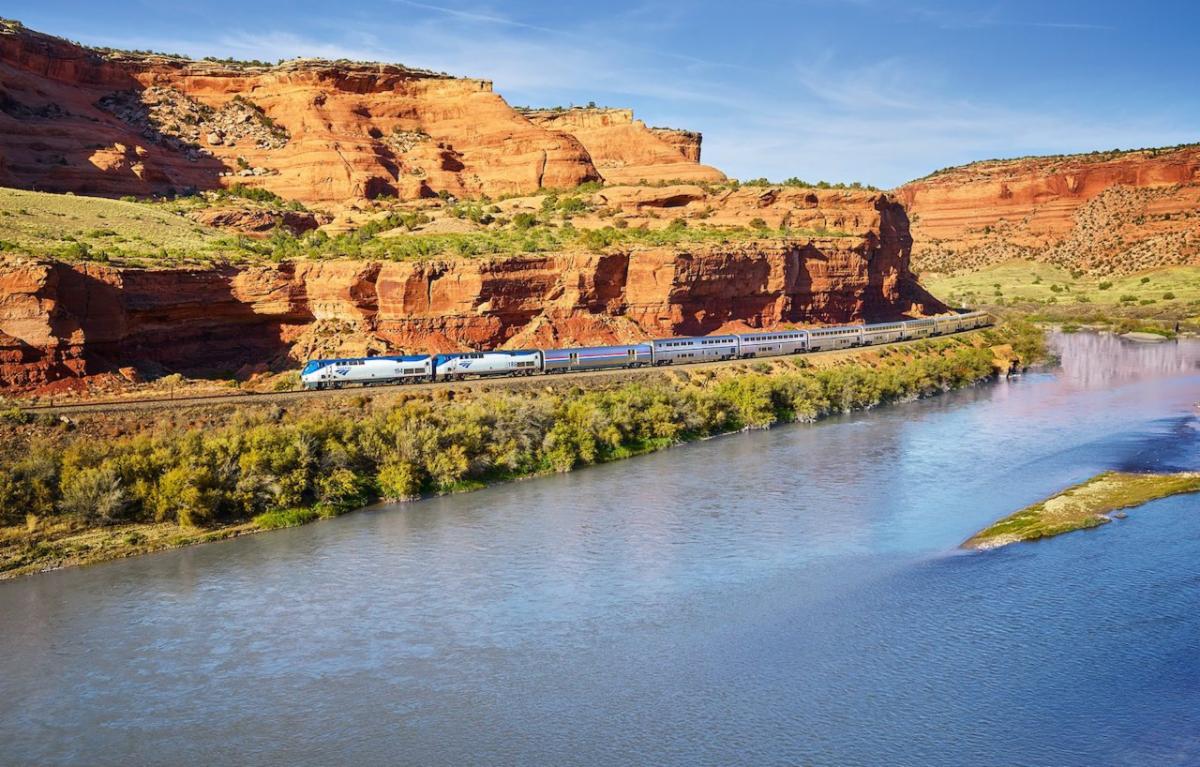
Amtrak has announced that 10 manufacturers have submitted their ideas on replacement railcars for such overnight routes as Auto Train, California Zephyr, Coast Starlight, Crescent, Empire Builder and Southwest Chief, marking the “first formal step to completely reequip the Amtrak Long-Distance Network that provides vital service on 14 overnight routes from coast to coast,” the railroad reported Jan. 19.
“Purchasing new long distance train cars will allow Amtrak to upgrade and modernize the iconic and vital overnight services that link our nation’s major regions,” said Amtrak Board Chair Tony Coscia. “We are looking for new trains that improve safety, reliability, accessibility and efficiency while offering the features our customers believe are most important to modernizing overnight train travel for the 21st century.”
Last month, Amtrak sent a Request for Information (RFI) to potential suppliers “defining and describing the scope of the railroad’s overnight train fleet,” including Superliner I & II, Viewliner I & II and Amfleet II railcars, and solicited input from manufacturers regarding the replacement of this equipment. As part of this effort, Amtrak says it is also researching design elements and customer amenities to “evolve overnight and cross-country train travel in the coming decades.”
Later this year, Amtrak says it plans to take the next step by issuing a formal procurement request. Funding for the future purchases is being provided to Amtrak through the federal Infrastructure Investment and Jobs Act (IIJA) enacted by Congress and the Biden Administration in 2021.
“This represents the final phase in our long-term plan to replace our trains—beginning with new Acela equipment and continuing with the Amtrak AiroTM trains announced last month,” Coscia said. “We believe in the future of our Long-Distance service, and we look forward to enhancing the customer experience across the Amtrak network, and further supporting U.S. manufacturing.”
The existing fleet of overnight railcars has been delivered to Amtrak over the course of 40 years - with the first of more than 800 cars entering service in 1979. Most of the equipment in the current fleet will approach the end of its service life after the next decade.
|
|
(Editor's Note: This video makes the point that the freight railroads are holding Amtrak from thriving because they do not follow the law. True, but we know there is more to it than this. The freight railroads have been hostile to Amtrak for more than half a century. Amtrak was designed to fail and has been starved of capital for its entire life. But we finally have a chance to rectify all of this.) |
|
The One Tiny Law That Keeps Amtrak Terrible |
|
Canada: Lac-Mégantic Bypass Project Advancing |
|
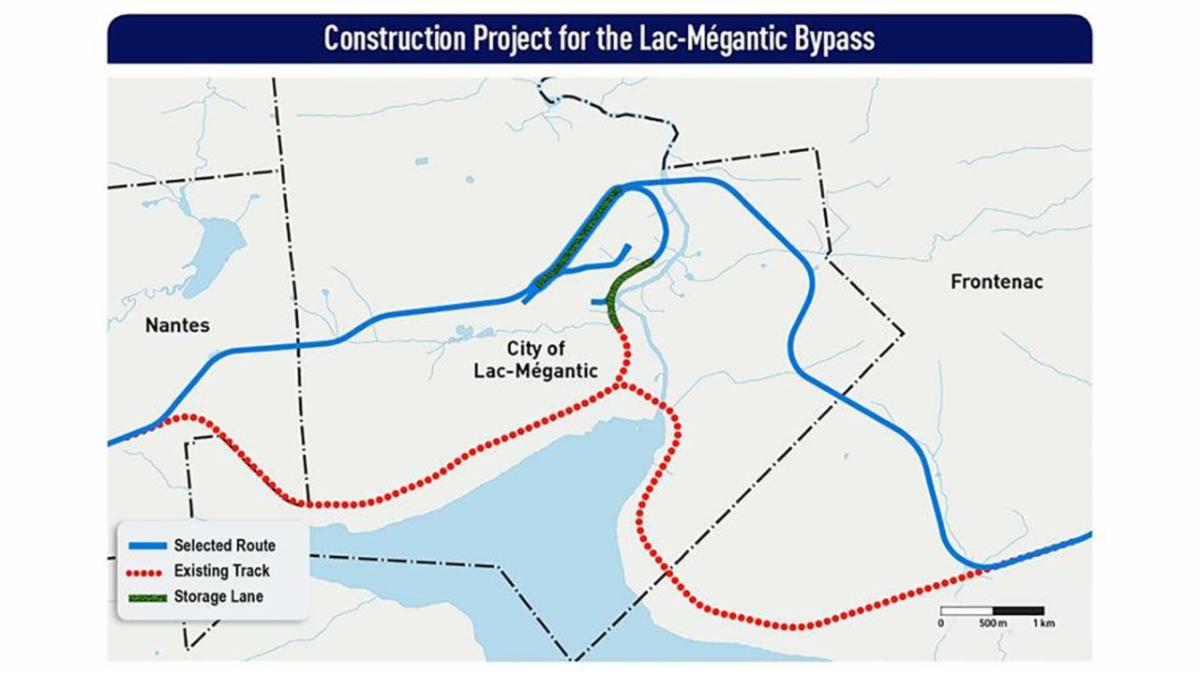
Nearly a decade after the horrific derailment of a crude oil unit train at Lac-Mégantic, Quebec that claimed 47 lives and led to new regulations for railroad hazmat tank cars, Canada Minister of Transport Omar Alghabra on Jan. 14 announced that building a 12.5-km (7.75-mile) bypass to get trains out of downtown Lac-Mégantic “remains a priority.” While the government has signed agreements to acquire some of the land for the project, he said, it has decided not to extend the “mutual negotiation period” with the remaining impacted owners after doing so three times, so that the project can move forward.
|
|
(Editor's Note: If adequate and proper investment was forthcoming in the railroad industry, complete with electrification of propulsion, there would be unprecedented demand for high horsepower electric/green locomotives, which would employ thousands of U.S. workers to build and maintain. But the Class Ones have little interest in innovation if it takes investment funds away from stock buybacks, CEO pay, dividends, etc. Time to nationalize the industry!) |
|
UE's Green Locomotive Project Reduces Our Carbon Footprint |
|
The General President of the United Electrical Workers, Carl Rosen, joined the America’s Work Force Union Podcast and discussed the Green Locomotive Project.
Local 506 represents 1,500 of 30,000 total UE members who will spearhead the Green Locomotive Project.
Created to address the unfortunate impact overused rail road locomotives have caused on the environment and climate change, the project aims to empower workers and the community to encourage the railroads to adopt green technology, and to ensure that new technologies lead to jobs at existing union factories.
Rosen explained the need for this project came about because overused railroad locomotives idle in railyards and produce diesel fumes, which are inhaled by railroad workers and neighboring residents.
The Green Locomotive Project, Rosen believes, will reduce the rail industry’s carbon footprint, increase union labor and curb climate change.
In addition, Rosen expressed concerns regarding the current attack on the right of railroad workers to strike and discussed why this right is important for members of organized labor.
|
|
(Editor's Note: The author Jordan Barab is a champion of workplace health and safety and an opponent of "behavior based safety programs." He spoke at the RWU Convention in 2018. We hope to have him back in 2024.) |
|
The Washington Post did the nation a service last week by recognizing that the near death of one relatively famous worker had received far more attention than the millions of workers endangered by far more serious hazards faced on a daily basis across the United States. That worker, Damar Hamlin, was employed in the sports industry -- specifically a dangerous occupation known as "football" where their working conditions involve being violently assaulted on a regular basis, often resulting in broken bones, life-threatening concussions and, in Hamlin's case, heart problems. (Not too dissimilar to the working conditions of health care and social service workers.)
The fact that some worker deaths and injuries receive more attention than others is not a new concept. In 2003, I wrote an article called Acts of God; Acts of Man where I similarly compared the attention paid to seven astronauts (aka space workers) who were killed in the Columbia space shuttle, to workers who fall off scaffolds and die in trenches every day. (Read it. It still stands up pretty well after 20 years, even if I do say so myself.)
Over 100 workers die in fatal workplace incidents each week, and several times that number die each week from occupational disease. Millions face serious work-related injuries each year. Almost all of those deaths and injuries go un-noticed and unrecognized, except by family members, friends, coworkers and those who bother to read about the few incidents that are recounted in the local media. The media tends to prefer workplace incidents where the victims are well known, where a lot of workers get killed or the death is fairly gruesome. Most worker deaths don't make the news at all.
Most who work in dangerous jobs don't make as much money or are as well known as Hamlin. The Post quoted Tonya Ford, whose uncle was killed in a grain facility and who until recently directed United Support and Memorial for Workplace Fatalities, a nonprofit that helps families and communities after occupational deaths. They also quoted Jessica Martinez, co-executive director at the National Council for Occupational Safety and Health, Mine Workers president Cecil Robert and other worker advocates. All spoke of the hazards that many workers face every day, often in low-paying jobs, the difficulty they encounter trying to correct the hazards, and the retaliation they face when they complain of hazards or report injuries.
|
|
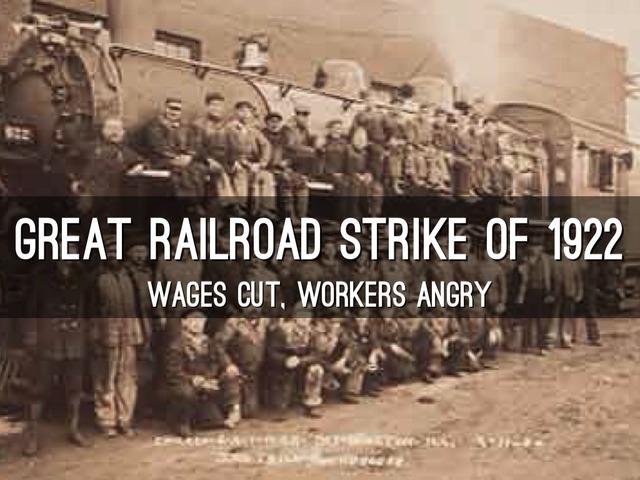
(Editor's Note: The Following is a summary of the 1922 National Shopmen's Strike, one of the longest and most brutal rail strike of the 20th century. All railroad workers are encouraged to learn their history including such great battles of this one, to be better prepared to win going forward. Please read the summary version of this article below. Want to read the full article? You can do that by becoming a member of the Railway & Locomotive Historical Society Details on the current issue (No. 227, which has the 1922 strike article) are at https://rlhs.org/WP/railroad-history/. RWU also recommends the book "Power at Odds: The 1922 National Railroad Shopmen's Strike" by Colin J Davis.)
|
|
1922 Rail Shops Strike Broken By Federal Injunction
MIKE MATEJKA
|
|
The term “union busting” was not used in 1922, but an epic national railroad strike that year brought deaths, beatings, broke union contracts and an incredibly repressive Chicago court injunction.
Across Illinois thousands worked “backstage” for the steam railroads – machinists, boilermakers, sheet metal workers, railway carmen – nursing the labor intensive steam locomotive and building and rebuilding rail cars.
During President Woodrow Wilson’s Administration (1915-1921), railroad workers gained union recognition along with improved wages and conditions. During World War I, the U.S. railroads were nationalized.
When Republican President Warren Harding’s Administration (1921-1923) came to power, the railroads returned to private ownership and the federal Railway Labor Board was stacked with Republican appointees, who mandated wage cuts and eliminated overtime pay.
On July 1, 1922, 400,000 railroad shop workers struck. Before airlines and interstates, if railroads were not running, the economy came to a standstill. The operating crafts – engineers, conductors, firemen, trainmen – continued to work but no maintenance quickly halted railroad traffic. Plus a national coal strike was also happening.
By July 10 railroads were ordering workers to return or lose their seniority. By July 20 numerous court injunctions were issued limiting union activity. Strikebreakers and company guards were recruited and in August 1922 the nation’s railroads paid out $2 million more in salaries, even though their workforce was on the streets. Equipment failures abounded and by September 1, 71 percent of all locomotives failed their monthly inspection.
Chicago and East St. Louis were the nation’s rail hubs and contained multiple facilities. Every junction or smaller city had a locomotive roundhouse or some repair facilities. Major railroad system repair shops with over 1,000 workers were located in Aurora, Bloomington, Centralia, Danville, Decatur, Galesburg, Joliet and Silvis (Rock Island).
|
|
(Editor's Note: Not a single freight carrier that we know of grants their employees a holiday on Martin Luther King Day. Given King's rile in advocating for organized labor and equality of all, and given the rail industry's historic racism, it was great to see at long last the unions actually bargaining for such a holiday. Here, the BMWED weighs in with a MLK Day message. Could it be that RWU's Campaign in support of MLK Day as a paid holiday for rail worker is catching on? See the RWU Resolution from 2019 HERE.)
|
|
BMWED's Martin Luther King Jr. Day Message 2023 |
|
As we mark Dr. Martin Luther King Jr. national remembrance day, it feels particularly hollow this year to not discuss the railroads’ shameless lip service and double talk on inclusion and diversity.
The latest bargaining round rightfully left the Class I freight carriers shamed in the court of public opinion. With the Congressional spotlight fully illuminated, every American witnessed the railroads’ greed and duplicity in messaging. If anyone was ever fooled by the corporate sweet talk of respect and dignity for their employees, that gig is up. Everyone now knows that the railroads are obtuse, vindictive, and horrid employers who steadfastly value profits over their people.
So, this year, when the carriers undoubtedly proclaim in flowery social media posts to support the ideals and values of Dr. King, ask them why their contract employees do not have the holiday. Decades have passed with the same tired excuses and it has been long enough.
Yes, trains run every day of the year. And, yes, we take great pride in our work. But if management is going to proclaim some grandiose stance of inclusion and appreciation for diversity within their workforce, then abide by those very principles. That is: Afford those you employ the ability to recognize the holiday that nearly every other person in Corporate America acknowledges. Otherwise, your dishonesty just shines brighter for all to see.
The railroads are of course going to state that railroad workers just received an additional paid personal day and they can choose to observe Dr. Martin Luther King Day as a holiday if they so desire. But this is disingenuous, because the railroads refused to let Veterans observe that holiday last year due to the lack of manpower from “Precision” Scheduled Railroading.
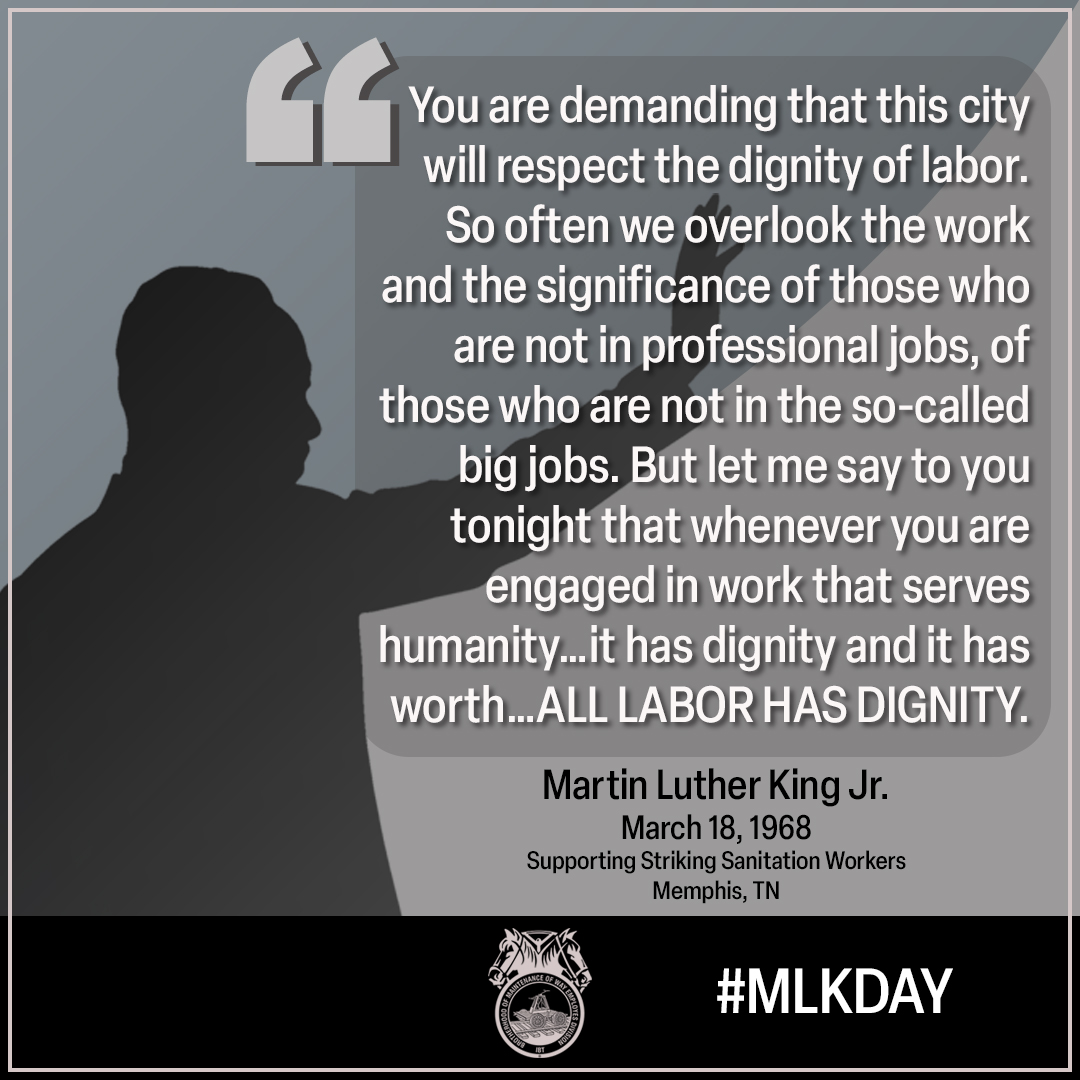
There is no argument that Dr. King would have joined us in the public admonishment of the railroads and helped champion the cause of improving the working conditions and quality-of-life of all railroad workers. His support of labor is well-documented and his tragic assassination in Memphis took place moments before he was to meet with striking sanitation workers there.
The railroads have a battered and bruised reputation that is well-earned. Their disregard and disrespect of their employees was put on full display last month for all to see. In the aftermath of the public admonishment, the carriers issued public statements, vowing to improve the culture in the workplace by implying they were going to make changes, but this was all a rouse to restore their polished image. Nothing has changed. Talk is cheap, and actions speak louder than words. So, if the railroads are serious about mending employee-management relations, then recognizing federal holidays centered around diversity, inclusion and unity would be a good step in that direction. Dr. King, of course, would urge the railroads to do so.
|
|
(Editor's Note: Preliminary speculation is that the derailment was caused by a broken rail.) |
|
Investigation Launched After Recent CPR Freight Train Derailment Near Chaplin, Saskatchewan
|
|
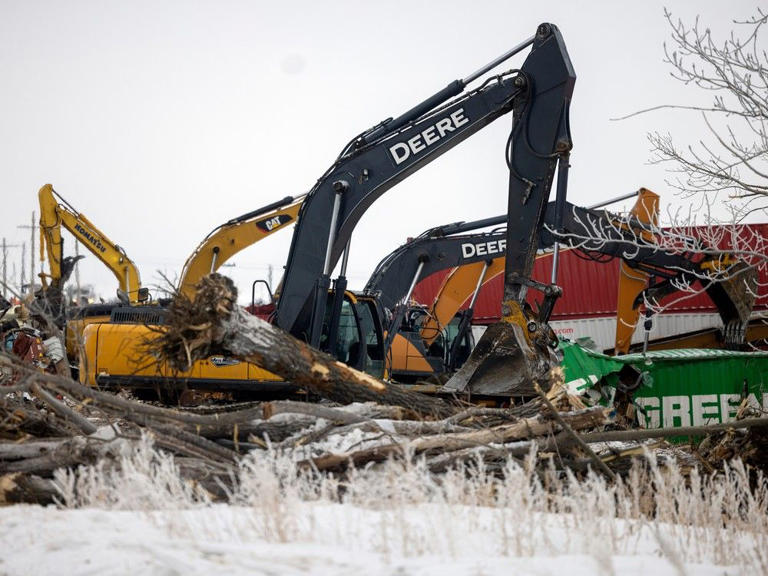
According to a press release on Monday, the Transportation Safety Board of Canada (TSB) will be deploying a team of investigators following a recent Canadian Pacific Railway freight train derailment that occurred after midnight on January 16, 2023.
“The TSB will gather information and assess the occurrence,” the TSB said.
The TSB said the derailment impacted 47 car bodies and 95 containers but as the investigation continues, those numbers could change.
The TSB is an independent agency that investigates transportation occurrences and aims for the advancement of transportation safety.
“It is not the function of the Board to assign fault or determine civil or criminal liability,” the TSB stated.
Details are minimal at the moment, but Global News will continue to follow this story and bring you more information once it becomes available.
|
|
|
|
|
|
|