The American Society of Le Souvenir Français Inc.
Monthly Bulletin - Vol. 1. No 6 - July 2021
|
|
PART II OF A SERIES:
ON THE FOOTSTEPS OF ROCHAMBEAU'S ARMY
IN CONNECTICUT & NEW YORK:
240th anniversary, July 1781-2021
|
|
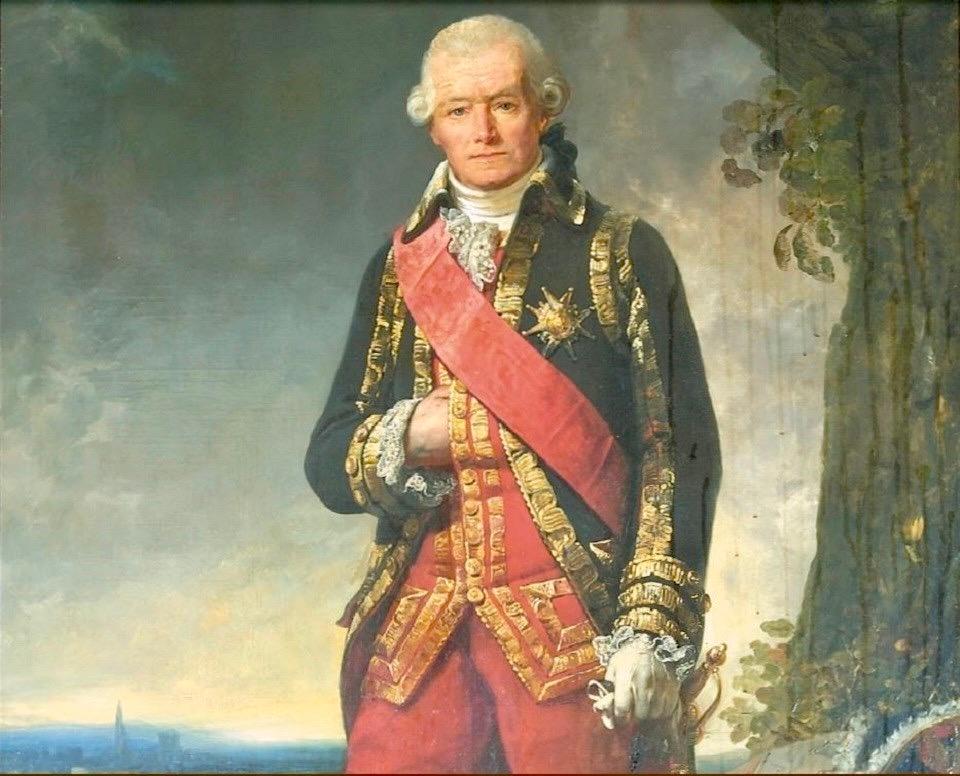
Jean-Baptiste Donatien de Vimeur, comte de Rochambeau (1725-1807)
Public domain, via Wikimedia Commons
|
|
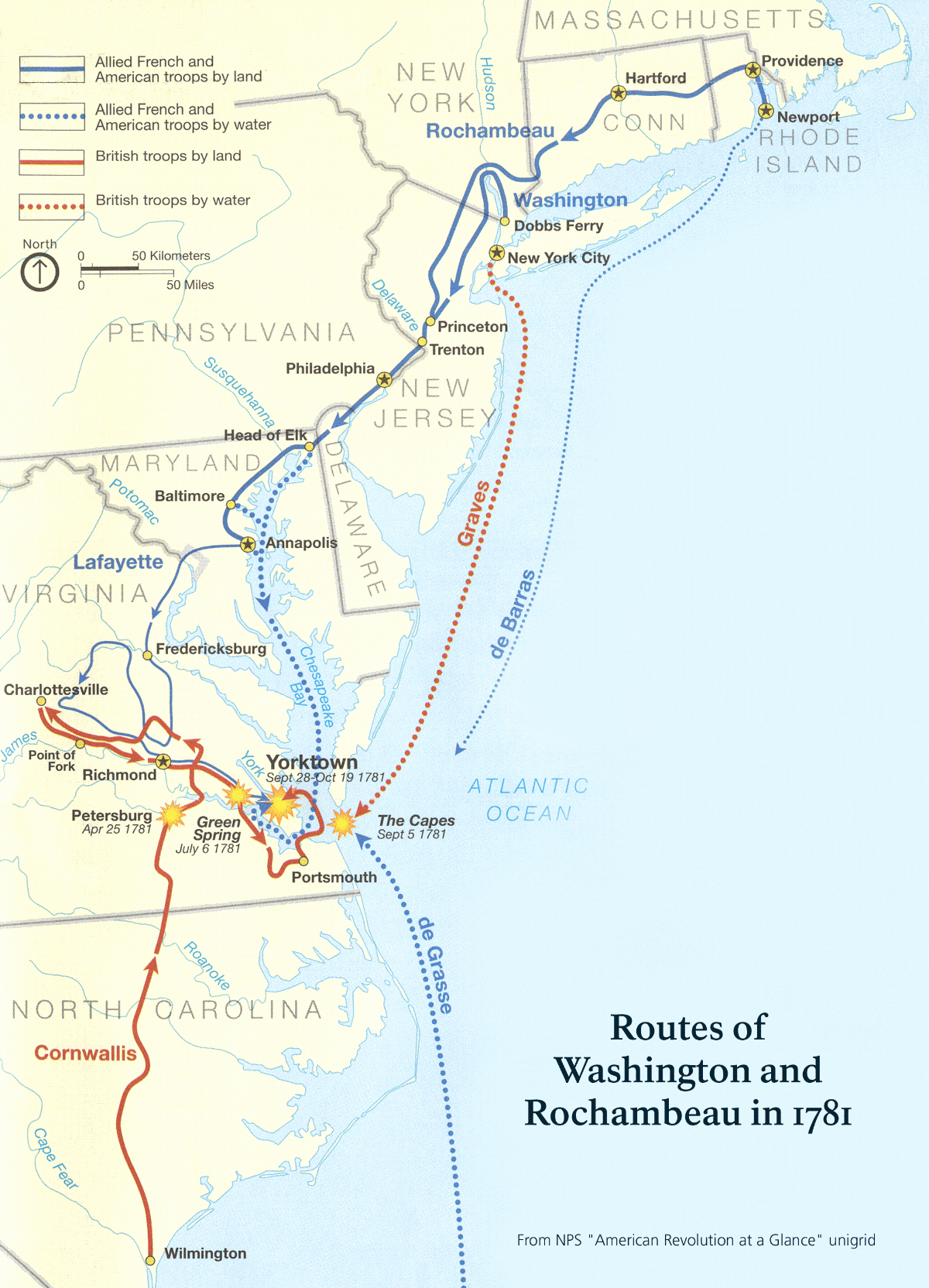
FROM MARCH TO SEPTEMBER, 1781,
THE FRENCH EXPEDITIONARY CORPS, 6,038 STRONG, MARCHED FROM NEWPORT, RHODE ISLAND TO YORKTOWN, VIRGINIA
AFTER CROSSING CONNECTICUT, THEY JOINED THE CONTINENTAL ARMY AND CAMPED FOR A MONTH A FEW MILES NORTH OF NEW YORK CITY, IN GREENBURGH, NY
JULY 6 - AUGUST 18, 1781
|
|
A LONG MARCH TO THE VICTORY THAT CEMENTED AMERICAN INDEPENDENCE
IN THIS SECOND PART OF A SERIES, WE COMMEMORATE
ENCAMPMENTS #7 TO #11 OF THE FRENCH ARMY
IN CONNECTICUT
AND THE JOINT FRANCO-AMERICAN ENCAMPEMENT
IN THE TOWN OF GREENBURGH, NY
JULY 6 - AUGUST 18, 1781
We wish to acknowledge the work done by the National Washington-Rochambeau Revolutionary Route Association Inc. (W3R) and the National Park Service (WARO), and in particular Dr. Robert A. Selig who has conducted years of research and has published countless academic papers, as well as Serge Gabriel, member of the American Society of Le Souvenir Français, who gathered many materials on this crucial episode of the Revolutionary War.
Summary of last month bulletin:
After Rochambeau's army sailed from Newport to Providence, the First Division of French forces started the march on Monday, June 18, 1781. Three days later French cavalry Legion under the duke de Lauzun left its winter quarters in the town of Lebanon, Connecticut,
followed a route some 10 to 15 miles to the south-east of the infantry, protecting its flank.
Rochambeau, who rode in the First Division, had established the following order for the march:
• The regiment Bourbonnois commanded by Marquis de Laval de Montmorency (second in command of the regiment was Vicomte de Rochambeau, son of Comte de Rochambeau) left on June 18;
• The regiment Royal Deux-Ponts under the command of Comte Christian de Forbach de Deux-Ponts, Colonel, left on June 19;
• The regiment Soissonnois commanded by Comte de Saint-Maisme (second in command was Vicomte de Noailles, brother-in-law of the Marquis de Lafayette), left on June 20; and
• The regiment Saintonge under the vicomte de Custine, left on June 21.
Each regiment consisted of between 1,000 and 1,500 men, as well as oxen-drawn artillery and baggage carts, and stretched about 3 miles on the road.
Last month we documented the march throughout Northern Connecticut from the 3rd to 6th camp. This month we will narrate stories from the 7th to the 11th camp, culminating in the month-long stay at Hartsdale, in the town of Greensburgh, north of New York City.
|
|
Farmington, CT: site of the Seventh encampment of the French Army. Major Peter Curtis Tavern, 4 High Street Farmington, CT 06032
|
|
7th Camp, Farmington, CT, 25-28 June 1781
• A French soldier recorded in his journal: “On the 27th (…) we marched 12 miles to Farmington, a little town. As soon as we had set up our camp there and the Turkish Music could be heard playing prettily, such a large number of inhabitants assembled there that one was surprised and had to wonder where all these people were coming from since we had encountered very few houses along our way during the daytime. This coming together of inhabitants continued to happen every day. As soon as we reached another camp we were immediately surrounded by Americans. Among them one saw very few male persons however but only women folk: if one saw a man among them it was unfailingly an old man or a cripple because all men folk from their 14th until their 60th year had to join the colors. Because of this there was a great dearth of men there. Almost everyone there nearly perished since the English treated them very badly at the time. “
• Rochambeau and some of his officers stayed at Phinehas Lewis’ Elm Tree Inn (there is a plaque on 791 Main Street opposite the Elm Tree Inn, corner of State Route 4 and Route 10, erected in 1926, commemorating Camp 7, 1781), others stayed at Peter Curtis’ Tavern, while the troops camped on the plains south of Farmington along the road to Asa Barnes’ Tavern, their next destination.
• There is a stone monument erected in 1923 in Old Main Cemetery at 26 North Main Street in nearby West Hartford commemorating French soldiers who died in a hospital.
|
|
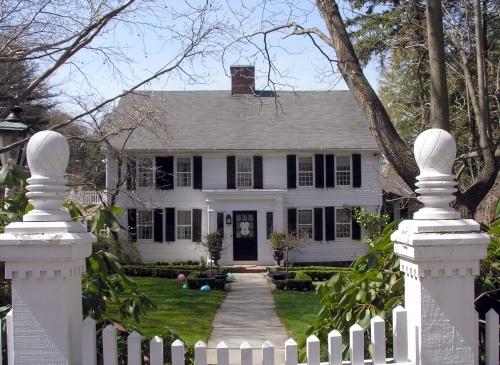
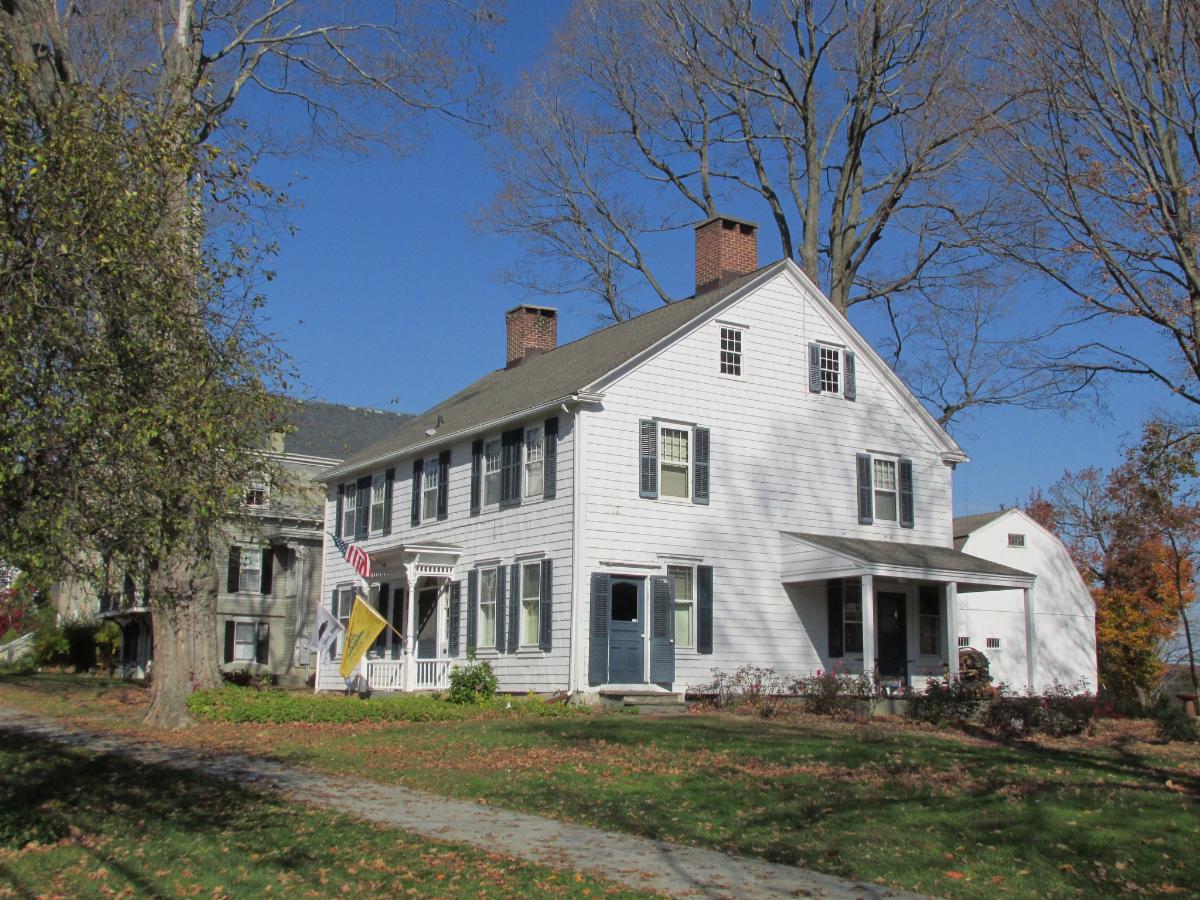
Barnes Tavern, 1089 Marion Ave, Plantsville, CT 06479 is listed to the National Register of Historic Places for its architectural and historical significance, is also part of the Marion Historic District. It is still a private residence.
Photo credit: Duncan Jones, own work, CC BY-SA 3.0 <https://creativecommons.org/licenses/by-sa/3.0>, via Wikimedia Commons
|
|
The 8th Camp of Rochambeau's Infantry, took place in Southington, CT, from June 26, 27, 28 and 29, 1781.
• Rochambeau marched south through Southington from the preceding campsite in Farmington. The march to Barnes’ Tavern and Camp 8 “was not fatiguing; the roads were very nice,” wrote Baron Closen. Most of the troops put up tents in that part of Southington called Marion at the foot of what is still known as French Hill and where Barnes’s Tavern is located. Some of the officers stayed at Barnes’, others “at an inn on Queen Street,” i.e., Deming’s Tavern, six miles away on the other side of town, and at Daniel Allen’s Tavern half-way in-between.
• A private from the Royal Deux-Ponts entered into his diary: “…we marched 13 miles to Barnes’ Tavern, an inn along the road. We set up our camp very close to it. We again had very numerous visits from the American maidens who circled the camp on horseback and who appeared just like English horsemen. This afternoon our MM generals gave a ball on the open field in front of our camp and invited the American maidens to it. This lasted into the dark night. All joy could be seen there what with dancing and singing as well with the soldiers as with the ocers who had fun with the English girls. After that we went to sleep in our tents, but the girls went home all sad.”
• In 1912, the American Irish Historical Society erected a monument at “French Hill” in Marion to mark the area where the army camped in 1781 and again in 1782.
|
|
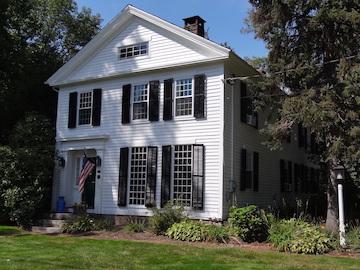
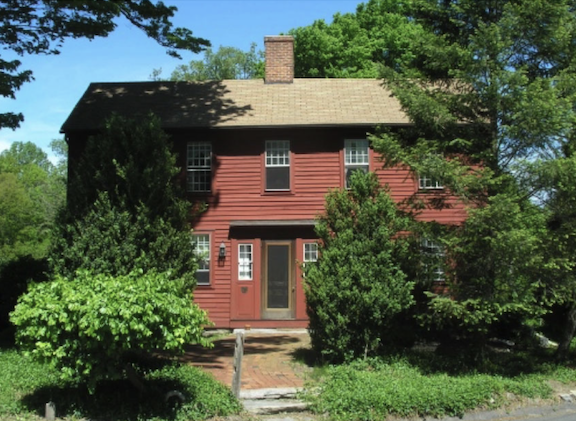
Home of Josiah Bronson at 506 Breakneck Hill Road in Middlebury, CT 06762
Photo credit: Magicpiano, CC BY-SA 4.0 <https://creativecommons.org/licenses/by-sa/4.0>, via Wikimedia Commons
|
|
9th Camp of the French Army, Middlebury, CT 27-30 June, 1781
• From Barnes’ Tavern the route went across “le mad river,” so called, according to the comte de Lauberdière, because of the rocks and stones in it, to Breakneck (now part of Waterbury, incorporated in 1809), a “village of 50-some houses.” The Mad River runs into the Naugatuck River in Waterbury; Lauberdière’s comment indicates that the troops took today’s Washington Avenue through Waterbury
.
• “Breakneck” seems to be an appropriate name due to the conditions of the road, generally decried by the French as “atrocious” and “case-col” litteraly “break-neck”. “Our horses could do no more, so we had to commandeer all the oxen we passed and go far afield to find others in order to reach camp with our guns. Many of our wagons broke down. We never had a worse day, considering the fatigues and misfortunes we endured” wrote Baron Closen, an aide-de-camp to Rochambeau.
• There were four nights of dancing around Josiah Bronson’s Tavern on Breakneck Hill Road.
Baron Closen remembered “Two very pretty young ladies whom we found in M. de Vioménil’s quarters (and who) seemed to have fallen from the clouds to receive us and console us a little for the fatigues of the day. Our artillery and wagons arrived only at nine o’clock in the evening, piece by piece.”
One of the two “beautiful maidens,” which the comte de Lauberdière, another aide-de-camp to Rochambeau, thought “looked very much like the queen of France,” may well have been Esther, the daughter of Josiah Bronson, who reportedly locked her away in her room for fear she might elope with a French officer.
|
|
Caleb Baldwin Tavern, 32 Main Street, Newtown, CT 06470 (c. 1763)
Credit: John Phelan, CC BY-SA 3.0 <https://creativecommons.org/licenses/by-sa/3.0>, via Wikimedia Commons
|
|
10th Camp of the French Army, Newton, CT (28 June - 1st July)
• After a few hours rest, Clermont-Crèvecœur and his artillery marched on to Newtown via Woodbury and Southbury. They crossed the Housatonic River, called the “Stratford” or “Little Stratford” river by the French, “on a bridge which is rather remarkably constructed, in that all the timber-work is supported, without pillars, by the thrusts of 3 intersecting arches.”
• Upon arrival in Newtown, the staff officers boarded in Caleb Baldwin’s Tavern, while the tents of the soldiers stretched all the way back to today’s Church Hill Road.
• Newtown was “full of Tories.” The “troops suffered much hardship there, since they camped in a very stony field infested with snakes and adders. One soldier was bitten on the right arm and disabled by it. For the first time the soldiers “saw much poverty there among the inhabitants as well as ruined fields and houses. This is the capital of the Tory country, and as you may well imagine, we took great precautions to protect ourselves from their acts of cruelty. They usually strike by night, when they go out in bands, attack a post, then retire to the woods where they bury their arms. … These people are very difficult to identify, since an honest man and a scoundrel can look alike.”
|
|
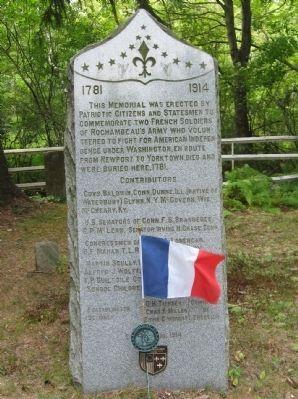
Memorial to two French soldiers, East Farms Cemetery, behind 3092 E Main St
Waterbury, CT 06705 - Photo credit: Michael Herrick of Southbury, CT
|
|
• This memorial is located in East Farms Cemetery, a small hidden cemetery in the wooded area behind the house at 3092 East Main Street.
• We are in the process of referencing this "hidden" place on google maps! Stay tuned!
Inscription:
1781 1914
"This memorial was erected by Patriotic Citizens and Statesmen to commemorate two French Soldiers of Rochambeau's Army who volunteered to fight for American Independence under Washington, enroute from Newport to Yorktown, died and were buried here, 1781"
|
|
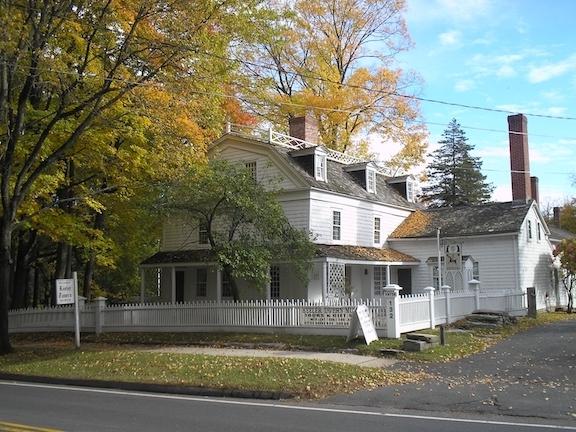
Ensign Samuel Keeler’s Tavern, 152 Main Street, Ridgefield, CT 06867
Rochambeau celebrated his 56th birthday in this tavern, now housing a living Colonial museum with period furnishings & costumed guides. Photo credit: Bill Coughlin
|
|
11th (and last camp in Connecticut) in Ridgefield’s Ridgebury Parish on July 1 and 2, 1781
• Rochambeau’s troops camped in this area. It was their last camp before crossing the border into New York and joining with the Continental Army near what is today White Plains, New York, on July 3, 1781.
•Deployed on the ridge was an advance guard of chasers and grenadiers under Major Alexandre de Berthier. The Hussar Legion of Duc de Lauzun took North Salem Road eight miles to the southwest to screen the French camp from British spies.
• Before leaving for New York, Rochambeau celebrated his 56th birthday in Ridgebury at the Ensign Samuel Keeler’s Tavern.
• After the victory at Yorktown, Rochambeau’s army returned north in the fall of 1782, passing through the area before reaching camp in Danbury October 23-24, 1782.
•On July 1, 1781, Rochambeau and his officers stopped for water at the homestead of Stephen Norris, which still stands along the road linking Danbury and Ridgefield. That morning, Abigail Norris had delivered her sixth child. In honor of the French, the child was named after the Duc de Lauzun: Delazon.
The grave marker of nine year-old Delazon Norris may still be found today in Ridgebury cemetery.
|
|
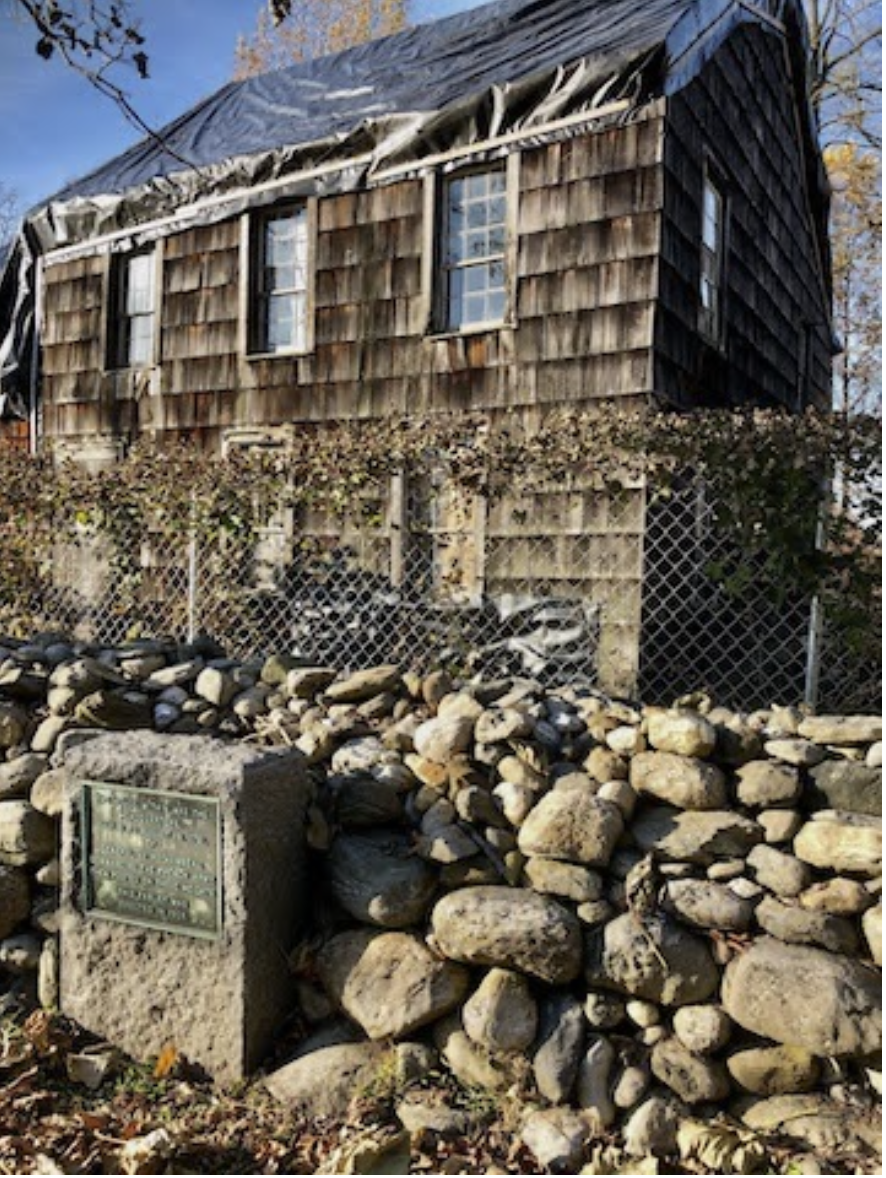
• Located 30km north of New York off I87 and just south of White Plains, this farm is undergoing renovations and has just been bought by the City of Greenburgh (Westchester County) for conversion into a museum.
• Rochambeau established his headquarters on this farm, July 6 -August 18, 1781 and met with George Washington to develop the strategy which was successful at Yorktown.
• A plaque was installed in 1905 on a granite rock with the seal of the Daughters of the American Revolution at the top.
Inscription:
THE HOUSE WITHIN WAS THE HEADQUARTERS,
JULY 6 TO AUGUST 19, 1781, OF
GENERAL DE ROCHAMBEAU, COMMANDING THE FRENCH ARMY,
THEN POSTED ON THESE HEIGHTS.
THIS TABLET WAS ERECTED IN 1905
|
|
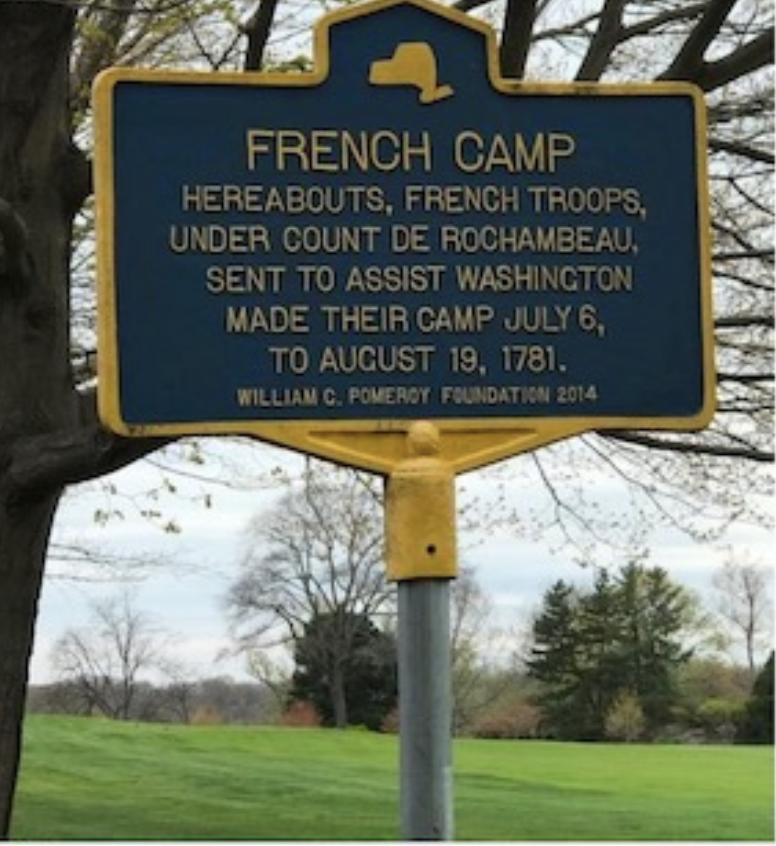
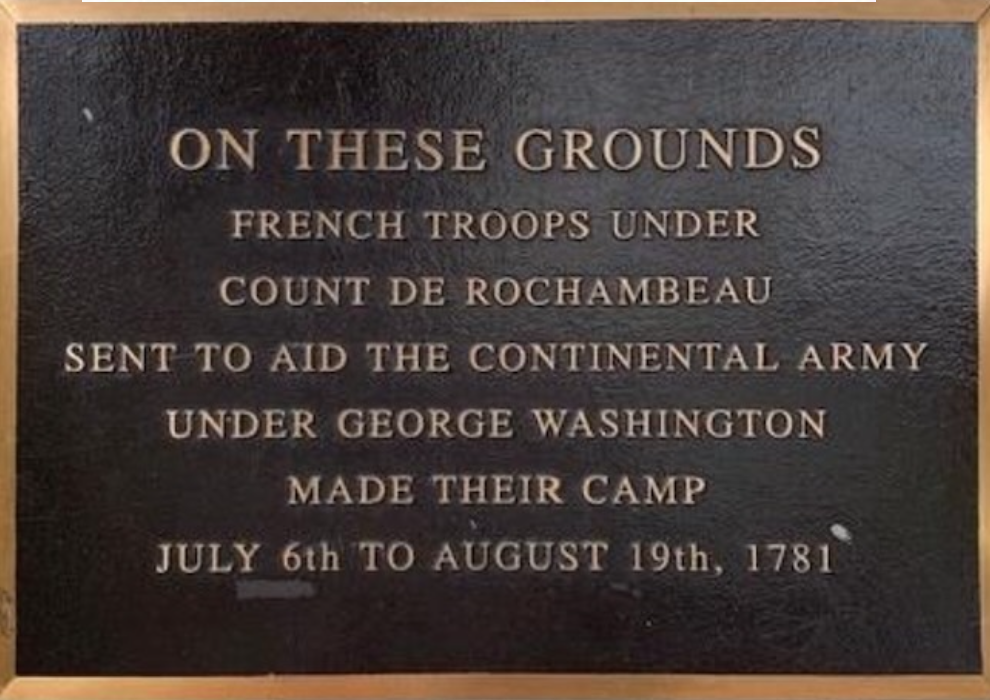
Plaques located inside at the entrance of the Sunningdale Country Golf clubhouse and on the green, 300 Underhill Road, Scarsdale, NY 10583
|
|
THE TWO ARMIES FINALLY JOIN!
• "The encampment at Greenburgh was the first time the allied armies met (...) It turned into the longest encampment of the campaign, and the only time the Franco-American armies encamped in close proximity to each other. For the six weeks that the armies camped there in anticipation of the march on New York it also became one of the most densely populated areas in the United States: its officers with their hundreds of servants, around 11,000 soldiers, wagoners and supply personnel constituted the fourth-largest city behind New York, Philadelphia, and Boston."
Excerpt from "The Franco-American Encampment in the Town of Greenburgh, 6 July – 18 August 1781: A Historical Overview and Resource Inventory"
Project Historian , ROBERT A. SELIG, Ph. D. © Town of Greenburgh
• During the month-long encampment, Lauberdière wrote that Rochambeau "always had with him and at his table a very great number of American officers. General Washington also had many French (officers)."
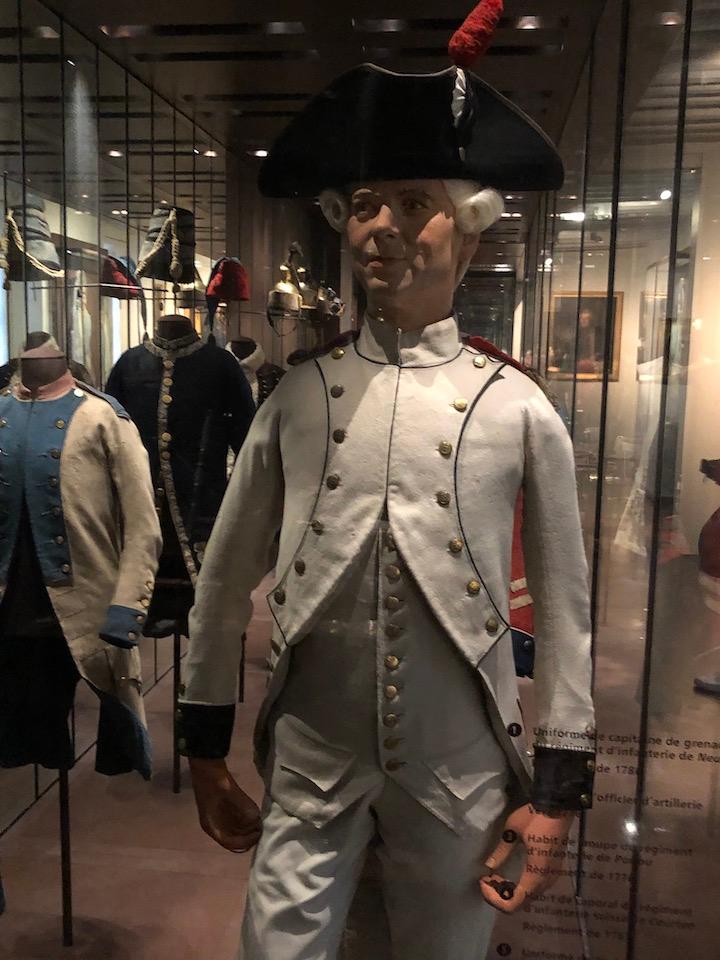
• The allied forces comprised a diverse group with a common goal. French troops impressed colonists with their professional military training and elegantly decorated uniforms. The Continental Army, however, included able bodies, from boys who were barely teens to men who were grandfathers. Some had been trained; others had never fired a shot. A man’s social or political status often determined his rank. Although most American soldiers were of British ancestry, some descended from Germans, Africans, and American Indians.
• Washington's secretary Jonathan Trumbull Jr. wrote to Colonel Richard Varick on 13 July :
"The Junction of the two armies is formed at this Place, & has commenced with high seeming Cordiality & Affection, demonstrated by constant Acts of Conviviality & social Harmony. A very fine Body of Troops compose the French Army, which seems anxious to give some Marks of Heroism, to distinguish their Attachment & Military Pride."
|
|
Musée de l'Armée, Paris. Photo Thierry Chaunu |
|
END OF PART II IN A SERIES
WE WILL KEEP WALKING NEXT MONTH
ALONGSIDE ROCHAMBEAU & WASHINGTON!
We encourage you to drive (or bike, or walk!!) through these beautiful towns and this Historic Road in Connecticut & New York.
Please visit these 2 wonderful websites for more details:
|
|
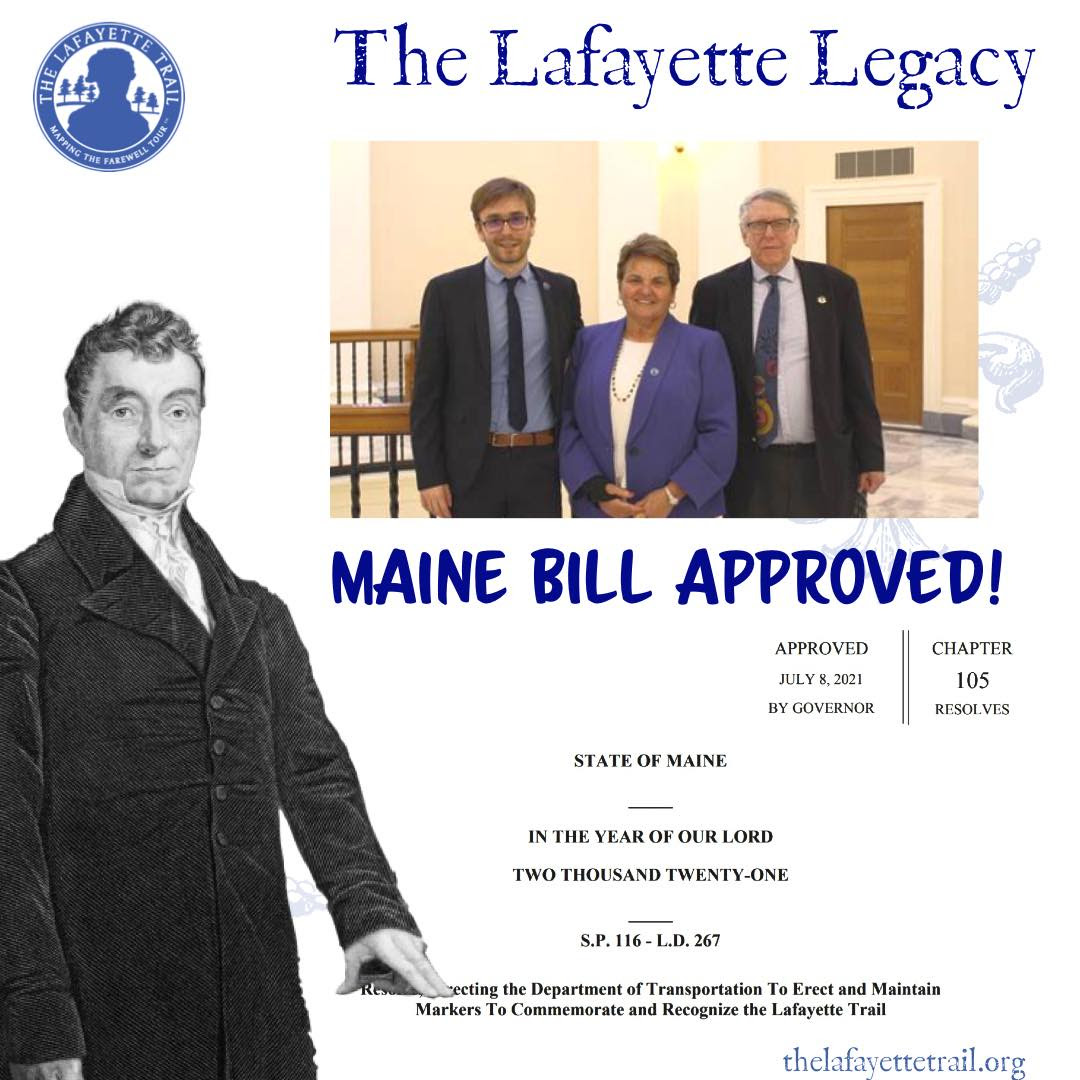
Sen. Deschambault with Founder of The Lafayette Trail, Julien Icher, on the left, and Alan Hoffman, an advocate for The Lafayette Trail organization, on the right. |
|
On July 8, 2021, The Governor of the state of Maine signed into law LD 267, “Resolve, Directing the Department of Transportation To Erect and Maintain Markers To Commemorate and Recognize the Lafayette Trail”.
The bill received unanimous, bipartisan support. The signing into law is the last step in the life of a bill.
The Lafayette Trail is now part of the law of Maine!
We are delighted that the Pine Tree State has created legal protections for Lafayette’s memory to be preserved and transmitted for the enjoyment and education of future generations.
We salute Julien Icher, president of the Lafayette Trail, for his tireless efforts to retrace, step by step, marker after marker, the phenomenal "rockstar tour" of Lafayette as the "Guest of the Nation" in 1824-1825.
Our gratitude goes also to all the dignitaries who made this possible: Senator Susan Deschambault of York for her sponsorship of this important piece of legislation, Alan Hoffman, president of the American Friends of Lafayette, and Beverly Robbins, State regent for the state of Maine Daughters of the American Revolution for their powerful testimonies in support of the adoption of this bill in the state of Maine.
To read the complete story, click the link below:
To read the bill, click the following link:
There is a series of videos on YouTube that we heartily recommend, "Follow the Frenchman" where you can see Julien Icher in action, with a host of local officials welcoming him throughout the United States:
The American Friends of Lafayette are also getting ready to prepare the bicentennial of Lafayette in 2024-2025, with many events in New York, where he stayed 30 days!
Stay tuned for more information in the coming months.
For more information and donations, contact:
|
|
NEWPORT, R.I.
Two grave markers for French Navy Officers of the French frigate Hermione:
Cpt Pierre du Rousseau Chevalier de Fayolle, aide-de-camp to Lafayette, and Lt Benjamin Auguste Lavilmarais, will be dedicated in the historic cemetery of Trinity Church, Newport, RI, on: Friday Sept. 10 at 2:00 PM.
A reception will ensue immediately afterwards at the historic Colony House, and there will be several events celebrating the French presence in Newport throughout the entire weekend, organized by the Historical Society and the municipality of Newport.
|
|
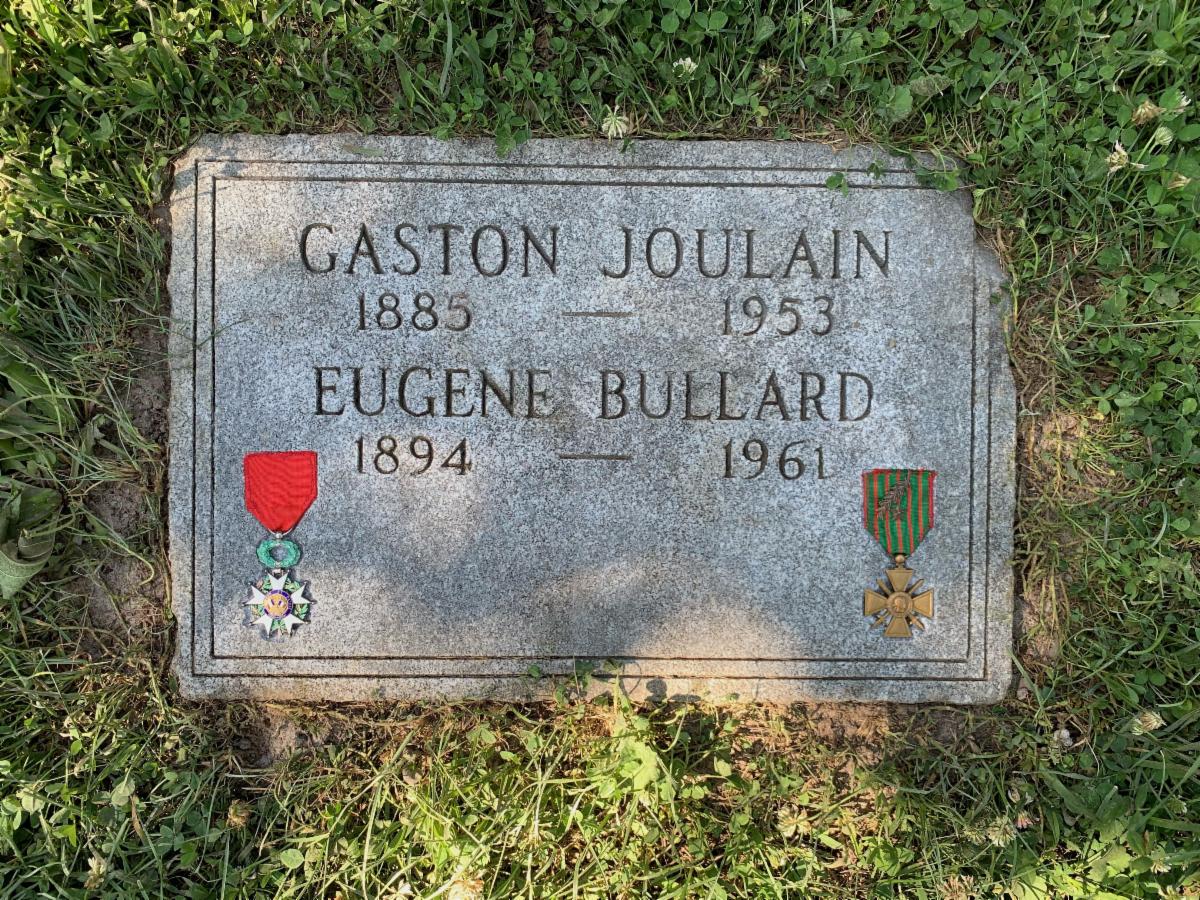
A NEW GRAVE MARKER FOR WWI AMERICAN HERO EUGENE BULLARD
Recognized by the US Air Force as
"The First African American fighter pilot in history"
Following our February 2021 Bulletin, which recounted the incredible story of Eugene Bullard, buried in the French War Veterans lot at Flushing cemetery, NY, Mr. Alain Dupuis, President of the Federation of French War Veterans and 2nd Vice-President of the Souvenir Français USA has procured two authentic, period-correct medals of the Legion of Honor and the "Croix de Guerre" with palm, and had them incorporated into a grave marker with new technology which allows for the medals to be inserted within the stone and covered by a special type of transparent resin, which should last for decades.
A re-dedication ceremony will be held, on or around next Armistice Day, November 11, 2021.
|
|
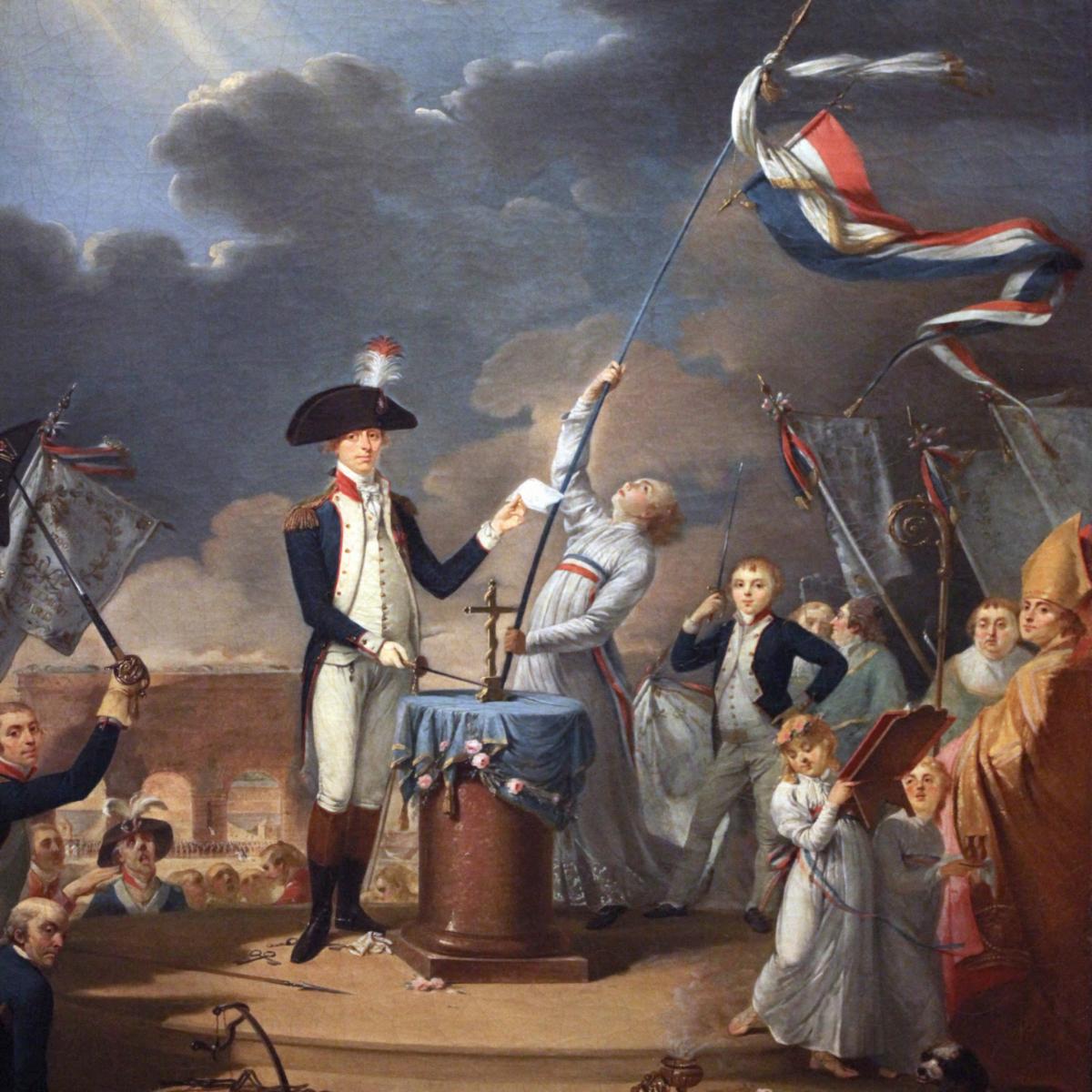
Le serment de La Fayette à la fête de la Fédération, 14 Juillet 1790
The oath of La Fayette at theFestival of the Federation, 14 July 1790
Oil painting by L. David (Musée Carnavalet, Paris)
|
|
AMERICANS CELEBRATE THE 14-JUILLET (aka BASTILLE DAY)!
Both national holidays in the United States and France are just a few days apart, and celebrate the same ideals of liberty, and unity.
Also commonly known as "Bastille Day", the National Holiday in France was decreed by the "Chambre des Députés" in 1880 to commemorate the "Fête de la Fédération", held on the Champ-de-Mars in Paris on July 14, 1790.
At the time in 1880, let us not forget that there were really only two republics in the world, since most other countries, with very few exceptions, were ruled by kings and queens.
Shown above in the famous painting by L. David is Général Marquis de La Fayette, who led the President of the National Assembly and all the deputies in a solemn oath to the coming Constitution. Standing next to him is his son Georges-Washington de La Fayette (aged 11), named after General Washington. (Musée Carnavalet, Paris).
In many cities throughout the United States, many Americans raised a toast and danced with French expats or residents.
For the first time in New York, the Consulate General of France in New York, the French Institute Alliance Française (FIAF) and the Committee of Francophone Associations (CAFUSA) organized a special July 14 celebration in Central Park with hundreds dancing, just as in Saint Tropez, to the tune of DJ celebrity Joachim Garraud.
|
|
OUR MISSIONS:
• To preserve the memory of the French soldiers, sailors and airmen who gave their lives for freedom, and who are buried in the United States.
• To honor French Citizens who did great deeds in the United States, or with a strong connection with the United States,
• To promote esteem for French military heritage in the United States,
• To strengthen the long-standing traditional bonds of friendship between the American and French peoples, and to this end: erect or maintain memorials and monuments and encourage historical research, public presentations and publications in the media.
Le Souvenir Français, a French association under the high patronage of the President of the Republic, was born in 1872 in occupied Alsace-Lorraine, and was founded in 1887 in Paris by Professor Xavier Niessen. The association has more than 300,000 members in France and in more than 45 countries.
In the United States, the American Society of Le Souvenir Français (Souvenir Français USA) has been represented since the First World War by a General Delegate, among whom were Dr Jules Pierre, MM. Bruno Kaiser, Colonel Roger Cestac, Christian Bickert, Mathieu Petitjean, and Jean Lachaud. The association is presided since November 2020 by CF(H) Thierry Chaunu (H) Lt Cdr., French Navy.
The American Society of Le Souvenir Français, Inc. is a 501(c)3 corporation established in 1993 in NY.
|
|
OUR PAST MONTHLY BULLETINS
June Bulletin – On the footsteps of Rochambeau (Part 1 – Connecticut)
May Bulletin honoring the WWII French aviators who died in the United States
April Bulletin celebrating the annual commemoration of “French Alliance Day” in Valley Forge, PA
March newsletter honoring two French Navy officers from Rochambeau’s army buried in Newport, RI.
February Bulletin honoring Eugene Bullard, America's first Black Fighter Pilot:
|
|
Did you know that a portion of every purchase you make on Amazon can benefit American Society of Le Souvenir Francais Inc, at no cost to you?
Simply go to: smile.amazon.com, designate American Society of Le Souvenir Francais Inc. as your beneficiary, and shop away!
|
|
Help us implement several historic commemorative projects celebrating the 243-year-old Franco-American friendship and alliance!
The American Society of Le Souvenir Français, Inc. is a registered NY State non-profit corporation and has full IRS tax exempt 501(c)3 status. All donations are tax deductible.
pt 501c3 status. All donations are tax deductibl
Contact: Thierry Chaunu, Président
132 East 43rd Street #341 The Chrysler Building New York, NY 10017
|
|
|
|
|
|
|