Weekly News From Los Alamos County
June 16, 2022
|
|
Inside this newsletter, you will find...
The Epidemiology Corner - COVID-19 Update, Community Briefing Next Week,
Oral Treatments Info., Updated Travel Requirements, Vaccine Clinic Coming,
Survey & Results, COVID-19 data and more.
|
|
|
|
COVID-19 Update...
"...Omicron variants BA.4 and BA.5 are roughly doubling in prevalence each week..."
|
|
Concerning BA.4/BA.5 Variants Expected to Soon Predominate in US
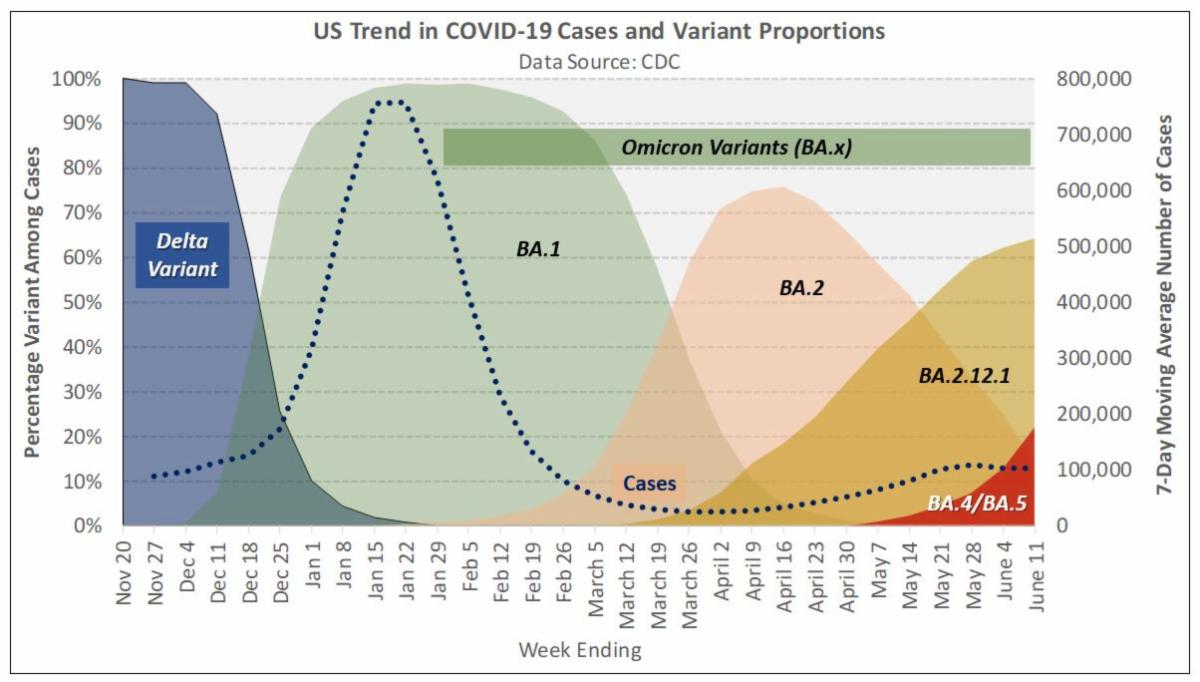
For the week ending June 11, CDC estimates that Omicron variant BA.2.12.1 continues to predominate in the U.S. at 62% prevalence, however, Omicron variants BA.4 and BA.5 are roughly doubling in prevalence each week and are now estimated to account for 22% of cases nationwide. See HERE. Case numbers in the U.S. have been stable at roughly 100,000 per day over the past four weeks, but health authorities expect case numbers to increase as the more immune-evasive BA.4/BA.5 variants come to predominate.
|
|
Observations from BA.4/BA.5 Waves in Portugal and South Africa
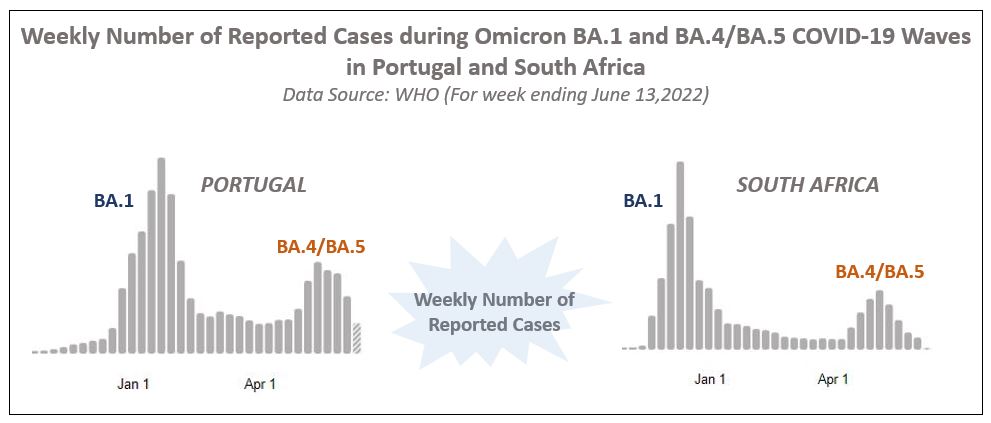
Two countries, Portugal and South Africa, have recently undergone BA.4/BA.5 variant waves which lasted about 6-8 weeks. The number of reported cases in each country peaked at about 40%-50% of that seen during the preceding January BA.1 surge. Whether a similar proportional increase in cases will occur in the U.S. as the BA.4/BA5 wave sweeps through remains uncertain. The European Centre for Disease Prevention and Control has warned that cases are increasing and will likely increase more in Europe with this next Omicron variant wave, which may bring increased hospitalizations and deaths. See HERE. Some laboratory studies have shown that BA.4/BA.5 variants are more likely to infect lung tissue compared to the preceding Omicron variants, and health authorities are concerned this enhancement may lead to higher levels of severe disease and death. To reduce risks of severe disease, CDC strongly recommends that all eligible persons, especially those at high-risk, remain up-to-date with vaccinations, including boosters. See HERE.
|
|
COVID-19 Incidence in the County: June Brings Sharp Increase in Reported Cases
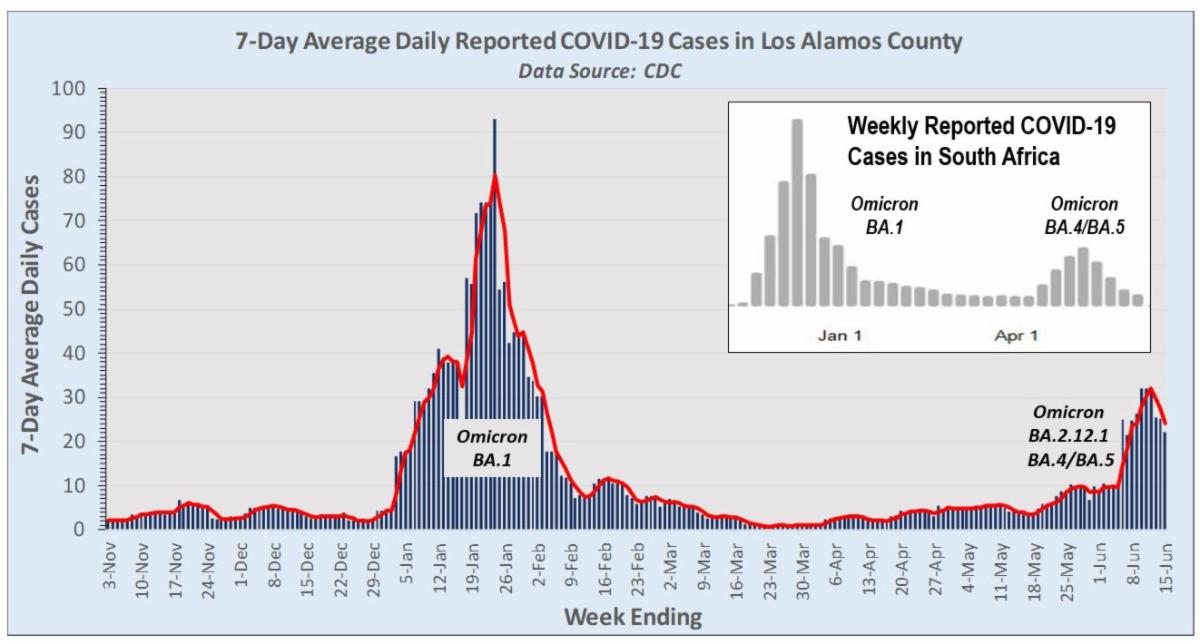
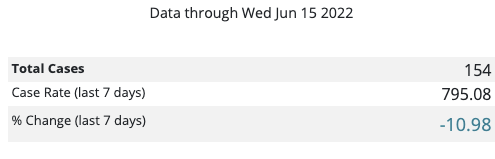
Average daily reported COVID-19 cases in the county more than doubled over trend during the first two weeks of June, reaching a level roughly 40% of the January BA.1 surge. Although the Omicron variants circulating in the county are unknown, the June incidence pattern is similar to that of the BA.4/BA.5 wave seen in both Portugal and South Africa. It is important to note, however, the current Omicron wave may not necessarily have peaked in the county and further near-term case increases may occur. Nearly six months have passed since the January BA.1 case surge, and waning immunity in county residents vaccinated or previously infected may continue to provide a reservoir of population susceptibility for the immune-evasive BA.4/BA.5 variants.
|
|
Community Level Risk and Comparison to Neighboring Counties in Health Services Area (HSA)
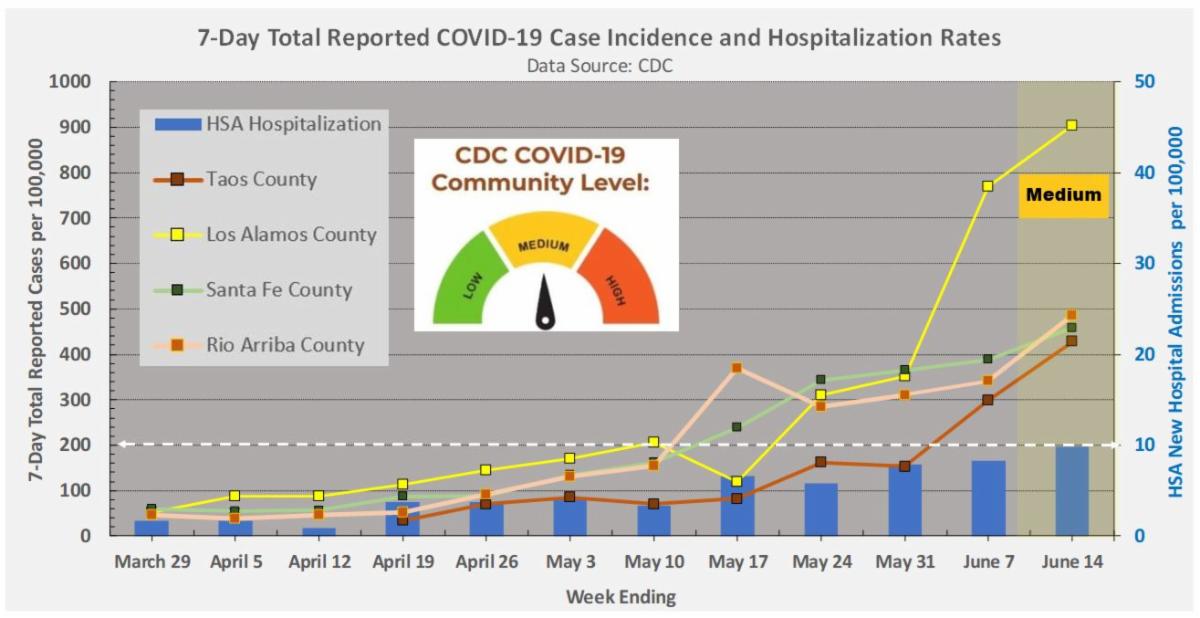
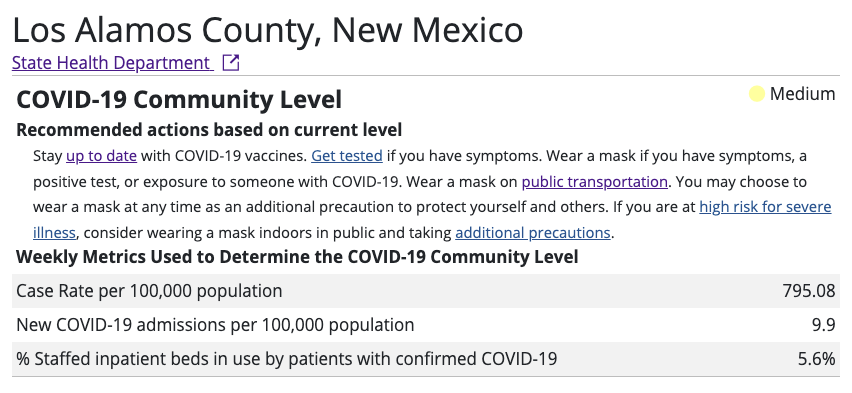
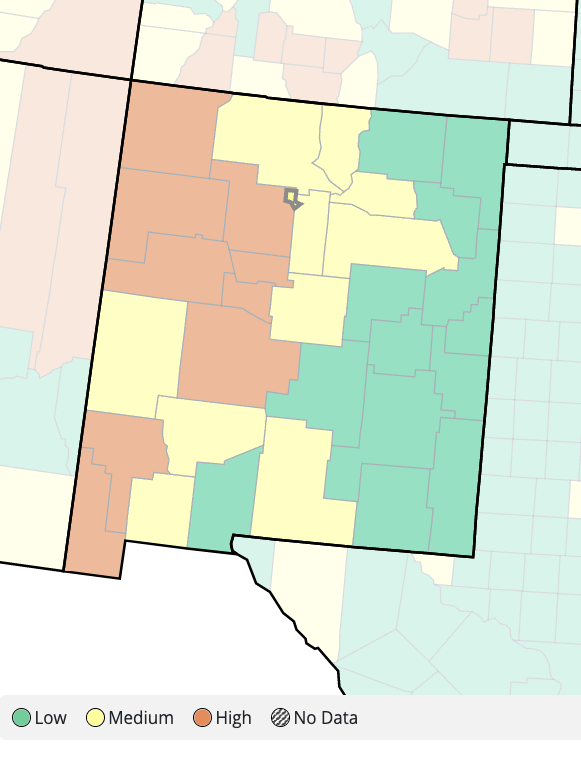
The current CDC Community Level for the county remains at Medium risk since the HSA hospitalization rate of 9.9 per 100,000 is just below the 10 per 100,000 threshold for High risk. Of the 33 counties in New Mexico, nine are currently classified as High risk, eleven as Medium risk, and the remainder as Low risk. See HERE. From March 2022 through May, case incidence and hospitalization rates rose similarly in Los Alamos County and the three neighboring HSA counties, but thereafter, incidence rates in Los Alamos increased much more rapidly, and as of the week ending June 14, were roughly two-fold elevated over neighboring HSA counties. The cause of the rapid increase in Los Alamos County case incidence is unknown, but one possible cause would be a comparatively earlier introduction of the BA.4/BA.5 variants into the county population.
|
|
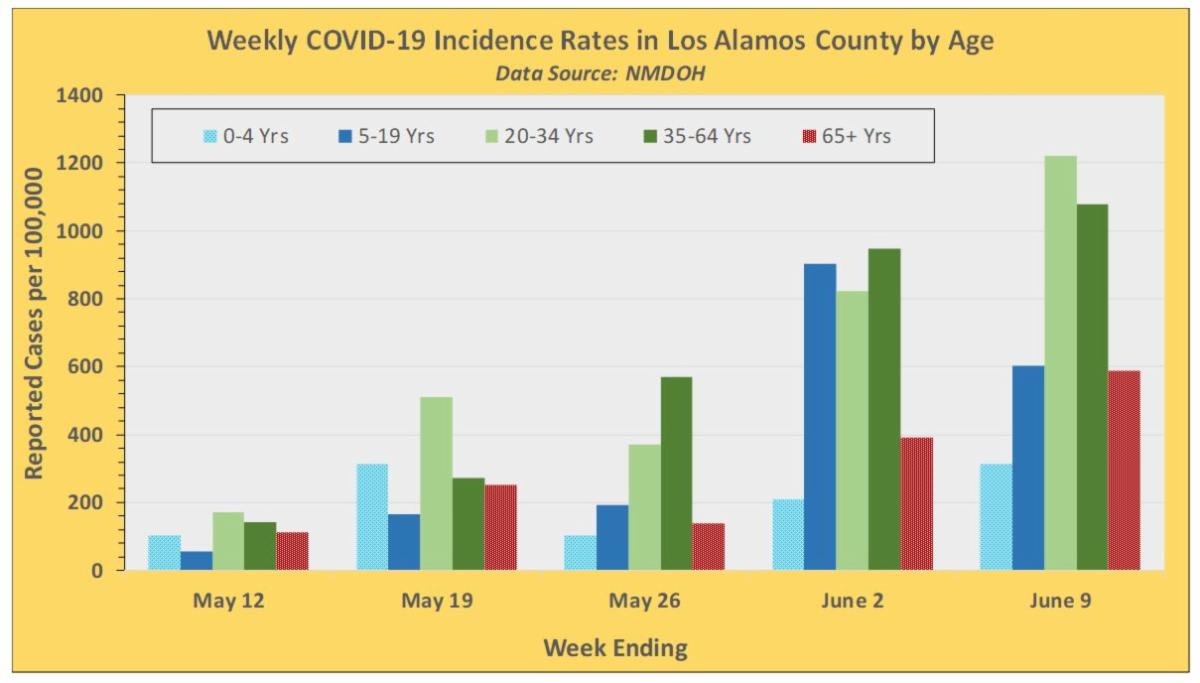
Comparison of Age-Specific Incidence Within the County (March 2022 – June 2022)
Reported case incidence has been continually rising in all age groups from the low level incidence occurring in March-May 2022. All age groups contributed to the jump in cases observed in June, with the highest rates seen in adults 20-64 years. Rates in persons 65+ years increased by nearly six-fold between the weeks ending May 12 and June 9. Seniors are at particularly high risk of severe disease and hospitalization, and NMDOH recommends that all persons 65+ testing positive for COVID-19 receive oral anti-viral treatments within 5 days of symptoms or positive test results. See HERE.
|
|
NOTE: The COVID-19 incidence data reviewed here are based mainly on PCR-confirmed testing results compiled by CDC and may not necessarily include positive at-home antigen tests. As such, case counts are likely underestimated, but by how much cannot currently be determined.
To assist with more complete case monitoring in New Mexico, NMDOH provides for on-line reporting of positive at-home antigen results HERE.
|
|
Community briefing on COVID-19 status
Los Alamos County is undergoing a surge of infections of the highly transmissible COVID-19 Omicron variants. As of June 16, the Centers for Disease Control and Prevention (CDC) has measured the impact of illness in Los Alamos County as “medium," although just barely.
Los Alamos County officials announced that it will hold a virtual briefing regarding the community’s COVID-19 status on Thursday, June 23 at 5:30 p.m. with representatives from the county, Los Alamos Public Schools, and retired epidemiologist William Athas, PhD. Members of the public can join using the following Zoom link:
Los Alamos County officials continue to encourage individuals to utilize tools to protect against COVID-19: Facemasks (N95 and KN95) and social distancing, Testing, Vaccines and boosters, and Treatments. Visit the following websites for additional information:
Los Alamos County website: https://lacnm.com/COVID for information on vaccines and testing in the community; the CDC website for suggestions to protect against COVID-19 at the various community levels; and the New Mexico Department of Health website at https://cv.nmhealth.org for additional information on vaccines/boosters, testing and treatments throughout New Mexico.
|
|
Oral treatment for COVID-19: The game changer
By: David R. Scrase, M.D. acting cabinet secretary for New Mexico Department of Health
There have been a lot of game changers since COVID-19 began – including the virus itself, which has completely upended our way of life, across the globe. For two years we have been in a dead heat, racing against emerging variants, lining our tool kit with the most successful vaccine in human history, collectively postponing big life events to save the very lives we are meant to be celebrating…and so much more. How are we faring in this race? A look back helps define where we are, how far we have come, and why what we do now matters.
The first game changer and the most prolific is of course the ground-breaking mRNA vaccine. A remarkable medical wonder, years in the making, released seemingly overnight to prevent millions of hospitalizations and lives lost. If you haven’t gotten yours, please make sure to get your vaccine and stay up-to-date on your boosters.
Second, came at-home testing: the free, convenient way for everyone to easily confirm within minutes instead of days, whether they are COVID positive. In addition to its vital role in mitigating viral spread, the swift response time gives a third game changer its best chance at leveling the field: the mighty, the powerful, the must-be-taken-within-a-5-day-window pill that will likely keep you out of the hospital, and may even save your life: the oral treatment.
Oral treatments, taken from the convenience of home, reduce our chance of severe outcomes from COVID-19, including hospitalization and death, by nearly 90%. What more needs to be said? But wait, there is more: oral treatments can prevent our hospitals from being overrun during surges. I’m sure we can all agree the global medical staff has paid their collective dues. Now we can pay it forward, by easily treating it with prescribed medication. That’s a game changer.
You might be saying, sounds good…but who gets these oral treatments? Just those at risk for hospitalization or death? Well, yes and no. Yes, of course those at increased risk for severe outcomes qualify for oral treatment…but what constitutes a high risk individual?
You may be surprised to know:
Anyone who is over 65, overweight, pregnant, has asthma, is a smoker, diabetic, and more. So in fact, that means the majority of us here in New Mexico. The more qualifying conditions a person has, the more likely they’ll suffer severe outcomes. If this is you, the time is now to speak with your doctor about a plan for oral treatments, or to make one.
Great. So how do we all get started?
A positive test result is required, along with any COVID-19 symptom, even fatigue. A few options: The Department of Health launched a resource to help you find a treatment. Test-to-treat locations offer both testing and treatment during the same visit. Since treatment needs to start within the 5-day window of the first symptom, the value of one-stop shopping goes beyond convenience. Another is at-home tests, quick results mean you’ll have the best chance at seeking treatment fast. If you don’t already have a handful of these tests at your house now, order some today at findatestnm.org.
I’ve said it before and it bears repeating: as tired as we are of COVID-19, it is not tired of us. And it’s not done with us. But in this fight against such a formidable and evasive viral contender, there is good news: by using these game changing tools, we become the game changer ourselves!
You have that power, I urge you to use it. Like one of my patients did Memorial Day 2022. She had a positive home test, is over 65 years old, and has some other risk factors, too. She texted me while I was out with my wife on a bike ride and soon after we returned home I called her, verified her test result, symptoms, and risk factors, and sent a prescription for oral treatment to her pharmacy. As I write this, she’s already taken her first dose.
And I’d like to thank all of you for your continued efforts to safeguard your fellow New Mexicans. I will continue to share all I can about the advancements we’re making, and the tools we have to protect ourselves, our communities, our hospitals, and each other. I believe the best is yet to come. COVID may not be over, but we are stronger than ever and can reach that day in the hopefully not too distant future, together.
The simple take away: COVID-19? Get Vaccinated. Get Tested. Get Treated (right away).
|
|
How Long Does Covid Immunity Last? Will a Second Illness Be Worse? How Can I Prepare?
Some reinfection questions, answered.
If you’re one of the millions of Americans who have already had Covid-19, you may be wondering how long you will have immunity from the coronavirus. Earlier in the pandemic, most people assumed that getting infected had at least one upside: that you would be protected against future encounters with the virus. But as the latest wave heads toward the Western region of the country and the virus shows no signs of easing up, reinfections seem to have become common. Already, many people are reporting second or even third infections with newer variants.
Experts have warned that exposure to the coronavirus — through vaccination or infection — does not mean that you are completely protected from future infections. Rather, the coronavirus is evolving to behave more like its closely related cousins, which cause common colds and infect people repeatedly throughout their lives.
However, the coronavirus doesn’t yet fit into clear seasonal patterns like the other common cold viruses. It can also cause debilitating symptoms that persist for months or years in some people, and has claimed the lives of millions of others. So what can you do to protect yourself, not only from infection but also reinfection?
How long will my immunity last after getting Covid?
Before Omicron, reinfections were rare. A team of scientists, led by Laith Abu-Raddad at Weill Cornell Medicine-Qatar, estimated that a bout with Delta or an earlier coronavirus strain was roughly 90 percent effective in preventing a reinfection in both vaccinated and unvaccinated people. “But Omicron really changed that calculus,” said Dr. Abu-Raddad, an infectious disease epidemiologist.
After Omicron emerged, prior infections only provided about 50 percent protection against reinfection, Dr. Abu-Raddad’s study showed. The coronavirus had acquired so many mutations in its spike protein that newer versions became more transmissible and better able to evade immunity. That means you can catch a version of Omicron after recovering from an older, non-Omicron variant. You can even get sick with one of the newer Omicron subvariants after getting over a different version of it.
Other factors also increase your vulnerability to reinfection, starting with how long it has been since you had Covid. Immune defenses tend to wane after an infection. A study published in October 2021 estimated that reinfection could occur as soon as 3 months after contracting Covid-19. While these findings were based on the genome of the coronavirus and accounted for expected declines in antibodies that could fight off the virus, the study did not account for new variants like Omicron that were radically different from older variants. Because of how different Omicron is, your protection may wane even sooner.
Because the virus is infecting more people now, your chances of being exposed and getting reinfected are also higher, Dr. Abu-Raddad said. And while it’s unclear if some people are simply more susceptible to Covid-19 reinfection, researchers are beginning to find some clues. People who are older or immunocompromised may make very few or very poor quality antibodies, leaving them more vulnerable to reinfection, Dr. Abu-Raddad said.
For now, you should treat any new symptoms, including a fever, sore throat, runny nose or change in taste or smell, as a potential case of Covid, and get tested to confirm if you are positive again.
Will subsequent infections be more or less severe?
The good news is that your body can call on immune cells, like T cells and B cells, to quash a reinfection if the virus sneaks past your initial antibody defenses. T cells and B cells can take a few days to get activated and start working, but they tend to remember how to battle the virus based on previous encounters.
That means that people who are vaccinated and boosted are especially well equipped to duke it out with the coronavirus. Similarly, people who have been infected before are able to keep the virus from replicating at high levels if they get reinfected. And most people who have logged encounters with both the vaccine and the coronavirus build up a hybrid immunity that may offer the best protection.
The result is that second or third infections are likely to be shorter and less severe.
But just because reinfections are less severe, it doesn’t mean that they are not terrible. You may still run a fever and experience body aches, brain fog and other symptoms.
What can you do to reduce your risk of reinfection?
Many of the tools and behaviors that help protect against infection can still help you avoid reinfection, Dr. Abu-Raddad said. “There is no magical solution against Covid reinfection.”
Getting vaccinated and boosted, for example, is a good idea even after you’ve had Covid. You only need to wait a few weeks after an infection to get a shot. The vaccines will bolster your antibody levels, and research shows that they are effective in preventing severe outcomes if you get sick again. “Scientific confidence in vaccine-induced immunity was and is much higher than infection-induced immunity,” Dr. Crotty said.
Additional measures, like masking indoors and in crowded spaces, social distancing and improving ventilation where possible, can provide another layer of protection. But because most people and communities have largely dropped these protections, it is up to individuals to decide when to adopt extra precautions based on their risk of getting Covid and how much they’d like to avoid it.
|
|
Testing News and Resources |
|
CDC Rescinds Order Requiring Negative Pre-Departure COVID-19 Test Prior to Flight to the US
Today, CDC is announcing that the Order requiring persons to show a negative COVID-19 test result or documentation of recovery from COVID-19 before boarding a flight to the United States, will be rescinded, effective on June 12, 2022 at 12:01AM ET.
This means that starting at 12:01AM ET on June 12, 2022, air passengers will not need to get tested and show the COVID-19 test result or documentation of recovery from COVID-19 prior to boarding a flight to the U.S.
The COVID-19 pandemic has now shifted to a new phase, due to the widespread uptake of highly effective COVID-19 vaccines, the availability of effective therapeutics, and the accrual of high rates of vaccine- and infection-induced immunity at the population level in the United States. Each of these measures has contributed to lower risk of severe disease and death across the United States. As a result, this requirement which was needed at an earlier stage in the pandemic may be withdrawn. CDC continues to recommend that those travelers boarding a flight to the U.S. get tested for current infection with a viral test as close to the time of departure as possible (no more than 3 days) and not travel if they are sick.
CDC continues to evaluate the latest science and state of the pandemic and will reassess the need for a testing requirement if the situation changes. CDC will communicate any updates publicly if and/or when they change.
|
|
|
Will you continue to test for COVID-19 before and after travel as recommended?
|
|
|
|
Los Alamos County Testing Resources
Visit the County COVID Page for information regarding testing, click below:
|
|
Los Alamos Vaccine & Booster Information |
|
Vaccine/Booster Clinic Monday, June 27
Los Alamos County and Premier Medical Group will host a vaccine/booster clinic (Moderna and Pfizer vaccines) for eligible recipients, including children as young as 5, on Monday, June 27 from 3:00 p.m. to 7:00 p.m. at First Baptist Church of Los Alamos, 2200 Diamond Drive.
Individuals can schedule an appointment at https://vaccinenm.org. While appointments are preferred, walk-ins are welcome. Insurance and identifications are not required.
|
|
Los Alamos County Vaccine/Booster Resources
Visit the County COVID Page for information regarding vaccinations/boosters, click below:
|
|
CDC COVID Data Tracker - June 16, 2022
To get today's break down of positive case data, demographics information, vaccine status and more for Los Alamos County or other counties across the United States, click HERE
|
|
The charts available with this TOOL layout the key metrics for understanding the reach and severity of COVID-19 in a given area.
|
|
Johns Hopkins
COVID-19 Status Report Dashboard for
|
|
NMDOH Epidemiology Reports - Daily and Weekly Data
As part of the COVID-19 pandemic response, NMDOH collects and analyzes statewide data for COVID-19 positive cases, hospitalizations, and deaths. The reports reflect these critical data and are updated weekly - click HERE
|
|
We are listening to you!
Your feedback is helping to shape future newsletters, inform decisions regarding services, and make Los Alamos County healthier and safer. Make sure to participate each week to be heard!
|
|
Remember, we appreciate your questions! We always try to respond in a timely manner, and if appropriate, we will include those Q&As in future newsletters.
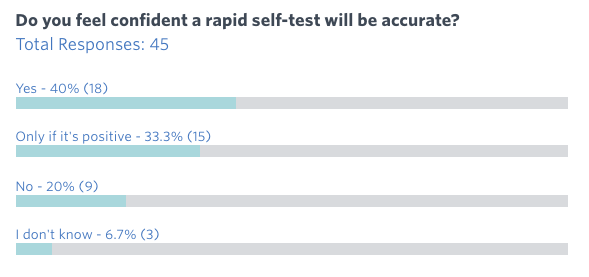
Take a look at these results from the last survey:
|
|
Your Lingering Covid Questions, Answered
When the Covid-19 pandemic began in 2020, we had a seemingly endless amount of questions and not so many answers. Now, more than two years later, we’re still learning how to live with the virus. And while many questions remain unanswered, there’s a lot we have learned about Covid-19 to navigate our lives amid the backdrop of a pandemic.
Here are answers to some of the Covid questions you may still have:
Jump to:
|
|
Have a question? Email us. |
|
What else would you like to see in this newsletter?
Click below to email us your feedback and questions!
|
|
|
|
|
|
|