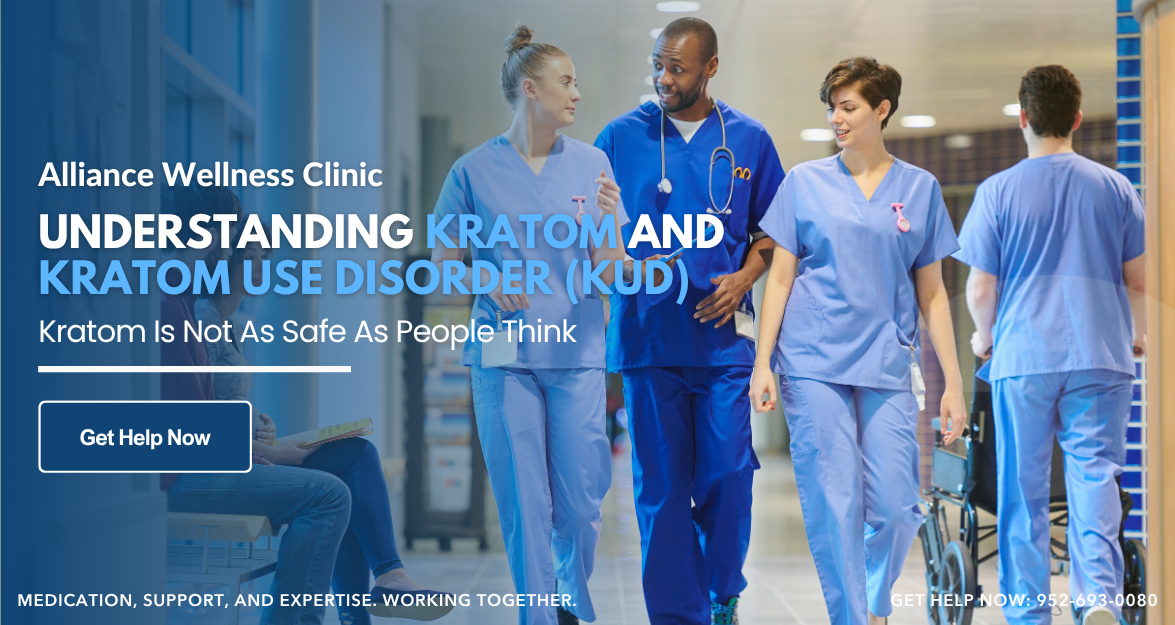
Understanding Kratom and Kratom Use Disorder | May 28, 2026
| | |
What Is Kratom?
Kratom (Mitragyna speciosa) is a botanical substance from Southeast Asia whose leaves contain alkaloids that act on the brain’s opioid receptors. At low doses it produces stimulant-like effects; at higher doses it produces sedation and analgesia similar to opioids. Its primary alkaloids, mitragynine and 7-hydroxymitragynine, are partial mu-opioid receptor agonists. Notably, 7-hydroxymitragynine has roughly 10 times greater potency than morphine at opioid receptors. (Source: Frontiers in Public Health, 2024)
Kratom products, sold in powder, capsule, liquid, or concentrate form at smoke shops, gas stations, and online retailers, are largely unregulated and unstandardized, meaning potency, purity, and content can vary dramatically from product to product.
Why Are People Using It?
Surveys of kratom users in the United States reveal that most are not using it primarily for recreation. Research shows that many individuals turn to kratom to:
- Self-manage opioid withdrawal symptoms and cravings
- Substitute for prescription opioids or heroin
- Manage chronic pain, fatigue, or anxiety
- Attempt to reduce or stop using other opioids
The Problem: Kratom Can Cause Its Own Dependence
While some individuals use kratom with the intention of reducing opioid use, managing anxiety or treating chronic pain, kratom itself carries substantial risk of physical dependence and addiction, a condition now referred to as Kratom Use Disorder (KUD).
Signs of Kratom Use Disorder (DSM-5 framework):
- Tolerance, needing progressively more kratom to achieve the same effect
- Withdrawal, experiencing physical symptoms (nausea, muscle aches, insomnia, anxiety) when stopping or reducing kratom
- Using more than intended, or for longer than intended
- Continued use despite harmful personal, health, or social consequences
According to researchers at Johns Hopkins Medicine, assessment and diagnosis of KUD should be systematic. Clinicians are advised not to automatically categorize kratom as “an opioid,” since its alkaloids act on multiple receptor systems, including mu-opioid, alpha-adrenergic, serotonergic, and dopaminergic pathways. Personalized, thorough assessment is essential. (Source: Springer/Current Psychiatry Reports, 2024)
| |
For providers: If you are seeing patients who use kratom, whether as a primary substance or as an attempted self-management strategy for opioid withdrawal, a licensed OTP can provide the comprehensive assessment and medically supervised treatment they need. Consider making a referral.
For individuals: If you feel like you can’t stop using kratom, or if you use it to avoid withdrawal from opioids, you are not alone, and what you’re experiencing is a medical condition. Evidence-based treatment is available.
| |
Alliance Wellness Clinic Treats Kratom Use Disorder (KUD)
Alliance Wellness Clinic, Inc. is one of the few programs in the Minneapolis area equipped to accept and evaluate patients with Kratom Use Disorder, including those who are using kratom. Our licensed medical providers and LADCs will work with patients to understand their full history and develop a personalized treatment plan.
Why Alliance Is the Right Choice for Kratom and Opioid Treatment:
- SAMHSA-certified, Joint Commission-accredited OTP, meeting the highest standards of care
- Medical providers (MDs) and licensed nurses experienced in opioid-related assessment
- Methadone and buprenorphine/Suboxone® available, both relevant to KUD treatment
- Licensed LADC counselors providing individual sessions tailored to your needs
- Cultural humility and a fully non-judgmental environment
- Most insurance accepted, including Medicare and Medical Assistance
Whether you’re a patient curious about your options or a provider looking to refer a patient with kratom dependence, Alliance Wellness Clinic is ready to help. Call us at 952-963-0080 to learn more, today!
| | |
About Alliance Wellness Clinic
Alliance Wellness Clinic, Inc. is a SAMHSA-certified, Joint Commission-accredited Opioid Treatment Program (OTP) serving the Minneapolis metropolitan area. As the drug supply continues to evolve, with fentanyl now often laced with dangerous adulterants, having access to a licensed, medically-supervised OTP is more important than ever. At Alliance, treatment is delivered by licensed nurses, medical doctors, and Licensed Alcohol and Drug Counselors (LADCs) in a culturally inclusive, judgment-free environment.
What Alliance Offers:
- Methadone maintenance treatment - daily, structured, and medically monitored
- Buprenorphine/Suboxone® - flexible medication with take-home options
- Individual counseling with licensed LADCs to support recovery and coping
- Chemical health assessments for personal, court-ordered, or funding purposes
- Referrals for mental health counseling and outpatient treatment
- Housing, employment support, and peer recovery connections
- Insurance accepted, including Medical Assistance and most private insurance plans
Alliance Wellness Clinic operates with its established clinical team and service model, strengthened by the expanded infrastructure, compliance expertise, and care coordination resources provided through Horowitz Integrated Services.
| | |
Partner with Alliance Wellness Clinic
At Alliance Wellness Clinic, client success is our priority. Through Horowitz Integrated Services, we are advancing opioid treatment across Minnesota by expanding access, strengthening coordination, and investing in sustainable, high-quality care. We look forward to connecting about our services, upcoming program enhancements, and how we can partner together to set a new standard of opioid treatment across the state.
| | |
Follow Us on Social Media
Stay connected with Alliance Wellness Clinic beyond the clinic. Follow us on social media for updates on our services, insights on opioid use disorder treatment, program expansions, and community partnerships across Minnesota. We share timely education, resources, and updates that reflect our commitment to high-quality, compassionate care, keeping clients, families, and professionals informed and connected as we advance opioid use disorder treatment, together.
| | | | |