Newsletter & Calendar of Events
September 28, 2026
| |
Thursday, October 1st
4:30-6:30 p.m.
Capitola Diner, 1900 41st Avenue, Capitola
As always, men and/or non-members are invited to attend.
|
Thursday, October 8th, 2026
10:00 a.m. to Noon
California Coffee, 9105 Soquel Drive, Aptos
Join like-minded conservatives for coffee and conversation! Men and guests are always welcome!
|
Thursday, October 15th, 2026
10:30 a.m. to Noon
(the old Malone's)
4402 Scotts Valley Drive, SVly
You are NOT alone!! Come join conservative men and women for coffee and conversation!
|
General Membership Meeting & Luncheon
Tuesday, October 27, 2026
Doors Open at 11:30a
Guest Speakers
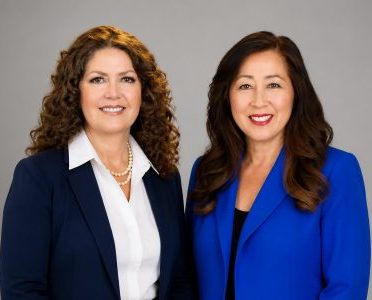
Shannon Kessler & Carol Pefley
Candidates for the CA Assembly
The November 3 California General Election will shape the direction of our state for years to come. Every seat in the California State Assembly is on the ballot, along with statewide offices, congressional seats, and a number of important statewide propositions.
This is an important opportunity for you to learn about the candidates seeking to represent you in Sacramento and to understand the importance of the State Assembly as well as other measures on the ballot.
Join us for a special Candidate Luncheon on October 27 featuring Shannon Kessler and Carol Pefley, candidates for the California State Assembly.
Over lunch, hear directly from both candidates as they discuss their priorities, and perspectives on issues important to our communities and the state of California.
Seascape Golf Club
610 Clubhouse Drive, Aptos
$40/members; $45/non-members
includes lunch choice of:
Grilled Salmon Salad
Romaine lettuce, Tomatoes, Mushrooms, Red Onions & Cucumbers, Topped with Grilled Salmon, and Raspberry Vinaigrette
Beef Lasagna
Beef, Topped with Marinara Sauce, Fresh Sautéed Vegetables
Opportunity Drawings
| Volunteers Needed to Canvas | We are looking for volunteers to canvas. If you are able to volunteer, contact Alla Mia at 831-566-4803. | Attached is a comprehensive voter guide consistant with Republican positions. Print and share with family and friends! |
What Your Monthly Donations Do
Each month we collect donations to help fund Turning Point PAC to canvass low-propensity voters. Below is a report of what our donations are doing.
|
What I saw while ballot chasing in Arizona
My name is Jessica O'Riley. I'm one of the ballot chasers your support put in the field in Arizona.
I wanted you to hear directly from me what your donation is actually doing.
Yesterday I knocked on a door and met a man who had no idea he was registered as a Democrat. He was shocked! We talked for twenty minutes about what's happening to this country, and by the time I left, he had switched his registration to Republican. He told me he has six people in his house who can vote. He's making sure everyone of them checks their registration and shows up in November.
That's one conversation. One door. Six new votes for America First candidates.
Later that same day, I met a young guy who told me he wasn't planning to vote. He didn't think it mattered. We talked about what's really at stake this November, and about why his voice counts more than he realizes. By the end of the conversation, he told me he's voting.
This is what your support is doing, Jane. Real conversations, on real doorsteps, changing real minds.
I want you to understand why this works. A TV ad can't sit on someone's porch and listen. A mailer can't answer the question that's actually keeping a voter home in November.
But I can.
|
Turn of the Screw: Another $135 Million from Taxpayers in Santa Cruz County Proposed
Voters deserve a straight answer before they're asked for another five years of a half-cent tax
By: Verbica for Congress
| |
SANTA CRUZ, Calif. - Sept. 22, 2026 - PRLog -- Peter Coe Verbica, candidate for Congress in California's 19th District and a signer of the "No New Taxes" Taxpayer Protection Pledge, weighs in on Santa Cruz County's proposed Measure E sales-tax increase.
Santa Cruz County is asking taxpayers for another half-cent sales tax for five years—reportedly an estimated $27 million a year, or roughly $135 million over the life of the tax. That is not pocket change. It is reportedly $135 million transferred from consumers and businesses to county government, on top of the taxes residents already pay.
What happens when sales taxes go up? At the margin, fewer cars are bought, fewer meals enjoyed at local restaurants, and fewer dollars are spent in local shops. When customers spend less, there can also be fewer entry-level jobs for young people.
The most important fact for voters is where that money goes. Measure E is structured as a general tax, meaning the proceeds go into the County's General Fund rather than being legally dedicated to a specific project or service. Whatever worthy programs are reportedly mentioned in the campaign for the measure, voters are fundamentally being asked to give county government another $135 million of broadly spendable revenue.
Before approving another tax, taxpayers can reasonably ask a simple question: Has the County demonstrated that it has exhausted opportunities to cut waste, improve efficiency and prioritize existing spending before asking residents for more? Calling the measure a half-cent tax makes it sound small. Over five years, however, the County's own estimate makes the scale much clearer: reportedly approximately $135 million. That is the number voters should keep in mind.
"Voters deserve a straight answer before they're asked for another five years of a half-cent tax: what, exactly, has the County cut or fixed on its own first?"
— Peter Coe Verbica, Candidate for Congress, California's 19th District
For more information: Peter Coe Verbica, JD, CRPC®, CFP® (https://peterverbica.com/)
Paid for by Verbica for Congress.
| Prop 39 Voter ID Statewide Tour to Hold 71 Rallies Through Election Day | |
Reform California Chairman and State Assemblymember Carl DeMaio is taking the Proposition 39 campaign on the road with a 35-day statewide bus tour featuring 71 events across California.
The tour kicks off September 29 and will take DeMaio, local elected officials, candidates, and civic leaders to communities across the state through November 2. Along the way, Reform California will distribute its “Plain English” Voter Guides, recruit and train volunteers, and hold rallies and press conferences in major regions.
Read the story below for the full statewide tour schedule and details on the campaign’s final push before Election Day.
- Prop 39 Voter ID Statewide Tour to Hold 71 Rallies Through Election Day
- Carl DeMaio Launches TV Ad Blitz for Prop. 39, Calls It the "Bipartisan Solution" to Voter ID — and Says Opponents Know It
- WATCH: Save Prop 13 Campaign at Risk of Failure!
- WATCH: Prop 39 Vote YES for a Bipartisan Solution for Voter ID
- WATCH: FINALLY! Indictments in CA Fraud Cases–Is Newsom Next?
We're running ads to promote these stories to Californians and get the truth out — since we know the mainstream media won't! That's why we need YOUR help. Even just $5 can help us get these stories in front of 10-15 persuadable Californians!
Can you share these stories with your friends and chip in TODAY to reach 10-15 others?
>>> Contribute Securely: Get These Stories Out to Californians
Best,
Dylan J. Martin
Communications Director
|
By James Fenkner, CFA
Sep 26
| |
Government always wants another slice of your paycheck. The easiest way is a special tax placed on the ballot under cover of a “citizen initiative.” Proposition 43 would do away with that dishonest development.
California has two kinds of local taxes. A general tax that goes into the general fund and can be (mis)allocated and (mis)spent by our elected officials. Such general taxes are passed with a simple majority.
A special tax is earmarked money that is tied to a named purpose: schools, parks, homelessness, fire, trains, basically anything that sounds good and popular. Before 2017, all special taxes required a threshold of 2/3 majority to pass. Prop 43 would reestablish that 2/3 majority threshold for special taxes.
Voters originally set that higher threshold on purpose. Proposition 13 in 1978, and Proposition 218 later, made a special tax hard to pass. If City Hall wants money locked to one cause, it needs two-thirds of the voters. A school board wants the same? Two-thirds. This higher threshold was based on the fact that earmarked taxes are much easier to sell to the electorate and once sold create constituencies hellbent on their continuation. Taxing you for a dedicated public pot was not meant to be easy.
Yet, California’s courts opened a workaround for special taxes lowering the two third’s threshold to just a simple majority. The 2017 case California Cannabis Coalition v. City of Upland was about a marijuana fee and election timing. Later courts stretched its logic to the vote threshold. File the same special tax as a “citizen initiative,” and a simple majority, 50 percent plus one, can pass it. The purpose stays special. The bar drops to a majority, opening the flood gates to more special taxes that are easy to pass; fifty percent is a low threshold in a state such as California with its massive bureaucracy and where public unions make up a significant bloc that always votes in favor of more spending.
Proposition 43 would end that shortcut beginning on January 1, 2027. Special taxes would again – staying true to the original Prop 13 – need two-thirds majority, no matter who puts them on the ballot.
Return to Prop 13’s Original Intent by Voting YES on Prop 43
The amendment is simple. No one may impose, extend, or increase a special tax without a two-thirds vote. New value-based property taxes would also be barred, except Proposition 13’s 1 percent rate and voter-approved bonds. Cities, counties, special districts, school districts, and community colleges would live under one rule. If the tax is special, it would need two-thirds approval.
Look at who those “citizen initiative” petitioners often are. Not neighbors with clipboards and a playground sketch. Public-employee unions are the main organized funders of city tax campaigns. A University of California analysis of 116 city tax measures found unions giving to 78 of them. On those races they supplied much of the money. Police and fire locals did much of the same self-interested funding when the tax would benefit their members.
Government agencies quickly learned that using “citizen initiative” made tax increases much easier. In San Francisco, a school district and its teachers’ union drafted a parcel tax for teacher pay and classroom staffing. A deputy superintendent edited the language. The union then asked three residents to sign as official proponents. A district-sponsored special tax would have needed two-thirds. The court treated it as a “citizen initiative” anyway.
Virtuous Packaging of Sneaky Taxes
The wrapping on special taxes is always virtuous, even if the outcome is not. Special taxes almost always name a cause few will campaign against, such as teacher salaries. child care, homelessness, fire protection, trauma centers, trains, parks, and community colleges. The deceptive wrapping is cynically used to make it easier to reach into your pocket.
It is worthy to note that what appears on the ballot as Proposition 43 is a watered-down version of the measure Howard Jarvis’s allies first filed. That version restored a two-thirds vote and reached back into special taxes already passed by simple majority. Assemblymember Buffy Wicks (D, Oakland) wrote the weakened replacement that let previously approved majority-vote special taxes stand. She shepherded it through the legislature where it passed 68–2 and 35–1. She then flip-flopped and urged Californians to reject the very amendment she had authored. The Democrat supermajority undermined Jarvis’s taxpayer stronger initiative. Then they walked away from the compromise that replaced it, in the cynical hope that special taxes continue to be easy to pass in California.
Proposition 43’s official title builds on the legislature’s deception. In 1978, Proposition 13 was objectively described as a “tax limitation” on the ballot because that is what it was. This year, Attorney General Rob Bonta completely turns the Proposition 43 ballot wording upside down by labeling it a “voter limitation” by inserting this statement on the ballot: “Limits Voters’ Ability to Raise Revenues for Local Government Services.”
The Prop 13 title named it a restraint on government. The Prop 43 title implies a loss for the public. Bonta’s creative writing does not mention a two-thirds threshold. It does not mention special taxes. It invites you to think you – not City Hall – are being limited.
Vote YES on Prop 43.
California is not an undertaxed state. California’s local governments already rank among the highest funded in the country. Lincoln Institute figures for 2023 put local general revenue here near $10,600 per person. The national average is about $6,900. Only New York’s local governments collect more.
At issue is whether another dedicated claim on your income must clear a 2/3 supermajority of voters or only a majority assembled by the special interest groups that often spend the money to benefit themselves.
Push back on the legislature’s deceptive attempt to make it easier to tax so their local minions can continue to overspend your hard-earned tax dollars.
Protect yourself.
VOTE “YES” ON PROP 43.
|
California Commentary
Despite fines, local governments still spend tax dollars on campaigns.
By Jon Coupal
| |
As the November election gets closer, be on guard for local governments openly supporting tax hikes – and spending taxpayer dollars doing so. While local officials are free to support or oppose ballot measures, they may not spend public funds on any election contest – either for or against a candidate or initiative.
Despite this clear prohibition, this is a growing problem, and it gets worse every election cycle as local governments – egged on by high priced consultants – push the envelope from merely informational activity into clear advocacy.
The Howard Jarvis Taxpayers Association has a special interest in challenging these violations because they are an affront to both statutory and constitutional law. The same First Amendment rights that allow individuals to speak on ballot issues also prohibit the use of taxpayer funds for political advocacy. In 1976, the California Supreme Court ruled, “The use of the public treasury to mount an election campaign which attempts to influence the resolution of issues which our Constitution leaves to the ‘free election’ of the people (see Const., art. II, § 2) … presents a serious threat to the integrity of the electoral process.” Stanson v. Mott (1976) 17 Cal.3d 206, 218.
A major development in this controversy occurred in 2017 when the County of Los Angeles spent almost $1 million in public funds on a multimedia campaign urging voters to support Measure H, a one-quarter percent sales tax increase to pay for homelessness services. The Howard Jarvis Taxpayers Association filed a complaint with the Fair Political Practices Commission (FPPC) as well as a lawsuit seeking to enforce the law that bars the use of public funds for political advocacy. Because the county failed in both its reporting and disclosure requirements, the FPPC imposed a record $1.3 million fine.
Taxpayers should be grateful that the FPPC has made addressing this abuse a priority. But there is only so much it can do. Current law does not permit the Commission’s Enforcement Division to investigate and bring legal action against public agencies and officials for spending taxpayer funds on campaigns. Its authority is limited to requiring disclosure of campaign spending and the timely reporting of those expenditures.
Past fines imposed by the FPPC under its limited authority include penalties imposed on the city of Garden Grove ($18,000 for distribution of a campaign related mass mailing at public expense), Fresno County Transportation Commission ($27,000 for failure to include a proper advertising disclosure on the “Video Ad”), and, just recently, Nevada County ($34,614 distribution of two mailers urging affirmative vote on a sales tax increase).
While these fines might generate bad p.r. for a local government, for taxpayers, they are inadequate relative to the severity of the misuse. That even applies to the $1,000,000 fine against Los Angeles County, for which one million dollars is budget dust.
In other words, despite the illegality of taxpayer funded advocacy, local officials have an incentive to violate the law because the potential ROI (the return on investment) of millions – if not billions – in new tax revenue would dwarf any fine or other punishment they might face. What is needed are real consequences imposed on bad actors including large fines, personal liability on the part of those authorizing those expenditures and, yes, even jail time.
So, what can voters do if they see a taxpayer-funded political ad that crosses the line from “informational” material to outright “advocacy?”
At a minimum, voters may forward a copy or screen shot of the questionable ad and send it directly to the FPPC’s “ad-watch” program, where citizens can report government-financed communications that they suspect cross the line into political advocacy. While the FPPC’s jurisdiction is limited to enforcing the disclosure of campaign spending and the timely reporting of those expenditures, the courts – both federal and state – are not so limited. Taxpayers have the right to proceed directly to Superior Court for claims asserted under the First Amendment of both the U.S. and California Constitutions.
Finally, voters can always contact the Howard Jarvis Taxpayers Association which has created a Public Integrity Project under the auspices of HJTA’s affiliated Foundation. HJTF’s Public Integrity Project has already proven to be an additional enforcement tool against illegal expenditures of public funds and other violations of law that hurt taxpayers and voters.
Jon Coupal is president of the Howard Jarvis Taxpayers Association
|
What California’s Healthcare Spending Doesn’t Guarantee
California Insider | September 24, 2026 | Sally C. Pipes
| |
In this California Insider interview, PRI President, CEO, and Thomas W. Smith Fellow in Health Care Policy Sally Pipes breaks down how fraud, lack of eligibility verification, and low reimbursement rates are undermining Medi-Cal's ability to serve the vulnerable Californians it was designed to help. Pipes explains that Medi-Cal now covers roughly 15 million Californians, about 37% of the state's population, at a cost of $220 billion last year, and notes that the federal government paused $867 million in payments to California on July 1st due to a fraud investigation.
Pipes also discusses the 280 hospice licenses revoked due to fraud, the lack of price transparency in hospital billing, and her recommendations for reform, including eligibility verification every six months and stronger oversight of managed care organizations.
Watch here
| Prop 39 Provides Much Needed Election Safeguards | |
This year’s ballot is filled with a wide variety of candidates and issues: bond measures for special projects, amendments to the California Constitution, multiple tax policies, changes to our election system, and more.
All of these go to the voters despite serious and verifiable concerns over the integrity of California’s voting processes.
At the polls in Solano County, voters are asked to write their names and addresses on a card, but there is no requirement to prove that you are the person whose name you wrote on the card.
Currently, according to a 2024 California law, it is illegal for poll workers to ask voters for any form of identification at the polls. This encourages impersonation, and is inconsistent with our “one person-one vote” system. People are asked for identification to verify who we are in almost every facet of our daily lives—yet not when it comes to our most sacred right to vote.
Remember, too, that polling shows that more than 80% of voters nationwide believe that showing ID at the polls is necessary for a reliable election process.
Secure elections ensure that voters’ choices are accurately recorded on the issues and candidates. Proposition 39, a widely popular citizen-led initiative, adds several much-needed security measures to California elections.
Prop 39 is NOT the Save America Act, but it is a huge step forward.
It requires voters voting in person to show a government-issued ID verifying their identity.
Ballots are sent to all registered voters in the state, and nearly 90% of California voters cast their votes by mail (VBM). When you understand that voter rolls are notoriously inaccurate, and signature verification at registrars’ offices is often subjective, additional safeguards are needed for VBM ballots.
Proposition 39 requires voters to provide the last four digits of a selected government-issued ID number on the mail-in ballot envelope. This is a much more definitive voter Identification than signature verification. The number on the envelope will either match the one assigned to the voter or it will not.
Opponents claim that some people can’t get government-issued IDs. Prop 39 directs the state to provide a free voter identification card to any voter requesting one. The proposition mandates that new and existing voters select a government-issued ID type during the voter registration process.
Currently when registering to vote, a person must attest to their citizenship under penalty of perjury by checking a box and providing identifying information. However, it is shocking to learn that election officials are not required to verify those attestations.
Prop 39 would require election officials to "maintain accurate voter registration lists [and]... use best efforts to verify citizenship attestations using government data” and to report each year the percentage of each county’s voter rolls that have been scrutinized and citizenship verified for the names remaining on the rolls. It would also require the State Auditor to verify compliance with these rules and report findings and recommendations for improving the integrity of elections to the public. This provides much needed accountability.
Voters should be aware that California’s Attorney General, who writes the title and summary for ballot measures, has altered both to imply that the measure intends to make it more difficult for citizens to vote.
Whatever issues are important to you -- taxes, parental rights, affordability -- valid elections are crucial to your vote actually making an impact on those issues.
Prop 39 represents a huge step towards securing the integrity of California elections.
Vote YES on Prop 39.
Colleen@CALA
| Proposition 4: California Fair Elections Act of 2026 | |
When State Legislators approved AB182 which overrode the normal numbering of ballot propositions this year and specifically placed Propositions 1-5 on the November ballot in a prescribed order, they revealed to everyone that they want these propositions passed by the voters. There is always a method to their madness.
Article II Section 10 of the California State Constitution states that laws enacted by the voters, can be amended only when approved by another vote of the people. This is a huge safeguard for the voice of California citizens. The Public Financing Reform Act of 1974 to promote transparency, accountability, and ethics in state and local government and the amendment to it that banned public funding of campaigns in1988 are voter enacted laws. Any amendments to them by the legislature must also be passed by voters. That’s why Proposition 4 is on the ballot in the first place.
It’s important to note that Proposition 4 includes a troubling provision to the state law authorizing the state legislature to amend the provisions of the law related to the public funding of campaigns in the future without any additional voter approval. If passed, citizens would no longer have a voice in public funding of campaigns. Surely this would open Pandora’s Box to taxpayer $$.
Proposition 4, the California Fair Elections Act would repeal the current ban on public funding of campaigns, enacted by the approval of Proposition 73 in 1988, thereby allowing the state or local governments to establish programs for the public funding of election campaigns. Currently, state law allows charter cities to provide public financing for campaigns but prohibits the state, counties, districts, and general law cities from adopting such programs.
Five California charter cities—Berkeley, Long Beach, Los Angeles, Oakland, and San Francisco—have adopted such programs. In the recent mayoral race in Los Angeles, Karen Bass and Council member Raman received $6 taxpayer dollars for every donated dollar. That certainly doesn’t level the candidate playing field.
Sen. Ben Allen (D-24) stated, "The California Fair Elections Act is all about trying to improve our Democracy and elections. Public financing programs serve as a tool to lessen the power of big money, expand opportunities for more people to run for office, and allow candidates to focus more on voter appeal instead of donor appeal.”
What about the influence of UNION dollars in our elections? No mention anywhere in the original bill or in the proposition about the major contributions of UNIONS to political campaigns and candidates. So perhaps Prop. 4 is not so much about equaling the playing field as it is about finding an addition source of taxpayer dollars for “certain candidates.”
Language in the bill provides little to no guidance about how to determine which candidates get funds and which do not. Leaving those guidelines in the hands of current local and state officials is problematic. Government has a poor track record when it comes to doling out taxpayer $$ for favored projects and candidates.
The California Taxpayers Association opposes the measure. David Kline, Vice President of Communications and Research for California Taxpayers Association said, "People when they pay taxes want to pay for schools, fire departments, libraries, roads, that sort of thing. The last thing they want to pay for is a negative political ad that is going to hit them on the radio or T.V. during election season."
Proposition 4 would enable state and local governments to use your tax dollars to contribute to candidates including those you might oppose. It also allows the state legislature to amend the campaign financing laws in the future without any voter input. That’s like putting a match in the hands of an arsonist, and it further reduces the power of the people of California to self-govern.
It’s a hard NO on Proposition 4
Colleen @ CALA
| |
Bill's Message of the Day
The Truth About China
By: Bill O'Reilly
September 28, 2026
| |
China is a different place now than it was when I visited eighteen months ago.
How is it different? The economy is very soft. That poses a direct danger to the dictator Xi. His economy is growing only 0.4 percent year after year. That’s dismal. Fixed investments are also down. So is real estate.
The truth is this: China needs American consumers. That is our biggest advantage when negotiating with the Communists. They need to start selling more goods in the USA to stabilize their economy.
President Trump, who’s still mad about the COVID situation, will drive a hard bargain.
During his summit with Xi last week, it was all smiles, no threats. Some people don’t like that. I don’t care. It doesn’t get Americans anywhere if our president alienates the Chinese dictator.
We need to generate more economic comfort for the folks living here. Daily prices are still too high.
The US and China can help each other. The Trump-Xi summit is a good place to start.
| |
Cuba’s Greatest Weapon Isn’t Missiles, It’s Impressionable American Minds
With Roman Balmakov
| |
A few months ago, when President Donald Trump began floating the idea of taking over Cuba using military force, many people were understandably surprised.
Since then, however, the State Department has put out reports and statements making the case for why Cuba is such a threat to the United States, calling the regime “an espionage superpower.”
A recent report says the Cuban regime has waged a 70-year-long war against the United States—not with kinetic weapons of course, but instead by using the dark arts of sabotage and subversion, including by propping up anti-U.S. socialists in central and south America and sending over spies who then spent decades hidden inside America with top security clearances.
And then, there’s what the State Department calls Cuba’s greatest weapon: the ability to control people in our cities and towns through ideological alignment. It’s the old Soviet tactic of, “If you hate American imperialism, work for Cuba behind the scenes.”
WATCH HERE
|
Victor Davis Hanson: 1992 Election Warns GOP It Must Sell Its Economic Record Before the Midterms
Victor Davis Hanson
September 25, 2026
| |
Editor’s note: This is a lightly edited transcript of “Victor Davis Hanson: In His Own Words” from Daily Signal senior contributor Victor Davis Hanson. Subscribe to Victor Davis Hanson’s own YouTube channel to watch past episodes.
Sami Winc: Quickly, on [President] Donald Trump’s speech, I thought some of the more strident things were that he basically was showing we entered a new era. We’re beyond the Cold War paradigm, and we’re into a whole new paradigm, and I think he’s right about it, where our strategic interests are going to play out for us on the world stage.
And then, yeah, I was wondering about—I thought that was a great speech.
Victor Davis Hanson: I’m really worried about the midterms, not because of the record, but because they’re not getting the message out. And I know we’re going to talk about the midterms, but it reminds me so much of 1992. George H.W. Bush was running for reelection. The recession, the ’90-’91 recession, kind of caused by a similar thing, the First Gulf War, where there was a disruption. The Kuwaiti oil fields were up in, everybody panicked. It caused a recession.
And three things happened. Three things happened. They’re all instructive for this year, for the midterms.
No. 1, the Democrats demagogued the economy. So, Al Gore stormed the country and said, “This is the worst recession since the Great Depression.” James Carville: “It’s economy, stupid.” Bill Clinton: “I just want to say we’re, we’re in depression level.”
And then you looked at the actual data. The economy in 1992 grew by 3.5%, not two quarters. The recession had been over for a year and a half.
No. 2, the inflation, despite the oil spikes, was about 3.5%. Unemployment was high, about seven, but it was going down. And the stock market, the Standard & Poor’s and the Dow Jones, had gone up by 10% that year. So, it was recovering.
The [gross domestic product] in ’92 was higher than it was under the first year of Clinton.
But you know what? They didn’t reply to it. They did not reply to it.
You know, there were a couple of reasons why they didn’t reply to it. No. 1, the architect of the ’88 victory, Lee Atwater, who was a crude guy, and he ran the Willie Horton ads, he ran the Boston Harbor ads, and the thing that sunk [Michael] Dukakis, who left the Democratic Convention nomination with a 17-point lead over George H.W. Bush.
Lee Atwater said, “I’m gonna take the bark off that guy. I’m gonna take the … ” And he did. And they showed that tank ad with that bobblehead helmet. It was so sad. Dukakis was a fine person. I didn’t like what he did, but he won ugly.
In 1991, when he was getting ready for ’92, he got a brain tumor, and he died at 40 years old.
And you know what the Republican establishment was? “Woo. We don’t have that embarrassment anymore. We can go back to, we can get back to Jerry Ford and Jimmy Carter, and we’re gonna lose nobly, and that’s what we wanna do. We do not wanna win ugly. We play by the Marquess of Queensberry rules.”
And so, they didn’t have that guy.
And then there was a third party, Ross Perot, that sucked off 19% of the vote. So Bill Clinton won by 43%.
So, what I’m getting at in these midterms, if you don’t get the message out about the economy. And what is the message? We just released, as of Sept. 20, we have the lowest poverty rate in history. It’s down to 10.2. We have the lowest child poverty rate in history.
The Left said, “If you cut DOGE, if DOGE cuts these things, and you uncover all this fraud, and you, you deport illegal aliens, you’re gonna—I mean, we’re gonna spike the poverty rate.”
No, it had just the opposite effect. It freed up cash for the people who needed it, and the economy is starting to boom.
And then second, we had the highest per capita income. It went up over 2.6% so far this year. Eighty-seven thousand five hundred. It’s the highest income in the world if you take away artificial incomes like the Swiss, tax-free foreign investment, or tax havens like Liechtenstein, or the petro, you know, like Saudi or UAE, just major industrial nations. It’s not even close: 8,700.
And we’re not hearing that.
And then the Atlanta Federal Reserve just issued its third-quarter, and that would be for July, August, September. September’s not over.
And guess what they said? We guessed on … Based on the data that we have for 90% of the third quarter ending, we predict when it’s ended, the economy, the GDP, will have grown at an annual rate of 5.1. That is blistering.
So, my point is, the economy is sound, and we have a little blip, as George H.W. Bush in ’92 did after the ’91 war because of the oil price. Same thing. Oil’s up to about $4.50 a gallon. It was down to almost $3.
But you’d think that would spike inflation, but the inflation rate is still about 3%. It’s a little high, but you’d think it would go, that shows you that all those tax reductions, all those deregulations, the trillion dollars of foreign investment, the deportation of 500,000 criminals, and the vast reduction in the… well, all of that is synchronistic.
And what it shows you, even with high oil prices at $100-plus a barrel, the inflation rate didn’t spike.
And so when this war is over, and I think it’s gonna be over pretty soon because this regime is getting desperate, when it collapses or whatever negotiation follows, you’re gonna have a glut of oil on there, and it’s going to take off.
But they need to say that.
And then the other thing about it, very quickly, is what happened in ’92. And this is my example, and I’m doing this by memory, but what happened in ’92 was George Bush had a fantastic foreign record.
He came in in ’89, and he oversaw the end of the Cold War because [Ronald] Reagan had broken the Soviet Union, but he didn’t get credit for it. The Berlin Wall fell in ’89 during Bush’s first year.
But he did navigate. There were calls for people to punish the Soviet Union or to put NATO right on the frontier. And he was very careful about that. He got criticized about that, but he navigated very well.
And everybody said, if you remember the ’91 Gulf War, they said, “Saddam Hussein has 3,000 tanks. He’s taken Kuwait. It’s gone. Just let it go.”
And Bush himself wavered a little bit. And remember Margaret Thatcher said, “Don’t go wobbly on me, George.”
But he came around. And that was a brilliant campaign.
You have to give credit to Colin Powell and Dick Cheney and George H.W. Bush and Norman Schwarzkopf. Very few casualties. They did what they wanted.
I had criticized him because they left him in power and we had to go back. But the point is, he had a lot of foreign-policy achievements, like [Donald] Trump does, flipping all of Latin America so there’s only five communist countries left, reinstating the Monroe Doctrine, getting Greenland basically in a brilliant move so that Denmark can brag to everybody that it owns Greenland.
And the Greenlanders are going to say, “Yes, we’re sovereign and independent and we’re Denmark, but we’re also going to be infused with billions of dollars of U.S. bases and trade and everything. And the Russians and the Chinese are going to be out.”
And it’s all done.
And the same thing with NATO, boosting NATO. So now it’s spending 2% and 3% GDP, and it wouldn’t do that before.
And if he wins the Iran war, and I think he will, that whole Middle East will flip.
But all of that’s going to be disguised and covered and forgotten unless they say there is good economic…
I know we have a problem with affordability, but it’s temporary. But look at the poverty rate, look at the income rate, look at the stock market, look at GDP.
And they’re not doing that.
And if you don’t do that, you get what I call midterm apostates. These are people in purple states that have to be reelected, and they start distancing themselves.
And to their credit, Mike Rogers, [Lisa] Murkowski, Susan Collins, all those, and most of the House people, they call up the president, no doubt, and they say, “Look, Don, Mr. President, I’m gonna trash you. I’m gonna say the war’s gone on too long. We’ve gotta, we’ve got to get out. I’m gonna say everything I can to distance myself. Then I’m gonna get elected, then I’m gonna vote for you, 95% of the time.”
That’s what they’re saying.
Yeah. But we’ll see.
We publish a variety of perspectives. Nothing written here is to be construed as representing the views of the Daily Signal.
|
What Islamic terrorism Taught Us
On September 11, 2001, nineteen men acting in the name of Islam murdered nearly 3,000 people on American soil. We were told the attackers had hijacked a peaceful religion. A quarter-century later, the body count says otherwise.
Since 2001 there have been more than 65,000 Islamist terrorist attacks in some 70 countries. That is not a rumor from the internet. It is the scale of the record.
The world’s four other major religions—Christianity, Hinduism, Judaism, and Buddhism—account for about 2 percent of religiously motivated terrorist attacks. Muslims account for the other 98 percent.
This is what September 11th should force us to remember. The world does not have a generic terrorist problem. The world has a Muslim problem. The problem is Islamic Ideology!
The geography of the slaughter is not a mystery. The heaviest attack counts are in Afghanistan (17,075), Somalia (10,768), Iraq (8,209), Nigeria (3,950), and Syria (3,421). The deadliest organizations are just as concentrated. The Taliban are blamed for 71,965 deaths; Islamic State and its branches for 69,641; Boko Haram for 26,081; Al-Shabaab for 21,784; Al-Qaeda for 14,856. Those five groups account for 82 percent of the deaths. The average attack kills about 3.7 people.
That is not “extremists who happen to be Muslim.” That is the operational record of movements that cite Islamic texts, Islamic law, and Islamic victory as their purpose. Islam is not compatible with Western civilization.
The same years that produced that violence produced a parallel fact at home. Muslim entry into the United States did not shrink after 9/11. It grew.
The Muslim population in America is up 145 percent since the attacks. More than 5.5 million Muslims now live in the United States. 59 percent of adult Muslims here are foreign-born. From Afghanistan the immigrant population is up by 202,000; from Pakistan, 201,000; from Iran, 119,000; from Yemen, 66,000; from Syria, 65,000.
Any effort to impose pragmatic screening on visitors and immigrants is immediately branded “racist” or “Islamophobic.” That is a convenient dodge—for activists who want to remake this country in the image of a seventh-century tyranny, and for politicians who want Muslim organizational support at election time.
A nation that will not name the ideology that keeps producing the attacks will keep importing the risk. Grief without memory is theater. Memory without policy is surrender.
September 11th was not an accident of American foreign policy, and it was not a one-day exception. It was a warning written in fire. The warning was about a political religion that divides the world into believers and everyone else, and that has spent the last twenty-five years proving it still means it. Honor the dead by telling the truth: the threat has a name, the numbers have a pattern, and a civilization that refuses to defend its borders and its law will not remain a civilization for long.
We're fighting aggressively to protect America. We need you with us — make an urgent tax deductible donation today!
-Brigitte Gabriel
| Other GOP Training & Events | |
September 30th 5:30p-8p (Wed) SCCR Central Committee
Governor Debate Watch Party
555 Pacific Avenue, Santa Cruz
RSVP
September 30th 5:30p-8p (Wed) Governor Debate Watch Party host by Carol Pefley
Palermo Italian Restaurant, 791 Auzeras Avenue, San Jose
RSVP 650-714-3680
October 3rd 9:30a-11:30a (Sat) SMGOP
Breakfast with Jenny Rae La Roux, Cal DOGE Director & CA-47 Candidate
$30/General Admission; $20/Young Republicans
San Carlos Location
Info/Tickets
October 4th 3-5:30p (Sun) Wine Social with Local Candidates
Carol Pefley, Assembly District 28 Candidate
Ashleigh Hopkins, SLV School Board Trustee Area 4 Candidate
Andrea Locke, Soquel School Board Trustee Area 4 Candidate
Private Residence, SVly
RSVP by text 650-714-3680
October 4th 2p-5p (Sun) Mid-Peninsula RWF
Fundraiser
Silent Auction & Political Trivia
Divino Ristorante, 968 Ralston Ave., Belmont
$45/person; includes hearty appetizers & wine
Info/Tickets
October 13th 7p (Tues) Liberty Forum of Silicon Valley
Evan Barker, "The Sickening Realities Behind the American Political Machine"
FES Portuguese Hall, 432 Stierlin Rd, Mountain View
Free to Members; $25/non-members
Info/Tickets
October 15th 11:30a Check-in (Thurs) West Valley RWF
$38/members; $42/non-members includes lunch
Boulder Ridge Golf Club, 1000 Old Quarry Road, San Jose
RSVP Grace 408-499-1695
October 28th 9a-11a (Wed) SVACR Breakfast Meeting
"When Justice is Unjust" with Brett Bymaster and former Santa Clara County DA candidate Daniel Chung
Three Flames Restaurant, 1547 Meridian Avenue, San Jose
$25/members; $30/non-members
Tickets
October 28th 7p (Wed) SCCR Central Committee
SVly Water District, 2 Civic Center Way, SVly
Info
| Follow Us on Social Media | Our Company | Contact Us | FAQs | Privacy Policy |
| | | |