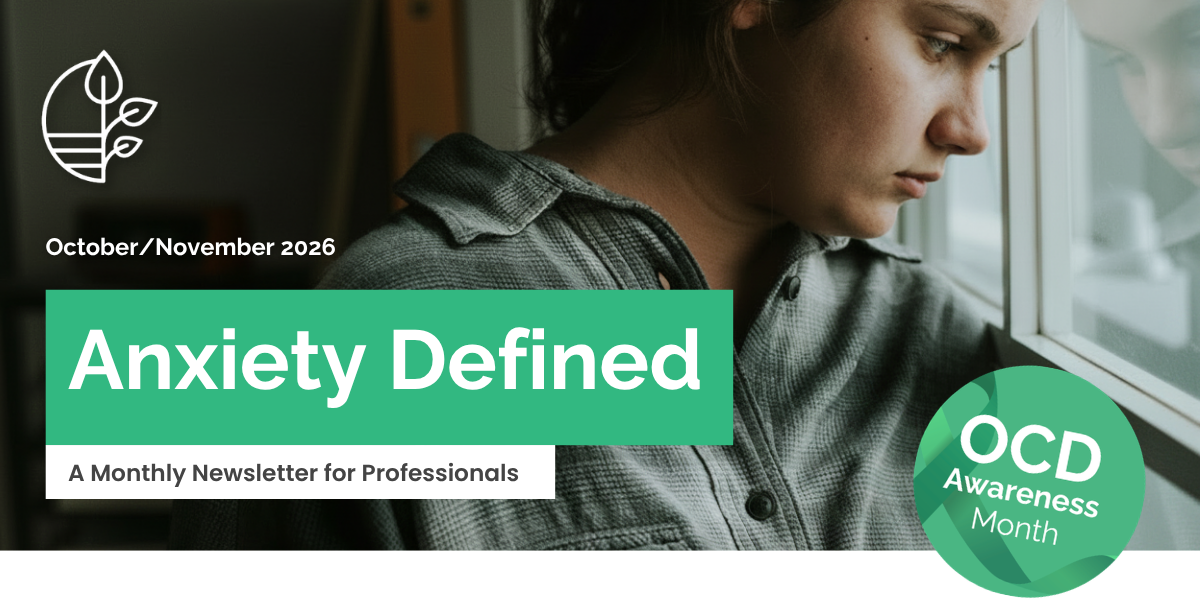
OCD can be difficult to identify when compulsions are less visible. Mental reviewing, reassurance seeking, avoidance, and efforts to neutralize unwanted thoughts may require careful exploration during assessment. | During OCD Awareness Month, we’re highlighting clinical considerations and resources to support recognition, assessment, and referral. Looking beyond the content of a client’s fears to understand the purpose of their responses can help clarify the role of obsessions and compulsions. | | Clinical Signs to Explore | | ✔ Repeated reassurance seeking or requests for certainty | ✔ Mental reviewing, counting, praying, or repeating to neutralize distress | ✔ Checking or restarting tasks until they feel “just right” | ✔ Avoidance connected to feared consequences | ✔ Family routines increasingly organized around rituals | ✔ Symptoms that consume time or interfere with functioning | | | | Three Clinical
Considerations | 1. Explore Less Visible Compulsions | Ask what clients do—outwardly or mentally—when unwanted thoughts arise. Understanding the purpose of a behavior can help distinguish a compulsion from a preference or routine. | | 2. Assess Family Accommodation | | Explore whether family members provide repeated reassurance, participate in rituals, or modify routines to reduce distress. Collaborative planning can help families support treatment while gradually reducing accommodation. | | 3. Connect Assessment With Appropriate Care | When OCD is suspected, consider further assessment and access to OCD-specific treatment. Exposure and Response Prevention (ERP) targets the cycle of obsessions and compulsions, with the treatment plan and level of care tailored to the individual. | | Our questionnaire can support conversations with clients and families and identify concerns for further assessment. It does not replace a diagnostic evaluation. | | | | Share this family-facing resource to help families understand possible signs and seek appropriate support. | Explore our Insights & Articles blog for more clinical insights and resources. | | Meet Our Medical Director | | Omar Canosa, MD
Child, Adolescent & Adult Psychiatry | Dr. Omar Canosa brings more than 20 years of psychiatric experience to treating anxiety, OCD, and related conditions, with a particular focus on adolescent and young adult development. His work includes comprehensive psychiatric evaluations, consultations, and individualized medication management. | | | Psychiatric Referral Options in CT, NJ, and NY | Psychiatric services are available for individuals aged 8 and older in CT, NJ, and NY. | Clients may access standalone psychiatric care while continuing with their current therapist, or receive care alongside Anxiety Institute’s outpatient and IOP services. Coordination with treating clinicians is available with appropriate consent. | | |
| Eye Movement Desensitization and Reprocessing (EMDR) Intensives offer extended sessions, typically 90 minutes to three hours, with scheduling tailored to each client’s clinical needs and readiness. Assessment and preparation guide treatment, and intensives can complement existing therapy through coordination with a client’s primary therapist, with appropriate consent. | | Upcoming Professional Education Series | | Queasy Does It: Exposure Response Prevention for Emetophobia | | Join us for a discussion on emetophobia, characterized by a persistent and debilitating fear of vomiting, seeing vomit, or feeling nauseous, with practical considerations for clinical care. | November 18, 2026 12PM ET | |
| |
| Explore self-paced continuing education courses covering ERP, anxiety, OCD, ARFID, pharmacotherapy, and other areas of specialized clinical practice. | | Monthly Professional Consultation Groups | | | | Connect with colleagues to discuss challenging cases, strengthen ERP implementation, and explore treatment barriers involving anxiety, OCD, ARFID, and neurodiverse presentations. | | Closing Thought From Our Chief Clinical Officer | Recognizing OCD requires curiosity about both what a client experiences and how they respond. Exploring less visible rituals can open the door to a more focused assessment and treatment plan. | | |
Consult With Our Team
Have questions about clinical fit, treatment options, or a potential referral? Our team can help you explore the next steps.
Call (844) 881-1846
or visit anxietyinstitute.com.
| | |
Anxiety Institute is a clinical treatment center specializing in acute anxiety disorders that uses advanced, proven techniques while nurturing the patient in their local home environment. Utilizing the most up-to-date, evidence-based treatments, our intensive services focus on treating teens and young adults, while coaching the parents who guide them. Locations in Madison, NJ; Greenwich, CT; and McLean, VA.
anxietyinstitute.com
| | | | |