US Biochar Initiative Newsletter
July 2021
Having trouble viewing this newsletter?
Choose 'display all images' (at top of email) and 'view entire
|
|
HELP DEVELOP TOOLS TO EDUCATE AND INFORM
By Tom Miles, Executive Director
Biochar producers struggle to reach end users and build markets. Much of the challenge revolves around information gaps that prevent markets from making the biochar connection. USBI has begun a two-year program with the University of Nebraska to produce targeted information products that will provide markets with the knowledge they need to specify and purchase biochar. The key sectors we will address are: storm water management, animal feed, manure management, biochar amended compost, soil blends and growing media, landscape turf and trees, and viticulture. Our program will produce use guidelines, fact sheets, and development roadmaps for these markets, drawing on the expertise of the biochar community. Join us and help develop information to educate and inform others so that they can enjoy the benefits of biochar.
|
|
UNIVERSITY OF NEBRASKA AND USBI
The U.S. Biochar Initiative (USBI) and the Nebraska Forest Service (NFS), part of the University of Nebraska, Lincoln (UNL), have received a nearly $120,000 grant through the U.S. Forest Service’s Wood Innovations Grant (WIG) program. The project will be led by USBI board member and NFS Forest Products Specialist Heather Nobert.
|
|
Seeking Education Grant Steering Committee Members
The USBI Education Committee is seeking your valuable experience as a researcher, biochar producer, or biochar user to help guide grant efforts. Steering Committee mem-bers will commit to provide advice on developing ma-terials, review publication drafts, and attend a series of
|
|
quarterly online meetings over the project's two-year period. If you have subject matter expertise in biochar production, applications and business |
|
development in stormwater or manure management, animal feed, biochar amended compost, soil blends and growing media, landscape turf and trees, or viticulture, please consider joining this exciting initiative to promote the biochar industry!
Send your letter of interest and qualifications to USBI Education Committee Chair Heather Nobert with "Steering Committee" in the subject line.
|
|
|
|
Before you scroll any further, could you take a moment to make a donation to USBI? Our readers value having free access to reliable info that helps them grow their businesses but most have not yet made a contribution. We hope today is your day to click on "Take Action"! |
|
|
MEET A BIOCHAR PRACTITIONER
Brett KenCairn
Senior Climate Resilience Policy Advisor, City of Boulder, CO
Director, Urban Drawdown Initiative
|
|
The Urban Drawdown Initiative, a collaborative effort between Boulder and the Urban Sustain-ability Directors Network supports over 50 cities in North America and Europe. Its goal is to acceler-ate the implementation of carbon removal strate-gies that improve community social, economic, and environmental resilience.
Q Please tell us how you got into this kind of work and how it has changed over the years?
A I founded a group called the Rogue Institute for Ecology and Economy in Southern Oregon back in the 1990s. Our purpose was to encourage sustainable forestry practices and conserve forest ecosystems. A decade later, I moved to the southwest and got more involved in wood utilization and bioenergy. I started working with the
|
|
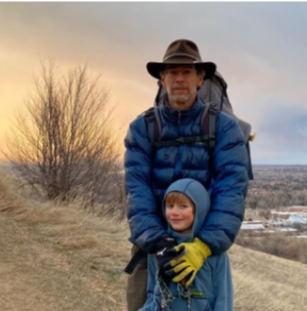
Brett KenCairn, Senior Climate Resilience
Policy Advisor, City of Boulder
|
|
City of Boulder in 2013. Over the years, the focus of sustainability has shifted more toward address-ing climate change.
Q What are the most important measures that cities can take to address climate change?
A We are re-defining what climate action is. For us, it's about a lot more than just emissions or fossil fuels.
Climate action is also about drawdown – capturing carbon from the air by growing plants and trees. For instance, we have an urban garden program involving 300 households that are monitoring carbon capture in soils in their yards as they grow trees and vegetables. We’ve also been doing experiments on parts of the city’s 25,000 acres of agricultural land adding biochar, compost, and nutrients to increase soil carbon. Increasingly, climate action is about resilience and renewing the urban ecosystems that provide ecosystem services like shade and storm water infiltration that will help our residents survive the extreme heat, flooding, and droughts that are becoming more common.
Q How big is the role of urban forestry, and how does biochar fit in?
A Once thing that strikes me is how little resources from the urban ecosystem are considered, and yet these resources are significant and using them sustainably fits right into the goal of creating circular economies and addressing climate change. We did a biomass assessment of our urban forest resource and started a new urban carbon management planning process both in Boulder and in other cities around the country. The
|
|
carbon management planning process - both in Boulder and in other cities around the country. The city is paying a lot of money to ship waste wood out of the area for disposal. We could be using that here to make biochar and energy. Bioenergy makes us more carbon-neutral and the biochar contributes to carbon drawdown and builds our climate-resilient ecosystem infrastructure.
Q The City of Boulder recently won a $100,000 grant from the Carbon Neutral Cities Alliance to support your biochar and bioenergy work. What will this grant enable you to do?
A We'll be able to do the planning and analysis we need to produce specifications for our department so they can start adding biochar into tree planting and landscaping, as well as using it in stormwater management. We will also start to identify where there is a need for thermal energy that can be produced from waste wood, and begin planning for combined heat and biochar installations. We'll be learning from what other cities are doing, such as Minneapolis, Stockholm, and Helsinki. That’s the value of networks like the Carbon Neutral Cities Alliance.
Q What’s next after this planning stage?
A We have also been invited to submit a proposal for two years of funding to Bloomberg Philanthro-pies for technical assistance and funding to create a city-wide biochar project. One thing we hope to address is the lack of infrastructure for processing waste from the urban forest. Most urban centers are not set up for wood processing and do not have a permitting process for doing so. It's really a missed opportunity.
|
|
|
|
This month, we continue to expand the Biochar Learning Center database on the USBI website bringing you the most current and useful articles, websites, videos and other resources.
Featured July Resources
|
|
negative technology and climate change to Techno-Economic and Lifecycle Assessments of Biochar Production from Forest Residues.
Urban Bioenergy-Biochar: An Opportunity Assessment for Municipalities The Urban Sustainability Directors Network, in collaboration with the cities of Boulder, Helsinki, Minneapolis, and Stockholm, engaged New York's Ithaka Institute to develop this overview about converting urban waste streams into both bioenergy and biochar. The assessment includes a survey of the organic materials generated within each city, existing and potential uses for excess heat generated during the carbonization process, urban uses for biochar, and existing pyrolysis or gasification technologies capable of converting urban waste streams into both energy and biochar. It also provides a preliminary assessment of the potential climate impacts from carbonization of urban waste streams and a brief discussion of the variability of biochar’s qualities and where biochar can be analyzed. The assessment concludes with a discussion of the potential costs and revenue streams that are associated with carbonizing biomass.
|
|
Find free educational videos on a ton of topics including current articles, books, podcasts, and more. Click the YouTube icon and share the link with your fellow practitioners!
|
|
|
ANNOUNCEMENTS AND OPPORTUNITIES |
|
----- Biochar Program Coordinator Job Opening at Michigan State University ----
|
|
----- Microsoft $1 Billion Dollar Climate Innovation Funding
|
|
Funding is available over the the next four years. See Microsoft awardee information and the funding inquiry form here. learn how a Smith College professor is working with the indigenous communities to use biochar to restore the damage caused by slash-and- burn agriculture.
|
|
----- New, Enhanced USBI North American Biochar Directory -----
|
|
Join the Directory - Get your free biochar listing now!
● Help customers find your business.
● Find out who needs your services.
● Discover organizations that are working on biochar solutions.
Join the directory and use it to connect with the North American biochar network.
Make it easier for others to find out about your biochar company or project. Be sure to fill out as much as you can about your sector, products, applications, technology, and the scale of your operations.
Together we are putting the world's carbon budget back in the black and building the most comprehensive biochar directory for the US market!
Once you enter your information, you will be taken to a donation page. We ask for a suggested contribution of $25 annually for your directory listing. Please give more if you can afford it. Your contribution helps to keep the USBI website alive and growing!
Add your USBI listing - HERE. After review, your listing will be published in the USBI Biochar Directory.
|
|
ROLLING OUT THE GREEN CARPET FOR
NEW USBI DIRECTORY MEMBERS
A big USBI directory welcome goes out to California biochar producers Ganrock and Genesee Farm & Retreat and Oregon producer Restoration Fuels, LLC.
We hope your listings bring you lots of new connections!
|
|
BIOCHAR EVENTS CALENDAR
Send your events to cgribley@biochar-us.org.
|
|
➤ Forbes Explains Biochar. “... to fully promote socio-economic resilience and ecological integrity of regional food-energy-water resources, the Biden administration … should consider the latest scientific advances in the field of renewable and sustainable materials, such as biochar from biomass feedstocks.” Read more from Amin Mirkouei who has published and co-authored 30+ articles in scientific journals.
|
|
|
|
Long-term carbon storage and a plethora of co-benefits make biochar an intriguing option for carbon credits, says technology journalist Heather Clancy. Is biochar part of your carbon removal strategy? Contact Heather here.
➤ California's Marin Master Gardeners Answer Biochar Questions. Is biochar right for your garden? The University Cooperative Extension advises that good uses of biochar include improving aeration in heavy or compacted soil, increasing soil aggregation in fine-textured soil, and improving sandy soil’s water-holding capacity. When used appropriately, all soil types can benefit from enhanced fungal biodiversity, increased availability of plant nutrients, and increased plant drought and disease-resistance.
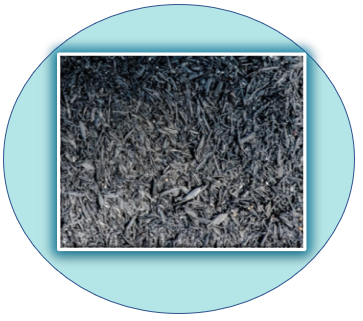
«Rice husks are one of many feedstocks used to make
biochar.
|
|
|
|
➤ NRCS Conservation Innovation Grant Awarded to California Biochar Project. California's Scott River Watershed Council plans to use its $114,900 award, along with $140,000 it raised in matching funds, to conduct a three-year comparison of pasture and hayfields fertilized with compost, biochar enhanced with compost, and plain biochar. The project hopes to determine whether biochar helps with soil water-holding capacity and fertility.
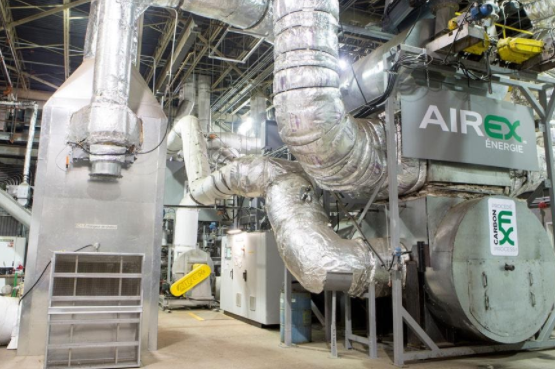
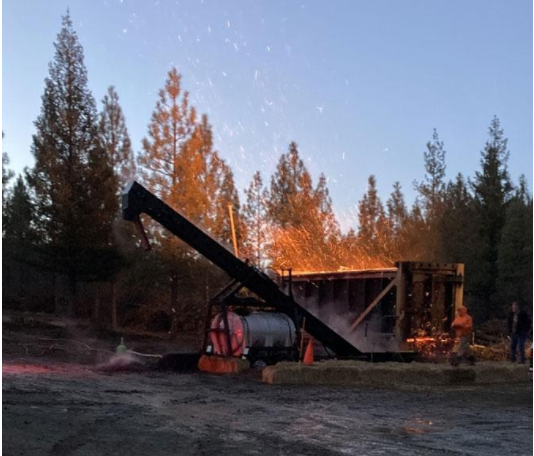
«Tigercat Carbonator operates in the Scott River
watershed.
|
|
➤ Forest to Farm Biochar Project Gains Permit Approval. A project in Washington’s Methow Valley is closer to launch as critical questions about emissions and power supplies are answered. C6 Forest to Farm hopes to create an industrial facility to process slash from removal of small trees that can spread a wildfire, turning them into a soil amendment, instead of burning them to eliminate slash piles.
➤ California High School Student Wins 2020 US Stockholm Junior Water Prize. Eshani Jha is the 2020 U.S. Stockholm Junior Water Prize winner for her method to use modified biochar for the removal of toxic contaminants from water. Her research aimed to remove contaminants by manipulating biochar surface area, controlling chemical composition and catalytic properties for oxidative breakdown, adding surface complexing agents, and modifying intrinsic pore size.
➤ Report: Biochar and Acid Mine Drainage. Researchers at the University of Arizona are working to clean up acid mine drainage that contains substantial amounts of heavy metals like arsenic and lead by sequestering the chemicals in biochar crystals.
|
|
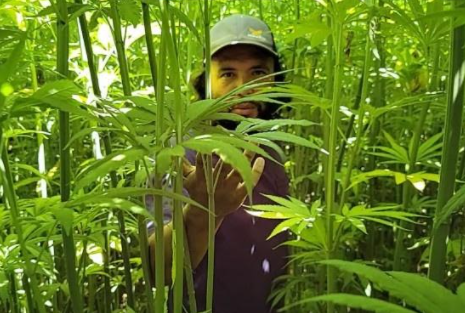
➤ California Hemp Group Plans Biochar Research. Western Fiber will study the effects of biochar on hemp cropping systems under a $25,000 grant from the U.S. Department of Agriculture. It will examine crop yield and performance, and changes in soil nutrient and carbon levels as a result of applying biochar and compost to the soil. Hemp has been identified as having high potential as input for production of biochar.
|
|
|
--------------------- promotional section ---------------------
|
|
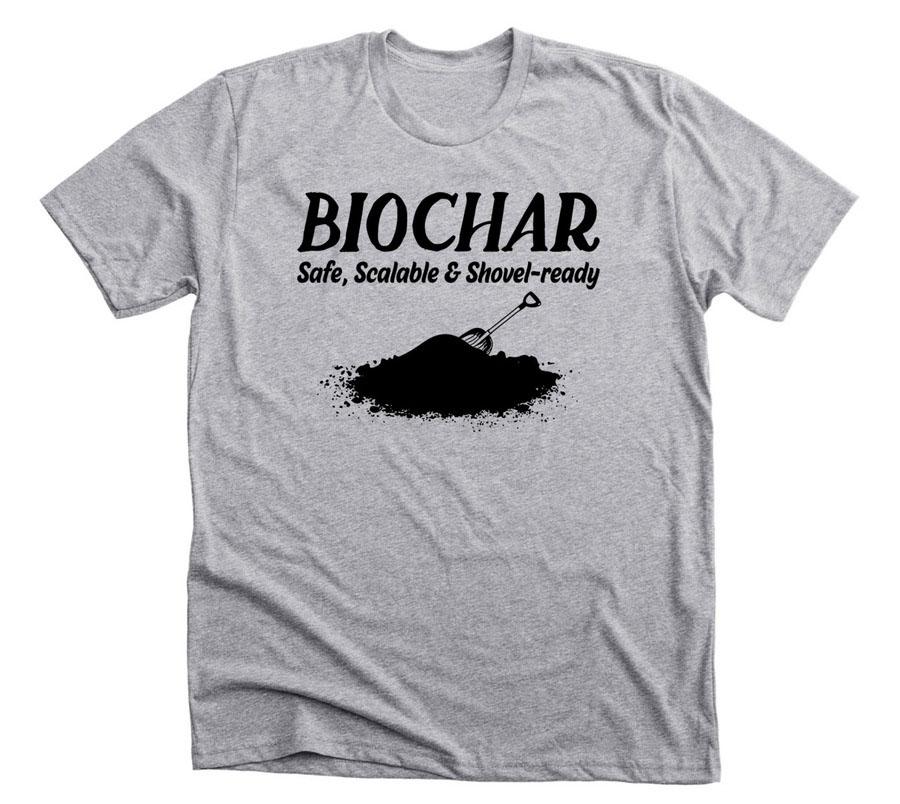
Proceeds go to the International Biochar Initiative
|
|
|
|
|
|
|