Digestive Health Monthly - June 2019
|
|
Greetings!
For individuals and families living with a chronic gastrointestinal (GI) condition, there are often more questions than answers. Questions like:
- What causes these conditions?
- Why do my symptoms occur?
- What's the best treatment?
- Is there a cure?
Research is how the answers to these questions, and so many more, are found. Like building blocks, each new research finding builds on a foundation of knowledge, bringing us closer to a more complete understanding of why these conditions occur and what can be done to manage, or even cure, them.
We invite you to join us this month as we review some of the exciting new advances in digestive diseases research and explore ways that you can get involved.
|
|
Men Have GI Needs, Too!
Be mindful of your digestive health during Men's Health Month
|
June is
Men's Health Month. Many chronic GI illnesses appear to affect more women than men. These include irritable bowel syndrome (IBS), idiopathic gastroparesis, and functional dyspepsia. However, these differences may be due, in part, to a reluctance by men to seek medical care for their symptoms. For instance, women with IBS are 3 times more likely to report their symptoms to a doctor than men with IBS.
This Men's Health Month, take time to assess your digestive health, and talk to your doctor if you are experiencing symptoms.
|
|
|
Meet Our 2019 Research Recognition Award Winners
|
The
IFFGD Research Recognition Awards were first established in 2003 to recognize and support the research accomplishments of young investigators actively engaged in research to improve the understanding and treatment of chronic GI disorders in adults and children.
IFFGD was pleased to present these awards last month to three investigators at Digestive Disease Week (DDW) 2019 in San Diego:
- Arpana Gupta, PhD, G. Oppenheimer Center for Neurobiology of Stress and Resilience, UCLA.
- David Levinthal, MD, PhD, Neurogastroenterology and Motility Center, University of Pittsburgh Medical Center.
- Ilan Koppen, MD, PhD, University of Amsterdam Academic Medical Center.
|
|
|
Randomized Clinical Trials
Your guide to RCTs
|
Have you ever wondered how doctors know if a treatment is really effective? The answer is a standardized investigative process called
Randomized Clinical Trials (RCTs).
Developed in the 1930s to eliminate bias from medical research, RCTs include a suite of necessary steps and features to establish safety and demonstrate that effects of the drug or other treatment can be replicated and are not the result of a happy coincidence.
|
|
|
GI Research on the Road
IFFGD talks to 8 researchers at DDW
|
Digestive Disease Week (DDW) is the largest annual gathering of scientists and researchers in digestive health. So, it's the perfect place to connect with researchers to get updates on recent advances in the field.
Last month, IFFGD sat down with eight investigators to discuss key topics in digestive health research as part of its newest program:
GI Research on the Road.
|
|
|
Be Your Own Researcher
Keeping a symptom diary can help you find patterns in your symptoms
|
Learning how to successfully manage symptoms of a chronic GI condition often means becoming your own researcher. You have to develop an understanding of your body and how it reacts to variables such as food, stress, and medications. One way to do this is by keeping a symptom diary. Like a researcher's notes, entries in your diary will reveal patterns in your symptoms and help you meet your individual needs.
|
|
|
Gut Talk
Microbes and brain-gut interactions
|
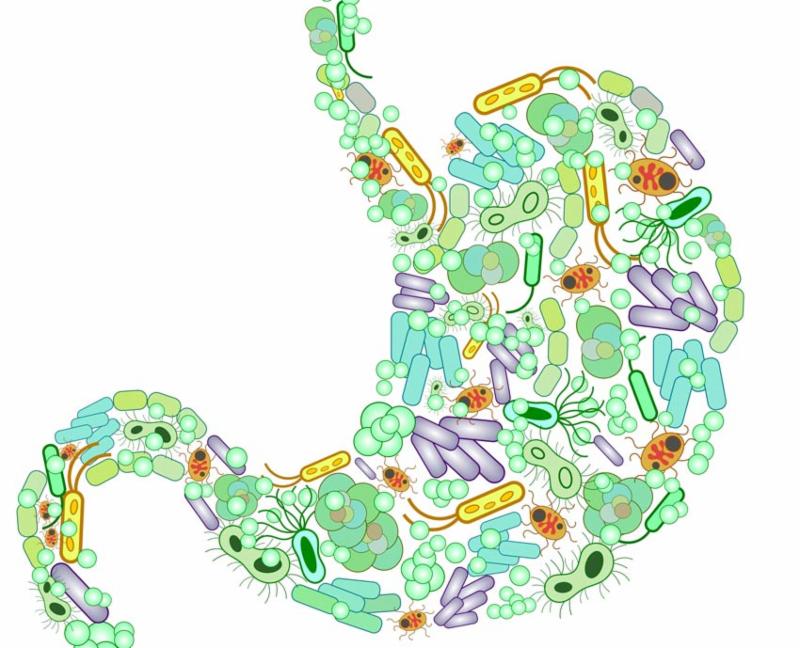
One exciting area of research has to do with the gut microbiome - the trillions of microorganisms living in the digestive tract - and how these microbes are involved in a constant exchange of signals between the brain and the gut.
"
These microbes have a cooperative relationship with us, not only playing a role in digestion, but also interacting and communicating with our own cells, with our gut and our brain."
-Emeran Mayer, MD
|
|
|
Fundraise for Research
Be part of the IFFGD research community
|
You don't have to be a researcher or even participate in a clinical trial to support research. One way you can be a member of the digestive health research community is by helping to raise money for research through IFFGD.
By creating an
IFFGD fundraiser, you contribute to research that aims to improve outcomes for patients and families with GI illnesses and provide your friends and family with a way to support something important to you. Plus, it's fun!
|
|
|
Clinical trials and research studies are important to improving our understanding of the underlying mechanisms of diseases and developing new and better treatments. By participating in a study, you can help advance research and learn more about your condition.
Here are 3 studies currently recruiting participants:
|
|
Blood and tissue samples are being collected from individuals with an inherited genetic disease or chomosomal abnormality for a repository. Donated samples will be made anonymous and shared with researchers working to understand rare genetic diseases, such as mitochondrial neurogastrointestinal encephalopathy.
|
|
The National Institute of Nursing Research (NINR) is seeking individuals of all ages with diarrhea for a research study. The study will test whether a research tool effectively detects pathogens (e.g. bacteria) that cause diarrhea. This study will be conducted at the NIH Clinical Center in Bethesda, MD.
|
|
Eligible individuals with fecal incontinence are being recruited for a study of the short term (8 weeks) and long term (1 year) efficacy and safety of translumbosacral neuromodulation therapy. Treatment will be anorectal manometry, translumbosacral anorectal magnetic stimulation, anal ultrasound, and cortical evoked potentials.
|
|
IFFGD is a nonprofit organization. We rely on donor support to fund research and to provide reliable information and support to those affected by chronic gastrointestinal disorders.
|
|
IFFGD | 414-964-1799 | iffgd@iffgd.org | www.iffgd.org
|
|
|
|
|
|
|