|
Hoping to Sell Your Home in the Spring? It’s Not Looking Good
Build-a-bear
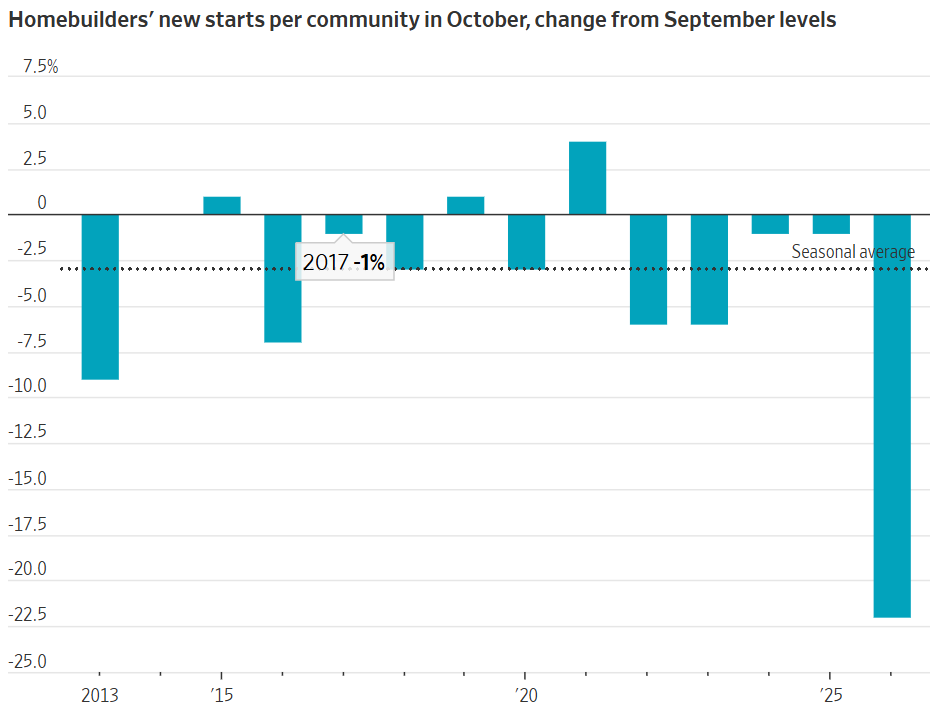
Here’s a disappointing sign for Americans hoping for better home-selling next year. Home builders are planning for a deep freeze in the spring. The number of new homes per community that builders started in October was 22% below September levels, data from John Burns Research and Consulting shows. Building slows at this time of year as part of the normal housing cycle, but this year’s drop is unusually large. Since 2012, the average seasonal decline in new housing starts from September to October has been 3%.
Regular sellers can watch the housing market and list their property within days if conditions turn favorable—say, a drop in mortgage rates that gets buyers off the sidelines.
But builders have to make a call on what the market will look like in several months’ time. Large builders like Lennar or D.R. Horton need four to six months to build a home from scratch, so new-home starts in October reflect their expectations for the crucial spring-selling season. Almost 40% of new homes purchased every year in the U.S. are bought between February through May.
“It is a telltale sign of how the industry is feeling right now,” says Rick Palacios, director of research at John Burns Research. “What we are seeing with home builders is a realization that spring 2027 is most likely going to be a repeat of 2026, if not slightly worse.”One reason builders have hit the brakes: They already have a glut of completed, unsold homes on their hands. Demand from buyers has been so weak that builders have 50% more unsold homes per community than is normal for the time of year.
Unsold inventory has also been rising in the existing-home market where sellers now far outnumber buyers. The National Association of Realtors will release existing-home sales data for October later today. The numbers reflect purchase contracts signed in late August and September, and are expected to be weak.
In September, worries about U.S. government debt sent yields on the 10-year Treasury above 5% for the first time since 2007. The bond-market move pushed the rate on a 30-year mortgage, which tracks the 10-year Treasury yield, above 7%.
Potential home buyers pulled back and mortgage applications fell. Hotter-than-expected inflation data released this week suggests relief from high mortgage rates isn’t coming soon. A big shift lower in rates would have to come soon to salvage next spring.
Owners who didn’t manage to sell their homes in the summer or fall will probably pull their listings over the winter and try their luck again early next year. Next time around, though, they may need to give ground on prices.
That could mean even more pain is in store for the housing market.
|