Welcome to the University of Oklahoma Carceral Studies Consortium Newsletter. The Carceral Studies Consortium strives to build a community for intellectual exploration that includes faculty, staff, graduate students, community members, practitioners, and organizers.
Carceral Studies is concerned with the independent function and nexus of the political and social systems that organize, shape, sustain, and entrench practices of punishment, surveillance, incarceration, and harm.
|
|
|
|
Recent controversy concerning the conservatorship of Britney Spears has demonstrated a continued effort to restrict women’s rights in the United States. Kylie Cheung explains that the court’s decision to maintain the conservatorship, and in turn, Britney’s IUD, is representative of a history of the nation’s desire to legally restrict reproductive rights, force sterilization, and decide parental worthiness. According to Cheung, it is uncommon knowledge that cases such as “…Buck v. Bell, the 1927 Supreme Court decision that permitted forced sterilizations, appraisal of someone’s mental abilities and worthiness of reproduction...” have never been overturned and, thus, are still actively employed in the criminal legal system today. Such policies target minorities, people with disabilities, and people in lower social classes. These disadvantaged groups are then disproportionately victim to the court’s will for blocked access to safe abortions, forced sterilization of prisoners/migrants, and ableist reproductive policies. As a result, Cheung believes “…reproductive justice, disability justice, and abolition are deeply intertwined…” in the battle against the legal system’s control. The goal of abolition is to guarantee “…the ability of all people to parent, not parent, and raise families in healthy, safe communities.”
|
|
|
|
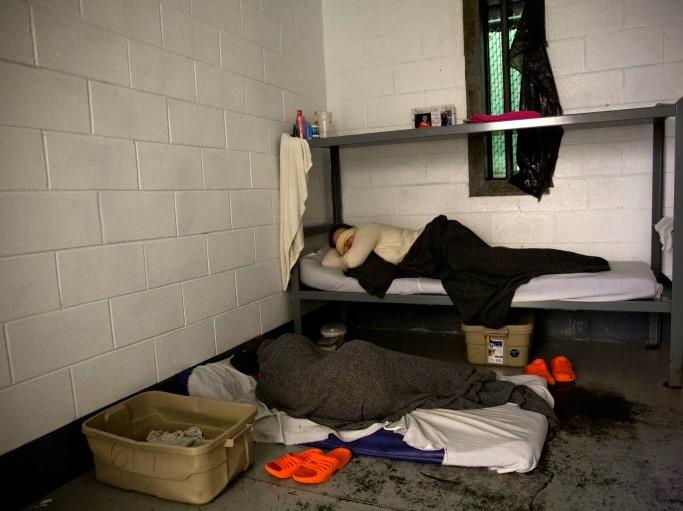
Pretrial detainment is a process that places those awaiting trial in jails on the assumption that this form of incapacitation will prevent further crimes as well as guarantee appearances for court dates. Jaclynn Ashly reports that the reality of pretrial detainment is a predatory system that punishes the poor for being unable to pay bail and disproportionately harms minority women, mothers, and women with mental health issues. Particularly, those placed in jail awaiting trial could remain there for months or even years before receiving a chance to present their case. Alongside the atrocities of horrid housing conditions, poor treatment, “legal limbo,” and pressure for false confessions, the detainment process is a potent “destabilizing force” which sends shock waves of collateral consequences throughout the lives of incarcerated women. Ashly notes that nearly “80 percent of women in jail are mothers – and are primarily single parents and sole caretakers for their children.” Pretrial detainment couples the immediate disruption to motherhood with the trauma of incarceration and eviscerated economic opportunities. Ashly concludes: “the system takes everything from you,” in many cases, without conviction.
|
|
|
|
Reset, a podcast hosted by Sasha-Ann Simons, interviews secondary education teacher Jesse Hagopian to discuss how teaching Critical Race Theory (CRT) can “…help deconstruct systemic racism and break the ‘school-to-prison pipeline.’” Hagopian poses the question of addressing CRT discussions amongst students by asking, “…are we going to help those youth have scaffolded conversations and provide the historical context for what they are seeing, or are we going to make education irrelevant to the things that are most pressing in our children’s lives?” The school-to-prison pipeline is worsened by a “…curriculum that does not reflect the lives of our BIPOC students. And so, when they don’t see themselves in the curriculum, a lot of times, they get labeled as defiant when they are not paying attention. And sometimes that’s better understood as resistance to racist curriculum.” Additionally, although most school faculty are white, the interview addresses how structural racism embedded in schools can override positive effects from primarily Black teachers and administrators. Simons and Hagopian synthesize these elements into a message of how restrictions on CRT in education and the proliferation of structural inequities create a domino effect towards incarceration for minority children.
|
|
|
|
NYU professor Homer Venters reports that a large proportion of correctional officers are refusing COVID-19 vaccinations, placing incarcerated persons and the public at an increased risk of contagion. Venters notes that the refusal of the COVID vaccination puts increased risks on incarcerated persons that are medically high-risk or unvaccinated while also posing a threat to the staff operations, which could lead to harmful outcomes such as increased lockdowns. Short of requiring all staff to receive vaccinations, Venters believes a four-step plan centered on education and health care expansion should combat such low rates. The procedure consists of “…survey[ing] correctional staff to learn about their concerns,” “…provid[ing] incentives and compensation for vaccination,” the “…leverag[ing] of credible messengers,” and “…expand[ing] the roles of state departments of health and the CDC behind bars.” Taken together, these efforts echo previous attempts to increase overall vaccinations rates but particularly for those that are incarcerated and unable to restrict their environmental exposure on the heels of the Delta variant of COVID-19.
|
|
|
|
One of the enduring effects of contact with the criminal legal system is a nearly inescapable requirement to disclose prior convictions to potential employers. Efforts such as “Ban the Box” have attempted to eliminate such disclosure with mixed results. But mass incarceration and contact with the legal system continue to ravage BIPOC communities, and unemployment rates have continued to climb dramatically during the COVID-19 pandemic. Duy Pham, Melissa Young, and “…93 percent of Americans…” support some form of a government-subsidized employment program. Similar to the job programs of the Great Depression, subsidized employment programs would include creating a sustainable infrastructure of opportunities coupled with workplace education and training. Yet, a significant difference would be for Congress to “…prioritize and target investments to youths and adults impacted by the criminal legal system.” A recovery emphasizing “an equity-centered national subsidized employment program can support an inclusive COVID-19 economic recovery, increase job quality, expand access to green-economy jobs, and lay the groundwork for a more fair, just, and prosperous economy.” According to the authors, a federal investment of $45 billion could jumpstart the removal of employment barriers for nearly one-third of adults.
|
|
|
|
Montclair Beyond Policing, a police/prison abolition group in New Jersey, hosts a weekly abolition study group to create an open dialogue to understand better how reducing the local police force benefits their community. Founding group member Lily Cui attempts to bridge the gap in community discourse by stating, “our priority…is not to persuade individual naysayers but to continue to research, educate ourselves and anyone interested in a structural analysis of our society, and develop non-policing resources that will keep our communities safe.” Within the study group, opposition to police abolition revolved around the good character of local police, police necessity, and the expectation that abolition means removing police while “…let[ting] the chips fall.” However, these points of contention are precisely what the study group aims to dispel through a larger comprehension for “political education” and an examination of sectors that could use the redirected funding, such as the local population of unhoused persons. The study group will continue through the end of August and is “inspired” for the upcoming discussions with some members hoping to expand the study group to other towns.
|
|
|
|
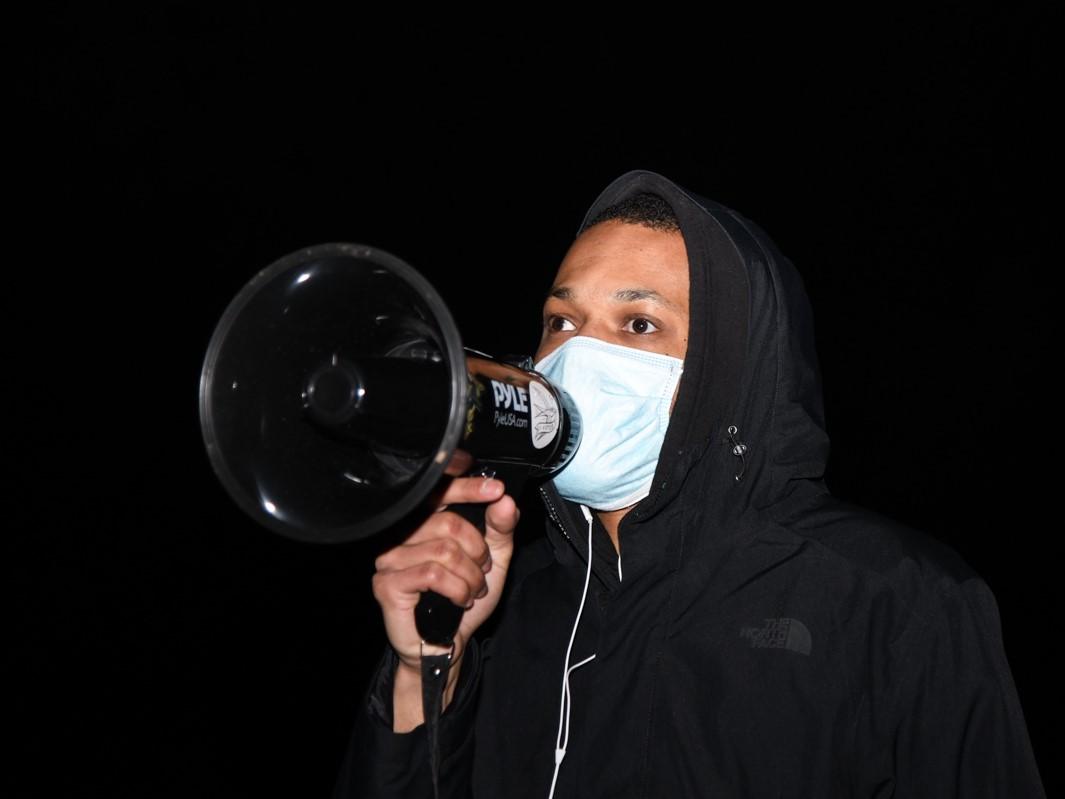
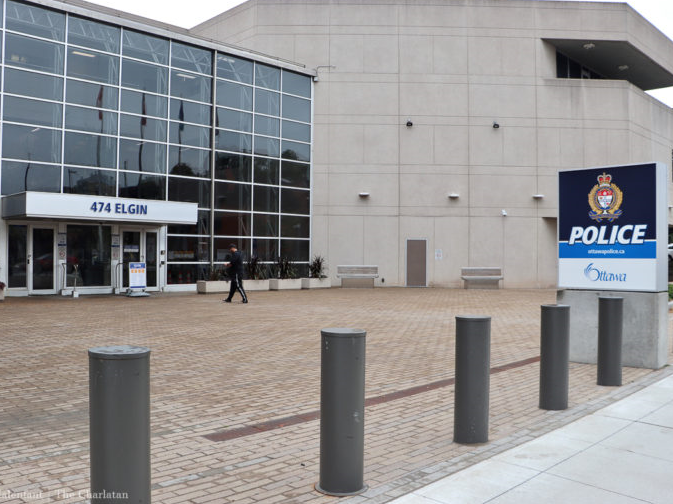
The desire to freeze law enforcement initiatives and budgets in Ottawa, Canada, led to an online protest over a $13.5 million funding increase for the Ottawa Police Service. Although the original plan for a physical demonstration was sidelined due to weather, the online rally featured community leaders and artists. Protesters cited a lack of funding for “care” initiatives. At the same time, law enforcement budgets continued to facilitate a growing police force and maintenance on the school-to-prison pipeline using school resource officers. Poet and protestor Maya Basudde stated, “I have personally been to more funerals than graduations and birthday parties because of the impact of policing over care.” The Ottawa Police Service responded to the calls for a funding freeze by creating a budget scenario report which outlined that if the budget were not increased, it would result in “’‘major’ service impacts, including a pause on all hiring and the firing of 130 to 140 officers.” Additionally, the police board sought to affirm the consulting services of “StrategyCorp” for the “review [of] the OPS budget and [the] use of force policy.” An action which, one protestor claimed, “...demonstrate[d] a double standard on which [some] public servant’s jobs are protected” whereas “...consultants [are not required] to cut funding for transit or lay off librarians.”
|
|
|
|
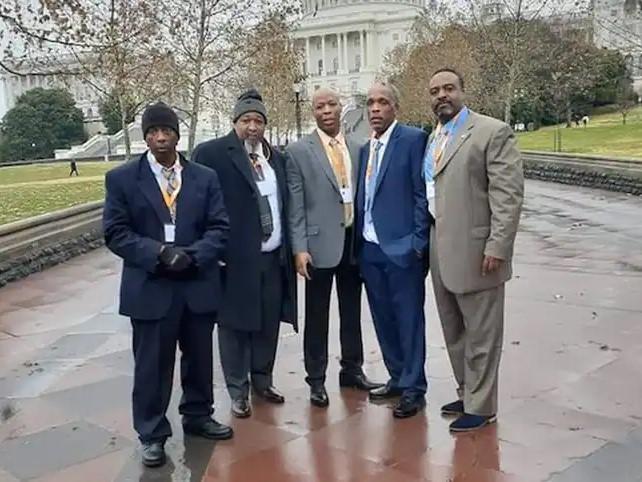
According to Gavin Jenkins, Congress passed a bipartisan bill called the First Step Act with one of the goals being to allow “…federal prisoners with qualifying drug offenses to apply for release.” Although the total of those released from this initiative since its passing remains low, those released faced a possible appeal on their cases by the Department of Justice. Ronald and Rodney Mack are two brothers that received such treatment and found themselves feeling “half-incarcerated, half-free” during the 18 months before the Department of Justice dropped its appeal. Ronald explained his prison sentence motivated him to learn more about the law related to his drug conspiracy charge. Ronald stated that he had to handle the looming threat of reincarceration the same way he oriented himself towards prison, saying, “…the blinders were on, action was the only thing that could make it go by.” Unfortunately, even after the dropped appeal, he said, “I still have my blinders on.”
|
|
Announcements & Opportunities |
|
Justice and Mobility Fund
Formerly incarcerated persons face severe disruptions to economic stability through limitations in education, stable housing, connections to employment opportunities, public benefits, and more. Recognizing this issue, The Ford Foundation, Blue Meridian Partners, and the Charles and Lynn Schusterman Family Philanthropies have committed $250 million to support organizations that boost economic mobility, advance racial equity, and scale the most effective solutions for formerly incarcerated persons.
|
|
|
ABOUT
The Consortium Newsletter will offer a roundup of a few selected articles that reflect today’s news, organizing, and thinking related to the carceral state. We understand that freedom work is built on education and engagement. Education requires an understanding of contemporary issues informed by their historical context. We hope that these curated articles will help you analyze the issues that we face and understand the community that we strive to construct.
Join the conversation!
We encourage feedback, suggestions, and article suggestions. Please reach out to carceralstudies@ou.edu with any ideas, thoughts, or recommendations.
If anyone you know is interested in receiving this newsletter and other information from the Carceral Studies Consortium, please forward them this email and they may click this link to subscribe.
|
|
Land Acknowledgment
The University of Oklahoma is on the traditional lands of the Caddo Nation and the Wichita & Affiliated Tribes. This land was also once part of the Muscogee Creek and Seminole nations. It also served as a hunting ground, trade exchange point, and migration route for the Apache, Cheyenne, Comanche, Kiowa, and Osage nations. Today, 39 federally-recognized Tribal nations dwell in what is now the State of Oklahoma as a result of settler colonial policies designed to confine and forcefully assimilate Indigenous peoples.
|
|
The University of Oklahoma is an equal opportunity institution. ou.edu/eoo |
|
|
|
|
|
|