|
|
Hello everyone, I hope you're having a wonderful month! The price of Bitcoin as of Friday, August 1, 2025, at 10:59 a.m. EDT is $115,653.
|
| | |
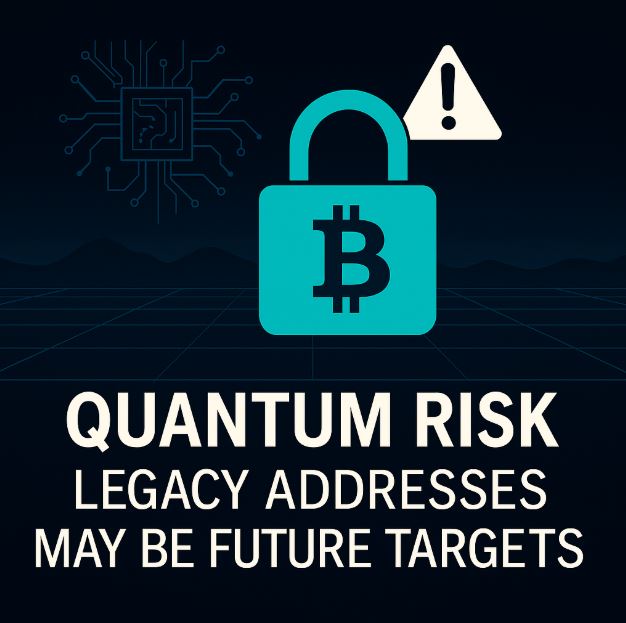
🔐 Quantum Risk Alert: Legacy Addresses May Be Future Targets
Bitcoin’s transparency is a double-edged sword—especially for early holders. Intelligence agencies and large tech firms are quietly archiving blockchain data under a “harvest now, decrypt later” model, targeting coins in legacy address formats (e.g., addresses starting with 1) where public keys are already exposed. If you or your clients still hold BTC in these older wallets, (which were the default from 2009 through around 2016) now’s the time to migrate to SegWit (bc1q...) or Taproot (bc1p...) addresses to reduce long-term quantum vulnerability. The clock is ticking—and decentralization rewards those who stay a step ahead.
| | |
Mistrial Motion In Tornado Cash Case Is Unlikely. Although the defense challenged the credibility of FBI testimony, hopes for a mistrial dimmed after the IRS introduced blockchain tracing data from Chainalysis and TRM Labs — tools often criticized for their opaque methodologies. Despite serious questions about due process and developer liability, the court appears unwilling to halt the government’s aggressive push to criminalize open-source privacy tools.
| | |
JPMorgan Considers Bitcoin‑Secured Lending. In a dramatic reversal, megabank JPMorgan is exploring lending dollars directly against clients’ Bitcoin and Ethereum holdings—a major shift from CEO Jamie Dimon’s previous crypto dismissal. While this move signals grudging recognition of crypto’s resilience, it’s still contingent on third‑party custody and regulatory guardrails that could rein in true permissionless adoption.
| | |
President Trump Plans To Open 401(k)s To Bitcoin, Crypto, Gold, And Private Equity.
Trump is reportedly preparing an executive order to unlock the $9 trillion U.S. retirement market by letting 401(k) plans invest in crypto, private equity, gold, and other alternative assets. This bold move reverses prior regulatory caution, finally empowering fiduciaries with decision‑making authority—an overdue correction in crypto’s favor, though implementation may lag behind the ambition.
| | |
Square Begins Rollout of Bitcoin Payments for Sellers, Targets Full Availability by 2026. Block’s Square has quietly launched a pilot allowing select merchants to accept Bitcoin via the Lightning Network, letting payments settle in real time and reducing fees by as much as 50% compared to traditional card networks. Rollout is expected throughout 2025, with full availability to all 4 million U.S. Square sellers by 2026—marking a major milestone toward mainstream Bitcoin usage, though geographically limited by regulatory approvals.
| | |
Max Keiser Warns: Corporate Bitcoin Holdings Face Future Government Crackdowns. Bitcoin maximalist Max Keiser, recently warned that corporations and ETFs holding Bitcoin could become primary targets of future government crackdowns—up to confiscation—for daring to decentralize money. His message is clear: only self-custody protects true Bitcoin sovereignty, while intermediaries—be they treasuries or custodians—leave holders vulnerable to state overreach.
| |
|
Standard Chartered Says It’s the First Global Bank to Offer Spot Bitcoin and Ether Trading. Standard Chartered has quietly become the first global systemically important bank to offer deliverable spot trading in Bitcoin and Ether via its U.K. branch. Institutional clients can now access BTC/USD and ETH/USD through familiar FX interfaces and settle with custodians of their choice—integrating crypto access into regulated banking without intermediaries cropping in.
| |
US Regulators Allow Banks Custody Over Bitcoin And Crypto. This isn't decentralization—it’s the tight grip of legacy finance entering crypto through the back door. While the guidance enables banks to custody digital assets, it also invites heightened surveillance, third-party control, and centralization of risk. True sovereignty still lies with self-custody users who refuse to put their keys—and coins—in any institution’s silo.
| |
‘Existential Threat’: Bitcoin Proposal Would Freeze Satoshi’s Quantum-Vulnerable Coins. Proposals to freeze vulnerable coins sidestep the will of everyday users, effectively undermining self-custody and turning developers into gatekeepers over which coins can still be spent. This approach risks ushering in soft-authoritarian “security” measures at the expense of Bitcoin’s permissionless ethos—while punishing early holders who, for technical or personal reasons, haven’t migrated to quantum-safe addresses.
| |
Bitcoin’s Quantum Countdown Has Already Begun, Warns Veteran Hacker. David Carvalho—formerly an ethical hacker and now CEO of Naoris Protocol—issues a dire warning: around 6–7 million BTC is vulnerable to quantum attacks due to exposure in legacy address formats (P2PK, reused P2PKH) that reveal public keys. Intelligence agencies and tech giants are already harvesting encrypted blockchain data for future decryption under a “harvest now, decrypt later” model, leaving Bitcoin dangerously exposed before post-quantum fixes are even in place.
| |
The Quantum Bitcoin Summit: A Grounded Look At The Issues. At a closed-door summit in San Francisco, Bitcoin devs and quantum researchers agreed that while real quantum threats aren’t imminent, complacency is dangerous. With up to 33% of BTC vulnerable through legacy address formats, experts warned that without coordinated upgrades or hard fork consensus, the network risks long-term erosion from within.
| |
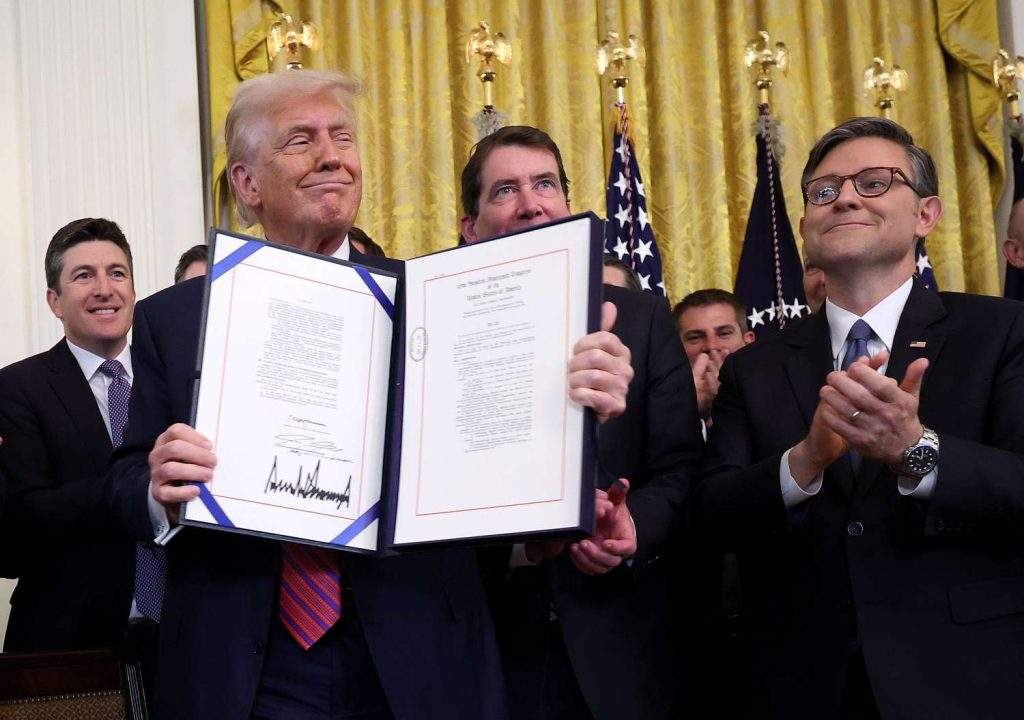
President Trump Signs GENIUS Act Into Law: A New Era for Digital Asset Regulation and Innovation. On July 18, 2025, President Donald J. Trump signed the GENIUS Act—Guiding the Evolution of National Innovation in U.S. Stablecoins—into law, ushering in a landmark regulatory framework that reshapes America’s approach to digital assets. This bipartisan legislation represents the first comprehensive federal statute dedicated to the oversight of stablecoins—blockchain-based digital tokens pegged to a reserve asset, such as the U.S. dollar.
| |
Cryptocurrency vs Token: Legal Differences Explained. As digital assets continue to shape modern finance, not all cryptocurrencies are created equal, and the distinction between cryptocurrencies and tokens carries significant legal implications. For founders, developers, and compliance professionals alike, how your asset is classified can determine whether you need licenses, trigger regulatory scrutiny, or face enforcement risk.
| |
Top 5 Crypto Scams in 2025: Real Cases, Legal Risk & Protection Strategies. The cryptocurrency market may be maturing, but scams are evolving just as quickly. In 2025, schemes are more innovative, more psychological, and in some cases, more violent. This article breaks down the top 5 most common crypto scams, along with real-world examples, legal exposure, risk mitigation, and best practices for both clients and attorneys.
| |
The Reality of KYC in Cryptocurrency and Blockchain Transactions. The rise of cryptocurrency and blockchain technology has transformed the global financial landscape, introducing decentralized, borderless systems that challenge the assumptions of traditional finance. However, with that innovation has come regulatory friction, and one of the most heavily enforced requirements imposed on crypto businesses is KYC, or “Know Your Customer.”
| |
Check out the Crypto Law Weekly on my YouTube channel @SashaHodder or Instagram @sashahodler
X @sashahodler
July 25 - Trump signs the GENIUS Act — the first U.S. stablecoin law: 100% collateralized, Full KYC/AML/OFAC, only banks can issue.
Stablecoins just became digital dollar infrastructure.
SEC chaos: Approved Bitwise’s 10-Crypto ETF, reversed it HOURS later.
July 18 - Congress passes the GENIUS Act, stablecoins go federal. The U.S. Marshals admit they only hold 28,988 BTC. Adam Back & Howard Lutnick launch a Bitcoin Treasury Co.
July 12- Coinbase is custodying 8 of the top 10 institutions’ BTC.
Robinhood under AG probe for deceptive pricing practices.
Tornado Cash delisted by OFAC… but Roman Storm still facing 45 years.
July 8 - Fidelity files for a federal OCC charter—will TradFi finally go full crypto-native?
Peter Thiel is raising capital to launch a bank focused on crypto and AI.
Connecticut just passed a law so bad it could block the state from ever benefiting from Bitcoin.
| |
"An adviser who is not recommending bitcoin is acting irresponsibly. The firms that don't allow their advisers to allocate to crypto, I believe, are violating their fiduciary obligations."
-Ric Edelman (veteran wealth manager)
| | This email's content is not investment, legal, or tax advice, nor does it offer or solicit securities transactions. It should not be viewed as an endorsement of any entity or security by our firm or staff. | | |
Make it a great August!
Sincerely,
Sasha Hodder
Hodder Law
sasha@hodder.law
www.hodder.law
| | | | |