| |
|
The Yolo Gardener
UC Master Gardeners of Yolo County
| | | | | |
| |
Wild Inspired
Kelly Mae Heroux, UC Master Gardener, Yolo County
Photo by Kelly Mae Heroux, adapted
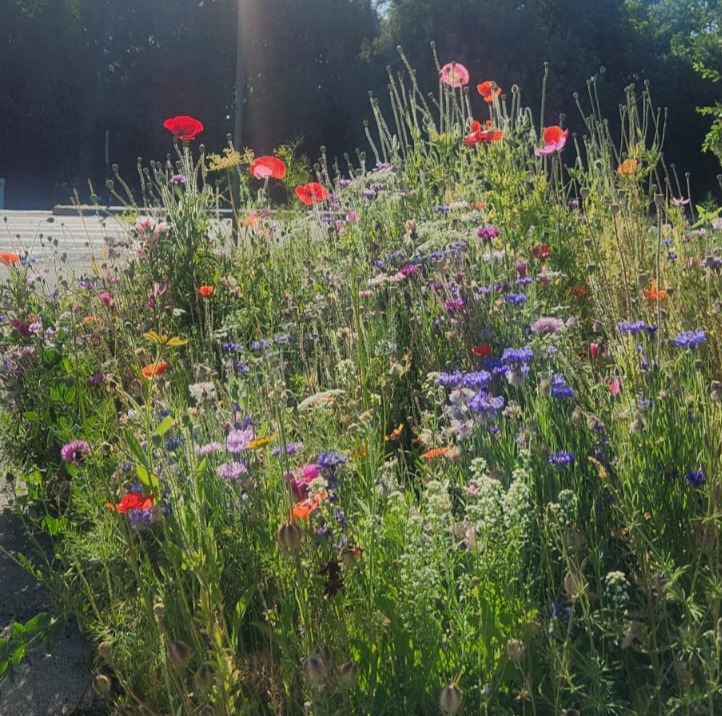
For the past two years, I’ve found myself smiling every time I pass a vibrant island of wildflowers in my neighbor’s front yard. Surrounded by neatly trimmed turf and concrete sidewalks, this unruly burst of color seems to make everything around it feel more alive.
The term wildflower often refers to flowering plants that grow without intentional cultivation and are typically native to a region. However, they can also be seeded or transplanted intentionally. Here in Northern California, wildflowers grow in a stunning range of colors and forms as they bloom with the unique rhythms of our local climate.
Many of our native wildflowers are spring ephemerals, such as sky lupine (Lupinus nanus) and the iconic California poppy (Eschscholzia californica). These beautiful harbingers of spring bloom brightly, then fade as summer heat returns, making way for hardier, often drought-tolerant species. Because they’re adapted to local conditions, most native wildflowers are not only resilient but also excellent support for pollinators and wildlife.
As California faces hotter, drier summers and increasing ecological pressures, planting wildflowers is a low-water, high-impact way to help restore habitat while also bringing color and life to our communities. And notice I didn’t write “planting wildflowers in your garden”? That’s because wildflowers don’t just belong in carefully tended beds! They can thrive in all sorts of spaces: roadside strips, bare patches, sidewalk edges, empty planters, even cracks in asphalt. Citizen scientists working with UC Davis researcher Haven Kiers helped disperse native wildflower seeds along sidewalks, bus stops, and bike paths. According to early results from the Seed Pile Project, the most successful wildflower growth occurred in places like cracks in pavement and roadsides, where seeds were left undisturbed.
While wildflowers are hardy, there are general guidelines for when and how to seed them. For example, summer is not the ideal time to sow wildflower seeds in Northern California—the heat and dryness can stress seeds and reduce germination. Instead, join me in starting to plan for a fall planting. Check out Calscape.org to get inspired and learn more about native California wildflowers; where to buy them, how to care for them, and what species are suited to your area. Create your own ever-changing patch of color and texture, with each wildflower variety blooming in its own seasonal rhythm. For the greatest ecological benefit, choose seed mixes with species native to Northern California. Many seed mixes are inexpensive, easy to care for, and include perennial or self-seeding species that return year after year.
| | | | |
NEW in Yolo County! The Woodland Regional Park Preserve | | |
Lorie Hammond, UC Master Gardener, Yolo County, 2024
Photos by Lorie Hammond, adapted
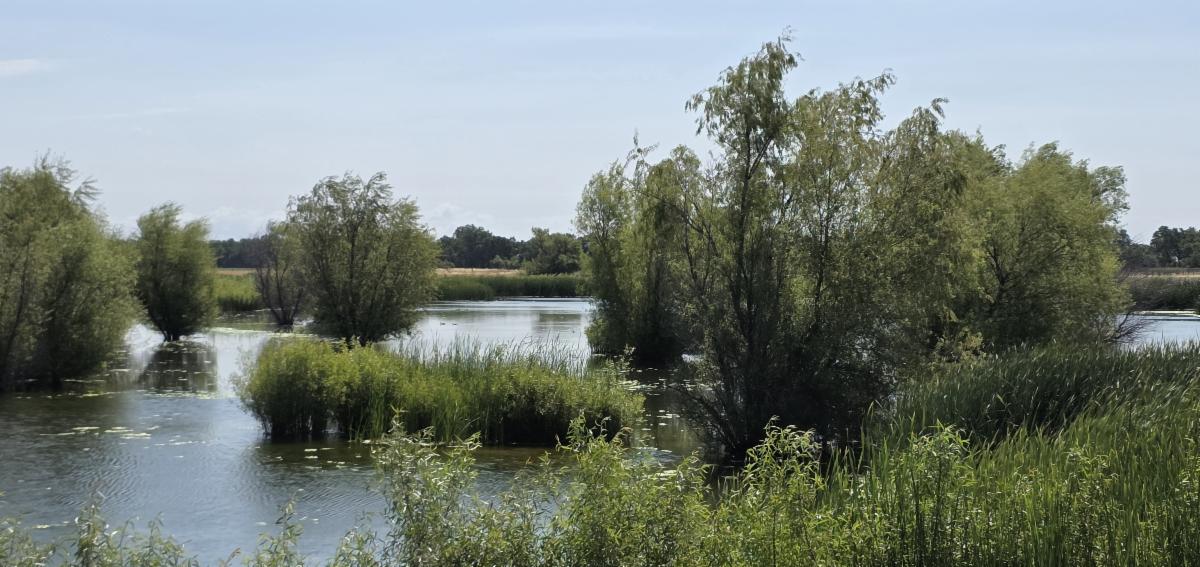
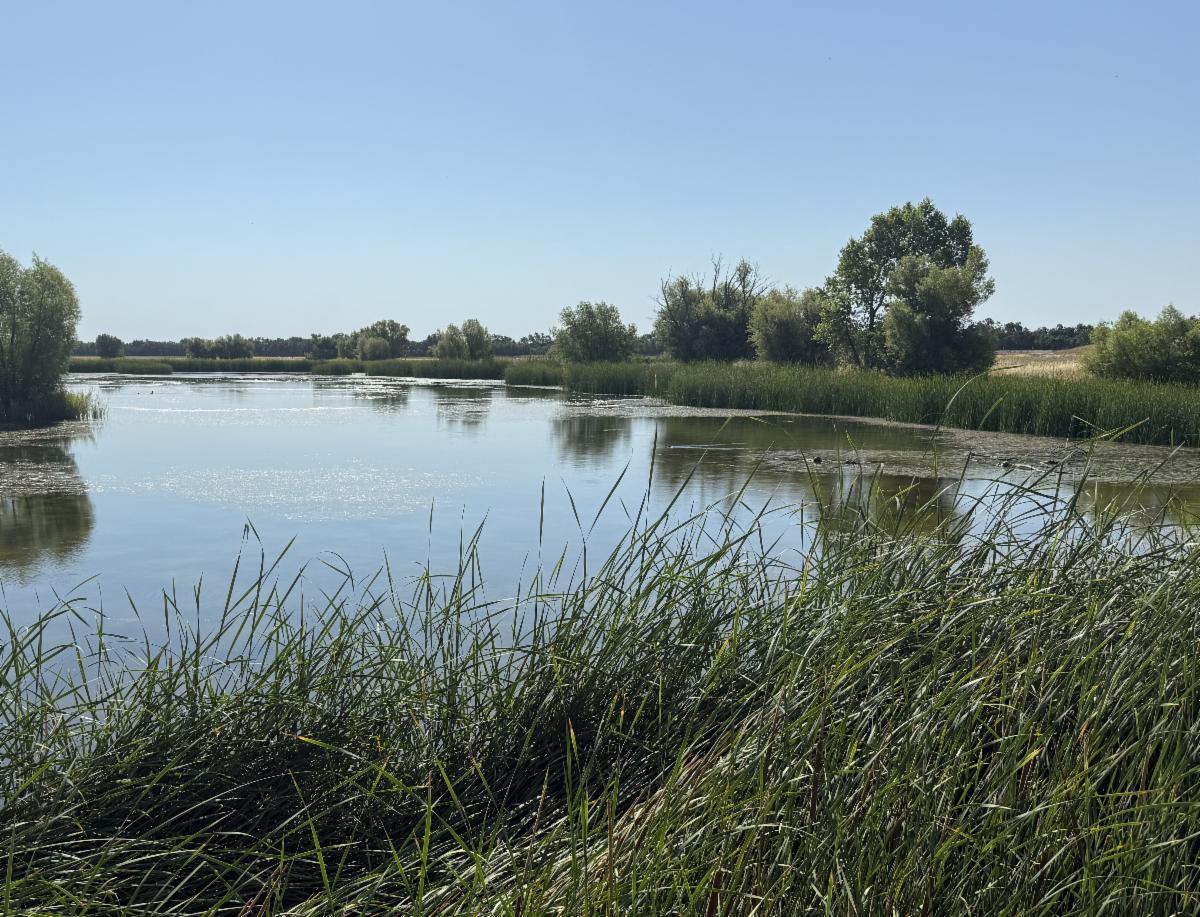
Many of us drive between Davis and Woodland for work, pleasure, or to go to Costco! The experience of traversing County Road 102 between these towns is utilitarian at best. For a delightful surprise, take a half hour deviation and turn east on County Road 25A, where a small sign says ”Woodland Regional Park Preserve.” Pass through a dry grassy field, turn left at the first opportunity, and you will encounter a magical wetlands invisible from the main road. Its one-third mile accessible path provides instant immersion into a serene natural setting. Once discovered, this path can be re-discovered many times, since like all natural landscapes, it will transform itself during different times of day and with the changing seasons.
While this Yolo County treasure only opened on May seventeenth of this year, it represents a long term cooperative effort between the City of Woodland and many other agencies. The reserve is a retired landfill site which has been converted into a 160-acre nature park which expands local wetland, plant and animal habitat and will support a variety of educational programs. The proximity of this reserve to Spring Hill...
| | | | |
Landscape Transitions Part 1 - Focal Points
Kate Bear, UC Master Gardener, Yolo County
Photos by Kate Bear, adapted
Nearly three years ago, my husband and I moved to Davis. The house we bought for our retirement life had a yard that included drip irrigation and no lawn, two positive attributes. The landscape was neat and easy to maintain, but didn’t satisfy my desire for variety, color, and complexity. I wanted to encourage more beneficial insects, bees, and birds, and create more layers (very low growing plants to taller plants). Most of the shrubs were pruned into balls or hedges and didn’t flower. There was a lot of space between plants with bark mulch, which I wanted to plant.
This article will be the first of three articles addressing different aspects of transitioning the yard to one that better meets my desires. This work is ongoing as ideas occur to me. Following is a discussion about keeping, enhancing, and creating focal points.
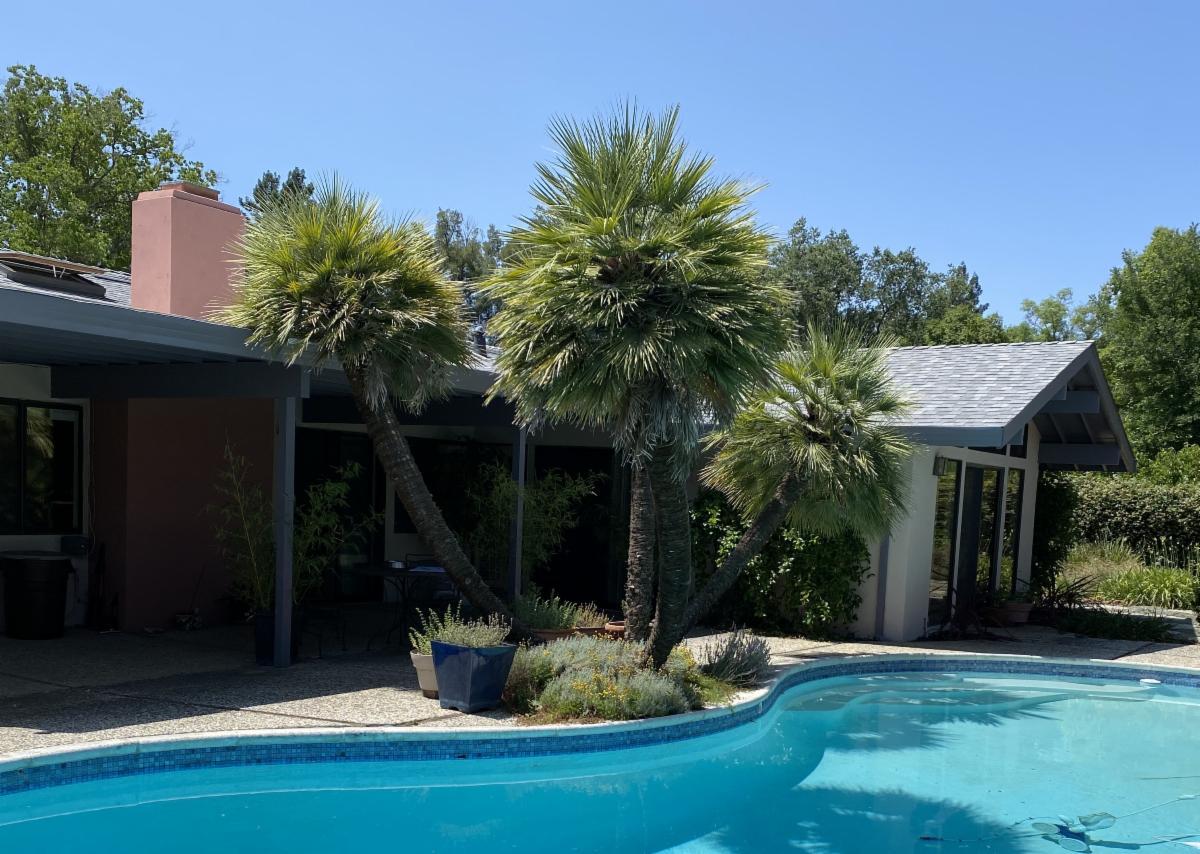
We inherited two excellent focal areas with this yard. One is a group of four palms planted by the pool in the back yard. The other is an area in the center of the front yard where a crape myrtle bush and late-winter flowering bulbs grow under a city tree and easily viewed from both the street and the house. We created...
| | | | |
The Light Eaters by Zoe Schlanger -
A Fresh Look at the Other Kingdom - Pt. II
| |
Mike Kluk, UC Master Gardener, Yolo County
The first half of this article was published last month. So, if you missed it, you can click here to read it. The Light Eaters is a recently published book looking at current research that is revealing how plants interact with, respond to, and manipulate other plants and animals in their environment. It gives us a view of the plant world from an entirely new perspective.
Plants that hear a predator coming
Past research has demonstrated that many plants produce compounds to become less tasty to predators. We actually find many of these useful, the flavor of mint or oregano, the fragrance of lavender. Botanists have also demonstrated that an increase in these chemicals occurs throughout the plant when it is being browsed, not just the leaves actually being bitten. Plants generate electrical impulses, much as our nerves do, but they travel at a much slower speed. Too slow to explain the change that can quickly occur in distant parts of a plant in response to an herbal predator. Two researchers, Rex Cocroft and Heidi Appel, decided to try a theory: could sound be the transmitting medium? Sound is merely vibration, whether it is passing through air or the body of a plant. They recorded the sound of the larvae of a white cabbage...
| | | | |
Ask a Master Gardener
This series provides answers to selected questions recently submitted to the UC Master Gardeners of Yolo County Help Desk.
Question: What is the best kind of mulch to use in our garden? Should I be concerned about using mulch that would make our soil too acidic?
| | |
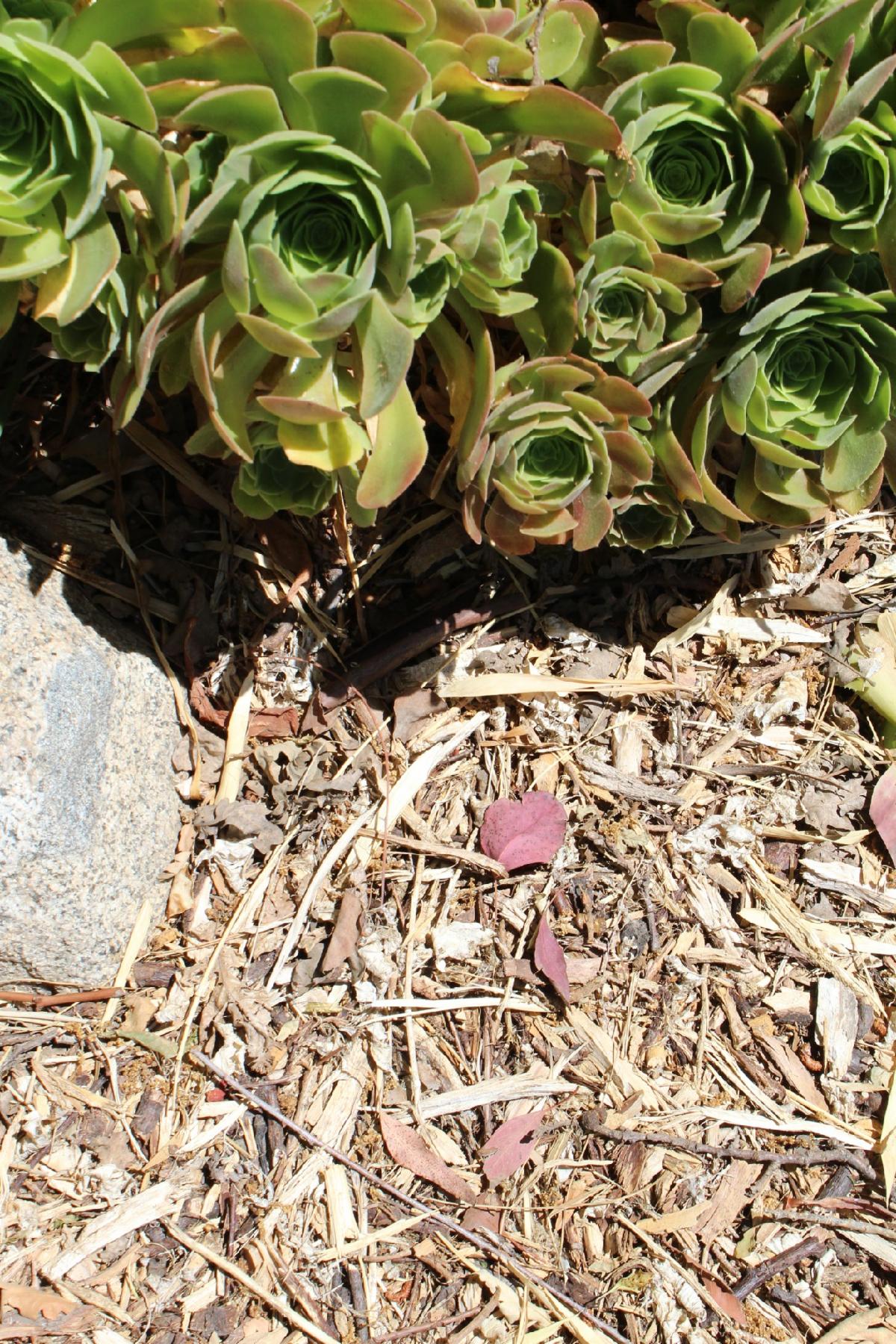
Answer: When it comes to mulch material there are several choices. Which kind of mulch will work best for your garden depends on the size of the garden you plan to cover, and your preference in terms of cost, appearance, and characteristics of the mulch. Should you worry about a mulch making your soil too acidic? Read on ….If you’re planning on using mulch around trees and perennial plants, arborist wood chips are a great choice. They keep the soil cool and moist, keep weeds under control, and don’t decompose too quickly. While organic mulches, such as arborist wood chips or recycled green waste may contain pathogens, there is little evidence that the disease will spread to a new location in mulch form.
Arborist wood chips will often include not only wood but also ground-up pieces of bark, branches, and leaves, making for a biologically diverse mulch that resists compaction. There are several different kinds of wood chips used for mulching, including mixed green waste or arborist wood chips, mulch made from shipping pallets, and bark chip mulch. The quality will usually dictate the cost; however, in some cases you can get wood chips free from a local arborist or municipal arborist. No matter which mulch you decide to use, keep the material several inches away from the plant base or tree trunk, and try to spread organic mulch in a layer at least three to six inches deep.
If you’re looking for mulch options for your vegetable or flower garden, then wood chips would be a poor choice. They take forever to decompose, and therefore can’t be easily worked into the soil as an amendment. For vegetables and flowers, you’ll want to mulch with materials like straw, weathered sawdust, weed-free dried lawn clippings, dry leaves, or compost. Like their wood chip counterpart, these other materials also keep the soil moist and cool, and suppress weeds, but they have the added benefit of being easily removed when it is time to replant and they can be worked into the garden soil occasionally to improve the soil’s structure and general health. The best time to apply organic mulch is when warm weather sets in, which is in the late spring.
You may have heard weed-block fabric, and other similar material suggested as mulches, but these inorganic materials don’t offer the same soil-improving benefit of organic mulches. In fact, they deteriorate fairly quickly and become landscape waste that ends up in landfill. Some people may want to consider rock or stone in their gardens as mulch. These materials can be aesthetically pleasing, reduce evaporation and when applied properly, suppress weeds. However, they do not improve texture or add nutrients to soil, and in the Sacramento Valley, will become quite hot in summer. When smaller stones or gravel are used, plan to love it forever because it is very difficult to remove.
Which brings us to the last question: should you be concerned about a mulch making your soil too acidic? While some mulches can be slightly acidic, that acidity is restricted to the mulch layer itself, and will have little to no effect on the overall pH of the soil underneath.
For more information refer to UC ANR’s publication – Mulches for Landscapes.
This article previously appeared in the Winters Express and Davis Enterprise.
If you have a gardening question, contact the UC Master Gardener Help Desk at 530-666-8737. Or send an email, with information regarding watering, sun exposure, details about your problem, and photos when possible.
| | | | |
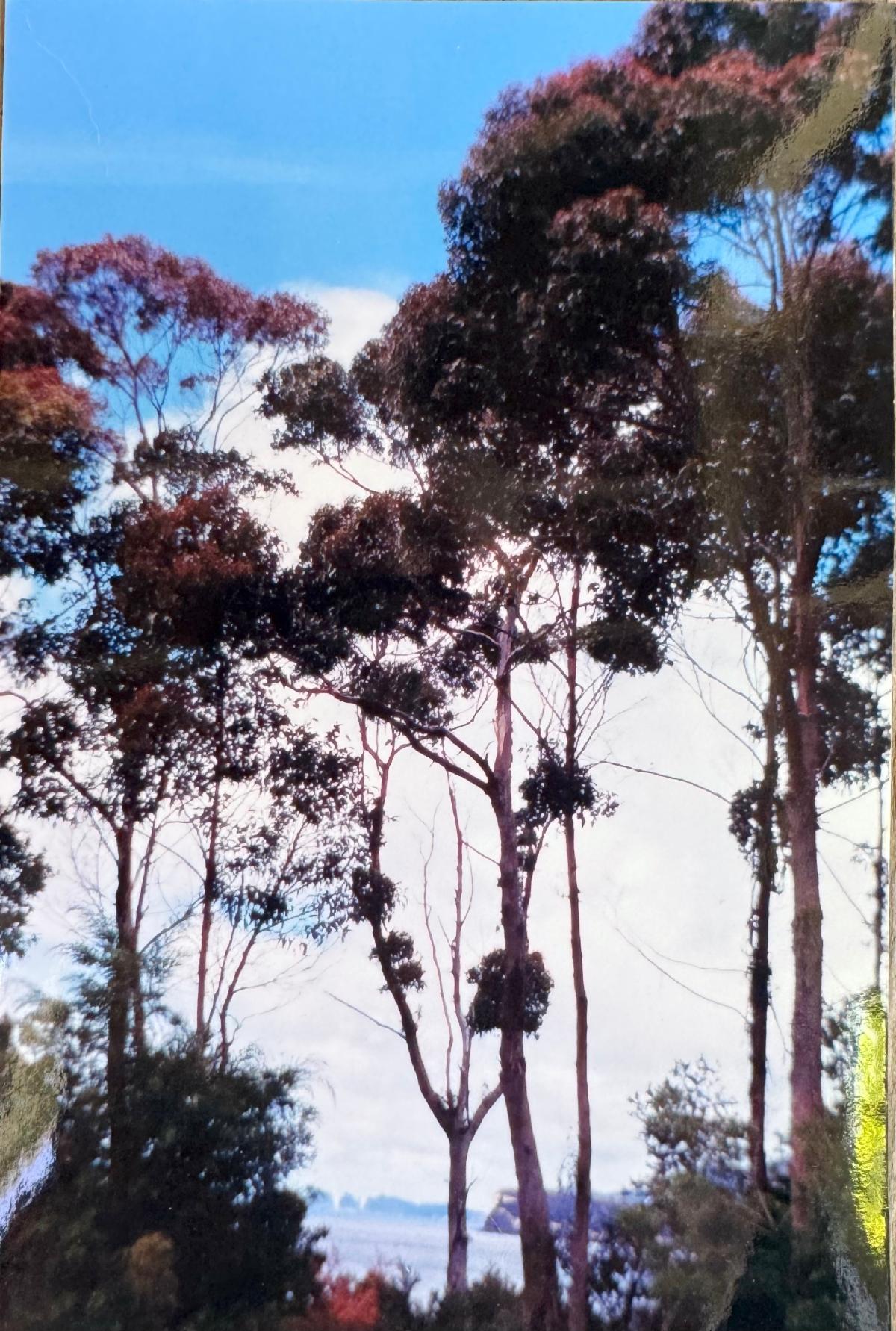
California Eucalypts: Should We Love Them or Hate Them?
Peg Smith, UC Master Gardener, Yolo County
Photos by Peg Smith
| | |
First a quick ramble through California’s history…
Why does California history have anything to do with eucalypts? It gives perspective to the increasing human presence in California and an example of the subsequent effects and changes in original flora and fauna of California. The elevation to statehood of California and the arrival of eucalypts are tied together by relatively recent historical events that brought tremendous changes to California.
Native Americans tribes thrived in California for approximately fourteen thousand years before European contact.
1542 – Following Cabrillo’s Spanish sailing expedition, which was the first European contact with Californian Native American tribes, the Spanish claimed Baja California and Alta California which encompassed a large region of the west.
1769 to 1834 - The first Mission was established in San Diego in 1769, the Mission system was secularized in 1834. The pueblos (towns) that were developed to support the Missions and the Presidios (forts) such as San Diego, Santa Barbara and Monterey continued as established small population centers.
1821 to 1848 - Mexico gained its independence from Spain in 1821 assuming governance of Alta California with the capital in Monterey. During the Spanish period land grants had been given to government officials, friends, and family of the governors. The Mexican government established a land grant process for which...
| | | | |
July Garden Tips
Peg Smith, UC Master Gardener, Yolo County
Photos by Peg Smith, adapted
July is a month to sit back with iced tea or lemonade and enjoy the results of your spring labors. It is also a time to make sure that garden tasks are completed early before the heat of the day. A gardener’s body is their best tool. The sensible approach (I must confess to not always being sensible) is to avoid overdoing your personal strength and energy supply or becoming dehydrated. Drink plenty of fluids, rest often, and apply sunscreen.
For vegetable growers July is also the month to get out your best running shoes so that you can ‘doorbell ditch’ summer squash and tomatoes, if you have excess, to your neighbors and friends.
| |
July Vegetable Planting Guide
Peg Smith, UC Master Gardener, Yolo County
| |
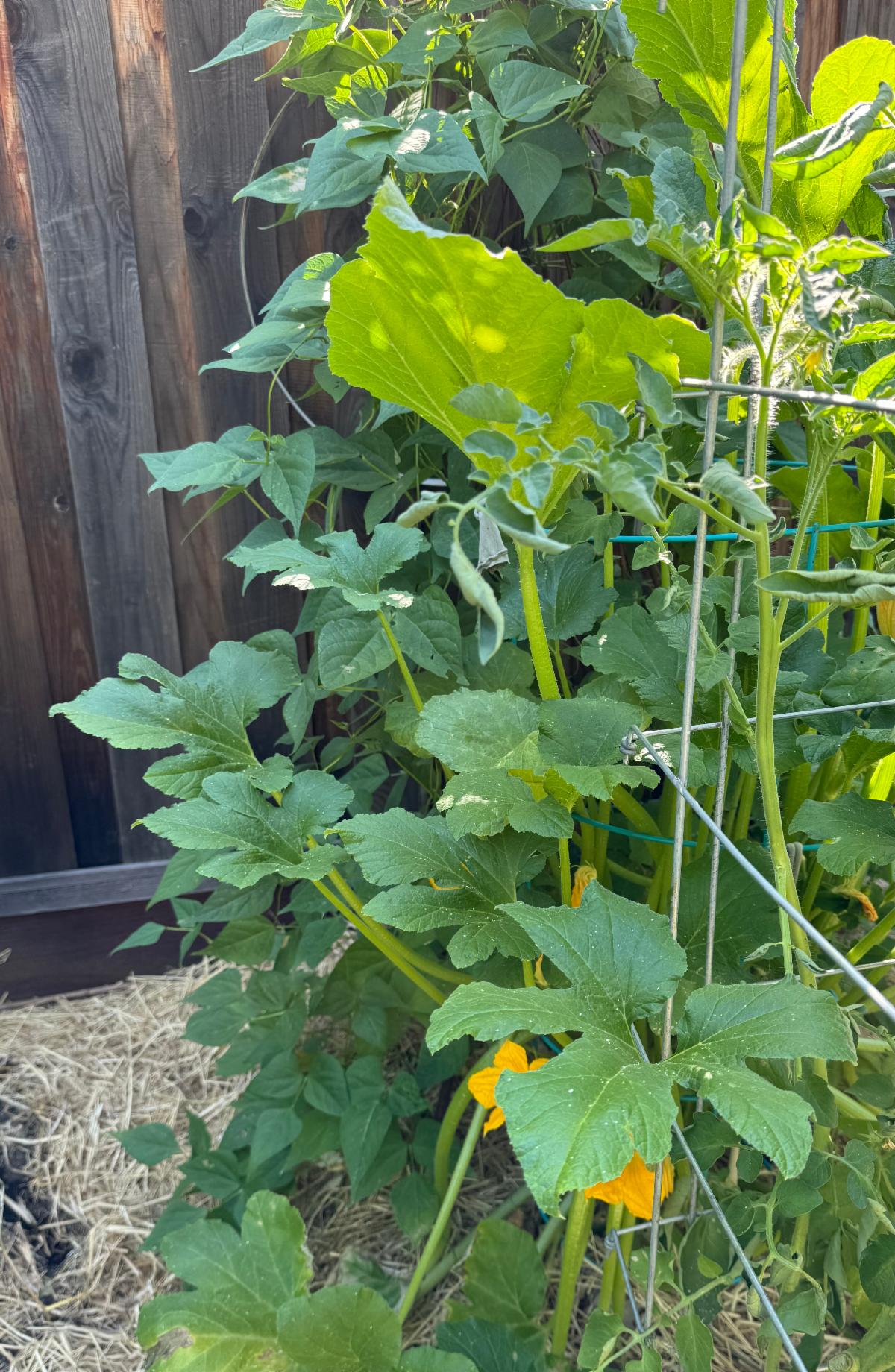
July is a month of heat when summer vegetables thrive. Produce needs to be picked often to encourage plants to continue flowering and stay productive. Keep the irrigation deep and consistent. Check for frass (caterpillar feces) on tomato plants to catch tomato horn worms before they can do too much damage. Watch for aphids, whitefly, cucumber beetle, powdery and downy mildew.
This is also the month to think ahead about winter vegetables. The brassicas: broccoli, cabbage, Brussel sprouts, and cauliflower can be started from seed...
| | | | |
| |
|
Master Gardeners at Local Farmers' Markets
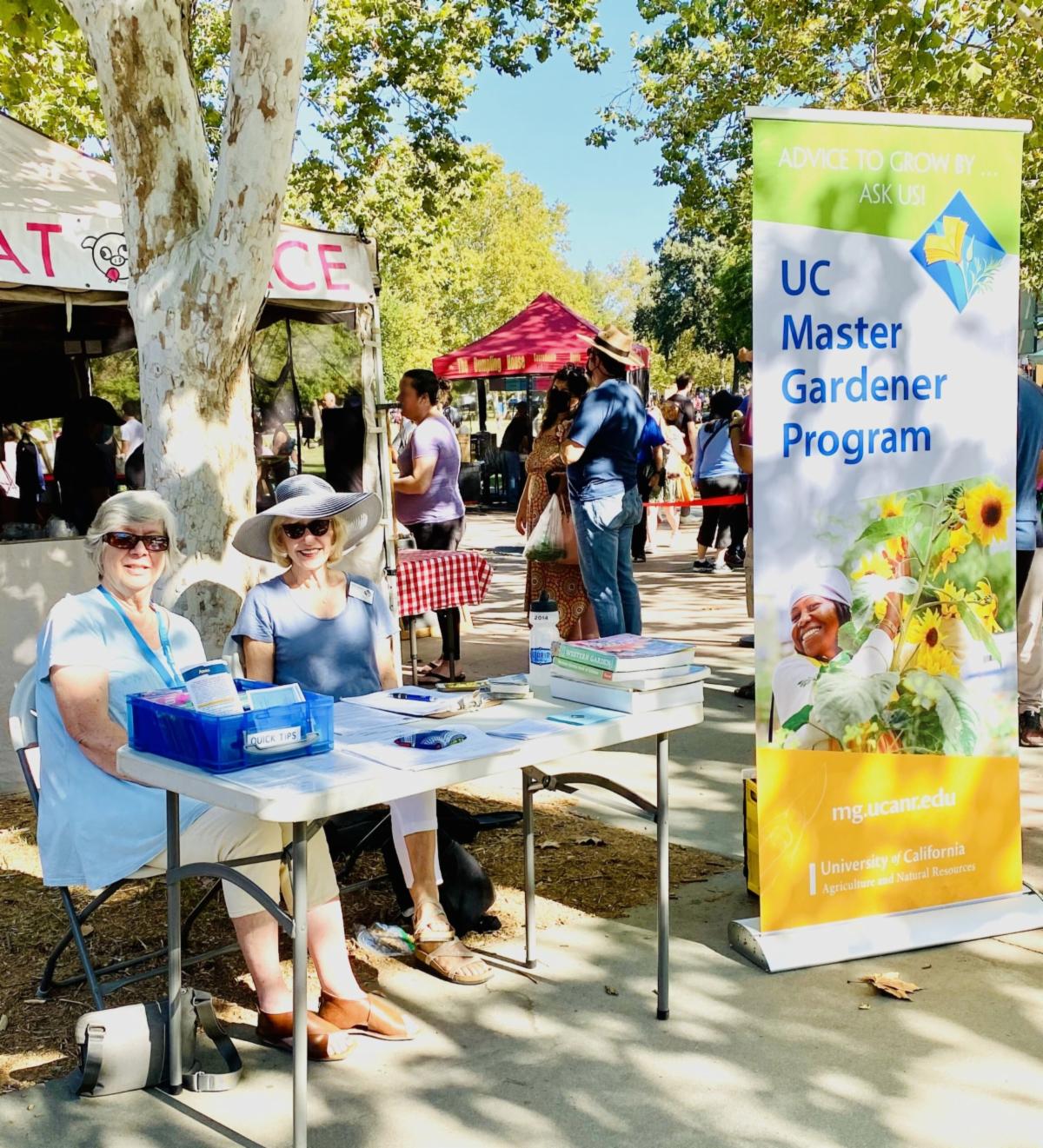
The UC Master Gardeners of Yolo County will be available at the following weekly farmers' markets to answer your gardening questions.
Davis Farmer's Market
Saturdays - 9am to 11am
Location: Central Park - Corner of C and Third Street, Davis
Woodland Farmers' Market
Saturdays - 9am to 12pm
Location: In front of Woodland Public Library - First St between Court & North, Woodland
Photo: Master Gardeners at the Davis Farmers Market by Kathy Hill
| | | | |
|
Questions and Answers Desk at Lowe's in West Sacramento
Location - Lowe's Home Improvement - 2250 Lake Washington Blvd., West Sacramento
The first and third Saturday of each month -
Saturday, July 5 - 10am to 12pm
Saturday, July 19 - 10am to 12pm
The UC Master Gardeners of Yolo County will be available to answer your gardening questions from 10am until noon at their twice monthly gardening "Questions and Answers Desk."
| | | | |
|
July 5 - Kitchen Garden Chat
10am - 11am (1st Saturday of each month)
Click Here for Zoom Link
We will discuss what to plant in the month of July, what to harvest, what pests to expect, and how to deal with them. During this time of year we will also talk about how to deal with the weather, start a discussion on the winter garden, and give you tips on what to do in July to be ready to plant in August. Everything you need for a thriving edible garden twelve months a year.
| | | | |
|
July 9 - Woody Plant Biology - with Chris Ingram
10 am to 1:30 pm, with midway break
Webinar - see registration link below
Cost: $25.00
Marin Master Gardeners invite Solano and Yolo Master Gardeners and members of the public to attend "Woody Plant Biology" which will cover the basic biological functions of woody trees and shrubs, including how they obtain nutrients, their growth habits, wound response, and related functions.
Speaker: Chris Ingram is a professional, Certified Aesthetic Pruner (AP) and an arborist with 30+ years of experience in arboriculture and pruning. He’s a graduate of the Merritt College Horticultural Program and studied under the Program’s founder, Dennis Makishima. Chris has taught AP classes at Merritt as well as classes for the Arborist Certification. He’s lectured to groups throughout the Bay Area and beyond, including Filoli, the Palo Alto Garden Club, Elizabeth Gamble Garden, the SF Rec and Park Department, the San Mateo Arboretum, and the Carmel Valley Art and Flower Show. In his professional practice, Chris provides a full range of arboriculture services with special emphasis on aesthetic and functional pruning of ornamental, exotic, fruit and native trees, and shrubs. He is a lover of old trees and specializes in their rehabilitation.
Note: The Zoom log-in link and soft copies of handouts will be sent via email on or before Monday, July 7 to those who complete a registration through the pay link, below. If you register, be sure to check your email for the Zoom link and handouts at least one day before the event.
To register for Woody Plants Bio on July 9, please access and complete the UCANR pay link - https://surveys.ucanr.edu/survey.cfm?surveynumber=46018
CE: 3.5 Hours (MG Internal Education)
Questions? Contact David Ross davidaross1964@gmail.com or Andie Ravas ravasjohnson@gmail.com
| | | | |
|
July 10 - Yolo County Library - UC Master Gardener Series
Becoming a Better Tomato Detective
Instructor - Patricia Lazicki, UCCE Vegetable Crops Advisor for Yolo, Solano & Sacramento Cos.
3pm to 4pm
Click Here for Zoom Link
“What’s wrong with my tomato plant?” With a wide field of potential suspects (e.g. diseases, nutrients, irrigation, animals, herbicides, weather, etc), finding the culprit(s) isn’t always straightforward. Identifying patterns, asking the right questions, and knowing where to look for resources can help narrow that field. In this workshop, we will go over and practice some useful tools for informing accurate diagnoses and recommendations.
| | | | |
|
July 12 - Gardening for Year Round Meals
Mapping the Sun and Vermiculture for Worm Casing Compost
11am
Location: Grace Garden - 1620 Anderson Road, Davis (behind the Davis United Methodist Church)
Instructor - Karen Slinkard, UC Master Gardener, Yolo County
Summer is here and this month we will discuss mapping the sun in your garden and why this is important. Additionally I will share my love of vermiculture for the very best worm casing compost. Bring your favorite ideas for our discussion of preparing and storing the summer harvest.
| | | | |
|
July 17 - Rose Maintenance Class
How to Have More Roses in Hot Weather
9am to 10am (every third Thursday)
Location: Quad Rose Garden at Woodland Community College - 2300 E. Gibson Road, Woodland
Hands-on class - bring your favorite hand shears / pruners, gloves, and kneeling pad. Master Gardeners will show techniques to produce more rose blooms in hot weather.
| | | | |
|
July 17 - Wild World of Wasps!
Webinar - 12pm
Registration link below
Wasps are a very diverse group of insects. Some species can be nuisance pests, creating galls on plants and stinging people, but many others are beneficial pollinators and predators of pests, such as aphids. And some wasps are just cool! In this webinar, we will discuss different behaviors of wasps and some of their roles in the ecosystem.
This webinar requires advance registration - Register here
This webinar qualifies as continuing education for UC Master Gardener volunteers. Please ensure you record your hours in the Volunteer Management System (VMS).
| | | | |
|
July 24 - Yolo County Library - UC Master Gardener Series
Plants as Problem Solvers
Instructor - Janey Santos, UC Master Gardener, Yolo County
3pm to 4pm
Click Here for Zoom Link
Join Yolo Master Gardener Janey Santos for a discussion on how to use plants to solve common problems in your garden such as drainage issues, soil erosion, limited access to water, sun transitions areas and more.
| | | | |
|
August 6 - Introduction to Aesthetic Pruning - with Chris Ingram
10 am to 2 pm, with midway break
Webinar - see registration link below
Cost: $25.00
Marin Master Gardeners invite Solano and Yolo Master Gardeners and members of the public to attend "Introduction to Aesthetic Pruning" which covers the fundamental and essential concepts and techniques in the aesthetic pruning of trees and shrubs. Concepts include finding and enhancing a tree’s essence, creating and maintaining a “focal point” tree and the differences between purely functional pruning (e.g., for fruit production) and aesthetic restructuring. The lecture portion of this class is prerecorded, however the Q & A sessions will be live with Chris Ingram.
Speaker: Chris Ingram is a professional, Certified Aesthetic Pruner (AP) and an arborist with 30+ years of experience in arboriculture and pruning. He’s a graduate of the Merritt College Horticultural Program and studied under the Program’s founder, Dennis Makishima. Chris has taught AP classes at Merritt as well as classes for the Arborist Certification. He’s lectured to groups throughout the Bay Area and beyond, including Filoli, the Palo Alto Garden Club, Elizabeth Gamble Garden, the SF Rec and Park Department, the San Mateo Arboretum, and the Carmel Valley Art and Flower Show. In his professional practice, Chris provides a full range of arboriculture services with special emphasis on aesthetic and functional pruning of ornamental, exotic, fruit and native trees, and shrubs. He is a lover of old trees and specializes in their rehabilitation.
To register for Introduction to Aesthetic Pruning on August 6, please access and complete the UCANR pay link - https://surveys.ucanr.edu/survey.cfm?surveynumber=46019
CE: 4 Hours (MG Internal Education)
Questions? Contact David Ross davidaross1964@gmail.com or Andie Ravas ravasjohnson@gmail.com
| | | | |
|
August 9 - Growing With and For Children
9am to 10am
Location: Dunnell Nature Park, 3351 Hillridge Drive, Fairfield
This is a free, in-person event. Learn about gardening with children and how they can enjoy gardening on multiple levels.
| | | | |
|
August 13 to 17 - UC Master Gardeners at the Yolo County Fair
Fair tickets go on sale July 7 and can be purchased at Yolo County Fair Ticket Sales.
UC Master Gardeners of Yolo County will be performing demonstrations and answering questions at an information table in the Plaza Center at the 2025 Yolo County Fair. Activities will include flower pounding, stamp art, bean art, and basil transplants. Bohart Museum of Entomology displays will be available to view. More information will be provided in the August issue of the Yolo Gardener Newsletter.
| | | | |
The Yolo Gardener Newsletter is a monthly publication and the events posted here are based on information available at the time of publication. Be sure to check the Upcoming Events list at the bottom of the page on the UC Master Gardeners of Yolo County website for up to date events and information. | | | | |
Connect and Learn With Us | | | | |
| |
| |
| |
| |
University of California Agriculture & Natural Resources (UC ANR) is an equal opportunity provider. | | | UC Master Gardeners of Yolo County2780 East Gibson Road Woodland, CA 95776 US | | | | |
| |