LAW ALERT: FLORIDA OVERHAULS PROPERTY INSURANCE AND FLORIDA REMOVES NON-MONETARY CONDITIONS IN A PROPOSAL FOR SETTLEMENT
June 17, 2022
|
|
Two Important Law Alerts From Luks and Santaniello, LLC. |
|
FLORIDA OVERHAULS PROPERTY INSURANCE
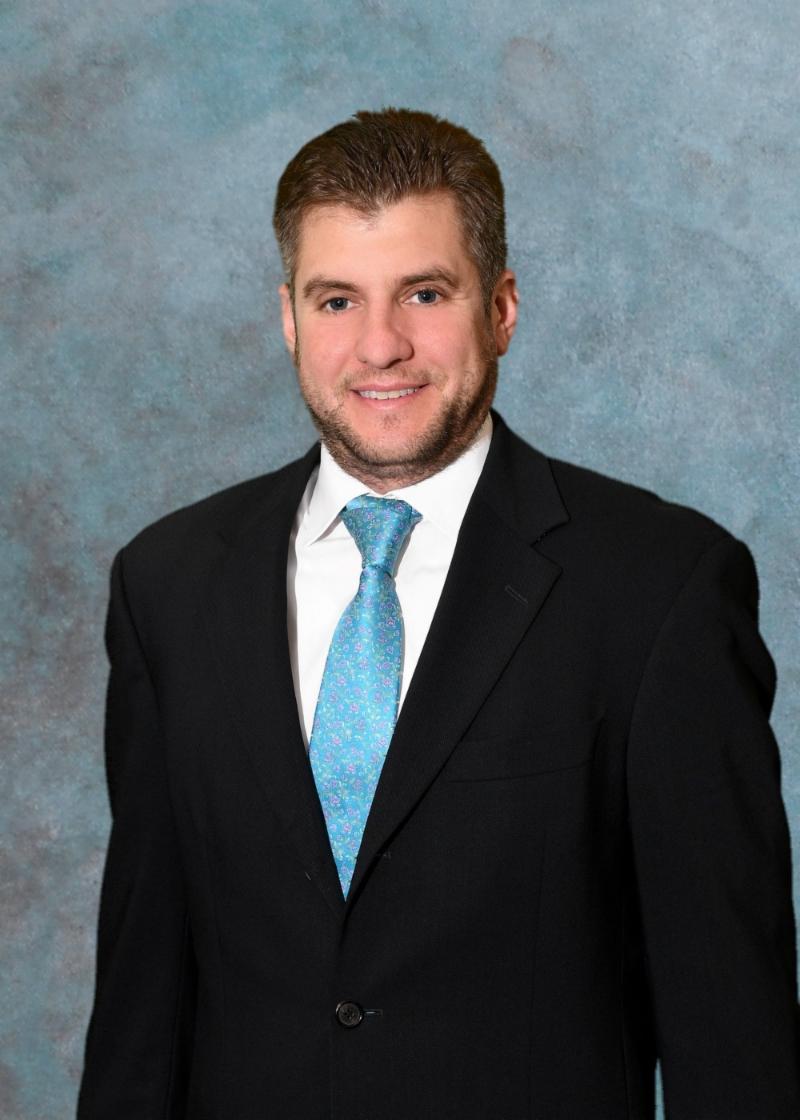
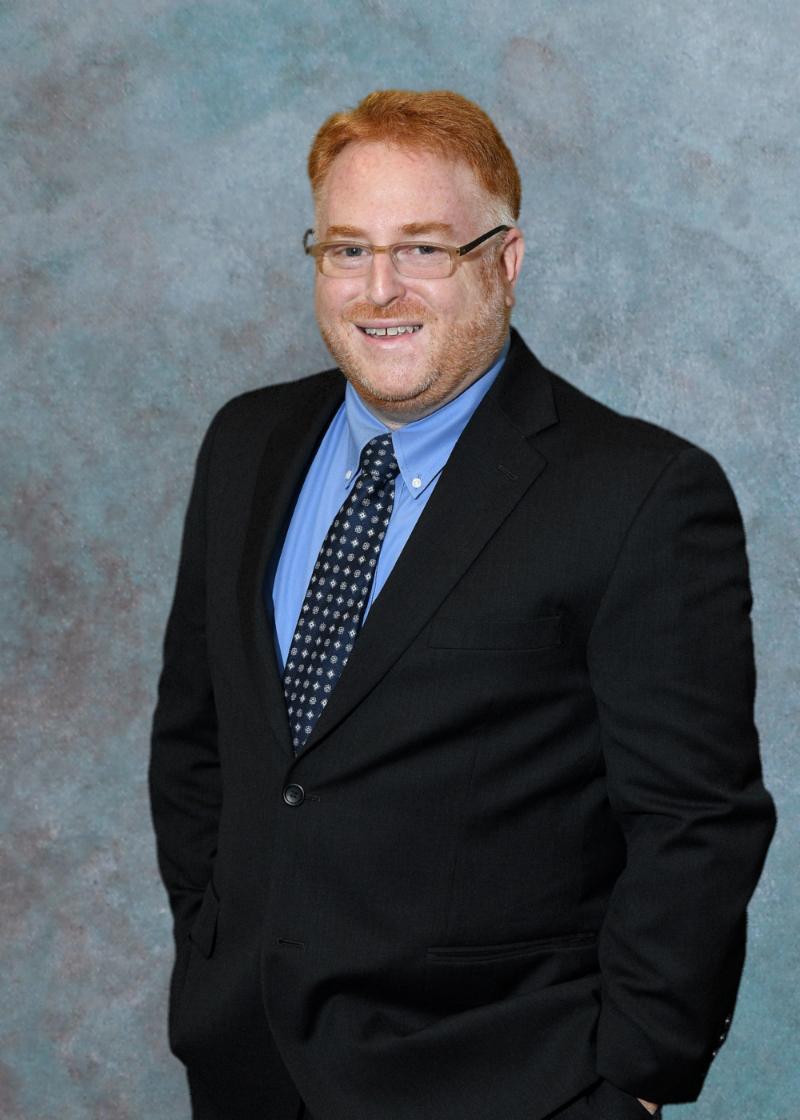
By: Jonah Kaplan, Esq., David Rosinsky, Esq., Tabitha Jackson, Esq., and Daniel Weinger, Esq., Daniel Santaniello, Esq., and Angelise Petrillo, Esq.
|
|
On May 26, 2022, Governor Ron DeSantis signed into law Senate Bills 2D and 4D, which are certain to change the trajectory of litigation in Florida regarding property damage claims against insurance carriers as we know it and, in response to the Surfside collapse last year, modifies existing law on building safety in Florida.
Senate Bill 2D is consistent with the legislature's recent attempts in Florida Statutes sections 627.7152 and 627.70152 to curtail first party property claims and litigation. We believe that the impact of Senate Bill 2D will be more significant than these prior bills as it attempts to eliminate attorney’s fees for property claims submitted by an assignee. Hopefully, Senate Bill 2D will allow the insurance market to stabilize, be more economically viable, allow for an expansion of competition of insurance carriers, and provide more transparency to evaluate risk.
Specifically, the most significant aspect of Senate Bill 2D is the elimination of the entitlement to attorney’s fees under an assignment of benefits to anyone other than a named insured or named beneficiary. Thus, roofing companies, water mitigation companies, mold companies, and the like that are not named insureds or named beneficiaries but obtain an assignment of benefits will no longer be entitled to recover statutory attorney’s fees pursuant to Florida Statute 627.428 and 626.9373 from an insurance carrier.
Additionally, a claimant will be required to show that an insurer breached the insurance contract in order to prevail in a bad faith claim for extra-contractual damages. As discussed below, overall Senate Bill 2D modifies statutes related to reinsurance, roof solicitation, roof underwriting, bad faith, attorneys’ fees, insurer regulation and transparency, and building codes.
We anticipate that, as a result of this new law, first party property claims and litigation will be reduced.
Senate Bill 4D is intended to ensure the safety of those residing in condominiums and co-op buildings throughout Florida and modifies roof replacement requirements in the Florida Building Code. Under the new law, in cases where only 25% of a roof is damaged, it can be repaired rather than fully replaced. This is a significant change because, up until now, under the “25% Rule” in Chapter 708.1.1, Florida Building Code, a home or condo owner had to replace the entire roof if 25% or more of the roof was damaged by a storm. This will help to reduce fraudulent roof replacement claims. The statute seeks to limit fraud by adding transparency consumer protections. It also prohibits roofing contractors from soliciting business to be paid by insurance claims filed by homeowners, and sets limits on the recovery of attorney fees to insured parties, not third party contractors.
Senate Bill 4D further heightens requirements, inspections, and overall safety for condominiums and co-op buildings in Florida by requiring “Milestone Inspections” and “Structural Integrity Reserve Studies.” Condominiums and co-op buildings will no longer be able to avoid maintaining their buildings and will be required to maintain reserve accounts dedicated to maintenance and repair of structural building components. Only time will tell how it impacts Associations’ property insurance premiums and/or their ability to secure adequate property insurance.
A synopsis of these and other notable new laws are as follows:
Senate Bill 2D, An Act Relating to Property Insurance
§ 215.5551 Reinsurance to Assist Policyholders Program (“RAP”). Administered through the State Board of Administration (“SBA”), RAP is funded via a $2 billion reimbursement layer of reinsurance for hurricane losses directly below the mandatory layer of the Florida Hurricane Catastrophe Fund (FHCF). RAP is created to assist insurers in insulating themselves from the risk of insuring properties in Florida.
All eligible insurers must participate in the program. The FHCF mandatory retention is $8.5 billion for the 2022-2023 contract year. The program would reimburse 90% of the insurer’s covered losses and 10% of their loss adjustment expenses up to each individual insurer’s limit of coverage for the two hurricanes causing the largest losses for that insurer during the contract year.
§ 215.5586 My Safe Florida Home Program: The Department of Financial Services (“DFS”) receives $150 million for the “My Safe Florida Home Program” for the performance of hurricane retrofitting on homestead single family homes with a value of $500,000 or less (previously $300,000), in “wind-borne debris regions” as defined in the Florida Building Code. The Program provides financial motivation for Florida residential property owners to obtain free home inspections that would identify mitigation measures and provide grants to retrofit such properties, reducing vulnerability to hurricane damage. Grants awarded provide $2 for every $1 provided by the homeowner, up to $10,000.
§ 489.147 Contractor Solicitation of Roof Claims: Creates additional prohibitions on contractor solicitation. Prohibits contractors from making any written or electronic communication encouraging consumers to contact a contractor or public adjuster to make an insurance claim for roof damage unless such solicitation provides notice that the consumer is responsible for any and all deductibles and that the contractor may be charged with insurance fraud via a third degree felony if he/she pays/waives any applicable deductible or intentionally files a claim with false, fraudulent / misleading information.
|
|
§ 624.1551 Civil Remedy Against Property Insurers: Section 624.155 of the Florida Statutes currently permits claimants to file bad faith claims under first-party property insurance policies. However, the existence of coverage, extent of damages, and the amount of loss must be determined before a claimant can file a bad faith suit. Notwithstanding any provision of s. 624.155, § 624.155(1)(b) now requires a claimant to establish an insurer breached the insurance contract in order for the claimant to prevail in a bad faith claim for extracontractual damages. As a result, claimants will have to establish that the insurer breached the policy in addition to the previous requirements outlined in Section 624.155.
|
|
§ 626.9373 & § 627.428 Attorney’s Fees. Both Sections § 626.9373 and § 627.428 of the Florida Statutes relate to obtaining attorney’s fees in litigation. § 626.9373 relates to claims against a surplus lines insurer, while § 627.428 relates to those against an insurer. Both statutes were amended to exclude and prohibit the ability to assign the right to attorney’s fees to anyone other than a named insured or named beneficiary. The intent of this amendment is to curtail litigation that arises due to the assignment of benefits to portions of a claim or all of the claim.
§ 627.701 Separate Roof Deductible (residential): Permits insurers to apply a separate roof deductible of up to 2% of the Coverage A limit (“Dwelling”) of the policy or 50% of the actual cost to replace the property’s roof. The policyholder may decline by signing a form approved by OIR. If a roof deductible is added to the policy at renewal, the insurer must provide a notice of change in policy terms and allow the policyholder to decline the separate roof deductible. The roof deductible does not apply to a total loss to the primary structure in accordance with the valued policy law under s. 627.702, F.S., (caused by a covered peril), a hurricane loss, a roof loss resulting from a tree fall or other hazard that damages the roof and punctures the roof deck, or a roof loss requiring the repair of less than 50% of the roof. Other items of note in section 627.701 include:
- Policyholders that accept a roof deductible shall receive a premium credit/discount.
- When a roof deductible is applied, no other deductibles may be applied.
- Roof deductible applies to a claim adjusted on a replacement cost basis.
- Insurer may limit claim payment for a roof to the actual cash value, if and until the insurer receives proof of payment of the roof deductible.
- Roof deductible provision shall be clear and unambiguous.
- Requires inclusion of the following disclosures:
- Immediately following the declarations page, notice that a roof deductible may result in high out-of-pocket expenses to the policyholder.
- On the declarations page, prominent display of the actual dollar value of the roof deductible at issuance and renewal. Permits insurer to limit payment on a roof claim to actual cash value until the policyholder pays the roof deductible.
|
|
§ 627.7011 Roofs / Insurer Underwriting: Prohibits insurers from refusing to issue/renew a residential policy with a roof that is less than 15 years old solely because of the age of the roof. If the roof is 15 or more years of age, insurers shall permit a roof inspection (at the homeowner’s expense) before requiring the replacement of the roof as a condition of issuing/renewing a policy. The insurer may not refuse to issue or refuse to renew a homeowner’s insurance policy solely because of roof age if an inspection of the roof indicates that the roof has five years or more of useful life.
§ 627.70131 Insurer Claims Handling: In all non-hurricane claims, insurers shall conduct a physical inspection of the property within 45 days of receiving proof of loss statements. Insurers shall notify policyholders of their right to receive any detailed report generated by an insurer’s adjuster that estimates the amount of the loss. The estimate shall be delivered to the policyholder within 7-days after request (or upon completion). Within 90 days unless there are factors beyond the control of the insurer, insurers shall provide a reasonable explanation of the claim decision in relation to the policy, facts, and law. If the payment is less than the insurer’s adjuster’s estimate of the loss, the Insurer shall explain any difference or discrepancy.
|
|
§ 627.70152 Suits Arising under a Property Insurance Policy. When a claimant’s suit is dismissed the court may award to the insurer reasonable attorney’s fees and costs to obtain the dismissal. There is now a presumption that Lodestar Fees are sufficient and reasonable. This presumption may be rebutted only in rare and exceptional circumstances with evidence that competent counsel could not be hired in a reasonable manner.
§ 627.7152 Assignment of Benefits (AOB) / Fees Associated: § 627.7152 was modified in that “Assignment agreement” now includes assignments executed by a party that inspects the property, or provides mitigation, clarifies that public adjuster fees are not an assignment agreement, and clarifies the requirement to provide a Notice of Intent to Initiate Litigation prior to filing suit. Valid AOBs shall specify that the assignee will hold harmless the assignor from all liabilities, including attorney fees. § 627.7152 also now prohibits assignment of the right to obtain fees in suits to persons other than a named or omnibus insured or a named beneficiary under the policy. The assignee can only recover attorney’s fees pursuant to § 57.105. Assignment agreements may occur, but the assignee vendor shall not recover attorney fees in suits against an insurer. The terms “disputed amount” and “judgment obtained” that were previously used to calculate the awardable attorney’s fees is deleted.
|
|
Senate Bill 4D, An Act Relating to Building Safety |
|
§ 553.844 Windstorm loss mitigation; requirements for roofs and opening protection: The new law creates a fund to help certain homeowners protect their property from wind damage. Homeowners will also notice the addition of a separate “roof deductible” that, under certain circumstances, can equal up to 2% of the policy value or 50% of the cost of a full roof replacement, whichever is less. The deductible won’t apply in certain circumstances, such as a total loss due to a hurricane or a tree falling on the structure, puncturing the roof deck. In addition, under the new law, in cases where only 25% of a roof is damaged, it can be repaired rather than fully replaced.
SB 4-D modifies Florida Statutes Chapters 553 (The Building Code Act”), 718 (“The Condominium Act”), and 719 (“The Co-Op Act”). SB-4D applies only to condominium or cooperative buildings of three or more stories. The intent of this legislation is to force building owners to timely repair structural deficiencies in order to prevent a catastrophic building failure.
§ 553.899 Mandatory Structural Inspections for Condominiums and Co-Ops: The law requires periodic “Milestone Inspections” by a licensed engineer or architect for the purposes of determining a buildings’ life safety and structural component integrity or adequacy. The Milestone Inspection must occur when any existing condo or co-op building reaches 30 years of age or 25 years for buildings located within 3 miles of a coastline. Milestone Inspections must be repeated every 10 years thereafter.
A Milestone Inspection consists of two phases. Phase 1 consists of a visual inspection of habitable and nonhabitable areas of a building, including the major structural components, and is to provide a qualitative assessment of the structural conditions of the building. If the Phase 1 inspection reveals substantial structural integrity deterioration, a more intensive Phase 2 inspection is required, which may involve destructive or non-destructive testing at the discretion of the inspector to fully assess areas of structural distress in order to confirm that the building is structurally sound and safe for its intended use.
Upon completion of a Phase 1 or Phase 2 inspection, the engineer or architect must submit a sealed copy of the Milestone Inspection Report to condominium association or co-operative association, and the local building official. The Association must also provide a copy of the report to each owner, posting it in a place where all residents can read it, such as a building’s common area bulletin board or on the association’s website. The Milestone Inspection Report is an official record of the Association.
§ 718.112 and § 719.106 – Structural Integrity Reserve Studies: In addition to periodic building inspections, all condominium and co-op owners for buildings three stories and higher are required to contribute to and maintain a reserve fund to pay for repair and replacement of structural building components. Owners can no longer vote to waive or reduce funding of reserves. The reserve fund is determined by a reserve study, which includes a visual inspection by a licensed engineer or architect, plus a report. The Structural Integrity Reserve Study Report is a financial analysis of the remaining useful life of each structural component and the cost to repair or replace at the appropriate time in the future. It must include the following building components: roof, load-bearing walls or other primary structural members, floor, foundation, fireproofing and fire protection systems, plumbing, electrical systems, waterproofing and exterior painting systems, windows, and any other item that has a deferred maintenance expense of replacement cost that exceeds $10,000.
Owners of existing buildings must conduct their first Structural Integrity Reserve Study by December 31, 2024. In addition, as of December 31, 2024, an association may no longer use those itemized reserve funds (or any interest accruing thereon) for any other purposes, and an association may only use those itemized reserve funds for their designated purposes. Members of a unit-owner controlled association may not determine to provide no reserves or less reserves than required in §718.112(g). The same requirements apply to new communities, whether under developer control or owner control. The first Structural Integrity Reserve Study of a new building must occurs at turnover of developer control to owners, then every 10 years thereafter.
The Structural Integrity Reserve Study Report is an official record of an association and must be maintained for 15 years. A prospective purchaser of a Unit has the right to inspect an association’s most recent Structural Integrity Reserve Study. If an association has not completed a Structural Integrity Reserve Study, the prospective purchaser of a Unit is entitled to a statement stating that the association has not completed the study.
Questions? Luks and Santaniello, LLC.'s First Party Property and Construction Law practice groups will continue to monitor and provide updates regarding developments in the applications of these new laws. For questions or further assistance with your Florida matters, please reach out to our First Party Property and Construction Law practice groups.
|
|
Jonah Kaplan, Esq.
T: (954) 647-0457
E: JKaplan@insurancedefense.net
|
|
David Rosinsky, Esq.
T: (954) 847-2927
E: DRosinsky@insurancedefense.net
|
|
Tabitha Jackson, Esq.
T: (850) 241-1208
E: TJackson@insurancedefense.net
|
|
Daniel J. Santaniello, Esq.
T: (561) 226-2525
E: DJS@insurancedefense.net
|
|
Angelise Petrillo, Esq.
T: (954) 847-2923
E: AMPetrillo@insurancedefense.net
|
|
Daniel Weinger Esq.
T: (954) 847-2924
E: DWeinger@insurancedefense.net
|
|
LAW ALERT: FLORIDA REMOVES NON-MONETARY CONDITIONS IN A PROPOSAL FOR SETTLEMENT |
|
By, Daniel Santaniello, Esq., J. Marcos Martinez, Esq., Angelise Petrillo, Esq., and Daniel S. Weinger, Esq.
|
|
The Florida Supreme Court recently approved a significant amendment to Florida Rule of Civil Procedure 1.442 which will have a substantial impact on the considerations a defendant should make before serving a proposal for settlement (PFS). Effective July 1, 2022, subdivisions (c)(2)(C) and (c)(2)(D) of Rule 1.442 will be amended to remove the ability to include non-monetary conditions in a PFS with the exceptions of a voluntary dismissal with prejudice of all claims and any other nonmonetary terms expressly permitted by statute. As a result, the inclusion of any other non-monetary terms, such as the requirement that the party sign a release, will render the proposal invalid.
In amending the rule, the Court explained that the change was to provide consistency with Florida Statute section 768.79, the offer of judgment statute, which makes no mention of non-monetary terms. Obviously, this amendment is disadvantageous to defendants, who will no longer have the ability to condition an executed release of its agents, representatives, and employees as part of an enforceable PFS. This is not to say that once a PFS has been accepted, a defendant cannot request that a release be executed. However, there is no guarantee a plaintiff will agree to place any additional limitations and conditions following the acceptance of the PFS beyond what is required by Florida law.
While this amendment is disadvantageous to defendants as written, as is oftentimes the case, it leaves open certain procedural questions that will only be answered as the courts begin adjudicating these claims. In the meantime, parties to a lawsuit may only continue serving proposals for settlement requiring a release as a condition of acceptance until July 1, 2022.
A brief summation of the text of the amended rule is provided below. The full Supreme Court opinion and text of the amended rule are linked here for your referral and use.
(a)-(b) [No Change]
(c) Form and Content of Proposal for Settlement.
(1) [No Change]
(2) A proposal shall:
(A) name the party or parties making the proposal and the party or parties to whom the proposal is being
made;
(B) state that the proposal resolves all damages that would otherwise be awarded in a final judgment in the
action in which the proposal is served, subject to subdivision (F);
(C) exclude nonmonetary terms, with the exceptions of a voluntary dismissal of all claims with prejudice
and any other nonmonetary terms permitted by statute;
(D) state the total amount of the proposal
(E) state with particularity the amount proposed to settle a claim for punitive damages, if any;
(F) state whether the proposal includes attorneys’ fees and whether attorneys’ fee are part of the legal
claim; and
(G) include a certificate of service in the form required by Florida Rule of General Practice and Judicial
Administration 2.516.
(3)-(4) [No Change]
(d)-(j) [No Change]
Questions? Luks and Santaniello, LLC.'s Legislative and Tort Reform Committee will continue to monitor and provide updates regarding developments in the applications of these new laws. For questions or further assistance with your Florida matters, please reach out to our Legislative and Tort Reform Committee.
|
|
J. Marcos Martinez, Esq.
T: (786) 433-4267
E: MMartinez@insurancedefense.net
|
|
Angelise Petrillo, Esq.
T: (954) 847-2923
E: AMPetrillo@insurancedefense.net
|
|
Daniel Weinger Esq.
T: (954) 847-2924
E: DWeinger@insurancedefense.net
|
|
Daniel J. Santaniello, Esq.
T: (561) 226-2525
E: DJS@insurancedefense.net
|
|
About Luks, Santaniello, Petrillo, Cohen & Peterfriend |
Our verdicts tell the story.™ Luks, Santaniello, Petrillo, Cohen & Peterfriend is a Florida Corporate & Insurance Defense Litigation firm. The firm defends professionals, corporations and their insurance companies from both Liability and Workers' Compensation claims. From our eleven Florida offices in Key West, Miami, Fort Lauderdale, Boca Raton, Stuart, Fort Myers, Tampa, Orlando, Jacksonville, Tallahassee and Pensacola, the firm’s 140+ attorneys deliver counsel and legal services in over 33 practice areas. The firm has several strategic and innovative practice areas including a dedicated Time and Policy Limit Demands and Tenders Practice Group and Surgical SIU | LOP Practice that handle a number of specialized issues. Members have tried over 200 cases in Florida State and Federal Courts.
Our mission is to provide our clients with legal services that help them manage risk and reduce exposure. Our goal is to ensure that our clients obtain equal justice in the courtroom. The Law Firm is Peer Review Rated by Martindale-Hubbell and is a member of The Gavel.net LLC., Nationwide Claims Defense Network. The firm's Partners are members of the National Retail and Restaurant Defense Association (NRRDA), the Trucking Industry Defense Association (TIDA), the Florida Defense Lawyers Association (FDLA), the Defense Research Institute (DRI) and the Claims and Litigation Management Alliance (CLM).
Managing Partner Dan Santaniello, Esq., Partners Anthony Petrillo, Esq. (Tampa), James Sparkman, Esq. (Boca Raton), Jack Frost (Boca Raton), Gary Ralph, Esq. (Fort Myers) and Nash John Hedrick, Esq. (Orlando) are Florida Bar Board Certified Civil Trial Experts. Construction Law Partners Valerie Edwards, Esq. (Boca Raton), Christopher Burrows, Esq. (Boca Raton), Patrick Hinchey, Esq. (Jacksonville) and David Harrigan, Esq. (Orlando) are Florida Bar Board Certified Construction Law Experts. The firm has a full service Appellate team in South, Central and Northern Florida to assist with summary judgments, motions in limine, discovery objectives, trial strategy and post trial positions.
The Daily Business Review selected Luks, Santaniello as finalists for the Most Effective Lawyers for its innovation in filing a Declaratory Judgment Action in a multiple Wrongful Death claim. These times present extraordinary challenges to businesses and their insurers. Let us help even the playing field. View Contact Directory Now.
Request a screen share meeting (email LS@insurancedefense.net) to view our claims portfolio management process, how we use artificial intelligence in litigation strategy and how we leverage claims analytics and technology to work efficiently and mitigate legal spend. Request a Screen Share Meeting.
|
|
Contact:
Luks, Santaniello, Petrillo, Cohen & Peterfriend
T: (561) 226-2525
E: DJS@insurancedefense.net
|
|
Luks, Santaniello, Petrillo, Cohen & Peterfriend
T: 954.847.2936
E: MDonnelly@insurancedefense.net
|
|
This Law Alert is for informational purposes only and does not constitute legal advice. Reviewing this information does not create an attorney-client relationship. Sending an e-mail to Luks, Santaniello et al does not establish an attorney-client relationship unless the firm has in fact acknowledged and agreed to the same.
“AV®, BV®, AV Preeminent® and BV Distinguished® are registered certification marks of Reed Elsevier Properties Inc., used under license. They are to be used in accordance with the Martindale-Hubbell® certification procedures, standards and policies. For a further explanation of Martindale–Hubbell’s Peer Review Ratings, please visit Martindale-Hubbell Ratings.
|
|
Copyright 2002-2022 Luks, Santaniello, Petrillo, Cohen & Peterfriend |
|
Follow us to stay informed on the latest firm updates! |
|
|
|
|
|
|