|
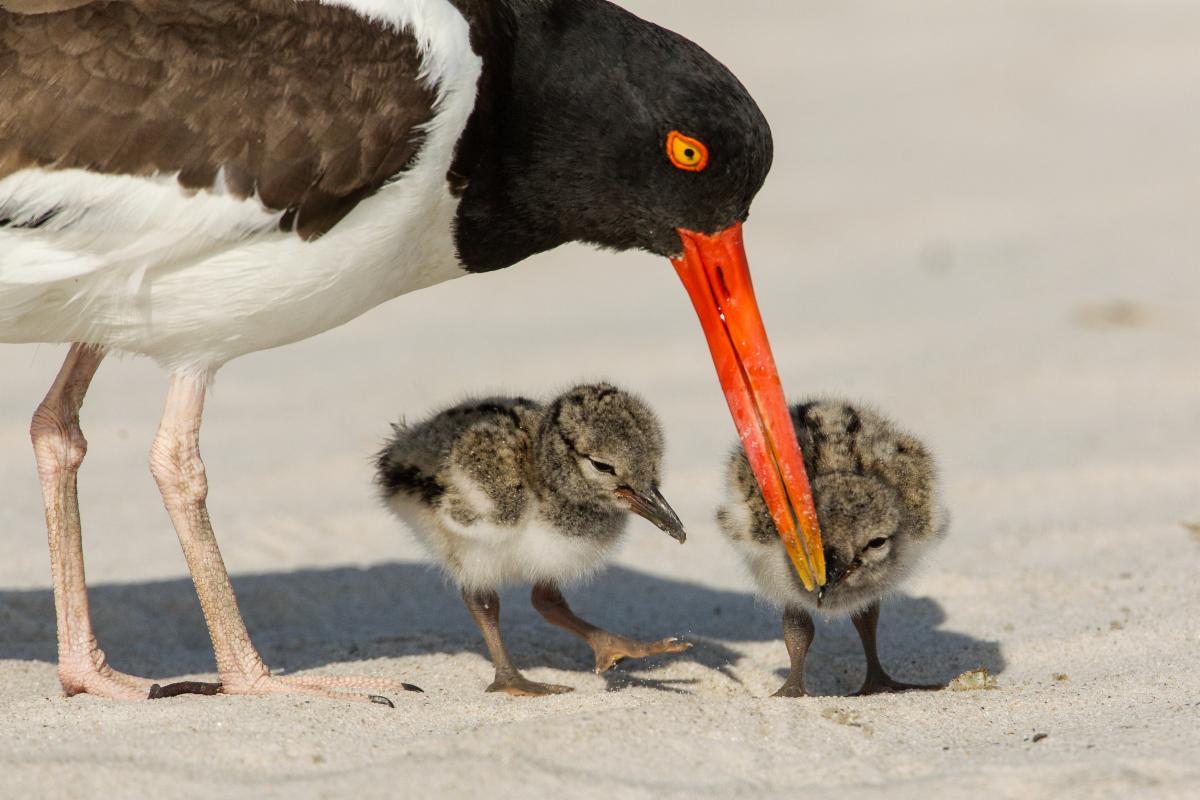
As one of Florida's largest and heaviest shorebirds, and combined with its striking appearance, the oystercatcher is easy to identify! Their long, orange bills act as a shucking tool for consuming their preferred diet of marine mollusks, such as oysters. As mollusks are their preferred diet, they inhabit coastal areas, like beaches, sandbars, oyster reefs, and salt marshes, that can support intertidal shellfish.
In Florida, nesting season lasts from March through August. Chicks are mobile and leave the nest hours after hatching but they'll be dependent on their adults for food for at least two months.
Unfortunately, coastal development has left few suitable breeding sites, as well as resulted in widespread habitat loss for oystercatchers. During breeding season, their nests are vulnerable to disturbances from beachgoers, severe weather events, and even pets. Breeding adults will fly from their nests if disturbed, which leaves their chicks and eggs vulnerable to predators and weather events.
To help oystercatchers thrive while on your birding adventures, give nesting birds at least 100 feet of distance or as much as possible, avoid walking through flocks of birds on the beach, keep pets leashed and away from birds, and respect posted signs and areas closed for beach-nesting birds.
|