|
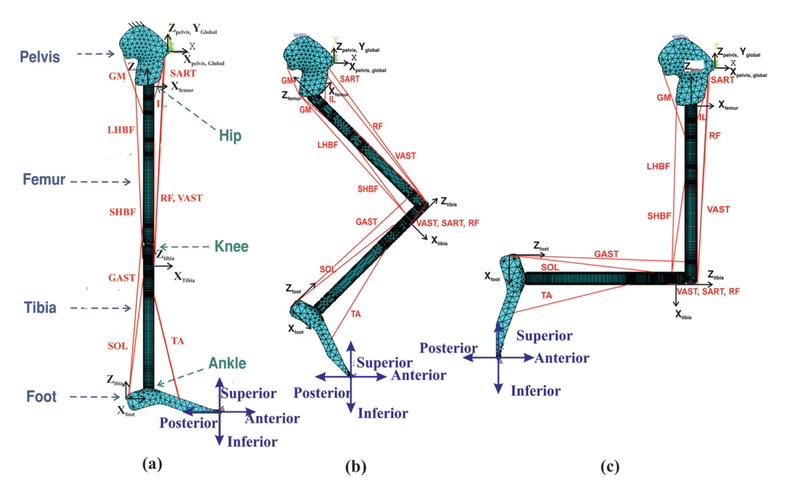
In the ever-evolving world of health and fitness, the potential of isometric strength training to enhance bone growth and combat osteoporosis in specific regions of the lower body has emerged as a particularly exciting area of research. A study by CS Florio et al. in Stimulation 2017 titled "Strength adaptations of the tibia bone for prescribed sets of isometric forces and joint angles" sheds light on this topic.
Read the Study: Strength adaptations of the tibia bone for prescribed sets of isometric forces and joint angles
The research utilized a computational model to assess the tibial bone's adaptive strength responses to various isometric forces, set within specified hip, knee, and ankle joint angles. Interestingly, the study demonstrated that when the knee was flexed at 90°, with the hip either in a neutral position or flexed by 45°, significant bone strength adaptations were observed. These adaptive improvements, crucial in the fight against osteoporosis, were notably more pronounced than exercises executed with a straight leg. The findings underscored the potential for isometric exercises to target and strengthen specific regions of the tibia, thereby assisting in osteoporosis prevention.
Yet, what makes these findings even more noteworthy is their potential applications. Musculoskeletal weakening - often due to aging, inactivity, or reduced gravitational forces - can dramatically impact an individual's overall health and mobility. From mere strength diminishment to significant mobility and functional loss, such weakening can influence numerous physiological systems. In the context of osteoporosis, isometric strength training, being low-cost and easy to execute, offers a promising avenue for bolstering bone strength. Furthermore, isometric exercises, which involve static force production without movement, have proven superior in fostering muscle and bone strength enhancements compared to dynamic activities.
The implications of this research are vast. For those at risk of or battling osteoporosis, isometric strength training offers a fourfold benefit: it not only augments muscle strength and bone density but also aids in enhancing cardiovascular health and bone blood flow. While pharmaceutical solutions often target the slowing of bone tissue material weakening, mechanical solutions like isometric exercises directly amplify the bone's structural integrity. This direct approach promises more tangible results in mitigating bone and muscle losses and enhancing the resistance of bones to fractures.
The benefits of isometric strength training, especially in the realm of osteoporosis prevention and bone health, are undeniable. For health-conscious professionals, incorporating isometric strength training can pave the way for a more robust, healthier future.
For more information on isometric strength training and its significant impact on functional health and performance, visit our website at www.Isophit.com or reach out to me at brad@isophit.com.
Yours in Isometric Strength,
Brad Thorpe
CEO / Inventor
Isophit
|