Forage and Livestock eNews
Updates and information from across the industry

Volume 19 Issue 4 April 21, 2026


Nominate someone today for the Forage Industry Innovation Award!


This award was developed by the Saskatchewan Forage Council in 2008 to acknowledge exemplary innovation, leadership, service and stewardship in Saskatchewan’s forage industry by producers, land managers, agency staff and researchers.


This award is presented annually at the SFC annual meeting which is traditionally held in summer.  If you are aware of someone who should be nominated for this award, please fill out the nomination form on the SFC Website and email it to office@saskforage.ca.


Find more information, the nomination form and past winners here: https://www.saskforage.ca/forage-award


Fed Feed vs. Grazed Feed

By: Burke Teichert, Understanding Ag


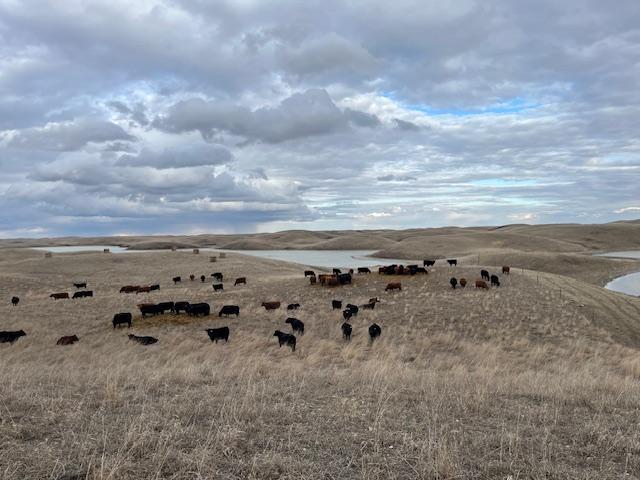
Have you heard the saying, “Anytime you place a piece of equipment between the mouth of the cow and her feed source, it has just cost you money.” This statement is generally true. That doesn’t mean the cost is never profitable or justified—it’s just that in cow-calf or stocker operations, it only makes sense occasionally. My goal is to avoid feeding hay or other harvested forage whenever possible. I know that north of I-70 in the US, there are places and times that winter conditions make feeding hay unavoidable; however, you will usually not need to feed nearly as much as is the habit of most ranchers.


This article is written to fit ranchers north of I-70 and west of I-35 in the US. However, many of the ideas for practices that adhere to the Six Principles of Soil Health will apply across a much broader range of regions. Jim Gerrish wrote the book, Kick the Hay Habit, and pointed out that many livestock producers in areas with very little snow feed nearly as much hay as producers in areas with much more snow. This suggests that feeding hay is often more of a habit than a necessity. Many of you can kick the hay habit while using practices that follow the Six Principles of Soil Health.


Read more

Save the date: Living Lab Central Prairie Conference


Date: December 15-16, 2026

Venue: Saskatoon Inn (Saskatchewan A & B)

Duration: Two full days, 8:00 AM - 5:00 PM
Theme: Prairie Proven Solutions: Lessons from our Prairie Living Lab


Join the Central Prairies Living Lab for an honest discussion about practices that support resilient, productive prairie farms & ranches. Five years of Living Lab research, tested on real operations by people who know this land!


Save the date! More details coming soon.


See the poster here.


Here's what hay buyers want
By: Amber Friedrichsen, Hay & Forage Grower magazine, March 17, 2026


Hay buyers are like snowflakes — no two customers are alike. Their preferences revolve around the type of livestock they are feeding, the stage of production those animals are in, and their capacity for handling and storing bales. There may be many boxes to check to keep customers happy, but having a target demographic and catering toward specific needs is the key to repeat business.


At last month’s Alfalfa and Stored Forage Conference in Russellville, Ky., three panelists shared their top priorities when buying and selling hay for horses, dairy cattle, and sheep. According to the panelists, horse owners want clean hay and good service, dairy producers need high-quality and year-round supplies, and sheep farmers want consistency.


Read more

Problematic Grasses on the Canadian Prairie

By: Canadian Prairies Prescribed Fire Exchange

Our “Problematic Grasses on the Canadian Prairies” brochure aims to showcase and identify the different types of invasive grasses found on grasslands in Canada’s prairies.


Part 1 of the brochure, which can be viewed below, consists of the main types of problematic grasses currently occupying prairie grasslands.


Part 2 features problematic grasses to look out for in the future.


Find the brochure here

Wildfire Prevention Using Sheep and Goats


sherpherdess.com visits Dylan Boeken, who raises meat sheep in Southern California.


Dylan raises sheep and goats for a full time income in California, without owning any land. Dylan is the lead shepherd at the Shepherdess Land and Livestock contract grazing operation in the Ojai Valley of Southern California. Shepherdess Land and Livestock is owned by Brittany Cole Bush..


Visit the website to watch this video and read about this innovative business.

Upcoming Events

Native Prairie Speaker Series - Prairie Climate Adaptation

April 29, 2026

via Webinar

Learn more here


Prairie Conservation and Endangered Species Conference

May 5-7, 2026

Saskatoon, SK

Learn more here


Native Prairie Speaker Series - Prairie Amphibians

May 12, 2026

via Webinar

Learn more here

Financial support for the Forage and Livestock eNews is provided in part by one of our partners, the Saskatchewan Forage Seed
Development Commission.
SFSDC Header Logo
Forage and Livestock eNews is published by the Saskatchewan Forage Council (SFC). Opinions and information are provided by the authors and publication does not imply endorsement by the SFC.
The Saskatchewan Forage Council gratefully acknowledges funding for our "Facilitating Forage Initiatives in Saskatchewan" project through the
Saskatchewan Cattlemen's Association Industry Development Fund:
Saskatchewan Cattlemen's Association logo
The Saskatchewan Forage Council recognizes our Annual Supporters:
 
Silver Sponsors:
Ducks Unlimited Canada logo
 
Bronze Sponsors:


Facebook  Twitter  Youtube