Strong Families. Strong Futures. | | |
Greetings to our VFN Family and Friends,
We are Celebrating Community and Giving Thanks.
This November, we reflect on Vermont Family Network’s mission to empower and support all Vermont children, youth, and families, especially those with disabilities or special health needs. Your partnership continues to drive incredible impact across our communities. For example, over the last year:
-
Personalized Family Support: Through our Family Support Program, VFN’s staff provided direct guidance, helping 1,111 families navigate complex education, health, and mental health challenges and decisions.
-
Lifting Family Voices: We hosted 20 online trainings and our Annual Conference to equip parents with information and resources to champion their children's needs. We also brought our Leadership Café series to libraries in diverse areas of the state, educating parents and youth self-advocates on ways to influence positive social change related to disability rights and policy.
-
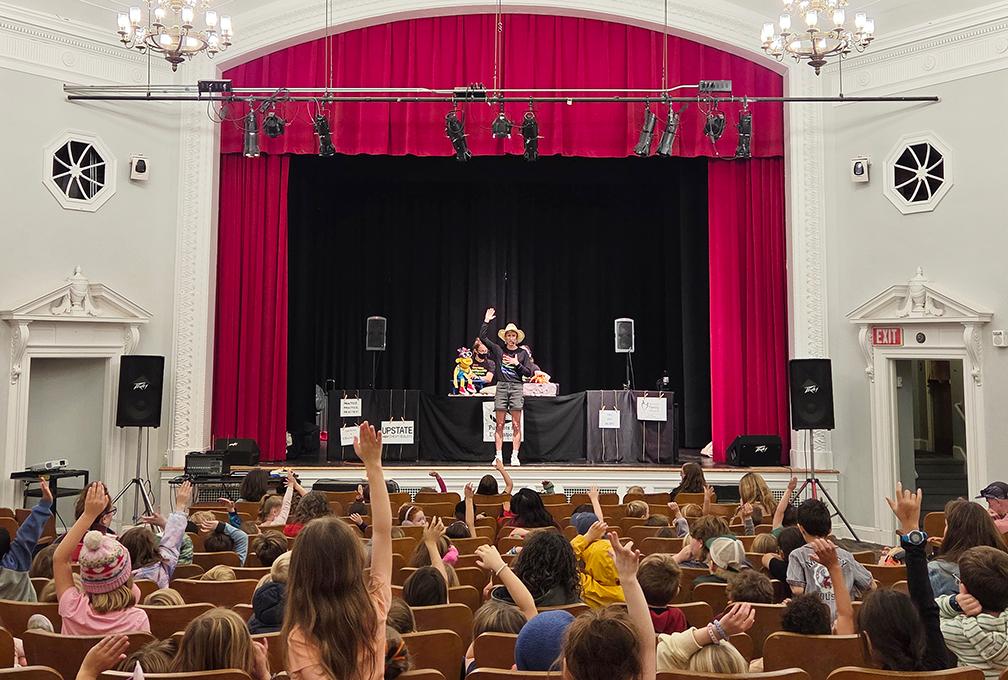
Puppets in Education: VFN delivered 126 educational puppetry performances at schools across Vermont, helping thousands of young children to build social-emotional resilience that is vital to their healthy development.
-
Family Financial Assistance: We provided 135 families across Vermont with grants of up to $1,500 each to support respite care and/or medical needs not fully covered by insurance.
As we enter this Season of Giving, we invite you to join us in making a difference if you are able. November and December have historically been months of remarkable generosity from our VFN community. As we approach “National Philanthropy Day” on November 15 and “Giving Tuesday” on December 1, your support will make a vital impact.
To sustain and grow VFN’s programs, we are launching an ambitious goal to increase individual year-end giving by 20%. Every gift helps provides a strong start for children and youth across Vermont.
How You Can Help:
-
Plan Your Gift: As you consider your year-end giving, please remember that VFN's vital work relies on community support.
-
Consider becoming a “Sustaining Donor” by setting up an online recurring gift to provide reliable, year-round support.
-
Make a Donation: Gifts of all sizes make a meaningful difference. Together, we are stronger.
- Multiply Your Impact:
- Check if your employer offers matching gifts to double your generosity.
-
Consider a gift of stock or mentioning VFN in your will.
-
Questions about Donating? Contact Joanne Fitzgerald, VFN’s Director of Development and Marketing, at joanne.fitzgerald@vtfn.org or 802-876-5315.
All of us at VFN extend our deepest gratitude to our expansive family-to-family network, volunteers, community partners, and donors who make this work possible. Thank you for standing with us and helping families, children, and youth—especially those with disabilities and special health needs—to reach their full potential.
From the Heart,
Karen Price, Emmy Hilliard, Michelle Kessler
The VFN Leadership Team
| | |
Our VFN 2027 annual conference
"Connections and Crossroads:
Building a Community of Support"
will be held on Wednesday, April 28th between 8:00 a.m. - 3:00p.m. at the
University of Vermont
Dudley H. Davis Center.
| | |
Some of you may have noticed public notices from your school district about “Child Find.” What is Child Find? It is a legal requirement under the Individuals with Disabilities Education Act (IDEA). School districts are required to identify, locate, and evaluate all children and youth (ages birth through 21) who may have a disability and need special education services.
If you think that your child may need special education services and you have questions about the special education evaluation or Child Find process, please contact the VFN helpline at 802-876-5315 or info@vtfn.org.
| | Join VFN's Family Faculty | | |
Think about the providers and teachers who have worked with your family over the years. Those who really listened to you and treated you as a partner probably made a big difference for you, your child, and the care your whole family received. That kind of family-centered collaboration significantly improves outcomes, and parents and caregivers are uniquely suited to teach tomorrow's professionals about its value.
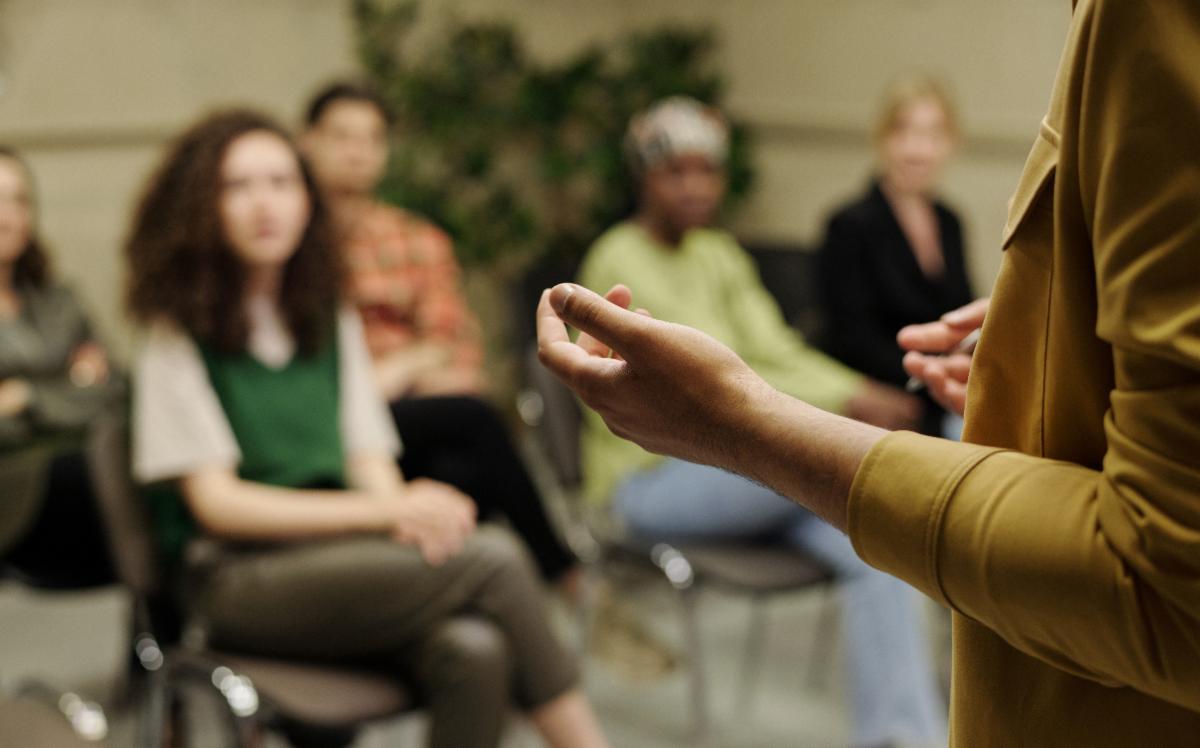
Vermont Family Network is actively seeking parents and caregivers of children with disabilities or special health needs to join our Family Faculty program. Family Faculty members talk with university students who are training to work in health care and education. Hearing directly from parents helps them understand what it’s like to get a diagnosis or spend hours on the phone with insurance, and it helps them see families as partners. Some of these students stay in Vermont after they graduate, so the families they learn from now are helping shape the care Vermont children will get for years.
Most of this work happens through family panels for UVM students, where parents talk about their experiences and answer questions. Some families also meet with small groups of medical students or host a medical student visit to learn about daily life with a child who has special health needs.
You don’t need any experience or special training; your story is the experience. VFN staff will help you get ready, and you decide what you want to share and what you’d rather keep private. Family Faculty receive a stipend for the investment of their time.
To learn more, email info@vtfn.org or call (802) 876-5315.
| | |
We are Growing:
Join Our Family Support Team!
| | |
Transition Planning and the
Individualized Education Program (IEP)
| | |
As children enter their teenage years, it is important to begin thinking about and planning for their future. What are they interested in, what are their skills, and what supports might they need to achieve their education, employment and independent living goals? For children with disabilities, this developmental stage is known as the transition to adulthood.
The Individuals with Disabilities in Education Act (IDEA) requires that when a student on an Individualized Education Program (IEP) reaches the age of 16, their IEP must include a Post-Secondary Transition Plan. The Transition Plan is designed to lay out a roadmap of coursework, services and supports that will enable a student to make progress toward their post-secondary goals.
There are eight elements that must be present in a student’s Post-Secondary Transition Plan. This Vermont Indicator 13 Checklist describes each of these elements. If your child is 16 or older, it is important to become familiar with the Transition Plan section of their IEP. Some questions you can ask yourself and the IEP team:
Do the post-secondary goals align with your child’s interests and skills? Are the annual goals in their IEP designed to help them make progress toward what they hope to achieve after they graduate? In what ways is your child being invited to contribute to the transition planning process?
Transition planning resources can be found in VFN's Transition Toolkit for Youth with Disabilities. If you would like to speak with someone about your child’s transition to adulthood, our Family Support team is here. Call our free helpline at 802-876-5315 or email us at info@vtfn.org.
| | |
What does it mean to be resilient?
This fall, Puppets in Education introduced a meaningful new element to our Resilience program, inviting students to think beyond the story and reflect on times when they have needed to be resilient themselves.
We began implementing the resilience program updates in September, alongside a new third and fourth grade version of the program. The updated script reflects the experiences and developmental needs of older elementary students. In this version, Ollie Potato has two homes, one with his mom and one with his dad, and shares some of the challenges of navigating life between two households.
Sometimes he forgets something at one house that he needs at the other. It's a lot to manage! Through Ollie's experience, students explore how resilience helps us navigate change and life's unexpected challenges.
We also changed the question we ask students at the end of the show. Rather than asking what they love about themselves or what makes them unique, we now ask: "When have you needed to be resilient?"
We weren't sure what to expect, but the students' answers were a wonderful mix of everyday milestones, new experiences, and some of life's more difficult moments.
At one school, third and fourth graders shared:
- "When I climbed a really, really, really big rock and I had to climb back down."
- "When I had to travel twice."
- "My first time riding a horse."
At another elementary school, we experimented with another addition: giving students time to turn and talk with a neighbor before sharing their answers. The conversation opened the door to even more thoughtful reflections:
- "When I had to move out of my training wheels and just use two wheels."
- "When my MeMe passed away, I had to go to school the next day."
- "Playing soccer for the first time when I was the only one who hadn't played before."
These answers remind us that resilience looks different for everyone. Sometimes it means trying something new, facing a challenge, or adjusting to a big change. Sometimes it means navigating grief, missing someone, or finding the courage to keep going when life feels difficult.
We were especially moved by a moment following one K-2 grades performance. A first grader approached one of our puppeteers and asked if they could speak with the Hermit Crab. The child confided, "I need to share something with the hermit crab… I had to move houses one time and it was really upsetting. I had a best friend, and we were really close like family, and I had to leave."
It was a powerful reminder that children don't always need to be prompted to connect with a story. Sometimes, they simply need a safe and welcoming opportunity to share what is on their hearts. By inviting children to remember their own experiences, we're helping them see that resilience isn't just something a hermit crab learns in a story. It's something they have already practiced in their own lives, and recognizing that strength is an important step toward building more of it.
Sometimes the most powerful lesson isn't telling children they can be resilient. It's helping them realize they already are.
| | |
Parent to Parent Support -
You Can Make a Difference!
| | |
You can help turn a difficult day into a better one for another parent.
Remember when you needed support?
Perhaps you had just learned of your child’s diagnosis or faced a new challenge. You felt alone and worried, wondering what the future would hold for your child and your family. You were looking for a connection that might bring some hope.
When you requested a support parent, a simple text to arrange a conversation brought a little relief. Someone cared and was ready to listen.
Talking with your support parent helped you feel less alone. You learned that others had faced similar challenges, and you had someone to share your worries with. The future began to feel a little brighter.
Pass that support on. Talking helps. Support parents make a difference, and you can, too.
Call us at (802) 876-5315 or email us at info@vtfn.org to learn how you can become a support parent and offer another parent the understanding and encouragement you received. Thank you.
| | |
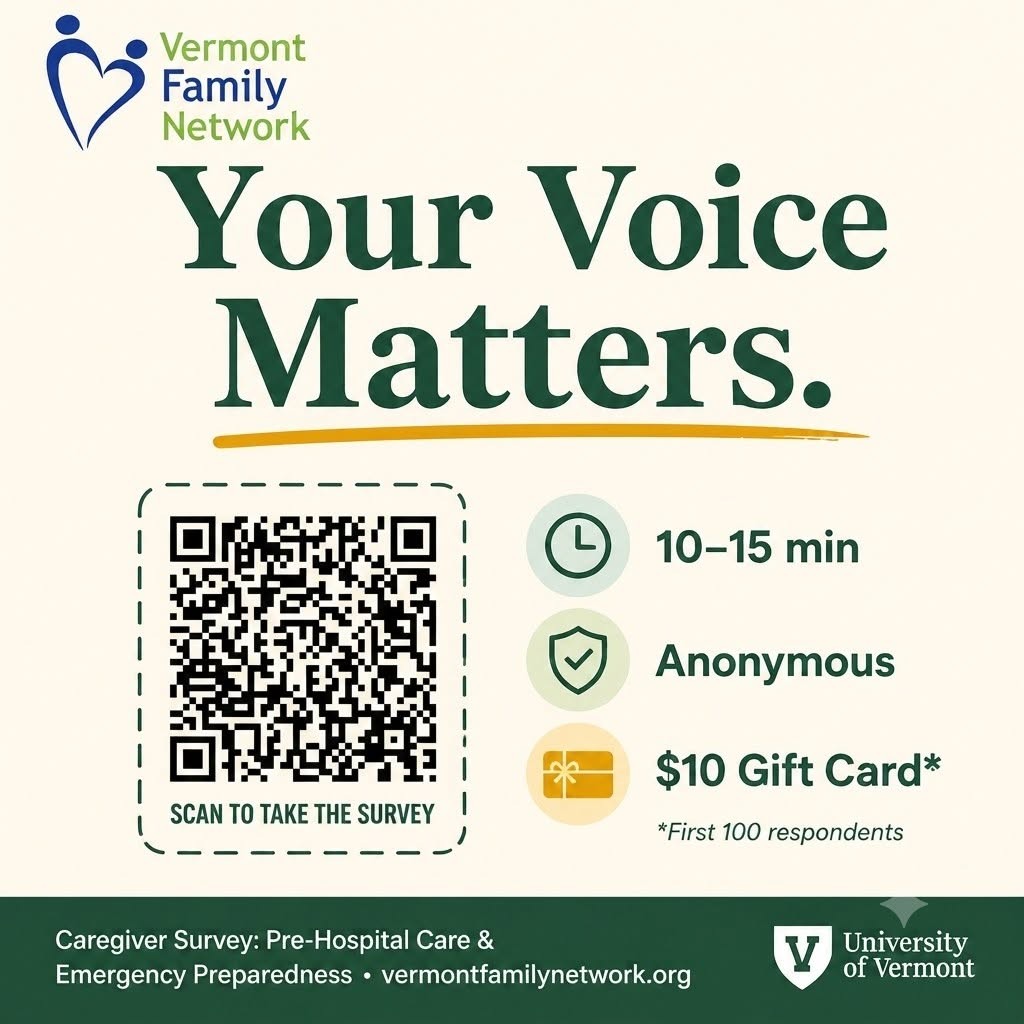
Your Voice Matters!
If you're caring for a child with a disability or special health need, our partners at the University of Vermont want to hear from you. They're looking at what happens before a child gets to the hospital, such as calling 911, ambulance rides, and how you prepare your family for an emergency. The survey aims to learn more about what that looks like for Vermont families.
The survey takes minutes, and your answers stay anonymous. The first 100 respondents can get a $10 gift card as a special thank you. To take the survey, please scan the QR code or click here to get started. Thank you!
| | |
A Fall Adventure with Sibshops
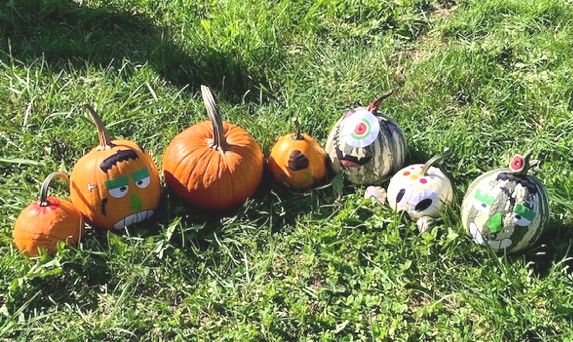
Sibs had an A-Mazing day at Whitcomb Farms land of Pumpkins in Essex Junction on October 11th where they decorated pumpkins and found their way through the corn maze.
Does your child, age 8 or older, have a sibling with a disability or special health need? They can join a wonderful group of Sibs for monthly fun activities in Chittenden County.
Sibshops meet one Saturday each month during the school year, usually from 1 to 3 p.m. Registration for the winter and spring sessions will open after the new year.
To ask questions or register your child, please email us at info@vtfn.org or call 802-876-5315.
| | |
More light for the dark months
Now that the clocks have changed, the sun sets around 4:30 p.m. Many families notice kids getting tired and cranky earlier this time of year, and parents do, too.
Morning light is especially helpful for sleep and mood in the winter. Open the blinds when you wake up, eat breakfast near a window, or step outside for a few minutes while you wait for the bus. A weekend morning walk is good if you can fit it in.
Light therapy lamps are another option for some families. You sit near the lamp for a short time in the morning, and many people find it gives them more energy through the winter months. Talk with your doctor before using one, and with your child’s pediatrician before using one for your child. This is especially important if you have eye conditions or take medications that make you sensitive to light.
Vitamin D is something to ask about as well. In Vermont, the winter sun is too weak for the body to make much of it, so many people are low by late winter. A doctor can tell you whether you or your child should take a supplement and how much, and can order a blood test to check levels.
Inside the house, more light in the evening can make the long nights easier. Twinkle lights are cheap and can be turned on any time, not just for the holidays. Kids often like choosing where to hang them. Brighter bulbs in the kitchen or living room help too. If your child has a hard time with transitions, try to keep the evening routine the same each night.
If you or your child are feeling low for more than a couple of weeks, let your doctor know. Seasonal depression is common in Vermont, and there are good treatments for it. If you would like to learn more, click here.
| | Upcoming Events - Register today! | | |
Free Online Workshops
November 19 at 10:00 - 11:00 a.m. "Being an Active Member of Your Child’s Special Education Team"
Families are essential members of their child’s educational team. Knowing how and when to raise concerns, make a request, or respond to a school decision can be confusing. This session will focus on effective ways families can communicate with school personnel while understanding the rights that support their participation in the special education process. We’ll discuss how to make requests in writing, prepare for various meeting types, document concerns, ask for clarification when something doesn’t make sense, and respond when you disagree with a decision. The goal is to help families feel prepared to participate meaningfully and know what steps they can take when questions or concerns arise.
Presenter: Cassie Santo - former VT State Director of Special Education
December 10 at 1:00 - 2:00 p.m. "Stronger Together: Expanding Adaptive Recreation Through Community Connections"
This workshop explores how recreation can become more inclusive by looking beyond traditional programming and focusing on participation, belonging, and removing barriers. The presentation will share South Burlington’s journey in developing adaptive recreation, from understanding community needs and training staff to building meaningful partnerships and creating opportunities for people of all abilities.
Presenters: Adam Matth - Director of Recreation, and Kate Likhite at the South Burlington Recreation Department
December 15 at 2:00 - 3:00 p.m. "A Family Guide to Vermont’s Designated Agencies Series – Part 3: How to Access Developmental Disability Services"
Vermont’s Developmental Disability Services System has undergone significant changes over the past year. In this webinar, we’ll hear from experts representing each of the system’s partner organizations to help families understand what these changes mean and how to access services and supports for their child. Together, we’ll walk through each step of the process, from intake and eligibility to connecting with providers and accessing services. Families will leave with a clearer understanding of the system, what to expect along the way, and a practical roadmap for navigating Vermont’s Developmental Disability Services System.
Presenters: Delanina Norton - Champlain Community Services (CCS), Jessica Pare - The Columbus Organization, Kate Miller - Public Consulting Group (PCG), Korinne McManus - Health Care and Rehabilitation Services (HCRS), and Theresa Rickard - Benchmark Human Services
January 28 at 10:00 - 11:00 a.m. "Understanding Your Child's IEP: Goals, Services, and Supports"
An Individualized Education Program (IEP) is more than a document. It's a plan for supporting a student's learning, access, and progress. In this workshop, we'll explore how IEP goals are developed, how they connect to a student's present levels of performance, and how special education, related services, accommodations, and other supports work together. Families will learn what to look for in their child's IEP and what questions to ask to better understand how the plan supports their child's needs.
Presenter: Cassie Santo - former VT State Director of Special Education
February 11 at 10:00 - 11:00 a.m. "Is the IEP Working? Understanding and Monitoring Your Child's Progress"
How do you know whether your child is making meaningful progress? This workshop will help families understand how IEP goals are measured, what progress reports should tell them, and how to recognize when a student may need additional support or changes to their IEP. We'll explore practical ways families can participate in conversations about progress, ask questions about the effectiveness of services and supports, and work collaboratively with their child's IEP team when concerns arise.
Presenter: Cassie Santo - former VT State Director of Special Education
Our workshops are online using the Zoom meeting platform.
If you are unable to attend the live presentation, you can still register and we’ll send you a link to the recording of the workshop which you can watch on your own time, unless otherwise noted. We appreciate when you register for our workshops as we need that data for our grant reporting.
Registrations are also posted under Upcoming Events on the landing page of our website. In case you missed our last series of workshops, you can find a full list on our VFN website. Check in regularly as we add more workshops to our schedule!
We save workshops on our website and YouTube channel.
| |
VFN Workshop Topics/Speakers Survey
We want to hear your ideas for our upcoming online workshops. What topics interest you? Are there presenters you would recommend?
Let us know your thoughts.
| | Contact Us. We Will Listen! | | Helping Vermont Families thrive for more than 30 years | | | |  |
Office
600 Blair Park Rd, Ste 240,
Williston, VT 05495
| | | | |