News and information to help journalists serve the public and stay safe.
|
|
The National Press Club Journalism Institute is offering new upcoming programs as part of its ongoing series of community conversations:
- The art & craft of the interview: How to deeply listen (July 17, 4 pm to 4:45 pm EDT). Do you listen, or do you wait to ask? Join two of the best interviewers in journalism — Terry Gross and Michael Barbaro — for a program on the challenges and opportunities of interviewing right now. Marketplace correspondent Kimberly Adams will moderate. Click here to register.
- Being heard: How to use your voice so people listen (July 29, 11:30 am - 12:15 pm EDT). Everyone has an opinion, but not everyone expresses their views with power and impact. In this program, L.A. Times editorial page editor Sewell Chan, L.A. Times columnist Erika Smith, Pulitzer Prize-winning New York Times reporter Nikole Hannah-Jones, and New York Times Magazine editor-in-chief Jake Silverstein will discuss how to make yourself heard; how to work with an editor or writer to hone a point of view; and how to pitch (& catch) a column or opinion piece. Click here to register.
- Keeping public records public: Strategies for getting access during the pandemic (August 5, 11:30 am - 12:15 pm). Government records belong to the public, but journalists often face delays and redactions that make it difficult to get information to the public. During the pandemic, it’s more important than ever for journalists to be strategic when seeking government records. Miranda Spivack, journalism fellow at the Brechner Center for Freedom of Information at the University of Florida, and Mark Walker, FOIA coordinator in The New York Times’ Washington Bureau, will share strategies and approaches to requesting and obtaining public records using the Freedom of Information Act and state open records laws. Click here to register.
- Journalists in peril: Creating a safer, equitable future together (September 16, 11:30 am-12:15 pm). Safety for journalists has taken on a renewed sense of importance as newsrooms grapple with the convergence of hostility toward those in the field and systemic racism that pervades even the most revered journalistic institutions. This program will be moderated by Jill Geisler, who will join Alex Marquardt, Sarah Matthews, Abby Phillip, and Michael Santiago. Click here to register.
Coming this summer:
- How to recruit, develop and advance a diverse investigative journalism team, in partnership with News Leaders Association
- Covering Justice: Reimagining the cops, crime, courts beats, in partnership with News Leaders Association
- Equity & community in local news: Lessons learned in 2020, in partnership with PEN America
- What would antiracist journalism look like?
- Write what you know, ‘Fix What You Can,’ and Love Hard
- How to be a sensitivity reader, whatever your job
- Design Hacks: Creating charts and timelines when it’s not usually your job
- Design Hacks: Creating maps when it’s not usually your job
- Career connection: Defining your digital footprint
The National Press Club Journalism Institute has added weekly programming, this daily newsletter, a daily writing group, and other support for journalists since March, and has waived fees for everything due to the COVID-19 pandemic. If you value what you’ve been learning from the Institute during this time, please consider a
donation of $5, $10, or whatever you can contribute
at this time.
|
|
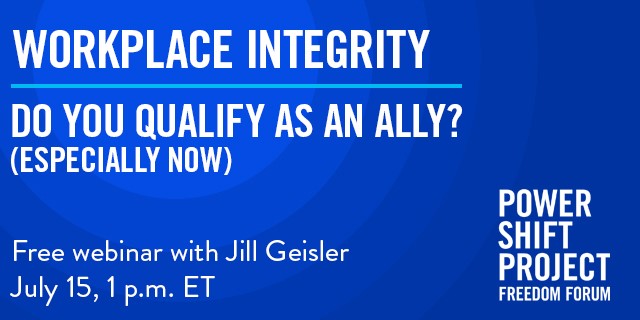
Bill Plante Chair in Leadership & Media Integrity, Loyola University Chicago
Freedom Forum Fellow in Women’s Leadership
“Managing the boss” is a session I often teach in leadership workshops. Knowing how to interact with your manager to get the best results for your ideas, projects, and career is an essential skill.
Some bosses are easier to manage than others. They tend to be more open about their decision-making process, their goals, and their standards.
- They tell people how they prefer to get and give information.
- They explain their work habits (night owl, not-lucid-before-coffee, advance planner) and what that means - or shouldn’t mean - to them.
- They operate with a degree of consistency that makes them comfortably predictable.
- They tell people what they stand for and what, to them, is non-negotiable (like diversity, deadlines, honesty, civility).
- They’re clear about things that aren’t their expertise and why, how and when they rely on others who have those skills.
- They provide at least a general understanding of the demands and pressures they’re dealing with, without overburdening the staff, to help people see business realities.
- They let people know when a decision will be delegated, done by consensus, or has to be the sole responsibility of the leader.
- They’re clear about their desire to hear about problems, especially those that people have tried without success to resolve on their own.
Managers who share this kind of information make it easier for staff members to get things done. Staff interactions with supervisors are easier because they don’t have to guess or gossip to find out what makes them tick.
Teams have a handy user’s guide to getting what they need from a manager who understands the importance of helping them succeed.
|
|
|
The National Press Club Journalism Institute is spotlighting
the next generation of journalists
, students who graduated from college or Master’s programs this spring into
a challenging job market
. We hope they’ll meet future bosses and colleagues here, who will reach out and support them in building journalism’s future together.
School
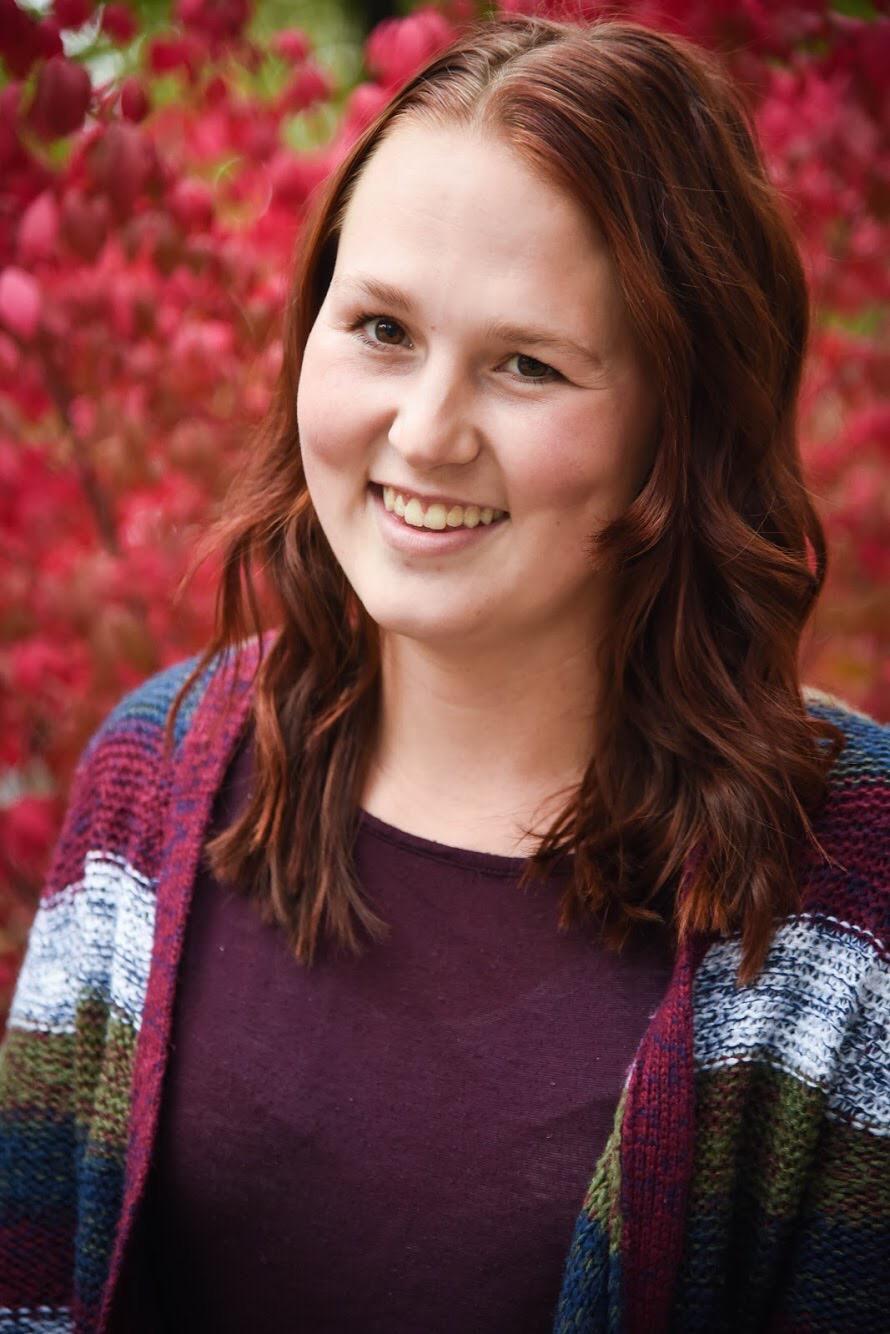
: Utah State University
Location
: Logan, Utah
Best journalism moment
: Meeting Col. Gail Halvorsen
What's been your best moment in journalism?
Gardner
: I can think of several "best moments" for me in journalism, but I think one of the top moments for me had to be meeting
Col. Gail Halvorsen
, who is known as the Candy Bomber from the "
Meet the Mormons
." I love the connections I've been able to make and the people I've been able to meet, that I otherwise would not be privileged enough to meet. Those moments happened most of the time because I was willing to branch out and take the plunge to ask for the interviews.
What do you want potential employers to know about you?
Gardner
: I want potential employers to know that I am driven and a well-rounded individual with a passion for writing and agriculture. As a small-town girl, I want to share my knowledge and passions with the world and make connections with people willing to tell their stories. I want to share those stories and be an advocate for the agriculture industry in whatever way I can.
|
|
Student debt is the friend who’s hung around your house since college, long after the party is over. As journalists grapple with the
multifaceted (and stressful) economic effects
of the coronavirus pandemic, a common thread is managing some form of student debt.
The CARES Act
suspended payments and interest
on federally-held student loans through Sept. 30, 2020. While the break in payments is a welcome reprieve for borrowers coping with the COVID-19 pandemic, it also provides some opportunity to pay down debt faster.
Here’s how:
If you hold private loans as part of your student debt, the CARES Act doesn’t defer payments — so keep making them. If your financial situation is uncertain, consider
refinancing
to take advantage of lower interest rates or ask your lender about
disaster or emergency forbearance
.
For up-to-date information on student debt during the COVID-19 pandemic,
bookmark this page
.
|
|
This newsletter is written & edited by the National Press Club Journalism Institute staff: Beth Francesco, Holly Butcher Grant, Jim Kuhnhenn, and Julie Moos.
Send us your questions and suggestions
for topics to cover.
|
|
|
|
|
|
|