|
You deserve a city that’s clean, safe and affordable.
But at the city level of government we don’t have all the tools we need to make it so.
Each level of government has different responsibilities, different levers, and different funding sources — and when we all work how we should, that’s when your life doesn’t just get incrementally better, it gets leaps and bounds better.
That’s why I’ve been advocating so hard for leadership in Sacramento to get us all on the same page about priorities, solutions, and accountability for results.
Because here’s the deal: Our County is responsible for health, including behavioral health, and the justice system. Here at the City, we’re responsible for emergency services, land use, and maintaining our public spaces. And our state makes the rules we all have to follow — and gives us some of the dollars to make it all possible.
We each have different roles. That’s how it should be. But when we all aren’t rowing in the same direction, that’s when things get hard.
Because how can we maintain our public spaces if our County doesn’t have the treatment beds we need to get people indoors? How can our County make sure those beds are used if the State doesn’t give us tools to mandate care?
That’s why we advocate. That’s why I spend time in Sacramento. That’s why we co-sponsor state legislation every single year — because as Mayor, I know I can’t create the change we all deserve by putting my head down and simply hoping that other levels of government will be responsive to the needs of our community. I get to talk to you and your neighbors every day — other levels of government don’t have that privilege. So it’s my job to make sure they know what you need.
I already have several bills in the works with our state leaders for this next legislative cycle that I’m excited to share with you. But before we get ahead of ourselves, I want to remind you of the state legislation we worked on this year, the wins we’ve achieved in the last couple weeks, and where I feel our state fell short.
✅ Recovery Housing — AB 1556
If someone is starving while the person next to them feasts, how can you expect them to say no when offered a bite?
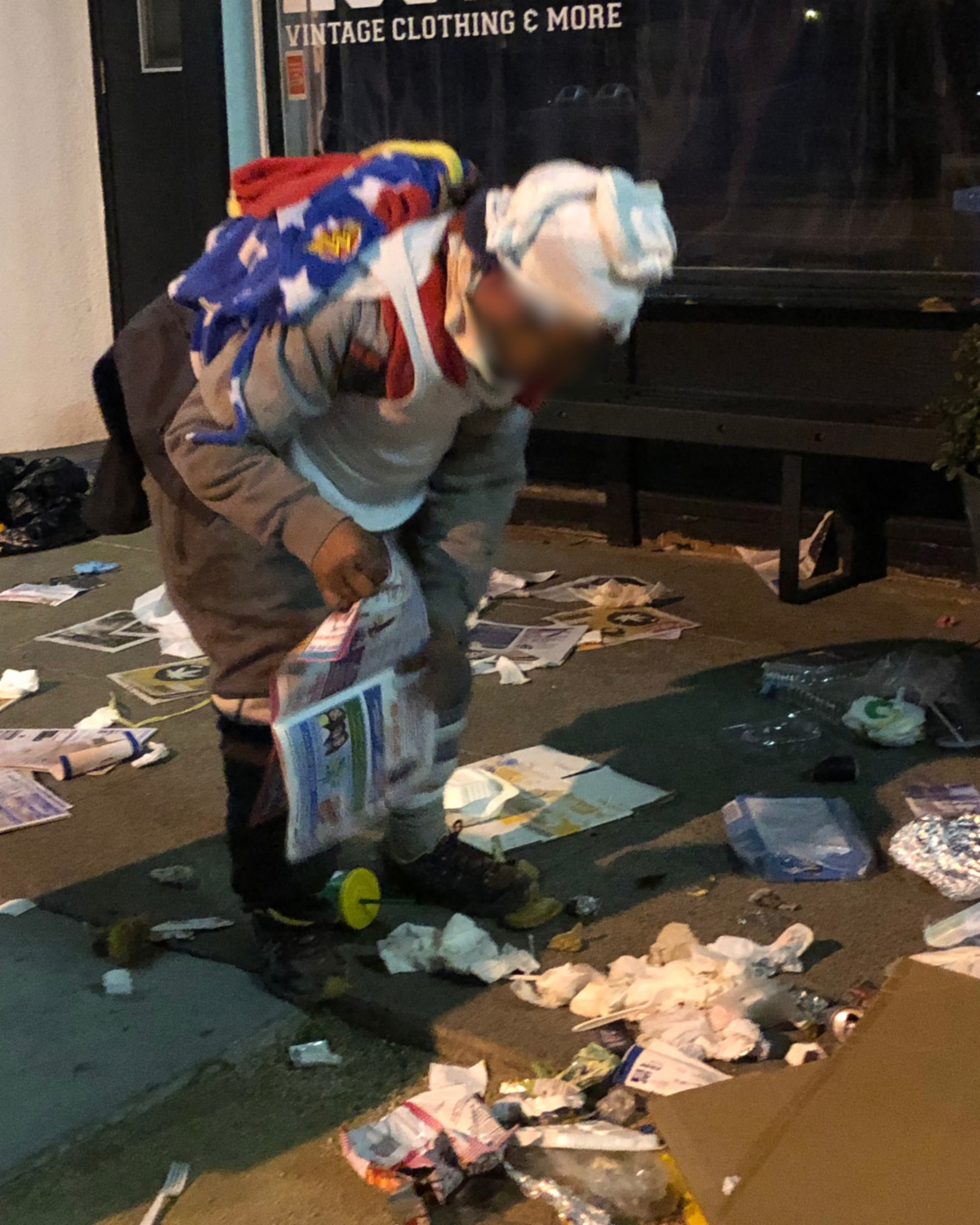
Breaking an addiction is hard enough. But for years, California hasn’t allowed even a dollar of state funding to be used to operate sober-living environments — meaning we’ve expected people to recover while surrounded by others using the very substances they’re trying to escape. This has been a major failing in our approach to homelessness.
But now there’s hope. This bill doesn’t go as far as I’d like, but finally we can use a limited amount of state dollars to fund recovery-based, purpose-driven approaches that yield dramatically better outcomes for those who are willing to try them. We should’ve been doing this a long time ago.
Thank you to Assemblymember Matt Haney for pushing this life-saving legislation again and again, and to our Governor for signing it into law this year.
✅ Copper Wire Theft
Thieves have been leaving our neighborhoods in the dark and wasting millions in taxpayers’ hard-earned dollars. This needs to stop.
Since July of last year, we’ve repaired more than 2,000 streetlights, most of which were damaged by copper wire theft. We’ve cut our streetlight repair backlog from more than 1,000 lights to fewer than 300 (you can even track our progress right here).
And our police department has gone after the market for stolen copper. Officers conducted sting operations targeting recyclers willing to buy wire that appeared to be stolen, resulting in criminal citations for three recycling businesses.
But here’s the problem: cities can repair the lights. We can run local sting operations. We can go after the people buying stolen metal locally.
What we can’t do on our own is dismantle more sophisticated organized criminal theft operations that cross city, county, and even state lines.
That’s why I supported Assemblymember Mark González’s AB 476 last year, and it’s why I was proud to co-sponsor AB 1941 this year.
This bill gives law enforcement stronger tools to target repeat and organized offenders who steal and traffic prohibited metal.
And just as importantly, it creates a statewide system for law enforcement, public agencies, telecommunications companies and recyclers to share information and connect the dots across jurisdictions.
Because repairing the damage after it happens is not enough. We have to make stealing and damaging our public infrastructure harder, make selling it harder, and make the consequences stronger for the people who keep doing it.
I want to thank Assemblymember Gonzalez and the Governor for taking an important step in the right direction with AB 1941.
✅ Diridon Exemption
You’ve all heard me talk about the need for CEQA reform when it comes to building housing where it makes sense — because unnecessary lawsuits (often not even related to actual environmental concerns) create delays that make housing in our state more expensive and sometimes even kill housing projects.
But CEQA doesn’t just contribute to our housing crisis. It also can stand in the way of much needed infrastructure investment, from upgrading our electrical grid to improving public transit.
This year, I partnered with State Senator Dave Cortese to pursue an exemption to CEQA that will help us expand Diridon Station without unnecessary delays so we can deliver the cleaner, better-connected transit hub our region needs. Thanks to Senator Cortese and again to the Governor for signing our bill.
❌ Construction Defect Liability
Now let’s talk about the change we didn’t achieve. Construction defect liability is a mouthful — but here in California, where we have the most expansive and litigation-friendly laws in the country, overly aggressive defect liability laws mean that condo projects can be subject to expensive lawsuits for minor defects, including chipping paint, up to a decade later.
To be sure, developers should be accountable for fixing any defects, but they should be able to directly repair the damage rather than engage in lengthy lawsuits that do more to enhance attorney’s fees than condo owners’ well-being.
The result of these lopsided regulations? The City of Miami (with just 490,000 residents) builds more condos each year than the entire state of California (with 82 times more people).
I worked with former State Senator Steve Glazer to right-size construction defect liability laws a few years back, but because of the advocacy of individuals who are financially incentivized to pursue junk lawsuits, the bill died.
This year, Assemblymember Buffy Wicks (who is one of the strongest legislators we have) brought it back. She, too, was unsuccessful.
Unfortunately, the special interests in Sacramento will fight this change tooth and nail. But I don’t believe we’ll be able to expand homeownership in California until we do.
Condos are a vital piece of our housing continuum. They are often a young couple's first home, the place where they start to build equity, or the place where empty-nesters downsize, making room for the next generation.
We can’t let special interests stand in the way of building more affordable homeownership opportunities. I will work to ensure this bill comes back in the next legislative cycle — because we can’t afford not to.
In the months ahead, I’ll be sharing more about how we’ll be pushing our state and county to help us create the clean, safe and affordable city we all deserve.
|