Pollinator Pathway Cape Cod


March Newsletter 2025


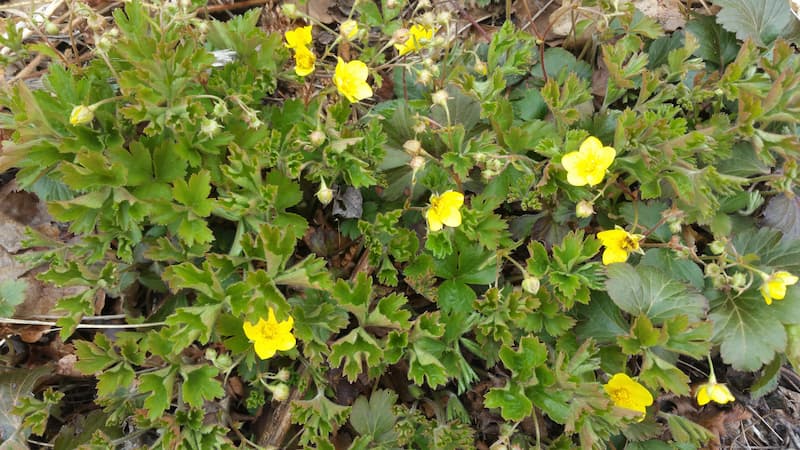
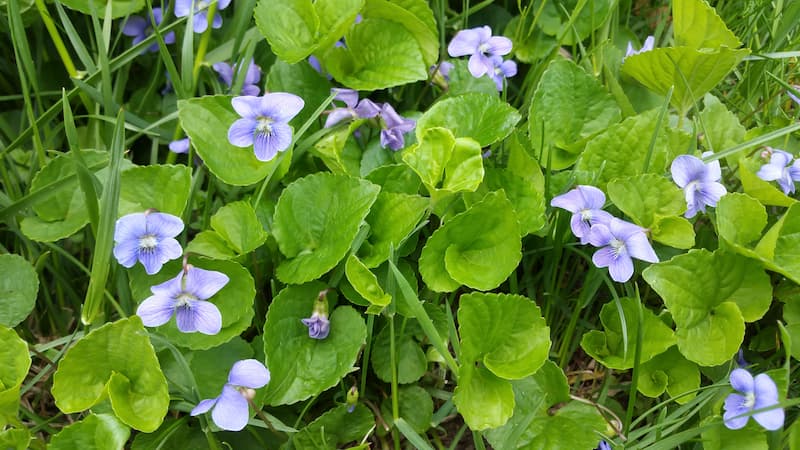
Photo Credit Kristin Andres


Spring is Here!


Pollinator Pathway Cape Cod continues to grow. We would like to welcome two new participating organizations. The Rotary Club of Hyannis and Scenic Roots Nursery in Sandwich. .


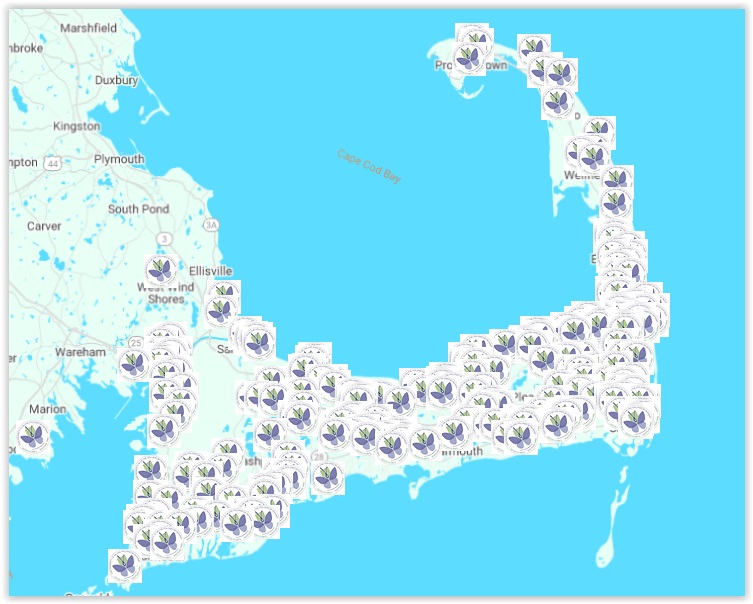
Registering on the Map shows the world that we are serious about rebuilding the habitat of our pollinators, one house at a time. Our goal is to cover the map in butterflies on Cape Cod. Please encourage your friends and neighbors to register their gardens on the map.


These two links should help.


Haven't put yourself on the map yet? You can do so HERE.

If you have already registered your property but don't see it on the map or would like to add more information, please fill out a form again HERE.


You can register on the map without adding a log list of native plants. The important thing is to get started.


Upcoming Events:


Activity is picking up. These are some of the events we will be participating in this year:


The Garden Club of Brewster, Brewster Conservation Trust, and Orleans Conservation Trust. Are sponsoring: Combatting Invasive Plants & Vines on Cape Cod on April 2, 2025 at 10am. Location: Cape Cod Bible Alliance Church, 3600 Rt. 6A, Brewster, MA

Learn how to correctly and efficiently tackle invasive plants and vines in your yard and on conservation lands. Erik Sechler is the Ecological Programs Coordinator for the New England Native Plant Trust. He has more than 10 years’ experience working for a Natural Heritage Program and NatureServe as an ecologist. He holds a master’s degree in Conservation Biology from Antioch New England University. His professional interests include avian, natural community and conservation ecology; rare plant ecology; and invasive plant ecology and management. Sponsored by The Garden Club of Brewster, Brewster Conservation Trust, and Orleans Conservation Trust.

There is no charge for this event. A $5 donation is suggested.

Register here: secure.lglforms.com/form_engine/s/G0owh4yUMrHjryMIiIhwAA


Hyannis Rotary Home and Garden Show, April 5, 2025, 9 am – 4:30 pm Hyannis Youth & Community Center - 141 Basset Lane, Hyannis, MA


Earth Day, April 22, 2025 at 10:30 AM - Gary Bowden will be speaking at the Wellfleet Adult Community Center. The topic is the PPCC and how citizens can take action to support our native pollinators. 


Latham Centers and Nauset Garden Club - Garden Fest, on May 10, 2025, 9:00 am -12pm, at Latham 's Anne McManus Center, 1439 Main Street, Brewster, MA. The fundraiser will have perennial, native, and hand dug plants, garden treasures, demonstrations, Mother's Day gifts, crafts.


The Master Gardeners association of Cape Cod’s annual plant sale is May 18 at the Barnstable County Fairgrounds. The sale will have a selection of native plants and cultivars, as well as veggies, herbs, pollinator-friendly hydrangeas, and Rhododendron. The sale starts 9 AM.


The Wellfleet Gardeners annual plant sale is May 24 at the Wellfleet Townhall. Sale starts at 8:30. 


Orleans Pond Coalition – Summer Celebrate our Waters – Children’s Fun Tent – June 7, 2025, 9:30 AM – 12:30 PM. Depot Square, Orleans (across from the summer Farmers Market and the Chocolate Sparrow). Nauset GC members will provide a container, soil and a native pollinator plant to ‘pot up’, take home, and plant. All ages. Everyone welcome. Information on native bees and PPCC.


Pollinator Week June 16-22 TBD


Hydrangea Festival July 11-20 TBD


If your organization is planning something to promote our pollinators, please send us a note and we will put it in the newsletter.  

Designing Pollinator Gardens

Our Pollinator Pathway has four Principles:

ADD native trees, shrubs, and Plants

SUBTRACT a little Lawn

AVOID chemical fertilizers and pesticides – they are not healthy for pollinators or anyone else

LEAVE the leaves on your garden bed in the fall


Each Month we will take one of these themes and expand upon it.


Why should we leave the leaves


Leaf litter is an important part of our natural ecosystem and supports a tremendous amount of life. Butterflies, native bees, moths, Insects, spiders and snails overwinter in leaf litter and when they emerge in the spring, provide the food source for our birds who are feeding their offsprings.


Leaf litter also supports the health of the soil by decomposing and adding nutrients back to the soil. It is a great source of natural mulch. Leaving leaves under trees and shrubs will bring many birds to your property. Once the leaves come out, they hide what is under the tree or shrub.


It is OK to shred leaves for mulch once the night temperatures rise about 50 degrees to ensure that the pollinators have left their winter resting place. It is a free form of mulch.

When should you clean up areas that need to be free of leaves? You should wait until the daytime temperatures are consistently above 50 degrees or 10 degrees Celsius.


Garden magazines and the media have conditioned us to have perfect manicured gardens. Find a better use of your time this spring and let your garden have a more natural look to support our pollinators. It is becoming the new trend in gardening. Happy Spring.   

In the News:


Butterfly Decline

A new study published in Science has found that populations of butterflies across the United States are declining. In addition to dramatic declines for individual species, the study concluded that total abundance of butterflies has declined by 22% from 2000 to 2020. That means that for every five butterflies seen 20 years ago, now there are only four.


From the Xerces Society: “Researchers at the Xerces Society, US Fish & Wildlife, and many universities across the USA have put together a comprehensive look at how butterfly populations have changed from 2000 to 2020. By putting together data from many different butterfly surveys, they discovered that the total number of butterflies, in general, has dropped by 22%. That means that for every five butterflies seen 20 years ago, now there are only four.

However, different species of butterflies have fared worse than others. While populations of a few species have actually increased, many more have declined, and sometimes dramatically. 107 species declined by more than 50%, and 22 species declined by more than 90%.

We know what the major threats are — pesticide use, habitat loss, and climate change — and what we can do to help. Butterflies need host plants on which to lay eggs, wildflowers on which to feed, a refuge from pesticides, and sites to overwinter. There is hope for these animals if we focus on providing habitat for butterflies across all landscapes, from cities and towns to agricultural lands and natural areas.”


Article from WBUR on the same topic closer to home: https://www.wbur.org/news/2025/03/06/butterfly-decline-united-states-massachusetts-climate-change-pesticides


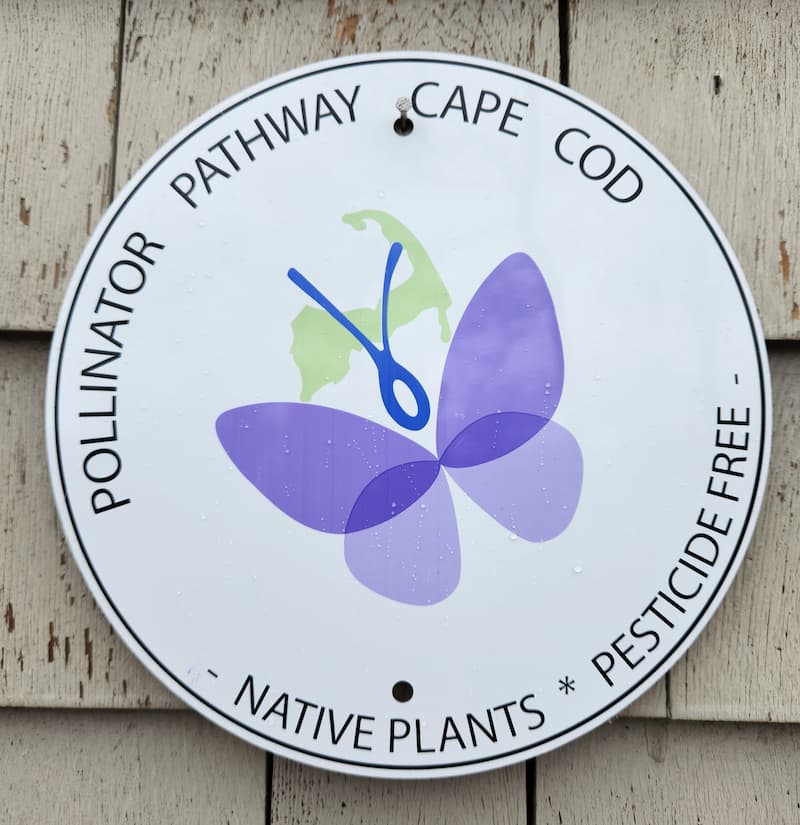
We have Pollinator Pathway Cape Cod signs available for purchase.

Where to buy our new sign: At this time, PPCC yard signs (with the Cape Cod image) can be purchased at Hyannis Country Garden, Brewster Book Store, Orleans Conservation Trust, Crocker Nurseries and Cape Abilities Farm. Signs are $15 plus tax. We hope to add more retail locations in the near future. If your organization has a tax-exempt certificate, you may purchase them wholesale from the Association to Preserve Cape Cod (APCC). https://apcc.org/shop Minimum order is 10 signs, $10.50 each.


It is wonderful to see all they ways our organizations are promoting the Pathway!

I will publish any additional events that you send me. Please share this newsletter with your membership.


Carol Alper, PPCC Steering Committee Chair

carolzalper@gmail.com                

pollinatorpathwaycapecod@gmail.com

Photo Credit: Kristin Andres


Pollinator Pathway Cape Cod

website: www.pollinator-pathway.org/towns/cape-cod

email: pollinatorpathwaycapecod@gmail.com