March 6, 2026

Facebook  Instagram  LinkedIn  X

The General Assembly started March with a burst of action in both chambers and in subcommittees. The Senate debated and passed the boat tax reduction bill (see below in State House Sound Bites). Meanwhile, the Senate Finance property tax subcommittee advanced a couple of SCAC policy positions on auditor and treasurer qualifications, and the Senate Agriculture and Senate Judiciary subcommittees continued hearing testimony and debating how to effectively regulate data centers. 


The House plowed through their calendar this week in preparation for their budget debate next week. A House Judiciary subcommittee debated a tort reform bill, and several House subcommittees took up local zoning bills. 


These and other bills of interest are detailed below. 

Upcoming Action Item


67.17. DJJ: Capital Expenditure Charge. This proviso, which was amended by the House Ways and Means Committee this week (see below in the budget section), requires local governments using the juvenile detention services provided by the Department of Juvenile Justice (DJJ) to pay a capital expenditure charge of $125 per day per child not to exceed 25 days to DJJ to cover capital expenditures and investments in the facilities that house juveniles. This charge is in addition to the per diem charge of $50 that offsets operating expenses. If the local government does not provide full funding to DJJ, the state will transfer the remaining amount owed from the Local Government Fund (LGF) on the local government’s behalf, and the transfer will be considered a distribution of the LGF to the local government. This is more than three times the amount that counties paid before the proviso! 


The House will begin debating the budget bill on the floor Monday, March 9. Please contact your House members before this debate and ask them to remove this proviso from the budget if you have concerns about the $125 per day capital expenditure charge (for a total of $175 per day including the per diem charge).

State House Sound Bites

Boat Tax Reduction 


“What shackle are we removing from local government that will allow them to alter how they collect enough money to run the county?” – Sen. Brad Hutto of Orangeburg County  


“What area should local government cut? Do you scale back spending on law enforcement? Public Works Department? Solicitors? Public defenders? The list just goes on and on about the services that are provided at the local level. The reality is budgets actually mean something at the local level.” – Sen. Overture Walker of Richland County  


“Those county council members are going to have to raise their millage rates to make up for this, and all we’re doing is lowering our taxes and are going to look like the political heroes, but on the other hand if we shift responsibilities to them, we make them look like the scums of the earth.” – Sen. Allen Blackmon of Lancaster County  


H. 3858, as introduced, would have given boat owners a 50% property tax reduction on boats registered and titled in South Carolina and eliminated the titling and taxing of all outboard motors with no way for county auditors to track their transfer. As passed by the House in 2025, the bill would lower the property tax reduction from 50% to 42.8571% statewide, except for houseboats. The property tax reduction must be phased in over three equal installments and would be applicable for property tax years beginning after 2026. This legislation would not apply to counties that already have lowered the assessment ratio on boats to 6%. Any local ordinances doing so would be repealed after Jan. 1, 2030, once the legislation is fully phased in.  


Status: The Senate adopted the committee amendment to require that outboard motors continue to be registered to allow counties to track the motors’ transfer. Several senators introduced an amendment that would have reimbursed counties for the loss of revenue from the general fund, but this amendment was defeated. After lengthy debate, the Senate gave H. 3858 second and third readings, sending the bill back to the House for consideration of the Senate amendments. 

Bills of Direct Interest to Counties

Revenue, Finance and Economic Development

SCDOT Modernization 


A Senate Transportation subcommittee met Thursday to continue discussing the comprehensive South Carolina Department of Transportation (SCDOT) modernization bill. The subcommittee previously adopted, at SCAC’s request, an amendment to clarify that the transfer of roads from SCDOT to counties must be agreed to by mutual consent and to remove the requirement that any roads transferred to counties always be maintained in good condition under SCDOT’s standards.  


Status: The Senate Transportation committee adopted the subcommittee amendment requiring the mutual consent language mentioned above (an SCAC policy position), removing all fees imposed by the original version, returning the power to appoint County Transportation Committees (CTC) to each legislative delegation, and requiring that each CTC be made up of fair representation including municipalities. This committee further amended S. 831 to create a pothole remediation program, which would allow residents to report potholes to SCDOT through a mobile application or website. The amendment would direct $15 million from the general fund to fund this program. S. 831 is pending second reading on the Senate calendar.  


If your county council serves as or appoints your CTC, the above amendment might compromise the composition of your committee. If you are concerned about the above amendment, please reach out to members of the Senate.  

Auditor Qualifications 


S. 98, an SCAC policy position, would require that to be eligible to serve or continue to serve as the county auditor, a person must: 

(1) be a citizen of the United States and of South Carolina; 

(2) be a qualified elector of the applicable county; 

(3) have: 

(a) a four-year bachelor's degree in accounting, finance, or economics from an accredited post-secondary institution; or 

(b) at least four years' experience: 

(i) in the field of accounting or auditing; 

(ii) as an employee in a auditor office in this state; or 

(iii) as an auditor in South Carolina.


Status: A Senate Finance subcommittee amended the bill at the request of SCAC and many county auditors by adding a grandfather clause and requiring the auditor to complete a 40-hour training program each year or risk forfeiting their salary supplement. The bill will be on the next full committee’s agenda.

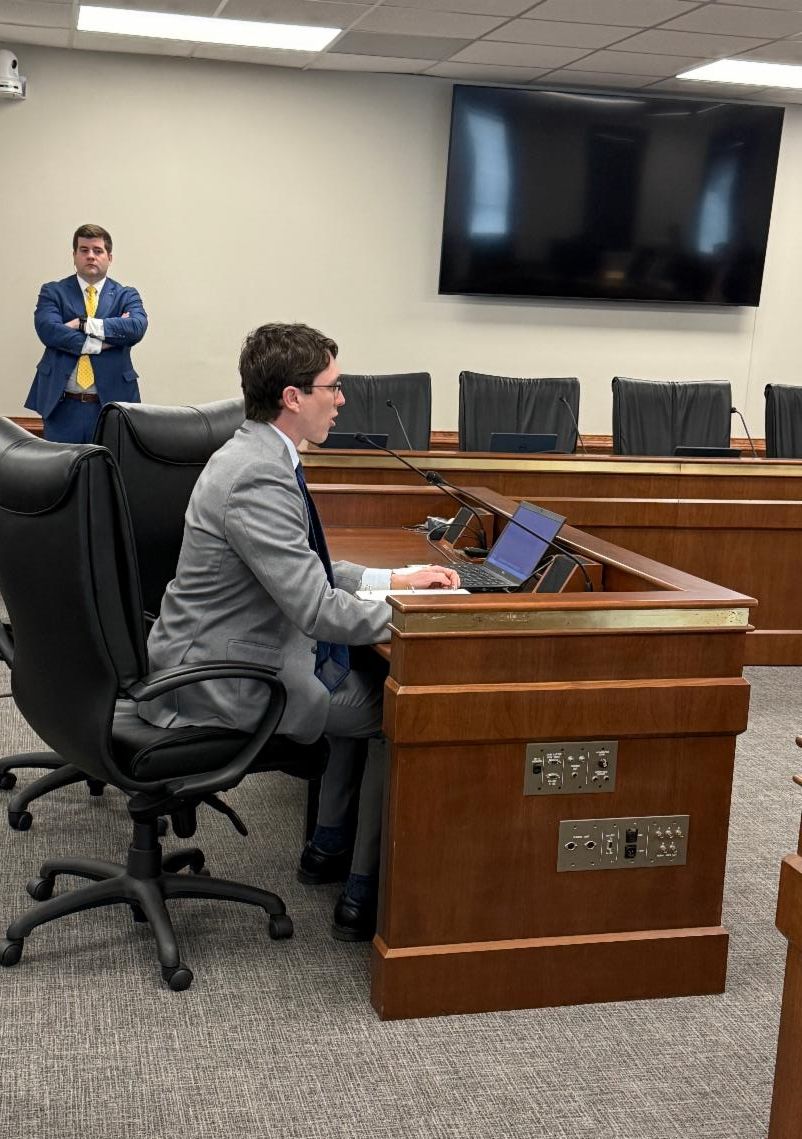
SC Association of Counties Director of Governmental Affairs Owen McBride testified on S. 97 and S. 98 in the Senate Finance Property Tax Subcommittee relating to auditor and treasurer qualifications.

Treasurer Qualifications 


S. 97, an SCAC policy position, would require that to be eligible to serve or continue to serve as the county treasurer, a person must: 

(1) be a citizen of the United States and of South Carolina; 

(2) be a qualified elector of the applicable county; 

(3) have: 

(a) a four-year bachelor's degree in accounting, finance, business administration, or economics from an accredited post-secondary institution; or 

(b) at least four years' experience: 

(i) in the field of accounting, financial management, financial reporting, budgeting, or economics; 

(ii) as an employee in a treasurer office in this state; or 

(iii) as a treasurer in South Carolina. 


Status: A Senate Finance subcommittee amended the bill at the request of SCAC and many county treasurers by adding a grandfather clause and requiring the treasurer to complete a 40-hour training program each year or risk forfeiting their salary supplement. The bill will be on the next full committee’s agenda. 


Cryptocurrency 


S. 163 would prohibit any governing authority, including a political subdivision, from accepting or requiring a payment using central bank digital currency issued by the Federal Reserve or another federal agency. The bill would include the following prohibition: 

(1) In areas zoned for industrial use, a political subdivision shall not: 

(a) place restrictions on a digital asset mining business that do not generally apply to businesses in that area; 

(b) place a specific limit on sound decibels generated from a digital asset mining business other than limits generally imposed for sound pollution in that area; or 

(c) change the zoning of a digital asset mining business without going through the proper notice and comment. 

(2) A digital asset mining business may appeal a change in zoning to the proper court of jurisdiction. 


Status: The House Labor, Commerce and Industry (LCI) Committee gave S. 163 a favorable report, and the bill is pending second reading on the House calendar. 

Land Use, Natural Resources and Transportation

Data Centers 


Two bills would create a regulatory framework under the Department of Environmental Services (S. 867) and Public Service Commission (S. 902) for permitting and siting requirements that data centers must meet to locate in South Carolina.  


Status: Chester County Planning and Zoning Director Jeremy Ward testified on S. 867 in a Senate Agriculture and Natural Resources subcommittee Tuesday, and the subcommittee will have another meeting March 10 to take further testimony. A Senate Judiciary subcommittee met to discuss S. 902 and hear testimony; however, no action was taken on the bill. The subcommittee plans to have future meetings to take further testimony. Please contact SCAC staff if you would like to speak on either bill.  


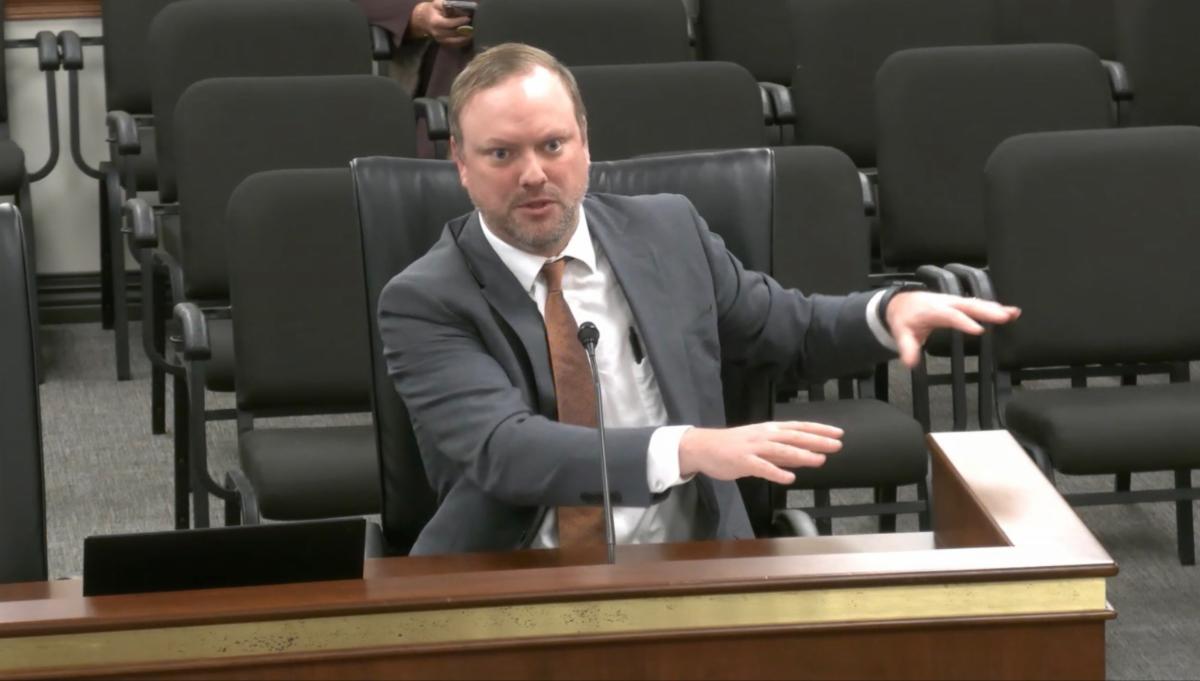
Chester County Planning and Zoning Director Jeremy Ward testified on S. 867 in the Senate Agriculture Subcommittee on data centers.

Protection of Monuments and Memorials 


S. 508 would prohibit a local government from relocating, removing, or disturbing certain monuments and memorials. Any county or municipality that violates the prohibition would lose all disbursements from the LGF until the violation is corrected.  


Status: The Senate Finance subcommittee adopted an amendment to remove the LGF penalty and narrow where monuments can be put back or transferred. S. 508 will be on the next full committee’s agenda. 


University Campus Events Zoning  


S. 832 would prevent a county or municipality from interfering with land use approvals for events held on the campus of a state-supported institution of higher learning based on zoning ordinances or land use classifications. However, the bill would not limit a county or municipality’s authority to enforce safety laws. 


Status: The Senate adopted an amendment on the floor to make sure nothing could be construed as limiting the authority of a county or municipality to apply and enforce generally applicable regulations. The Senate gave S. 832 second and third readings, sending the bill to the House.  


Utility Terrain Vehicles (UTVs) 


S. 222 would allow UTVs to be used on public roadways and would create regulations surrounding this usage.  


Status: The Senate Transportation Committee adopted a subcommittee amendment to prohibit a county from imposing any tax or fee on UTVs while allowing a county to require proof of residency for an operation permit sticker. The committee gave S. 222 a favorable report as amended, and the bill is pending second reading on the Senate calendar. 


Concurrency Programs 


S. 227 would define concurrency programs and authorize local governments to enact them, an SCAC policy position. These programs allow a county or municipality to manage the strain that growth and new development place on existing infrastructure. A local government could require a developer to pay impact fees, build or fund improvements, phase in the project, or wait until infrastructure is expanded before approving a development project.


Status: A Senate LCI subcommittee gave the bill a favorable report as amended, and the bill will be on the next full committee’s agenda. 


Chinese-Owned Land 


H. 4974 would prohibit certain companies—owned in whole or in part, or controlled by the People’s Republic of China or the Chinese Communist Party—from owning, leasing, possessing, or exercising control over any land or real estate located within 25 miles of a state or federal military base or installation for the purpose of installing or erecting certain towers. 


Status: A House Medical, Military, Public and Municipal Affairs (3M) subcommittee adopted a technical amendment and gave the bill a favorable report. H. 4974 will be on the next full committee’s agenda. 


Mobile Home Zoning 


H. 5113 would prohibit local governments from preventing the continued lawful but nonconforming use of property when a pre-existing manufactured or mobile home is replaced with a new one. The county may prevent such use under certain limited circumstances. 


Status: The House LCI Committee adopted a subcommittee amendment to clarify that the replacement home does not have to be brand-new and to modify the definition of a manufactured home to mirror the federal definition. The committee gave H. 5113 a favorable report, and the bill is now pending second reading on the House calendar.  


Transportation Network Companies 


H. 3474 would amend the “Transportation Network Company Act” to revise the definition of "personal vehicle" to include a personal vehicle that may be registered or licensed as a charter limousine with the South Carolina Public Service Commission or as a limousine or other for-hire vehicle by the governing body of a county or city.  


Status: The House recalled H. 3474 from the LCI Committee and placed the bill on the calendar before giving it second and third readings, sending the bill to the Senate. 

Public Safety, Judicial and Corrections

HALO Act 


H. 4763 would create the Helping Alleviate Lawful Obstruction (HALO) Act, which would make it a misdemeanor offense to obstruct a first responder or emergency medical care provider performing their official duties, an SCAC policy position. The first responder or health care worker must first warn the obstructer to remove themselves at least 25 feet away. This offense would be punishable by a fine of no more than $500 and imprisonment for no more than 60 days.  


Status: The House amended the bill to reduce the punishment to no more than 30 days and to require emergency medical providers to take reasonable steps to ensure the parent, guardian, or appropriate family member has given consent to medical treatment, as well as some technical amendments. The House gave H. 4763 second and third readings and sent the bill to the Senate. 


Juvenile Crime Waivers 


H. 4151 would update the definition of a child or juvenile to exclude a person 17 or older who is charged with any offense involving a weapon, as well as a person 16 or older who is charged with a felony offense carrying a term of imprisonment for 30 years or more, a first-degree burglary offense, or the offense of attempted murder. This would shift these cases from family court to circuit court. However, the bill would authorize solicitors to remand these cases to the family court at their discretion.  


Status: The House amended H. 4151 to add to the list of charges that would automatically cause a case to be heard in circuit court. It also expanded the methods by which a case could be remanded back to family court, including by motion of the circuit court or upon motion of the defendant after a hearing and order issued by the circuit court judge for a person 16 or older who is charged with one of the felony offenses listed above. The House gave H. 4151 second and third readings as amended and sent the bill to the Senate. 


Juvenile Fingerprints 


H. 5120 would require DJJ to fingerprint and photograph juveniles admitted to any secure facility operated by the agency and send these to the State Law Enforcement Division. The fingerprints must be kept separate from adults’ fingerprint records. 


Status: The House gave the bill second and third readings and sent H. 5120 to the Senate.  


Juvenile Prevention Programs 


H. 5121 would establish community juvenile crime prevention programs under which public or private nonprofit entities would be allowed to provide services and activities to prevent juvenile crime and delinquency. 


Status: The House recommitted the bill to the Judiciary Committee. 


Tort Reform  


H. 4544, as introduced, would amend the definition of “occurrence” to add, “for purposes of this chapter, where multiple acts or omissions constituting negligence occur without a break in the causal chain, and result in substantially the same injury, harm, or damages, such acts or omissions shall be deemed a single occurrence, regardless of whether committed by one or more individuals or entities.”  


Status: The House Tort Reform Ad Hoc Committee amended the bill to raise the existing caps on damages found in the Tort Claims Act from $300,000 to $600,000 per individual arising from a single occurrence and from $600,000 to $1,200,000 per occurrence. The bill received a favorable report as amended. 


Police Animals 


H. 3034 would enact “Fargo's, Hyco's, Rico's, Coba's, Wick's, and Mikka's Law," relating to harassing, injuring, or killing police dogs or horses, by expanding the conduct that violates these provisions, increase the penalties, and require restitution to the law enforcement agency, a past SCAC policy position. 


Status: A House Judiciary subcommittee gave the bill a favorable report, and H. 3034 will be on the agenda of the next full committee meeting. 


Street Takeovers 


H. 4292 would make it unlawful to organize, participate, or be a spectator in a deliberate and coordinated blocking of a public street, highway, or parking lot for racing, burnouts, or any other such reckless behavior with vehicles. The bill also provides penalties. 


Status: A House Judiciary subcommittee gave the bill a favorable report, and H. 4292 will be on the agenda of the next full committee meeting. 


Firefighters Health Program 


H. 5013 would require the Department of Public Health (DPH) to create and administer a firefighter occupational health program, at no cost to the firefighter, to test all active career and volunteer firefighters for certain carcinogens, including but not limited to per- and polyfluoroalkyl substances. The bill also would require the DPH to provide health and cancer screenings. Fire departments must allow reasonable paid release time for firefighters to participate in the testing and screenings. 


Status: A House 3M subcommittee heard testimony from several firefighters affected before adjourning debate on the bill to determine the fiscal impact of the program. 

County Government and Intergovernmental Relations

Polling Places 


S. 694 would allow the Aiken County Board of Voter Registration and Elections, with consent of their legislative delegation, to move polling places within the county. 


Status: The Senate amended the bill with the provisions of S. 36, to allow all county boards of voter registration and elections, with the consent of their legislative delegation, to place the polling places within their county. This is an SCAC policy position. The Senate gave S. 694 second and third readings and sent the bill to the House. 


Hospital Beds 


H. 5164 would create building and fire code exceptions for the placement of hospital beds in hallways in the event of emergency. 


Status: A House 3M subcommittee amended the bill and gave it a favorable report. The bill should be on the next full committee agenda. SCAC will report on the amendment once it becomes available. 

Other Statewide Bills of Interest

Insurance Rate Reduction 


H. 4817 would enact the “Insurance Rate Reduction and Policyholder Protection Act” to overhaul the insurance business in South Carolina. Section 12 of the bill would charge the director of the S.C. Department of Insurance (DOI) or their designee with approving the appropriation of funds for local government loss mitigation projects. A House Labor, Commerce, and Industry subcommittee adopted a comprehensive amendment that would, among other things, move the Insurance Roofing Investigation Unit from the Department of Insurance to the Department of Labor, Licensing, and Regulation, allow for criminal penalties for the DOI Fraud Unit, strikes the “No Pay-No Play” section, provide a $0 deductible option for windshield replacements, and allow DOI to set benchmarks for premium discounts. The House LCI Committee gave H. 4817 a favorable report as amended, and the bill is pending second reading on the House calendar. 


Nitrous Oxide  


S. 751 would prohibit the sale of nitrous oxide products to minors by creating the offense of selling or providing these products to minors and create a civil penalty for a minor who misrepresents his or her age to attempt to or successfully purchase these products. The Senate adopted an amendment on the floor that clarifies, in addition to any criminal penalties, a business entity convicted of violating this article also may face administrative action from the state or local authority that issued its business license, permit, or registration, including suspension or revocation, consistent with existing law. S. 751 as amended was given second and third readings and sent to the House. 

Newly Introduced Legislation

See below links for summaries of legislation introduced this week.


House Bills


Senate Bills


View/Download Full Text for Newly-Introduced Legislation


You can also go to www.scstatehouse.gov and click on "Legislation," then "Introduced Legislation."


Note: If you would like to offer comments to the SCAC staff, please call us toll-free at 1-800-922-6081, fax to (803) 252-0379, or send an email.

X Share This Email
LinkedIn Share This Email