Dear Angelenos:
Technology has kept us connected, responsive, and functional in the midst of a pandemic. We have adapted to the necessity for social distancing by moving many of our services online, making it possible to file applications, pay fees, attend hearings, and provide feedback remotely.
City Planning’s new Online Application System (OAS) is part of this shift. The OAS makes it possible to take advantage of the Department’s development services from any place with an internet connection. In the short term, the program keeps critical services available to local businesses while also minimizing the need for in-person visits during the pandemic. Over the months and years ahead, the OAS will form part of the digital infrastructure that allows us to move more planning services online, in the interest of convenience and transparency.
While there is still work to be done to close the “digital divide,” so all Angelenos can
enjoy access to our web-based services, we are excited about the possibilities opening
up through digital outreach, online filing, GIS maps, data analytics, and more to come.
Together, we are Planning for LA.
|
|
Vince Bertoni,
Director of Planning
|
|
|
|
North Hollywood Redevelopment Plan Expiration |
On February 21, the North Hollywood Redevelopment Plan reached its project end date. The plan was originally created in 1979 to help incentivize economic investment along a 743-acre stretch of the San Fernando Valley, located one mile north of the intersection of the Hollywood and Ventura freeways, immediately to the north of the Cahuenga Pass.
The boundaries of the project area are Hatteras Street on the north, Cahuenga Boulevard on the east, Sarah Street on the south, and Camellia Avenue on the west. It includes the NoHo Arts District, home to numerous contemporary theaters, art galleries, cafes, and shops.
New projects built within the former boundaries of the North Hollywood Redevelopment Plan area will no longer
be subject to the development guidelines of the former plan, or subject to planning clearances for such items, including building and change-of-use permits.
For additional information, email
|
|
|
|
Hollywood Community
Plan Update: City Planning Commission
|
On February 18, City Planning staff presented the Draft Hollywood Community Plan to the City Planning Commission (CPC). The update to the plan aims to generate housing by increasing the development rights of properties near transit stops or job centers. It would also take steps to safeguard job centers in Hollywood and protect the hillsides.
Following a comprehensive presentation of the proposed changes to the area's land use designations and zoning, members of the public and commissioners debated the plan's measures. The CPC will resume discussion of the Draft Hollywood Community Plan at its March 18 meeting.
|
|
|
|
Purple Line Transit Neighborhood Plan Update |
On February 10, City Planning announced it would pause the ongoing update to the Purple Line Transit Neighborhood Plan (TNP) until the update to the Wilshire Community Plan is underway. Aligning the Purple Line TNP with the larger update to the Wilshire Community Plan will allow for a more comprehensive approach to long-range planning in this part of the City.
As part of assessing the Department's work programs given a reduction in resources, City Planning is aligning some efforts while developing more inclusive and equitable strategies to support community engagement and input on core policies. With respect to the work completed thus far, the Purple Line TNP team anticipates continuing the conversation leading up to the relaunch of the work program.
|
|
|
|
Expedited Processing Section |
To support local economic investment, City Planning has recently made more application types eligible for processing by the Expedited Processing Section (EPS). Since its establishment in 2003, the EPS has helped further the City’s housing and economic development objectives while maintaining a streamlined review process.
The EPS now accepts applications for projects located within certain plan overlays, Redevelopment Plan Areas, and Coastal Transportation Corridor Specific Plans. Small-scale residential and mixed-use projects with 10 or fewer units can also take advantage of EPS’s services.
Other planning applications, including those for the adaptive reuse of buildings, stand-alone alcohol entitlements for restaurants, and select entitlements for commercial and industrial projects, are also able to request EPS's services. For more information, contact plnexpedited.intake@lacity.org.
|
|
|
|
City Planning has issued a memo outlining the ministerial review of Density Bonus projects requesting on-menu incentives, consistent with State law. To facilitate housing production, the Department will ministerially process all new applications requesting on-menu incentives, as well as those in the pipeline.
Density Bonus is a State-mandated housing incentive program created to promote mixed-income housing with onsite affordable units. Developers who meet the requirements of the State law are entitled to receive Density Bonus and other benefits as a matter of right. For more information, contact the Housing Services Unit at dcpphp@lacity.org.
|
|
City Planning Discusses Online Application System with
LA CityView 35
|
|
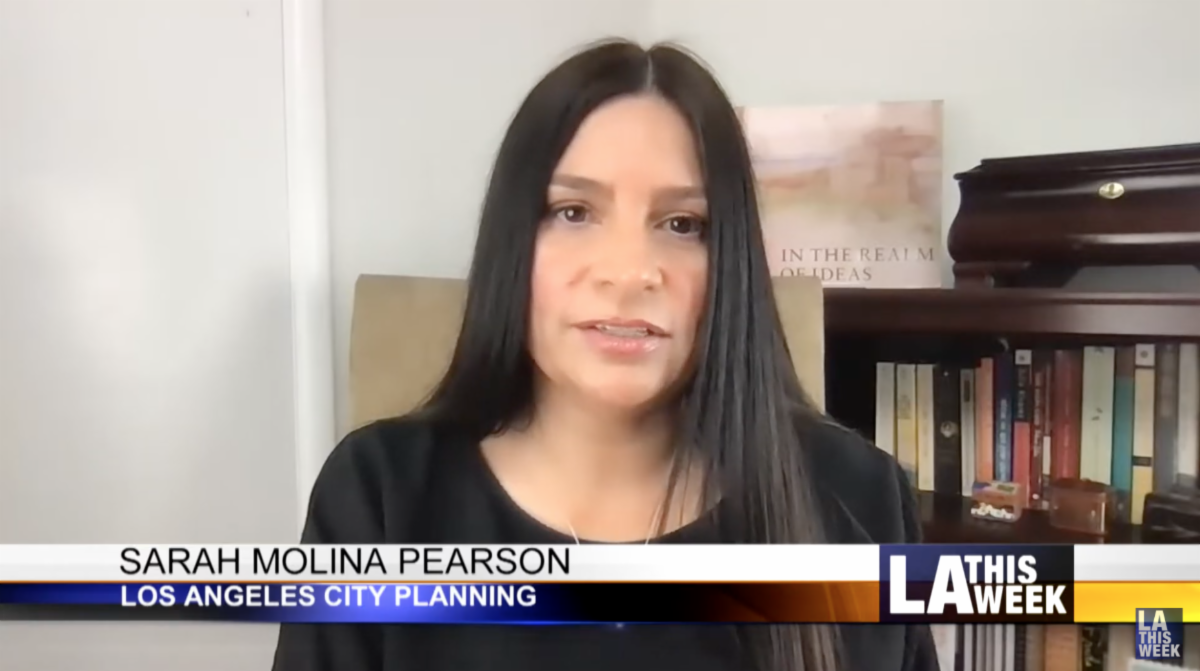
Senior City Planner Sarah Molina-Pearson recently appeared on LA CityView 35 to discuss the expanded Online Application System (OAS). The OAS portal makes it easy for applicants to stay Safer at Home during the COVID-19 pandemic by submitting City Planning applications, as well as payments, online.
Users can submit applications online 24/7, 365 days a year from the comfort and safety of their home or office. The portal also increases transparency in the permitting process, allowing users to monitor the status of their applications in real time and communicate with the assigned planners.
The OAS currently accepts 16 different applications. Recent improvements have focused on facilitating administrative approvals and permit sign-offs that previously required a trip to City Hall or one of the Development Services Centers. Making these application types available online is an easy and effective way to assist local businesses during the pandemic. In the coming months, City Planning will add more services to the OAS, including administrative clearances for Accessory Dwelling Units.
|
|
Neighborhood Alliance of River Communities Receives Briefing on Housing Element
|
On February 2, Senior City Planner Matthew Glesne was invited by the Alliance of River Communities (ARC) to provide a status update on the Housing Element Update.
The meeting, held virtually in keeping with stay-at-home orders, provided an opportunity for City Planning to engage local stakeholders on topics ranging from housing needs and barriers in Los Angeles to the City’s Regional Housing Needs Assessment (RHNA). Attendees also got an overview of the vision and draft concepts for the ongoing update to the Housing Element of the City’s General Plan, also known as “the Plan to House LA.”
The Housing Element identifies Los Angeles’s housing needs and opportunities and establishes clear goals and objectives to inform future housing decisions. When the current update to the Housing Element is completed, it will guide the creation and implementation of the City's housing policy from 2021 through 2029.
|
|
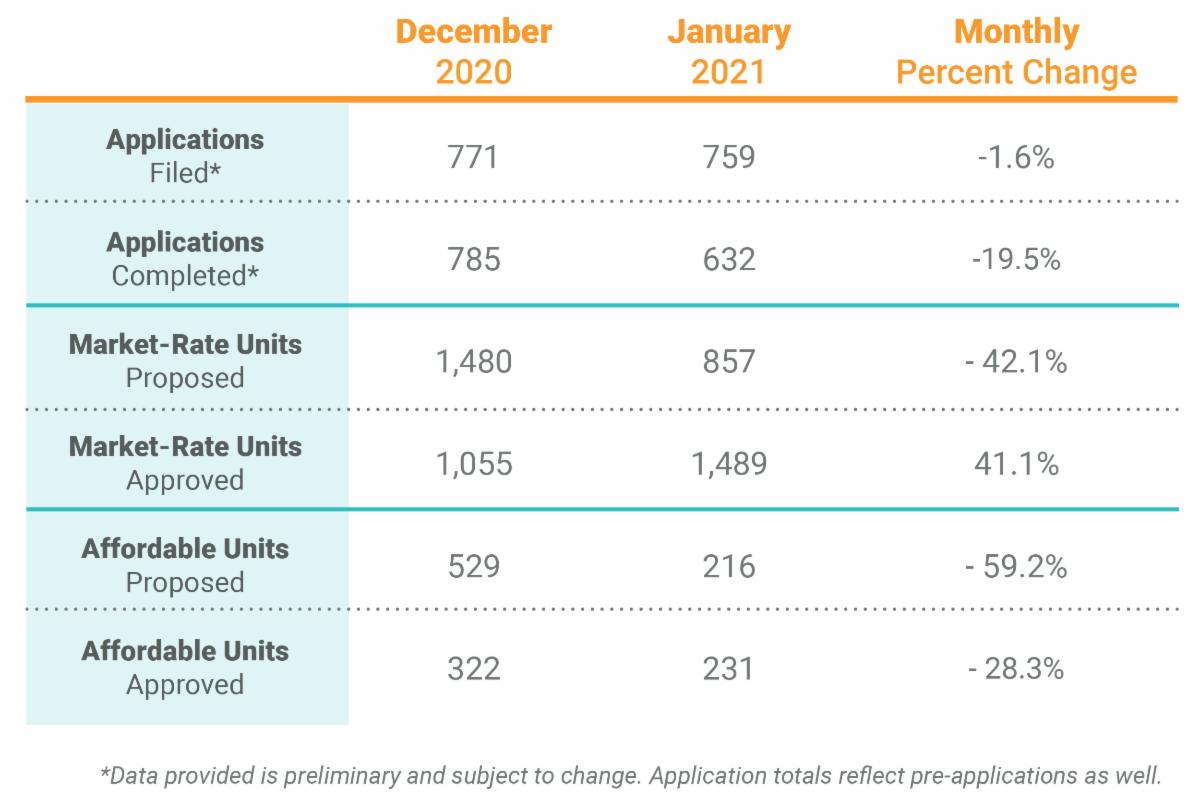
In January, the number of applications filed and completed was on par with the number of applications filed and completed during the same time last year, before the Safer at Home orders. Overall, the number of applications filed has increased, on average, 4% over the last six months. |
|
|
|
- Held Public Hearing and virtual open house events in December 2020
- Held Community Planning 101 webinar sessions in November 2020
-
Released updated draft Zoning, Plan Text, Land Use Map, and Community Benefits Program in November 2020
- Extended the comment period for the Draft Environmental Impact Report (EIR) to December 4, 2020 and draft Plan to January 13, 2021, providing additional opportunity for public comment
- Conducted virtual office hours in September 2020
- Released updated draft Zoning, Plan Text, Land Use Map, and Community Benefits Program in August 2020
-
Released Draft EIR in August 2020 for a 120-day comment period
- Conducted office hours in January and February 2020
- Released Draft Zoning in October 2019
- Released Draft Plan and Land Use Map in July 2019
|
|
|
|
- Preparing for Zoning Workshops in 2021
- Preparing draft EIR
-
Released a Draft Land Use Map and Plan Principles and Strategies in December 2020
- Held virtual webinars in December 2020 to share draft land use designations
|
|
|
|
- Planning for EIR Scoping Meeting in Early 2021
- Conducted a series of Office Hours in September 2020
-
Released Draft Concepts and held virtual open house webinars in July 2020
|
|
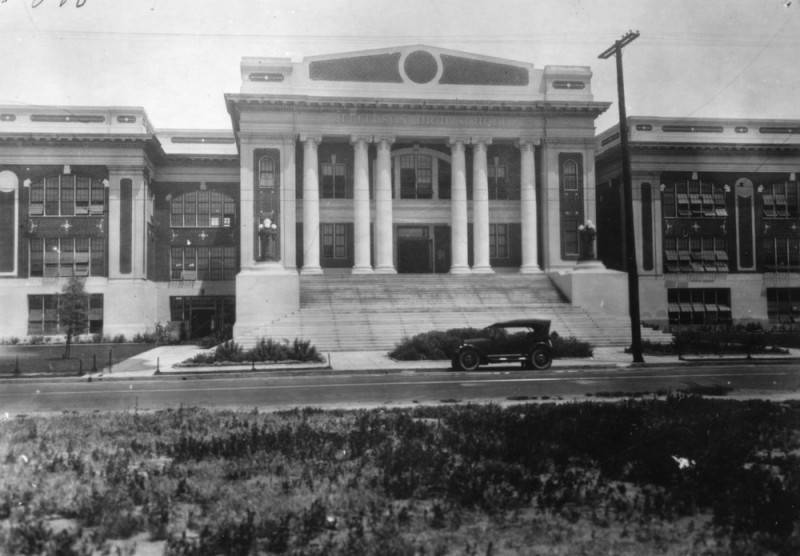
Photo Courtesy: Los Angeles Public Library /Los Angeles Trade -Tech Photo Collection |
|
Founded in 1916, Thomas Jefferson High School has been a pillar of the Los Angeles community for over 100 years. The fourth-oldest high school in the Los Angeles Unified School District, it has produced more prominent jazz musicians and composers than any other high school—public or private—in California.
Thomas Jefferson High is one block away from Central Avenue, the thoroughfare prominently associated with the West Coast’s jazz scene from 1920 to 1955. With
career-making venues like the Dunbar Hotel, The Last Word, and Club Alabam, the Black enclave was nicknamed “Little Harlem.”
Jefferson High School’s contribution to nurturing and sparking a distinctive jazz culture was significant, to say the least. At the heart of South Central’s exploding jazz scene, the school boasted a robust music curriculum that included courses in music theory, music appreciation, harmony, counterpoint, orchestra, band, and choir.
Among Jefferson High’s notable musical alumni are Etta James, Charles Mingus, Dexter Gordon, members of the musical group The Platters, The Penguins, “Louie Louie” writer Richard Berry, Duke Ellington Orchestra singer Ivie Anderson, and five-time Grammy Award winner Barry White.
Jefferson alumni have also made their mark outside the field of music. These luminaries include a Nobel Prize winner, two Olympic Gold Medalists, a member of the U.S. House
of Representatives, and the first Black federal judge from a state west of the Mississippi.
|
|
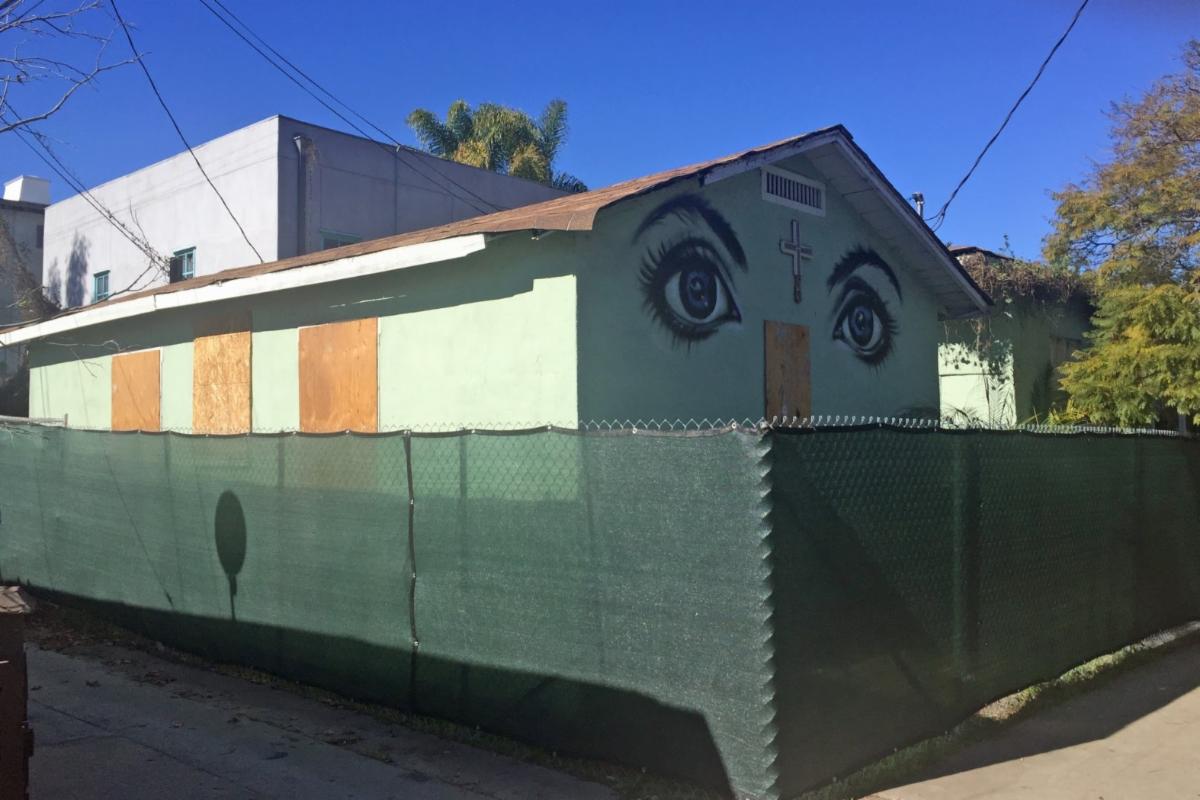
Last year, the City Council approved the designation of the Monday Women’s Club as a Historic-Cultural Monument. Located at 1209 South Sixth Avenue, in Venice's historically African American Oakwood neighborhood, the Monday Women’s Club was one of several African American women’s clubs in Southern California.
The women’s club movement started at the beginning of the 20th century, with both social and charitable missions. Because African American women were excluded from participating in the organizations led by white women, local African American women’s organizations emerged from churches, mutual aid societies, and literary clubs, many of which were affiliated with the National Association of Colored Women (NACW). The members of the Monday Women’s Club came together not just for social engagement, but also to improve the lives of African Americans through charitable and political activities. NACW-affiliated clubs provided assistance through day care, health services, and job training, and they also lobbied for women's suffrage.
The Monday Women’s Club occupied the building from 1926 to 1947. It is estimated that approximately 20 African American women’s clubhouses once existed in Los Angeles; today, the Monday Women’s Club and the Wilfandel Club in West Adams are the last remaining buildings associated with these important organizations.
|
|
March City Planning
Commission Meetings
|
|
3/4, 3/11, 3/18, and 3/25 |
|
March Area Planning
Commission Meetings
|
|
Central: 3/9 and 3/23
South Los Angeles: 3/2 and 3/16
South Valley: 3/11 and 3/25
West: 3/3 and 3/17
East: 3/10 and 3/24
Harbor: 3/2 and 3/16
North Valley: 3/4 and 3/18
|
|
LOS ANGELES CITY PLANNING
@PLANNING4LA
|
|
Sign up to receive citywide planning updates by email
|
|
|
|
|
|
|