Weekly Digest Number 30 - July 27, 2021 |
|
Editor's Note: In our leads tory this week, the Class One railroads cry the blues that they cannot hire workers. This after furloughing tens of thousands (most of these pre-pandemic), destroying the seniority and lifestyle of thousands more, and making the lives of countless others miserable and demoralized, the nation's big railroads wonder why they cannot hire. Think about it. It must be more than paltry stimulus checks that is keeping people from working a six figure job on the railroad. |
|
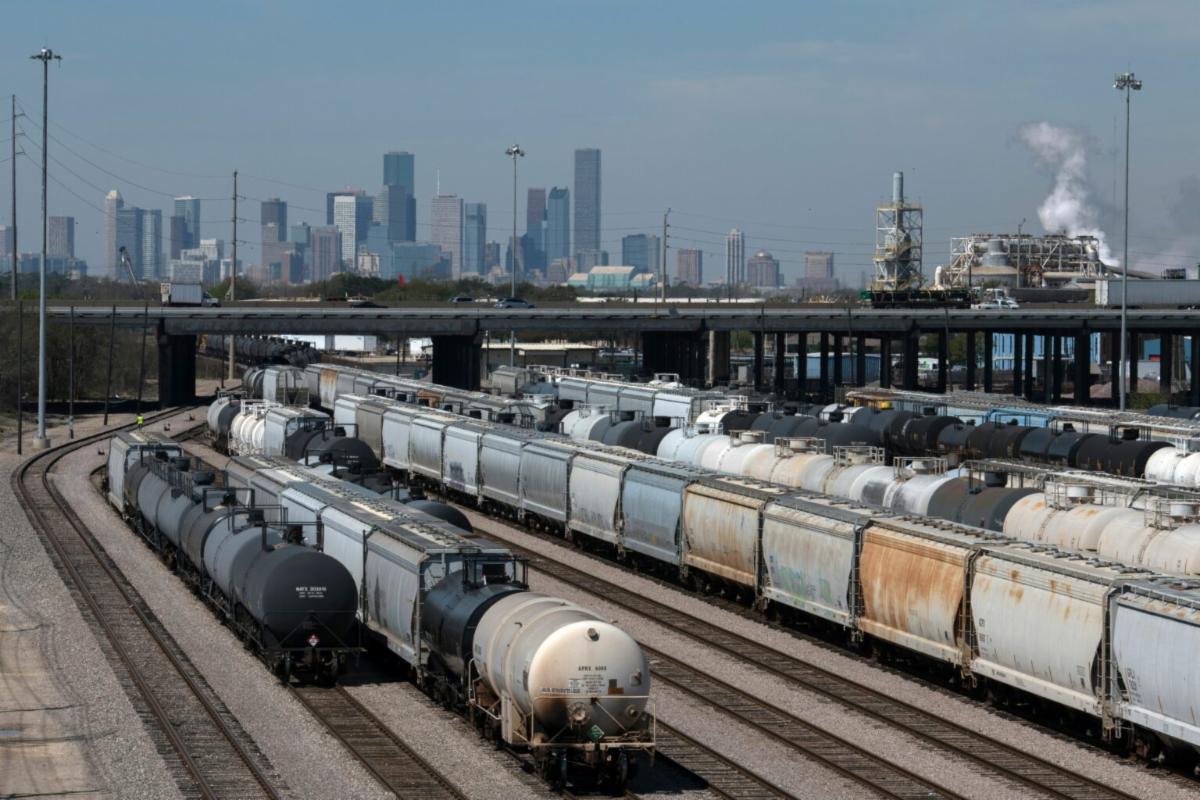
After Slashing 33% of Workers in 6 Years, Railroads Complain about Labor Shortages, Amid Uproar Over Slow Shipments |
|
“No way did I realize how difficult it was going to be to try and get people to come to work these days”: CEO of CSX.
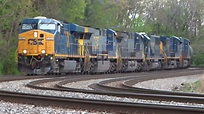
So there are few hiccups in the US economy right now. James Foote, the chief executive of CSX, one of the largest railroads in the US, put it this way during the earnings call yesterday: “I’ve never seen any kind of a thing like this in the transportation environment in my entire career where everything seems to be going sideways at the same time,” he said. “In January when I got on this [earnings] call, I said we were hiring because we anticipated growth. I fully expected that by now we would have about 500 new T&E [train and engine] employees on the property,” he said. “No way did I or anybody else in the last six months realize how difficult it was going to be to try and get people to come to work these days.
And this comes after railroads had spent six years shedding employees in order to tickle Wall Street analysts and pump up stock prices. The North American Class 1 freight railroads combined – BNSF, Union Pacific, Norfolk Southern, CSX, Canadian National, Kansas City Southern, and Canadian Pacific – have tried to streamline their operations, using fewer but longer trains and making other changes, including under the strategy of “precision scheduled railroading,” implemented first by Canadian National, then by CSX.
The resulting deterioration in service triggered numerous complaints from shippers. But one of the big benefits was that the workforce could be slashed, which fattened the profit margins at the railroads. Wall Street analysts loved it, and it was good for railroad stocks. By now, precision scheduled railroading has become the new religion at all Class 1 railroads except at BNSF, which has not officially adopted it, at least not completely.
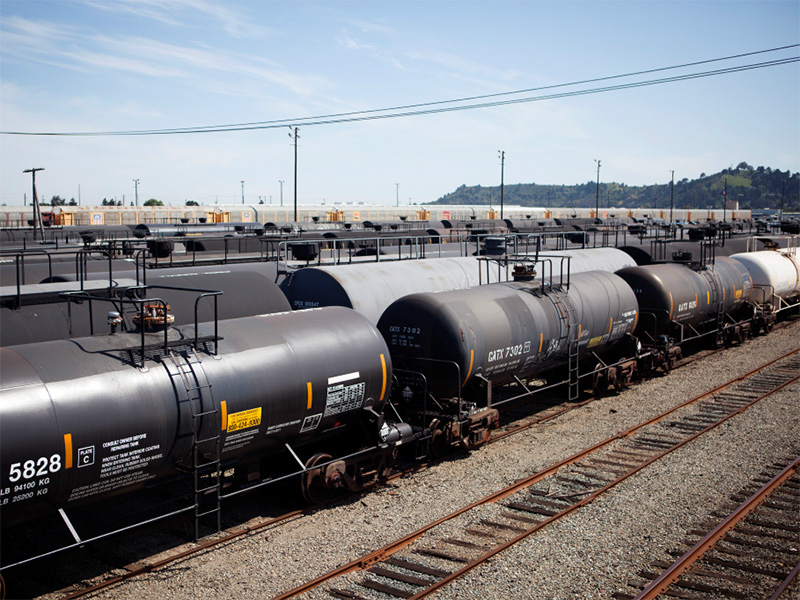
In the process, over the past six years, the Class 1 railroads have axed 33% of their workers through layoffs and attrition. According to the Surface of Transportation Board (STB), an independent federal agency that oversees freight railroads, the Class 1 railroads slashed their headcount from 174,000 workers in April 2015 to 116,000 workers in June 2021.
|
|
Editor's Note: Here we go again. We have seen the UP meltdown in 1996-97; the NS meltdown in 1999-200, and the CSX meltdown in more recent years. As the nation's railroads now struggle under PSR to deliver freight in an efficient and timely manner, perhaps it is time for the railroad workers and the American people to consider converting them into public utilities to be controlled and operated democratically. |
|
STB Asks Class One Railroads to Report on Intermodal Supply Chain Problems |
|
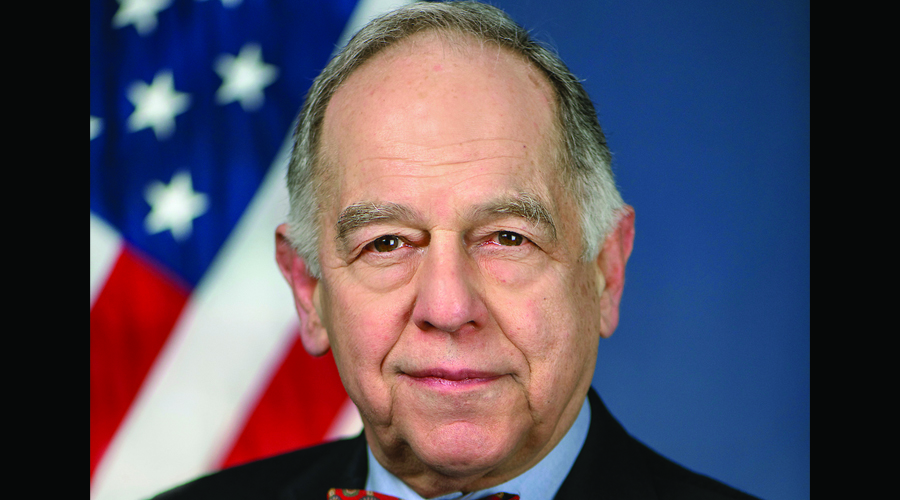
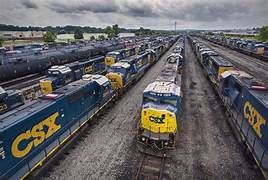
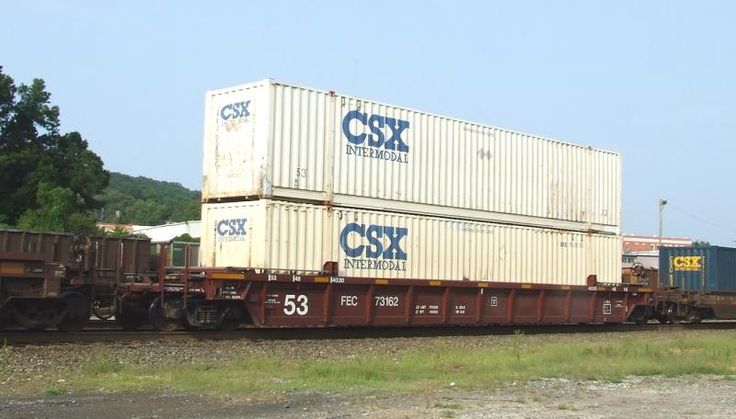
Surface Transportation Board (STB) Chairman Martin Oberman yesterday sent a letter to all Class Is expressing his concern over persistent problems with congestion in the international intermodal supply chain and significant container storage fees that some shippers are being required to pay in order to receive their containers. Overman asked the Class Is to provide certain information about the extent of congestion at key container terminals and their policies and practices for assessing storage charges.
The chairman’s request is designed to help the board better understand the magnitude of container congestion, the purpose and effect of storage fees, and whether receivers are afforded relief when they lack the ability to facilitate the release of their containers, STB officials said in a press release.
The STB has received "numerous reports reports related to the length of time that containers are being held in rail yards, and the sizeable storage fees (demurrage) some customers have been required to pay in order to obtain release of containers bearing their shipments," Oberman said.
"The board's principal concerns are helping to mitigate the congestion problems at intermodal yards caused by the unprecedented economic situation, improve network fluidity and provide relief to shippers and receivers who are not in a position to reasonably avoid onerous and potentially business-threatening storage charges," he said. The letter is available on the STB website.
|
|
Editor's Note: With all of the problems encountered as outlined in the two articles above, the rail carriers continue to deliver for their stockholders, if nobody else. This of course is unsustainable, and the carriers will be forced to face the music in the end. For now, the orgy of profiteering continues.... |
|
Despite Service Disruptions, Class One Carriers Continue to Rake in Record Profits |
|
Is Intermodal Going Off the Rails? |
|
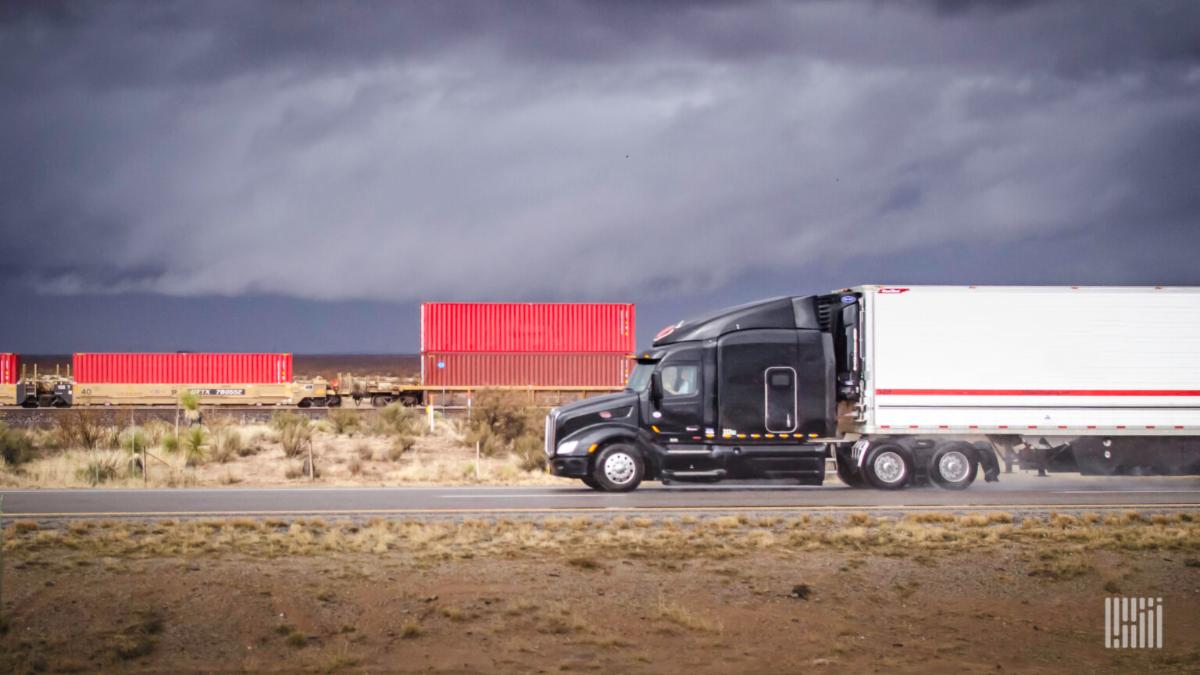
Intermodal congestion may be leading to share loss to the highway Intermodal rejection rates peaked near all-time highs over the past month as volumes fell. Looking over the past few months, volumes, measured by FreightWaves Outbound Loaded Container Volume Index (ORAILL), were actually higher in March and April while rejection rates fell below 2%. With trucking capacity extremely tight, are intermodal providers losing market share?
It is counterintuitive to see demand (volumes) fall and capacity appear to tighten — indicated by an increase in tender rejections. It seems as though intermodal carriers are reducing their available capacity for contracted customers. It is rare to see an intermodal tender rejection due to the nature of the business. Many providers automatically accept load requests because it is almost like guaranteed capacity — but the service is not.
When asked about this phenomenon, rail and intermodal market expert Mike Baudendistal said, “Terminals are congested, boxes are not leaving fast enough and IMCs (carriers) have been too aggressive about raising rates for how the service levels are … leading to share loss to the highway.”
Basically, the cost savings for shipping on the rail is not enough to offset the deterioration in service. This explains the deterioration in volumes over the past few months to an extent, but the tender rejections indicate the carriers may be struggling to meet demand anyway. The timing is just unusual.
|
|
Editor's Note: This is worth the read. Occasionally, Railway Age Magazine will allow a dissenting voice. |
|
Regarding the “point-counterpoint“ debate originally published in Fortune about Precision Scheduled Railroading and reproduced in Railway Age, with Brannon and Gorman on the “for” PSR side, and Rep. DeFazio (D-Ore.) not exactly on the “against” side, but on the “questions need to be answered” side. I read the invitation to submit a reasonable, fact-based, non-political response to encourage discussion. Thank you. I’ll do my best, and I promise: no profanity.
But let’s look at train accidents. Now, full disclosure: I have no idea if any single one of the train accidents I’ve reviewed was caused by so-called PSR, but I’m not interested in any single accident. I just want to know if anything has changed pre- and post-adoption of PSR, in the frequency of train accidents that might cause concern in an operating officer, and push her or him to look at more cases with a bit more scrutiny.
So just for fun, let’s say we take the 8 years 2013 to 2020, inclusive. For more fun, we will divide them into a pre-PSR 2013-2016 period and a post-PSR 2017-2020 periodf. And for more fun, we’ll compare them for the frequency of train accidents, not including grade crossing accidents.
For fun, we’ll find the frequencies, the rates of:
• Train accidents per total train-miles.
• Train accidents per employee-hour.
• On-duty injuries per employee-hour.
• Employee fatalities per total train-miles.
• Employee fatalities per employee-hour.
(Note: The raw data is taken from FRA safety data tables; the calculations are mine. As much as I might like to hold FRA responsible for any errors, I can’t. They’re mine.)
Frequency of train accidents:
• 2013-2016: 1 (one) every 398,192 train-miles; 2017-2020: 1 (one) every 364,107 train-miles.
• 2013-2016: 1 (one) every 251,815 employee-hours; 2017-2020: 1 (one) every 226,682 employee employee-hours.
In both cases, train accidents occurred with greater frequency in the 2017-2020 period.
On-duty injuries per employee-hours:
• 2013-2016: 1 (one) every 112,814 hours; 2017-2020: 1 (one) every 116,388 hours.
An improvement of approximately 3%.
On-duty employee fatalities:
• 2013-2016: 1 (one) per 61.6 million train-miles; 2017-2020: 1 (one) per 58.1 million train-miles.
• 2013-2016: 1 (one) per 39 million hours; 2017-2020: 1 (one) per 36.1 million hours.
In both cases, the frequency of fatalities has increased.
|
|
Editor's Note: One of the Congressional champions of both rail labor and railroad expansion and investment is Oregon Congressman Peter DeFazio. Here he takes aim at an anti-union/anti-worker commentary published recently in Fortune Magazine. |
|
Wall Street is Boosting Profits in Railroads with New Technology. But it’s Ignoring the Drawbacks |
|
In a commentary published in Fortune earlier this month, Ike Brannon and Michael F. Gorman took great liberties in trying to debunk my concerns with precision scheduled railroading (PSR). Please allow me to set the record straight.
I have served on the U.S. House Committee on Transportation and Infrastructure for 34 years, crafting public policy through seven different presidential administrations, both Democratic and Republican. Freight transportation is critical to our economy. The ability to efficiently, reliably, and safely deliver freight makes us more competitive in the global economy.
But PSR is not some fancy optimization strategy to increase freight volume or improve operations and reduce emissions; rather, it is a business strategy promoted by Wall Street to boost short-term profits. Wall Street investors have proven they don’t care about the long-term health of the industries from which they seek to extract wealth. Similarly, they don’t care about ensuring an efficient, reliable, and safe freight service that drives the U.S. economy.
|
|
Congressional Leaders Push for Transformational Investment in Rail |
|
The Bipartisan Infrastructure Framework (BIF) continues to slowly advance its way through the Senate, with key negotiators attempting to find a middle path between progressive demands to invest less money in highway expansion and more in expanding passenger rail and transit, and conservative demands to reduce non-highway spending levels in the package.
There has been a renewed push in the Senate this week to dramatically increase the base level of funding for passenger rail in the infrastructure bill. Led by Senators Chris Murphy (D-CT) and Richard Blumenthal (D-CT), the group is pushing to significantly increase the current funding levels for rail, reported to be at $66 billion over five years.
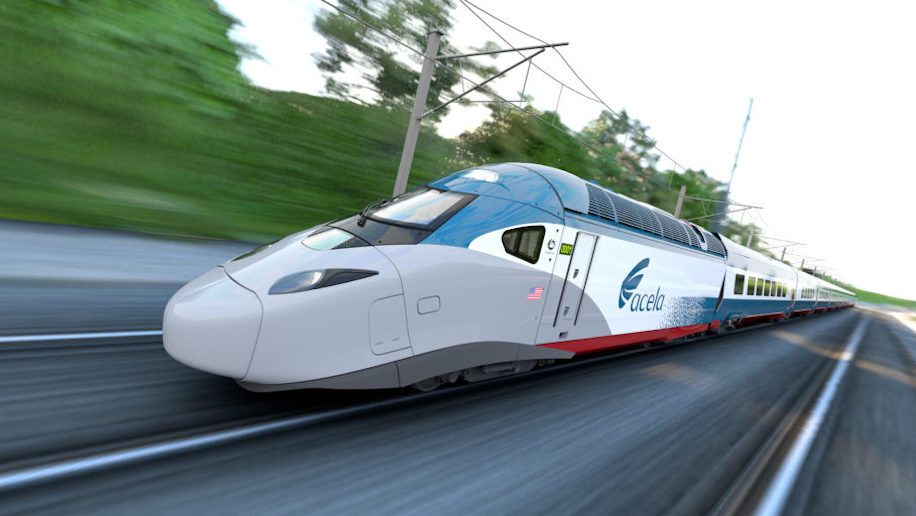
“While we appreciate the work that has gone into crafting the bipartisan agreement proposed by President Biden and recently endorsed by Senators from both parties, the funding levels agreed to as part of this framework are not sufficient to properly upgrade America’s aging rail system,” wrote the group. “We have before us a once-in-a-generation opportunity to change the lives of millions of Americans—to bring American infrastructure into the 21st century, and to create a cleaner, greener, more interconnected nation. Therefore, we urge you to draft a budget resolution that enables Congress to significantly increase investment in passenger rail programs so that we can deliver high-speed rail to American commuters and businesses.”
The bill will be finalized any day now. Please take a moment to call your Senators and ask them to support a transformational investment in passenger rail!
|
|
Tell Congress To Support the "Rail Passenger Fairness Act" and Allow Amtrak Trains to Run on Time |
|
Use the field on the right to find the phone numbers for your elected officials in DC. Tell their office that the freight railroads are ignoring the law when they hold up Amtrak trains. Ask them to support the Rail Passenger Fairness Act (S.1500 and H.R.2937), which doesn't change the law but just gives Amtrak the right to go to court to protect YOUR right to be on time. Senator Richard Durbin (Illinois) and Rep. Donald Payne, Jr., (New Jersey) have introduced this bill in the Senate and the House and it deserves your support.
Let's stop being #latebyfreight once and for all.
|
|
Pass the PRO Act and Defend Workers' Rights! |
|
The Protecting the Right to Organize (PRO) Act is the labor law reform we need to protect workers and unions. If the PRO Act passes in the Senate, President Biden will sign it into law. Tell your senators that you support unions, working people and the PRO Act!
Workers’ rights are under attack. Our outdated labor laws have been chipped away and weakened by anti-worker legislators. Every day, we hear about corporations openly union-busting and retaliating against workers without consequence.
That’s why we need the PRO Act, the most significant worker empowerment legislation since the Great Depression. If it passes, it would:
- Empower workers to form unions and bargain over wages and work conditions.
- Hold corporations accountable for union-busting.
- Repeal “right to work” laws, which were created during the Jim Crow era to divide Black and White workers.
Strong unions mean higher wages, safer working conditions and dignity for all people who work. Passing the PRO Act is our first step to getting there.
Whether your senators support the PRO Act or not, help us keep up the pressure and make it clear to them that the PRO Act is a priority for working people. Add your name today.
|
|
NJ Company Fined for Labor Violation after Luzerne Worker Dies |
|
A 29-year-old Luzerne County man climbed into a rail car to scrape oil sludge from its walls in 2019. He collapsed within 30 minutes and died soon after. On Monday, his employer was sentenced for violating the labor requirement meant to protect him.
The Avenel, New Jersey company Dana Rail Care, was fined $325,000 for ignoring safety guidelines set forth by the Occupational Safety and Health Administration in March of 2019, resulting in its employee's death. It was also sentenced to a two-year probation and required to report any additional OSHA citations to the court.
“The death of the employee was a tragedy and could have been avoided if the company had followed the regulations for this type of dangerous activity,” said U.S. Attorney Bruce Brandler.
|
|
Britain’s First Diesel-Battery Hybrid Train Makes Passenger Debut |
|
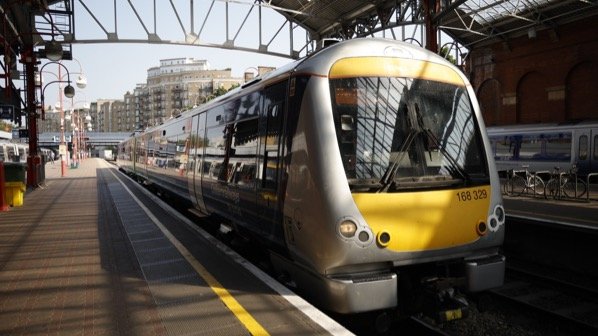
BRITAIN’s first diesel-battery hybrid train made its passenger debut on July 21 when it carried invited guests from London Marylebone to Bicester Village. A two-car class 168 operated by Chiltern Railways and branded HybridFLEX has been converted in a project with Rolls-Royce and rolling stock owner Porterbrook.
Rolls-Royce has provided a hybrid powerpack for the train that reduced fuel consumption, meaning CO₂ emissions drop by up to 25%, Nitrous Oxide (NOx) emissions by more than 70% and particulate emissions by more than 90% compared with the diesel engine it replaces. The train will enter full passenger service from September.
“We need to modernise Chiltern again and this exciting use of new technology in an older train is a potentially very significant opportunity to help us decarbonise and improve our customer experience,” says Chiltern Railways managing director, Mr Richard Allan.
|
|
OSHA Orders CSX to Pay Nearly $222K to Whistleblower |
|
Occupational Safety & Health Administration investigation found that a Jacksonville, Florida-based CSX Transportation Inc. company violated the Federal Railroad Safety Act and “demonstrated a pattern of retaliation” after firing a worker in December 2019 for reporting safety concerns.
As a result, OSHA ordered CSX to pay $71,976 in back wages, interest and damages, and $150,000 in punitive damages to the worker, according to a statement issued Thursday.
The investigation is the “latest example of CSX retaliating against workers for reporting safety concerns,” according to OSHA, which in October 2020 ordered the company to reinstate an employee who reported an unsafe customer gate and an on-the-job injury and pay more than $95,000 in back wages and $75,000 in punitive damages.
Similar whistleblower investigations of CSX resulted in reinstatements and payment of back wages and damages in the New York region in 2016 and 2010, according to OSHA. CSX could not immediately be reached for comment.
|
|
Houston’s Mayor Asks EPA to Probe Contaminants at Rail Site Associated With Nearby Cancer Clusters |
|
Houston Mayor Sylvester Turner has asked the Biden administration to seek fines and order the cleanup of a hazardous waste site owned by the Union Pacific Railroad that has been linked to two cancer clusters among nearby residents.
In a June 25 letter to Michael S. Regan, administrator of the Environmental Protection Agency, Turner asked that the EPA investigate the health threat and “secure truly meaningful relief” for the predominantly African American community, “including relocation for impacted residents.”
“We need EPA’s help,” Turner said, “to help mitigate environmental risks to this overburdened community and advance environmental justice.”
Turner’s request came after Texas health officials in January found that children living in the city’s largely Black Fifth Ward and Kashmere Garden neighborhoods contracted acute lymphoblastic leukemia at a five times greater rate compared to the state average.
|
|
Influential Congressman Opposes CSX Acquisition of Pan Am Railways |
|
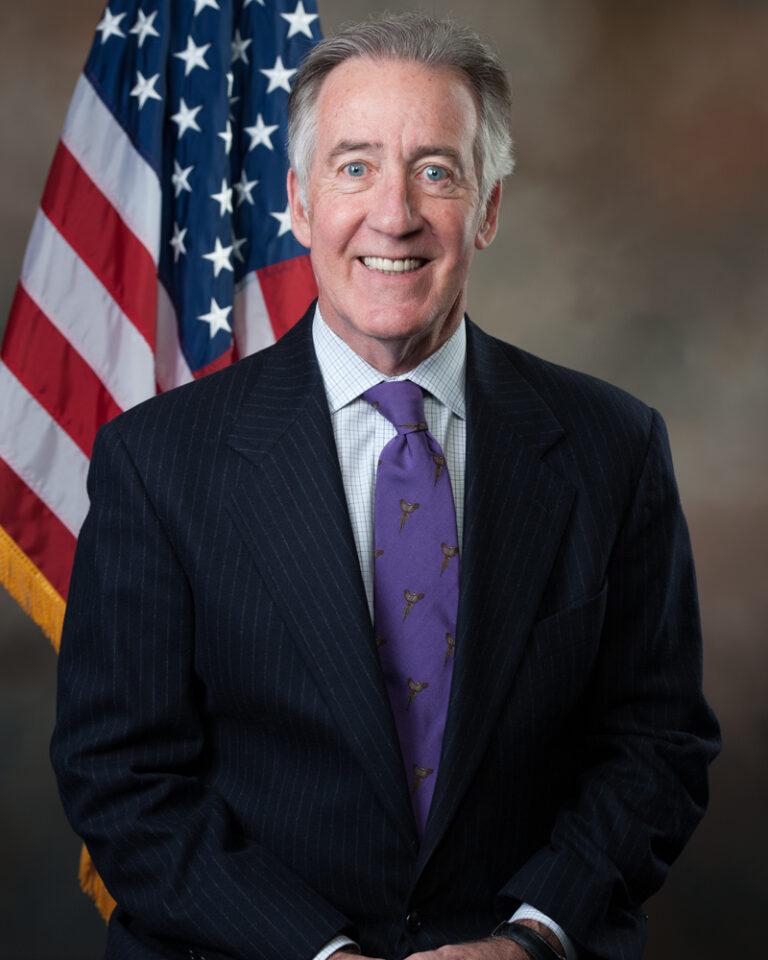
WASHINGTON — U.S. Rep. Richard Neal, chairman of the powerful House Ways and Means Committee, has told federal regulators that he opposes CSX Transportation’s proposed acquisition of New England regional Pan Am Railways.
“Considering the repercussions that would result from CSX Transportation’s purchase of Pan Am Railways and its impact on my district, along with my previous experience in attempting to work with CSX, I believe it is in the best interest of the greater New England region to oppose this acquisition,” Neal wrote in a July 9 letter to the Surface Transportation Board.
Neal (D-Springfield, Mass.) said he was concerned the merger would affect commuter and passenger service in Boston and western Massachusetts. In particular, he said the merger might disrupt passenger service and result in reduced maintenance on the so-called Knowledge Corridor route between Springfield and the Vermont border.
But the Knowledge Corridor — the former Boston & Maine north of Springfield — is state-owned, with maintenance funded by the Massachusetts Department of Transportation and performed by Pan Am Southern.
|
|
Editor's Note: While the formation of any coalition that proposes rail infrastructure investment is positive step forward, RWU supports a coalition to come together around supporting conventional railroad infrastructure development, more along the lines of Solutionary Rail.
|
|
Multi-faceted Coalition to Campaign for Federal High-Speed Rail Investment |
|
Groups driven by high-speed rail’s sweeping economic and climate benefits
Washington, D.C., (July 15, 2021) —A broad coalition of public interest, labor, environmental and business groups announced today that it has launched a major campaign to ask Congress to include $205 billion in funding for high-speed rail in the pending infrastructure bills, as well as robust labor standards, a High-Speed Rail Development Authority, and a Rail Trust Fund.
The growing campaign for high-speed rail has already attracted the support of a diverse coalition of 80 members of Congress, with Representatives Alexandria Ocasio-Cortez (D-NY), Seth Moulton (D-MA), and Jim Costa (D-CA), as well as Senators Ed Markey (MA) and Kirsten Gillibrand (NY) at the forefront of calls to include funding for high-speed rail in a reconciliation bill.
A new alliance, The U.S. High Speed Rail Coalition is convening leading unions, businesses, and public servants to lend support to the campaign. A bipartisan group of former Secretaries of Transportation — Ray LaHood, Anthony Foxx, and Norman Mineta — serve as co-chairs of the coalition.
Andy Kunz, President of the U.S. High Speed Rail Association said, “The United States is the only major industrial nation that does not have high-speed rail. In France, Germany, Spain, Italy, and the UK, high-speed rail lines crisscross these nations. China built a brand-new system of 23,000 miles of high-speed rail in just the last 14 years! The U.S. has none. We are launching this campaign to finally bring high-speed rail to the United States.”
|
|
|
|
|
|
|