Connecting

May 7, 2025


Click here for the sound of the Teletype

Top AP News

Top AP Photos

AP Merchandise

AP Emergency Relief Fund

Connecting Archive

AP Newsletters

AP Donations

AP News Tips

Colleagues,


Good Wednesday morning on this May 7, 2025,


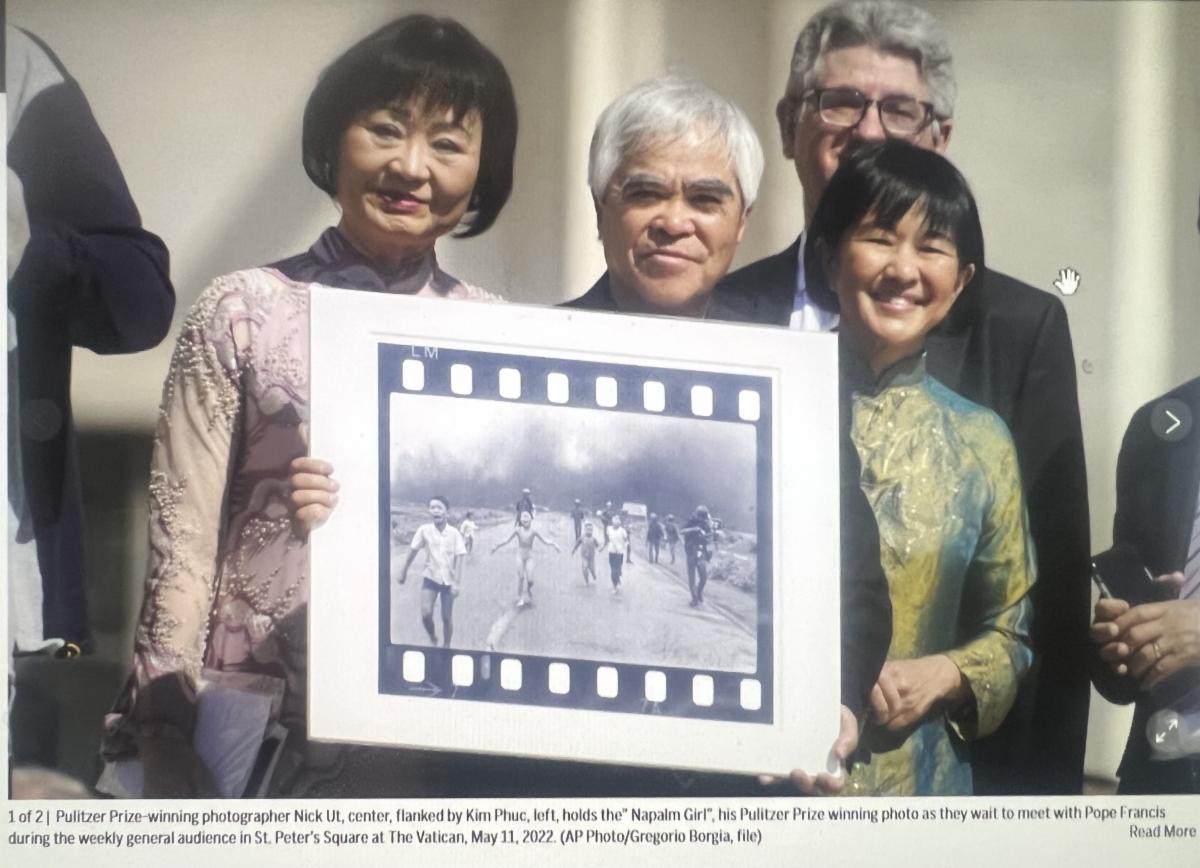
The Associated Press released a 96-page report Tuesday that found there was “no definitive evidence” to warrant changing a nearly 53-year-old photo credit for one of the most defining images of the 20th century.


The report – AP’s second examination in less than four months — focused on who actually took the Pulitzer Prize-winning photo credited to Nick Ut of a naked girl running from a napalm attack during the Vietnam War. A documentary shown at Sundance in January, “The Stringer,” asserts that it was actually shot by another man, Nguyen Thanh Nghe, but that credit was given to Ut, an AP staff photographer.


Today’s issue brings you the story in the form of a wire story, AP’s statement, the full report and reaction from Nick Ut’s attorney.


Here’s to a great day – be safe, stay healthy, live it to your fullest.


Paul


Associated Press finds ‘no definitive evidence’ to change credit for famous Vietnam War photo

By DAVID BAUDER


Months after the release of a film that questions who took an iconic Vietnam War image of a naked girl running from a napalm attack, The Associated Press said Tuesday it had found “no definitive evidence” to warrant changing a nearly 53-year-old photo credit.


The AP released a 96-page report — its second examination in less than four months — about who actually took the Pulitzer Prize-winning photo credited to Nick Ut that became one of the defining images of the 20th century. A documentary shown at Sundance in January, “The Stringer,” asserts that it was actually shot by another man, Nguyen Thanh Nghe, but that credit was given to Ut, an AP staff photographer.


The AP concluded that it was “possible” Ut took the photo, but it was unable to be proven conclusively due to the passage of time, absence of key evidence, limitations of technology and the deaths of several key people involved.


At the same time, AP found no proof that Nguyen took the photo, the report said.


“We left nothing uncovered that we’re aware of and we’ve done it with a great deal of respect to everybody involved,” said Derl McCrudden, an AP vice president who heads global news production. “It makes no difference to us if we changed the credit, but it has to be based on facts and evidence. And there is no definitive evidence proving that Nick Ut did not take this picture.”


The AP’s latest study involved further interviews, examination of cameras, building a 3D model of the scene and studying photo negatives that survive from June 8, 1972, the date of the photo.


The report revealed inconsistencies on both sides. The prize-winning photo was apparently taken on a Pentax camera, not a Leica as Ut had long claimed. Nguyen told AP he was not working for NBC that day, as was earlier asserted. Of 10 people on the scene that day that the AP reached, Nguyen is the only one who believes that Ut didn’t take the picture, the report said.


The report said that believing Nguyen’s story would require several leaps of faith, including believing that the only time he ever sold a photo to a Western news agency it turned out to be one of the most famous images of the century.


Ut, who has strongly maintained that the photo is his, said Tuesday he was gratified by the findings of AP’s investigation.


“This whole thing has been very difficult for me and has caused great pain,” he said in a statement. “I’m glad the record has been set straight.”


Click here for link to this story. Shared by Patrick Maks, Myron Belkind.


AP statement on ‘Terror of War’ report 

By LAUREN EASTON

The Associated Press


The Associated Press on Tuesday issued this statement about its comprehensive report examining authorship of its iconic “The Terror of War” photograph from the Vietnam War:


The Associated Press has spent almost a year examining all available evidence related to its iconic “The Terror of War” photo, in pursuit of an accurate historical record.


The report published today shows how seriously AP has taken questions about the authorship of its image. The AP has concluded that the credit will remain with Nick Ut.


AP standards require that a photo credit be removed if definitive evidence shows the person claiming to have taken a photo did not. In the absence of such proof, the photo credit remains.  


AP’s extensive visual analysis, interviews with witnesses and examination of all available photos taken on June 8, 1972, show it is possible Ut took this picture. None of this material proves anyone else did.


Our investigation has raised significant questions, which are outlined in the report, that we may never be able to answer. Fifty years have passed, many of the people involved are dead and technology has limitations.


In keeping with AP’s news values, it is paramount we take a critical inward look any time our journalism is called into question and that is precisely what the AP has done here. 


AP’s report is available here.


Click here for link to this statement. Shared by David Kennerly, Patrick Maks, Myron Belkind.


Statement from Nick Ut’s attorney


The Associated Press today published its in-depth report of their yearlong investigation on whether there is any reason for them to change the credit given to Nick Ut for his famous “Terror of War” photo that won him the Pulitzer Prize in 1973. Nick is gratified that the AP concluded that his credit for the photo will stand and that the claims in the “documentary” “The Stringer” do not support the attack on Nick Ut’s credit for the picture. The 52-year delay in Carl Robinson’s and Gary Knight’s public attack on Nick Ut leaves some unanswerable questions because of the loss of film negatives from that era and the death of many key witnesses to the events of June 8, 1972.


However, the detailed analysis by the AP investigators, interviews with the remaining witnesses, and the written historic accounts by the key witnesses who have died, all compel the AP conclusion that there is no basis to disturb Nick Ut’s credit for the famous picture.


Nick welcomed the AP’s intense investigation and fully cooperated with them by answering all questions that the AP investigators put to him during over five hours of a face-to-face interview.


We hope that the filmmakers will decide not to further attack Nick Ut’s reputation, and pull their film from further distribution in light of the official Associated Press findings that destroy the credibility of their so-called “documentary.”


Nick Ut reacted to the news and said, “I’m so gratified that AP’s year-long investigation showed what has always been known, that the credit for my photo of Kim Phuc running down the road after being hit by napalm is correct. This whole thing has been very difficult for me and has caused great pain. I’m glad the record has been set straight.”


Because of pending litigation between Nick and the VII Foundation in the Court nearest the VII Foundation in Arles, France, Nick will not comment further on these issues.


Contact: Jim Hornstein, attorney for Nick Ut


Laid Off By the AP Blues

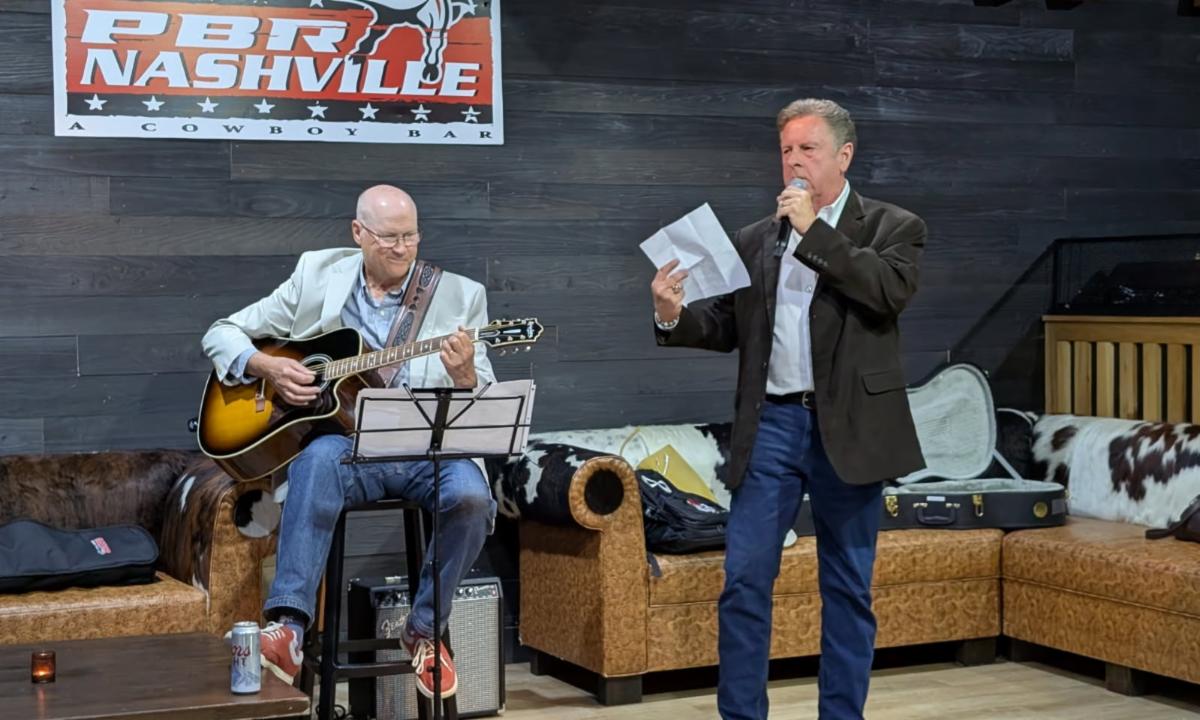
Former AP Account Director Sam Moore, who was laid off in December, wrote and performed “I’ve Got The AP Layoff Blues” with retired broadcast sales director Bob Young accompanying him on guitar.


A hit of the Career Celebration party on Saturday night in Nashville was a song written and performed by one of those whose job was eliminated – Sam Moore of Dallas. He was accompanied by guitarist Bob Young, a former AP sales representative.


Here are the lyrics:


I've seen 'em come and go for 20, 30 years.

I've heard 'em scream "why me?' as they cried in their beers.

They sold, they took pictures, they even wrote the news.

But now they find themselves singing the Laid off by the AP blues.


We all were sad to say goodbye to our friends hopping on the bus.

But as soon as they drove off we thought, better them than us.

We felt ok about ourselves, we had paid our dues.

The last thing you'll see is me singing laid off by the AP blues.


They never saw it coming, they were not equipped

To see HR on their Zoom call, waiving a big pink slip.


That taught us all a lesson, watch out for the clues.

Before we're all caught singing the laid off by the AP blues.


Well I'd been working extra hard since my friends went away.

Had a zoom scheduled with my boss, he wanted an update.

Just before the call, I got the notice - HR will join us too.

And now I sit here joining the choir to laid off by the AP blues.


I never saw it coming, I was not equipped

To see HR on MY Zoom call, waiving a big pink slip.


Guess I didn't learn my lesson, to watch out for the clues.

And I'm sitting here singing the laid off by the AP blues.


There's more to this story, I think you ought to hear.

I had my friends all lined up to wipe away my tears.

Social Security and Medicare would provide me what was due.

But Elon showed up on their calls, and now they're laid off too!


You'll never see it coming, you'll never be equipped

To see HR on your Zoom call, waiving a big pink slip.


We never learn our lessons, never see the clues.

But there's always room for another voice, to sing Laid off by the AP Blues.


Ohio, Texas ties

From the Nashville party – from left, Dorothy Abernathy, Dale Leach and Jim Baltzelle. Dorothy was Cleveland correspondent when Dale was Ohio news editor, and Jim Baltzelle was ACOB in Texas when Dale was bureau chief there.


Lights! Camera! Pope!


Doug Daniel - As Roman Catholic cardinals gather to replace the late Pope Francis, the event is giving fresh attention to the 2024 movie “Conclave.” The Oscar winner for best adapted screenplay is an unusual and entertaining behind-the-scenes drama about a papal election. It’s not the first movie to explore, at least in part, how the church decides who will lead it.

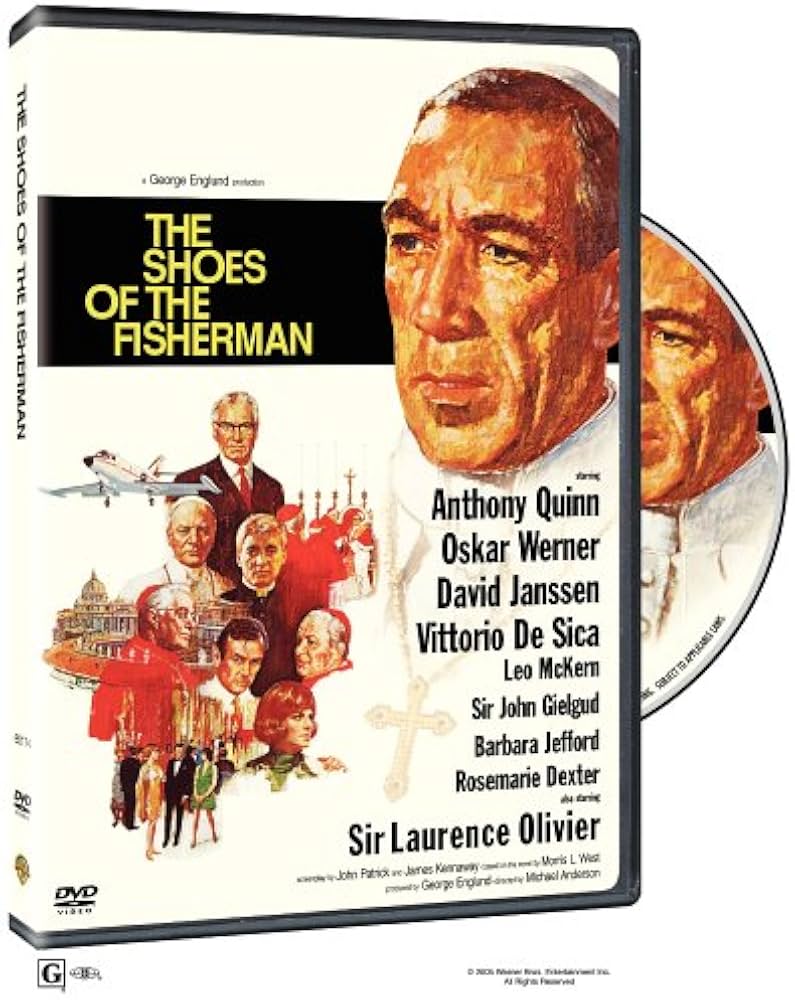
“The Shoes of the Fisherman” (1968) tells how a Catholic archbishop (Anthony Quinn) held in a Soviet gulag ends up a free man, then a cardinal and, of course, elected pope. In the second half of the movie, he adjusts to the surprisingly lonely job and plays a key role in averting nuclear war. (Hey, it was the ‘60s!)


A TV correspondent is a leading character. In that role David Janssen, just off his run in the series “The Fugitive,” divides his time covering one pope’s death and another’s election with handling an adulterous affair and a failing marriage. The character serves two purposes: explaining what happens when a pope dies and getting some women in the plot. Janssen, in his understated manner, tells a shocked world the new pope is not only not Italian, he’s a Russian! (Remember, it was the ‘60s.)


More interesting, I think, is the subplot of an academically inclined priest (Oskar Werner) whose writings about the nature of Christ and mankind are under suspicion for blasphemy. This puts the new pope in the uncomfortable position of silencing a younger man whom he, shall we say, thinks of fondly. (Did I mention this was the ‘60s?)


“The Shoes of the Fisherman” was based on a novel by the popular writer Morris West. He took seriously the theological issues he imbedded in the novel, but they were glossed over or dropped in the screenplay. Alas, this expensive and good-looking movie wasn’t a hit with either critics or ticket buyers. (My favorite dismissive comment, aimed at the star, was to call it “Zorba the Pope,” a reference to Quinn’s hugely popular 1964 film.) However, like the more recent “Conclave,” the movie has a great cast and an engaging plot behind it.


Here’s a trivia challenge: Name Oscar-winning actors, besides Anthony Quinn, who have played the pope in films or TV series. There are at least five.


John Gielgud (“The Shoes of the Fisherman”)


Anthony Hopkins (“The Two Popes”)


Jeremy Irons (“The Borgias”)


Rex Harrison (“The Agony and the Ecstasy”)


Jon Voight (“Faith: Pope John Paul II”)


Wondering why Evan Vucci’s photo didn’t win


Paul Harrington - Some of us old-school newspaper folk wonder why Evan Vucci’s Trump assassination shot didn’t win this year’s Pulitzer, not even nominated as a finalist.


Simple enough to me - Trump Derangement Syndrome has invaded the American media.


The photo showed the wounded president in a positive light and that’s a No No


The is a historic image right up there with Rosenthal’s Iwo Jima shot. It should have been a contender, but it was not to be.


Is there a course in ethics in the J-schools these days?


Hanoi reunion

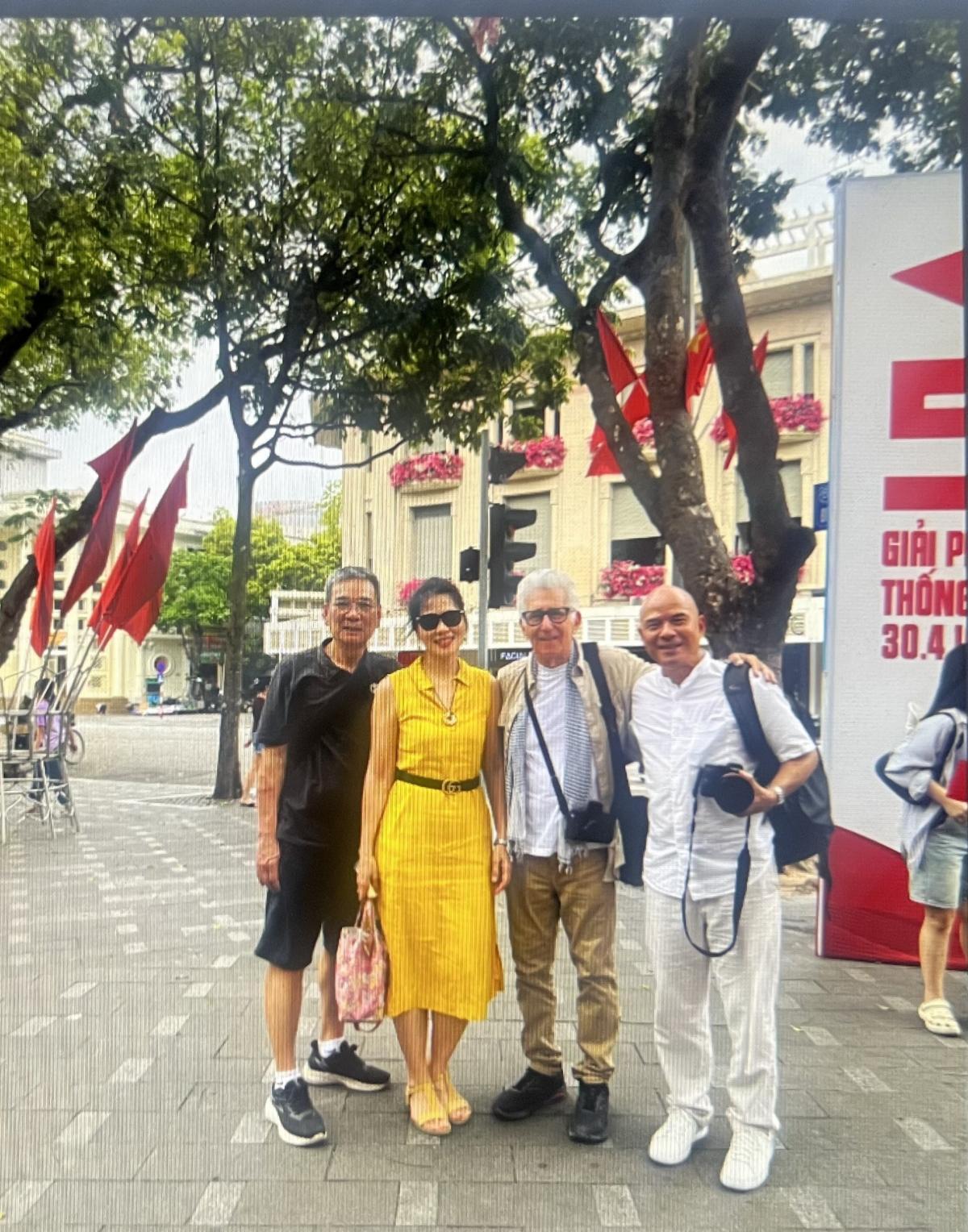
Richard Vogel – Here’s a photo from our AP Hanoi office reunion in Hanoi the other day. From left: Nguyen Van Xuan, Nguyen Ngoc Lien, Richard Vogel, Tran Van Minh.


That was our office news staff, without whichever bureau chief was around, I was based in Hanoi from 1996-2006. I think in that timeframe we saw five separate bureau chiefs come and go.

Connecting wishes Happy Birthday

Bud Hunt

Stories of interest


MAGA world sees red after iconic Trump assassination attempt photo snubbed for Pulitzer Prize: ‘So telling’ (New York Post)


By Shane Galvin


Supporters of President Trump are seeing red after the iconic “Fight! Fight! Fight!” photo taken moments after he narrowly survived an assassination attempt last summer was snubbed by Pulitzer Prize judges.


The photo, taken by Associated Press photographer Evan Vucci, captured the heroic moment the then-candidate stood up after being struck by an assassin’s bullet at a July 13 rally in Butler, Pa. — yelling “Fight! Fight! Fight!.” with his fist raised and his face bloodied before he was ushered offstage.


“Evan Vucci’s photograph of Donald Trump after last summer’s assassination attempt is iconic — maybe the single most famous photo of the past decade,” conservative influencer Charlie Kirk wrote on X.


“But because it made Trump look good, the Pulitzer Prize committee just refused to give it the award for best breaking news photograph of 2024,” Kirk wrote, adding, “Total joke.”


Read more here. Shared by Doug Tucker.


-0-


On the attack: Trump’s media response in Abrego Garcia story is notably vigorous (AP)


By DAVID BAUDER


NEW YORK (AP) — Responding to coverage of Kilmar Abrego Garcia’s deportation, the Trump administration has called journalists “despicable,” questioned CNN’s patriotism, scolded Fox News and even admitted to a mistake — in admitting to a mistake in the first place.


The vigorous reaction was noteworthy even in service to a president known for never backing down and a hostility toward the press. “The song is the same,” said former CNN Washington bureau chief Frank Sesno, “but the volume is a lot louder.”


President Donald Trump has fought the press on several fronts since returning to office in January. His team is battling The Associated Press in court over White House access, has sought to close Voice of America and launched FCC investigations into ABC News, CBS News, PBS and NPR, among others.


In the Abrego Garcia case, the White House took a situation that may have knocked predecessors on their heels and used it as an opportunity.


Read more here.


-0-


Meet the 32 ‘new media’ outlets the White House invited to its press pool (Poynter)


By: Angela Fu


When the White House took over its press pool in February — giving it control over which journalists received close access to President Donald Trump — it announced it would start inviting in “new media.”


That invitation has since gone to 32 outlets, a motley group that includes everything from decades-old magazines to much newer podcasts. The majority are conservative or right-wing — often explicitly so — but the rest defy easy categorization. There are three religious networks, all of which lean conservative, as well as a mix of outlets that includes a legacy paper, television networks and a digital outlet powered by artificial intelligence and Web3.


A White House press official said the office considers a “variety of factors” when filling the new media slot. They include availability, interest, reach, space, the relevant news of the day and “other factors,” like whether the outlet was excluded from previous press pools.


Because space in the Oval Office, Air Force One and other presidential areas is limited, a special group of roughly a dozen journalists — the White House press pool — is permitted to follow and report on the president’s activities every day. Outlets rotate through the pool, which includes photojournalists, broadcast reporters and print journalists. Special pools exist when the president travels.


Read more here.


-0-


Rachel Stassen-Berger is returning to the Des Moines Register as new executive editor (Des Moines Register)


Lucas Grundmeier


A familiar face is returning to the Des Moines Register to lead its newsroom. Rachel E. Stassen-Berger, who served in senior editing roles at the Register from 2018 to 2022, will become its executive editor June 2, Gannett Co., the Register’s owner, announced May 6.


“Our job is not just to report on the community, but to reflect and engage them,” Stassen-Berger told staffers after being introduced to applause. Gannett news executives Michael Anastasi and Ray Rivera announced the hiring to staff at a meeting at the Register’s downtown office.


Stassen-Berger shared outlines of some of her priorities as editor, including building a culture of innovation in storytelling and community connections. “Every day you have to challenge yourself to do something better, to do something different,” she said.


Read more here.


A Student Journalist Covered a Pro-Palestine Protest. Soon, Her Graduation Came Under Threat. (Columbia Journalism Review)


By Meghnad Bose


Back in March, pro-Palestine protesters staged a sit-in at Barnard College, an affiliate of Columbia University, just across the street. Mahmoud Khalil, a recent Columbia graduate and lead negotiator at last year’s encampment, was there, among others, including a few student journalists, who reported as Barnard officials made it known that police had received a bomb threat and said they had to clear the area. Soon, nine people were arrested. (“Anyone who refuses to leave the location is subject to arrest,” officers said.) As it turned out, the bomb threat was fake. Three days later, Khalil was arrested by federal immigration authorities. In early April, Georgia Dillane, a Barnard senior who works at WKCR, Columbia’s radio station, got a “fact-finding” email from Barnard’s Community Accountability, Response, and Emergency Services (CARES) that would eventually place her graduation under threat.


Dillane, who is twenty-two, was not at the protest that day in March. She was at the WKCR studio, anchoring the broadcast. On the scene was her colleague Celeste Gamble, a twenty-year-old sophomore at Barnard, who had been wearing a press ID, and who left when Barnard officials told the crowd of the bomb threat. Gamble received the same email. Gary Maroni, the director of CARES, had written to each of them requesting a meeting “to provide any information you would like to share, including information that refutes any suggestion that you were involved, are a witness, or have information about this incident.” (The emails were shared with CJR.) Dillane and Gamble were told that they would not be permitted to bring anyone along with them for the meeting. Failure to engage, Maroni wrote, could be viewed as a violation of Barnard’s student code of conduct.


Read more here. Shared by Doug Pizac.


-0-


Climate collaboration: The Climate News Task Force brings 12 newsrooms together on climate journalism (Editor and Publisher)


Bob Miller | for E&P Magazine


A new task force aims to bridge 12 newsrooms that focus on climate journalism.


The Climate News Task Force (CNTF) was created earlier this year to elevate collaboration for sharing content, evaluating impact and raising and sharing revenue, among other opportunities.


The CNTF was formed in January and was announced publicly in March. The group is beginning discussions about priorities and logistics. Not all the entities involved in the task force exclusively cover climate content. Some branch out into other areas of journalism, but all of them produce and share climate content.


Floodlight (a nonprofit newsroom that focuses on climate news) Founder and Executive Director Emily Holden and Meaghan Parker, executive director at the Council for the Advancement of Science Writing (CASW), are directing efforts behind the scenes. The task force is an arm of the CASW.


Read more here. Shared by Len Iwanski.

Today in History - May 7, 2025

By The Associated Press

Today is Wednesday, May 7, the 127th day of 2025. There are 238 days left in the year.


Today in history:


On May 7, 1915, a German U-boat torpedoed and sank the British liner RMS Lusitania off the southern coast of Ireland, killing 1,198 people, including 128 Americans, out of the nearly 2,000 on board.


Also on this date:


In 1945, Nazi Germany signed an unconditional surrender at Allied headquarters in Rheims, France, ending its role in World War II.


In 1954, the 55-day Battle of Dien Bien Phu in Vietnam ended with Vietnamese insurgents overrunning French forces; it would be the last major battle of the First Indochina War.


In 1975, President Gerald R. Ford formally declared an end to the “Vietnam era.” In Ho Chi Minh City — formerly Saigon — the Viet Cong celebrated its takeover.


In 1977, Seattle Slew won the Kentucky Derby, the first of his Triple Crown victories.


In 1984, Monsanto and six other chemical companies agreed to pay a $180 million settlement to Vietnam veterans who were exposed to the chemical herbicide Agent Orange during the Vietnam War.


In 2020, Georgia authorities arrested a white father and son and charged them with murder in the February shooting death of Ahmaud Arbery, a Black man they had pursued in a truck after spotting him running in their neighborhood near the port city of Brunswick. (The two men and a third white man would be convicted of murder in state court and hate crimes in federal court.)


Today’s Birthdays: Singer Thelma Houston is 82. Rock musician Bill Kreutzmann (Grateful Dead) is 79. Actor/former boxer Randall “Tex” Cobb is 75. Actor Breckin Meyer is 51. Reggaeton musician J Balvin is 40. Actor-comedian Aidy Bryant is 38. Actor-writer Maya Erskine is 38. Actor Alexander Ludwig is 33. YouTube personality MrBeast (Jimmy Donaldson) is 27.


AP classes, by the year...


(EDITOR'S NOTE: This is a listing of Connecting colleagues who have shared the year and the bureau where they started with the AP. If you would like to share your own information, I will include it in later postings. Current AP staffers are also welcome to share their information. We include deceased staffers when their information is shared; their names are italicized.)


NEWEST ADDITION

Raf Casert, Brussels, 1984


1951 - Norm Abelson (Boston)


1953 – Charles Monzella (Huntington, WVa)


1955 – Henry Bradsher (Atlanta), Paul Harrington (Boston), Joe McGowan (Cheyenne)


1957 - Louis Uchitelle (Philadelphia)


1958 – Roy Bolch (Kansas City), Robert Dubill (Buffalo)


1959 – Charlie Bruce (Montgomery)


1960 – Claude Erbsen (New York), Bill Lenz (Detroit), Carl Leubsdorf (New Orleans), Harry Moskos (Albuquerque)


1961 – Peter Arnett (Jakarta, Indonesia), Strat Douthat (Charleston. WVa), Warren Lerude (San Diego), Ed Staats (Austin)


1962 – Paul Albright (Cheyenne), Malcolm Barr Sr. (Honolulu), Myron Belkind (New York), Dave Mazzarella (Newark), Peggy Simpson (Dallas), Kelly Smith Tunney (Miami)


1963 – Hal Bock (New York), Jeff Williams (Portland OR)


1964 – Rachel Ambrose (Indianapolis), Larry Hamlin (Oklahoma City), John Lengel (Los Angeles), Ron Mulnix (Denver), Lyle Price (San Francisco), Lew Simons (New York), Arlene Sposato (New York), Karol Stonger (Indianapolis), Hilmi Toros (New York)


1965 – Bob Dobkin (Pittsburgh), Harry Dunphy (Denver), John Gibbons (New York), Bob Greene (Kansas City), Jim Luther (Nashville), Larry Margasak (Harrisburg), Rich Oppel (Tallahassee), Jim Rubin (Trenton). Lynn Sherr (New York), Mark Thayer (San Francisco)


1966 – Shirley Christian (Kansas City), Mike Doan (Portland, OR), Edie Lederer (New York), Nancy Shipley (Nashville), Mike Short (Los Angeles), Marty Thompson (Seattle), Nick Ut (Saigon), Kent Zimmerman (Chicago)


1967 – Dan Berger (Los Angeles), Adolphe Bernotas (Concord), Lou Boccardi (New York), Linda Deutsch (Los Angeles), Don Harrison (Los Angeles), Frank Hawkins (New York), Doug Kienitz (Cheyenne), David Liu (New York), Bruce Lowitt (Los Angeles), Chuck McFadden (Los Angeles), Martha Malan (Minneapolis), Bill Morrissey (Buffalo), Larry Paladino (Detroit), Michael Putzel (Raleigh), Bruce Richardson (Chicago), Richard Shafer (Baltimore), Victor Simpson (Newark), Michael Sniffen (Newark), Kernan Turner (Portland, Ore)


1968 – Lee Balgemann (Chicago), John Eagan (San Francisco), Earleen Fisher (Indianapolis), Joe Galu (Albany/Troy), Peter Gehrig (Frankfurt), Charles Hanley (Albany), Jerry Harkavy (Portland, Maine), Herb Hemming (New York), Brian King (Albany), Samuel Koo (New York), Karren Mills (Minneapolis), Michael Rubin (Los Angeles), Rick Spratling (Salt Lake City), Barry Sweet (Seattle)


1969 - Ann Blackman (New York), Ford Burkhart (Philadelphia), Harry Cabluck (Pittsburgh), Dick Carelli (Charleston, WVa), Dennis Coston (Richmond), Ron Frehm (New York), Mary V. Gordon (Newark), Daniel Q. Haney (Portland, Maine), Mike Harris (Chicago), Brad Martin (Kansas City), David Minthorn (Frankfurt), Cynthia Rawitch (Los Angeles), Bob Reid (Charlotte), Mike Reilly (New York), Doug Tucker (Tulsa), Bill Wertz (Minneapolis), Jim Willse (New York), Bill Winter (Helena)


1970 – Richard Boudreaux (New York), David Briscoe (Manila), Sibby Christensen (New York), Richard Drew (San Francisco), Bob Egelko (Los Angeles), James Gerstenzang (San Francisco), Steve (Indy) Herman (Indianapolis), Tim Litsch (New York), Lee Margulies (Los Angeles), Arthur Max (Tel Aviv), Chris Pederson (Salt Lake City), Brendan Riley (San Francisco), Chuck Robinson (Indianapolis), Larry Thorson (Philadelphia)


1971 – Harry Atkins (Detroit), Jim Bagby (Kansas City), Larry Blasko (Chicago), Jim Carlson (Milwaukee), Jim Carrier (New Haven), Chris Connell (Newark), Bill Gillen (New York), Bill Hendrick (Birmingham), John Lumpkin (Dallas), Kendal Weaver (Montgomery)


1972 – Hank Ackerman (New York), Rod Davis (Dallas), Bob Fick (St. Louis), Joe Frazier (Portland, Ore.), Terry Ganey (St. Louis), Mike Graczyk (Detroit), Denis Gray (Albany), Lindel Hutson (Little Rock), Linda Kramer Jenning (San Francisco), Brent Kallestad (Sioux Falls), Tom Kent (Hartford), Nolan Kienitz (Dallas), Kent Kilpatrick (Detroit), Andy Lippman (Phoenix), Mike Millican (Hartford), Bruce Nathan (New York), Ginny Pitt Sherlock (Boston), Lew Wheaton (Richmond)


1973 - Jerry Cipriano (New York), Susan Clark (New York), Norm Clarke (Cincinnati), Marty Crutsinger (Miami), Steve Fox (Los Angeles), Joe Galianese (East Brunswick), Merrill Hartson (Richmond), Mike Hendricks (Albany), Tom Journey (Tucson), Steve Loeper (Los Angeles), Jesus Medina (New York), Ellen Miller (Helena), Tom Slaughter (Sioux Falls), Jim Spehar (Denver), Paul Stevens (Albany), Jeffrey Ulbrich (Cheyenne), Owen Ullmann (Detroit), Suzanne Vlamis (New York), John Willis (Omaha), Evans Witt (San Francisco)


1974 – Norman Black (Baltimore), Julie Dunlap (Philadelphia), David Espo (Cheyenne), Dan George (Topeka), Robert Glass (Philadelphia), Steve Graham (Helena), Tim Harper (Milwaukee), Elaine Hooker (Hartford), Sue Price Johnson (Charlotte), Fong Lien (Los Angeles), Dave Lubeski (Washington), Janet McConnaughey (Washington), Lee Mitgang (New York), Barry Shlachter (Tokyo), Bud Weydert (Toledo), Marc Wilson (Little Rock) 


1975 – Peter Eisner (Columbus), Charles Hill (Charlotte), Jim Limbach (Washington), Bill McCloskey (Washington), David Powell (New York), Eileen Alt Powell (Milwaukee)


1976 – Brad Cain (Chicago), Judith Capar (Philadelphia), Dick Chady (Albany), David Crary (Jackson), Steve Crowley (Washington), Diane Duston (Columbus), David Egner (Oklahoma City), Carole Feldman (Newark), Steve Hindy (Newark), Marc Humbert (Albany), Steven Hurst (Columbus), Richard Lowe (Nashville), Mike Mcphee (Boston), John Nolan (Nashville), Guy Palmiotto (New York), Charlotte Porter (Minneapolis), Chuck Wolfe (Charlotte)


1977 – Bryan Brumley (Washington), Robert Burns (Jefferson City), Charles Campbell (Nashville), Carolyn Carlson (Atlanta), Dave Carpenter (Philadelphia), Solange De Santis (New York), Jim Drinkard (Jefferson City), Ken Herman (Dallas), Mike Holmes (Des Moines), Doug Jeffries (New York), Brad Kalbfeld (New York), Larry Kilman (Atlanta), Scott Kraft (Jefferson City), John Kreiser (New York), Peter Leabo (Dallas), Kevin LeBoeuf (Los Angeles), Ellen Nimmons (Minneapolis), Joyce Rosenberg (New York), Dan Sewell (Buffalo), Estes Thompson (Richmond), David Tirrell-Wysocki (Concord)


1978 – Jane Anderson (Providence), Vinnie D'Alessandro (Hartford), Tom Eblen (Louisville), Ruth Gersh (Richmond), Monte Hayes (Caracas), Doug Pizac (Los Angeles), Charles Richards (Dallas), Reed Saxon (Los Angeles), Steve Wilson (Boston)


1979 – Jim Abrams (Tokyo), Peter Banda (Albuquerque), Brian Bland (Los Angeles), Scotty Comegys (Chicago), John Daniszewski (Philadelphia), Frances D’Emilio (San Francisco), Pat Fergus (Albany), Brian Friedman (Des Moines), Sally Hale (Dallas), Susana Hayward (New York), Jill Lawrence (Harrisburg), Warren Levinson (New York), Joe Madison (New York), Barry Massey (Kansas City), Phillip Rawls (Nashville), John Rice (Carson City), Kurt Rossi (New York), Linda Sargent (Little Rock), Joel Stashenko (Albany), Robert Wielaard (Brussels)


1980 – Alan Adler (Cleveland), Christopher Bacey (New York), Diane M. Balk (Indianapolis), Jeff Barnard (Providence), Mark Duncan (Cleveland), Bill Kaczor (Tallahassee), Mitchell Landsberg (Reno), Mike Mazzo (East Brunswick), Kevin Noblet (New Orleans), Lee Perryman (Tampa), Jim Rowley (Baltimore), David Speer (Jackson), Hal Spencer (Providence), Jo Steck (Los Angeles), Carol J. Williams (Seattle)


1981 – Paul Davenport (Phoenix), Dan Day (Milwaukee), John Flesher (Raleigh), Debra Hale-Shelton (Little Rock), Len Iwanski (Bismarck), Ed McCullough (Albany), Drusilla Menaker (Philadelphia), Kim Mills (New York), Mark Mittelstadt (Des Moines), Susan Okula (Hartford), Roland Rochet (New York), Larry Ryckman (Carson City NV), Lee Siegel (Seattle), Marty Steinberg (Baltimore), Bill Vogrin (Kansas City)


1982 – Dorothy Abernathy (Little Rock), Al Behrman (Cincinnati), Tom Cohen (Jefferson City), John Epperson (Chicago), Ric Feld (Atlanta), Kiki Lascaris Georgio (New York), Nick Geranios (Helena), Mike Gracia (Washington), Howard Gros (New Orleans), Mark Humphrey (Nashville), Dan Juric (East Brunswick), Robert Kimball (New York), Rob Kozloff (Detroit), Bill Menezes (Kansas City), David Ochs (New York), Eric Risberg (San Francisco), Cecilia White (Los Angeles)


1983 – Elise Amendola (Boston), Edward L. Birk (Boston), Donna Cassata (Albany), Scott Charton (Little Rock), Sue Cross (Columbus), Mark Elias (Chicago), Mary Esch (Albany), Doug Fisher (Columbus), Alan Fram (Newark), David Ginsburg (Washington), Lisa Hamm-Greenawalt, Diana Heidgerd (Miami), Kevin McGill (New Orleans), Sheila Norman-Culp (New York), Carol Esler Ochs (New York), Jim Reindl (Detroit), Amy Sancetta (Philadelphia), Angie Lamoli Silvestry (New Orleans), Rande Simpson (New York), Dave Skidmore (Milwaukee), Barbara Worth (New York)


1984 – Laurie Asseo (Phoenix), David Beard (Chicago), Owen Canfield (Oklahoma City), Raf Casert (Brussels), Wayne Chin (Washington), Jack Elliott (Oklahoma City), Jim Heintz (Columbus), Candice Hughes (Dallas), Danny Johnston (Little Rock), Kelly P. Kissel (New Orleans), Hank Kurz (New York), Joe Macenka (Richmond), Paul Newberry (Atlanta), Eva Parziale (San Francisco), Walt Rastetter (New York), Malcolm Ritter (New York), Keith Robinson (Columbus), Cliff Schiappa (Kansas City), David Sedeño (Dallas), Andrew Selsky (Cheyenne), Pedro Sotomayor (Los Angeles), Patty Woodrow (Washington)


1985 – Dennis Conrad (Cleveland), George Garties (Los Angeles), Beth Grace (Columbus), Betty Kumpf Pizac (Los Angeles)


1986 – Joni Baluh Beall (Richmond), David Beard (Jackson), Tom Coyne (Columbia, SC), Dave DeGrace (Milwaukee), Alan Flippen (Louisville), Paul Geitner (Montgomery), Jim Gerberich (San Francisco), Howard Goldberg (New York), Mark Hamrick (Dallas), Sandy Kozel (Washington), Arlene Levinson (Boston), Robert Meyers (London), David Morris (Harrisburg), Susan Ragan (New York), Lori Dodge Rose (Jefferson City), Bob Seavey (Lima), Barbara Woike (New York)


1987 – Donna Abu-Nasr (Beirut), Jim Anderson (Mexico City), Dave Bauder (Albany), Bob Bellafiore (Albany), Chuck Burton (Charlotte), Ted Duncombe (Philadelphia), Beth Harris (Indianapolis), Lynne Harris (New York), Steven L. Herman (Charleston, WVa), Elaine Kurtenbach (Tokyo), Rosemarie Mileto (New York), John Rogers (Los Angeles), Julia Rubin (Denver)


1988 – Chris Carola (Albany), Peg Coughlin (Pierre), Frank Eltman (New York), Kathy Gannon (Islamabad), Steve Hart (Washington), Melissa Jordan (Sioux Falls), Margaret Lillard (Nashville), Bill Pilc (New York), Philip Rosenbaum (New York), Kelley Shannon (Dallas), Darlene Superville (Newark)


1989 – Charlie Arbogast (Trenton), Susan Boyle (New York), John Braunreiter (Milwaukee), Ted Bridis (Oklahoma City), Paul Randall Dickerson (Nashville), Katie Fairbank (Indianapolis), Ron Fournier (Little Rock), Ann Gibson (Richmond), Josh Lemieux (Kansas City), Teresa Walker (Nashville)


1990 – David Boe (Chicago), Frank Fisher (Jackson), Ken Giglio (Washington), Kathryn Loomans (Washington), Dan Perry (Bucharest), Steve Sakson (Baltimore), Sean Thompson (New York)


1991 – Amanda Kell (Richmond), Suzanne Mast Lee (Washingon), Santiago Lyon (Cairo), Lisa Pane (Hartford), Wayne Partlow (Washington), Ricardo Reif (Caracas), Bill Sikes (Buffalo)


1992 – Emery P. Dalesio (Trenton), Jennifer Garske (Washington), Kerry Huggard (New York), Wilfredo Lee (Washington)


1993 – Connie Farrow (St. Louis), Shawn Pogatchnik (London), Jim Salter (St. Louis), Tim Sullivan (New York), Adam Yeomans (Tallahassee)


1994 - Glen Johnson (Boston), Ralph Siegel (Trenton)


1995 – Elaine Thompson (Houston), Donna Tommelleo (Hartford)


1996 – Patricia N. Casillo (New York), Burt Herman (Sacramento), John Khin (New York)


1997 – J. David Ake (Chicago), Peter Banda (Albuquerque), Martha Bellisle (Carson City), Kia Breaux (Kansas City), Chuck Burton (Charlotte), Pamela Collins (Dallas), Aaron Jackson (New York), Rachel La Corte (Miami), Madhu Krishnappa Maron (New York), Jim Suhr (Detroit), Jennifer Yates (Baltimore)


1998 – Alan Clendenning (New Orleans), Guthrie Collin (Albany), David Koenig (Dallas), Mitch Stacy (London), Richard Turkheimer (New Orleans)


1999 – Melinda Deslatte (Raleigh), Stacey Plaisance (New Orleans), Laura Rauch (Las Vegas), Terry Spencer (Miami)


2000 – Carrie Antlfinger (Milwaukee), Betsy Blaney (Dallas), Gary Gentile (Los Angeles), Ken Miller (Oklahoma City), Rhonda Shafner (New York), Tom Tait (Las Vegas)


2001 - Mike Weissenstein (New York)


2002 - Michael Casey (Jakarta)


2003 - Valerie Komor (New York)


2004 - Jim Baltzelle (Dallas)


2005 – Ric Brack (Chicago), Richard Jacobsen (Mexico City), Frank Jordans (London)


2006 – Jon Gambrell (Little Rock)


2008 - Steve Braun (Washington)


2011 - Joseph B. Frederick (New York)


2013 - Alex Sanz (Atlanta)


2014 - Peter Costanzo (New York)


2024 - Gabriela Aoun (San Diego)

Got a photo or story to share?

Connecting is a daily newsletter published Monday through Friday that reaches 2,000 retired and former Associated Press employees, present-day employees, and news industry and journalism school colleagues. It began in 2013. Past issues can be found by clicking Connecting Archive in the masthead. Its author, Paul Stevens, retired from the AP in 2009 after a 36-year career as a newsman in Albany and St. Louis, correspondent in Wichita, chief of bureau in Albuquerque, Indianapolis and Kansas City, and Central Region vice president based in Kansas City.


Got a story to share? A favorite memory of your AP days? Don't keep them to yourself. Share with your colleagues by sending to Ye Olde Connecting Editor. And don't forget to include photos!


Here are some suggestions:


- Connecting "selfies" - a word and photo self-profile of you and your career, and what you are doing today. Both for new members and those who have been with us a while.


- Second chapters - You finished a great career. Now tell us about your second (and third and fourth?) chapters of life.


- Spousal support - How your spouse helped in supporting your work during your AP career. 


- My most unusual story - tell us about an unusual, off the wall story that you covered.


- "A silly mistake that you make"- a chance to 'fess up with a memorable mistake in your journalistic career.


- Multigenerational AP families - profiles of families whose service spanned two or more generations.


- Volunteering - benefit your colleagues by sharing volunteer stories - with ideas on such work they can do themselves.


- First job - How did you get your first job in journalism?


- Most unusual place a story assignment took you.


Paul Stevens

Editor, Connecting newsletter

paulstevens46@gmail.com