Our office focuses on implementing report recommendations from the last 30+ years that guide UH Mānoa in becoming reflective of Hawaiʻi's language, culture, values, and knowledge systems from which all people learn, connect, grow, and heal:


  • Hawaiʻi-Guided Student Success
  • Hawaiʻi-Grounded Staff and Faculty Development
  • Cultivating Hawaiʻi Environments 
  • Hawaiʻi-Reflective Community Engagement


We cannot do this work alone. It is our mission to foster the potential within each of you to positively contribute to our collective kuleana to make UH Mānoa reflective of Hawaiʻi. These monthly newsletters, with written reflections that cover the preceding month's happenings, are meant to keep you connected, highlight your work and continue to inspire you.

Pilina Circle at Institute for Astronomy

Na Hope Matsumoto

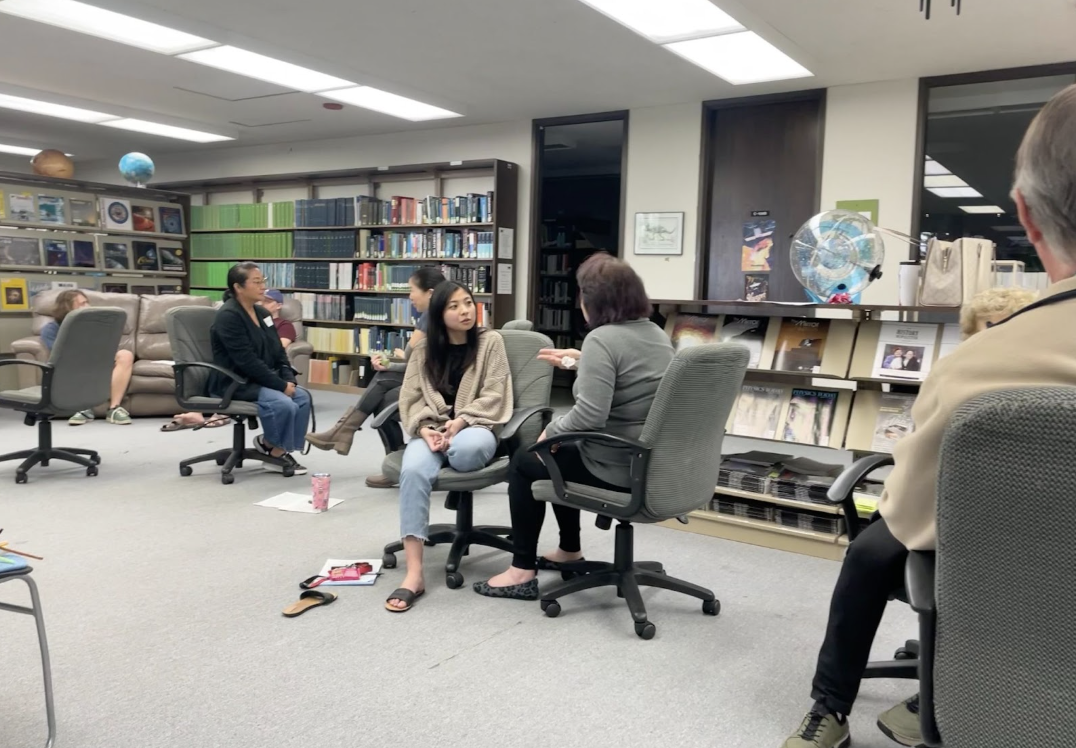
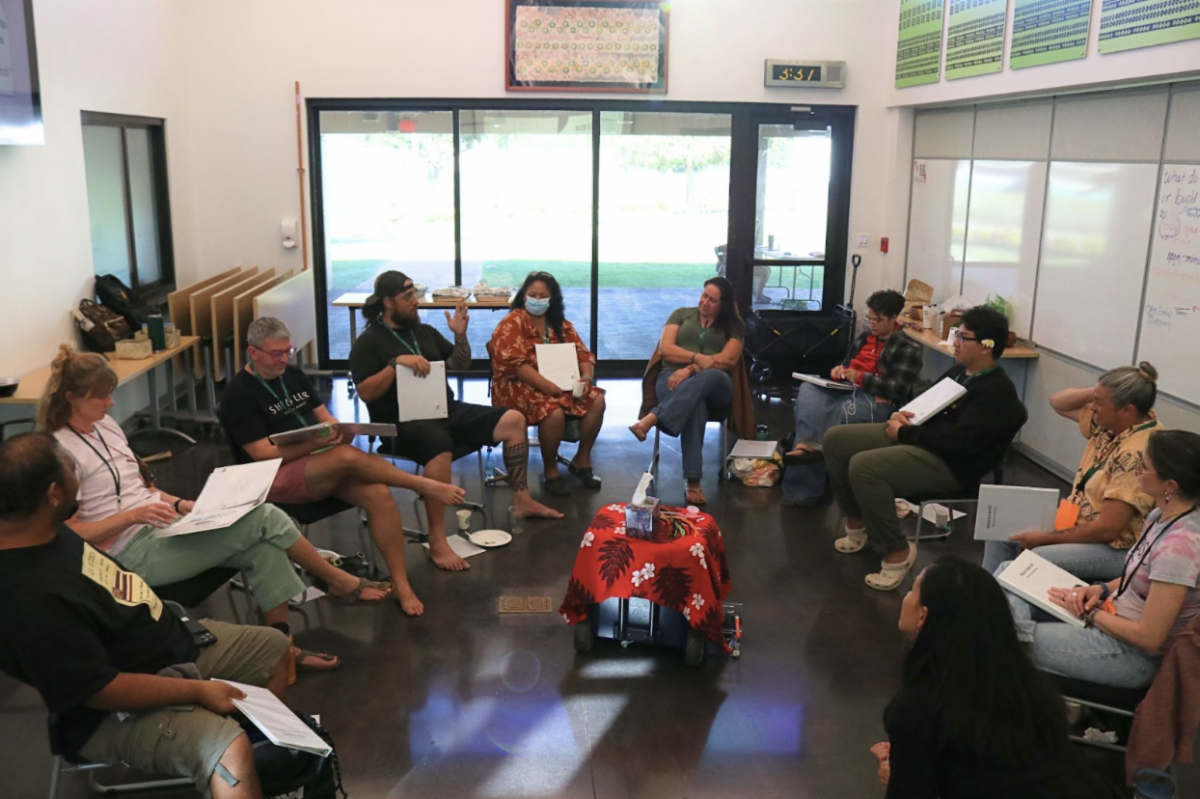
Pilina Circle participants engaged in dyads of sharing stories and listening deeply.

On January 28th, I had the opportunity to co-facilitate a Pilina Circle at the Institute for Astronomy, located mauka of our main UH Mānoa campus. At IfA, the view of Waʻahila ridge is different from what I’m used to seeing from Hawaiʻi Hall, yet the experience of pilina is just as wonderful. During our circle, we saw children from a nearby school walking through the courtyard just outside of our glass doors, and I was reminded of all the times I’ve seen students from the Mānoa Children’s Center walking around Hawaiʻi Hall. There are so many similarities that we share across our Mānoa campus, and I am learning more that these forms of pilina allow us to gravitate towards the connections that matter most. 


Mahalo to IfA for welcoming our team into your home space and for sharing such a vibrant array of stories and energies. It was a pleasure to deepen pilina with all of you, and I’m thrilled that now I have more opportunities to celebrate recent research publications! And mahalo to my co-facilitation partner Dr. Ideta for continuing to inspire me with the magnificent ways you build pilina.

ʻAhahui Noiʻi Noʻeau ʻŌiwi – Research Institute of Indigenous Performance (ANNO) 2026

Na Kawehionālani Goto

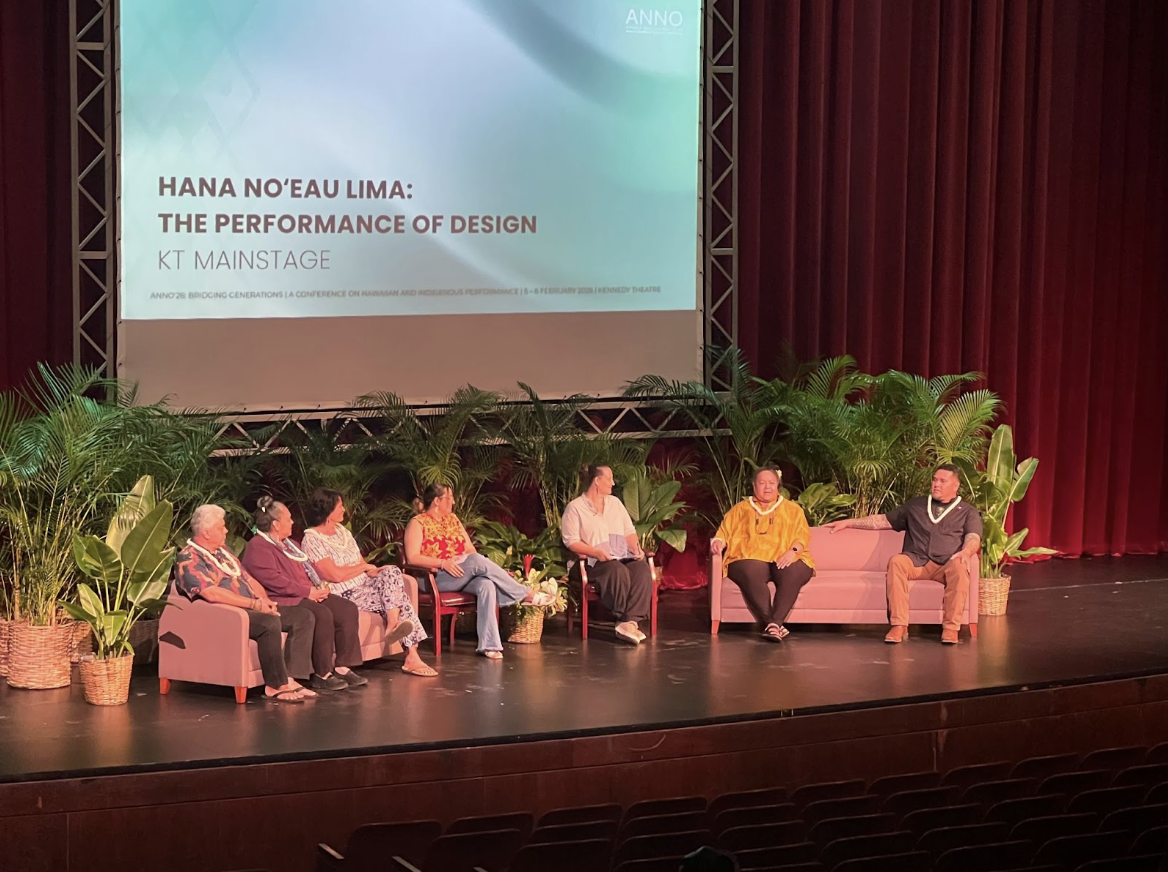
“Hana Noʻeau Lima: The Performance of Design” panel at the ʻAhahui Noiʻi Noʻeau ʻŌiwi – Research Institute of Indigenous Performance (ANNO) second biennial conference at the Kennedy Theatre mainstage at the University of Hawaiʻi at Mānoa. From L-R: Kumu Kumulaʻau Sing, Kumu May Haunani Balino-Sing, Kumu Dalani Tanahy, Moderators: Kaʻiukapu Baker & Maile Speetjens, Kumu Mele Kahalepuna-Chun, and Kumu Miki Cook

At the hana noʻeau lima panel, Kumu from various arts shared their ʻike. The moʻokūʻauhau of the Kumu provided context for the ensuing discussion and varied perspectives. Some manaʻo that stayed with me: 

  • That kapu-noa is a spectrum traversed by artisans, where noa is critical for teaching others. 
  • In an institution such as UH Mānoa, we must teach behaviors and boundaries as part of perpetuating any Hawaiʻi-grounded art form 
  • That arts from start-to-finish involve so much unseen work 
  • That practitionership or practicing an art form may not reflect the embedded, inherent, and perpetuated nature of the art form itself 


In Kikilia Lani’s (2023) thesis, “I Ka Wā Ma Mua, Ka Wā Ma Hope: Looking Back to Advance Forward – Kanaka Maoli Perspectives and their Implications on Student Belonging,” she states,

Ancestral knowledge and contemporary (personal) growth can not only coexist, but the connection between both are crucial to collective innovation and progress. I contend that ʻike kūpuna consider innovation to be a result of enlightened thinking, as evidenced in the following proverb: “I hele no ka hole iʻe i ka lā” (the grooving of tapa mallets is done in the day time; fine work can only be done in daylight). (p. 27) 


Considering our campus’s kuleana and looking to the lessons from the Kumu on the panel and this contemporary Kanaka scholar, I am still pondering the following reflections: 

  • What boundaries for operating our institution should we have in place to protect our lands & waters, peoples, and practices?
  • How do such boundaries inform behavior on our campus? 
  • And where do such boundaries and behaviors intersect with the values we live by and the collective innovations we birth on our campus?

Pilina Circle at Waikīkī Aquarium

Na Hope Matsumoto

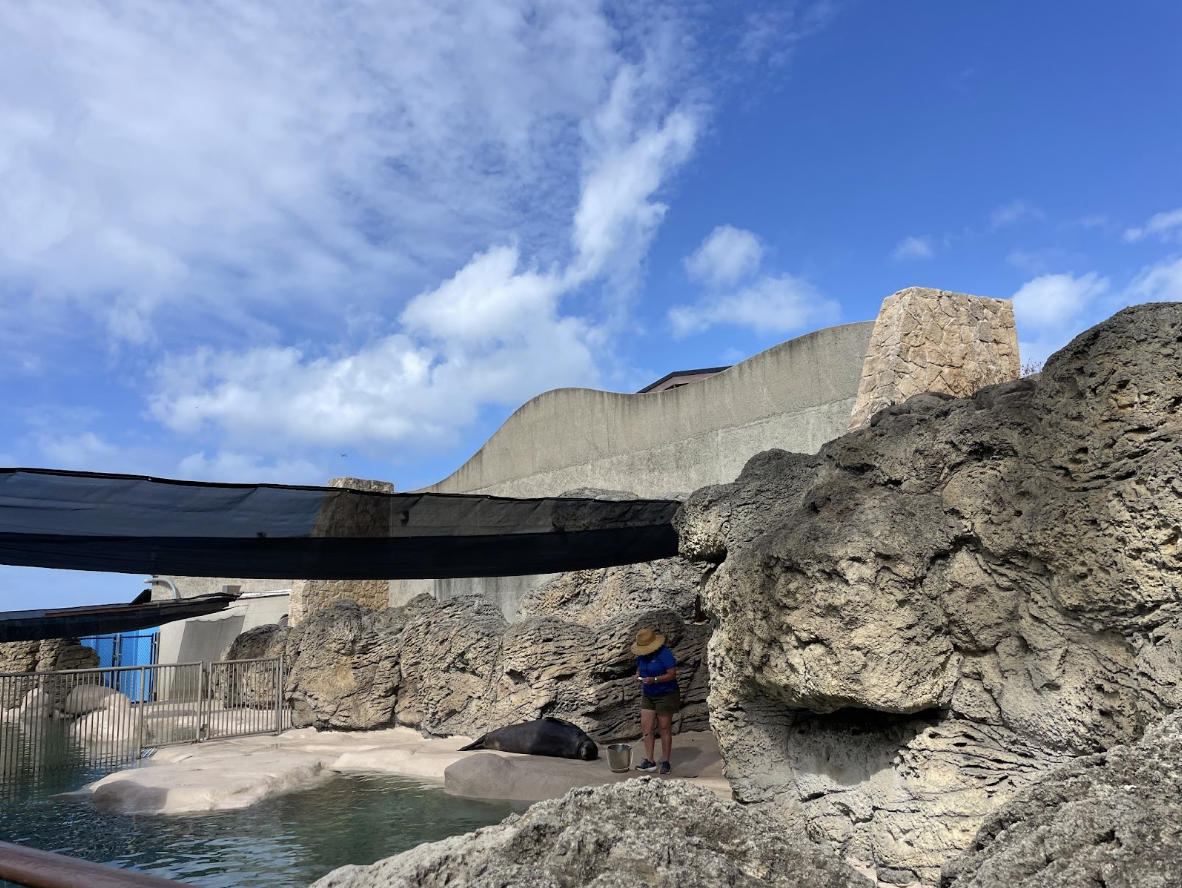
Feeding time for Hōʻailona the monk seal at the Waikīkī Aquarium.

On February 12th, I had the opportunity and pleasure to co-facilitate a Pilina Circle with Dr. Kawehi Goto at the Waikīkī Aquarium, which is another away-from-main-campus part of our UH Mānoa campus, this time towards the makai side of Waikīkī. As our team members (including Nick and Timmy) walked through the space and refamiliarized ourselves with the exhibits (I probably could have spent the whole day learning more about flowerpot coral, or just looking at them), we even had the chance to see Emo Nemo the famous clownfish and Hōʻailona the monk seal! 


Mahalo to the wonderful staff, faculty, and volunteers at the aquarium! Our team had such a wonderful time learning from you folks—and visiting the gift shop! After spending some time in this unique space and learning from the stories that were shared, I am inspired to think about how individual perspectives and actions can be woven together with care to create a larger network of pilina. I really appreciated experiencing all the new ways that pilina continues to unfold across the different places we call UH Mānoa.

Waiʻanae Co-Facilitator Training

Na Nick Childs

Pilina Circle co-facilitators gathered in Waiʻanae for a training.

Eō e nā haumana mai ka wai mauka mai Waiʻanae, ka ʻāina kaulana i ka laʻi pohu malino a ke kai a me ka uwē wale! We are so proud to congratulate our new Pilina Circle co-facilitators hailing from the Waiʻanae coast! Hulō! Starting their journey by participating in our 2024 Kaiāulu workshop series, these community leaders took the next step in completing an intensive two-day training that taught them the histories of this practice and the steps one takes to co-facilitate a Pilina Circle. 


While supported by the shade of Palikea and the Kaiāulu wind, our new co-facilitators also brought us many lessons on what pilina means to them, and the important steps they take to support relationships in their communities: finding commonalities and daily connection, having patience and an open mind, and leaning into trust. We are excited to take these lessons back to Mānoa and support our new co-facilitators in their journey to build pilina on the West Side.

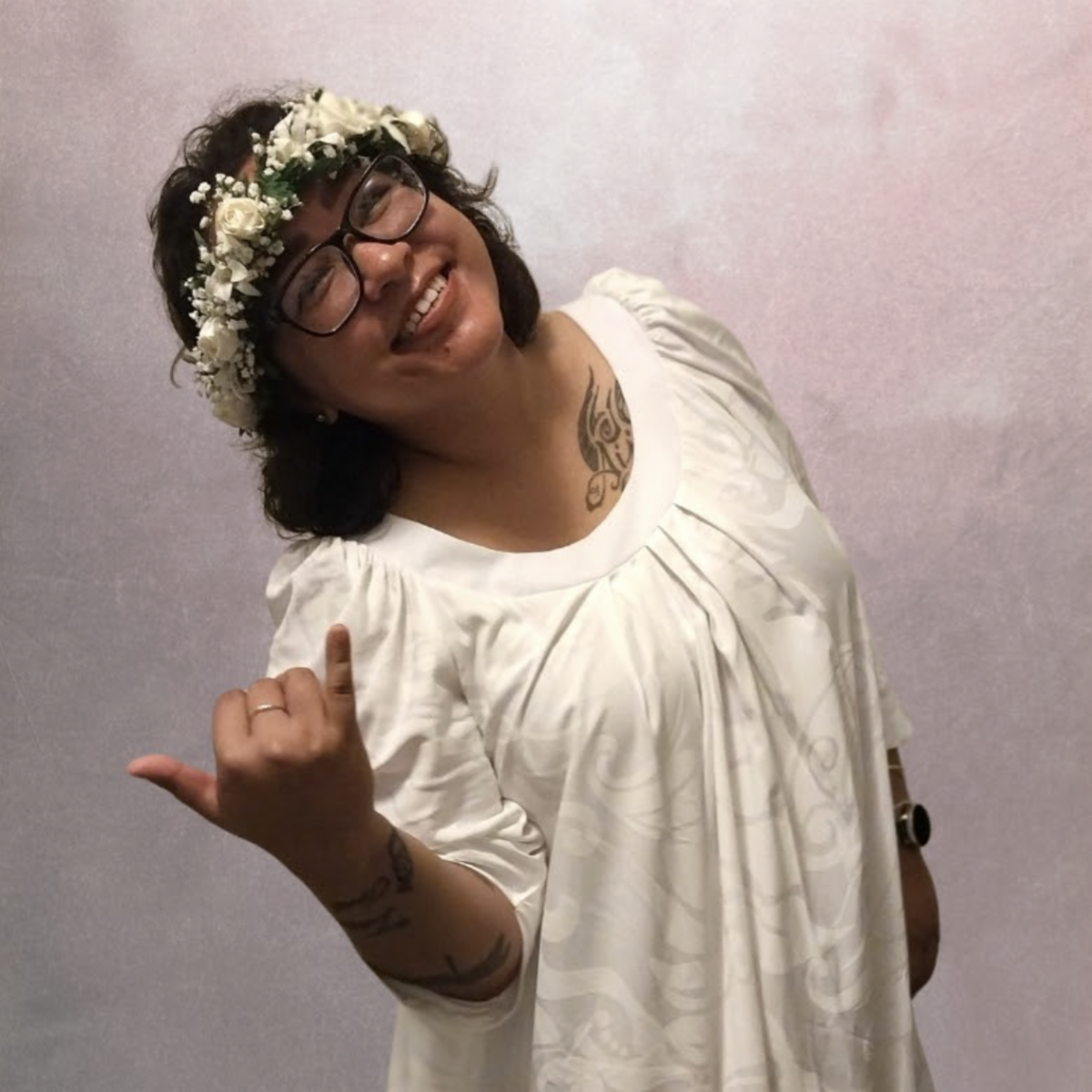
Kikilia Lani, this month's lamakū feature.

Kikilia Lani


Birthplace/Hometown:

ʻEwa Moku, Oʻahu


High School:

ʻAiea High School


UHM Degrees: 

BA ʻIke Hawaiʻi, MI Education (2020)

MEd Educational Administration (2023)

PhD Education (in progress)


Current Occupation:

Graduate Research Assistant – Data & Evaluation, Hawaiʻi Papa o Ke Ao Native Hawaiian Place of Learning Advancement Office


What inspired/inspires the path for your academic major? 

I never imagined education and student support would become my life’s work, but the very experiences that once made college seem out of reach are the ones that shaped me into the practitioner I am today. As the oldest in my ‘ohana, my kūlana required me to be action-oriented: adept at identifying problems and determining what was needed to address them. That instinct deepened in my teenage years when many adults told me college was a pipedream. In their eyes, my grades and attendance were evidence that I was a lost cause. They compared me to classmates without recognizing that my kuleana and circumstances were different. Survival was the priority. When support wasn’t available, I learned to rely on my own determination. My journey was extremely unconventional, but the desire to build a different life (and to be a good partner and parent) kept me going, and I eventually became the first in my family to graduate college. Over the years, I’ve met others like me—capable, driven, and carrying more than most people could see. I still remember what it feels like to be dismissed, and I refuse to perpetuate that practice. What started as survival has grown into service; my work is grounded in ensuring students feel seen and supported.


What are your future goals in your work? 

My goals for the future are to: (1) finish my PhD, (2) keep learning and growing, (3) continue to build pilina with others and ‘āina, (4) give back to my community, and (5) cultivate joy in what I do.


How do you see your time at UH shaping the way you aloha ʻāina? 

My understanding of aloha ‘āina has deepened through my time within the UH system. I used to compare myself to others and feel that I wasn’t doing enough—I didn’t spend enough time in the lo‘i, testify at enough hearings, or ‘ōlelo like others. My time and energy were devoted to other kuleana, and I felt shame because I didn’t aloha ‘āina the “right way.” Over time, through showing up, trying all the things, building pilina with others, and observing other Kanaka engaging in a variety of spaces, I realized that aloha ‘āina isn’t one-size-fits-all. I began reassessing how I engaged as a haumāna…a limahana…a makua…a pakanā…a kupa‘āina. By acknowledging all of these facets of life where I was doing my best and making small, but steady impacts and improvements, I came to understand that everything I did was an expression of aloha ‘āina.


What does UH Mānoa as a Hawaiian place of learning mean to you? 

It’s both exciting and inspiring to witness the work being led within our lāhui by Kanaka ‘Ōiwi to cultivate Hawaiian places of learning—spaces that center ‘Ōiwi voices, values, and ‘ike. A Hawaiian place of learning should reflect our people, protocols, and practices across all areas of the space, not as performance or spectacle, but as everyday practice embedded in its structure. For many, it seems obvious that being in Hawai‘i should mean that our places of learning are inherently Hawaiian. While UH has historically emphasized haole (non-Hawaiian, foreign) ways of knowing and being, there is a growing recognition of the depth and significance of Hawai‘i’s own. Regardless of perception or precedent, it is important that UH lives into its mission of being a Hawaiian place of learning because we’re in Hawai‘i. Kiko pau.

Instagram  Email  Web