|
Fall is slowly settling in. My legislative staff and I have been working full tilt to fit in meetings, visits to local youth programs, and travel to Transportation Committee hearings. With a "bill drafting deadline" the last Friday in September we finished early research and outreach and filed proposals for the next Legislative Assembly that starts meeting in 2025 (see next section). In the photos below you'll get a glimpse of my recent site visits and activities including Everyone Village, Peace Village, Pearl Buck early learning center, downtown public library, LCC building trades, and Dorris Ranch in Springfield.
It's campaign season. All State Representative positions are open for election or re-election every two years, so I spend time on that too ... in addition to continuing work on legislative priorities, chairing two committees, writing bill ideas for a future session, and working with staff who are keeping up with constituent inquiries.
My vacation was at the beginning of June. That was prime time for planting tomatoes and vegetables, so mine got in late – very late. With some luck I’ll still be harvesting cherry tomatoes and zucchini in October. The basil is fragrant, and the thyme and rosemary are working their way into cooking. Wishing you a few more happy days of sun as we move toward fall leaves and rain.
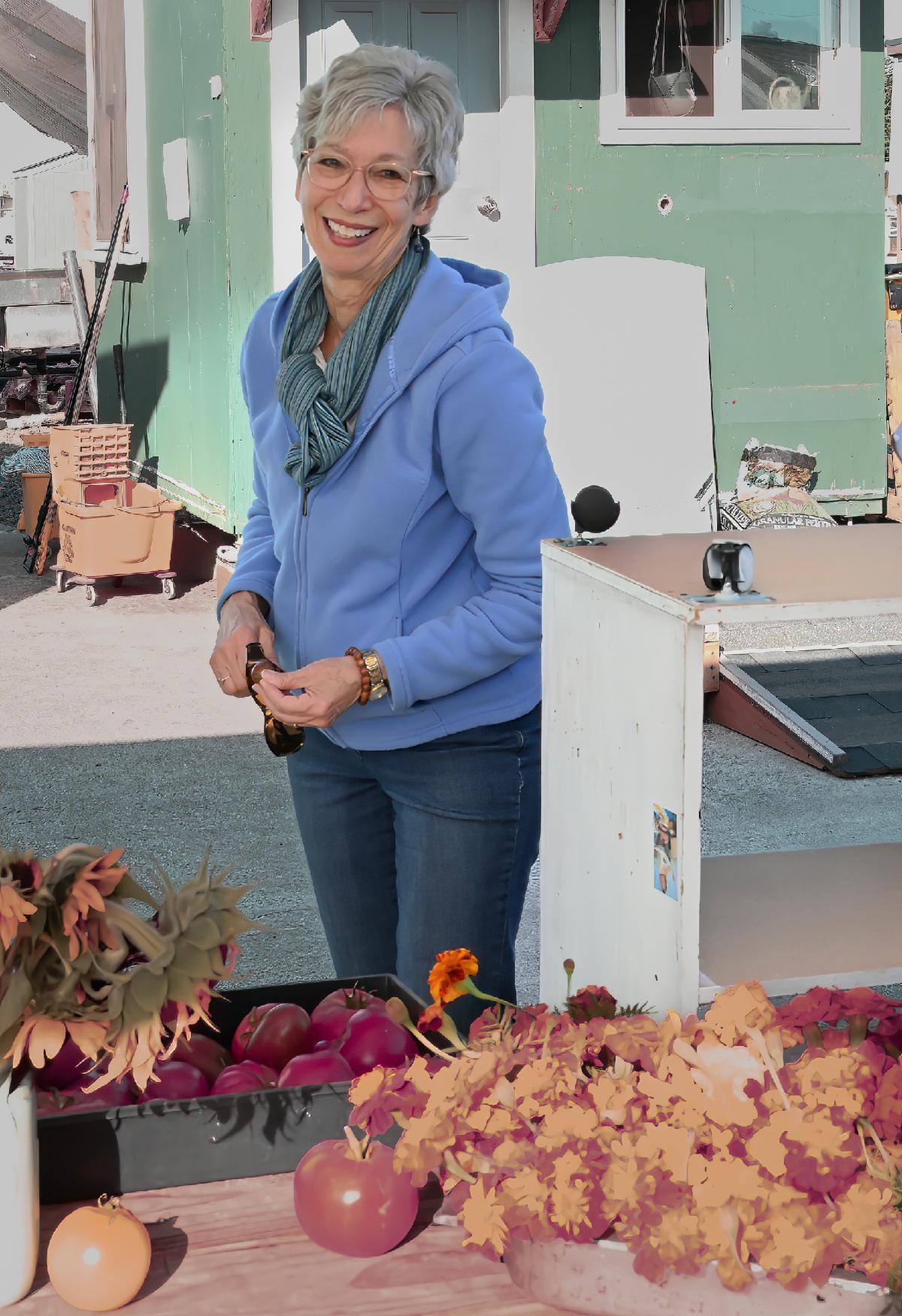
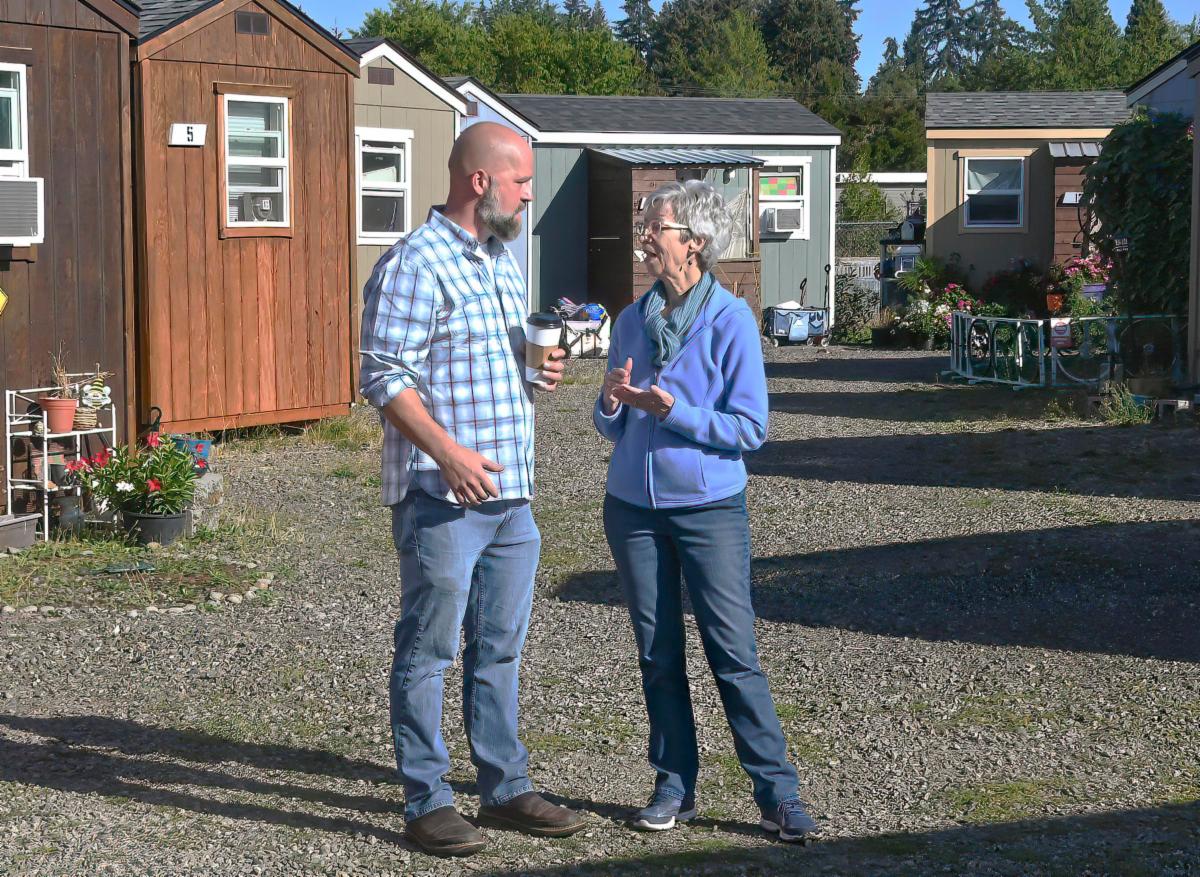
[Photo taken on a visit to Everyone Village. Story below]
|  | |
If you missed my latest e-news, here's the link to July 2024. | |
Legislative proposals for 2025 | |
|
All current legislators are eligible to develop bill concepts for consideration in the next legislative session. We hear ideas and work on them, sometimes doing extensive research and holding stakeholder meetings to prepare proposals. To be ready for early consideration in the next legislative session, these proposals must be submitted to our legislative attorneys (Legislative Counsel) by September 27.
All House members run for re-election every two years. Members who are re-elected would then file their bills as soon as the next session begins. Those who are retiring or not re-elected may give their bill proposals to another member to submit for consideration.
Here are a few of the 20 or so topic areas I’ve been working on:
| |
|
Corporate practice of medicine (CPOM)
Prohibiting noncompete and nondisclosure contract language, to ensure physicians can get back to work in their communities. Clarifying CPOM to meet the spirit and intent of requirements for physician (not corporate) ownership and control. The basic principle is that our physicians should be in charge of health care for patients, not the corporation.
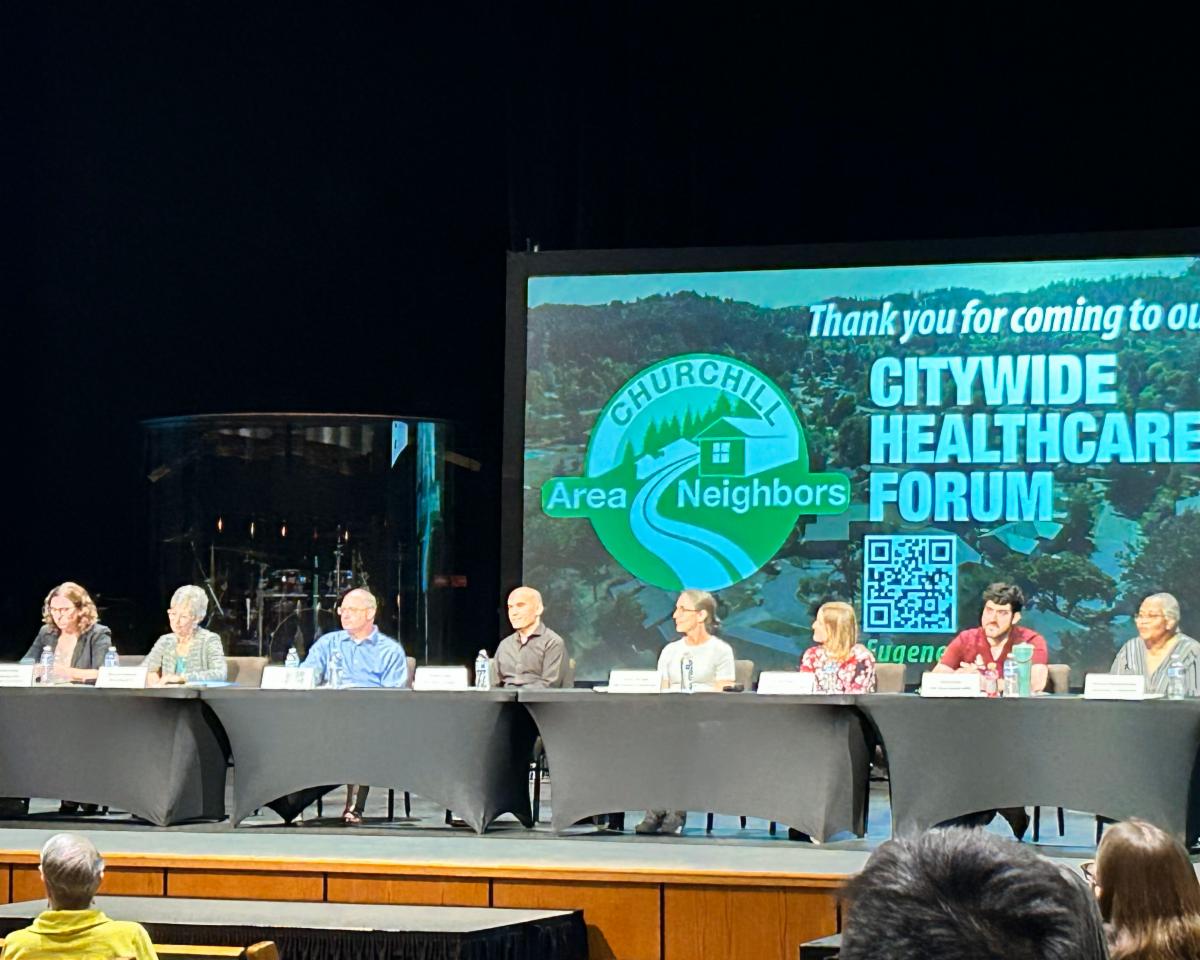
Photo: Citywide Healthcare Forum, Sept. 27. I was one of 8 panelists discussing loss of the hospital and a number of OMG doctors
Urgent Care clinics
Definitions and registration for urgent care clinics. This should be helpful for patients and people who refer patients (such as Nurse Advice lines) to know what services will be available. Hospitals are strictly regulated. Doctors, nurses, plumbers, and truck drivers (and lots more) are licensed. There is no current license, regulation, or definition for urgent care clinics.
Reduce the red tape
This proposal should streamline process and smooth out bureaucracy for local human service providers. It aims to improve credentialing and criminal background check processes and reduce backlogs so that counselors and therapists can get to work and see patients who are waiting for help. I'm working with Relief Nurseries, Looking Glass, Pearl Buck, Options, Oregon Community Programs, and others.
These are just the high profile topics that I expect will garner the most interest, and support, and opposition (they don't come without some controversy!). I'll share a list of other ideas in future enews updates.
| |
|
Pills. Inhalers. Ointment. Infusion. More and more people around the country and in Oregon are using mail order for their prescription medications, sometimes required by insurers or Pharmacy Benefit Managers. Mail order has even been pushed onto infusion centers, including cancer treatment. The idea is to save money. For many patients, it’s a welcome convenience. But it can also be a problem. For example, mail service in remote areas can be interrupted for days or weeks due to snow or ice. My concern is for patients, when the medication is exposed to temperature or humidity conditions that could damage the drug’s usefulness, and that can happen while the medication is in transit. Federal and state law ensures drug safety from manufacturer to pharmacy, but not after it's received at a mail order pharmacy (distribution center) and will then be in transit again. How long was the medication in a truck exposed to the hot sun? Or freezing temperatures? A few hours? A few days?
Mail order medications can reach temperatures outside their recommended range while in transit or mailboxes. The consequences can be dangerous. Some medicines are unstable at temperatures too high or too low and might be ruined or less effective. Read the New York Times article. I have initiated inquiries with the Oregon Health Authority, Board of Pharmacy, and others.
p.s. Do you use a weather app? Here's what Accuweather has to say about medication and weather.
| |
Transportation, a statewide conversation | |
Bridges, fog lines, and broken roads | |
|
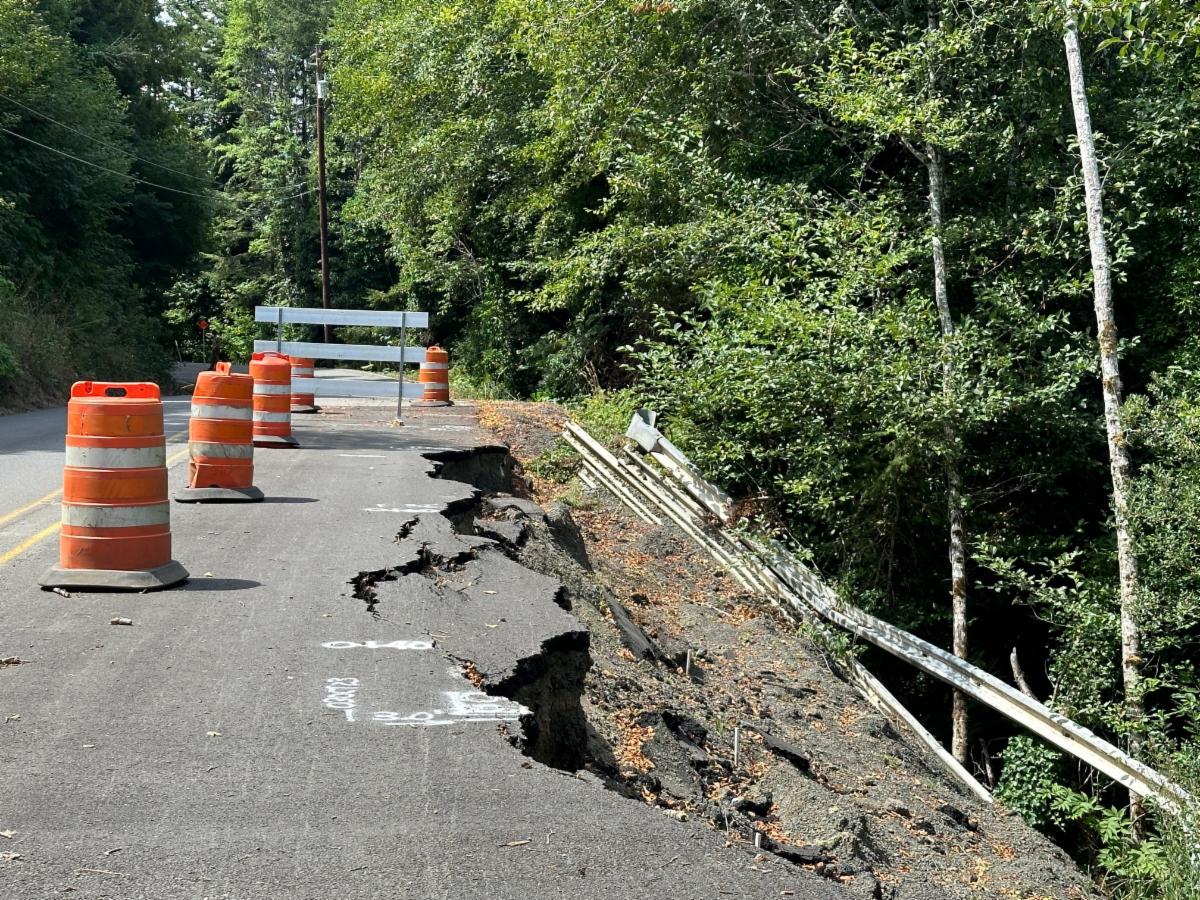
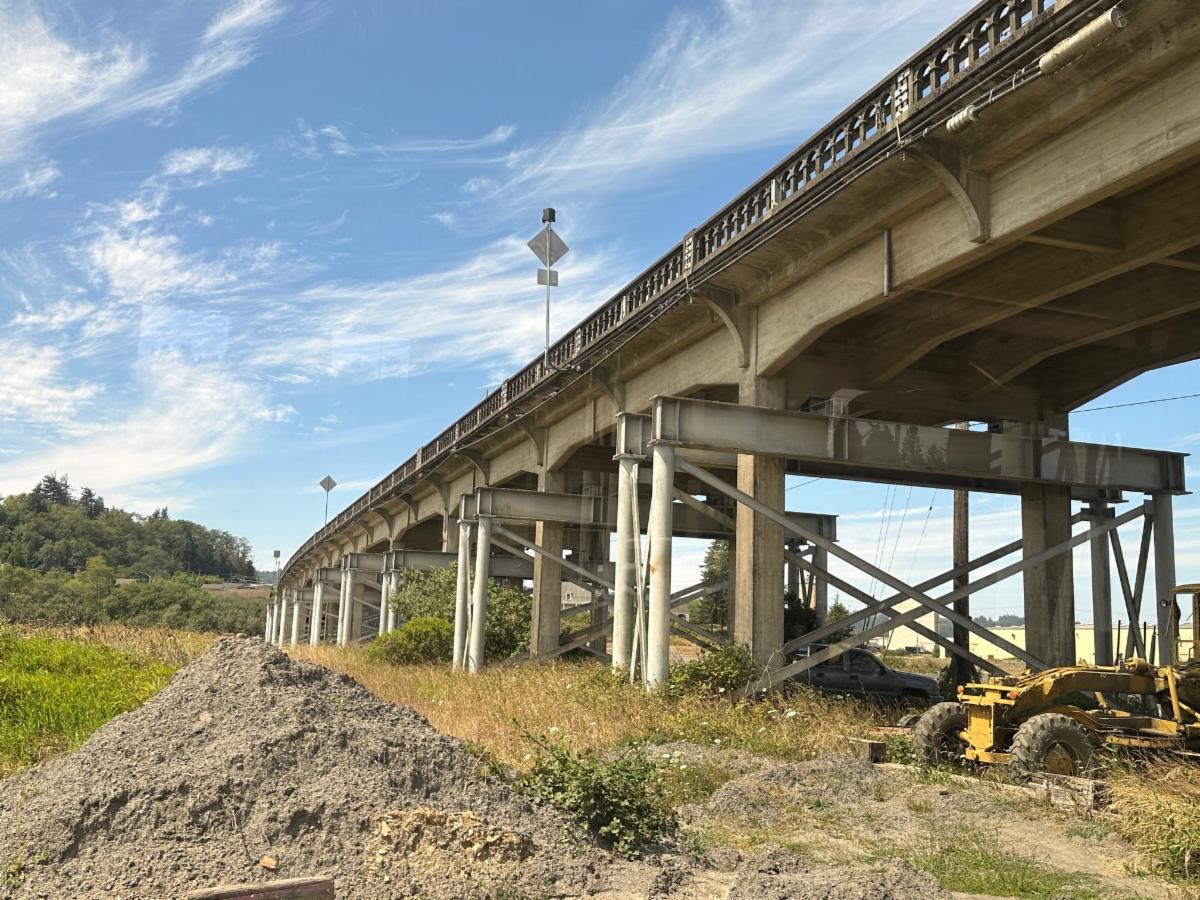
The Joint Committee on Transportation is working on a major initiative planned for next year: what does our transportation system need, and how should we fund it? (See my July newsletter for an explanation.) The Committee scheduled a series of briefings and hearings in locations around the state, including Bend, The Dalles, Hermiston, Coos Bay, Medford, Hillsboro, and more. Local planners and maintenance managers accompany us, describing the challenges of keeping up with miles and miles of repainting fog lines to help people see the edge of the road, repairing roads that continue to break as the land shifts, and inspecting and upgrading bridges.
The Committee met in Eugene on on July 17, taking a bus tour, convening a roundtable discussion with people from local agencies and interest groups, and then hearing from about 40 people in the public hearing. You can read the written testimony submitted here and watch the public hearing here.
I particularly appreciated testimony from our neighborhood associations on the proposal to connect two areas of North Eugene and the Santa Clara neighborhood with an arterial bridge over the Willamette River. We heard support for the proposal’s pedestrian and bike corridor, dedicated bus lane, and slower vehicle speeds. As we prepare for 2025’s transportation package, I’m committed to ensuring crucial projects like the arterial bridge get the attention they deserve.
| |
We (carefully) get out of the bus to see the broken roads, watch activity at ... | |
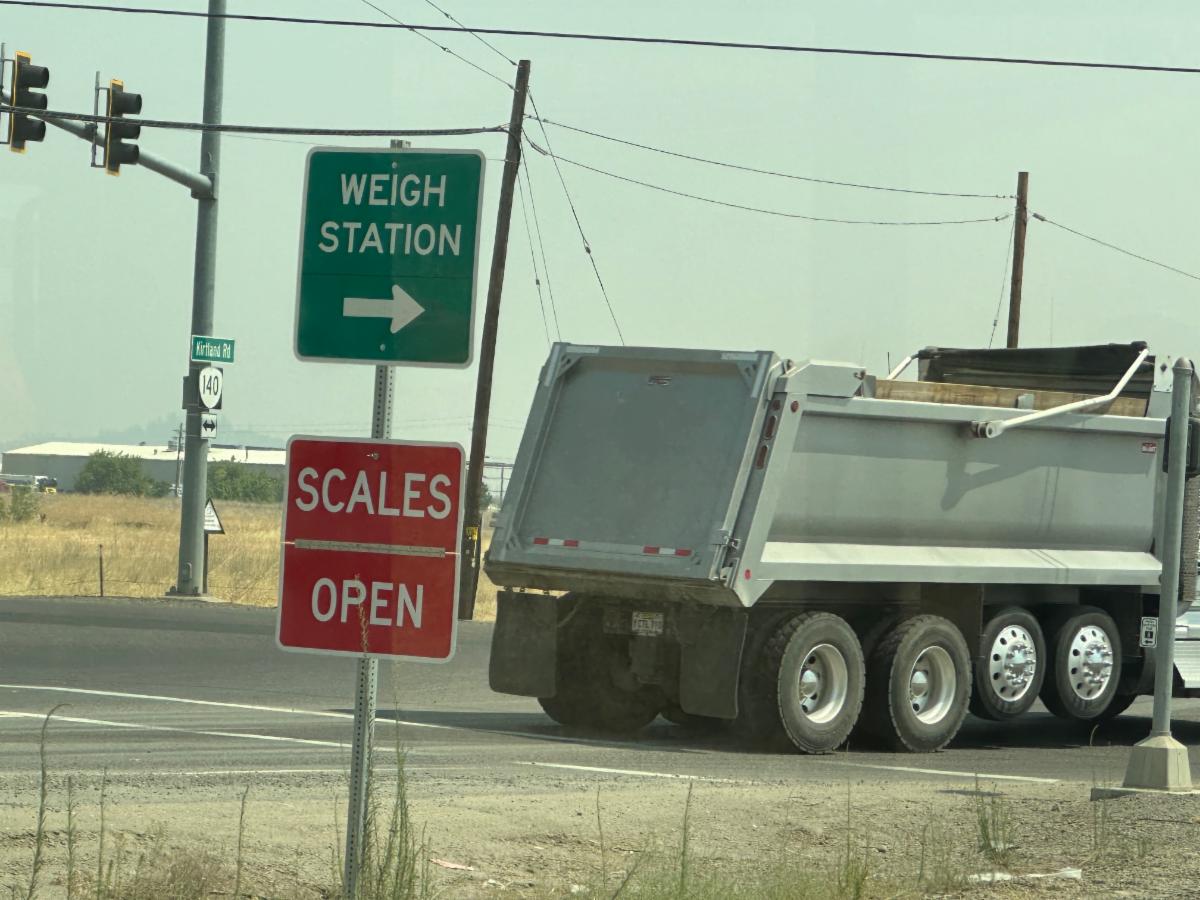
... truck scales (important for enforcing weight limits to avoid damaging certain roads), ... | |
... and go look under and around bridges. | |
Cybersecurity: following up | |
|
Earlier enews issues described my work to establish an Oregon Cybersecurity Center of Excellence (CCOE). The initial victory of passing a bill is not the end of the story, it's just the beginning! So what's going on? I stay connected to see how it's working out.
The CCOE is attracting national attention as the first of its kind in the nation, and also making the point of maybe the first-ever time for three Oregon public universities to join together in a common mission. Its partners include other universities and community colleges, private sector businesses, and federal agencies including FBI and Department of Homeland Security.
One objective was to create a cybersecurity workforce, recognizing Oregon's 7,000 unfilled positions. Another was to help small agencies like small cities, counties, and school and park districts protect against cyber attack.
Workforce
We're increasing the workforce pipeline, getting kids interested in the profession prior to college. NW Cybercamps for K-12 students expanded from four locations in 2023 to seven community colleges and universities in 2024. UO offered free experiences to 12 Eugene high school students in July. Universities and community colleges are expanding and creating new undergraduate and graduate degree and certificate programs.
Service: helping cities, counties, schools
CCOE uses a "teaching hospital" model enabling students to learn while getting critical work experience and providing service to Oregon communities. Security services are now being provided to several cities, school districts and special districts around the state are receiving cyber assessments, monitoring, and other security services.
| |
|
Cyber attack: An entire county shut down
Curry County was shut down for weeks in 2023, unable to do anything online. No email, no marriage licenses, no jail bookings, no real estate transactions recorded. Curry County Commissioner Brad Alcorn said. “Everything that relates to county operations that was online is now gone. So our computers have to be completely wiped clean, and everything’s got to start over. ... We are essentially starting from scratch."
| |
|
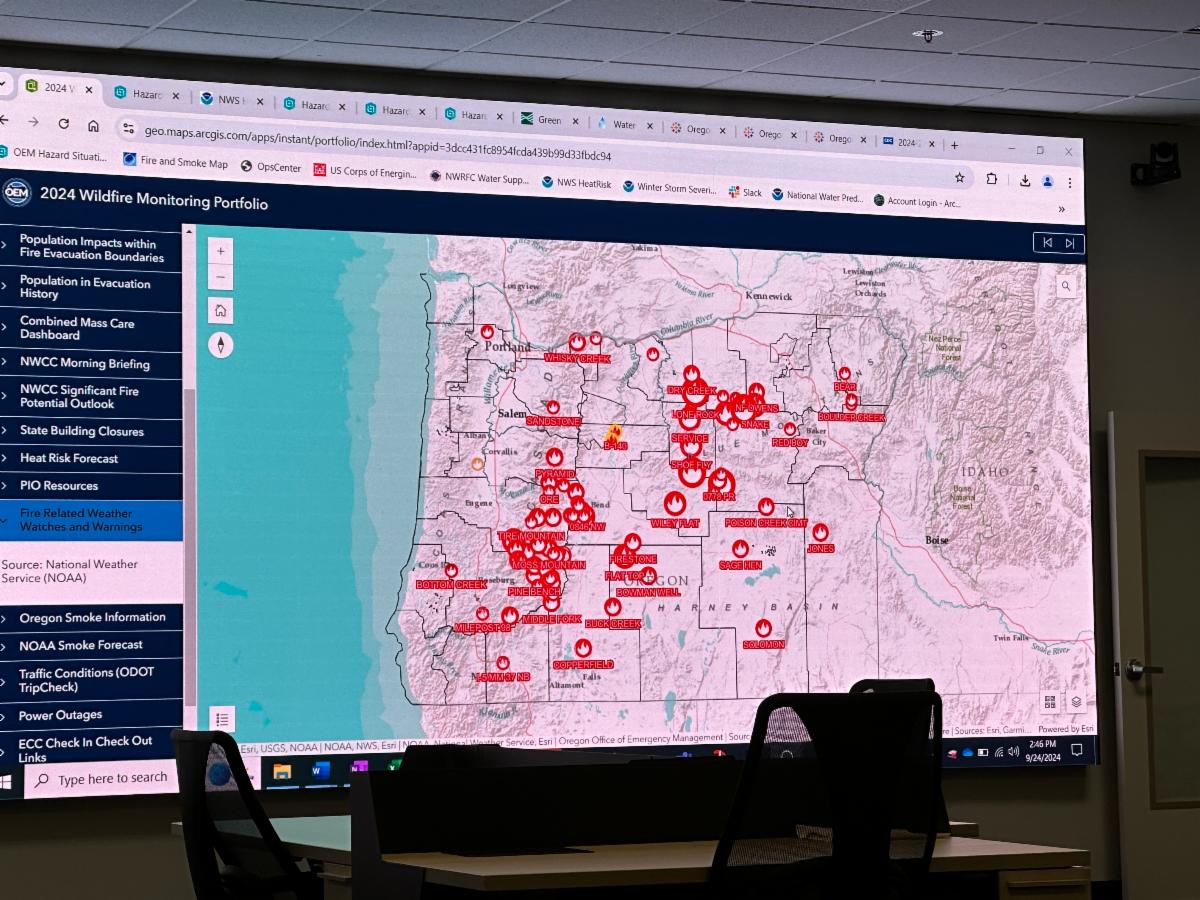
Wildfire has so far remained far from our local area, but the situation remains critical and devastating in other areas. A recent agency report recorded 23 large fires (100+ acres in timber or 300+ acres in grass/brush) burning in Oregon. Over 2 million acres of forest and rangeland has burned. A little over half of the fires (53%) were human caused, by debris burning, equipment and vehicles, and campfires; those burned 380,000 acres, about one-fifth of the total.
From ODF: “Another watchout this time of year are the seasonal east winds, whose dry, gusty influences increase the likelihood of sparks leading to fires and can lead to considerable growth on any existing fires in the path of the wind. East winds come to the Pacific Northwest every year around the end of August and last through the fall months. They occur from the crest of the Cascades to the Oregon/Washington coast. Though the winds come annually, significant east wind “events” do not occur every year. If an event does occur, it usually lasts about 48 hours."
| |
OEM's Emergency Coordination Center
On a recent visit to Oregon Department of Emergency Management Emergency Coordination Center (ECC) I got a briefing on RAPTOR: Real-time Assessment and Planning Tool for Oregon. My photo shows a fire map on a full wall of real-time info displays. I also heard how the center managed the response to the winter storm and ice emergency and disaster declaration. The ECC is a hub to coordinate statewide response during emergencies, with space for public and private agencies to work in the room together, and media access for quick, accurate public information. Federal agencies can operate out of the building as needed; I talked with FEMA officials who have been helping Oregon victims of declared winter storm and summer wildfire emergencies.
| |
|
Resources and sign up for alerts
- OR-Alert: Receive lifesaving alerts and instructions from the state during emergencies
- Lane Alerts allows fire, police, and other emergency response agencies to issue alerts to residents in the event of severe weather, fire, flooding, hazardous materials, need for immediate evacuation, civil danger, local area emergencies, and missing persons. Sign up for Lane Alerts.
- From OEM, Wildfire response and recovery website, Track fires and air quality
- See ALERTWest (AlertWildfire) real-time camera views
| |
Consumer privacy
Right to Know. Right to Correction. Right to Deletion. Right to Opt Out.
Update from the Oregon Department of Justice
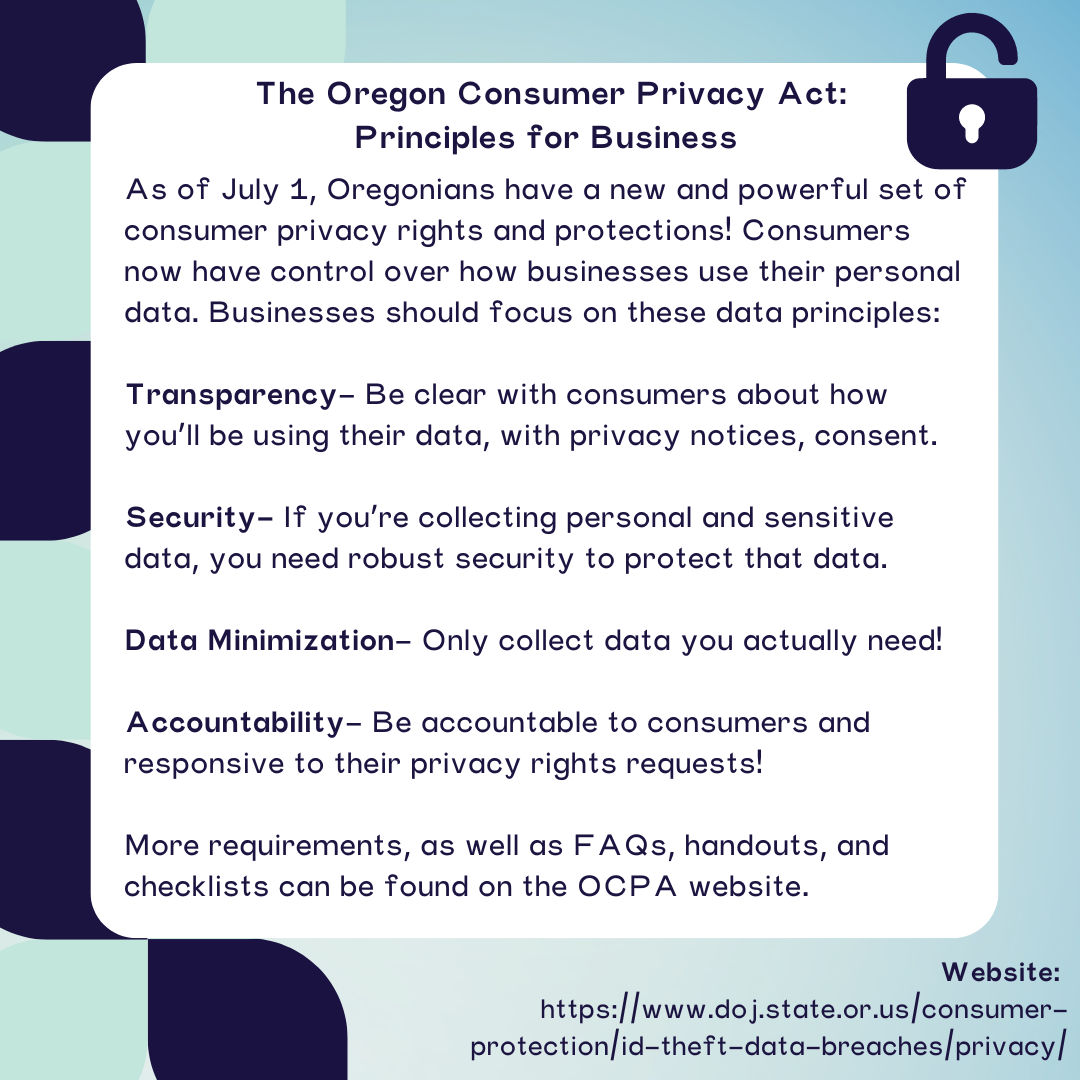
Oregonians have a new and powerful set of consumer privacy rights and protections with the enactment of the Oregon Consumer Privacy Act (OCPA) earlier this year.
Businesses must explain in their privacy notice how you can exercise your privacy rights. The notice must explain how you can request that your data be deleted or corrected, request a copy of your data, and request information about who the business has shared your (or any personal data) with. A business will have to include a link on its website where you can opt-out of targeted advertising or the sale of your personal data. For more information see this: FAQ and Report a Complaint.
| |
|
Register to vote by October 15 for voting in November election
You can register at any time, but the deadline to register to receive a ballot for a specific election is 21 days before. If you want to vote in the general election in November, make sure to register before October 15!
You can register to vote, check your registration, and find more information at OregonVotes.gov.
| |
Everyone Village
Transformation through Shelter, Community, Purposeful Goals, and Restorative Hope
| |
|
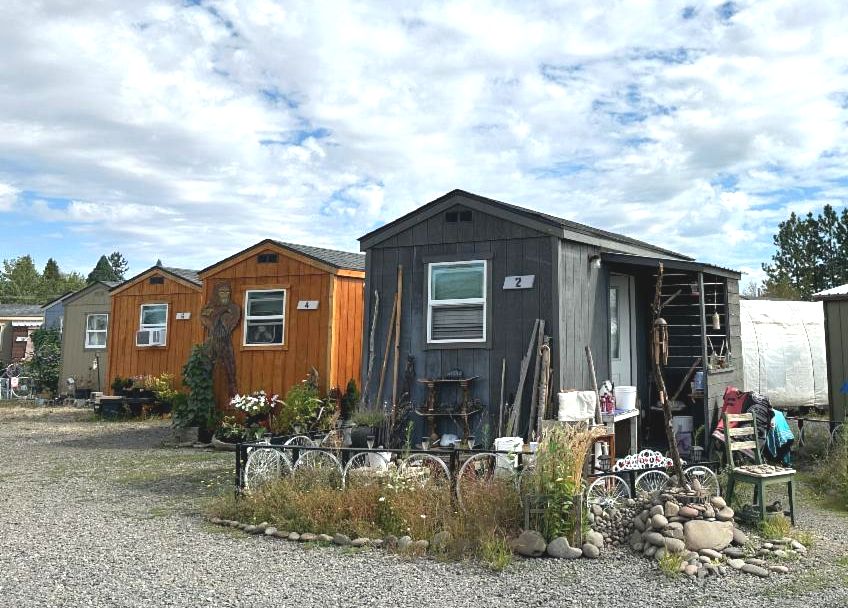
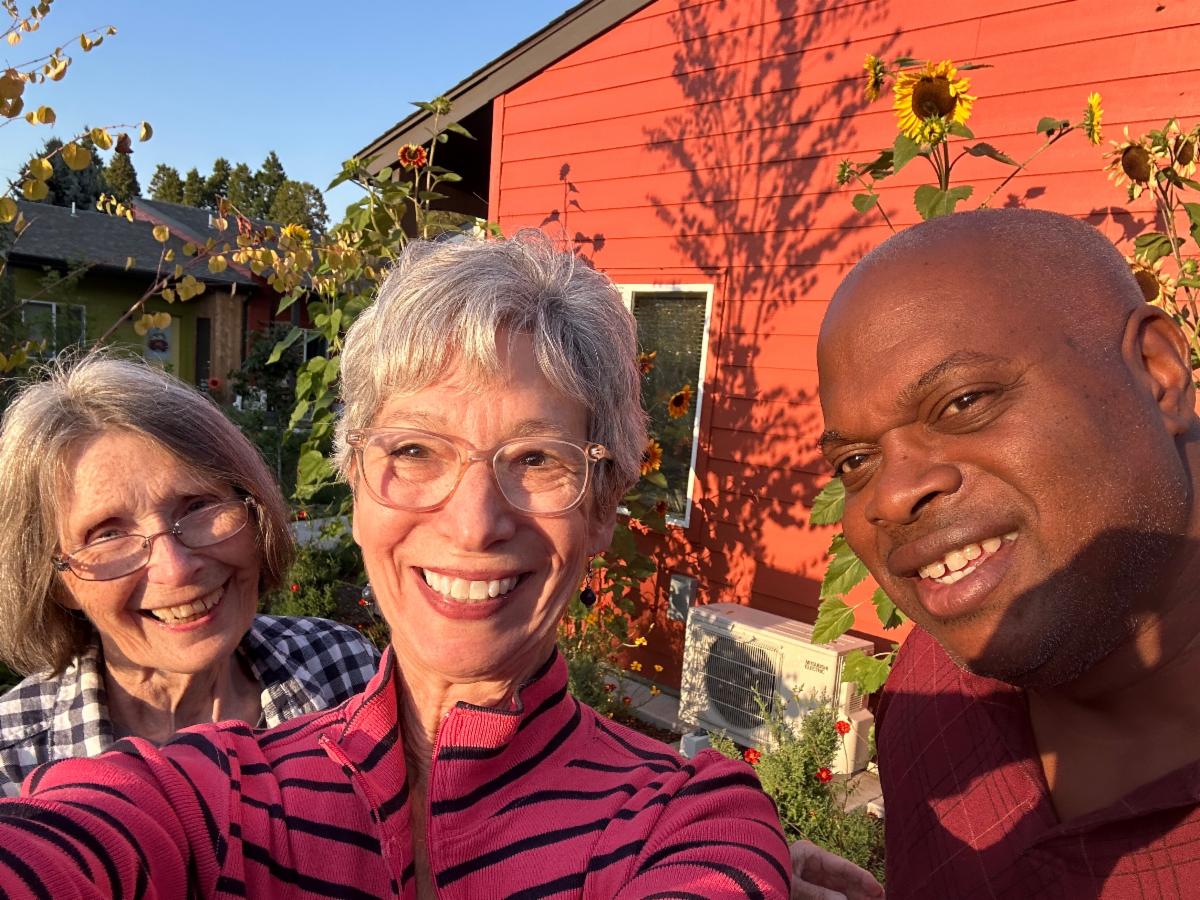
The winter hazel shrub that I had been raising for several years now has a new home now at Everyone Village, along with a Japanese Spirea for their pollinators. I delivered the shrubs and stayed to see the community first-hand, and went back for a second visit.
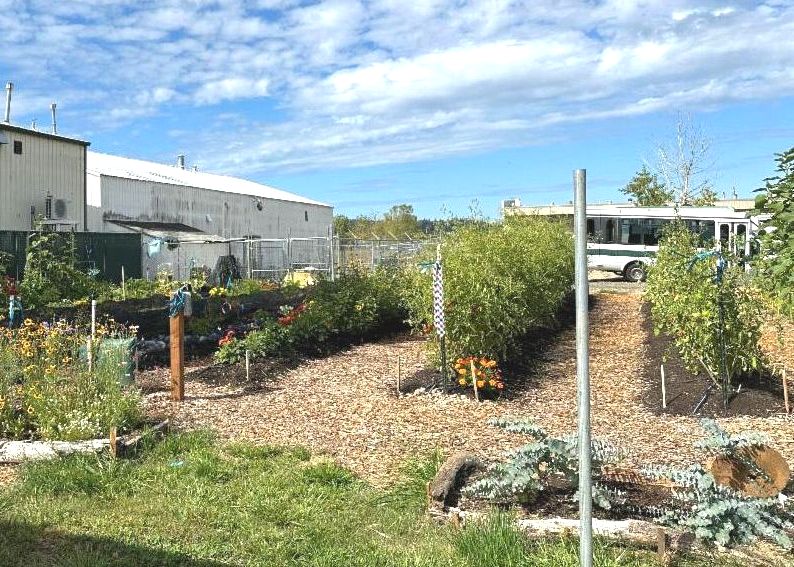
Everyone Village is a transitional shelter program with wrap-around support services, individual "tiny homes" and shared laundry, meals, and other facilities. The center photo shows their garden where they grow food for their own meals and flowers to sell. But the main take-away message for me is that this is an intentional community, not simply a housing program. Read about Everyone Village.
| |
Snapshots in the community | |
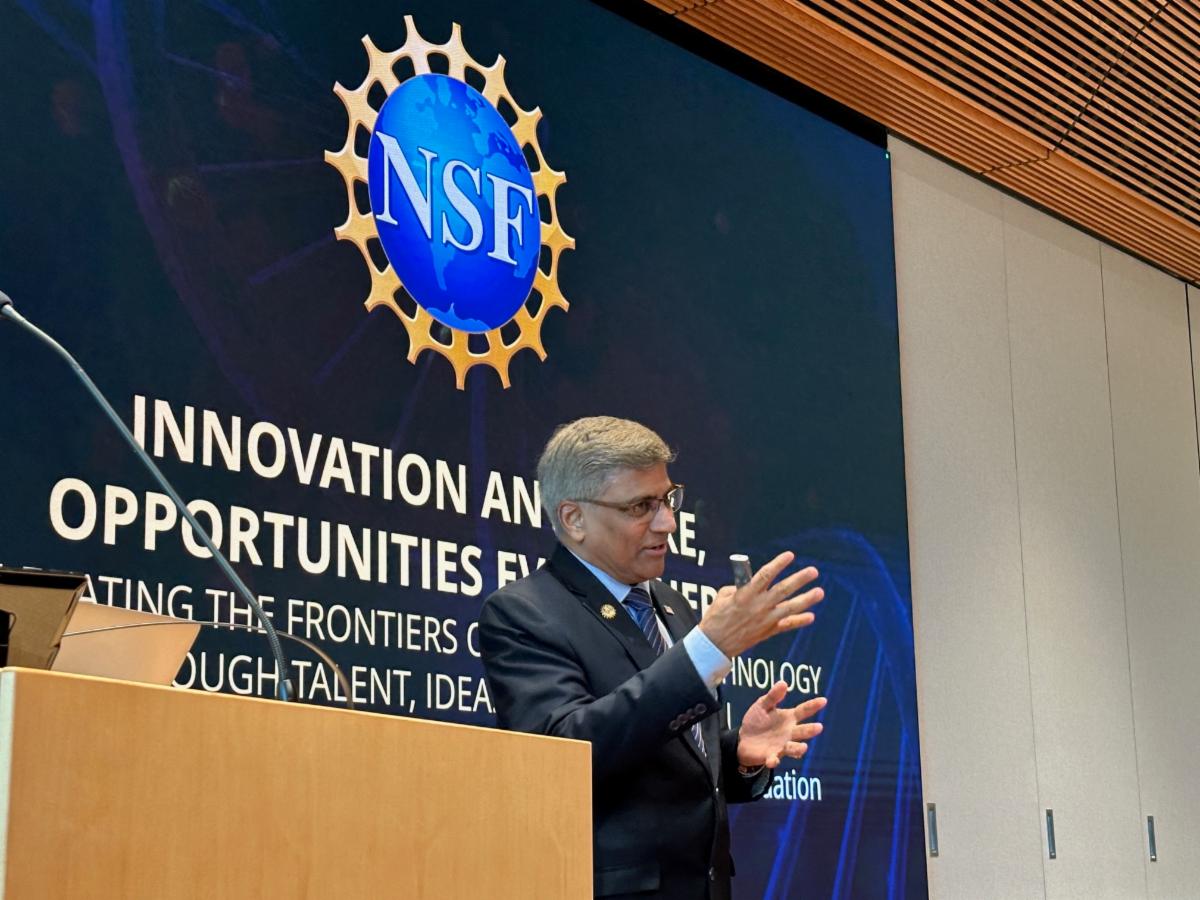
National Science Foundation Director Dr. Sethuraman Panchanathan was at UO last month. I listened to his fascinating, inspiring talk about the NSF mission, science as the endless frontier, and warning that "Talent and ideas are democratized but opportunity is not." | |
The downtown library displayed entries submitted by community members for the Love Your Library design contest held earlier this year. | |
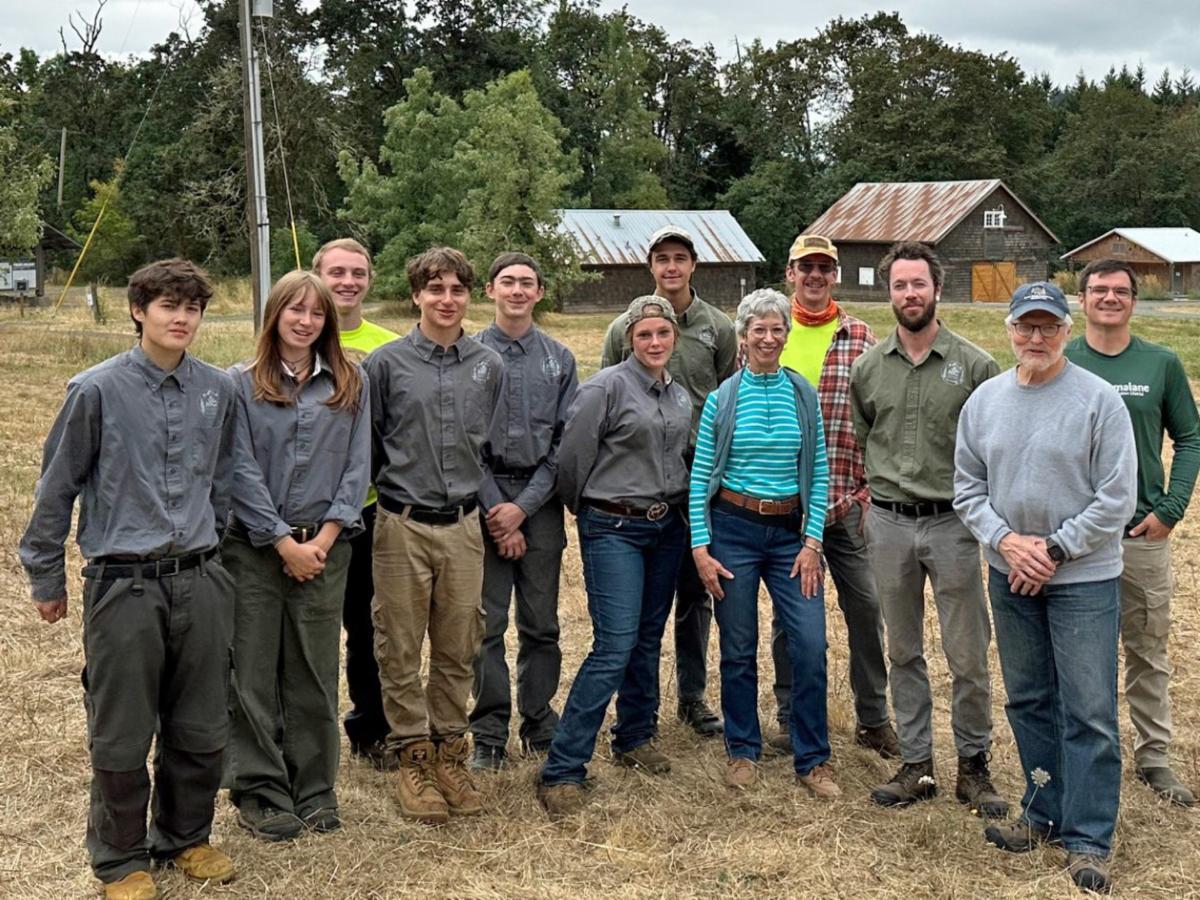
visiting with a Northwest Youth Corps work crew | |
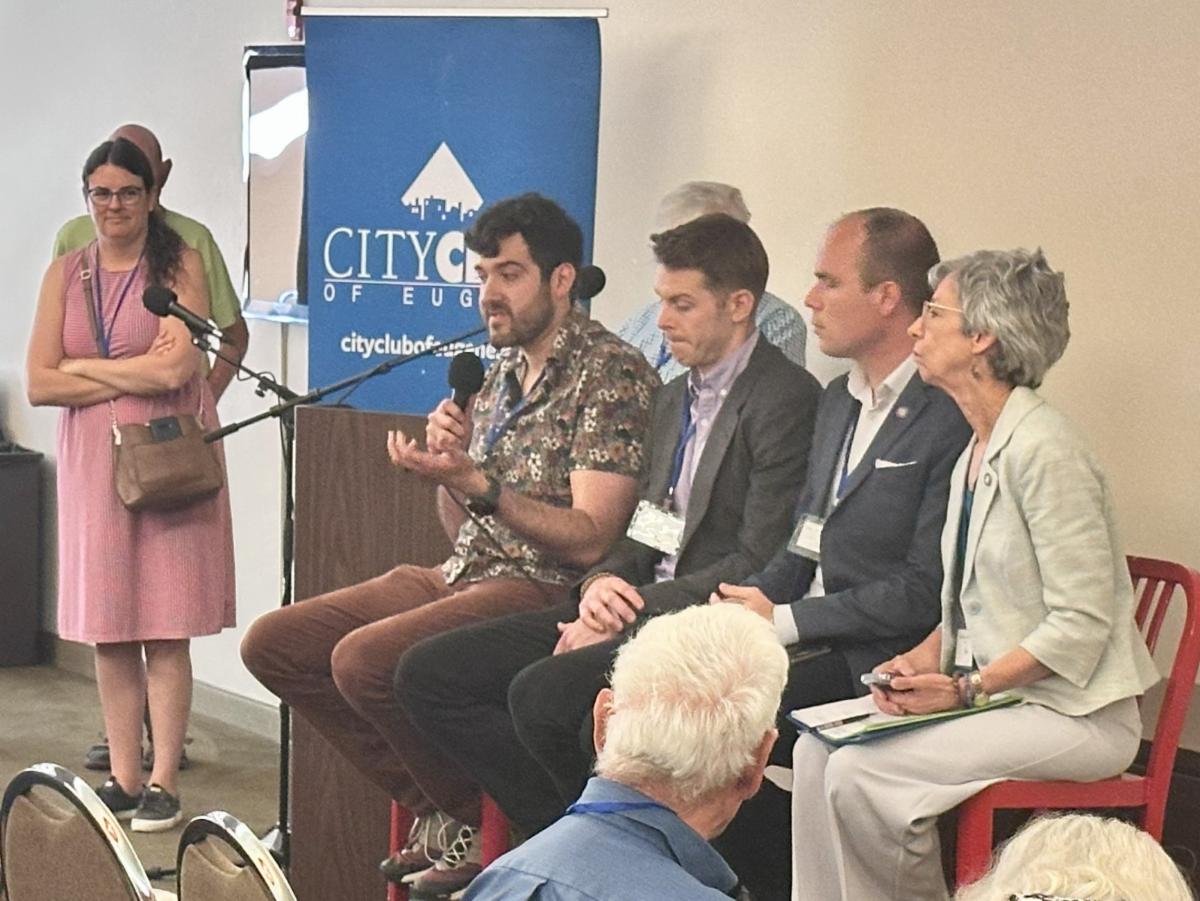
speaking on a City Club panel discussing access to health care | |
Talking with Peace Village residents | |
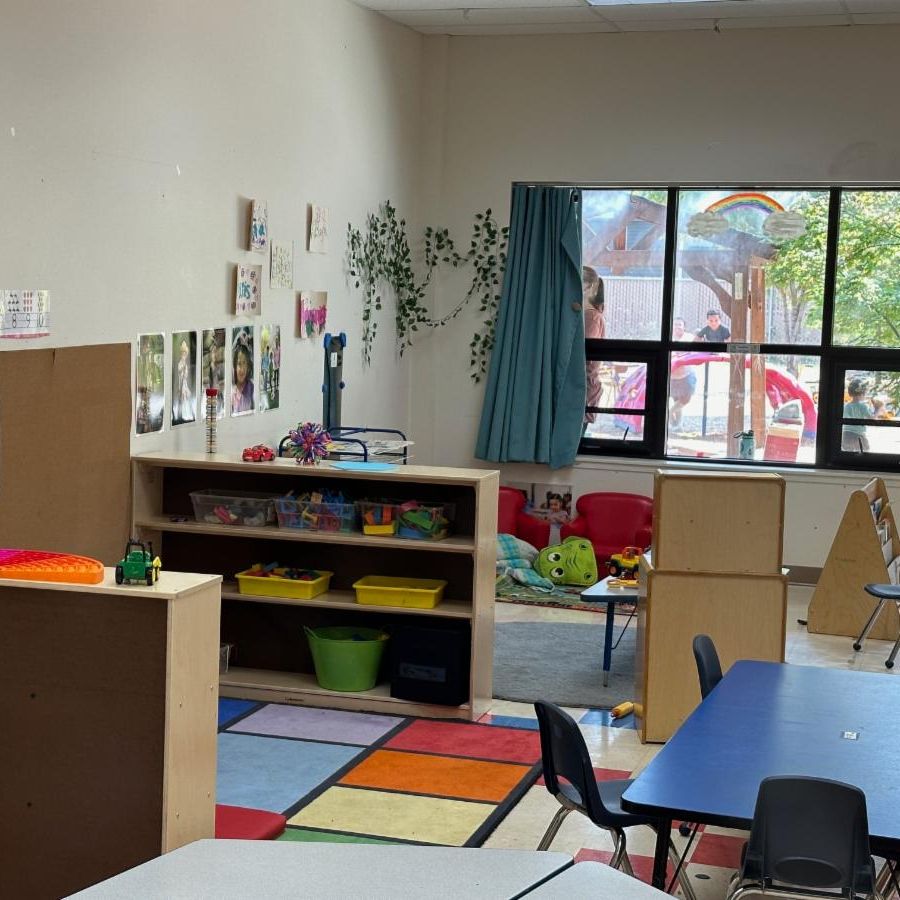
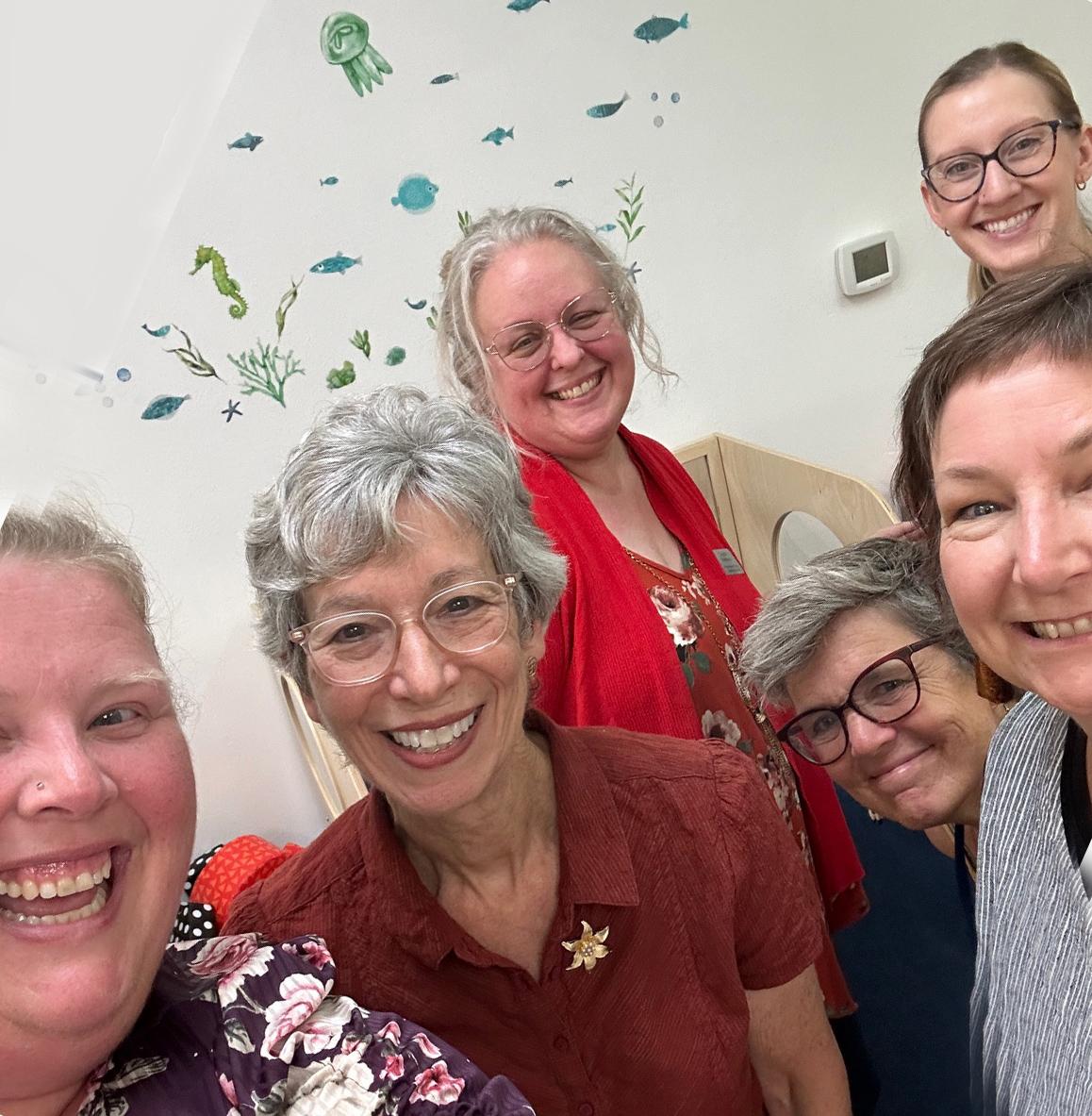
Learn. Play. Eat. A fun visit with terrific staff at Pearl Buck's early learning center and United Way reps. Learned about their preschool and family supports helping children and their families. | |
LCC ITEC: Industry and Trades Education Center | |
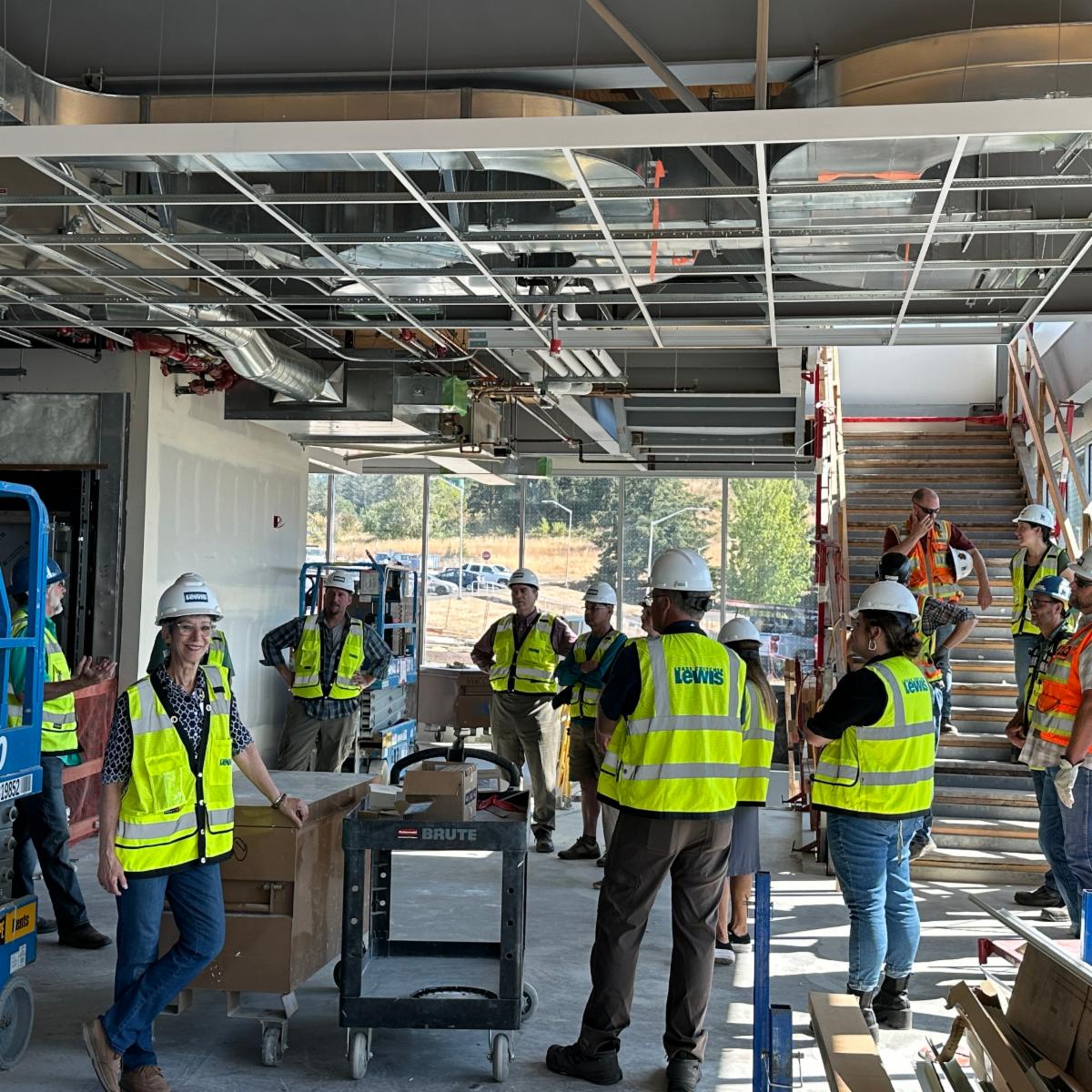
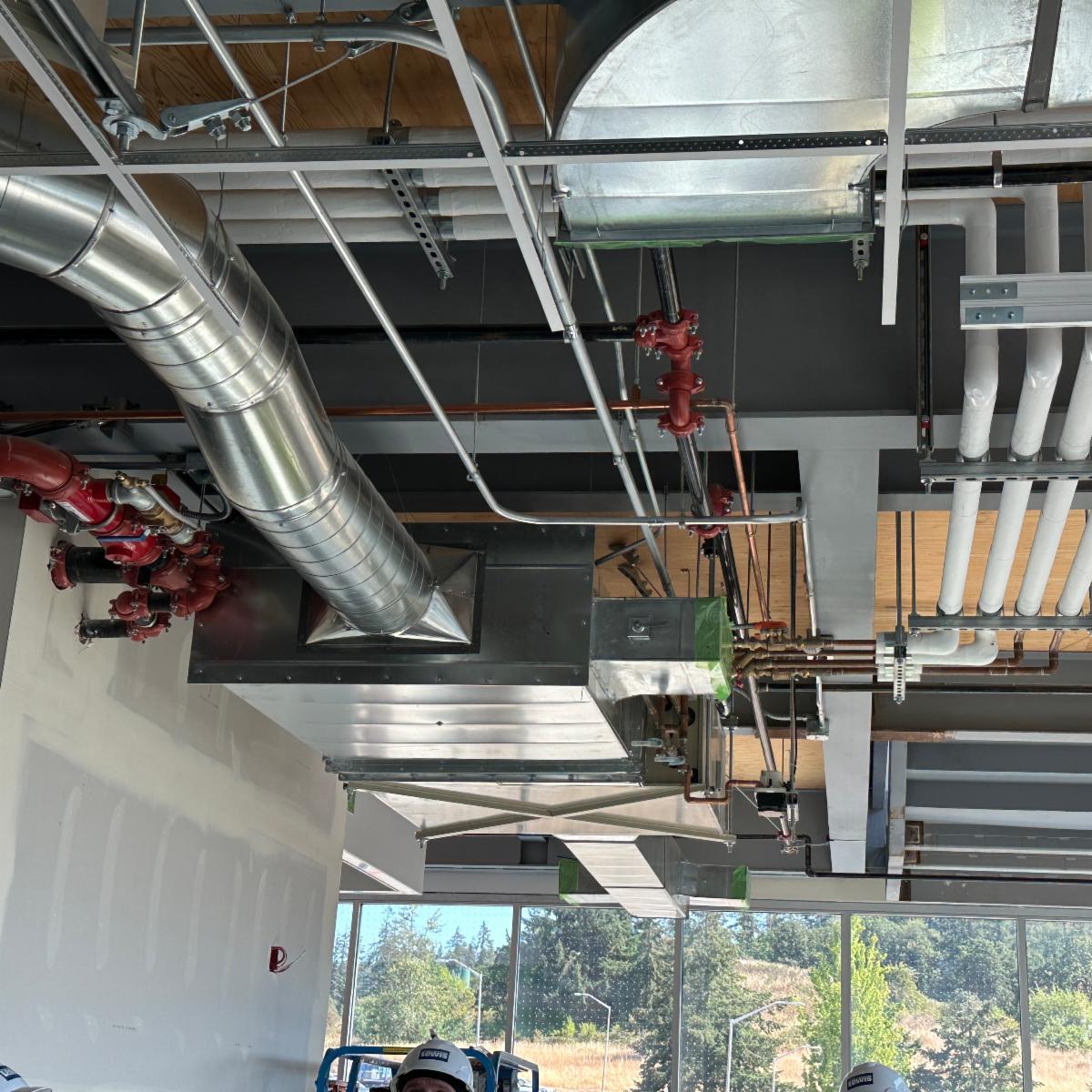
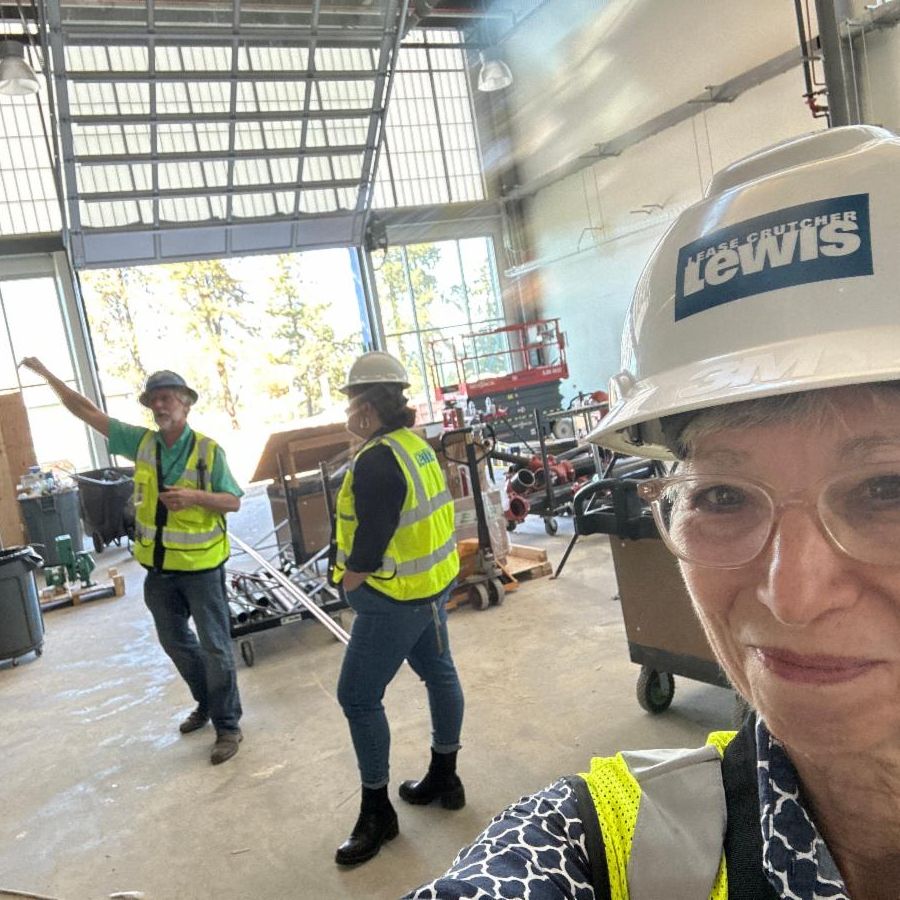
Visiting LCC's Industry and Trades Education Center, "Industry 4.0." Some interesting takeaways during my visit: The future of manufacturing. Specialized training for large scale motors and motor controls and a large robot arm. Design includes data cable trays and accommodates wireless connections. Training for apprenticeships in electrical and plumbing, too. | |
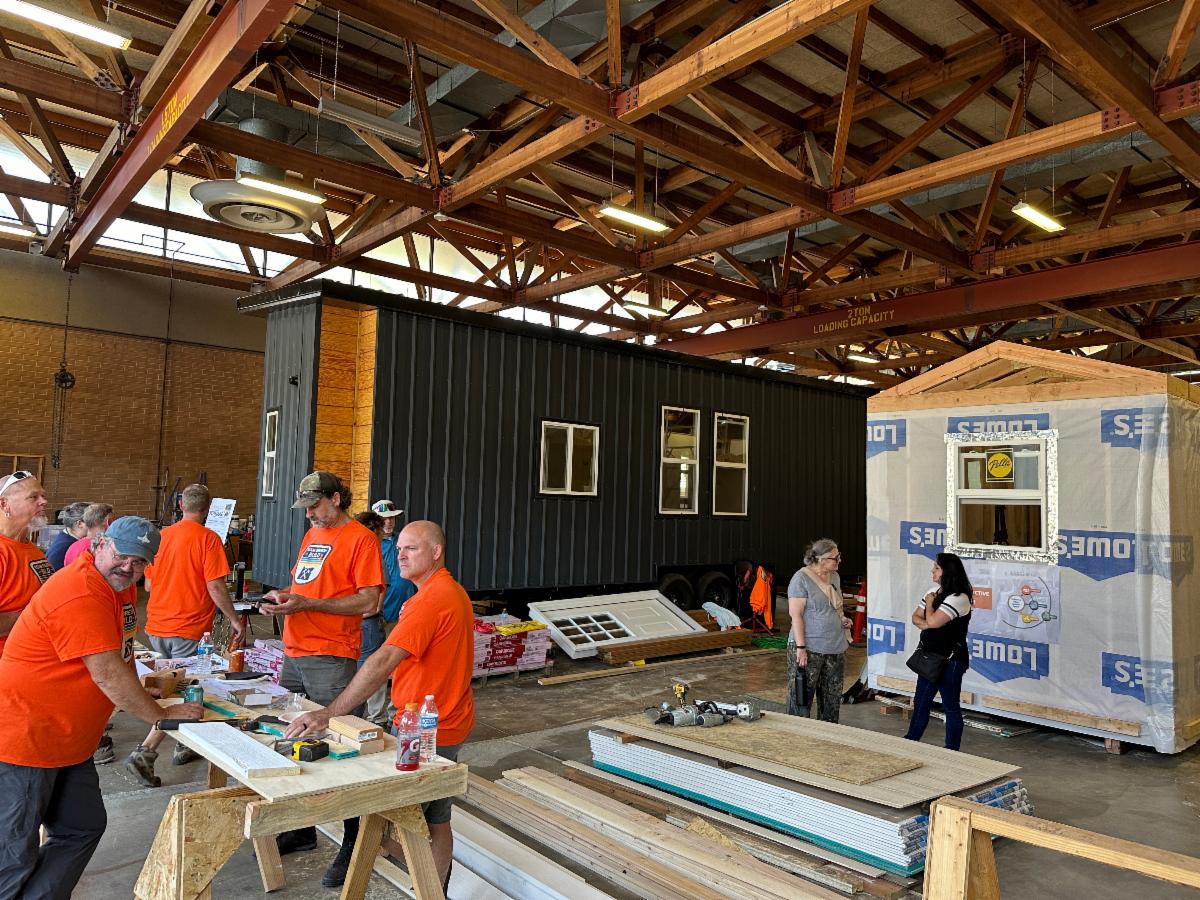
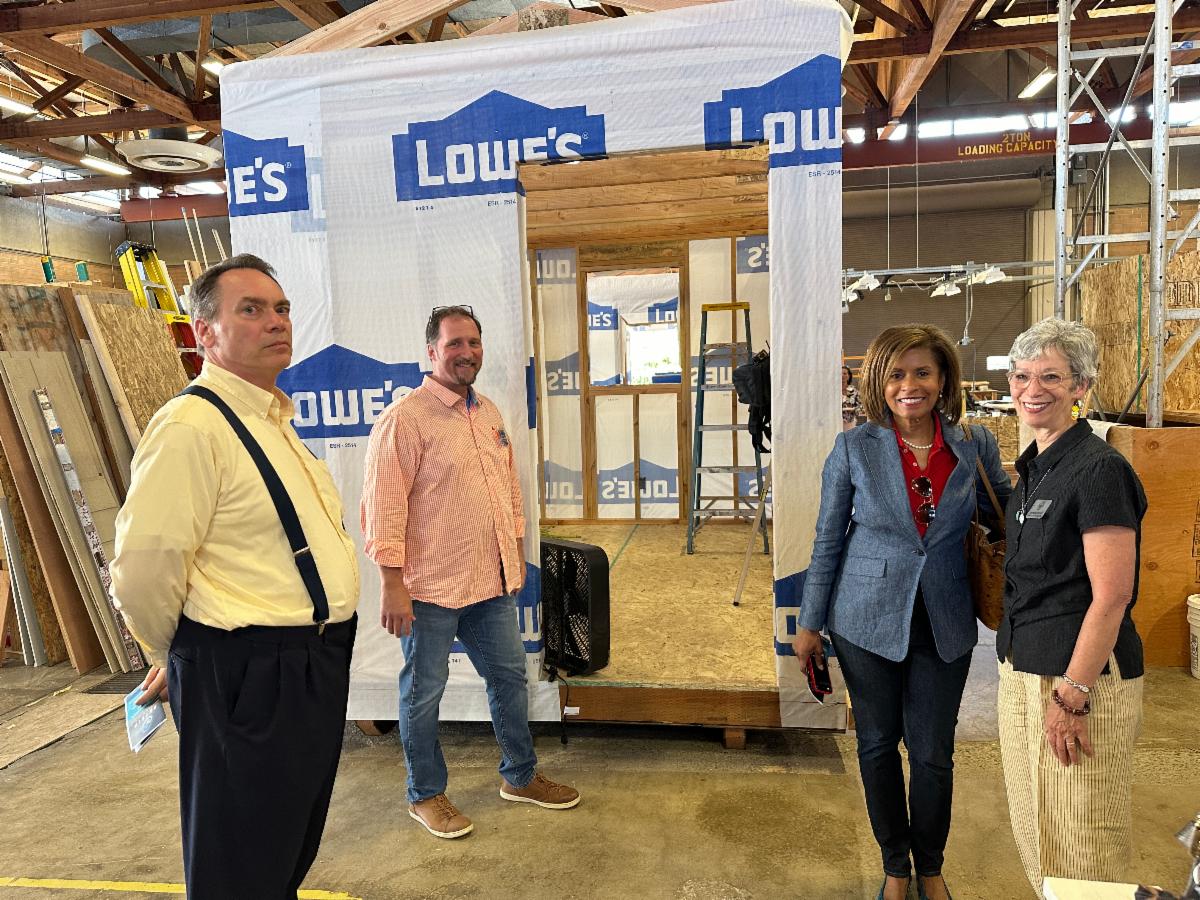
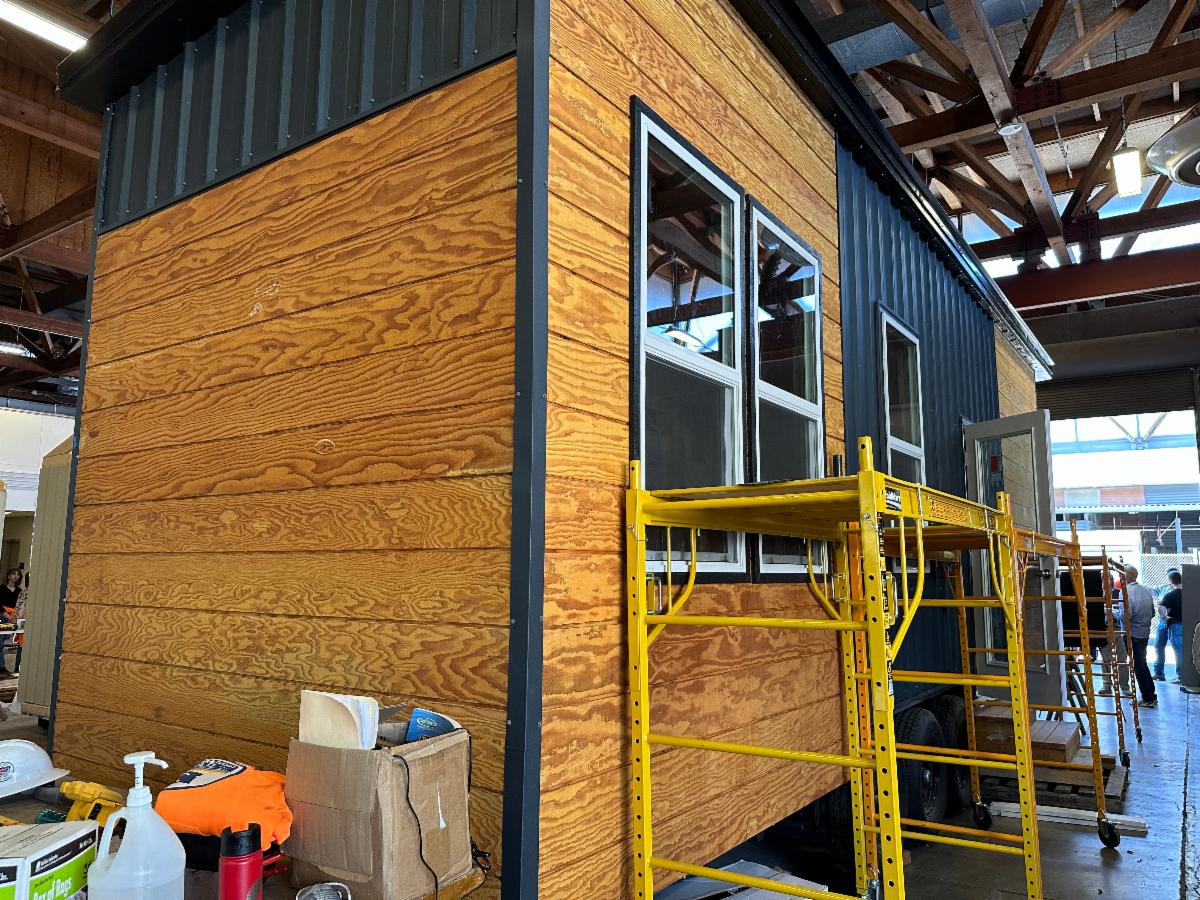
Visiting Team Oregon Build at LCC. I learned about two types of hands-on opportunities for high school and college students, learning construction skills while building sheds and cottages for emergency or transitional shelter. Some of these are built to move around for temporary housing while people are displaced by fire or other emergency. When they find more permanent housing this tiny home can be moved and available for someone else. Their tiny homes are used also by Everyone Village and Square One Villages. | | | | |