Celebrating our estuary
The last full week of September was National Estuaries Week. Across the country, people came together to recognize and show appreciation for these special places. In D.C., Tampa Bay’s own Representatives Buchanan and Castor signed onto a U.S. House Resolution designating the week. Huge thank you to them for their support! Here at home, we celebrated our estuary in many ways and invited you to join us in the festivities.
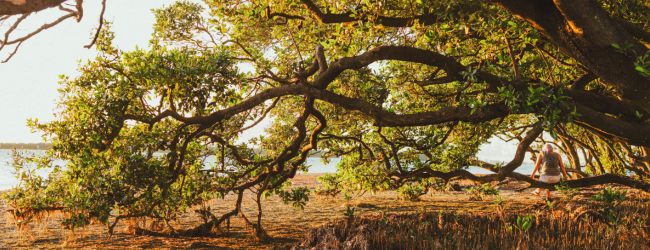
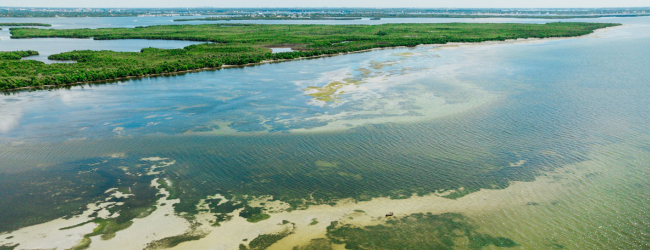
We ran a week-long social media campaign showcasing how our estuary and its watershed offers endless opportunity for recreation and respite—and in a place that is breathtakingly beautiful to boot. The rousing photographs in the campaign were taken by Drew McDougall to feature Tampa Bay and all that its outdoors offer. Check out our social media campaign on any of our platforms linked at the bottom of this newsletter. We plan to upload many of these images to our Unsplash page for public use.
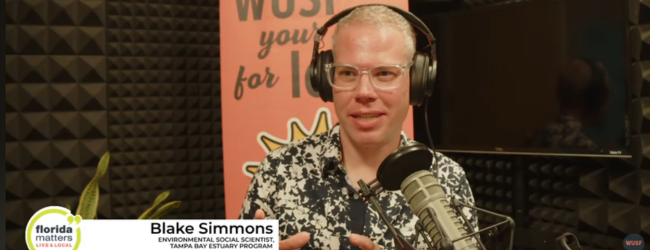
TBEP staff presented at various events throughout the week, including at the Restore America’s Estuaries conference in San Francisco. Marcus Beck, Senior Scientist, presented on the State of the Bay report TBEP publishes every 3 years, including our process for summarizing the metrics included in the report, which he leads. Blake Simmons, Environmental Social Scientist, presented on ways to integrate social science into restoration to maximize the benefits for people and nature. On Thursday, TBEP Research Ecologist Kerry Flaherty Walia participated in the Tampa Bay Association of Environmental Professionals 2026 Women in STEM Workshop held at the Rusty Pelican in Tampa. Kerry was one of 8 environmental leaders to lead a table discussion during the workshop; her table topic focused on implicit bias and how to be better allies in the workplace. The workshop was sold out and brought together over 80 women (and men) from the environmental field including lawyers, consultants, and field technicians and ranged in career stage from students to late career professionals.
Also on Thursday, TBEP co-hosted “Where Waters Meet: Stories of Hope from Florida’s Gulf Coast Estuaries” with the Sarasota Bay Estuary Program. The event focused on hope-inspiring environmental stories from skilled storytellers in environmental fields. Following an hour-long networking reception, the Master of Ceremonies, Tampa Bay Times Environment Reporter Max Chesnes, kicked off the event with a moving welcome to the audience. Then the audience heard from TBEP and SBEP Executive Directors, Ed Sherwood and Ryan Gandy; Co-owner of A.P. Bell Fish Co., Karen Bell; Mote Marine Lab Fisheries Ecology and Enhancement Program Manager and Senior Scientist, Ryan Schloesser; Florida Fish and Wildlife Research Institute Research Administrator, Courtney Saari; City of St. Petersburg NPDES Program Coordinator, Shaun Swartz; and Florida Wildlife Corridor Impact Campaigns Director and Florida Uncut Podcast Host and Producer, Mason Gravley. The event ended with a panel discussion for Max and the four other speakers, which Mason moderated. We had a lot of fun planning this event and are extremely grateful to our MC and speakers as well as the engaged audience.
We culminated the week’s festivities with the Tampa Bay Debris Derby held at E.G. Simmons Park in Ruskin. This annual trash tournament challenges teams and individuals to collect as much trash as they can in a morning for the chance to win prizes donated by generous businesses. For each large item or bag of trash brought in, a team was given a raffle ticket that they could use to try to win a prize. This year, 142 volunteers spread over 42 teams collected more than 12,750 pounds of trash—that’s 5,000 pounds more than last year! The heavyweight champions, Team No Bag Limit, collected 1,400+ pounds alone. The strangest item award went to team “If you litter, we can’t be friends” for bringing in a bucket of strange figurines from the Hillsborough River. We want to thank everyone who made this event a success, with special thanks to our co-hosts and sponsors, including the Coastal Conservation Association of Florida whose donations made the raffle extra special this year! The bay is 12,752 pounds of trash cleaner today because of your support!
You can continue celebrating and appreciating our estuary this fall in numerous ways. #OptOutside the day after Thanksgiving instead of participating in Black Friday consumerism. Enjoy the potentially cooler (okay, maybe just less humid) weather by spending time with your loved ones or seeking solitude in one of the many beautiful places our estuary and its watershed offer. A great place to get ideas and be inspired are the images we shared as part of the week’s social media campaign.
| |
Regional Stormwater Controls Project
We were awarded a $9.5 million RESTORE grant in 2024 by the Florida Department of Environmental Protection to decrease nutrient pollution into the estuary by developing, prioritizing, and implementing stormwater improvement projects throughout the Tampa Bay region. The grant work is split into two phases: planning and implementation.
The first phase budgeted $1.5 million of the grant to find opportunities to reduce nitrogen loads in Old Tampa Bay by at least 90 tons per year, or a 25% cut from current levels. This includes figuring out the locations with the greatest potential to reduce nitrogen loads into the bay, developing concepts for projects in those locations, working with partners to rank projects, then designing and permitting the top one to three projects so they are ready to implement. We focused this first phase on Old Tampa Bay because its seagrass recovery and water quality lag behind the other bay segments.
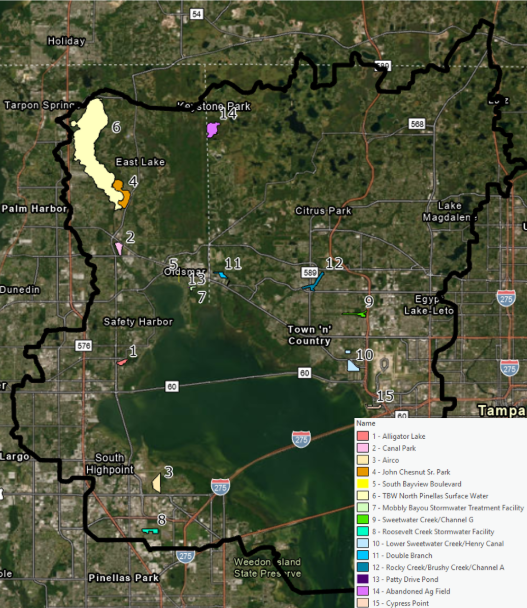
We’ve recently completed a couple major steps in phase one: identifying the locations with the greatest opportunities to reduce nitrogen loads from stormwater into the bay (i.e., areas near the creeks and canals moving the most freshwater to the bay) and developing 15 project concept areas that can be further refined in the Old Tampa Bay watershed.
The project locations with the greatest opportunities to reduce nitrogen loads in Old Tampa Bay include nine in Pinellas and six in Hillsborough counties. Four are existing or already planned concepts, two are retrofits to existing stormwater facilities, and nine are brand new concepts developed under this grant. Many of the new project concepts involve the watersheds of tidal creeks that flow into the bay. The locations with the greatest potential nitrogen load reduction include a deep injection well at Chestnut Park, an alternative water supply Surface Water Feasibility Study in the Brooker Creek/Lake Tarpon basin, and treating waterflow diverted from Sweetwater Creek and Rocky/Brushy Creeks.
So far, much of the work in phase one has been developed by TBEP and a contractor, but now we’re ready to work collaboratively with our partners to select up to three of the 15 project concepts to be fully designed and permitted. To help rank the projects, TBEP has asked both the Old Tampa Bay Working Group of the Tampa Bay Nitrogen Management Consortium and the Agency on Bay and Coastal Management to provide feedback on the prioritization criteria used to evaluate and rank the project concepts.
As phase one nears completion and with the RESTORE Council’s approval, we will move to phase two. The second phase of the project budgets the remaining $8 million of the RESTORE grant to fund construction of stormwater load reduction projects in the broader Tampa Bay region that are ready to begin. We are continuing to solicit projects that are “shovel ready” (i.e., designed and permitted) through next year.
This grant couldn’t come soon enough. According to the Value of Water campaign, the state of Florida will need to invest over $9 billion per year over the next 20 years to bring its water infrastructure into a state of good repair. In addition, a recent TBEP paper showed that future climate conditions will make meeting nitrogen targets in the bay harder. Considering these results and that stormwater is the biggest source of nitrogen loads into the estuary, reducing nitrogen pollution from stormwater sources with the funding from this grant is more important than ever.
| |
Funding helping homeowners tackle stinky situations
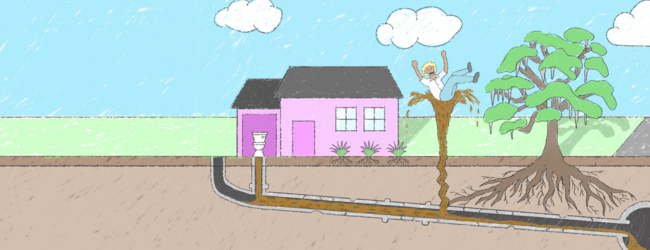
One way that we can further reduce the amount of nitrogen entering Tampa Bay, is by ensuring that it makes it to wastewater treatment facilities instead of leeching into the water table through leaky pipes. Following major sewage spills in 2015 and 2016, TBEP worked with partners to address this issue. We developed and ran a behavior change campaign called “Pipe Up” that ultimately encourages homeowners to inspect and repair damaged lateral sewer lines.
A key finding of the original Pipe Up campaign was that rebates would be an important way to incentivize lateral sewer inspections and repairs. So, we worked with local governments to adopt ordinances for rebate programs and provided funding to support them. As a result, there are now several programs across the watershed in place to help homeowners with this problem.
If you are a resident of Pinellas County and your private sewer lateral needs to be replaced or repaired, there is a rebate program available to you. If you are unsure if you have a private sewer lateral problem, the county recently launched a Private Sewer Lateral Find & Fix Program to help you figure it out. While the rebate program runs all year-long, the funding is first-come, first-served and it usually runs out before being refreshed when the new fiscal year begins. Guess what time it is? It’s the new fiscal year! That means that if you have an eligible rebate, now is the time to get your application in order. Head to the Pinellas County website to learn more about what’s covered, who is eligible, and how to apply for the rebate.
With funding support from TBEP, the City of St. Petersburg’s private lateral rehabilitation rebate program has replaced 18 private sewer lateral and over 1,000 linear feet of pipe. The program is in the first phases of implementation so, for now, only residents in specific neighborhoods are eligible, but the program will be expanded to all homes within the city’s service boundary during the next phase. To learn more about this program, including eligibility, what’s covered, and how to apply, go to the City of St. Petersburg’s website.
Now that the rebate programs are up and running, TBEP is planning new social marketing research to increase resident awareness and use of these programs.
At the individual home level, it may seem like a trivial amount of nitrogen pollution being prevented from entering the bay, but every load reduction we can achieve matters. Together, we can keep Tampa Bay clean and healthy for wildlife and ourselves!
| |
Bay fish still recovering
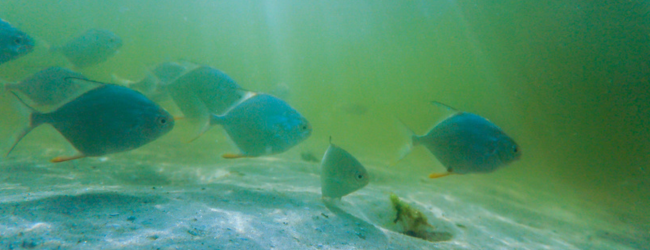
The 2025 Tampa Bay Nekton Index results are in—all four bay segments are in the “caution” category, indicating that fish and macroinvertebrate populations are recovering from the combined effects of multiple stressors, like the 2021 red tide event, storms, and on-going drought conditions. While not where we’d like to see them, we know it can take several years for fish communities to stabilize after major disturbances. So long as we continue to prioritize the health of their habitat, they will recover.
The Nekton Index is calculated each year using the previous year’s cumulative fisheries-independent monitoring data collected by the Florida Fish and Wildlife Conservation Commission. While the results don’t tell us what is happening right now, the data allow us to track trends in how the bay’s fish and macroinvertebrate communities respond to changes in environmental conditions. Because the data are collected across the bay at specific sites, we can also track how conditions change at specific locations or bay segments (e.g., when seagrass health declines and it disappears, we can link diminishing nekton index scores at that location to the declines). View the Tampa Bay Nekton Index Dashboard on our website.
| |
Underwater “Easter egg” hunt produces thirty-eight scallops
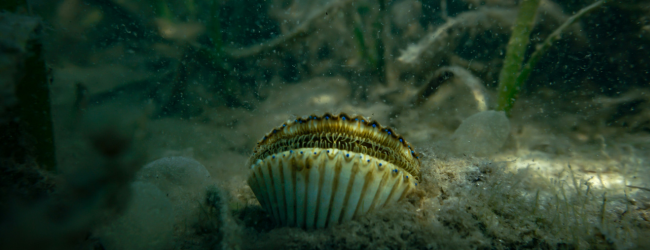
As we approached the original date for the Great Bay Scallop Search, August 1, the weather was not looking favorable for safely boating and snorkeling. In the eleventh hour, we decided to pivot to a do-it-yourself-type scallop search this year to protect our volunteers. Teams had from August 1 until August 28 to head to a designated location to search for bay scallops, something we liken to an underwater Easter egg hunt.
Despite the last-minute course change, 23 volunteer teams participated in the 2026 Great Bay Scallop Search, co-hosted by the Tampa Bay Watch and TBEP and sponsored by Owens Corning, and found a total of 38 bay scallops. Thank you to everyone who participated! You can see results of this year’s Great Bay Scallop Search in our updated scallop search dashboard.
A sustainable bay scallop population is a priority action under the TBEP Comprehensive Conservation and Management Plan. Bay scallops are an important indicator species of bay health because they need clear, salty water and healthy seagrass habitat. The annual Great Bay Scallop Search is an excellent example of a community science program that involves the public in scientific monitoring while engaging them in learning about the issues that affect the bay. Learn more on our website.
| | |
Bring TBEP back-to-school with you
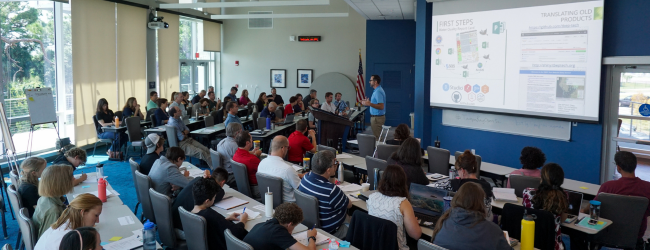
Have you ever wished that you could bring TBEP to school with you? While we can’t join you there every day (we did our time), we do offer in-person support for students, teachers, and classes. If you are covering a topic in your classroom that we have expertise in, we could present to the class as guest speakers. We also love to inspire students, especially to consider careers in science. For one example, we recently participated in a STEM night at Lithia Springs Elementary School. Another example of encouraging the next generation, TBEP Assistant Director Maya Burke gave a stellar convocation address to the USF Honors College. We also serve as advisors in many capacities to undergrad and graduate classes. For instance, recently University of Florida students in the Gulf Scholars program joined us to learn about our work related to the Tampa Bay Coastal Master Plan as they are studying these topics in the region. If you’d like to request a speaker or TBEP staff to participate in an event, please submit a speaker request form. If you are interested in asking TBEP staff to act as advisors to students, please contact our staff directly or email info@tbep.org.
| | |
The Jane Goodall Hike for Hope is an invitation for everyone around the world to honor late scientist and conservationist Dr. Jane Goodall by committing to spending time outdoors on the anniversary of her passing and the following weekend.
| | |
Native Grass Planting at Boyd Hill Nature Preserve | Oct 17
Join the Friends of Boyd Hill and the St. Pete Eco Club to restore native grasses in a coastal upland habitat at Boyd Hill Nature Preserve as part of a Bay Mini-Grant-funded project.
| |
Come discuss how we might celebrate the Bay Mini-Grant 30th Anniversary. Learn about Local Environmental Archives on a Global Scale: Digitizing the History of Tampa Bay at USF from Dr. Amanda Boczar & Sydney Jordan. And take a tour of the USF Library and Herbarium.
| | |
The mission of the Tampa Bay Estuary Program is to build partnerships to restore and protect Tampa Bay through implementation of a scientifically sound, community-based management plan.
TBEP is a partnership of Hillsborough, Manatee, Pasco and Pinellas counties; the cities of Tampa, St. Petersburg, Clearwater and Largo; the Southwest Florida Water Management District; the U.S. Environmental Protection Agency and the Florida Department of Environmental Protection.
| | | | |