|
By Rev. Christopher B. Morton
Regional Minister
What is ABC Christian Church’s story?
Have you ever had someone ask you about the congregation where you worship and serve?
Did you have a clear, succinct response? Did you feel good about what you were describing?
Or, did your tongue get tied, and found that words stumbled out of your mouth only to watch them fall to the floor before they landed in the person’s ears?
Did you re-play the conversation in your mind afterwards, but this time you were able to find all the right words on that do-over-in-your-mind?
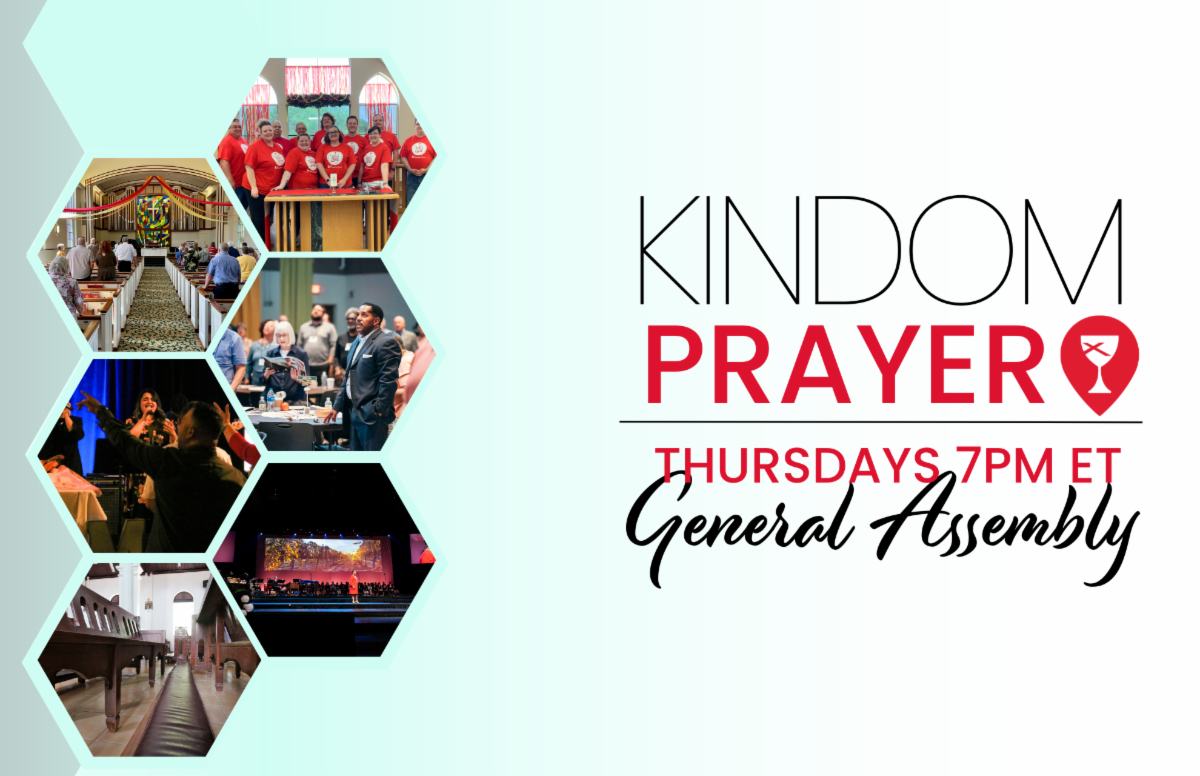
The Christian Church (Disciples of Christ) will be gathering in Louisville KY from July 29th – August 2nd for our 2023 General Assembly: Kin-dom of God – Within Us, Among Us. There, we will gather to worship and pray together, to sing and move together, and to tell ours and listen to one another’s stories.
Together, we will share our stories so that we can learn from one another about issues that local congregations are facing, and events that local congregations are celebrating. We will tell stories about how churches are exploring ways to re-purpose their buildings, address Christian Nationalism, launch ministries to address climate change, bring men together anew, support pastor wellness, rebuild following a disaster, and live in a post-pandemic world. To only name a few of the ways that we will tell and listen to stories from the church.
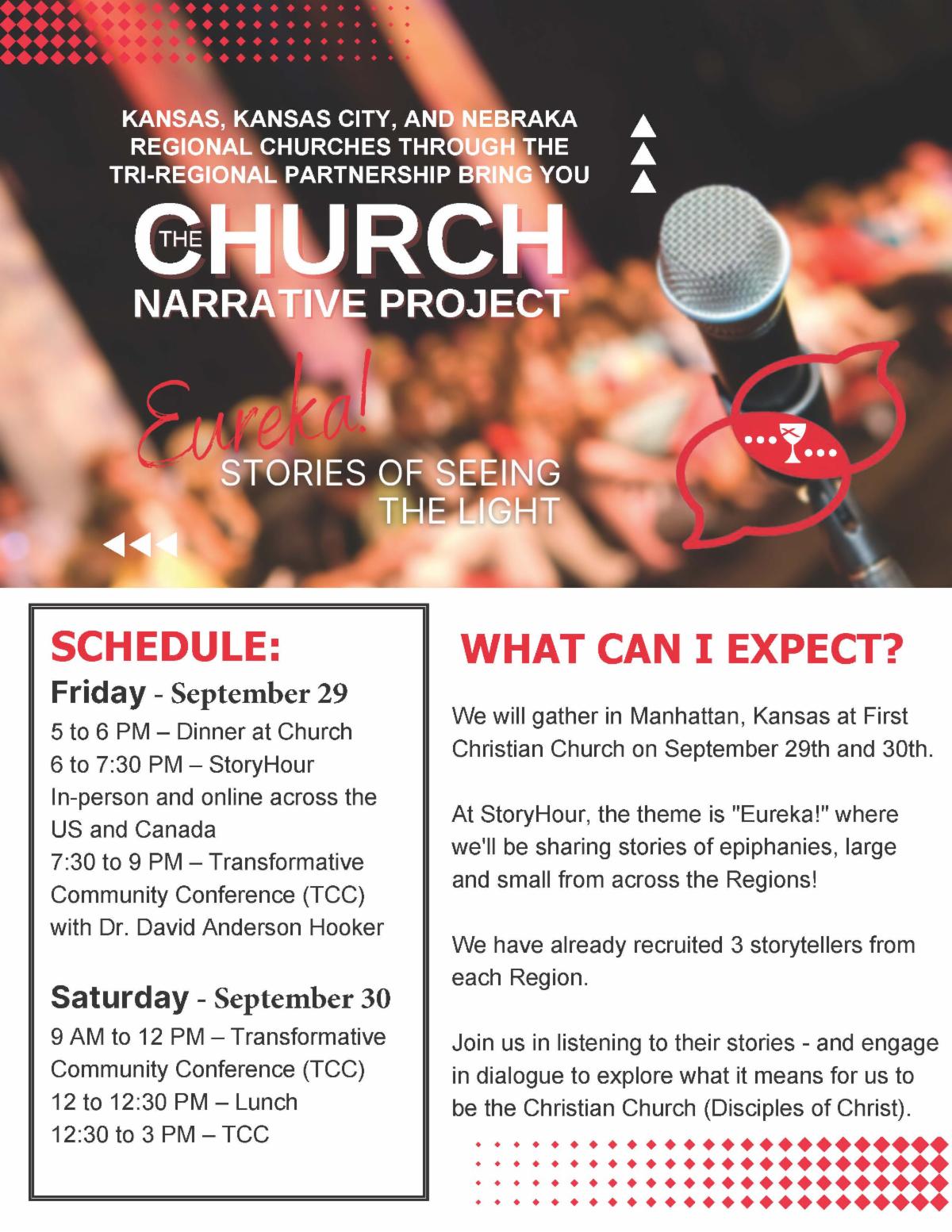
For most of us, we think of such stories as the same thing as a narrative. In this issue of our e-Newsletter on Church Vitality and Leadership, there are a number of pieces that talk about stories and narratives (e.g., the Tri-Regional Partnership Initiative is hosting the Church Narrative Project on September 29th and 30th in Manhattan KS). But the difference between a story and a narrative is not a distinction without a difference. Let me see if I can help untangle one from the other.
The stories that we tell are usually about particular events, or series of events that unfold. For instance, a church that wanted to serve people who lived downtown struggled with getting volunteers to go downtown. In response to the shortfall of volunteers, the church hosted small group conversations so that they could listen to the questions and concerns that people had about going downtown. Only, no one came to the small group sessions.
The narrative conveys why things happened in a story. With that in mind, let me use another example. For brevity sake, I’ll use the story “Someone died.” That is a story, albeit very brief. The narrative of that story might be “Someone died, and it was very wrong.” The narrative explains our understanding of the event(s), reflecting a particular point of view.
You don’t choose to, or not to watch TV channels because you know the story that they will tell. You choose which TV channels because of the narrative that you associate with that TV channel. It is likely that you watch either NBC, ABC, CBS, MSNBC, Fox, or CNN – not because you know the story that they will tell, but because your narrative of that channel suggests that whatever story they are telling is what you have come to expect.
Likewise, people choose a church not because of a story about a single event, or series of events, but because of the church’s narrative. People are listening for the “why” of the stories that you tell about the church – to hear the church’s narrative.
The challenging part of any storytelling is to become aware of that underlying, or overarching narrative that streams through the story that is being told.
As you consider the church’s story where you worship and serve, begin to make notes (mentally, or physically) of what the narrative you hold about the church. And see what emerges for you about your church’s narrative. And consider how the Church Narrative of the Christian Church (Disciples of Christ) influences how you hear, and tell the stories about the church where you worship and serve.
|