History is Our Story, and
Our Story is Your Story
| |
Dear Society Members,
Well, it has been a very busy spring!
Society board members had a great time participating in several events leading up to the razing of the Robert Louis Stevenson Elementary School. Principal Lisa Sullivan organized two open houses for current Grandview Heights students of all grades and for the community. We are highlighting those events, including the groundbreaking ceremony for the new school, in this newsletter. We will be documenting the construction project throughout the year.
We also became aware of the possibility that a time capsule was planted on the Stevenson school grounds in 1960. We are currently pursuing the validity of that report. Hopefully, it is true, and we can preserve it as the new school is constructed. If our readers have any information about the time capsule, please notify us at ghmchs.1@gmail.com
GH/MCHS board members have also participated in or attended several other community events, including the annual Memorial Day parade, the Memorial Service at Memorial Park, and two focus groups conducted by Parks and Recreation. In regard to the latter, we feel it is important to educate or remind the various attendees of the rich heritage of our two communities.
Please read on for updates on our popular History Walks and the 100+ Year-Old Home Marker Program. We are also requesting your participation in a short survey to help us focus on events and activities that are most meaningful for you.
Thank you VERY much for your continued support, and have a great summer!
Mike Young
President, GH/MCHS
GHHS Class of 1973
| |
Our mission is to connect with you by bringing our rich past to the present. We want to engage more closely with you to share those stories and events in more meaningful ways. In doing so, we want you to become friends of the Society, not just members—rather than just joining us, do something with us. To accomplish this goal, we are drafting a survey to understand your interests better and solicit suggestions for activities you prefer or would like to see. To complete the survey, please go to
If you prefer not to participate in the survey but wish to comment, please submit your comments or suggestions to ghmchs.1@gmail.com
| | |
Robert Louis Stevenson Elementary School is 100 Years Old This Year
Robert Louis Stevenson Elementary School is celebrating its 100th birthday this year. However, it will not see 101 years in its current form.
|
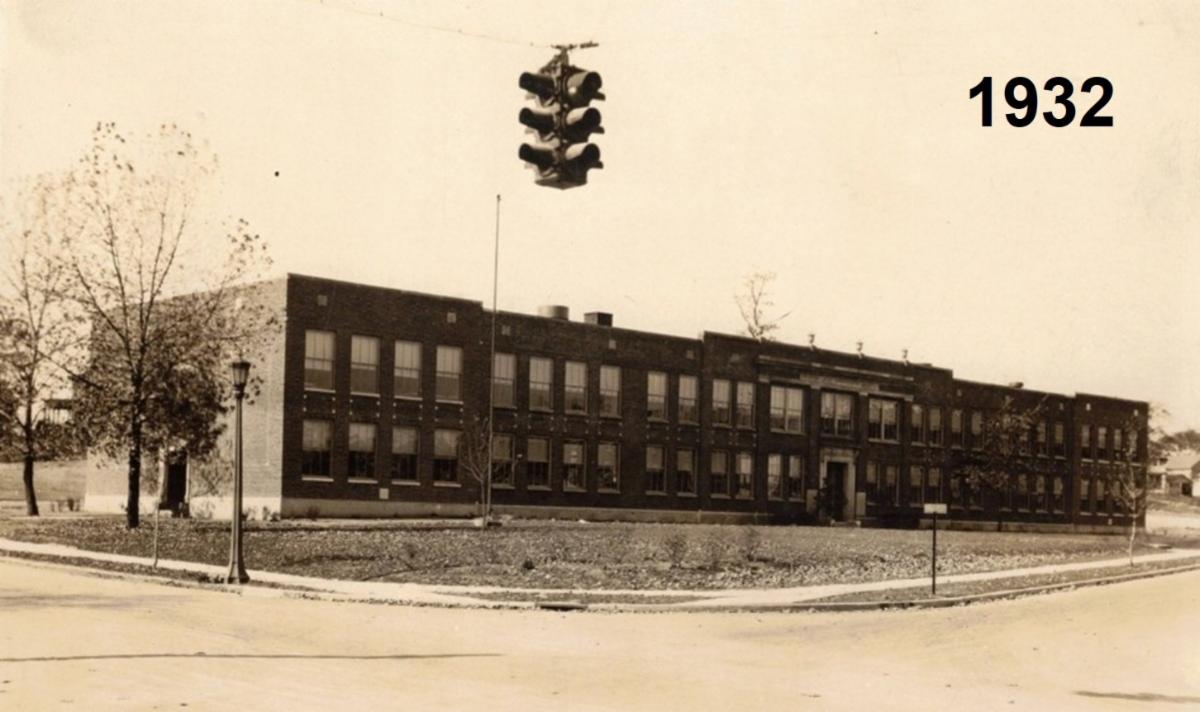
Earliest known photo of Robert Louis Stevenson School
|
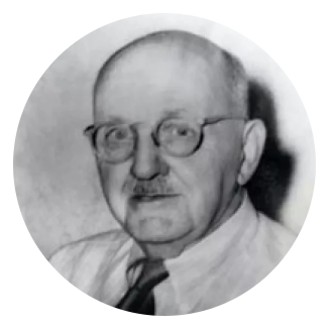
Beginning this month, Grandview will build a new school in its current location. The construction management firm Elford Inc. will lead the project. Interestingly, Elford was the firm that built the school in 1926. In 1910, Edward “Pop” Elford, with just $153.75 to his name (2026 = $5,300), decided that the best way to promote integrity in the construction industry was to start his own company. The Robert Louis Stevenson Elementary School was one of Pop’s first major projects.
To learn more about the early history of Robert Louis Stevenson School, please visit our website. Click HERE
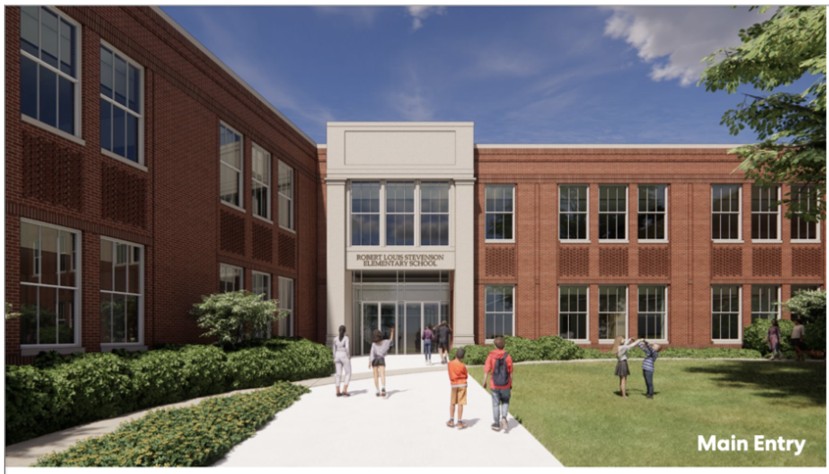
The new school will retain its original name.
| | Architectural drawing of the new Robert Louis Stevenson School | | |
Rising Population Drove the Construction of the Robert Louis Stevenson School in 1926
Families began moving into the Marble Cliff/Grandview Heights area at the end of the 19th Century. This growth accelerated after the Hamlet of Marble Cliff was incorporated on October 12, 1901, and the Village of Grandview Heights on February 12, 1906. In 1912, there were 130 pupils registered in the elementary schools. Eight years later, in 1920, student enrollment had grown to 628. The educational system encompassing the two communities was largely responsible for attracting so many young families to the area. Indeed, during the 1920s, the Grandview area was experiencing the largest housing construction boom in central Ohio. By 1925, children encompassed 25 percent of the population of Grandview Heights.
By this time, the 10 rooms of the main elementary school located at Fairview and First Avenue could no longer accommodate the number of children living in the area. Consequently, a second elementary school—soon named by students after the author Robert Louis Stevenson—was erected at the corner of Oxley Road and First Avenue for $135,000 (2026 = $2.5 million). At the same time, city planners, concerned about rapid population growth, earmarked another property at the corner of Third Avenue and Cambridge Boulevard as the site of a future school (though it was never used as such).
| | |
The GH/MCHS Participates in Final Events at Stevenson Elementary School
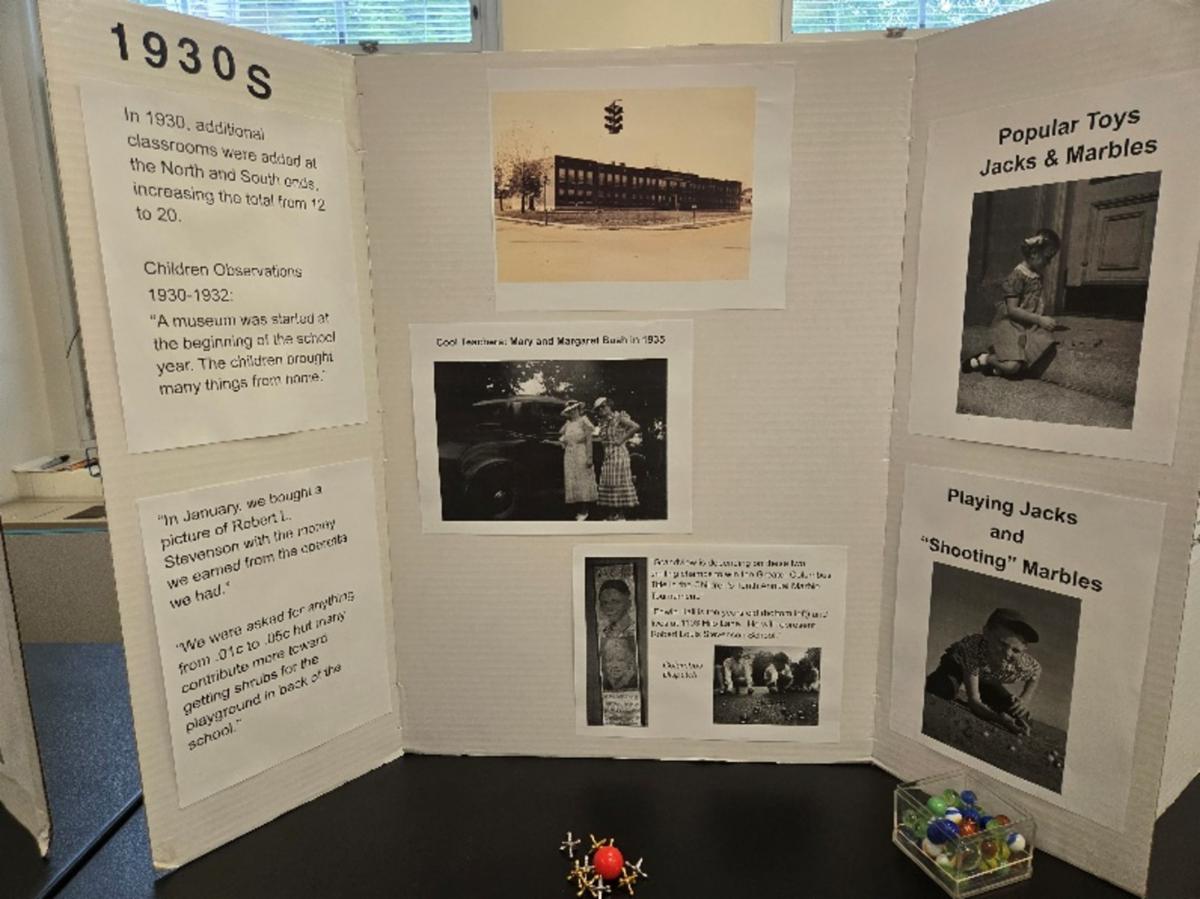
In April and May, the Society participated in three events leading up to the school's final days. On April 24, Society board members Jill Kuyper, Brian Kuyper, Carlye Bills, Renee Heydinger, and Mike Young participated in the school’s All-Arts Day. Jill and Mike had worked for several weeks to construct large poster boards depicting each decade of the school’s history. They also identified and purchased the most popular toys from each decade and included them in the displays. For example, the yo-yo was the most popular toy in the 1920s, and jacks and marbles for the 1930s.
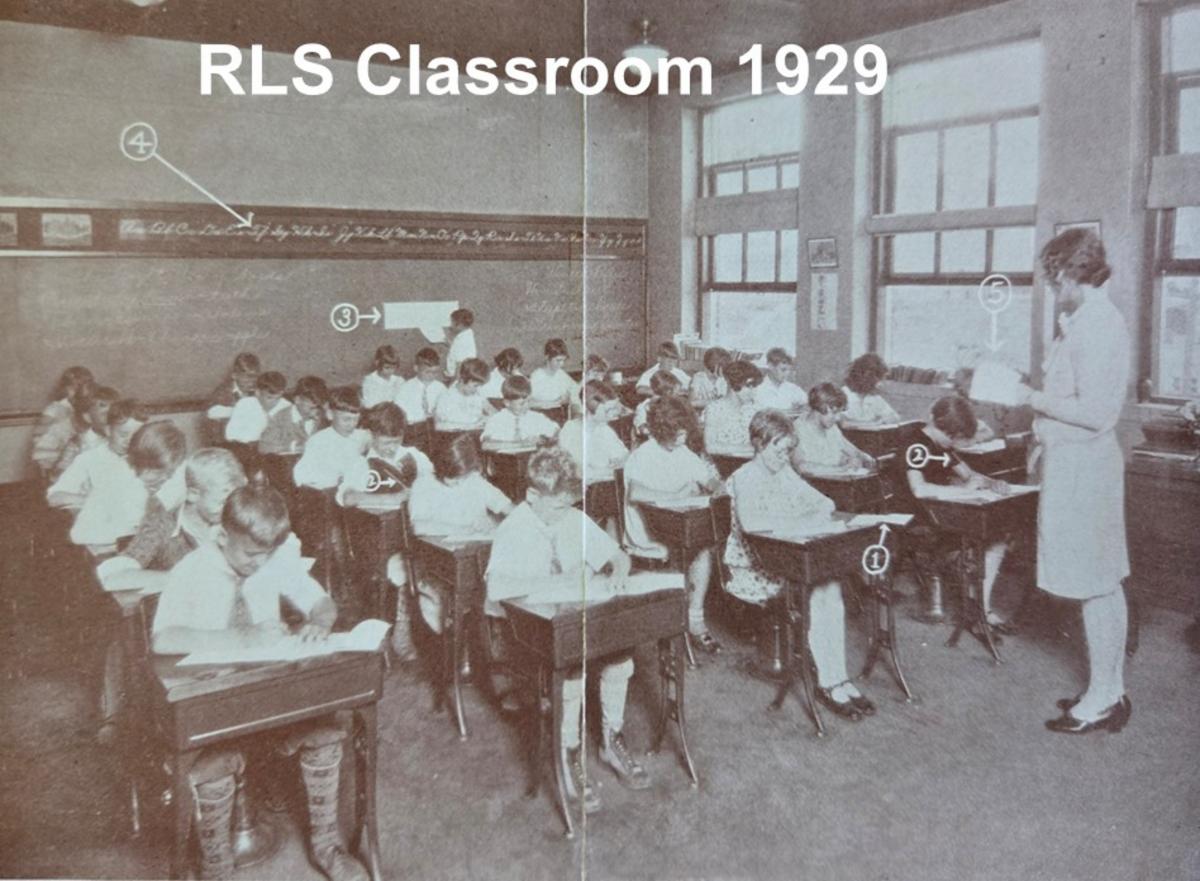
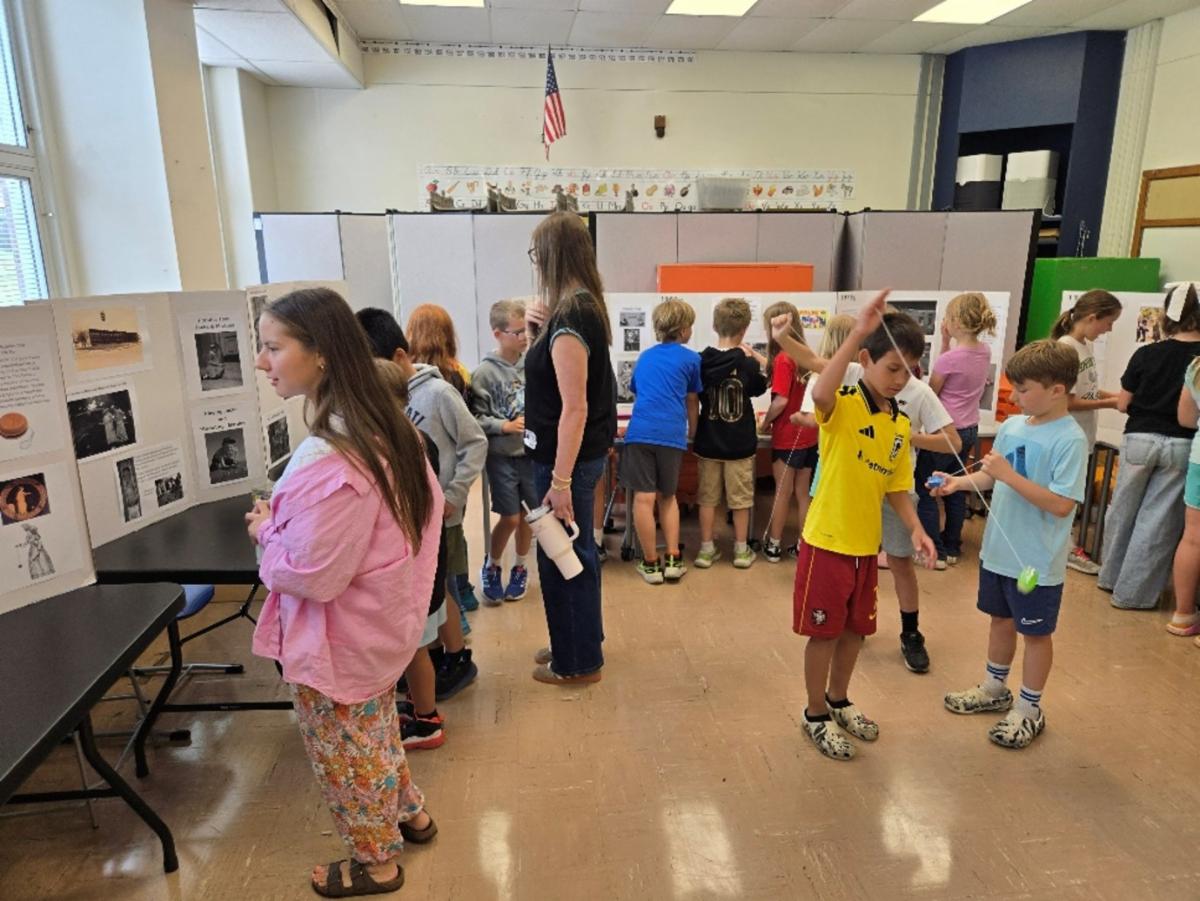
| Throughout the day, second and third-grade classes rotated through the displays. The kids learned about Robert Louis Stevenson, including his photograph and the books he authored. They also saw other photos, such as a classroom configuration from the 1920s, how teachers dressed in the 1930s, and how the First Avenue playground changed over the years. The following day, current students in all grades one through twelve were invited to tour the school and to visit the Society’s display. | | The students enjoyed playing with all the toys in the displays. | |
The Groundbreaking Ceremony and Open House
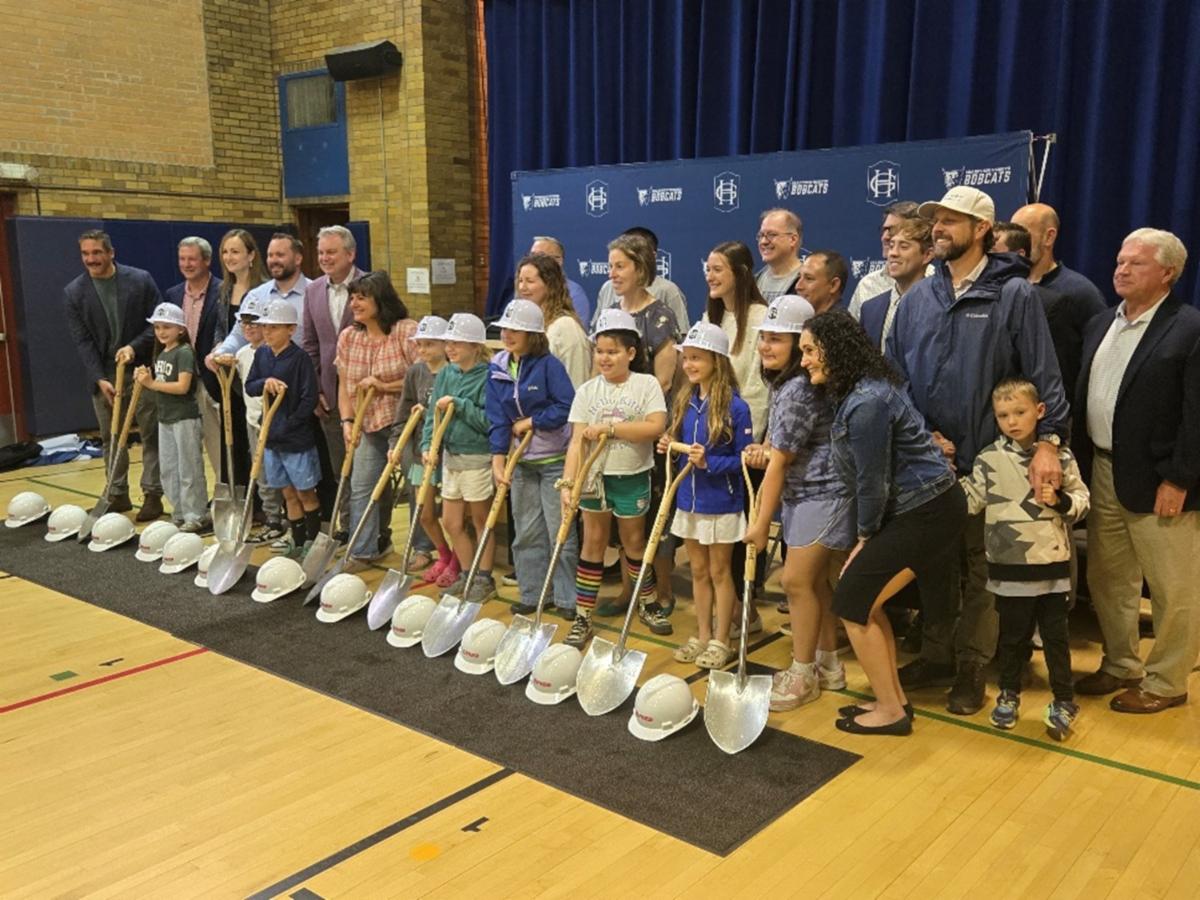
More than 200 local residents came to the school to attend the groundbreaking ceremony and to take one last look at the school. At 10 am, rain forced the event to be moved inside. That did not dampen spirits as Stevenson alumni walked the halls and classrooms, reminiscing about their years there. The board members resurrected the display for this groundbreaking ceremony and community open house.
As everyone relocated into the gymnasium, School Superintendent Andy Culp enthusiastically spoke about past and present improvements within the Grandview school system. He sincerely thanked the many people involved or responsible for the progress in our communities.
|
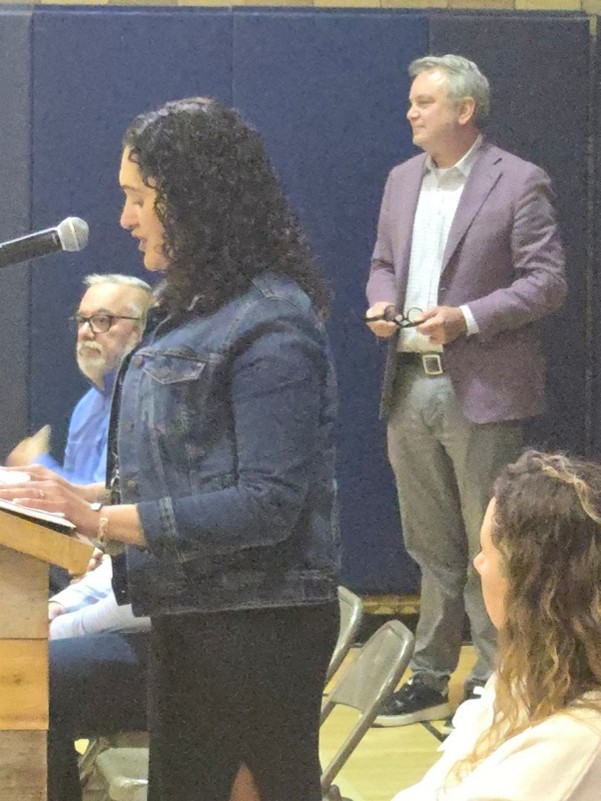
Stevenson principal Lisa Sullivan, visibly moved by the musical performance of her kindergarten and first-grader students, briefly spoke to thank the community and her staff for the support she has received and to the joy she experienced as RLS principal. This is her last year at Stevenson as she moves to a new position as principal near her home in Hilliard.
Principal Lisa Sullivan speaks to the attendees. Andy Culp, Superintendent of Grandview Schools (back right), and Jim Buffer, Director of Operations for Grandview Schools (back left), look on.
| |
Parks and Recreation Focus Groups
In April, Carlye Bills and Mike Young represented the Society in two focus groups conducted by Grandview Heights Parks and Recreation. As the various participants representing different constituencies in the community conceptualized the future, Caryle and Mike’s takeaway was how to preserve our communities’ history while advocating for progress in a measured way.
One example would be the Wallace Gardens located at the corner of Goodale Blvd and Grandview Avenue (see article below). While some residents might view it as prime real estate for a future community project or facility, the Society believes its historical significance as a Victory Garden dating back to World War II underscores Grandview Heights' rich heritage.
Heritage is what a community chooses to inherit, preserve, and pass down to the next generation. It’s about identity, values, and meaning. Heritage includes physical things such as our historic homes and artifacts, as well as intangible traditions like folklore and community celebrations. The Goal of the Historical Society is to foster a sense of belonging, honor those who came before us, and preserve a shared identity.
| |
The Victory Gardens and the
Grandview Community Kitchen
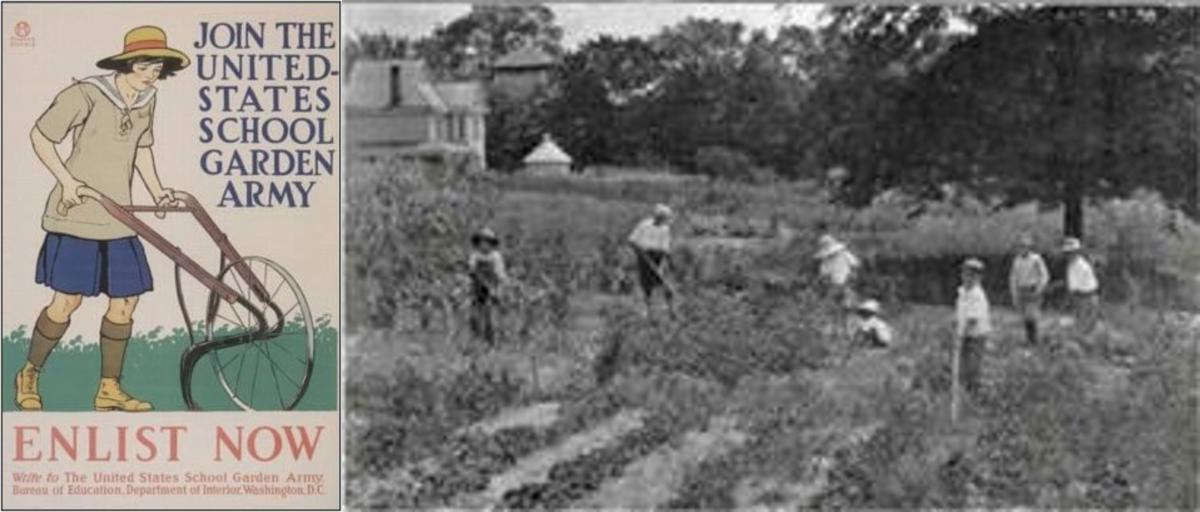
| During the First World War, the Federal government encouraged the development of personal and community Victory Gardens to support rationing and to foster community togetherness. Posters appeared throughout most communities in the U.S. in 1917 and 1918 to encourage the creation of gardens. Grandview and Marble Cliff had community gardens along Goodale Boulevard, Grandview Avenue, and near First Community Church. |
The photograph below is from the August 1918 Norwester Magazine. It depicts Grandview school children working in the school-sponsored gardens at the corner of Third Avenue and Arlington Avenue. The school PTA sponsored student gardens in this location. The eighty school kids each had a 10’x30’ plot that they were responsible for maintaining. They set up their lots as a “company” under the direction of the high school principal, Mr. P. A. McCarty (a math and science teacher who became the first principal of GHHS. He lived on First Avenue between Wyandotte and Lincoln and played a foundational role in the early development of the school district). The “officers” of the company who "enlisted" in the School Garden Army were students Leroy Hendershott (Captain), Marian Hall (1st Lieutenant), and Jean Marchi (2nd Lieutenant).
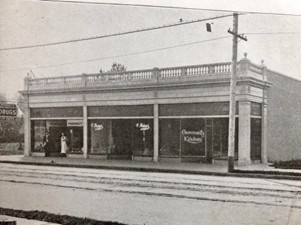
| The students planted and grew potatoes, lettuce, beans, onions, and cabbage and donated their harvest to the community food kitchen on First Avenue, where the vegetables were prepared. The 1919 photo below shows the community kitchen, located in the same building as a Kroger store and Mykrantz Drug store. The building was on the southwest corner of First and Oakland Avenues, east of the lot where the library would eventually be constructed. Note the streetcar power line above the tracks for the streetcars that ran through the communities from 1901 to 1936. |
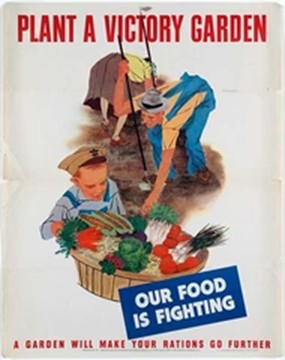
During World War II, the Federal Government once again encouraged the use of Victory Gardens. Posters like this were widely distributed across most communities in the U.S. The program encouraged people to plant victory gardens not only to supplement their rations but also to boost morale at a time when victory was not assured. They were used along with rationing stamps and cards to reduce pressure on the food supply. Victory gardens became a part of daily life on the home front.
|
The Victory Garden at Goodale and Grandview Avenue has been very popular among the residents of Grandview Heights and Marble Cliff since World War II. The gardens sit on land that was donated to the city in the 1930s by George Urlin, a photographer, owner of the Columbus Bicycle Co., and real estate developer. In 1984, the city named the gardens after Ashland Avenue resident Jim Wallace. At that time, Jim had maintained a garden plot there since 1944 and was popular among the other gardeners, often offering advice. As a boy growing up in Dayton, Jim had helped his family maintain a Victory Garden during World War I. The Wallace Gardens are a historic treasure in Grandview Heights. The Society is now beginning the process of obtaining recognition in the Ohio Historical Marker Program.
| | |
Grandview Heights High School
Alumni Association Luncheon
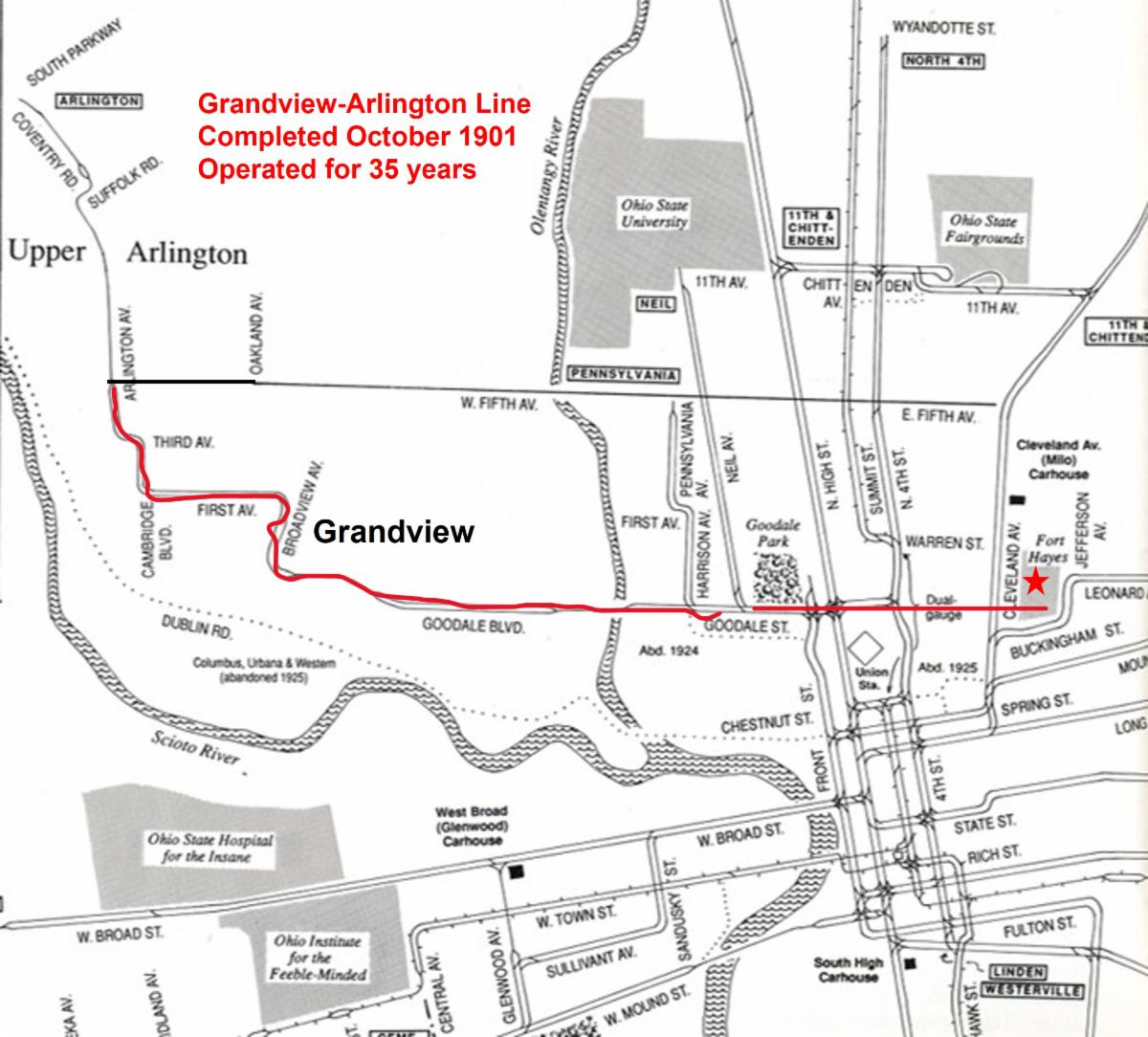
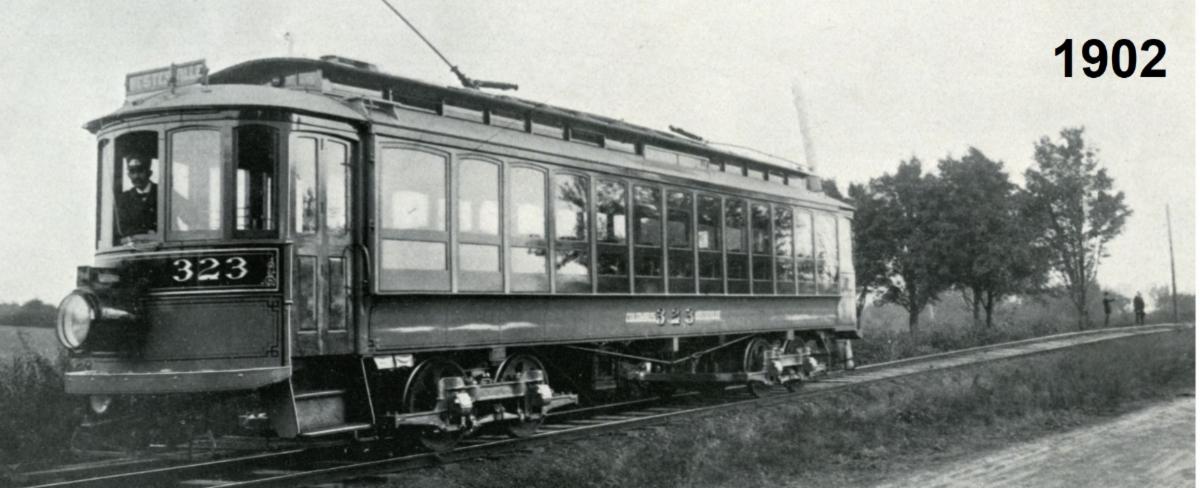
At the May 22 Grandview Heights High School Alumni Association luncheon, Mike Young gave a presentation on the history of Fort Hayes and the garrison’s connection to Grandview Heights and Marble Cliff. He spoke to the origin of the post, beginning with the Civil War, when the Federal government ordered the construction of a Federal arsenal in Columbus to equip Ohio volunteer militia units joining the Union Army. Initially called Columbus Arsenal, Mike traced its evolution to 1875, when it became Columbus Barracks and the Army’s most important recruiting base, then through the Spanish-American War and World War I. Mike noted that many officers and senior NCOs stationed at Fort Hayes in the early 20th Century (called Columbus Barracks until 1922) lived in Marble Cliff and Grandview Heights, attracted by the nice homes, the quality of the school district, and the ease of commuting along the Arlington-Grandview streetcar line (depicted below). The streetcar line operated between 1901 and 1936.
| |
|
Announcing a New History Walks Tour
History Walks is a collaborative effort between the GH/MCHS and the Grandview Heights Public Library (GHPL). It is a collection of 15 walking tours, each with approximately 8-9 stops, with the associated history described. Each tour is approximately 2 miles long and takes around 1.5 hours to complete on foot. Additional themed tours are sometimes added to the app. We encourage walking, running, or biking the tour routes to get the most benefit from this experience. The tour is FREE. You can download the app at grandviewhistorywalks.org, the Apple App Store, or Google Play Store.
| |
Board member Karen Riggs has done a marvelous job of developing our History Walks. She recently worked with GHPL, our partner for History Walks, in developing the new “Tree Tour.” Grandview Parks and Rec provided tree descriptions for the app. This new tour was launched on Arbor Day, Friday, April 24. You can download it HERE.
| |
Is Your Home Older Than 100 Years Old?
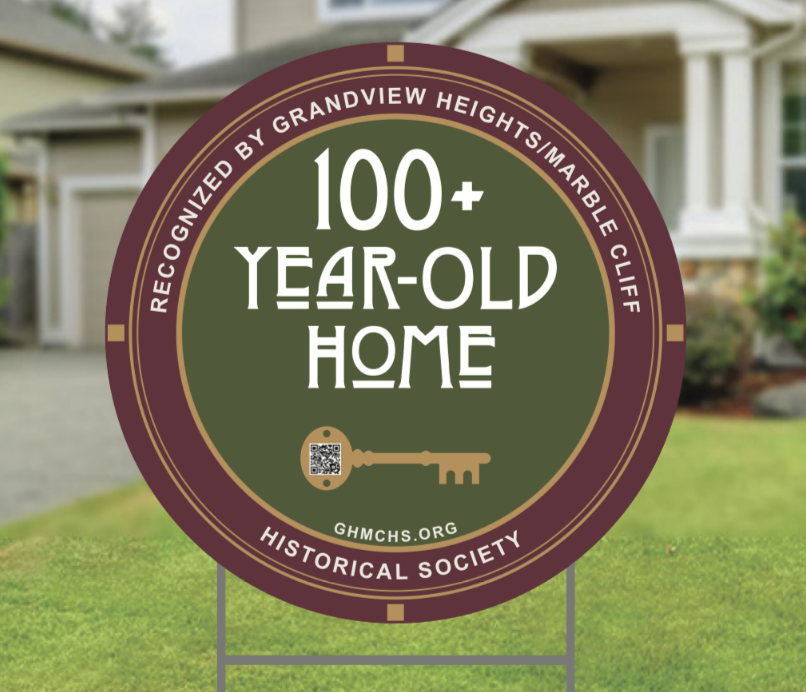
Last year, the Society launched the 100+ Year-Old House Marker Program. Between the late 1890s and 1929, hundreds of homes were constructed in Marble Cliff and Grandview Heights. Many of our homes have already reached that centennial event, and owners have purchased markers. If you wish to learn more about the program, please visit our website at ghmchs.org.
| |
|
Our Current Board Members
Trustees:
Renee Heydinger
Ruthanne James
Jill Kuyper
Brian Kuyper
Karen Riggs
Audra Wheeler
Active Emeritus:
Wayne Carlson
Tom DeMaria
Kent Studebaker
Officers:
Carlye Bills – Secretary
Geli Young – Treasurer
Teri Alexander – Vice President
Mike Young – President
| | |
Volunteers Welcomed!
To sign up and become a part of our volunteer team, simply shoot us an email at ghmchs.1@gmail.com. Don't forget to include your name and contact information and let us know if you are interested in any particular events.
| |
We Want You...
To Join the Society Board
| | |
Want to learn more about Grandview Heights and Marble Cliff and help preserve our communities' heritage and desirability?
Responsibilities of a Trustee include:
- Attend a monthly Board meeting
- Assist with Society events
- Promote the Society’s mission
An in-depth knowledge of Grandview Heights and Marble Cliff history is not essential; however, an interest in learning about our communities’ history is important.
If you are interested in becoming a Trustee, please send a statement of interest, contact information, and a short biography to Mike Young, President, at ghmchs.1@gmail.com.
| | | | |