Faulkner County Agriculture Update
October 23, 2026
| | |
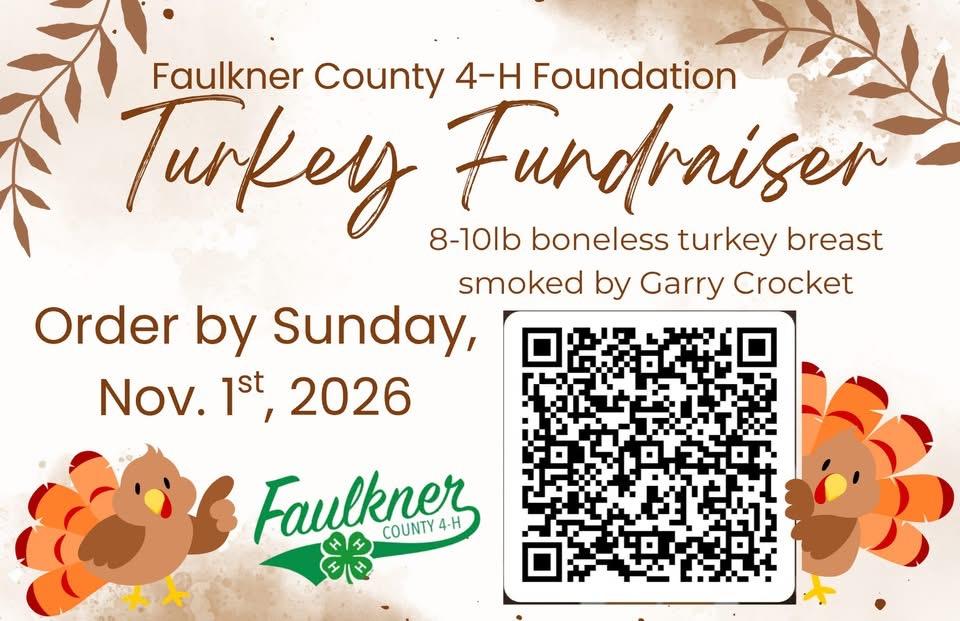
Faulkner County 4-H Foundation Turkey Fundraiser
It is time for the annual smoked turkey fundraiser from the 4-H Foundation. We need orders by November 1, so get your orders in soon because November will be here before you know it.
| | |
Weather
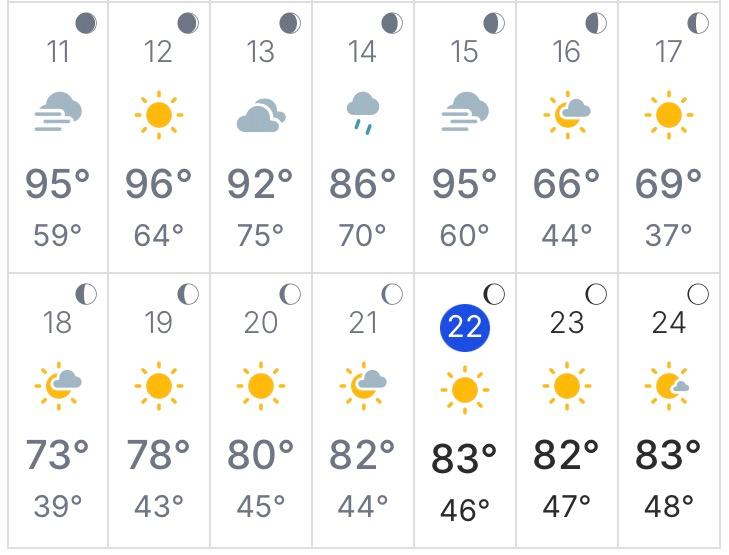
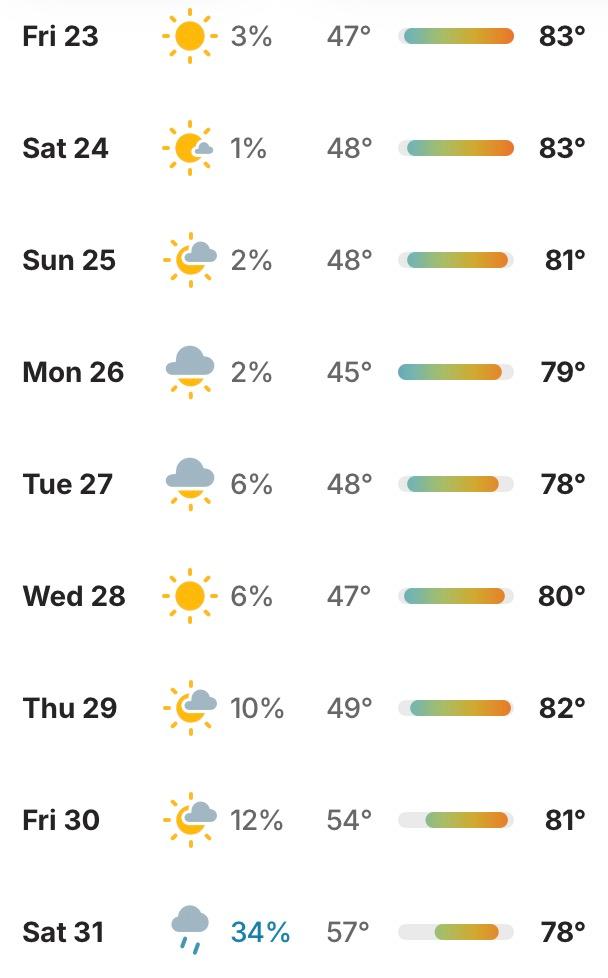
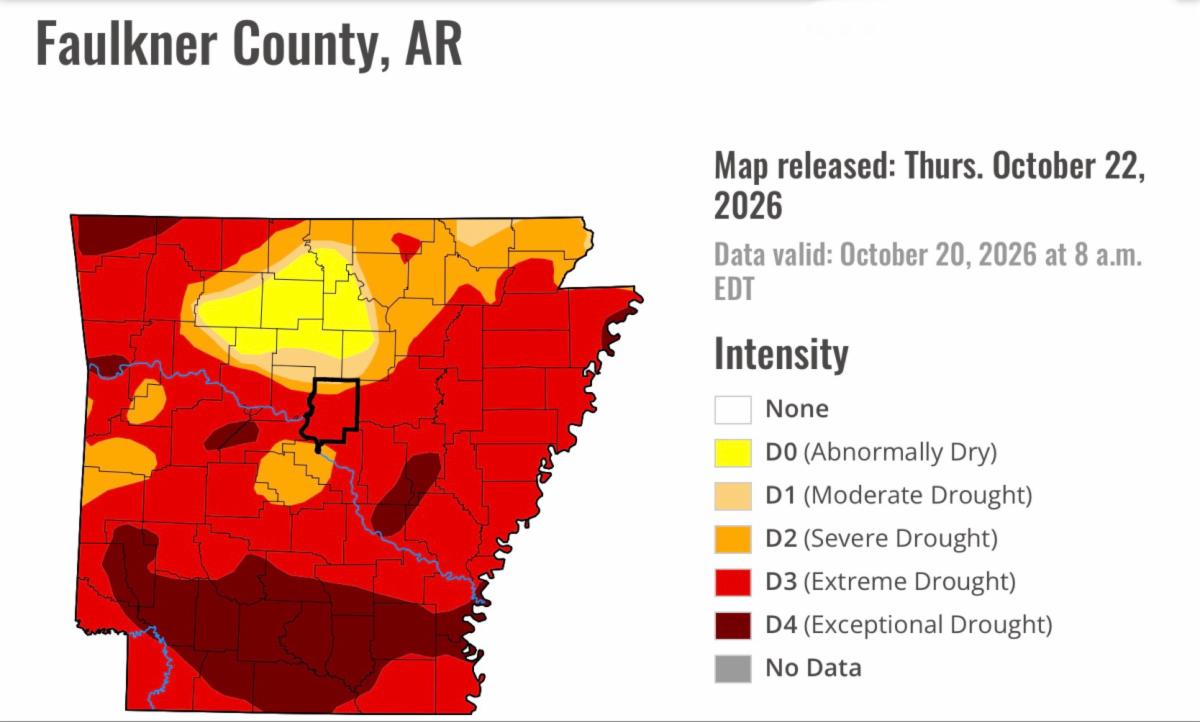
If we go just off of temperature this was a really nice week. Highs in the 80's and lows in the 40's has been wonderful. But we still have not had any rain. If you look at the drought map the majority of the state is in D3 and the D4 areas increased greatly this week. The very top part of Faulkner County is still in D2, but the majority of the county is in D3 and I wouldn't be surprised if we don't move into D4 next week. The forecast doesn't have much of a change next week, with the next best chance of rain moving in on Halloween. The question is will it be a trick or a treat!
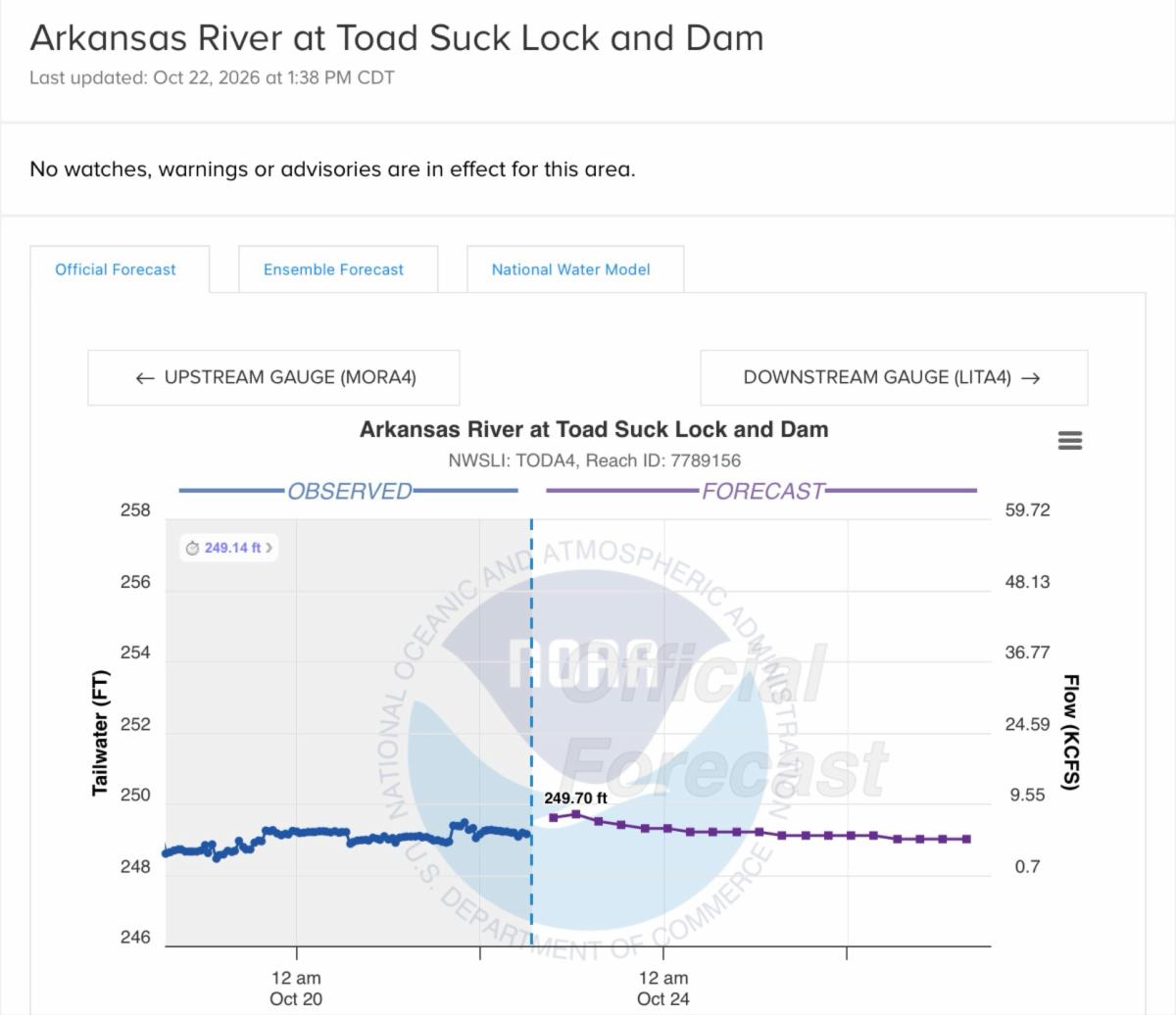
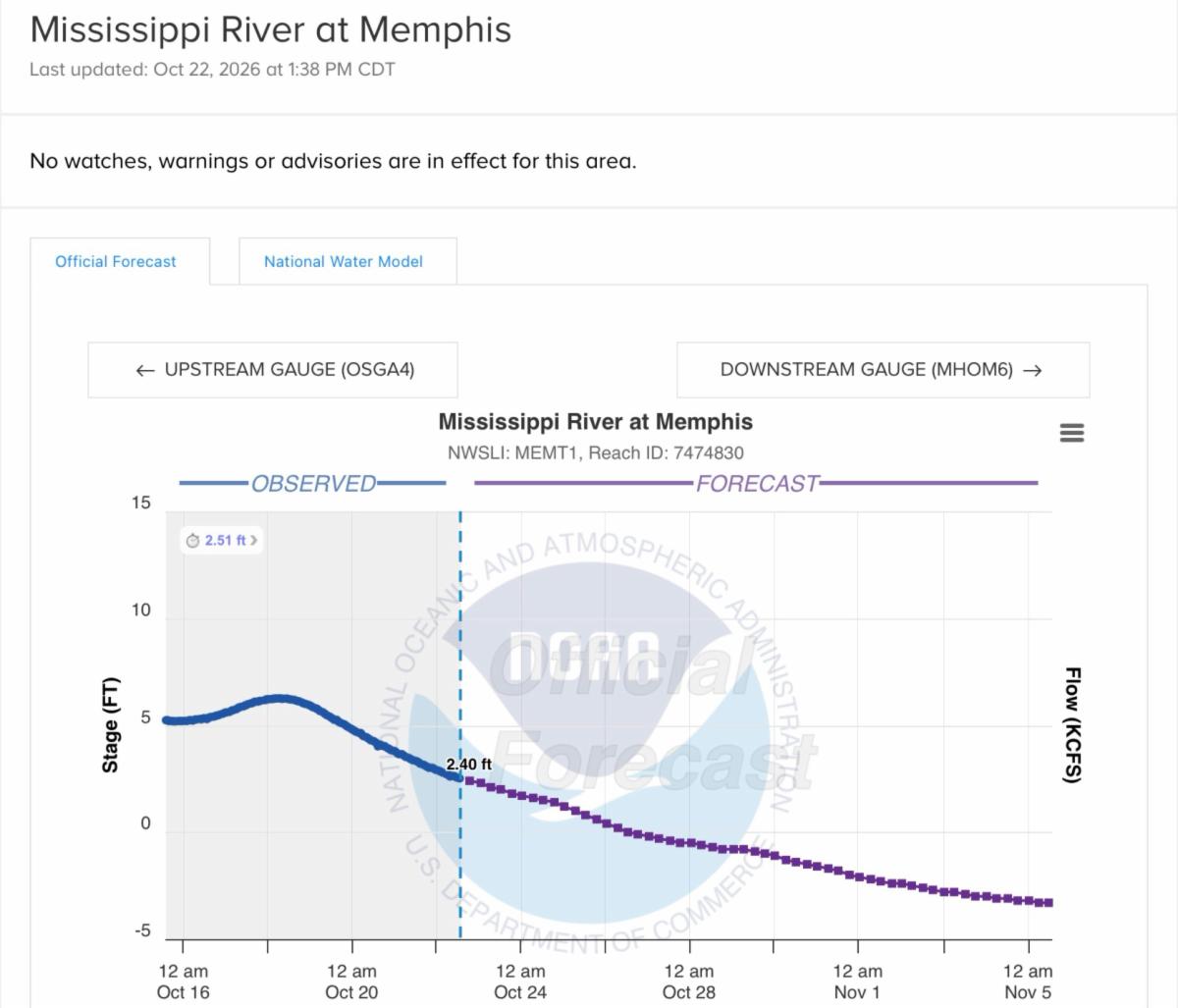
| | Arkansas and Mississippi River | | Variety Trial Information | | |
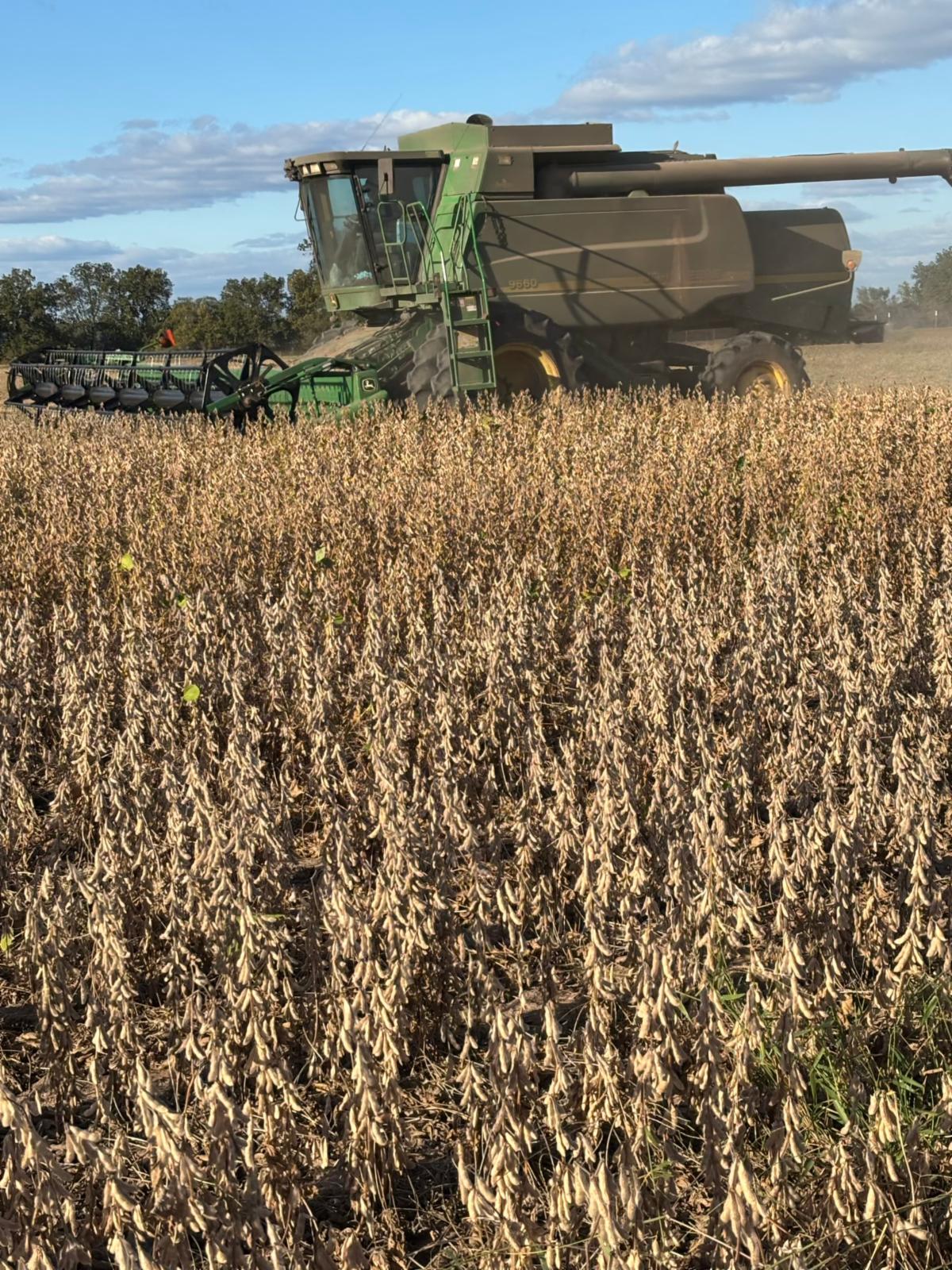
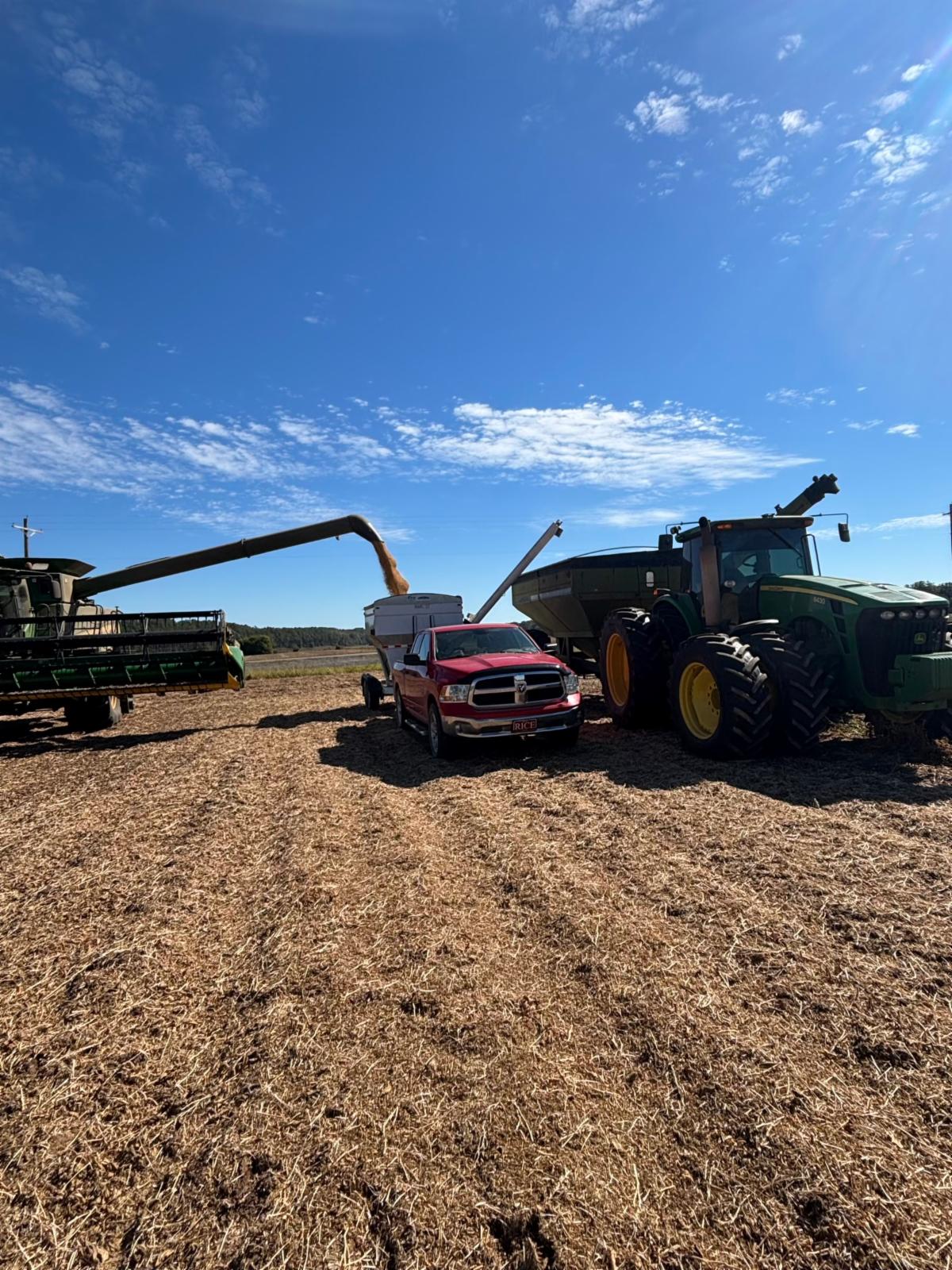
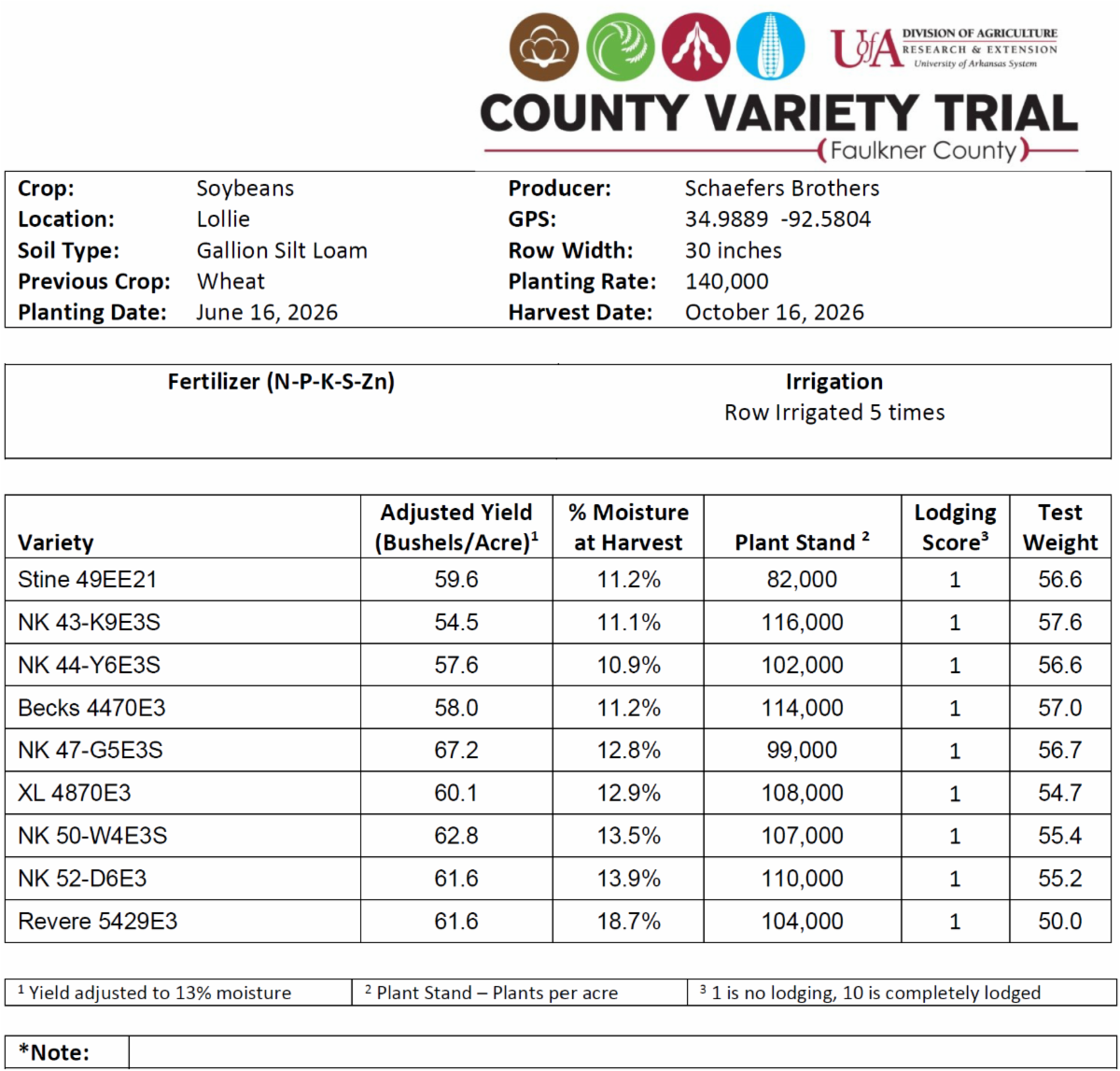
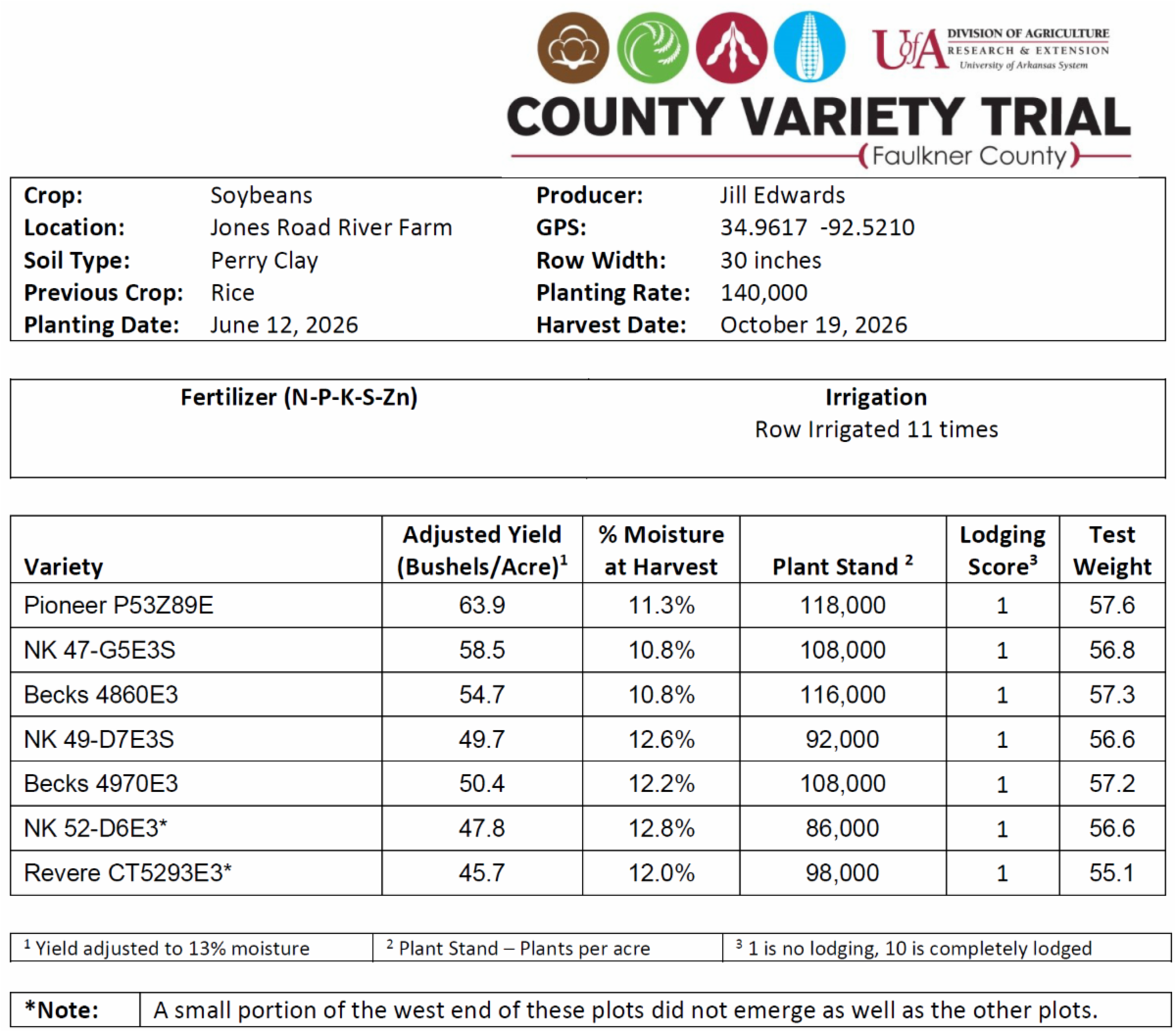
We got the two soybean variety trials harvested this past week. The Enlist trial was harvested last Friday afternoon on Schaefers Brothers and the Enlist on clay soil trial was harvested Monday on Jill Edwards. There was some really good yields.
I think one of the things you may want to look at when you look at the yields is notice the maturity dates. Once you get up to 4.7 and 4.8 and above, the yields are much better. To me this just verifies that we need to be growing late 4's and 5's in Faulkner County.
All of the variety trials can be found on our newsletter and publication webpage. The link is located below.
| | |
Winter Production Meetings
Save the dates for our upcoming Winter Production Meetings.
Soybean & Corn - January 29 will be at the Conway County Extension Office
Rice - March 4 - Place TBD
| |
Trump Administration Announces $8 Billion Harvest Fuel Relief Program
(Washington, D.C., October 19, 2026) – On October 19, President Donald J. Trump, alongside U.S. Secretary of Agriculture Brooke L. Rollins, announced the U.S. Department of Agriculture (USDA) will make $8 billion available for one-time payments to American farmers this harvest season to provide relief during temporary market disruptions and increased input costs.
“President Trump is the most pro-farmer president of my lifetime and he is continuing to put Farmers First every day,” said Secretary of Agriculture Brooke L. Rollins. “Today, I am proud to announce alongside President Trump more targeted relief is coming to our farmers through the Harvest Fuel Relief program. This $8 billion dollar investment will help bring certainty to our farmers during this harvest so they can continue to feed our nation.”
Similar to the Farmer Bridge Assistance (FBA) program, the Harvest Fuel Relief (HFR) program will provide simple, proportional support to producers using a uniform formula to cover a portion of modeled losses during the 2026 crop year. This national loss average will be based on FSA reported planted acres, Economic Research Service cost of production estimates, and World Agricultural Supply and Demand Estimates yields and prices.
The $8 billion in payments provided through the Harvest Fuel Relief program are authorized under the Commodity Credit Corporation (CCC) Charter Act and will be administered by the Farm Service Agency (FSA).
Commodity-specific payment rates for Title I commodities will be released in November. Payment methodology for other eligible commodities will be announced at a later date. Crop insurance linkage will not be required for participation in the Harvest Fuel Relief program; however, USDA strongly urges producers to take advantage of the enhanced risk management tools included in the Working Families Tax Cuts Act to best protect against price risk and volatility in the future.
Producers of non-Title I commodities, including specialty crop growers and fishermen, are encouraged to provide data related to increased fuel costs to HarvestFuel@usda.gov for USDA’s consideration when determining payment rates.
Eligible producers are encouraged to create a Login.gov account in advance of the application period announcement. Pre-filled applications will be available online to producers with a Login.gov account linked to USDA.
The Harvest Fuel Relief program builds upon the Trump administration’s unprecedented support for America’s farmers. Earlier this year, the Farmer Bridge Assistance program delivered $12 billion in one-time bridge payments over 560,000 farmers across the country. Just two weeks ago, nearly $14 billion in gross payments were provided to producers through the Agriculture Risk Coverage (ARC) and Price Loss Coverage (PLC) programs through The Working Families Tax Cuts Act – an approximate $8 billion increase over what farmers would have received without the historic bill.
| | |
Preliminary Corn Hybrid Report
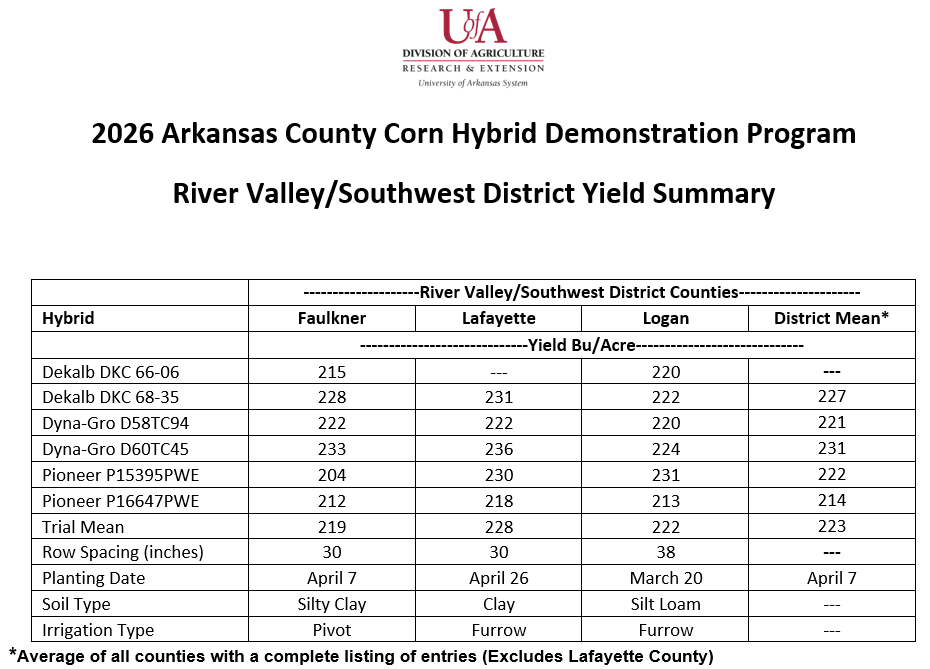
The 2026 Arkansas corn performance tests preliminary yield results are now available on the Arkansas Variety Testing webpage (link below). The preliminary report just has yields. The final full report should be available soon.
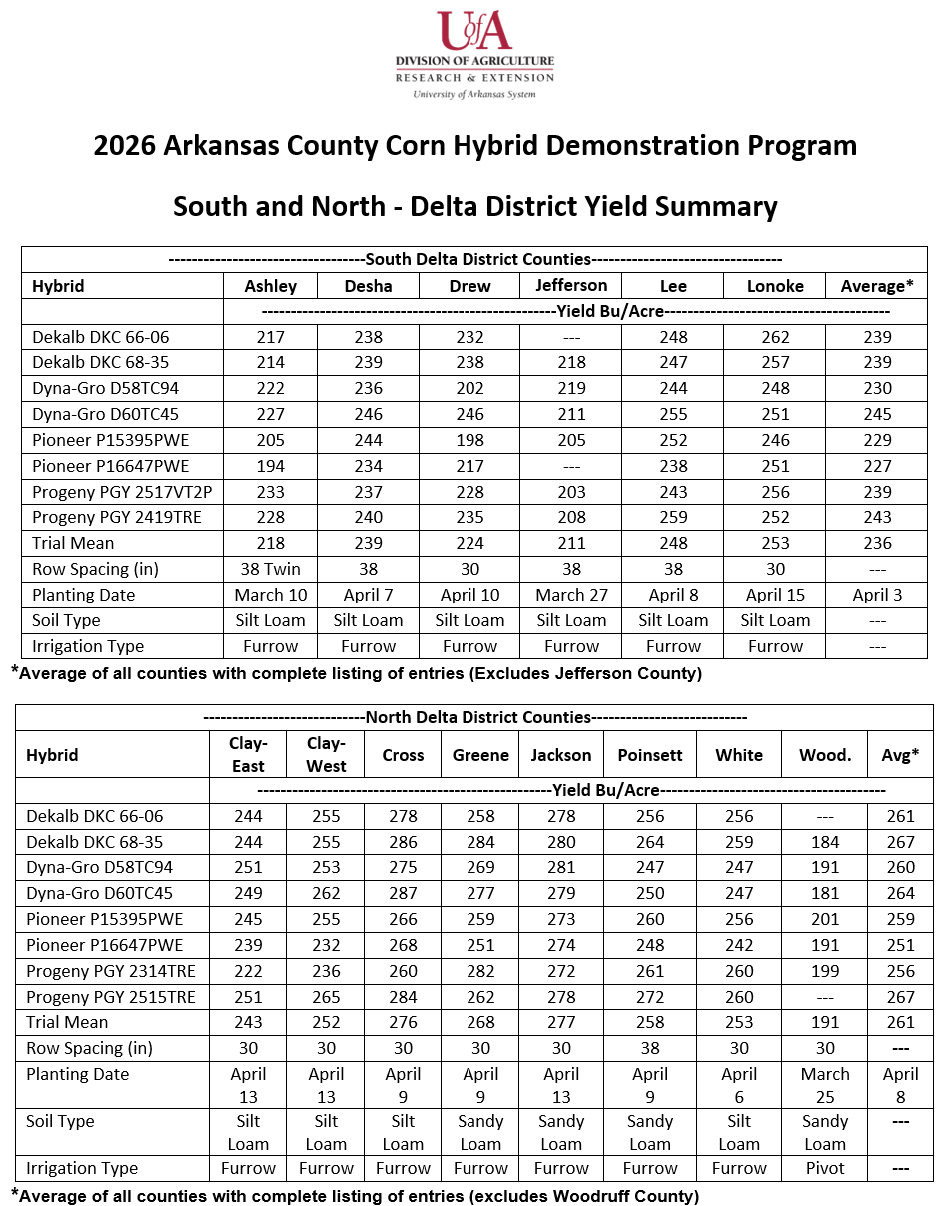
I have also added the yields from the 2026 Standardized Corn Hybrid Trials. These trials are County Agent trials performed on producers farms across the state.
| | |
Soybean Fertility Trials
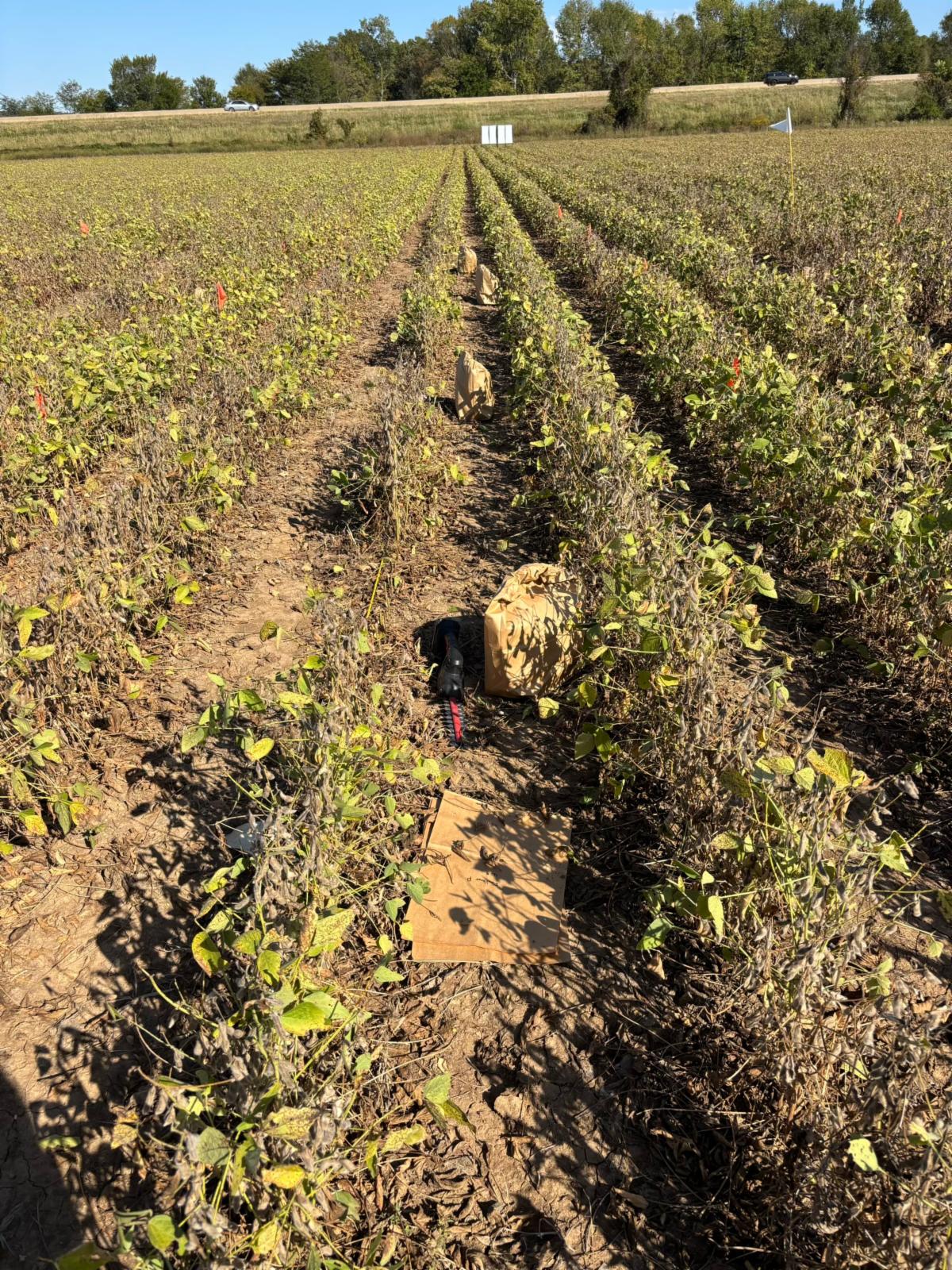
I established two soybean small plot fertility trials this season. I had one for phosphorous and one for potassium. Both were on non irrigated soybeans, so the end of the season was a tough finish. I harvested both of them over the last week. I harvested five feet of one row out of the middle of each plot and bagged them up. Dr. Ana Morales-Ona Smith our row crop fertility specialist picked up the samples on Thursday and will take them back to the Northeast Rice Research Center and thrash them. We should have results in the next couple of weeks.
| | |
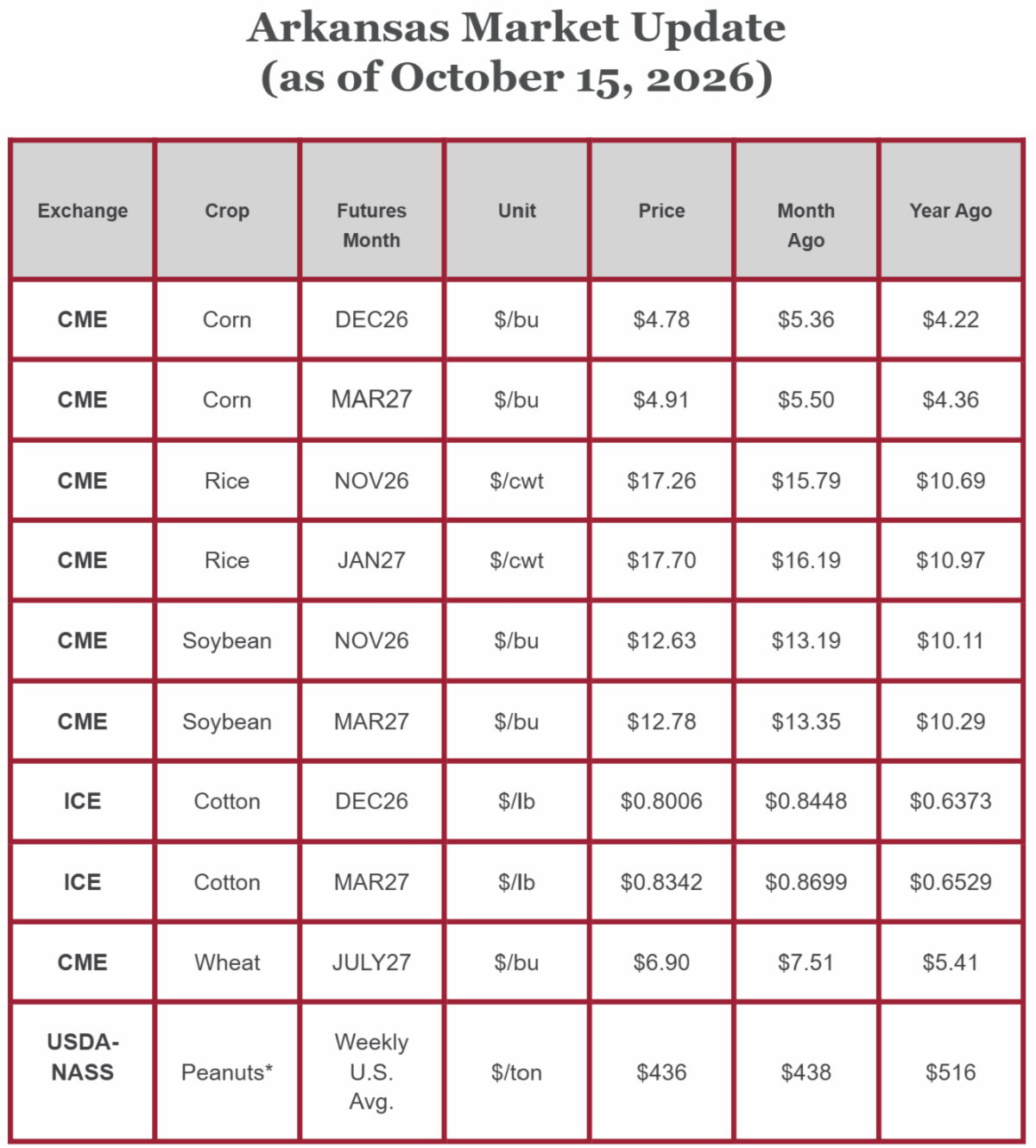
October WASDE Delivers a Bearish Shock to The Corn Market
H. Scott Stiles, Extension Economist, University of Arkansas
The USDA’s October World Agricultural Supply and Demand Estimates (WASDE) report provided notable revisions for the major field crops. The highlight of this month’s report was a surprise increase in corn production. Soybean and cotton production estimates increased as well on favorable late-season conditions that led to higher yield forecasts. In contrast, the long-grain rice balance sheet saw a downward revision in this month’s production estimate and a corresponding draw down in ending stocks.
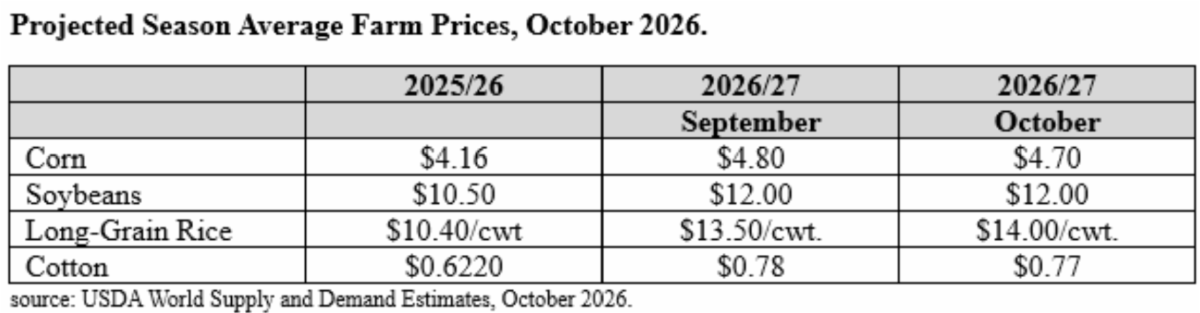
The adjustments this month to the U.S. corn balance sheet provided the report’s largest surprise. USDA caught traders off guard with a 2.7-bushel increase in national yield to 181.2 bushels per acre. This increased total production by 234 million bushels to 16.034 billion. Higher production combined with a 173-million-bushel increase in beginning stocks outpaced the 125-million-bushel combined increase in domestic use and exports. Thus, ending stocks increased by 282 million bushels to 1.849 billion bushels. With stocks-to-use moving back above 10% to a more comfortable 11.3%, the USDA trimmed its projected season-average farm price by 10 cents to $4.70 per bushel. Corn futures turned sharply lower following the report, with December futures down the 30-cent daily limit for a brief time. Prices recovered somewhat to finish 20 cents lower for the session. The December 2026 contract closed October 9th at its lowest point since mid-August at $4.79 ¾.
| | |
Soybeans also saw a modest .3-bushel yield increase to 53.1 bushels per acre, which raised overall production by 27 million to a record 4.56 billion bushels. Offsetting much of the production increase, beginning stocks were reduced by 10 million bushels and total demand was increased by 12 million bushels. Soybean ending stocks increased by 5 million to 315 million bushels; identical to 2025/26. The 2026/27 season average farm price was left unchanged this month at $12 per bushel.
The only adjustment this month to the U.S. long-grain rice balance sheet was a 292,000-cwt. reduction in crop size. The U.S. average long-grain yield was lowered by 21 pounds to an average 7,422 pounds per acre. Louisiana was the only “long-grain” state that saw a yield reduction this month. There were no other changes and ending stocks were reduced by 292,000 to 21.1 million cwt. The 2026/27 season average farm price was increased by 50 cent per cwt. to $14/cwt. or $6.30 per bushel.
Lastly, the U.S. cotton balance sheet saw production increase 2% this month to 13.44 million bales. The projected national average yield also increased 2% from 776 pounds in September to 790 pounds. Larger crops for all Delta States drove the increase. There were no changes to domestic mill use and exports. On higher production, the forecast for ending stocks increased 200,000 bales to 3.80 million; down from 4.15 million last year. The projected season-average farm price for upland cotton was lowered 1 cent from last month to 77 cents/lb.
In summary, following the shocking yield increase to 181.2 bushels per acre, the corn market faces the most downward pressure with projected carryout now sitting at 1.849 billion bushels. This leaves the market in a position of having to uncover additional demand for any hope of a sustained price rally. For soybeans, a record harvest forecast of 4.56 billion bushels has been mostly absorbed by smaller carry-in, record crush and improved exports, keeping the price outlook relatively stable. From a futures price perspective, rice entered the October WASDE technically strong. With long-grain ending stocks down 50% year-over-year to 21.1 million cwt., the tightening balance sheet continues to offer fundamental support to the rice outlook. Cotton has gained fundamental support from lower production and tighter ending stocks in 2026/27. New efforts to boost cotton demand will need to bear fruit as domestic mill use remains at its lowest point since the 1880s. Exports will make up 89% of total demand in the current marketing year. Sustained price strength in cotton will require strong export demand and world mill use, or weather-related production losses in key export competitors.
The complete USDA October WASDE can be found here.
USDA NASS’ October Crop Production can be found here.
The next monthly WASDE and NASS Crop Production reports will be released on November 10, 2026 at 11:00 a.m. Central Time.
| | Beef, Small Ruminants, & Forages | | |
ArFGC Fall Forage Conference
“Recovering forage systems”
Has drought got you down? Figure out your next steps! Pastures provide essential forage for livestock; however, severe drought has negatively impacted production throughout the state. The 2026 Arkansas Forage and Grassland Council Fall Forage Conference, themed “Recovering forage systems” will be at the CrossRoads Cowboy Church in El Paso on October 30th. Doors will open at 8am, with the program starting at 8:30.
This year’s conference will focus on practical strategies to reduce these impacts with sessions designed to address the unique challenges facing forages in Arkansas. Educational topics include weather outlook, reviving drought stressed pastures, drought mitigation strategies, as well as reporting local conditions.
You will hear from Arkansas meteorologists, university experts, as well as local producers. Attendees will also have an opportunity to hear from Tim Schankenburg, University of Missouri Southwest Region Field Specialist in Agronomy.
These conferences bring producers, agencies, organizations, and private industry together to promote and advance forages in agriculture. The conference is recommended for forage and livestock producers seeking to mitigate drought impact.
Early registration by October 19 is encouraged for planning purposes.
The pre-registration fee is $40 per person. Students who pre-register may attend at no cost. Registration will be available day of the event $45/person and $20/student. Registration is payable by cash, card, or check.
To pre-register, scan the QR code or contact: Addie Stamps at addie.stamps@arfb.com or 501-607-8978.
Crossroads Cowboy Church is located at 3071 Highway 5 in El Paso, AR 72045.
| | |
Faulkner County Cattlemen's Meeting
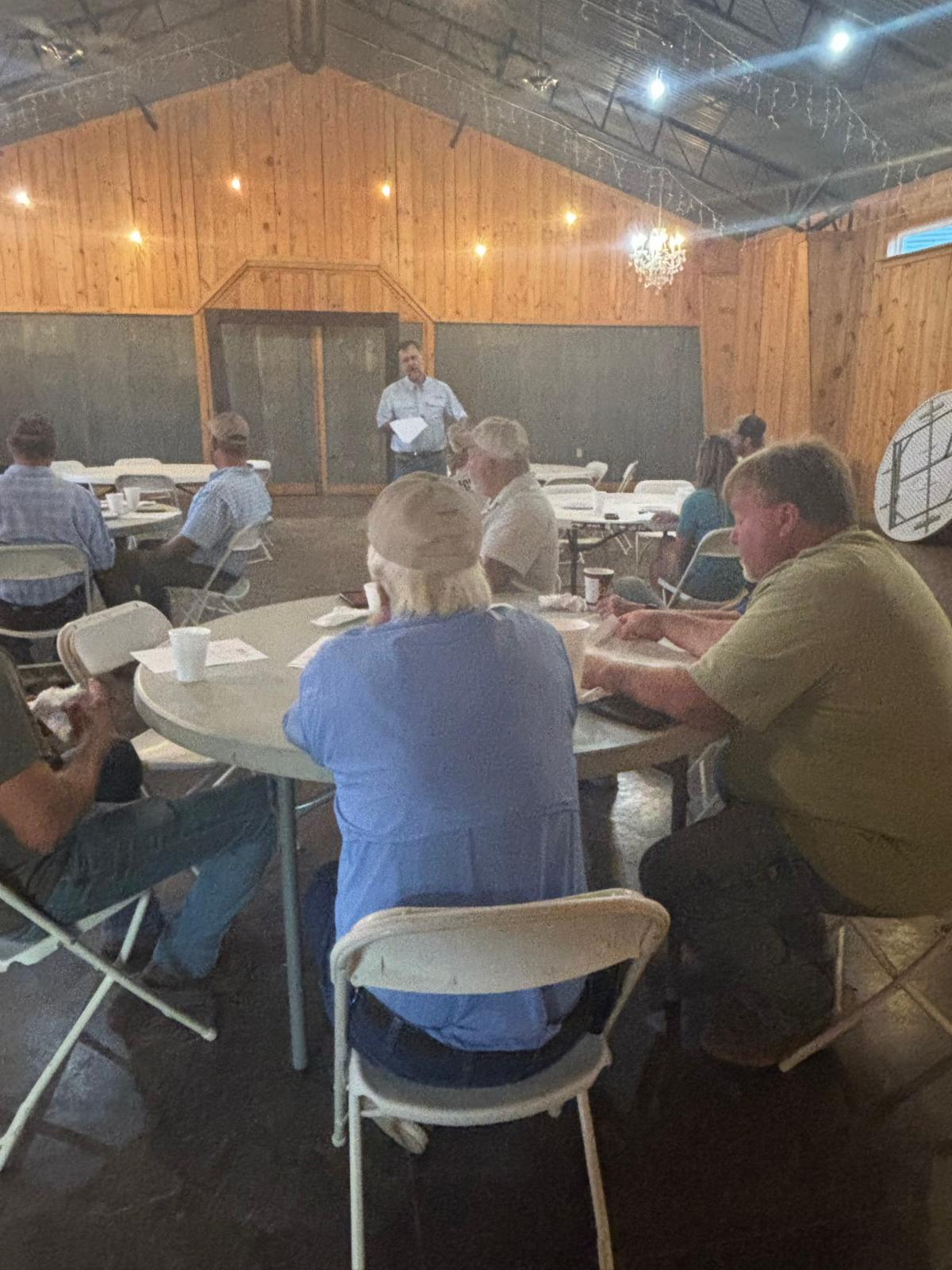
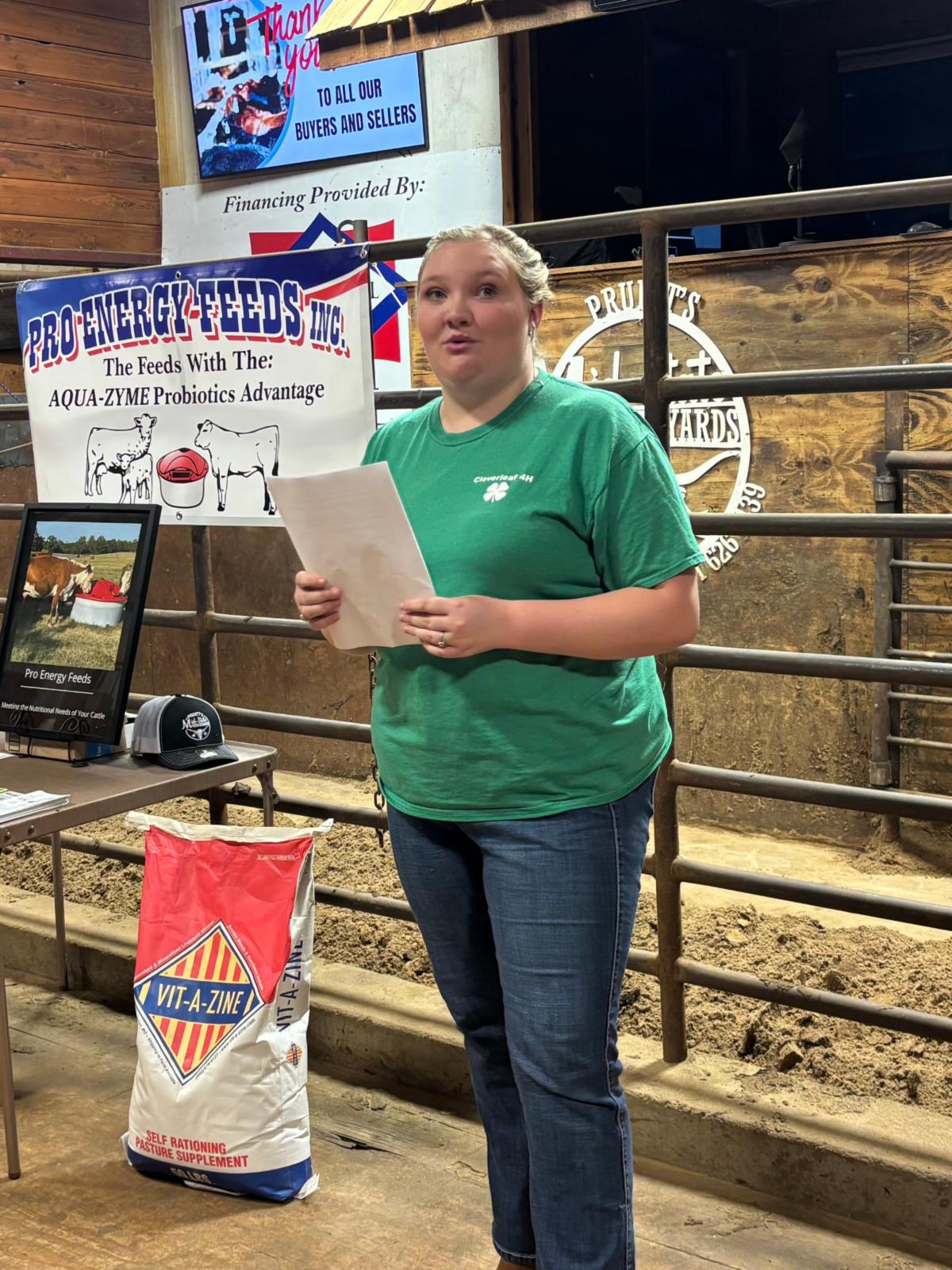
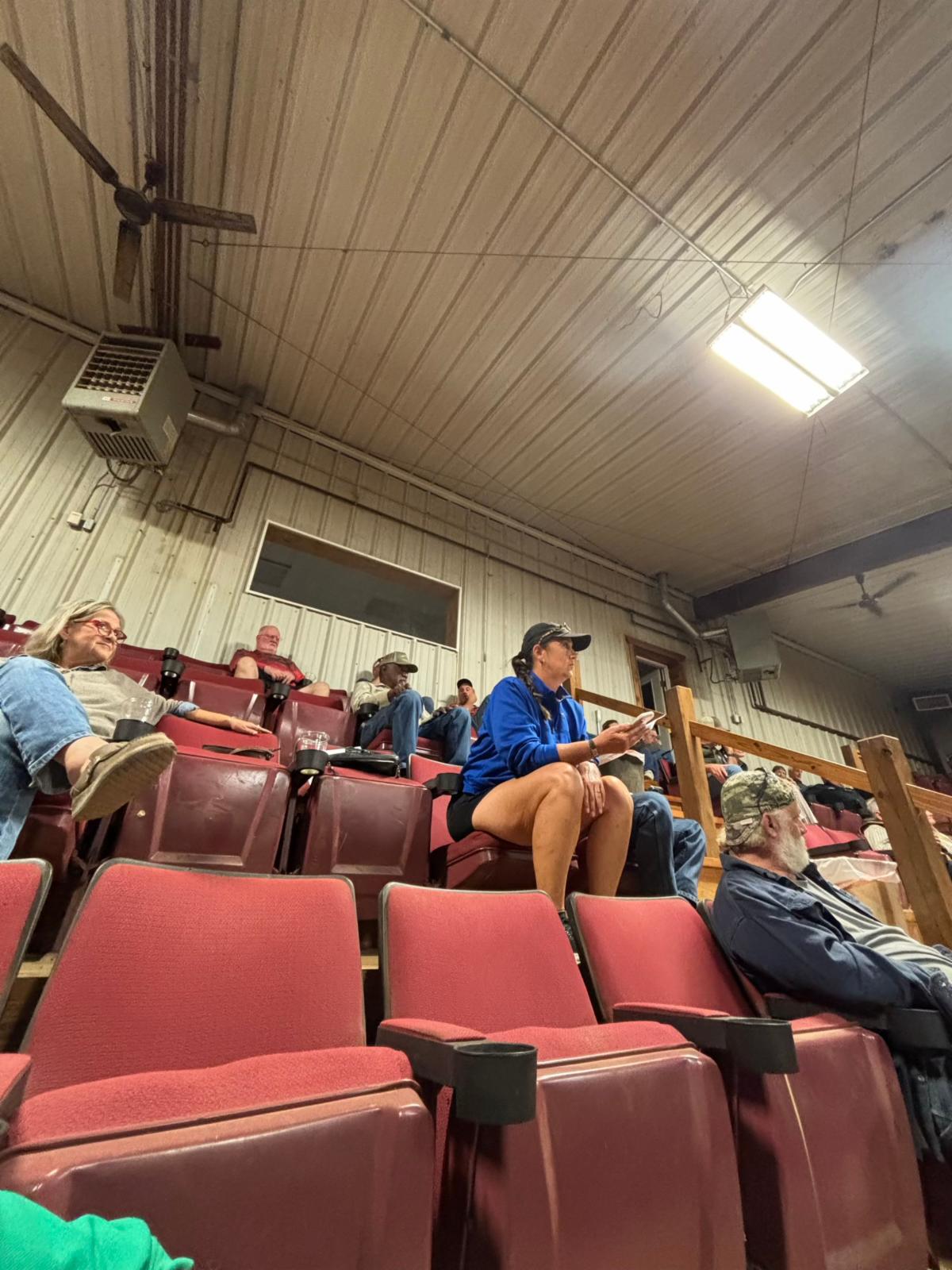
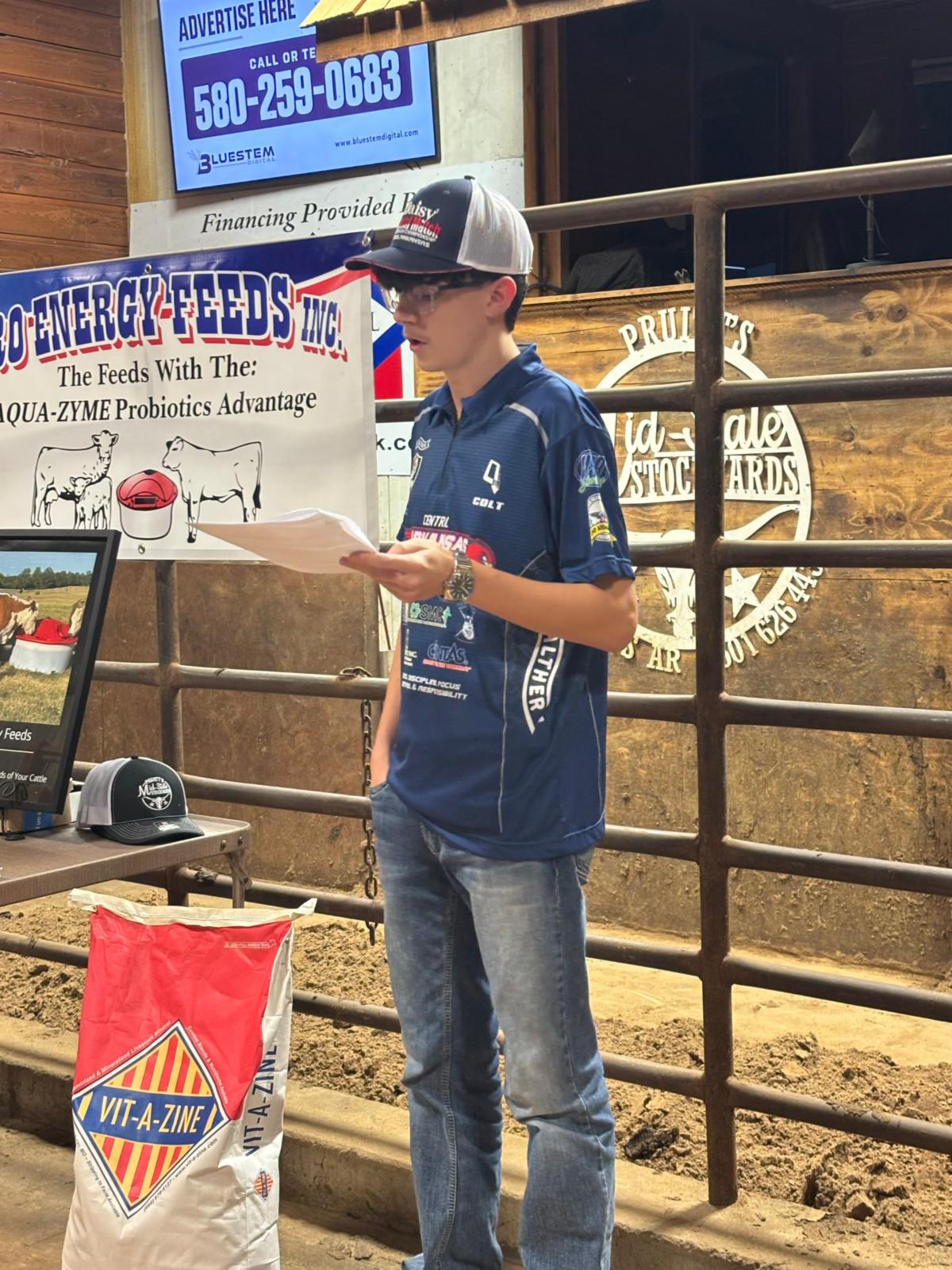
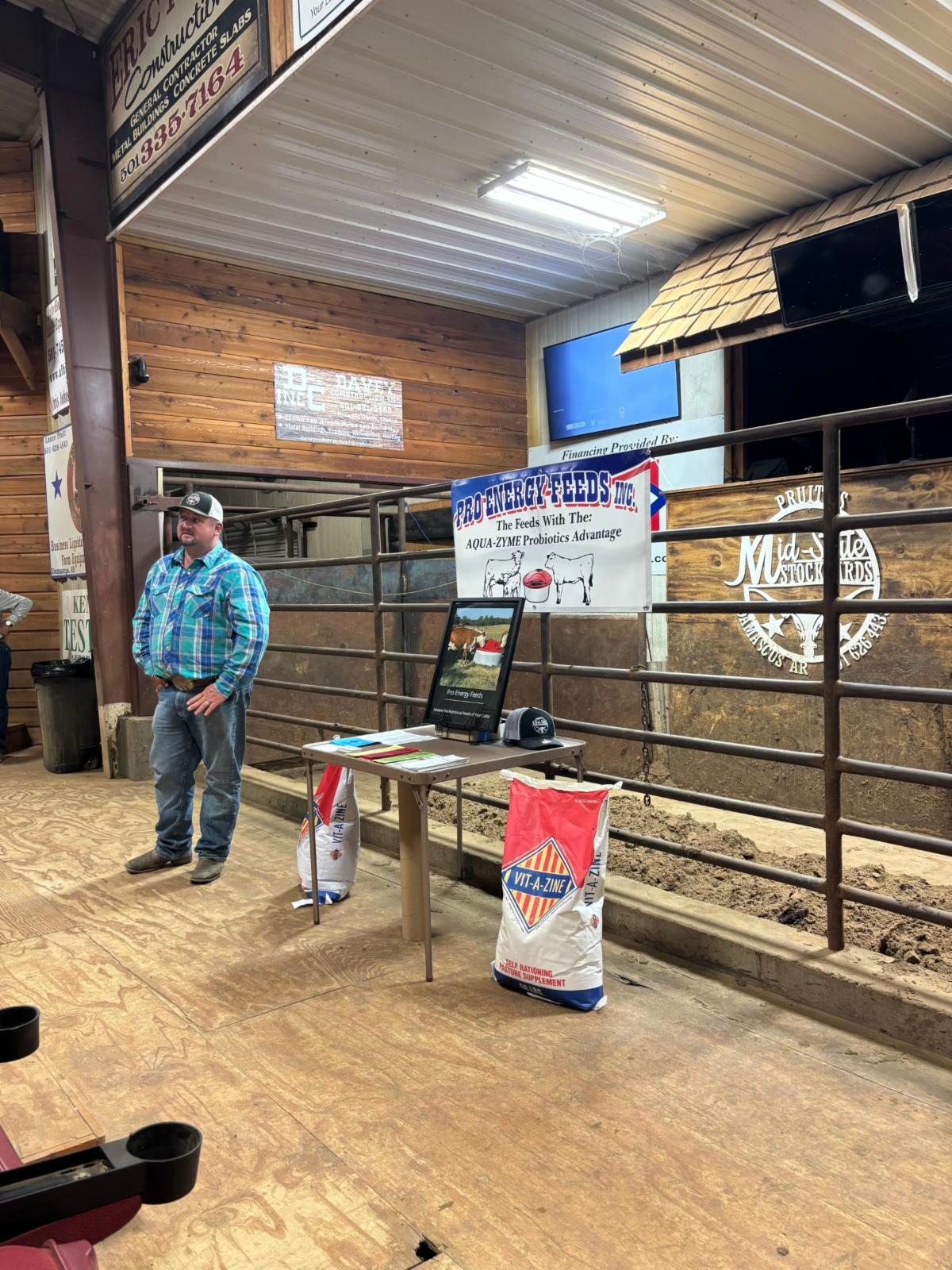
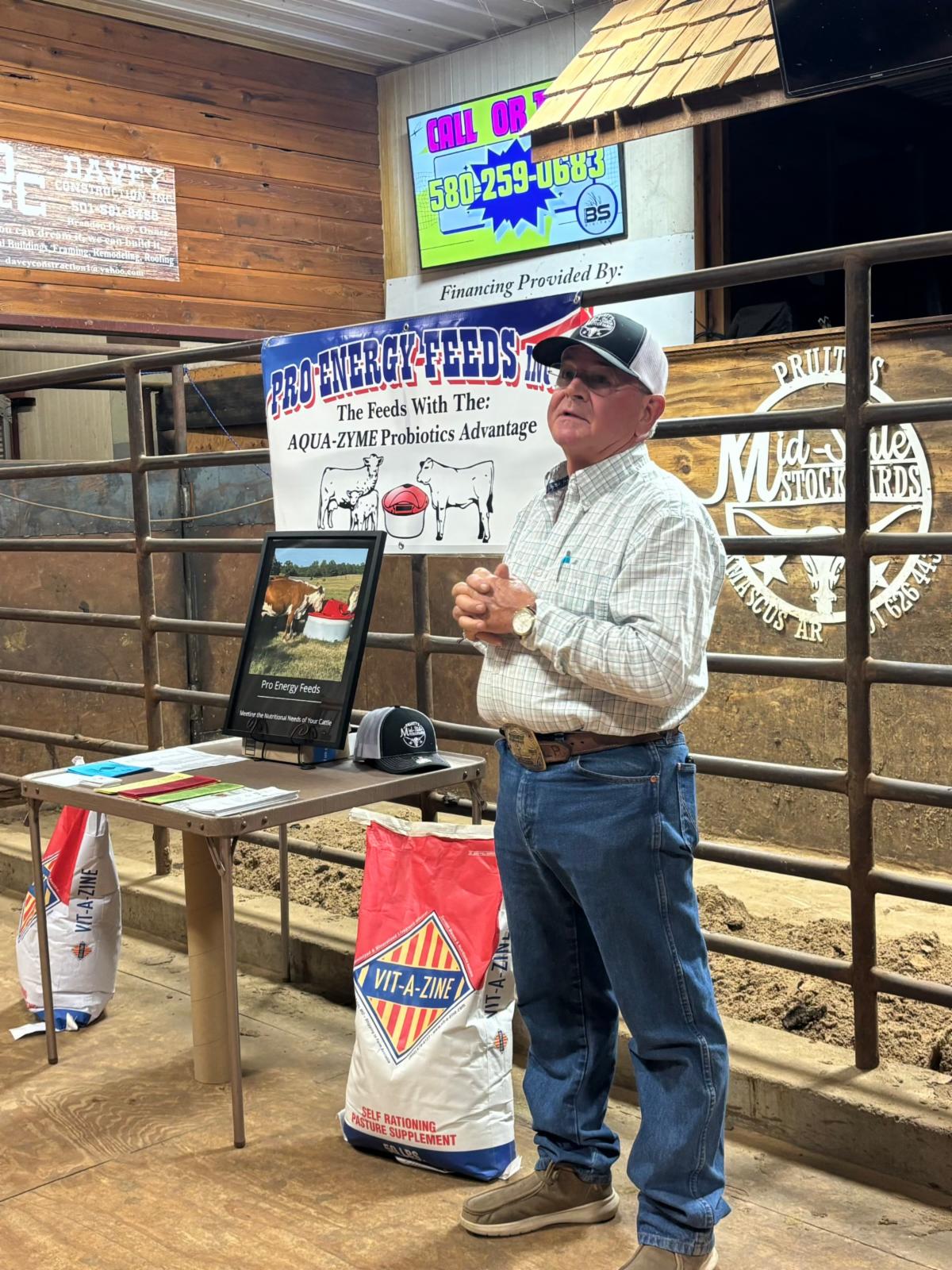
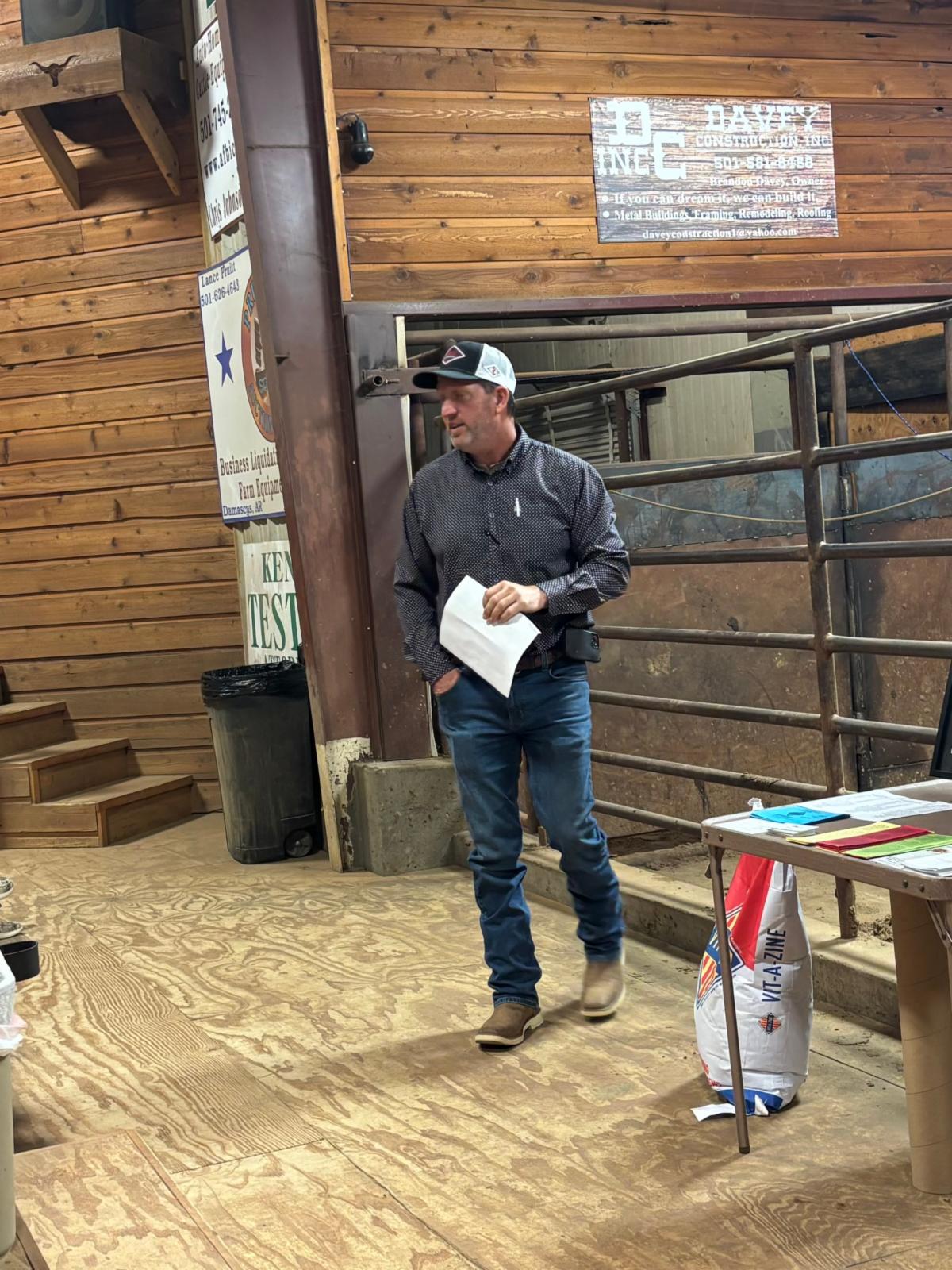
The October Faulkner County Cattlemen's meeting was held at Pruitt's Mid State Livestock Barn in Damascus on Thursday October 22. It was a great meeting with about 40 members in attendance. Faulkner County 4-H members gave a great talk about 4-H. Sponsors Lance and Lane Pruitt discussed feeding cattle and the cattle market. The next meeting will be December 10 at Friendship Baptist Church.
| | |
Feeding Cull Cows to Add Value
Paul Beck, Oklahoma State University Extension Beef Cattle Nutrition Specialist
As we discussed last week, only about 60% of cull beef cows are marketed in the Utility grades (Boning or Breaking Utility) with 20 to 25% in the USDA Cutter and 5 to 15% in the Canner grade. Feeding thin cows to higher BCS before marketing can make a large difference in their value. Beef cutout research (Apple and others 1999 https://doi.org/10.2527/1999.77102610x) indicated that cows in BCS 3 were 33% Boning or Breaking Utility grade while cows in BCS 6 and 7 were 73 and 100% Boning or Breaking Utility. So, body condition of cows at market has a large impact on their value. I calculated the value of cull cows using current cull cow prices, expected weight changes between BCS, and expected changes in cull cow grades. Feeding to add weight and condition of a thin cow from a BCS 3 to 7 can increase her value by over $450.
Research at Texas Tech University (DeClerck et al., 2020) showed that thin cull cows (BCS of 2) can be fed mixed diets in feedlot pens to gain weight and body condition. At the end of the 45-day feeding period cows in a high roughage diet (25% cotton burrs) consumed 32 pounds (DM basis) and gained 5.8 pounds/day requiring 5.5 pounds of feed DM per pound of gain. Cows in the low roughage diet (10% cotton burrs) consumed 30 pounds per day, gained 6.4 pounds per day and required 4.5 pounds of feed per pound of gain. These thin cows gained 3 body-condition scores over the 45 days but consumed large amounts of feed to do it.
Cows do not have to be fed in dry lot to gain weight and body condition, supplementation programs can be fed to cull cows as well. Recent research shows that grazing cull cows supplemented with 0.5% of body weight (4.7 lbs of supplement/day) on pasture gained 126 pounds over 84 days (1.5 pounds/day) while feeding 1% of body weight (9.5 lbs of supplement/day) increased gains to 193 pounds (2.3 pounds per day).
Adding value to thin cull cows can be profitable, but increased sale value is not the same as increased profit. Feed expenses, available forage, cow health, labor, interest, and market risk must all be considered before retaining cows for feeding.
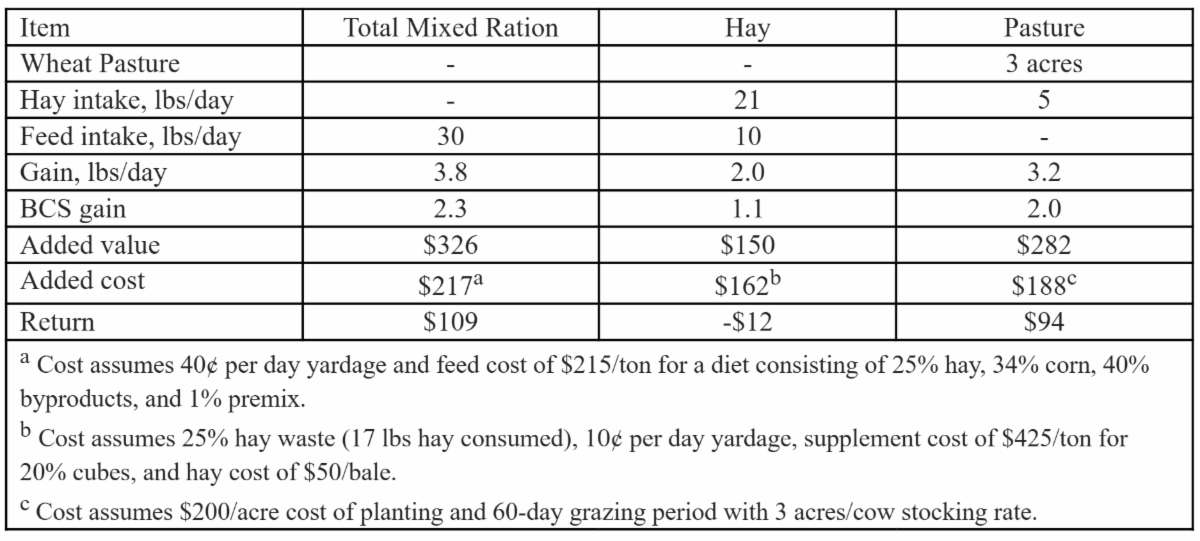
Here are some scenarios for adding condition and weight to cull cows over 60-days starting at a BCS 4:
| | |
Daily feeding a total mixed diet can be very efficient and cost effective, but requires excellent management, dedicated feeding equipment and facilities that many producers do not have available. Feeding hay and a supplement is easier to manage but does not add as much gain as other feeding programs and may not be cost effective, especially when hay stocks are limited during droughts. Recent rains have boosted the growth of wheat pasture and high prices of calves has made a cow grazing program economically competitive with our normal stocker grazing programs on wheat pasture. Cows can gain rapidly on wheat pasture but require higher stocking rates that growing calves to provide adequate pasture.
Adding value to thin cull cows can be profitable, but increased sale value is not the same as increased profit. Feed expense, available forage, cow health, labor, interest, and market risk must all be considered before retaining cows for feeding.
| |
Body Condition Score of Small Ruminants
Miller County Agriculture - University of Arkansas Cooperative Extension Facebook Page
Sheep & goats are seasonal breeders. As daylight gets shorter, they get ready to breed. Ewes have an average estrus cycle of 16-17 days, and does 21 days.
A breeding soundness exam (BSE) conducted before the breeding season can reduce the risk of breeding failure. The BSE consists of a physical examination, inspection of the reproductive organs, semen collection and sperm evaluation.
Females that are excessively fat or thin may have lower conception rates and higher embryonic mortality. Producers should aim to have ewes and does at a BCS of 3 on a 5-point scale at breeding, and increase body condition slowly to an average of 3.5 at lambing.
This is a nutritional strategy to increase the ovulation rate and, consequently, lamb/kid crop. Animals are supplemented with 1/2 to 1 pound of whole corn/head/day. Flushing should start 3 to 4 weeks pre-breeding and continue 2 to 4 weeks post-breeding (or through the first estrous cycle) to support ovulation and reduce early embryonic loss. It works for dams with low BCS.
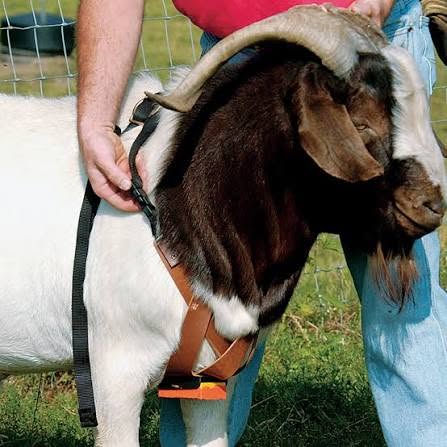
You can monitor breeding activity with a marking harness (photo).
Click here to learn how to determine BCS:
https://www.uaex.uada.edu/publications/pdf/FSA-9610.pdf
| |
|
Winter Annuals
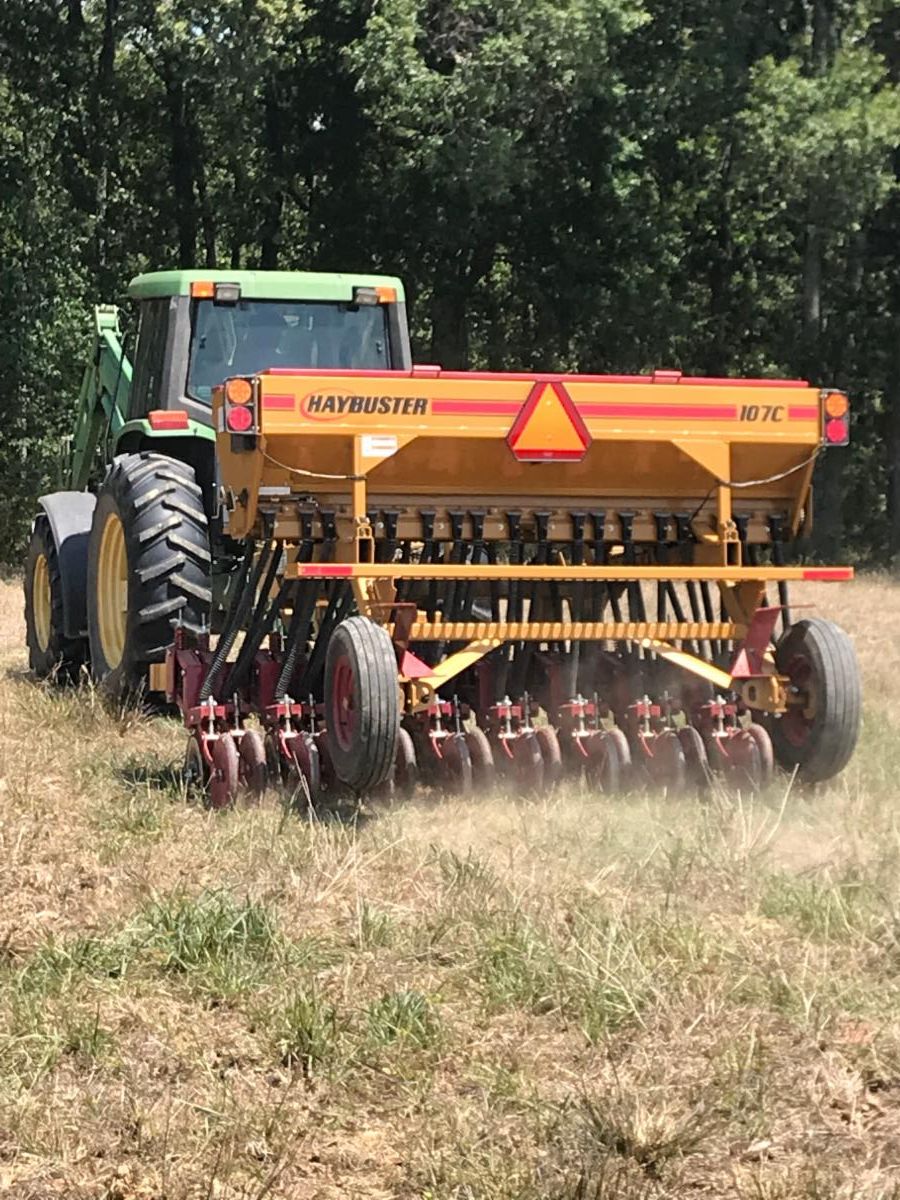
We are getting down to the end of a planting window for winter annuals. If we don't get any rain soon, in may be better to wait and plant in February or March. I would say if we can't get them planted in the next two weeks, we may need to punt and get a new plan.
| |
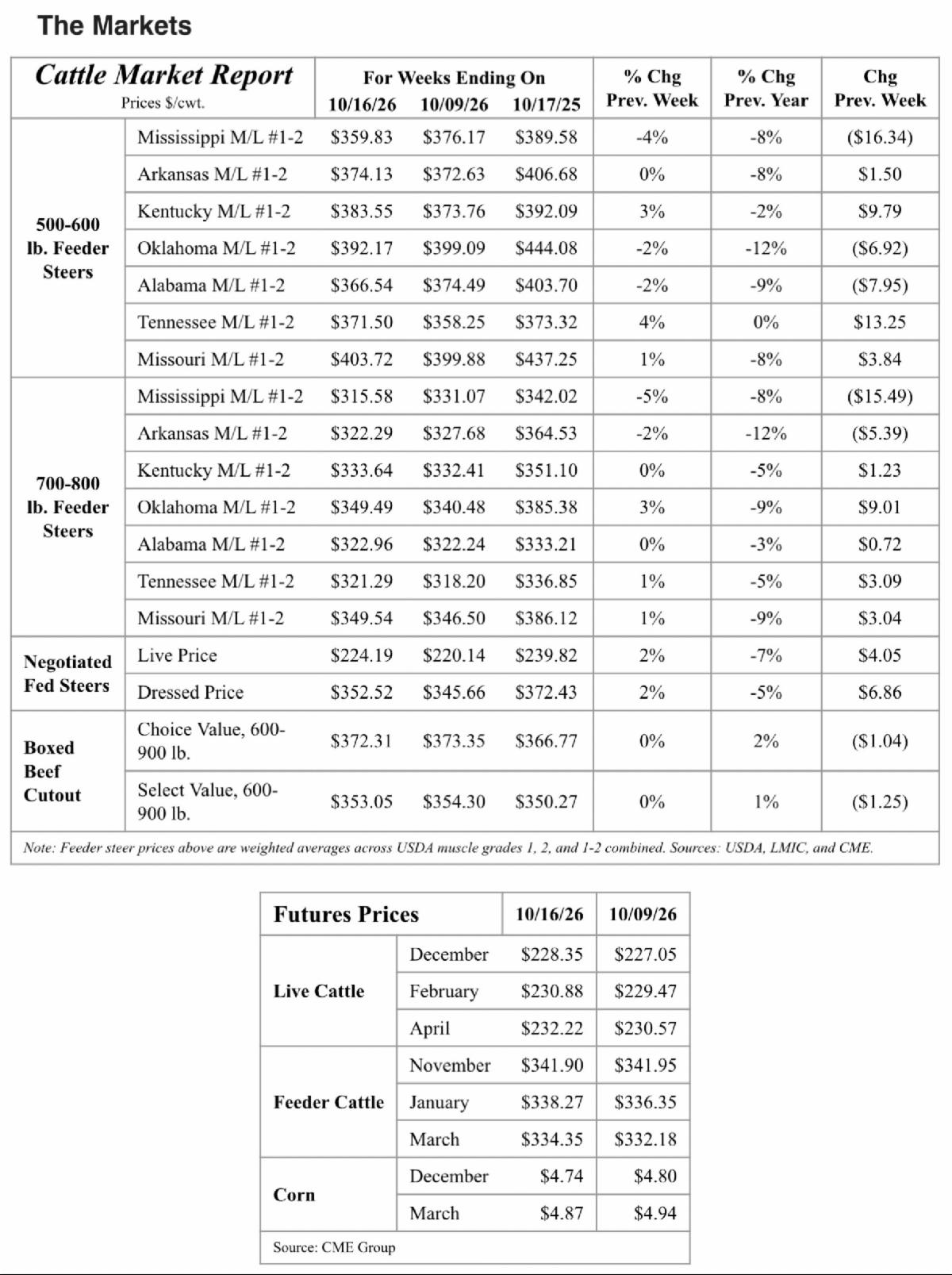
Here is this weeks Cattle Market Notes Weekly | | |
Pesticide Applicator Trainings
There will be no more in person Pesticide Applicator Trainings until this winter. If you need a license you can still do the training online. There is a link below for the online training and a link to check your license status.
| | |
Livestock Market Report
The following links are for the weekly livestock market report from the Arkansas Department of Agriculture website and the Livestock Auction Dashboard from USDA. Both sites have marketing data for all livestock sold at Arkansas Sale Barns.
| | |
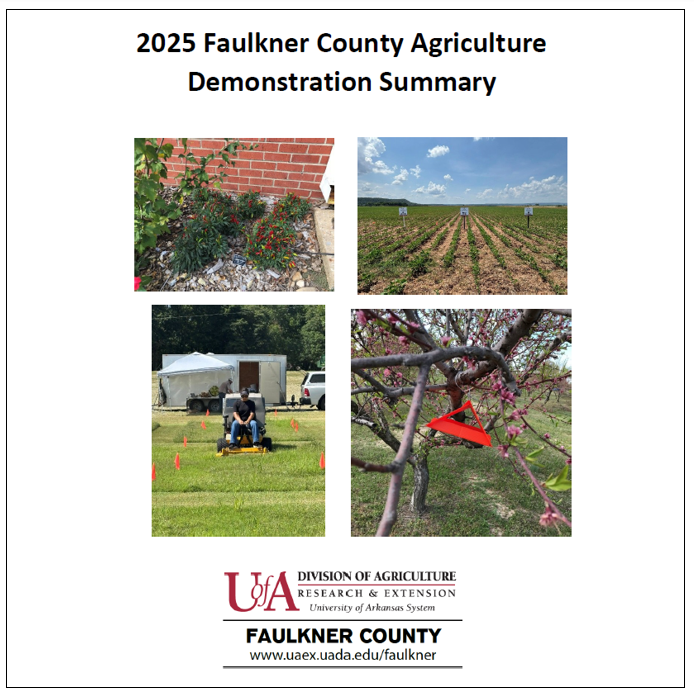
2025 Faulkner County Agriculture Demonstration Summary
The 2025 Faulkner County Agriculture Demonstration Summary is now available at the link below.
The 2025 Faulkner County Demonstration Summary is a collection of on-site demonstration results conducted in Faulkner County by local County Agents. Demonstrations are the cornerstone of the University of Arkansas System Division of Agriculture Cooperative Extension Service’s mission which is:
“We strengthen agriculture, communities, and families by connecting trusted research to the adoption of best practices.”
On-site demonstrations allow producers and homeowners to see firsthand how Extension recommended varieties and best management practices work in their counties and surrounding area.
| | |
Sign up for Text Alerts
You can now sign up for text alerts from me throughout the year. I have two areas you can sign up for which includes Faulkner Livestock or Faulkner Ag (Row Crop Updates). To sign up you can follow one of these links or use the QR Codes below.
| | Pursuant to 7 CFR § 15.3, the University of Arkansas System Division of Agriculture offers all its Extension and Research programs and services (including employment) without regard to race, color, sex, national origin, religion, age, disability, marital or veteran status, genetic information, sexual preference, pregnancy or any other legally protected status, and is an equal opportunity institution. | | | | |