|
A lifelong advocate for criminal justice reform, Linda Connelly has dedicated her career to understanding and improving the system from the inside out. With a Psychology degree as a foundation, her journey began in Baltimore's Public Defender's Office, where firsthand exposure to the challenges faced by youth and their families ignited a passion for change.
Subsequent roles as a Correctional Officer and a reentry program developer equipped Linda with a deep understanding of the complexities of incarceration and the critical need for effective reintegration strategies. As a pioneer in the field, she established groundbreaking programs, including the nation's first private juvenile correctional facility focused on rehabilitation and the first electronic monitoring program with comprehensive case management.
After building a successful community-based treatment organization, Linda retired in 2017, determined to focus solely on systemic change. Today, she continues to volunteer as a consultant, working tirelessly to reimagine a more just and equitable criminal justice system
Female Prison Warden to Fearless Advocate for Successful Prison to Life Re-Entry: Meet Public Servant, Linda Connelly
What is your personal/professional story?
I was one of the lucky few who found my passion in life right after college. I majored in Psychology, and my first job was with the Public Defender’s Office in Baltimore with their Juvenile Division. I interviewed youth and their families about their crime and situation. I was so dismayed and upset with what I saw I decided I had to work in the criminal justice system and help change it.
I was a Correctional Officer in a Federal Prison for 4 years. I learned a lot about incarcerated people. It broke my heart to see people coming in and out of the system over and over again. That led me to want to spend time in the community side of criminal justice in halfway houses providing reentry services. When the Bureau stopped operating halfway houses and began contracting for those services, I left them and joined a community-based organization that operated halfway houses.
I was with this organization for 10 years developing a lot of firsts in the country: the first “private prison” (a good quality one for juvenile Native Americans previously held in jails with no programming) and the first electronic monitoring program in the country which included the all-important case management piece. Additionally, we developed numerous residential programs and day reporting centers, all under contract to Federal, State, and County governments.
The corporate headquarters were in Southern CA, and I was the Regional Director in Northern CA, so very much working on my own.
After 10 years with this organization, I left and started my own community-based treatment organization. We continued for 25 years with a terrific staff and programs throughout California. I became frustrated with the lack of progress in the criminal justice field and wanted to make a bigger difference, instead of spending my time managing a large staff and contracts. I sold my organization and retired in 2017 and have been doing volunteer consulting to reimage our criminal justice system ever since.
What key moments in your life led you to where you are today?
Growing up in the South during the Civil Rights era helped me see firsthand the disparity in our society. It was very troublesome to see “colored” and “white “water fountains as a child. I never understood, and I would intentionally drink out of the colored water fountain.
When I went to work for the community-based organization after the Bureau of Prisons, I kept seeing the men promoted to Vice President getting big salaries, but not me even though I was the one bringing in novel new programs and a significant portion of the revenue. I eventually went to the President and said I was quitting. He said: “Why don’t you start your own business?” I laughed and said I had never had a business course in my life. He persevered. He sold me a small electronic monitoring contract; I borrowed $100,000 from a friend and started my organization. I was scared to death but plowed ahead because I loved my work and there was no turning back.
I was fortunate to quickly win a residential contract for a 100-person homeless parolee program for the State of CA. We called it Milestones. This program completely turned my life around. The passion of our clients and staff, their desire to help themselves and each other, and the commitment of all involved to make this a model program has stuck with me to this day. After 12 years there was a hostile takeover on the Board - I was kicked out, and the Board member who spearheaded the takeover embezzled $800,000 and destroyed the program. I have never been through anything as painful in my life, but the spirit and love of the Milestonians (what we call ourselves) could not be killed. Even though that program ended 22 years ago, we still have reunions of graduates and staff. That terrible experience resulted in magic that still perseveres with all of us and is key to who I am.
Where does your passion to serve come from?
As I mentioned, growing up in the segregated South sparked my interest, but I have to say my passion for criminal justice reform comes directly from the clients I have worked with over the last 50 years. I remember their names, their faces, their stories, and that spurs my passion to help. I have and am working with so many justice-involved men and women who want nothing more when they come out of prison than to help those coming out behind them. I have never seen such generosity of spirit, sacrifice, and true compassion for people needing help. It is amazing and gets me pumped to do more!
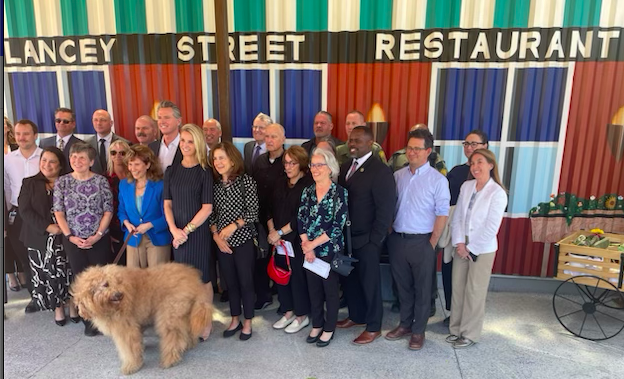
Just last week I attended the opening of the Delancey Street Restaurant inside a California prison. Lifers in an honor dorm going through the Delancey Street Foundation curriculum operate all aspects of the restaurant. Hearing their stories of sincere concern for their victims, shared concern for each other and humanity even among former gang members, and learning to put aside anger and hatred – all of this sparks my passion and keeps me going. Former Governor Jerry Brown was the impetus that got Mimi Silbert, the Delancey Steet Foundation Founder, to open the honors dorm in the prison 10 years ago, and current CA Governor Gavin Newsom suggested to Dr. Silbert that she open a version of her San Francisco Delancey Steet restaurant in the Solano State Prison. The event last week was their grand opening and both Governors were in
attendance. It was quite a special event for a one-of-a-kind program and restaurant inside a prison.
Lastly, I think seeing so many crimes on our streets, rampant substance abuse, untreated mental illness, and homelessness continue at such high levels when we KNOW what we need to do to help people, but don’t have the political will to do so, spurs me on to try to help change. We can all do better when we all do better – we just have to have the commitment to do so.
How can GlobalMindED help you reach your goals?
As a volunteer I come up with ideas, share my knowledge and experience, connect people and ultimately help change the system. Global MindED can introduce me to people who have similar interests and want to help move these projects forward.
Prevention: We rarely hear about prevention. There are currently 90 Prevention & Resource Centers across the country (called Assessment Centers) which bring public agencies (schools, behavioral health, law enforcement, social services) and community-based agencies together under one roof to provide any needed services to youth and families. One important goal is to stop the school-to-prison pipeline. The programs are working, but we need them in every community in this country!
Successful reentry for every person released from prison: While there is certainly an improvement in reentry across the country there are still too many people leaving prison without identification, safe housing, employment and assistance. We know what works to help people succeed and we need to implement these services now for everyone leaving prison.
Brain Health Academy: Years of research show the plasticity of the brain and its ability to change when given the proper training. I am working with a renowned neuroscientist, Mike Merzenich, who has developed affordable, individualized brain training courses to change how the brain deals with trauma, mental health, addiction, and cognition. They are developing various pilots for: children struggling at school; veterans; corrections staff; alternative sentencing; and the prison population.
Public Education Campaign: The general public does not fully understand how the criminal justice system works and that to attain public safety, we must hold people accountable while providing necessary treatment and support. Most people in prison have significant trauma and mental health issues. The narrative in the media and in communities remains “tough on crime”, a slogan from the ’80s and '90s, rather than ‘smart’ on crime. Research and evidence show we must address the underlying issues of justice involving people if we want them to be released as good neighbors and prevent crime in the first place. Public education will result in safer communities and significant savings of money.
|