Facebook  Twitter  Instagram  Youtube  

SUPPORTERS AND MEDIA LINE THE DELAWARE RIVER

AS AMERICA'S FLAGSHIP DEPARTS FROM PHILADELPHIA 

AFTER NEARLY 30 YEARS

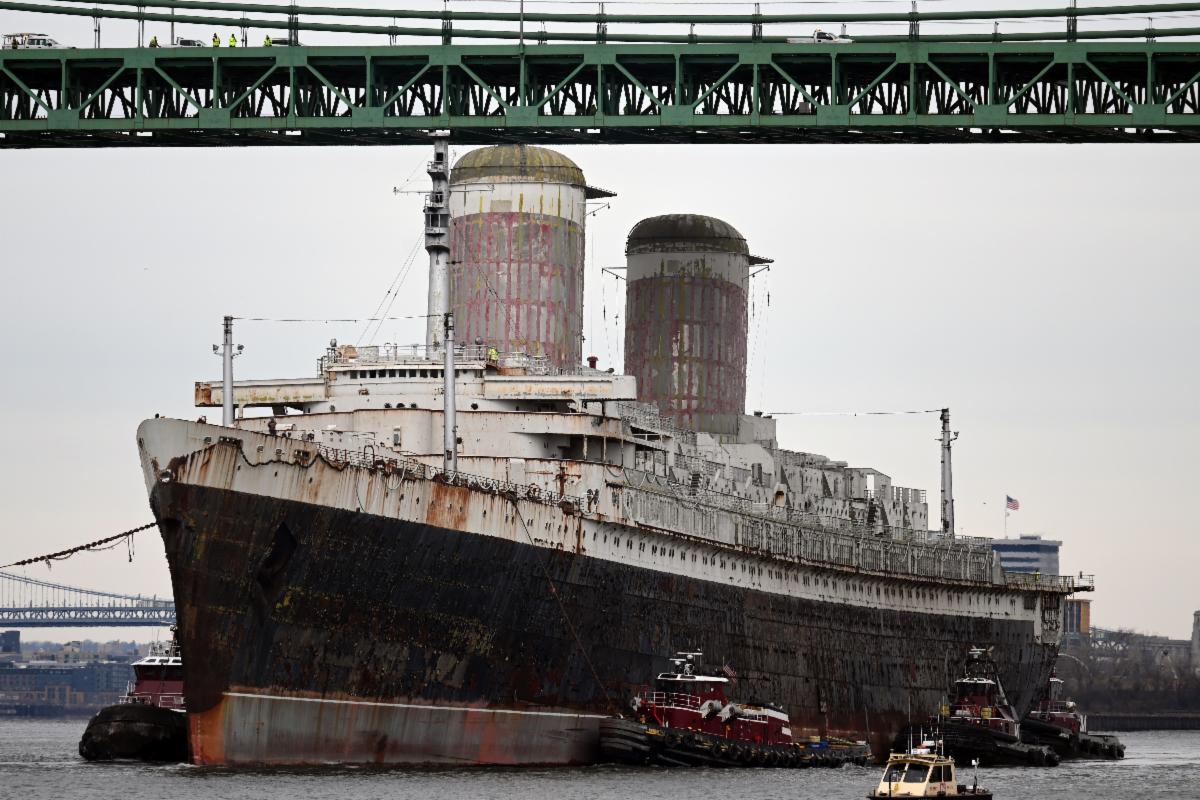
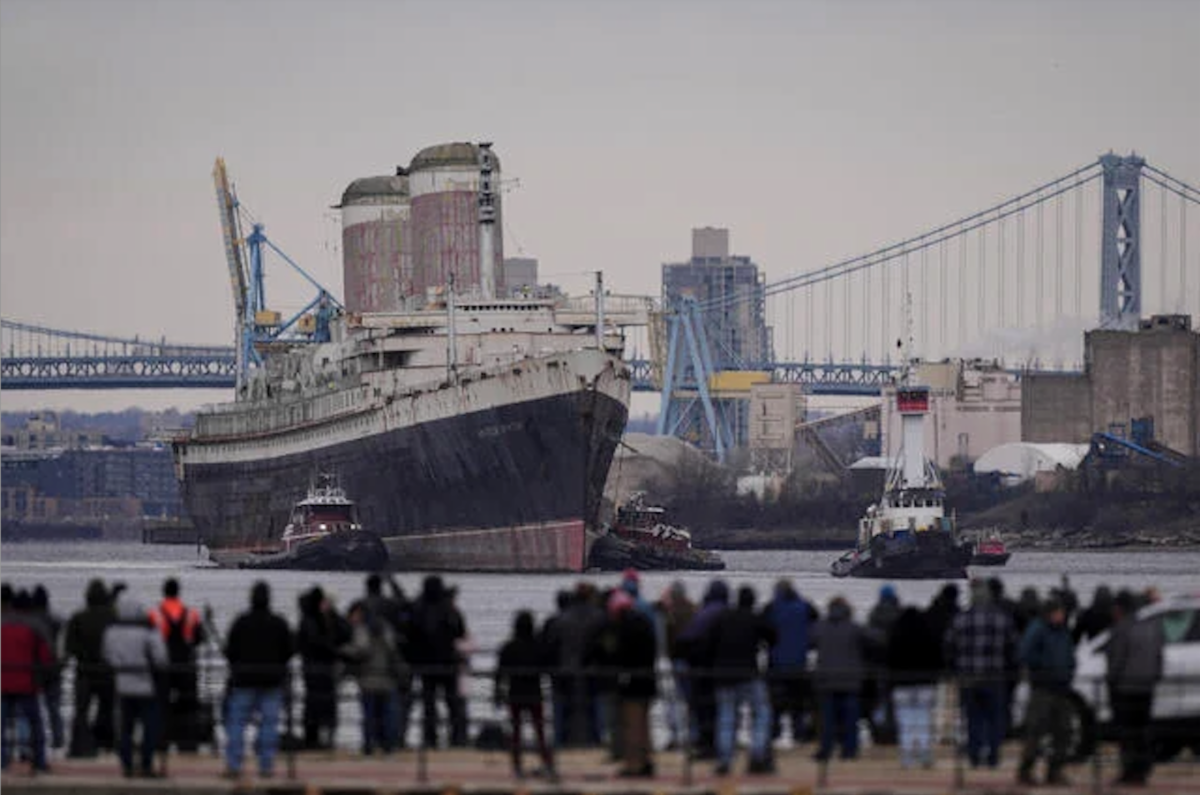
On Wednesday, the SS United States made history again, taking to the waves for the first time since 1996. The grand sendoff was fitting for America’s Flagship - a special escort from the Philadelphia Fire Department, five tugs, news helicopters buzzing overhead, and crowds of onlookers admiring her from along the shore. (Image left courtesy of Ashli Friel.)


At around 11:40am, the tugboats Cape Lookout, Annabelle Dorthy Moran, Robert McAllister, Beverly McAllister, and Vinik #6 began moving the SS United States into the Delaware River channel. The intricate process can be rewatched from this live-stream aired by the Associated Press.


This ship glided majestically down river, streamed live on the Conservancy's Facebook page, as people around the world watched. After passing under the Walt Whitman Bridge for the last time - with only 8 feet of clearance - as captured in this video produced by Okaloosa County - she was off and moving, traveling south at an approximate speed of 5 knots. Aerial coverage of the tow was provided by CBS 3, Fox 29, and NBC 10.


Great videos of the departure were captured by a number of online content creators, including Wildwood Video Archive, the Battleship New Jersey, and of course, the Conservancy's own documentary film crew.

As America's Flagship departed from Philadelphia (image right courtesy of the Associated Press), Conservancy President Susan Gibbs released a statement on the historic occasion, saying in part, "Today, the nation’s sole surviving ocean liner will glide down the Delaware River to begin the next chapter in her uniquely American story. As the fastest ship to ever cross the Atlantic travels for the first time since arriving in Philadelphia in 1996, we are reminded of the postwar high-water mark that the SS United States so gracefully and powerfully embodied when she was launched in 1951... During this period of intense political polarization, America’s Flagship, built through a public-private partnership as a luxury liner and a top-secret, high-speed, troop transport to protect our national interests overseas, illustrates the power and the promise of coalescing around a common cause."


"We are grateful to the people of Philadelphia for their steadfast support and appreciation of the SS United States over so many years. As home to so many historic national landmarks, Philadelphia has been a fitting port-of-call for almost three decades. We also thank everyone who has supported the SS United States Conservancy during our 14-year stewardship of America’s Flagship, and we wish her “fair winds and following seas” on her historic journey to her new home,” Gibbs concluded.


During the SS United States' two-week tow along the eastern seaboard, Okaloosa County’s contractors will be utilizing real-time route planning, which will adjust the ship's course every 6 hours based on weather and currents. This makes her specific route and timing challenging to predict. You can track the ship's course HERE.

THE BIG U'S FINAL VOYAGE MAKES BIG NEWS

After nearly 30 years in Philadelphia, the departure of the SS United States for her next chapter as the world’s largest artificial reef made headlines across the country and around the world. Here are links to just a few of the articles about the Big Ship’s big move.


There was also no shortage of media interest in the greater Philadelphia area.

MUSEUM PLANNING MOVING FULL SPEED AHEAD 

The Conservancy will now advance plans for a land-based SS United States museum. We will showcase the ship's rich history through our extensive curatorial collections, as well as explore the cultural importance of the ship's mid-century modern art and design and the record-breaking engineering that made her a 20th century marvel. The museum's exterior design will incorporate major architectural features from the vessel, including her funnels, radar mast, propeller, and other iconic elements. 


During the museum planning and construction period, the Conservancy will also continue to develop traveling and temporary exhibitions, deepen our oral history initiative, mount fascinating digital exhibitions, and expand our major collection of one-of-a-kind artifacts, artwork, furniture, and archival documentation of the ship’s storied design, construction, career, and history.

Donate
Website
Shop