Welcome to the University of Oklahoma Carceral Studies Consortium Newsletter. The Carceral Studies Consortium strives to build a community for intellectual exploration that includes faculty, staff, graduate students, community members, practitioners, and organizers.
Carceral Studies is concerned with the independent function and nexus of the political and social systems that organize, shape, sustain, and entrench practices of punishment, surveillance, incarceration, and harm.
|
|
Carceral Studies Conversations Podcast |
|
"Eyewitness Evidence" with Dr. Scott Gronlund |
|
|
|
Dr. Scott Gronlund, Roger and Sherry Teigen Presidential Professor of Psychology at the University of Oklahoma, conducts use-inspired, basic research on human memory. In this episode, Dr. Gronlund discusses the malleability of memory in relation to eyewitness evidence in criminal legal proceedings, as well as the key lessons from an analysis of cases where DNA exonerated people in which eyewitness testimony was key in the conviction.
|
|
|
|
Since 1865, the U.S. legal system has targeted and restricted Black freedom, particularly the freedom of Black women. This history begins with the creation of Black Codes that regulated Black freedom and evolved through the twentieth century with the profitable convict leasing systems. After convict leasing was banned, segregation laws then the war on drugs became the new vehicles by which the state regulated Black freedom. Despite the long history of attacks on Black freedom, Black women largely have been ignored in conversations about mass incarceration. LeFlouria argues that until we include Black women in the conversation about mass incarceration, “true justice cannot exist.”
|
|
|
|
This review of We Do This ‘Til We Free Us explores Mariame Kaba’s belief philosophy that collective action and community are required to dismantle the prison industrial complex, create mutual aid, reduce harm, and build community safety network. In this book, Kaba offers a primer on abolition and community building rooted in transformative justice. Mariame Kaba, an abolitionist organizer working to dismantle the prison industrial complex, labored extensively in Chicago and New York City to transform society through organizing. Kaba’s organizing and humility, Parrella-Aureli argues, is “a reminder to live passionately and presently in a world that can feel increasingly stressful and traumatic at times.”
|
|
|
|
In the wake of protests after George Floyd’s killing last year, LAPD sought protest-related footage from Amazon’s Ring home camera system. These requests “len[t] credence to years of warnings that pervasive private surveillance networks will enable questionable police practices.” The unredacted portion of the requests fails to invoke any alleged crime the LAPD was pursuing or any substantive description of an incident. Biddle argues: “Ring, which has imbued its work with a law-and-order, pro-police corporate ethos both before and after its acquisition by Amazon in 2018, provides cops with a vast, unprecedented network of thousands and thousands of privately owned unblinking eyes and always-listening ears in cities and towns large and small, all connected to the internet.”
|
|
|
|
This new initiative from the Boston Globe allows people to ask the newspaper to update or anonymize past coverage of them online. “The ‘Fresh Start’ initiative is part of a broader effort to rethink the Globe’s criminal justice coverage and how it affects communities of color, amid a national reckoning over racial inequity.” This program is designed to address the “long-term impacts even minor stories can have in the digital age.”
|
|
|
|
After workers at the Hollywood West Fred Meyer threw away perishable items following a power outage at the store, Portland police officers guarded the dumpsters to prevent people from salvaging the food. Juniper Simonis, who arrived at the scene to watch the police, claimed the police threatened arrest. Activists at the scene, according to Ramakrishnan and Nakamura, argued “the immediate action to prevent people from taking the discarded food speaks to the value the city places on providing aid to those in need.”
|
|
|
|
Sierra-Arévalo argues: “In spite of long‐term declines in the violent victimization of U.S. police officers, the danger of police work continues to structure police socialization, culture, and behavior.” The research finds that police culture’s emphasis on external dangers encourages a preoccupation with violence and safety. Police training emphasizes the constant threat of attack. This preoccupation, in turn, harms both police and the public, such as through high-speed driving that has caused thousands of deaths and injuries. Police culture, Sierra-Arévalo concludes, “amplifies the perceived likelihood of violence.”
|
|
|
|
The Staten Island District Attorney’s office released some of the NYPD’s misconduct findings and disciplinary actions. These documents “reflect a department that frequently declines to issue the toughest punishments for offenses that the NYPD now says it takes seriously—including lying, excessive force, firearm misuse, domestic violence and driving under the influence.” Advocates of police accountability contend that these findings reveal a troubling trend that contributes to the epidemic of police misconduct. The DA, for example, dropped charges against a man who was falsely arrested for driving while intoxicated after the Gothamist/WNYC illuminated the fact that the arresting officer was on a list of officers that Brooklyn prosecutors did not trust, yet this officer remained on the streets making hundreds of arrests in the subsequent years before being transferred to Staten Island.
|
|
|
|
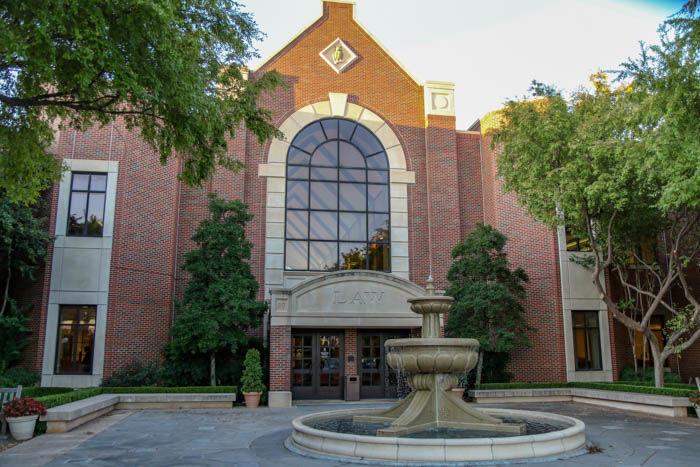
“OU Law announced its search for the new Ada Lois Sipuel Fisher Chair in Civil Rights, Race and Justice position, named for the first Black student accepted into the College of Law.” The position is named for Ada Fisher, who applied to the OU College of Law in 1946 but was rejected on the basis of state law. Sipuel Fisher then filed suit, which was appealed to the Supreme Court. In 1948, the Supreme Court ruled that the state must provide Sipuel Fisher the same opportunities as all other citizens of the state. According to the job announcement, this position “is dedicated to a legal scholar who holds an established interest in and deep knowledge of civil rights law, election laws, race and the law, anti-discrimination law, equal rights and diversity in law, and critical race theory.”
|
|
|
|
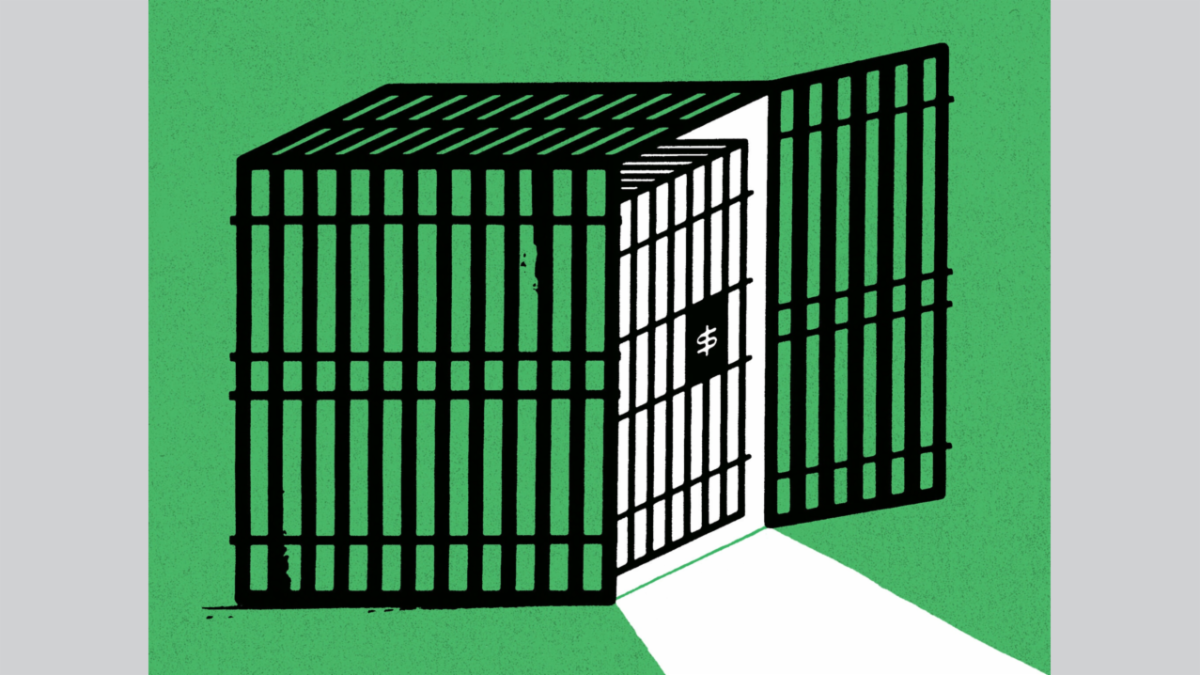
Immigration and Customs Enforcement and the U.S. Marshals Service uses county jails across the U.S. to detain immigrants, people seeking asylum and those in pre-trial custody on federal charges, which “perpetuates a profit-driven system of mass incarceration.” These agencies pay counties—and the sheriff’s departments that run the jail—per diem for the use of county jails. This revenue, Kang-Brown and Norton argue, “subsidizes the cost of detaining and incarcerating local people, and, in many cases, offsets the enormous local costs of jail construction or renovation.” The federal government spends $1.3 billion per year on jail beds, which “has resulted in a carceral arms race, with counties competing to produce more capacity to lock people up.”
|
|
|
|
As part of a slate of criminal justice and police reforms signed into law in Illinois, the state committed to eliminating cash bail for pretrial detainees, which will take effect in Jan. 2023. Those who aren’t deemed a threat to the community will be released from jail before trial without any required bail. The Illinois Justice Project argued: "The end of cash bond -- one of the most important reforms -- will put meaning into our criminal justice system's 'presumption of innocence.” This reform comes after the Illinois Supreme Court Commission in Pretrial Practices found that a defendant unable to afford bail “sees his or her life unravel within days – loss of a job, loss of child custody, health problems without access to medication.” Although other states have reduced the use of cash bail, Illinois will become the first state to eliminate it entirely.
|
|
Announcements & Opportunities |
|
External Funding 101 for Qualitative & Interpretive Researchers
March 5, 2021 | 10:00 am - 3:00 pm CT
|
|
|
"Ideating for Convergent Research in Trauma & Advancing Well-Being"
March 12, 2021 | 3:00-4:00 pm CT
Join Connie Chapple (Sociology) and David McLeod (Social Work) of the OU Carceral Studies Consortium and CFE in a workshop to jump-start ideas for future collaborative proposals related to trauma & advancing well-being among women, children and families. During this session, OU researchers will exchange ideas across disciplines and begin brainstorming collaborative proposals for external funding. Faculty from arts, humanities and STEM disciplines with an interest in engaging social justice work are encouraged to attend to learn more.
|
|
|
"Abolitionist Pedagogy Workshop"
An Online Workshop Led by Dr. Sabina Vaught
March 26, 2021 | 1:30-2:30 pm CT
Dr. Sabina Vaught, founding chair of the Carceral Studies Consortium and Professor and Inaugural Chair of the new Department of Teaching, Learning, and Leading at the University of Pittsburgh will offer an Abolitionist Pedagogy Workshop on March 26, 2021.
|
|
|
Carceral Studies Student Work Prize
Submissions Due May 1st, 2021
The Consortium is pleased to announce a Carceral Studies Student Work Prize. OU students may submit an original essay or creative work produced as part of any course in any discipline during the 2020-2021 academic year that deals with the topic of Carceral Studies, broadly conceived. Submissions are due May 1st, 2021.
|
|
|
ABOUT
The Consortium Newsletter will offer a roundup of a few selected articles that reflect today’s news, organizing, and thinking related to the carceral state. We understand that freedom work is built on education and engagement. Education requires an understanding of contemporary issues informed by their historical context. We hope that these curated articles will help you analyze the issues that we face and understand the community that we strive to construct.
Join the conversation!
We encourage feedback, suggestions, and article suggestions. Please reach out to carceralstudies@ou.edu with any ideas, thoughts, or recommendations.
If anyone you know is interested in receiving this newsletter and other information from the Carceral Studies Consortium, please forward them this email and they may click this link to subscribe.
|
|
Land Acknowledgment
The University of Oklahoma is on the traditional lands of the Caddo Nation and the Wichita & Affiliated Tribes. This land was also once part of the Muscogee Creek and Seminole nations. It also served as a hunting ground, trade exchange point, and migration route for the Apache, Cheyenne, Comanche, Kiowa, and Osage nations. Today, 39 federally-recognized Tribal nations dwell in what is now the State of Oklahoma as a result of settler colonial policies designed to confine and forcefully assimilate Indigenous peoples.
|
|
The University of Oklahoma is an equal opportunity institution. ou.edu/eoo |
|
|
|
|
|
|