March 17, 2026

Top stories

■ Trump team applying pressure to media: Tell the war's story the way we see it (Associated Press) / Brendan Carr says he can police TV journalism because broadcast licenses are 'free' (Reason) 


■ ‘Axios is cutting 11 people across national, local, news desk visuals and social.’ (Ben Mullin) / Despite the cuts, publisher Nicholas Johnston says the site is ‘continuing to hire and grow’ (The Wrap)


■ CBS News 24/7 staffers begin bicoastal walkouts, with full support from WGAE (The Wrap) / CBS News staff strike: How it will impact Tony Dokoupil, '60 Minutes' and more (TV Insider) 


■ David Zaslav payout for WBD-Paramount merger unveiled (Deadline) / The Ellisons are building a media empire. Trump keeps cheering them on. (Washington Post)


■ US media mogul sees a big opportunity in the cuts at the Washington Post (Guardian)


■ Canada mortgage billionaire buys stake in The Economist Magazine (Bloomberg) 


■ Nashville journalist Estefany Rodríguez granted bond, but not released (Nashville Banner) 


■ Public records shed light on the justice system — but it can be a battle to get them (Marshall Project)


■ NBC News links up with tech journalist Joanna Stern as it pursues creator deals (Hollywood Reporter) / STAT News hires CNBC executive Harris (Talking Biz News) / Baton Rouge Biz Report is expanding (Talking Biz News) / Inc. hires JeanFrancois as a reporter (Talking Biz News) / Dana Walden unveils her Disney Entertainment leadership team spanning film, TV, streaming and games; Debra OConnell upped to DET chairman (Deadline)


■ Wired’s new editor doesn’t care if the tech bros are mad (New York Times)


■ BuzzFeed debuts AI slop apps in bid for new revenue (TechCrunch) 


■ FIFA partners will be able to stream select World Cup games on YouTube (USA TODAY)


■ Meet the meteorologists leaving broadcast behind (Columbia Journalism Review)

CRAFT
Sunshine Week: A celebration of access to information

6 FOIA tips to boost your reporting


Editor’s note: Sunshine Week, the annual celebration of access to public information, is coordinated by the Joseph L. Brechner Freedom of Information Project. To commemorate the power of public information, we’ve asked experts to share their tips for requesting open records and responding when facing roadblocks to access.


By Eileen O'Reilly, past National Press Club president

Diving into public records may sound boring, but it can turn a hunch into an award-winning story that holds power to account. 


Americans have the right to know how taxpayer money is spent, how the government acts in their name, and how it exercises power over their lives.


The Freedom of Information Act (FOIA) gives any person the right to request access to records from federal executive branch agencies, including departments, agencies and certain government-controlled corporations.

  • It does not apply to Congress, the federal courts, or parts of the Executive Office of the President whose sole function is advising the president.
  • Federal agencies may withhold or redact information if it falls under one of the nine statutory exemptions in the law.
  • State governments have their own statutes, and some require proof of residency.


Here are six tips on using this important reporting tool:


Do your homework first. What question do you hope the request will answer? Which agency or custodian is most likely to have that information? 


  • If you think you may file multiple FOIA requests from the same agency, build a source relationship with the FOIA public liaison and ask clarifying questions about how records are stored.
  • Read the submission rules carefully so a procedural mistake doesn’t delay your request.
  • Check if they must notify you before exceeding a cost estimate.


Narrow your search down as much as possible. What prior reporting or FOIA requests can you find related to your request? What keywords would be the most useful? What time period likely holds the requested information? What type of system might contain the answers (emails, body-worn cameras, etc.)?


  • Check MuckRock and the National Freedom of Information Coalition to look for related FOIA requests.
  • Preserve images of records you find online in case they disappear. 
  • Track your requests, responses, fees, what you received/didn’t receive, etc.


Perfect your written request for records. For instance, ask for emails between Person A and Person B containing one or more of these three keywords “XX,” “XX,” and “XX,” during this time period XX-XX. 


  • If there is an urgency to inform the public about government activity, state that and request expedited processing. Ask to be classified as a representative of the news media and to receive a public interest fee waiver. 
  • Request preferred format (i.e., original video, memos, emails, photos) and state you want the metadata included when possible.
  • Ask for records to be released on a “rolling basis” so you can start reporting right away.


Submit the request following the agency’s guidance.


  • Proof carefully before submission and include your contact information. Retain a full copy of your request.
  • Ask for an estimated date of completion.
  • Put reminders on your calendar to follow up after 20 business days for federal requests. Be the squeaky wheel with polite but persistent pressure.


If applicable, push back on denials or excessive fees.


  • Ask for an itemized fee estimate and their legal basis. Strategically decide if you can narrow your search and ask how much that might lower costs.
  • Ask which exemption justified the denial or redaction, and if there are additional non-exempt portions that could be segregated and released.
  • Common arguments include: showing that similar records had been released, saying they didn’t demonstrate specific foreseeable harm, or pointing out that they are not being consistent with their own policies.


Escalate your legal approach. If you continue being denied without justification, request mediation through the Office of Government Information Services. Or file a formal appeal within the deadline. 


If there are missed deadlines after polite and persistent requests, sometimes journalists describe this journey in a story. This can place pressure on the agency to prioritize your request and helps your audience know you are seeking transparency and accountability.


Go deeper: See our previous Sunshine Week content for more guidance on open records.

CAREER


Career Day Session Spotlight: What hiring managers want you to know


Landing a journalism job today takes more than strong clips and a polished resume. In a rapidly changing, highly competitive industry, standing out is harder than ever.


So how do you help hiring managers see you as a future colleague and not just a name on a page?


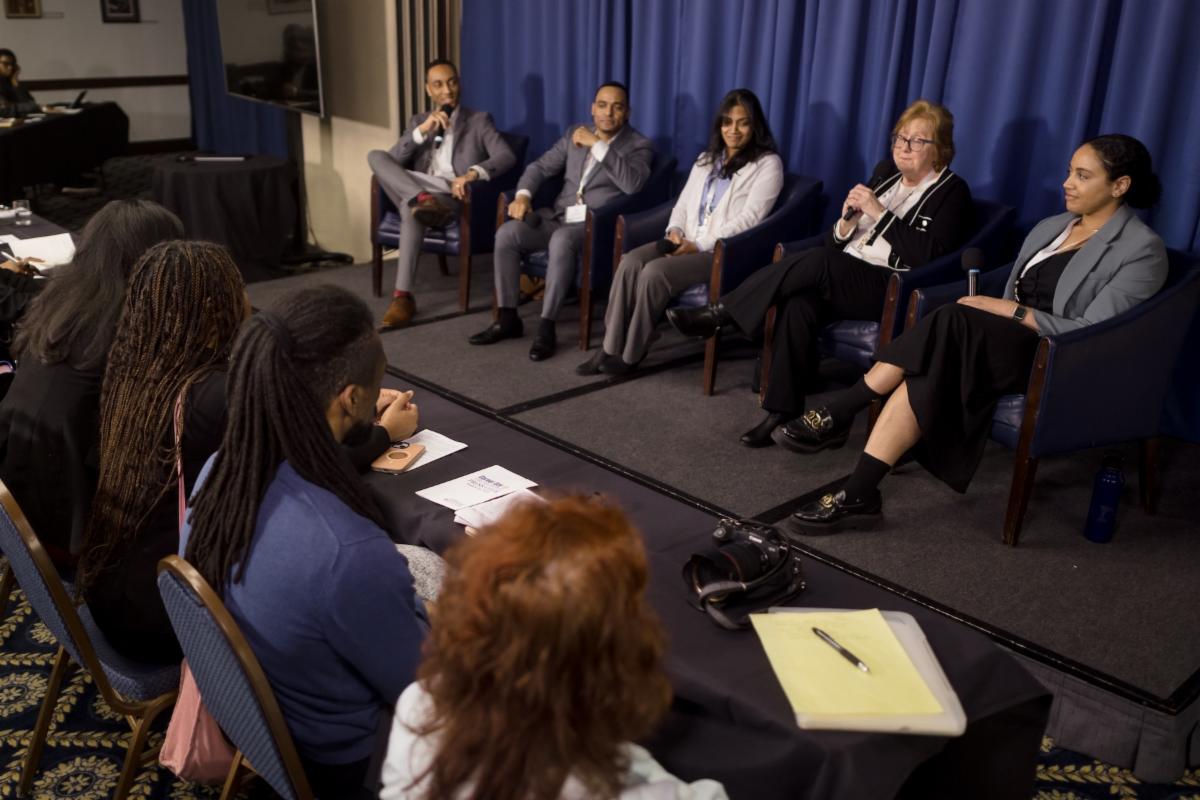
Back by popular demand, we’re convening a panel of editors and hiring managers from American City Business Journals, Bloomberg Industry Group, and more during Career Day at the National Press Club.

They’ll tackle your biggest questions about getting hired in 2026: What skills matter most in today’s newsroom? How do you adapt to a field shaped by audience strategy, AI tools, and platform fluency? And which skills transfer across roles and industries?


Whether you’re just starting out or making a career pivot, this session offers practical strategies you can use right away.

Join us from 9 a.m. to 4 p.m. ET on Friday, March 20, for the full Career Day programming — or drop into this single session. We promise that you’ll leave with actionable next steps, fresh perspective, and renewed momentum. (See the full schedule here.)


COMMUNITY

Resources

This newsletter is written and edited by the National Press Club Journalism Institute staff: Beth Francesco, Holly Butcher Grant, and Elliot C. Williams. Send us your questions and suggestions for topics to cover.


Get this from a friend? Subscribe and view the archives.

Facebook  X  Linkedin  Youtube  

DONATE TO THE INSTITUTE


The National Press Club Journalism Institute promotes First Amendment values by equipping journalists in Washington, D.C., and nationwide with the skills, knowledge, standards, resources and networks to empower and inform the public. As the non-profit affiliate of the National Press Club, the Institute powers journalism in the public interest. The Institute's tax ID number is 52-1750908.