STEM and Engineering Connections |
|
This is our final Global Goals focused newsletter for this year! Whether you want to engineer solutions for challenges related to ocean resources or life on land, keep reading to access activities and projects for your classroom.
|
|
We are Back!!!
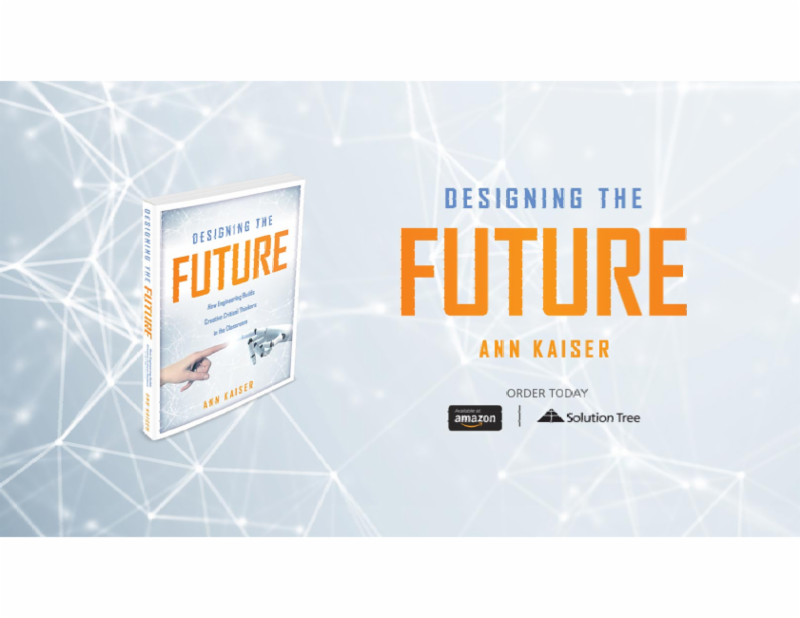
We are vaccinated and so happy to be resuming in-person workshops! May is already busy and we are now booking for June through December. This is a great opportunity to do things differently and distinguish your school as one that empowers students to be innovative problem-solvers and creative engineers. To celebrate our return, we are providing complimentary faculty copies (up to 30 per workshop) of Ann's book "Designing the Future" as part of any contract signed before September 1, 2021. It is the perfect roadmap for change in your school! And don't forget that STEM-related training and resources can be covered by Title II and IV funding. Click below and email us about your needs and vision so we can help you put together a plan that is guaranteed to make creative problem-solving part of your curriculum and culture.
|
|
Middle and High School
Our oceans are the key to life. They cover three quarters of the Earth’s surface, contain 97% of the Earth’s water, and represent 99% of the living space on the planet by volume. Oceans contain 200,000 identified species, but actual numbers may lie in the millions, many still waiting to be discovered. But in a world where over 3 billion people depend on seafood for protein, over 70% of all fisheries are under stress. And it is estimated that about 8 million pieces of plastics enter the oceans every day. It will take many minds working together to protect this incredibly important resource. You can give your students a head start!
There are many topics that you can focus on if you want to take a STEM-based approach to the challenges we face in protecting our oceans. Here are some of the curricular connections that UNESCO suggests at the K-12 level:
- Management and use of marine resources (renewables and non-renewables): global access and overfishing, quotas and how they are negotiated, aquaculture, seaweed, mineral resources
- Sustainable Marine Energy (renewable energies, wind turbines and their controversy)
- Marine ecology – the food web, predators and prey, competition, collapse
- Coral reefs, coasts, mangroves and their ecological importance
- Sea level rise and countries that will experience total or partial loss of land; climate refugees
- Ocean pollutants: plastics, microbeads, sewage, nutrients and chemicals
- The deep ocean and deep-sea creatures
Helpful resources and materials include:
- The One World Centre (Australia) has a terrific compilation of educator resources realted to SDG 14.
-
Ocean Wise has a full online middle school "course" that can give your students the background that they need.
- ProjectEngin has a great engagement activity that really brings home how and why overfishing occurs. It is easily modified and expanded and it works well for grades 4 -12. You can access our Fisheries Quick Build here.
- Plastics and plastic pollution can be complex topics. Some introductory activities that work well in middle and early high school include those from National Geographic and Practical Action.
|
|
Grades K-6
Stewardship of our planet needs to focus on the land we live on. The overall goal of SDG 15 is to sustainably manage forests, combat desertification, halt and reverse land degradation, and halt biodiversity loss. There is a lot to be done and there are countless curricular connections that you can make. We have a few ideas to help your students get started.
- ProjectEngin has a simple Quick Build activity that really brings home the importance of every element in a habitat. You can access "The Missing Piece" here. We have had terrific success with it as an introduction to a Grade 2 project as well as in teacher workshops! It would work well at all grade levels.
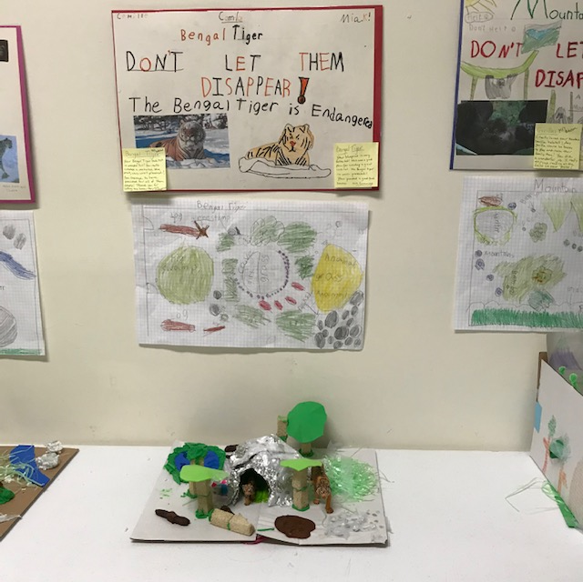
- This month's full project release is designed for grades 2-5 and challenges students to create public awareness about the challenges that endangered species face as their habitats are destroyed and altered. The final deliverable is an a zoo-like exhibit that educates visitors about the relationships between habitats and animals. Let us know how our Habitats project works for you!
|
|
Congratulations to Bryan Colahan!!!
Our colleague, Bryan Colahan, is a Rhode Island Finalist for the Presidential Award for Excellence in Math and Science Teaching (PAEMST)! Bryan is not only a stellar classroom teacher at Tiverton High School, he works with us to develop new materials and to support our work in teacher training. Bryan is a strong advocate for the inclusion of Engineering in STEM curriculum and the use of modeling and project-based learning in science classes. Congratulations to one of the best!
|
|
This Year is Almost Over! Be a Part of Our Grand Finale!
Send Ann pictures of your students' engineering projects and prototypes and we will make them part of our year-end gallery! It's a great way to showcase their work and to reinforce the idea that all challenges have multiple solutions. Let us know how your students are designing the future! Submit by May 28th and be entered in a drawing for a free copy of "Designing the Future"!
|
|
|
Join Our Community of Educators Who Engineer!
Innovation and change happen when we put together different experiences, talents, and viewpoints. That is the focus of our Participate community of learners. Gain access to new resources, project plans, and webinars. You can also share your experiences and tips with others. We are currently sending out invites to new members.
Click below for an invitation to join us!
|
|
Designing the Future
Are you looking for ideas and resources to support creative problem-solving in your classroom? Check out Designing the Future: How Engineering Builds Creative Critical Thinking in the Classroom, Ann’s book for K-12 educators. Learn how you can engage the inner engineer present in your students, no matter what or who you teach. There are lots of activities, projects, and resources you can implement immediately both in the classroom or online.
|
|
|
|
|
|
|