Q: To begin, what is the current status of the COVID-19 pandemic in Oglala Lakota County SD, where LWS is located?
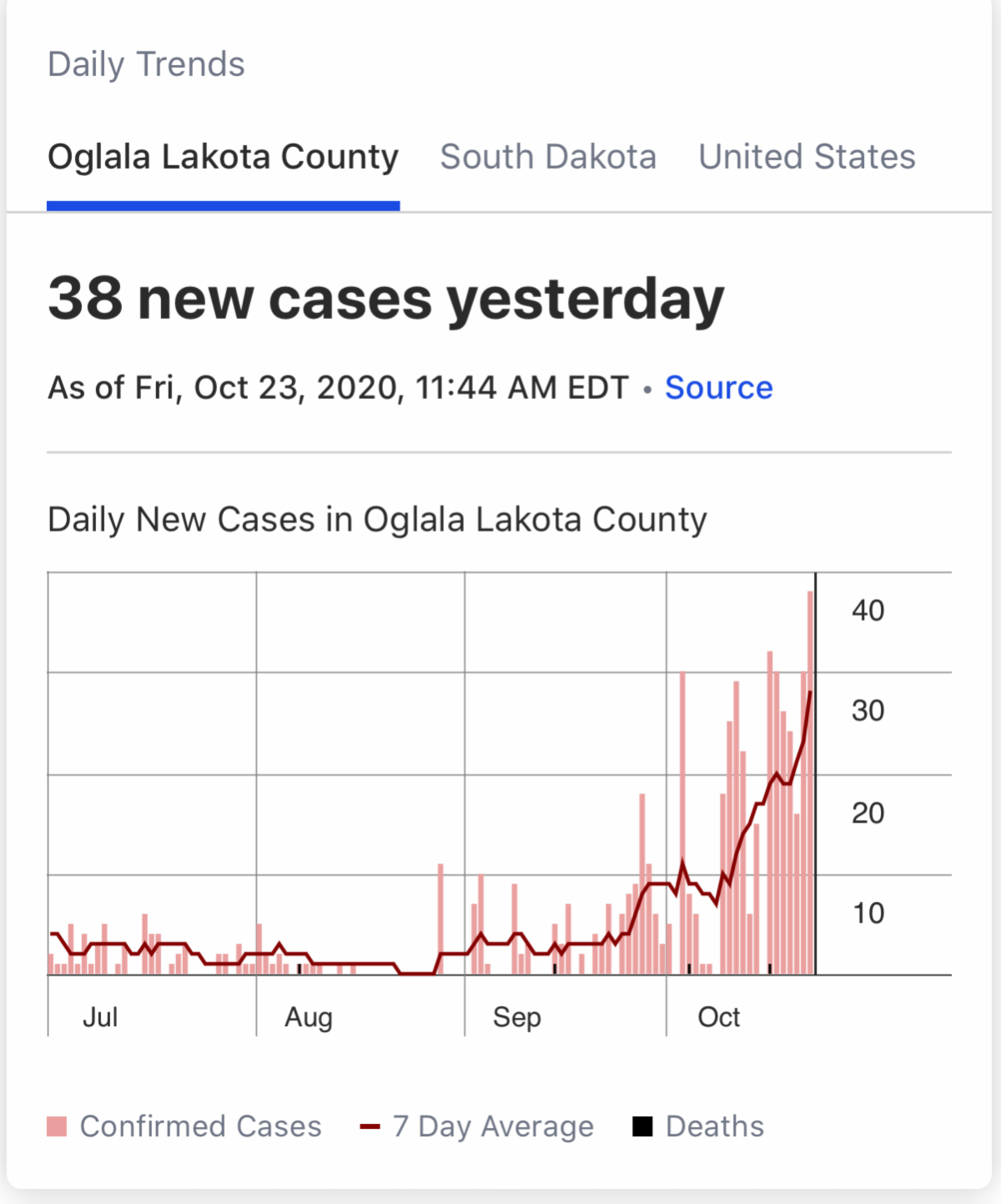
Statistics from the South Dakota Department of Health show that Oglala Lakota County has had a severe jump in active cases of COVID-19, as shown in the attached chart. Also, SD health officials state that 14 patients with COVID-19 are now occupying the 19-bed capacity of the Pine Ridge IHS Hospital.
Q: How has the Oglala Sioux Tribe Council responded to this growing rise in COVID-19 cases?
Since March 26, 2020, the Oglala Sioux Tribe (OST) Council has enforced a “shelter-in-place” ordinance, which has not allowed students on school premises for classes or extracurricular activities. As a result, educational activities have been limited to virtual classes and paper packet deliveries (called “Home Learning Packages” at LWS). The ordinance also designated schools as essential businesses, which means our faculty and staff could travel on a limited basis.
However, on October 21, 20201, the OST Council has now placed the entire Pine Ridge Reservation on a seven-day lock-down running from October 23 through October 30. And if needed, this preventive measure will be extended until the virus's positive rate is reduced.
Q: What does “lock-down” mean on the Pine Ridge Reservation? And how does it affect school activities?
According to the OST COVID-19 Response Taskforce, the lock-down ordinance means no one will travel on or off the reservation for seven days. BIA and tribal roads, as well as nonessential businesses, will be closed. And except for essential tribal employees, people must work from home, to “the greatest extent possible."
For the Lakota Waldorf School, this means that faculty and staff must remain at home, and “Home Learning Packages” will be temporarily suspended. However, zoom classes will be continued, and the OST Council has issued passes that allow school lunches to be delivered by bus to our students.
Q: How is this affecting the students? How are they doing during this difficult time?
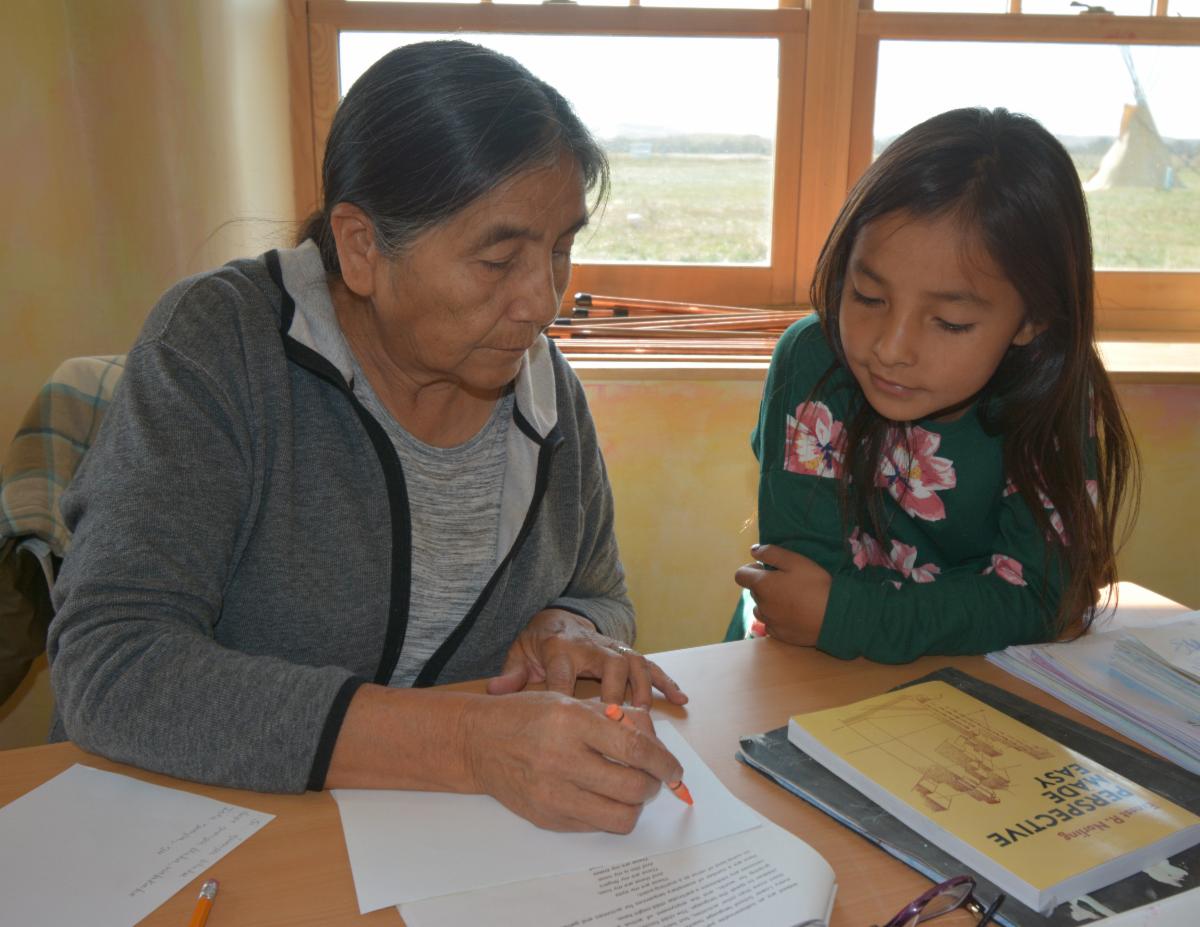
As the pandemic continues to deprive students from their regular social encounters at school, this long-term isolation from peers is affecting their emotional wellbeing. Also, academically, our students are not receiving the normal support and guidance they need to learn and complete their schoolwork correctly. As a result, LWS teachers are strongly focused on helping parents in their role of providing their children with a supportive learning environment.
Q: What about LWS teachers? How are they doing? And what steps are being taken under these limited conditions?
When the COVID-19 pandemic emerged in early 2020, our priority became the health and well-being of our students, which means our academic goals took a second seat to CDC guidelines and OST Council ordinances.
Although this shift in focus has been right and necessary, we have also significantly been challenged by the extraordinarily difficult and mostly impossible task of conforming indigenous Waldorf pedagogy into a distance learning curriculum. We cannot observe or interact with most of our students, which means we have no way of adjusting assignments to fit each student's needs. And the limited teaching options that we do have available – such as zoom meeting, phone calls, YouTube videos, and online math class subscriptions – barely provides a glimpse of a school-based on Waldorf pedagogy.
Nevertheless, our teachers are exceptionally dedicated to doing their best, which at this time involves a focus on the well-being of our students and their families. To this end, two COVID-19 emergency grants - from First Nations Development Institute and the Santa Fee Natural Tobacco Company Foundation - have allowed us to equip our students with all necessary school supplies, books, writing material, and everything they need to have a workspace at home. The grants have also made it possible to provide our students wellness-packets (with items like organic hand soap, hot water bottles, a planting kit, and materials for craft activities) as well as bags of organic groceries (such as pasta, bread, flour, tomato sauce, apples, cereal, and school garden vegetables).
Q: Is there anything else that members of the LWS community should know?
Yes. The Lakota people are strong. We have endured hardships for many generations, and we will survive this COVID-19 pandemic. Also, when students return to the classroom, the power of Waldorf pedagogy will be on our side. It may take time, but we have an indigenous Waldorf curriculum for raising a stronger and healthier generation of Lakota children.