|
|
Defending wildlife and habitat through:
Advocacy
Conservation
Education
|
|
|
News & Updates: November 2023 |
|
In this issue:
- Kansans for Conservation announces State Conservation Fund Initiative
- Cedar management at Hutton Sanctuary will restore nearly 200 acres of riparian grassland
- Getting kids outside with the Nature Adventurepack program
- Bird Feeding Basics
-
Philanthropy Reflection: An Expression of Gratitude
-
AOK Events: Registration for Kansas Lek Treks Prairie-Chicken Festival opens in mid-December
-
Chapter Spotlight: Join a Christmas Bird Count near you
-
AOK Nature Spot Recommendations: Kill Creek Park in Olathe
|
|
|
Kansans for Conservation announces
State Conservation Fund Initiative
|
|
Kansas remains one of only fifteen states without dedicated state funding for conservation. Every day Kansas delays in establishing sustainable conservation funding is millions lost in federal matching funds. This month, Kansans for Conservation presented legislation that would finally create such a fund.
The State Conservation Fund bill to be introduced in 2024 will:
- Provide funding to working lands, wildlife, parks and recreation, and education at a level identified to maximize federal and private match in critical conservation areas
- Utilize existing state revenues and not require any new taxes or fees
- Streamline funds from the state directly to on-the-ground conservation
In July, AOK joined Kansans for Conservation, a coalition of diverse organizations working together to increase conservation funding in Kansas. We are helping the coalition increase awareness of the need for conservation funding and the proposed legislation. Please share our FaceBook and Instragram posts! Several posts are scheduled throughout December.
|
|
|
Cedar management at Hutton Sanctuary will restore nearly 200 acres of riparian grassland |
|
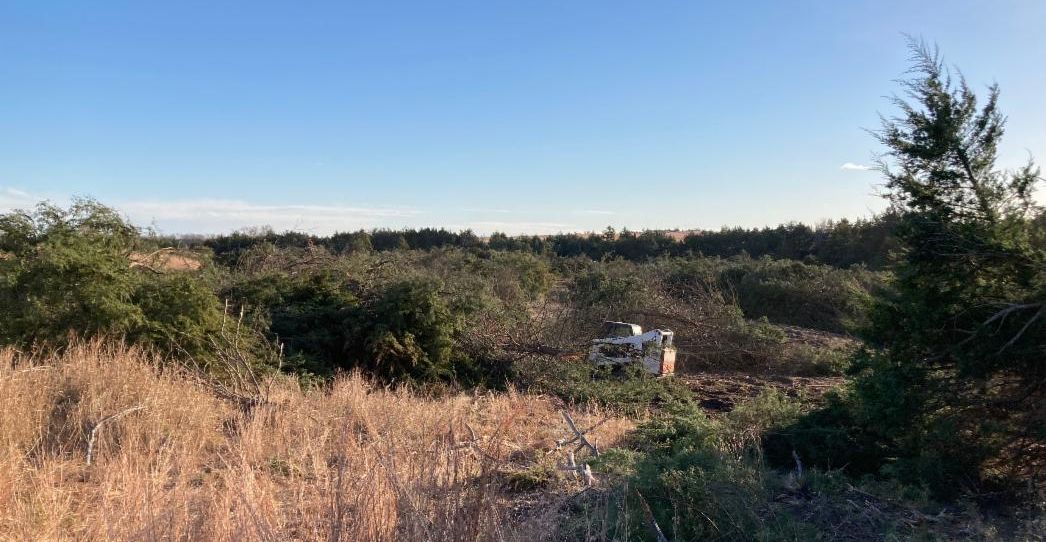
Winter is a great time to remove cedars and do other habitat management without disturbing birds and bats during critical breeding or migration periods. Two projects are underway at AOK's Hutton Niobrara Ranch Wildlife Sanctuary in northern Nebraska.
The first project I lovingly call 'restoring willows to Willow Creek'. Currently, the creek is choked with Eastern Red Cedar. These cedars create a dense canopy preventing grasses and wildflowers from growing underneath them. Without the thick roots of the grasses and wildflowers holding the bank together, the creek is suffering from erosion issues. The cedars are also a barrier for dispersing prairie-chickens. We have hired a contractor who has started clearing the mature cedars along the creek as well as the young cedars in the adjacent pasture - 155 acres in total. The project is being cost-shared with Pheasants Forever and the US Fish and Wildlife Service. This restoration will reduce erosion and increase habitat quality for state-threatened fish including the Northern Redbelly and Finescale Daces which currently reside in Willow Creek.
The second project will enhance the hardwood forests within the Wetland Easement area at Hutton by removing 25 acres of cedars lining the edge of the hardwood forest. These cedars hinder the movement of elk through the area, but also shade out understory vegetation. Many declining species, like Whip-poor-wills, Wood Thrush, and American Woodcock, require understory vegetation to conceal their nests from predators. This project is funded solely through the US Fish and Wildlife Service through the Wetland Easement program.
We look forward to sharing before and after photos in the coming months!
|
|
|
Getting kids outside
with the Nature Adventurepack program
|
|
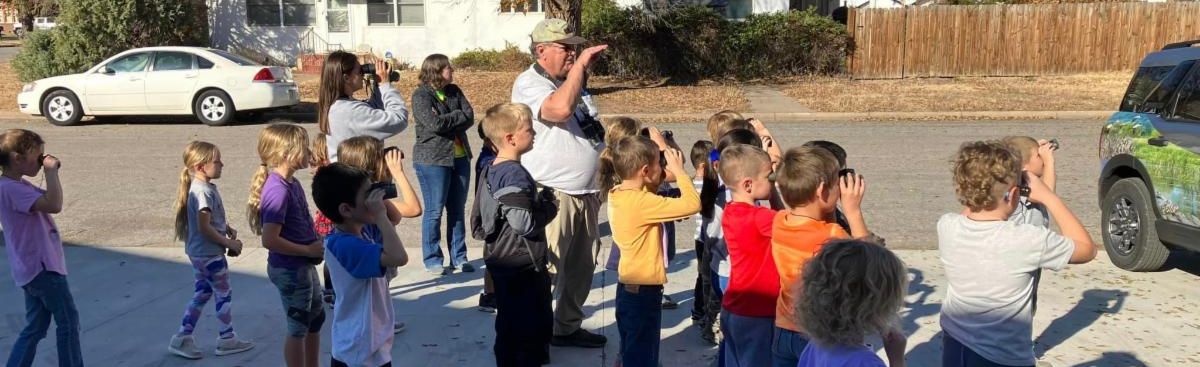
The Nature Adventurepack program is taking me, Executive Director Jackie Augustine, throughout southwestern Kansas to talk about birds and to encourage library patrons to check out binoculars from their library. Ashland was my most recent destination. I recruited Tom Flowers, a birdwatcher and bander from Meade, to help out. Cara Vanderree, a Librarian at Ashland City Library, organized a busy day for us!
We started with the third graders at 10am. We first played a migration game where the children had to run up and down a grassy strip while 'predator' students tried to tag them. The children could jump inside hula hoops representing stopover sites to avoid predators. Then, Tom and I split the children into two groups. Tom took the students on a walk around the block looking for birds. I took the children inside and read Ruby's Birds by Mya Thompson and talked about birdsong using plush birds that played their song when you squeezed them.
At noon, I talked about Beginning Birdwatching to a group of adults at Lunch and Learn. Cara and other friends of the library provided a bird-themed lunch with chicken pasta and hummingbird cake!
We were planning on hosting the K through second graders in the afternoon, but over lunch, we received a call from the school. The third graders had a great time that morning - now the fourth and fifth graders wanted to come as well and wanted to know if that would be alright. I thought, 'the more the merrier!' and agreed.
At the end of the day, we had talked to about 75 students and 25 adults about birds and birdwatching. Thank you so much to Tom and Cara for making the day a success!
|
|
|
|
|
One of the most commonly asked questions I receive during my beginning birdwatching talks is 'What should I feed my birds?'
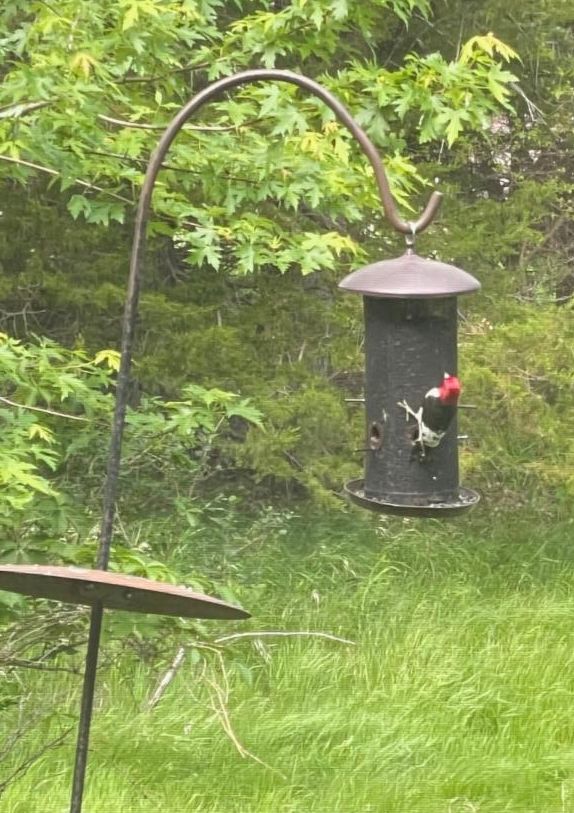
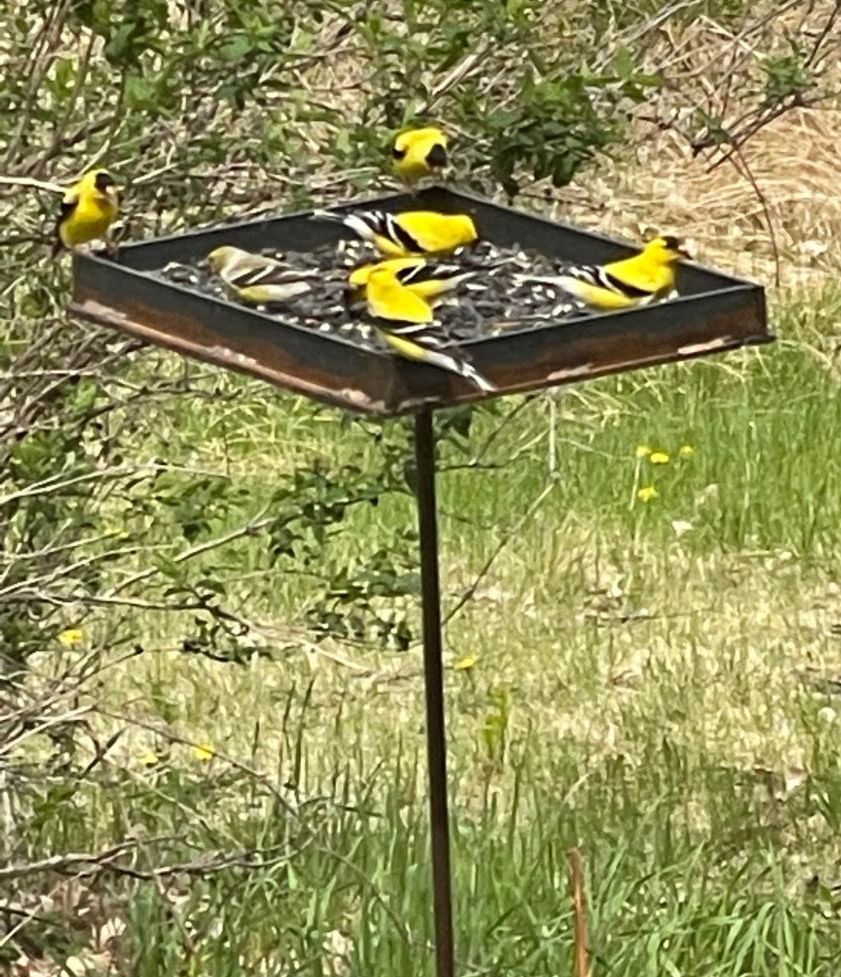
My short answer is: black oil sunflower seeds. It doesn't matter how you provide them - they are going to attract a wide variety of birds! They are packed with protein and fat and are a perfect snack for everything from the tiny goldfinch to the sturdy Blue Jay. Providing them on a platform feeder, like the middle picture to the left, will attract Dark-Eyed Juncos and other birds who prefer to feed on the ground. I generally avoid mixes because most mixes have a lot of millet or other 'filler' seeds. Birds seem to sort through the seed to pick out the sunflower seeds. There are some good mixes on the market at bird feeding specialty stores.
If you want to branch out, try providing suet. Again, look at the ingredients and avoid ones that contain a lot of millet. I prefer the ones with peanut butter and cracked corn. Woodpeckers love suet, but so do starlings. To discourage starlings, leave the square plastic holder on the suet and hang it so that it can only be accessed from the bottom. Starlings cannot hang upside down to eat, but woodpeckers can.
Another thing you might try is thistle seed. Small birds like goldfinches and siskins feast on thistle. You have to be careful though - thistle seed has a short shelf life. Don't buy a lot of it all at once and buy it from a place where it hasn't sat on the shelf. Thistle tends to attract more birds in winter than in summer.
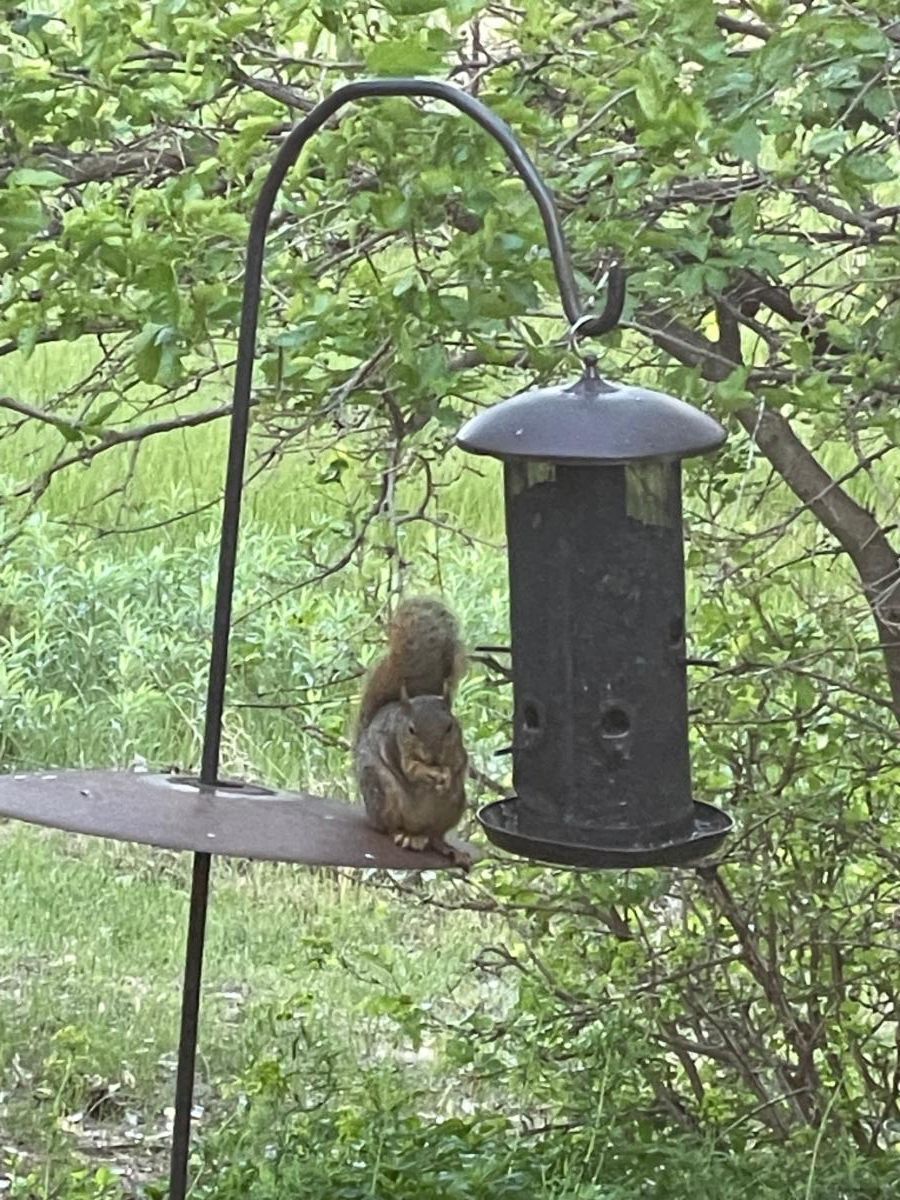
Whatever seed you provide, you are bound to attract squirrels and raccoons. This infuriates some people. You can install baffles of various types to prevent them from reaching the seed (some baffles are more successful than others). You can invest in a sturdy feeder that is resistant to squirrel damage. There are even feeders that spin in circles when a squirrel steps on it, sending them flying off the feeder! I just put out multiple feeders as they don't seem to both attract squirrels at the same time. I suggest learning to enjoy them.
Finally, watch for diseases. If you see birds with swollen eyes or feet, take your feeder down, clean it with a 10% bleach solution, and let it dry completely before adding seed. I also suggest leaving it down for at least a week for the disease to pass through and out of the birds visiting your feeder. Some people are more proactive and disinfect their feeder monthly.
Photos of the bird feeder at Hutton Sanctuary:
Top: Red-headed woodpecker eating sunflower seeds on a regular feeder. Note the saucer-shaped baffle to discourage squirrels and raccoons.
Middle: American Goldfinch eating sunflower seeds on a platform feeder.
Bottom: A squirrel who doesn't understand the purpose of a baffle.
|
|
|
Philanthropy Reflection:
An Expression of Gratitude
|
|
In this time of the year, we often think about gratitude. I wanted to take a moment to reflect on what it is to be grateful, how AOK connects with you in gratitude, and to share some of the benefits of gratitude. With a Latin root, the word gratitude connects an act of appreciation with the tangible and intangible things that we are thankful to have. When we give thanks, we actively (whether internally or externally) think about and acknowledge those things and people for which and for whom we are thankful. Oftentimes, we think about something outside of ourselves as part of the source of our gratitude - whether that is a person, nature, or a higher power.
In positive psychology research, gratitude is strongly and consistently associated with greater happiness. Gratitude helps people feel more positive emotions, relish good experiences, improve their health, deal with adversity, and build strong relationships.
We, at AOK, are grateful that you are part of our strong community of people who stand with us to protect our beloved natural resources. You help us achieve our goals on behalf of our native plants and animals, and make those of us who work with AOK happier. We are grateful to you and for you.
|
|
AOK Events: Registration for Kansas Lek Treks Prairie-Chicken Festival opens in mid-December |
|
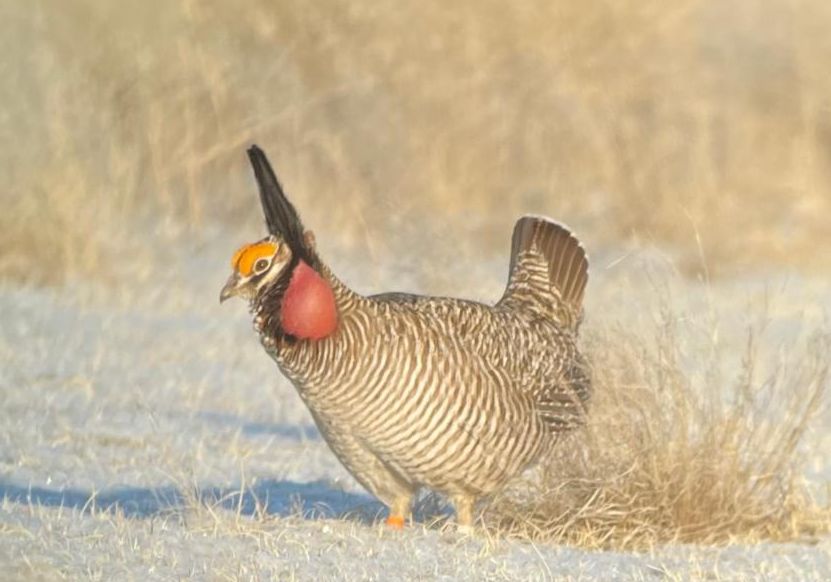
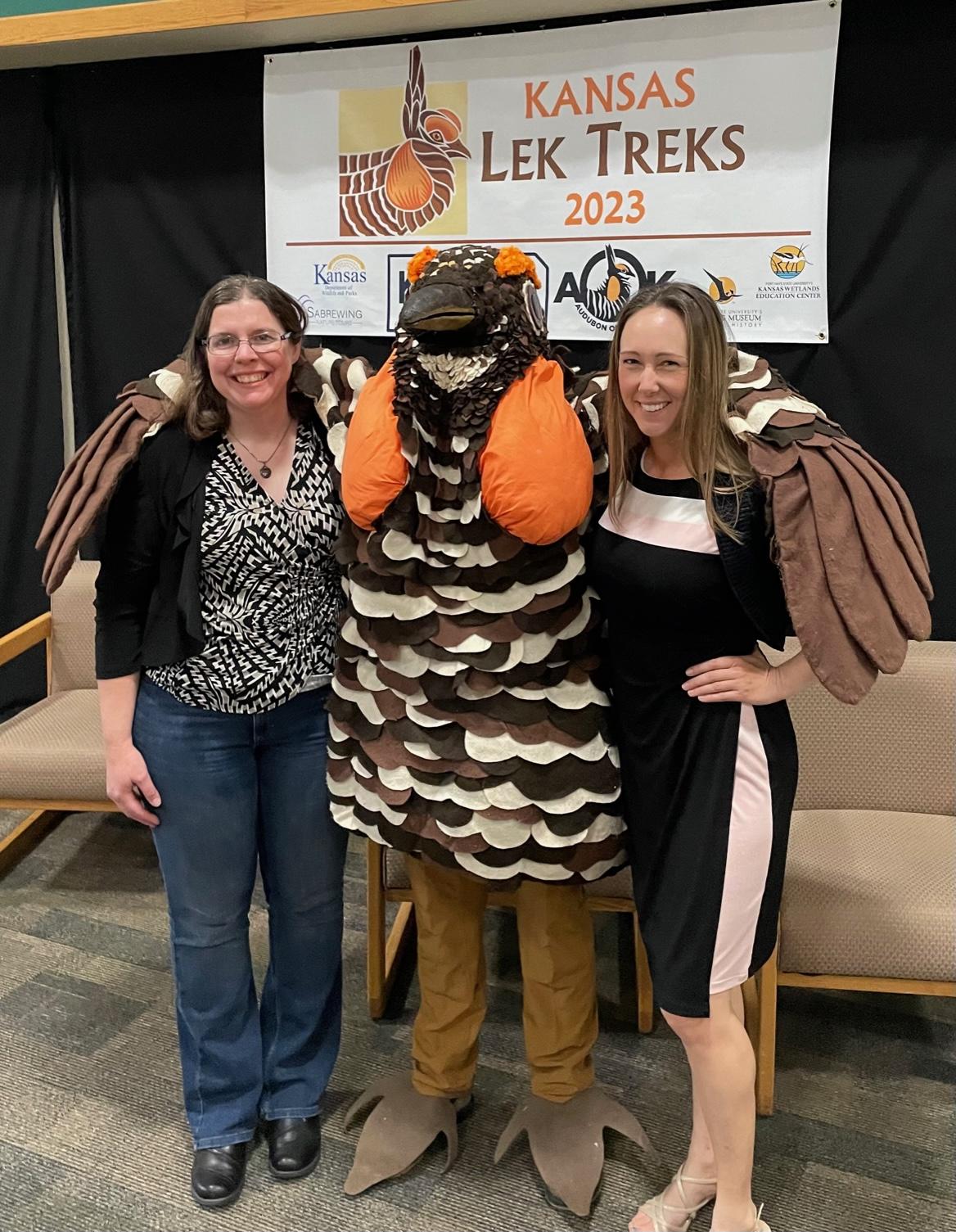
Audubon of Kansas (AOK) will hold its third annual Kansas Lek Treks Prairie-Chicken Festival from April 11-14, 2024 in Hays, KS. Hays offers opportunities to see both Greater and Lesser Prairie-Chickens within an hour’s drive. An additional post-festival trip will offer the opportunity to view Sharp-tailed Grouse at AOK’s Hutton Niobrara Ranch Wildlife Sanctuary in northern Nebraska. There are also social events and field trips focusing on wetlands, geology, or prairie grouse habitat management. This year's banquet speaker is Dr. Larkin Powell, prairie-chicken and grassland biologist from the University of Nebraska-Lincoln. He is also the author of Great Plains Birds.
New this year: We will have options for people with mobility challenges to participate.
If you are considering attending, I encourage you to sign up for notifications. You will be alerted when the website has new information and when registration opens. The festival attracts around 130 people from all over the United States, and registration fills quickly. Registration will open some time between Dec 15-20.
|
|
|
Chapter Spotlight:
Join a Christmas Bird Count near you!
|
|
Now is time to connect with local birders and contribute to community science!
Audubon Chapters and volunteers throughout the state host Christmas Bird Counts. Every corner of the state has a count within about an hour's drive (more often much closer!). This is an annual tradition where bird watchers count the number of species AND individual birds they see within a 15 mile diameter circle. By counting birds in the same area with the same methods every year, volunteers are contributing to science. This standardized protocol allows abundance trends to be documented over time, and to be compared across different areas of the country. One of the most important recent studies utilizing this data discovered that there are 3 billion fewer birds in North America since 1970.
Besides feeling good about contributing to community science, volunteers also enjoy connecting with like-minded individuals. No experience is necessary! Beginners are paired with experienced counters, and can contribute by pointing out birds that they see for the experts to identify. Be sure to bring binoculars and snacks!
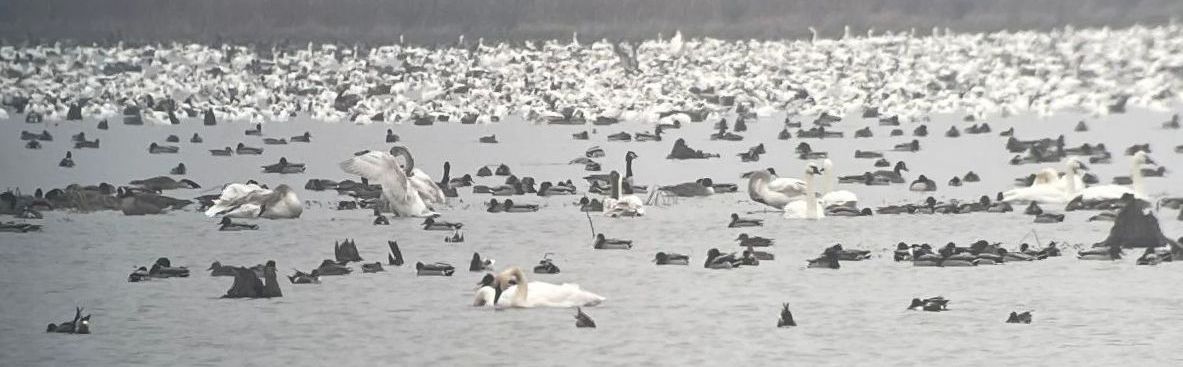
Photo: Swans and other birds counted during the 2022 Parson's Christmas Bird Count.
|
|
|
AOK shares favorite birding spots! |
|
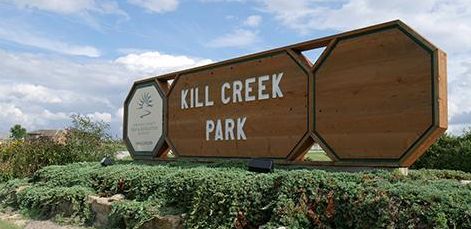
Kill Creek Park in Olathe
Kill Creek Park
11670 S Homestead Lane
Olathe, KS
Ann Tanner, AOK Board member and representative for Burroughs Audubon Society of Greater Kansas City, recommends Kill Creek Park in Olathe. She writes:
One of my favorite parks for hiking and birding is Kill Creek Park, conveniently located off Route 10 between DeSoto and Olathe, Kansas. This is an 897 acre park with 12 miles of hiking, mountain biking, and equestrian trails with free access (no charge to visit). It has 1.5 miles of paved trails. Most of the paved trails are fully accessible.
Immediately upon entering the park, visitors see one of the highlights. The Russell and Helen Means Observation Tower is a 58 foot structure that provides amazing views of the park and surrounding areas. It has both an elevator and stairs and is fully accessible and ADA Compliant. The top of the tower is a great location for seeing raptors (including Bald Eagles, Red-Shouldered and Red-tailed Hawks) soaring above the park as well as Blue Jays caching acorns, along with Pine Siskin and American Goldfinch feeding on native seed plants near the tower. Burroughs Audubon Society has sponsored several field trips at Kill Creek Park that start at the Observation Tower. While you are at the tower, check out the adjacent park headquarters complex that hosts a Purple Martin Housing Community maintained by the Johnson County Extension Master Naturalist Bluebird Stewards.
I usually park at Shelter 1 that is just beyond the tower and not far from the lake. It has great access to the lake, hiking trails, and a trail that leads to the Prairie Overlook Deck that provides a location to view the prairie in spring and summer with its gorgeous wildflowers.
My favorite trail at the park is the shorter loop trail known as the Outer Hank Trail. Along this trail in the winter, I enjoy seeing Winter Wren near the creek and a wide variety of raptors including Northern Harrier. In the spring and summer, the area near this trail is filled with Eastern Kingbirds, Scissor-tailed Flycatchers, warblers, Dickcissel, and Indigo Bunting. The Johnson County Extension Master Naturalist Bluebird Stewards maintain an extensive Eastern Bluebird Nesting Box Project at the park, so you will see plenty of Eastern Bluebirds, Tree Swallows, and House Wrens in the spring and summer. In the fall, the park becomes a haven for sparrows including Fox, Tree, Savannah, Harris’s, and even the elusive LeConte’s Sparrow. Year-round birds include Belted Kingfishes, Cedar Waxwing, Eastern Meadowlarks, and a wide variety of woodpeckers, including Pileated and Red-headed Woodpeckers.
A trail surrounds the Kill Creek Park Lake that hosts waterfowl, geese, and swans during the winter. An unpaved hiking trail provides access to the back side of the lake where the paved trail is not available.
|
|
|
Amy Kucera - Sanctuaries Coordinator - Questions about AOK sanctuaries and habitat management amy@audubonofkansas.org
Lana Arrowsmith - Hutton Niobrara Coordinator - Hutton Sanctuary Management & Reservations lanamicheel@gmail.com
Audubon of Kansas
PO Box 1106 - Manhattan, KS 66505
785-537-4385
|
|
|
|
|
|
|