|
Mother Teresa of Calcutta: A Life Given Away
Fr. Sleeva Kala, OSFS
| | |
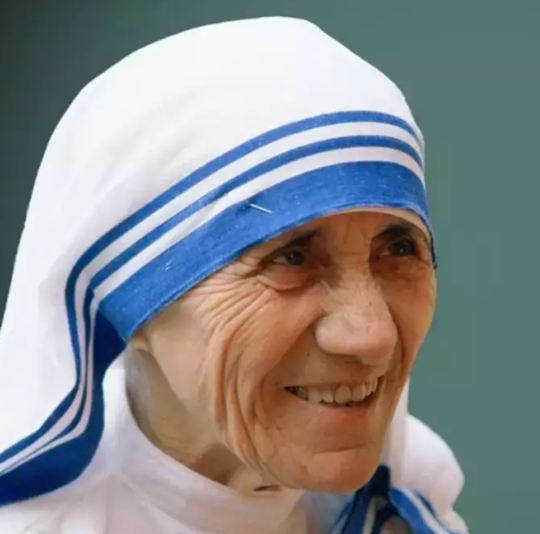
In 1993, I remember Mother Teresa visiting our Diocese in Nalgonda, India. Her visit was announced in all the parishes, including our parish. Our pastor encouraged everyone to go and see her. People generously donated money, gold, and other gifts for her mission, and some of our parishioners had the beautiful opportunity to meet her in person.
I was only seven years old at the time, and unfortunately, it was a school day, so I could not go. What a miss it was. Even today, I wish I had been there just to see her in person.
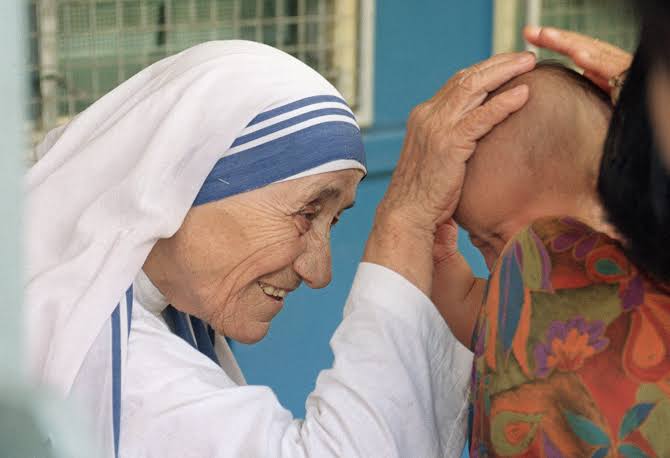
Once Mother Teresa was asked about her extraordinary work among the poor, she humbly said: “I am like a little pencil in the hand of a writing God who is sending a love letter to the world.” A pencil gives itself away as it writes. Little by little, it becomes smaller. That is the beauty of Mother Teresa’s life. She allowed God to use her completely, even when it meant pain, sacrifice, and suffering.
| | |
In 1948, when she left the Loreto convent, she left behind her sisters, friends, comfort, and security. She knew the road to the slums would not be easy, but she trusted God’s call to be with the poorest of the poor.
Mother Teresa once wrote, “The missionary must die daily.” She understood that love is not simply something we feel; it is something we give. And true love always costs us something. Perhaps that is why her life still touches so many hearts. She became smaller so that God’s love could become greater through her.
| |
I missed the opportunity to see Mother Teresa when I was seven. But perhaps, in another way, I have been given the grace to see her more clearly over the years, not simply as a great woman, but as a little pencil in the hand of God, writing His love into the lives of the poor and into the heart of the world.
May Saint Teresa of Calcutta teach us to place our own lives into God’s hands and allow Him to write His love through us.
| | |
The feast day of St. Mother Teresa of Calcutta is September 5.
A good way to celebrate is by learning more about her life. Check out the documentary "Mother Teresa: No Greater Love."
| | |
Bearing Witness
by Elizabeth Connell Wright
“They say you die twice. First, when you stop breathing and a second time, when the last person says your name.” This quote — or variations of it — has been attributed to many people, from Al Pacino to Banksy to Ernest Hemingway and several others. I don’t know who was first to say it, but we all understand its significance. We want to be remembered — we want to know that our lives mattered to others, and as Catholics, we hope others will pray for us.
To bury the dead is one of our corporal works of mercy, and one of the seven spiritual works of mercy is to pray for the dead. In our tradition, we are not only praying names of the dead because their lives mattered, but also because, at our heart, we believe in eternal life. We cease to live in our earthly bodies, but we still live on. We are alive in Christ.
When I became the Communications Director at St. John Neumann, people started telling me stories about people who were no longer with us: Sandy and now John McCarthy, Fr. Bob Brown and Fr. Tom Murphy, Marilyn Hala, Tom and now Betty McFarlane, Tom Zorn, and many others. Though I never knew them, I know their names, and I know they were special to the SJN community as others continue to bear witness to their lives.
Parishioner Pat Reilly used to write down memories and would tell me snippets of SJN’s rich history — about the people who built this community. He would often come in my office after 9 a.m. daily Mass, sometimes bringing me a typewritten story about his family or SJN. Earlier this year, Pat died, and when I pass the cross overlooking Lawyers Road, I am reminded of him. The cross, he told me, was once atop the chapel, but as the church was under construction, it was removed and tossed in a scrap pile. He salvaged it and carried it to the place where it has remained since: bearing witness to our faith to all who pass on Lawyers Road each day.
|
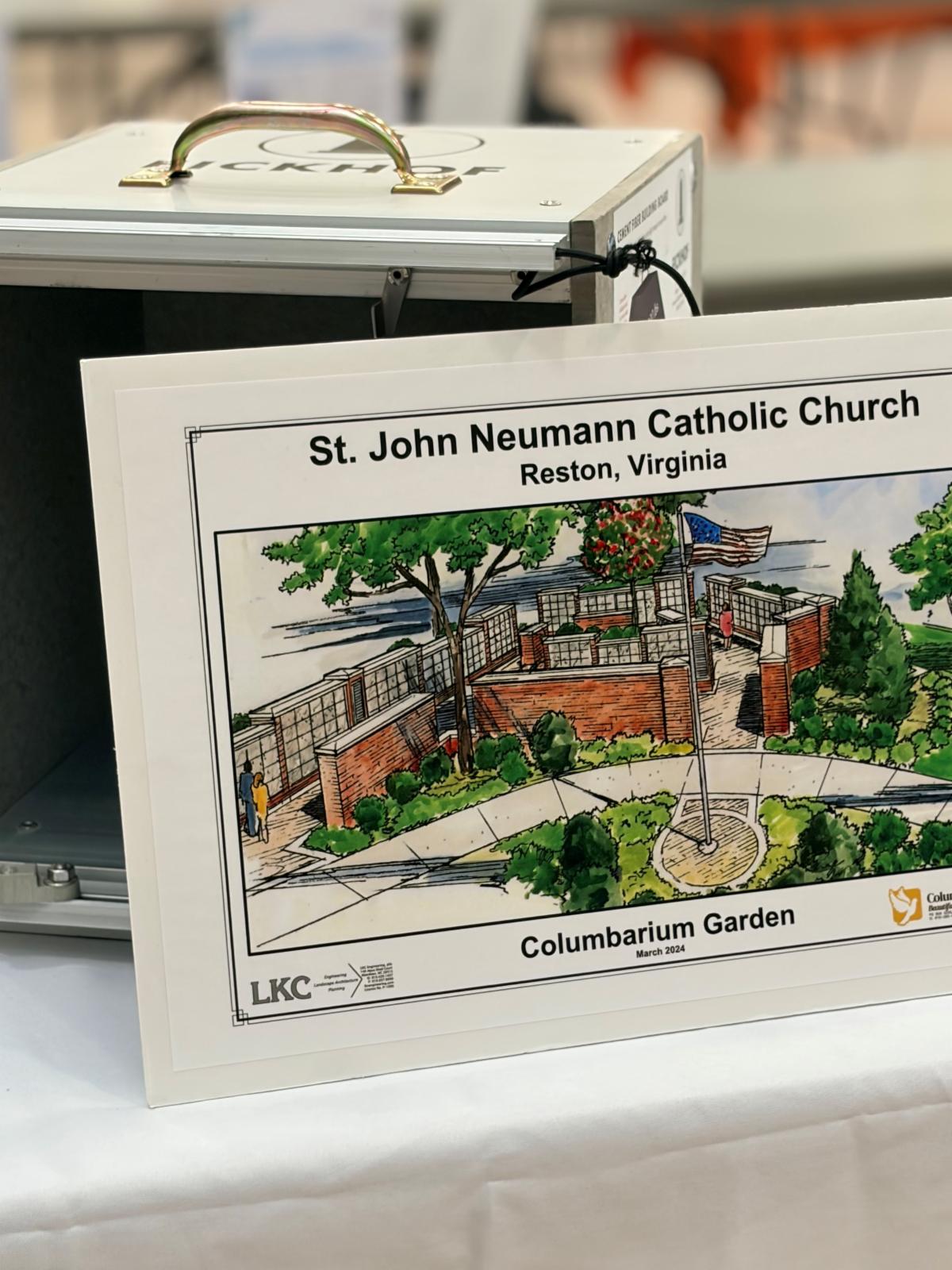
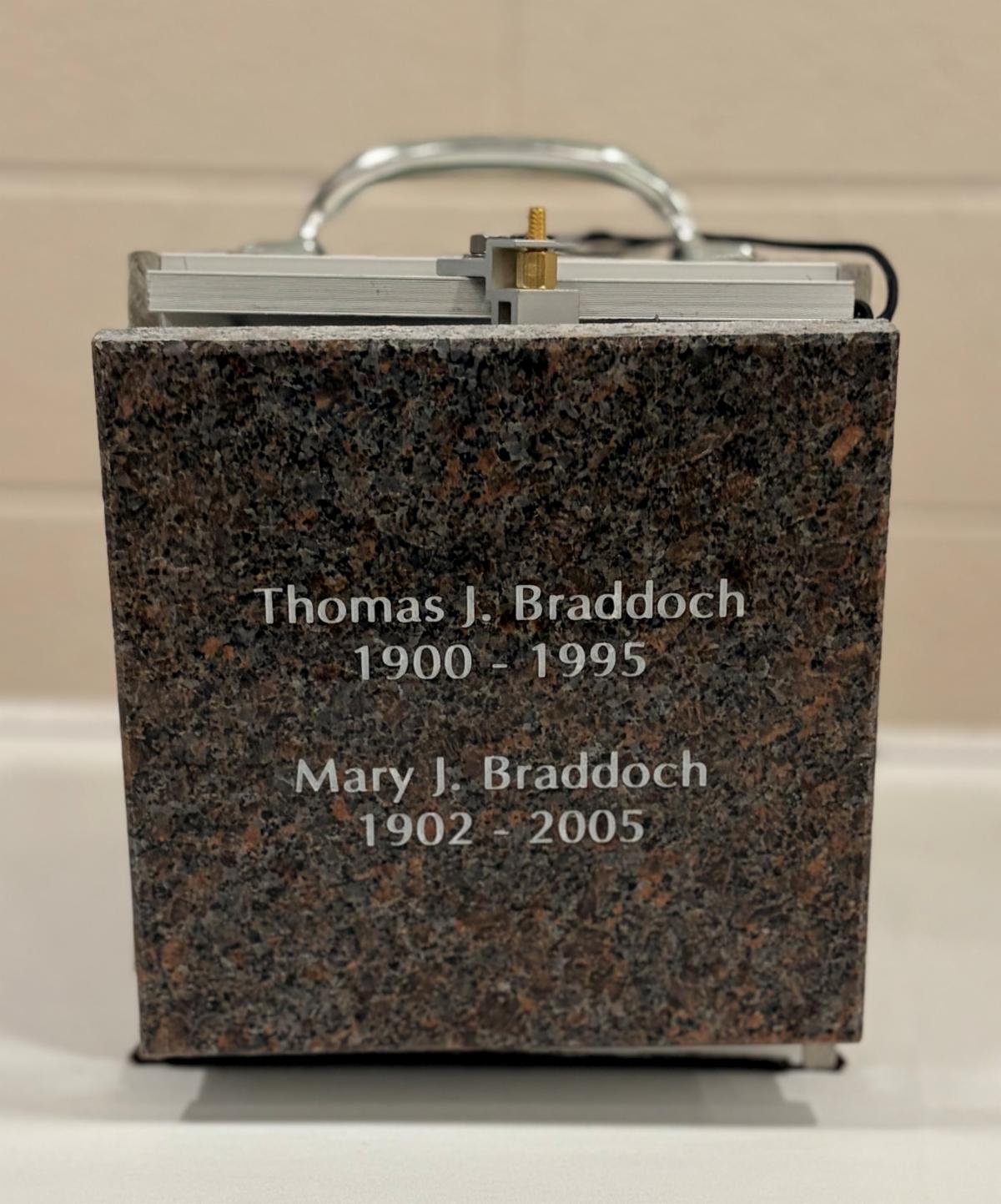
 | | As we have planned the Columbarium over countless meetings and emails over the last few years, I have found some peace in working so intimately with the reality of death. I have learned to more clearly focus on eternal life and am normalizing the thought of what happens next. This month, construction of our Columbarium begins, and in 2027, we will begin inurning SJN parishioners in the niches. For over three years I have been on the Columbarium Planning Team, and it is feels almost surreal that we are beginning construction on September 8. Over the coming months, as we watch construction and the building of a structure that promises to strengthen the very core of our community, remember that this is sacred. It is so much more than an extension of our building. We are essentially creating a community that transcends our existence here at SJN. Names etched in granite will outlive us. Spending time in the Columbarium, praying for the dead, we will be reminded of stories, and we will pass down them down. We will pray for each other, and we will be remembered in community. We will remain in community.
As the Columbarium project begins and continues, please pray for the work being done, the hands building this sacred space, and the many lives that will be remembered within the holy space of the Columbarium.
For details and photos as the Columbarium is being built, please visit our website.
| | |
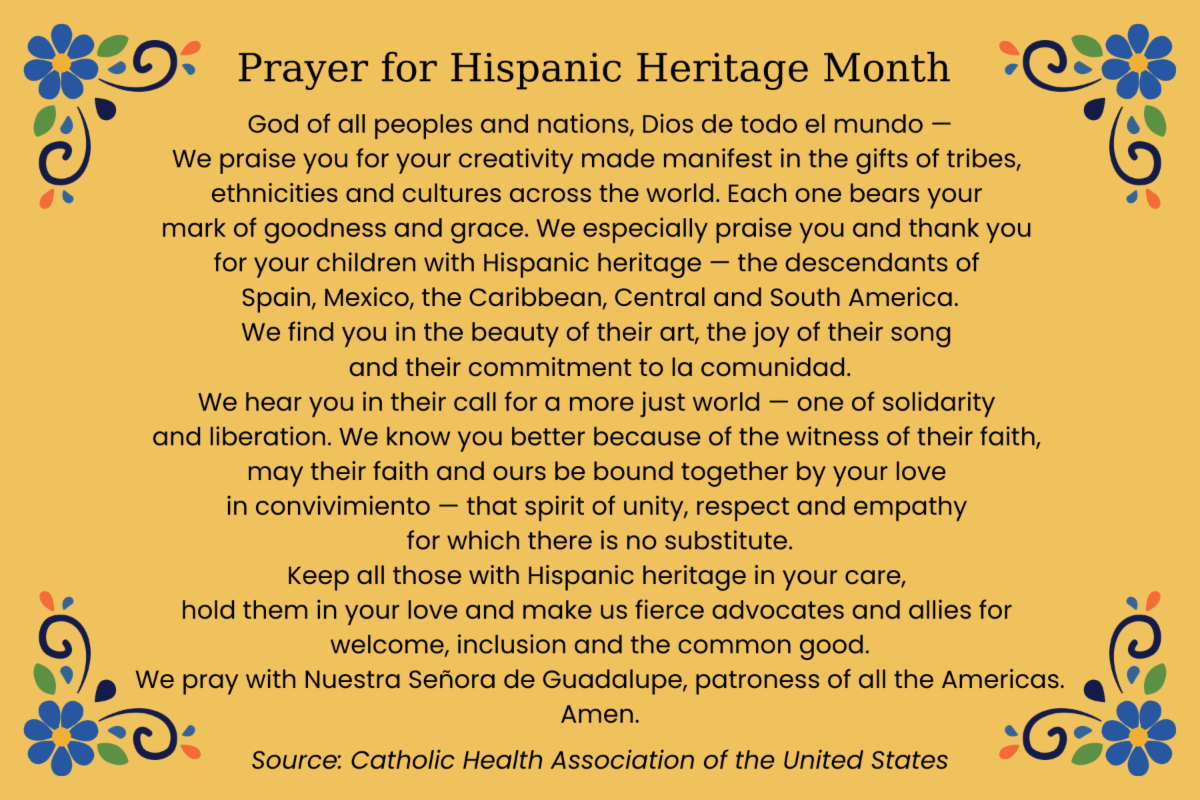
Hispanic Heritage Month is September 15-October 15.
Check out things to do and see this month.
Also, don't miss out on the annual SJN Hispanic Heritage Month Festival in the Auditorium on Sunday, October 4 at 3 p.m.
| | |
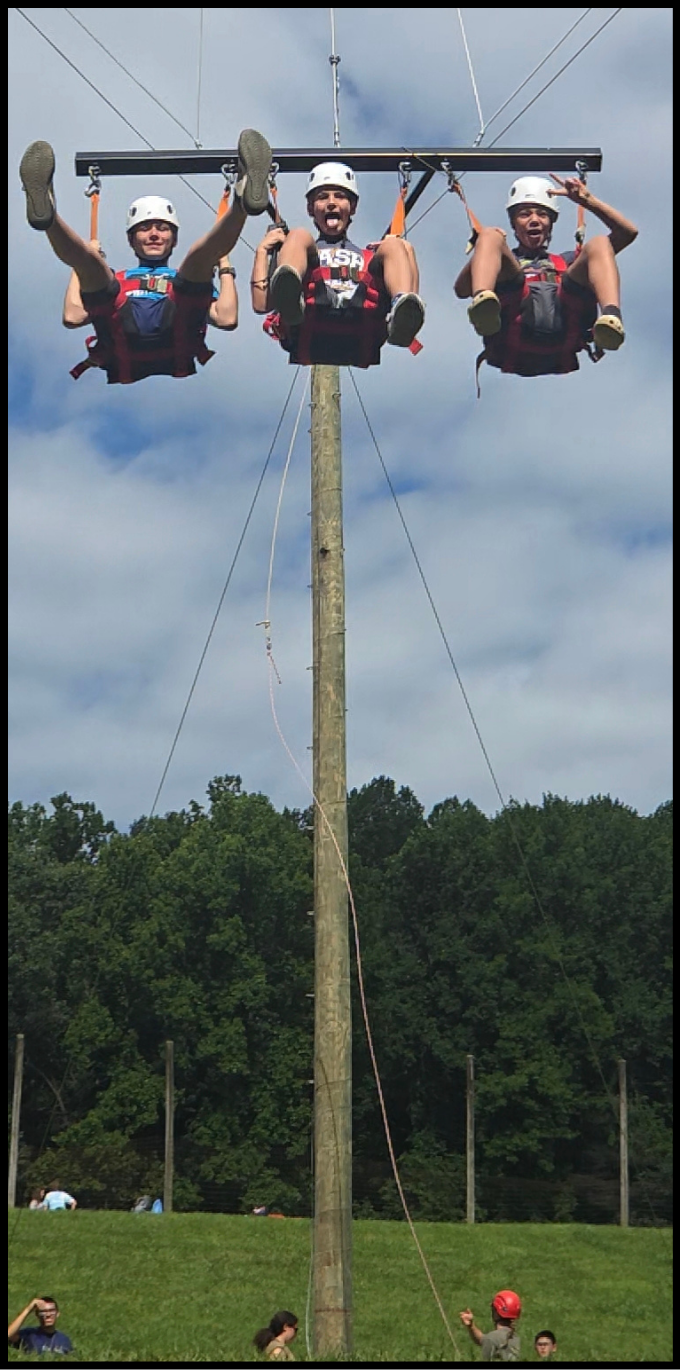
It’s a hot and humid July morning. You and two friends are next in line to ride the “GIANT SWING.” It’s the last activity of the camp week, and the one you’ve been most nervous to try, but with some encouragement from your friends, you’re determined to see it through. As you steady your resolve, you look back on a week of unexpected firsts: your first stay at a sleep-away camp, your first time on a high ropes course, your first victory in paintball, and just the night before, your first time coming face-to-face with Jesus through Adoration. Of all the week’s experiences, it’s the last one that surprises you as your favorite, you feel a sense of calm now rested within you. You’re ready for this last adventure.
“Spoons!” a counselor calls out and a dozen other kids rush over, arms stretched out to help lift you into a harness. You are hooked in now with your friends beside you; nowhere to go but up. A counselor atop a ladder checks your harness and says a prayer of courage and protection over you. The counselor descends the ladder and calls out, “GO! GO! GO!”
The rest of the campers rush past a pole behind you, pulling a long rope with them as they run. You start to ascend backwards. Ten, fifteen, twenty, twenty-five feet now hoisted above the ground. You pause. A shout rings out from below, twenty voices as one, loud as thunder, “JESUS CHRIST BRINGS US…” And as your friend in the center pulls the cord to release you into the air, you answer back, “FREEDOM!”
This is an experience of one of our twenty-five middle schoolers who visited Damascus Summer Camp this July. This Catholic youth summer camp was founded in 2001 in Columbus, Ohio, by a group of parents and parishioners who, to quote the official page, firmly believe that “Jesus Christ isn’t boring and His Church isn’t either.” Since then, they have built a missionary movement hosting sleep away camps in three states and retreats all over the country uniting all of it under one banner: Damascus.
This summer brought the first Damascus camp to their new campus in Emmitsburg, MD, just an hour and a half drive from Reston. Our youth were accompanied by Angela Davis, head of Middle School Faith Formation, and myself as chaperones. Like many of our campers, this was my first sleep-away camp experience as well and just like them, I think it might have been the best week of the summer.
While St. John Neumann brought one of the larger groups; there were other group of all sizes with campers from up and down the East Coast, as far north as Massachusetts and as far south as Florida. It is a testament to the reputation Damascus has built up in the last twenty-five years.
| |
The camp describes itself as a high adventure experience and that is made evident the minute you arrive and are greeted by a massive, inflatable obstacle course floating atop a spring-fed mountain lake. Activities the campers were able to enjoy included archery tag, paintball, a high ropes course, an obstacle course, and the aforementioned giant swing, which sends campers careening through the air reaching heights of forty feet over a hill. Other lower octane activities included swimming, fishing, crafts, and free time to walk the grounds or relax in the sun. As exciting as these activities were, though, if you ask any of our youth what their favorite part of camp was, they might have an unexpected answer.
| |  | |
A week after camp ended, I got the chance to speak with some of our youth and asked what their biggest takeaway from camp was.
“Adoration!” was the first answer.
“Mass was fun!” was another.
“Getting to make new friends!”
“Going to Confession!”
“Seeing Jesus!”
What Damascus gave our youth was the freedom to dive deeper into their faith, without judgment, the same freedom found in Jesus Christ. When we gathered for Mass, Eucharistic Adoration, or moments of reflection, the camp staff brought an enthusiasm that made the Church feel alive, because it is, and our youth were invited to partake in that life. They were exposed to praying in different forms: through modern music and ancient hymns. They were invited to experience Christ in Adoration by kneeling in the chapel or sitting in the grass beside the lake at sunset. They were encouraged to ask the hard questions, to be curious, and find answers. For the first time, many of our youth got to see themselves as the once and future Church and felt the fire of the Holy Spirit in their hearts.
| |
Our task now is to help them keep that flame lit, offering opportunities to fan the fire through service, socialization, and spiritual connection. We want our young people to know that the Church they experienced at camp is the same one they came home to.
In that spirit, I invite everyone reading this to let our youth know that they have a place here at St. John Neumann. You can talk to them if you see them at pancake breakfast. You can personally invite them and their families to join one of our ministries that serves our community. You can volunteer to work with our youth, not only in the classroom but with our middle school and high school youth groups, to be a mentor and role model. I invite you to see Christ in them and to allow them to see Christ in you.
Of all the positive takeaways from summer camp, most people would probably say it was the friends they made that were the best part. Damascus gave our youth the chance to do just that, finding friends in each other and in God. I’m sure all the kids agree with me; we can’t wait to go back next summer but we can all make the Church feel alive today!
| | |
Monarch Summer
by Elizabeth Connell Wright
In the June newsletter, I wrote "Encountering God in the Garden," about the first Monarch caterpillar to transform in my newly planted milkweed garden. Little did I know at the time, that one stowaway caterpillar, who came to me when I picked up a Swamp Milkweed at the Reston Association Spring Native Plant Sale, was foreshadowing my Monarch Summer.
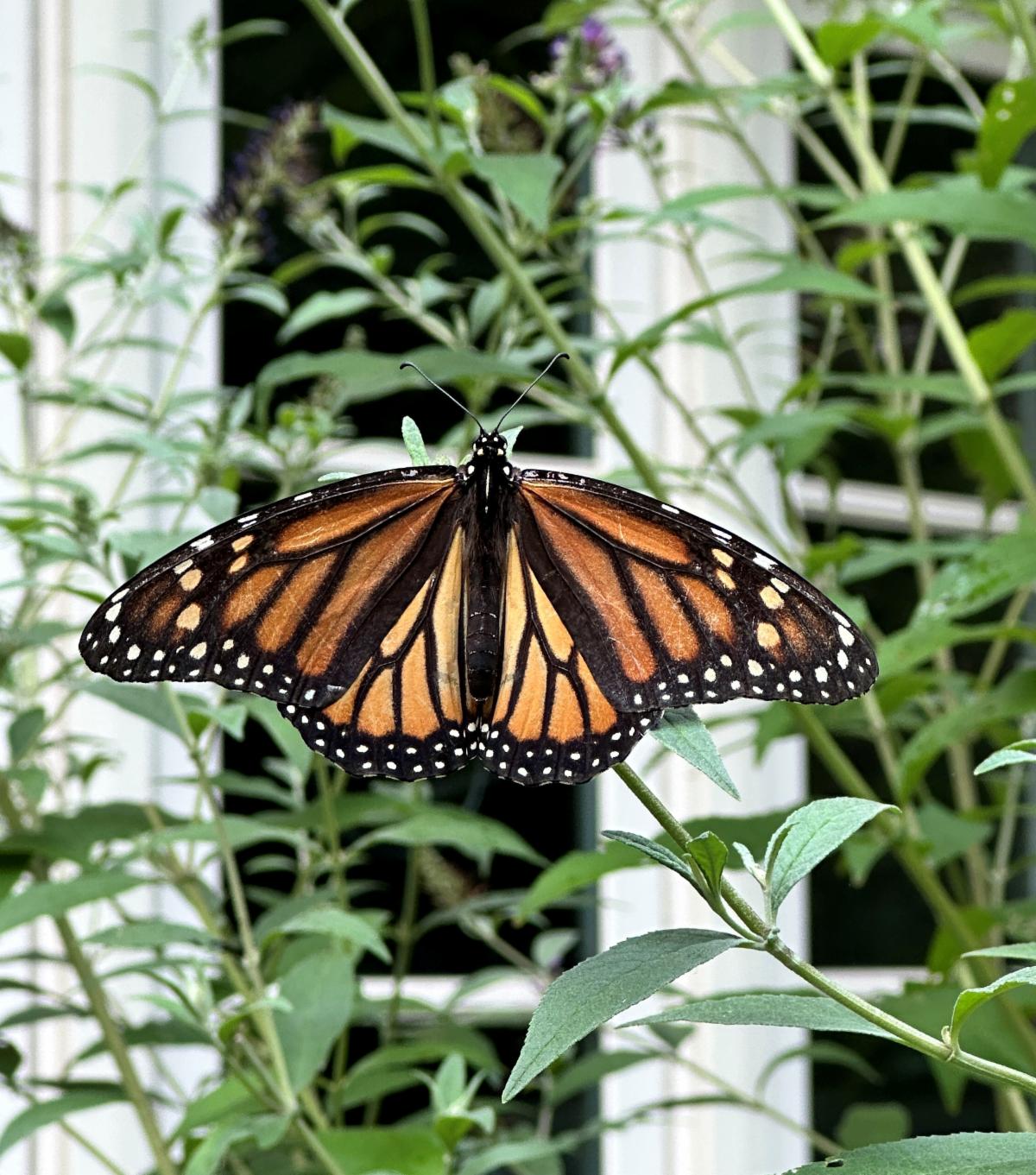
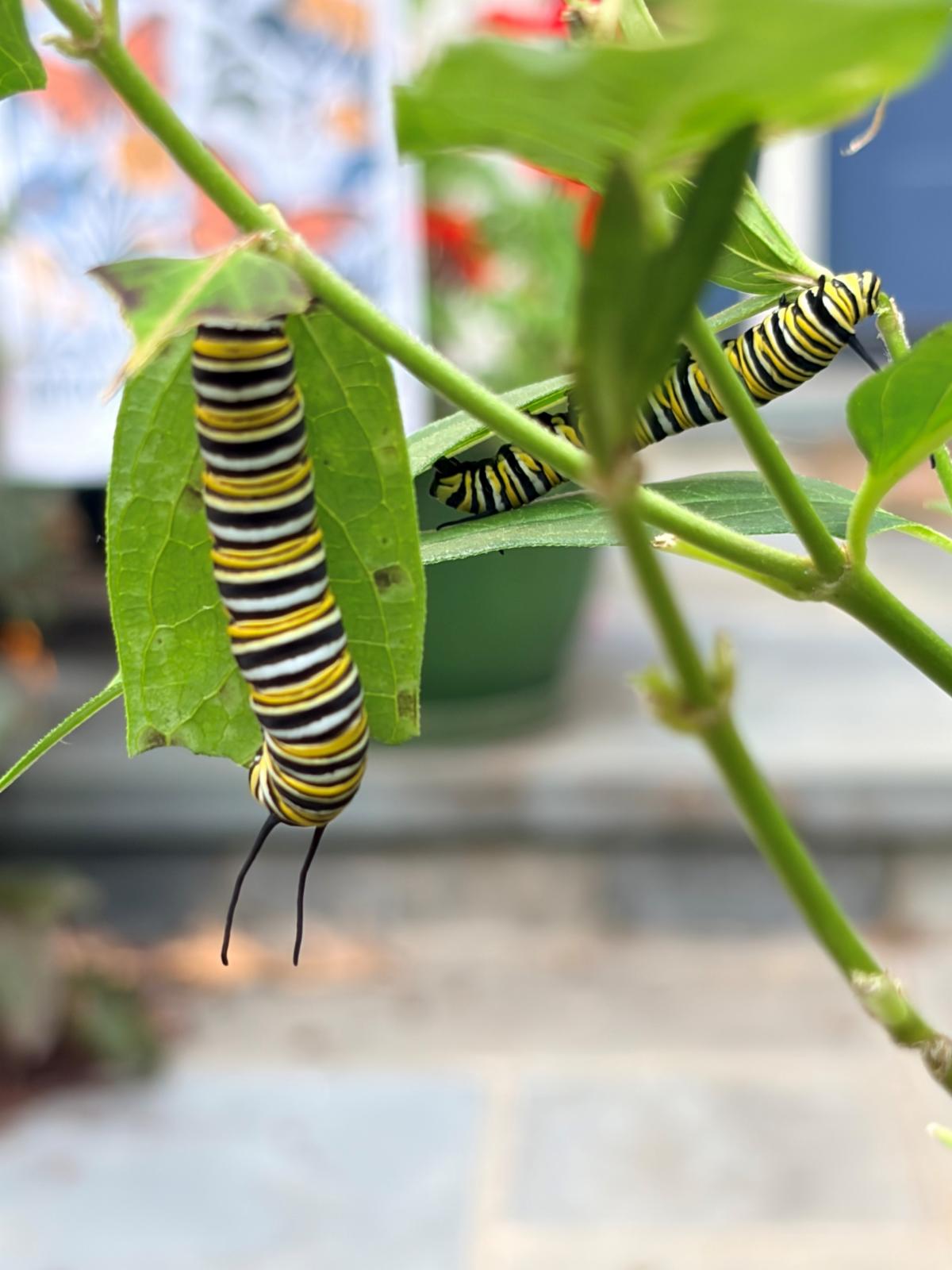
As bright summer days begin to fade to the subdued colors of autumn, my once full and leafy milkweed has been ravished by over 100 Monarch caterpillars, and I have watched several move seamlessly from caterpillar to chrysalis and counted the days as I waited for them to unfold bright new wings. Then watched the whole cycle repeat itself again and again.
|
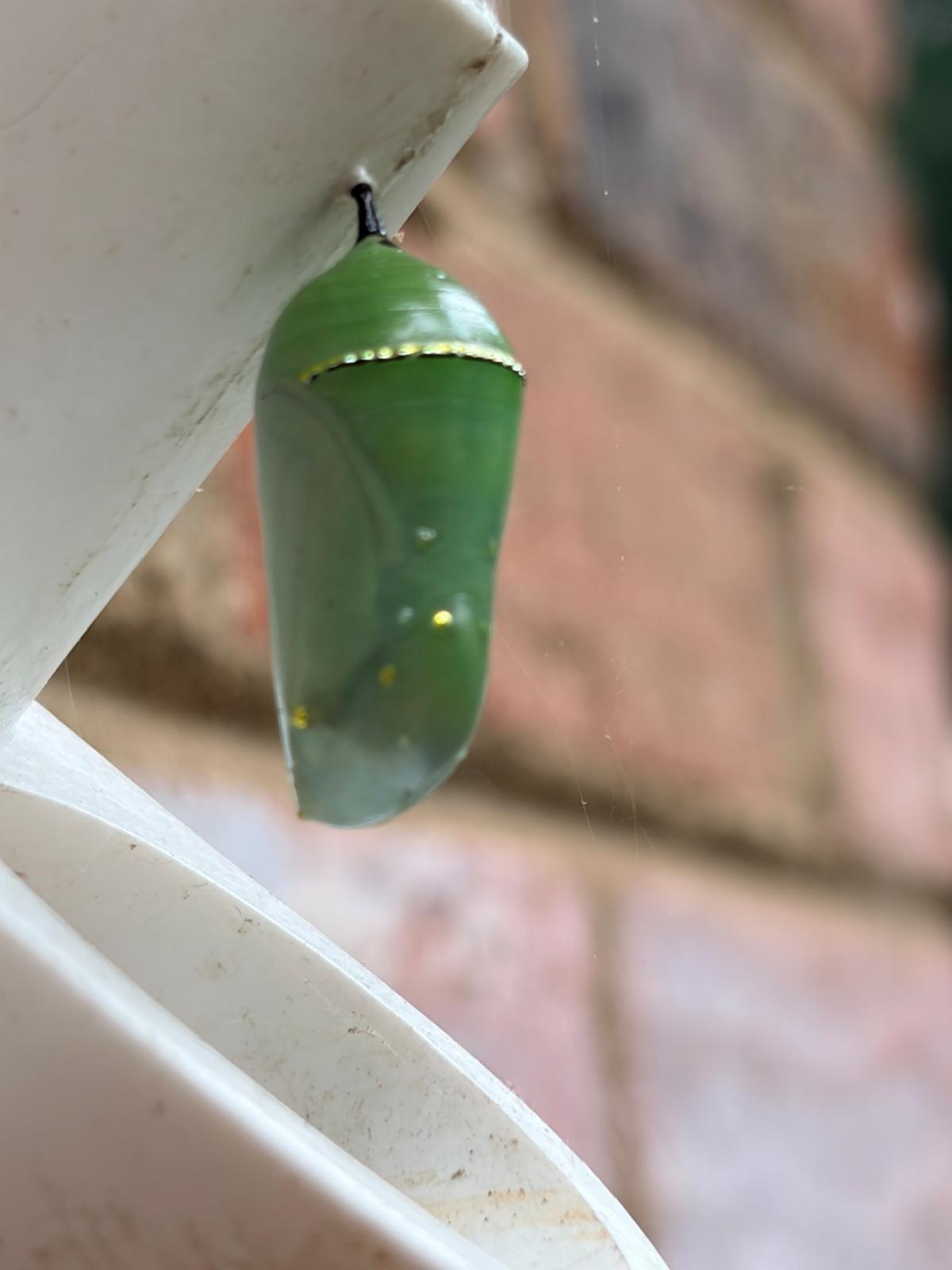
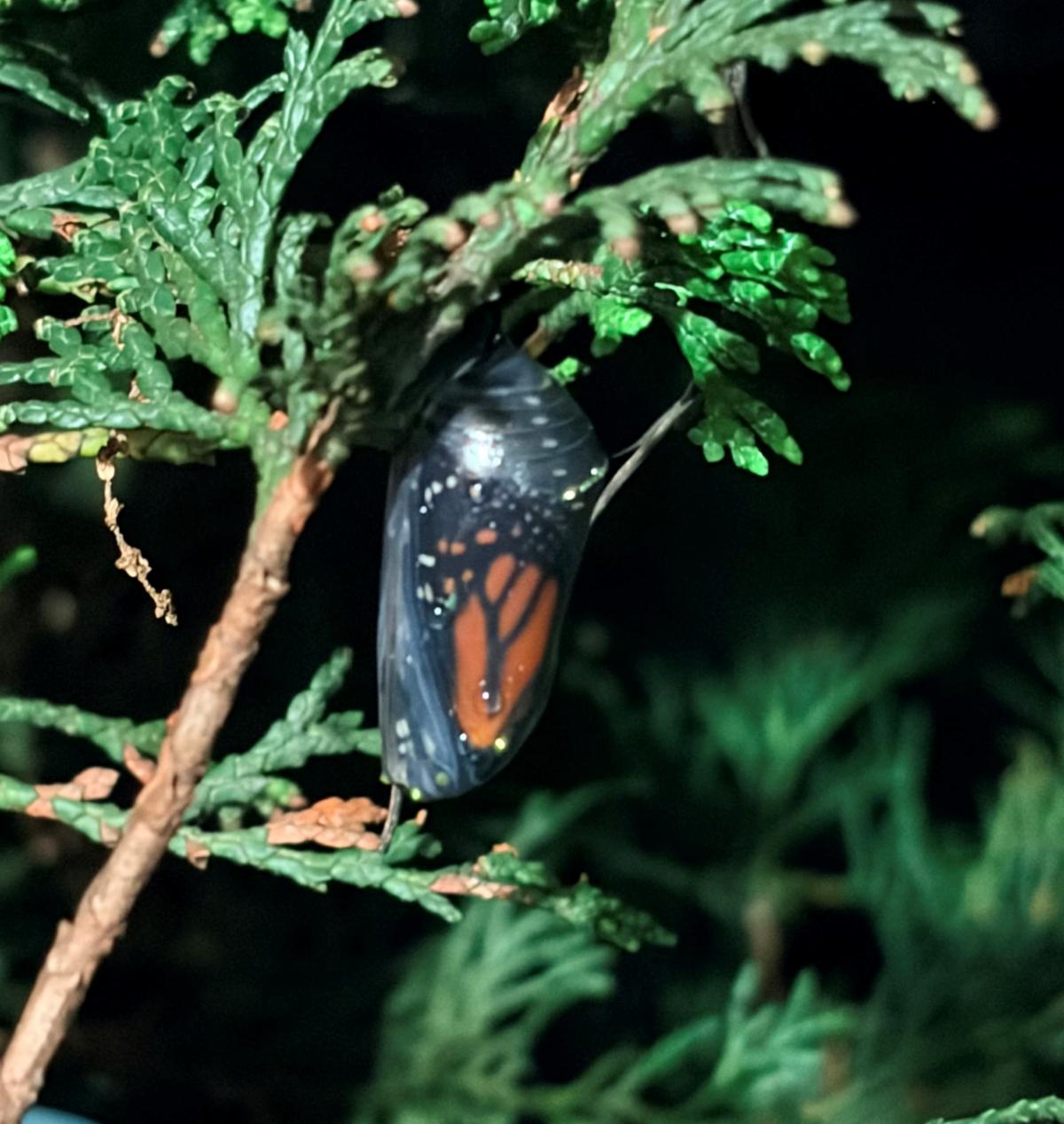
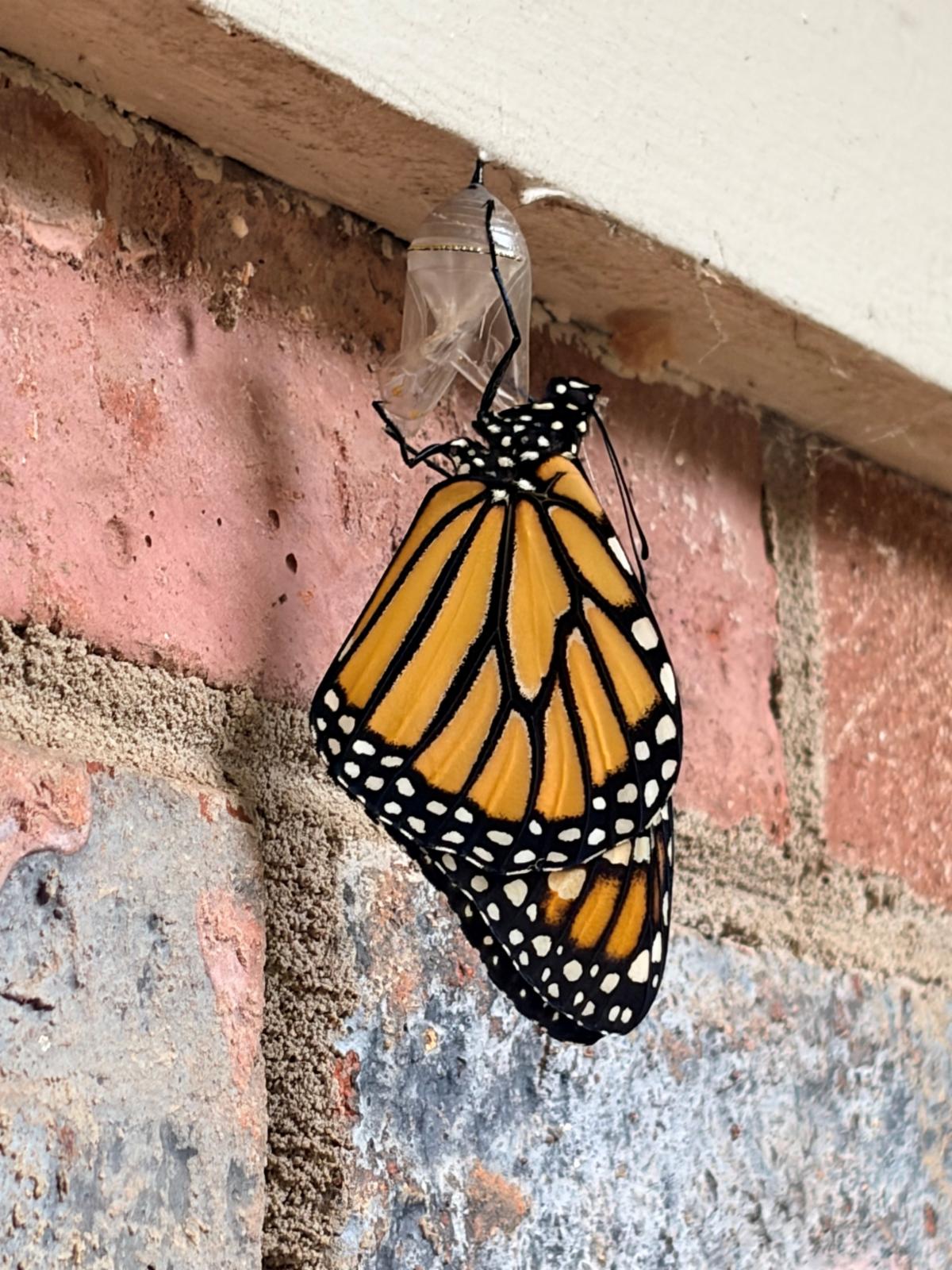
| | | I have felt like an inquisitive child as I have observed their remarkable behavior wondering how they choose a location for transformation or what exactly is happening inside the chrysalis. Since the first Monarch, another has not chosen the peony bush that was selected by the first Monarch caterpillar for transformation. Instead, favorite chrysalis locations have proven to be a cypress tree right outside my front door, as well as the eaves of the house. Several have also chosen other nearby bushes, a hanging basket, and the milkweed itself (which seems risky considering the voracious appetites of the caterpillar are probably not discerning as they select which leaf to devour next!). One bravely positioned itself under the stars and stripes on our flag pole. Currently, I have a pair of caterpillars who ventured off together and spun their bright green chrysalises side-by-side straight off the brick front of the house rather than climbing just a few inches higher to dangle from the eaves.
| |
As you have probably guessed, I have spent a lot of time in my garden this summer, captivated by their behavior. I have come to recognize the indicators of the most exciting parts of their transformation. I now have hundreds of photos of them on my phone and enthusiastically show off pictures of "my babies" at the slightest, often unprovoked, opportunity. I know that it sounds suspiciously like an obsession, but in reality it has been the most unexpected gift from God — amidst a summer of changes and challenges, it has been the purest of joy for me, a seeming whisper of assurance from the Spirit.
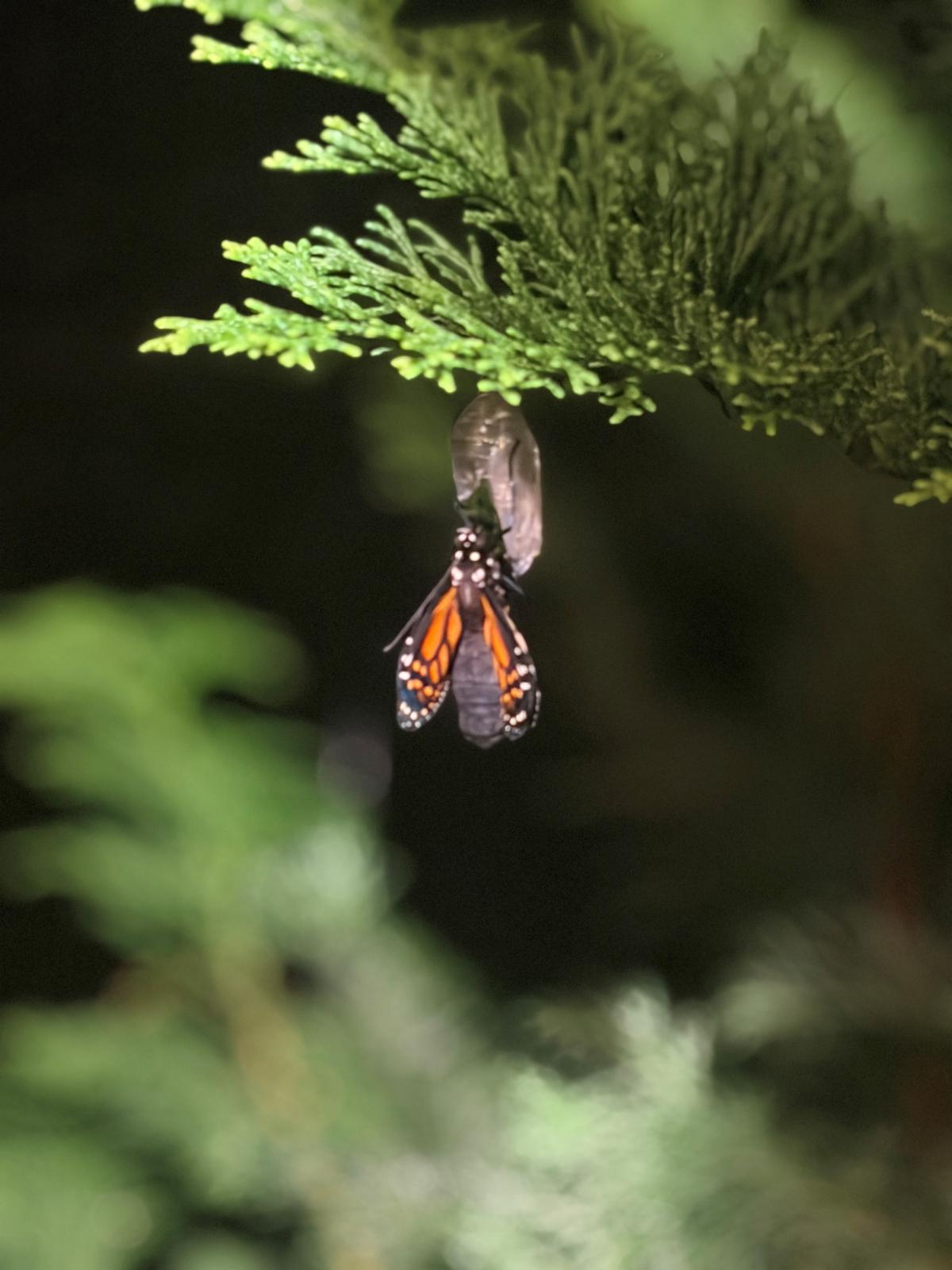
It is fitting that on September 1, the first day of Season of Creation, I had two girls "born" just before sunrise. This month, as we celebrate God's creation, may we all stop to see God's wonders and rest in the awe of his creation.
Click here to learn how to make your yard a monarch habitat and certified Waystation or visit Care for Our Common Home to learn about Season of Creation events over the next few weeks.
| | Very hungry caterpillars | | One of the "girls'" just after she emerged on September 1. | | The second butterfly, wings unfolded, on September 1. | | | | | |
Despite my best efforts, only once this summer did I witness a caterpillar "spinning" into a chrysalis, and it was absolutely fascinating!
Watch the caterpillar contract and rotate as she is wriggling out of her old skin.
This video is in real time.
| | |
Our Lady of Strength
by Elizabeth Connell Wright
| | |
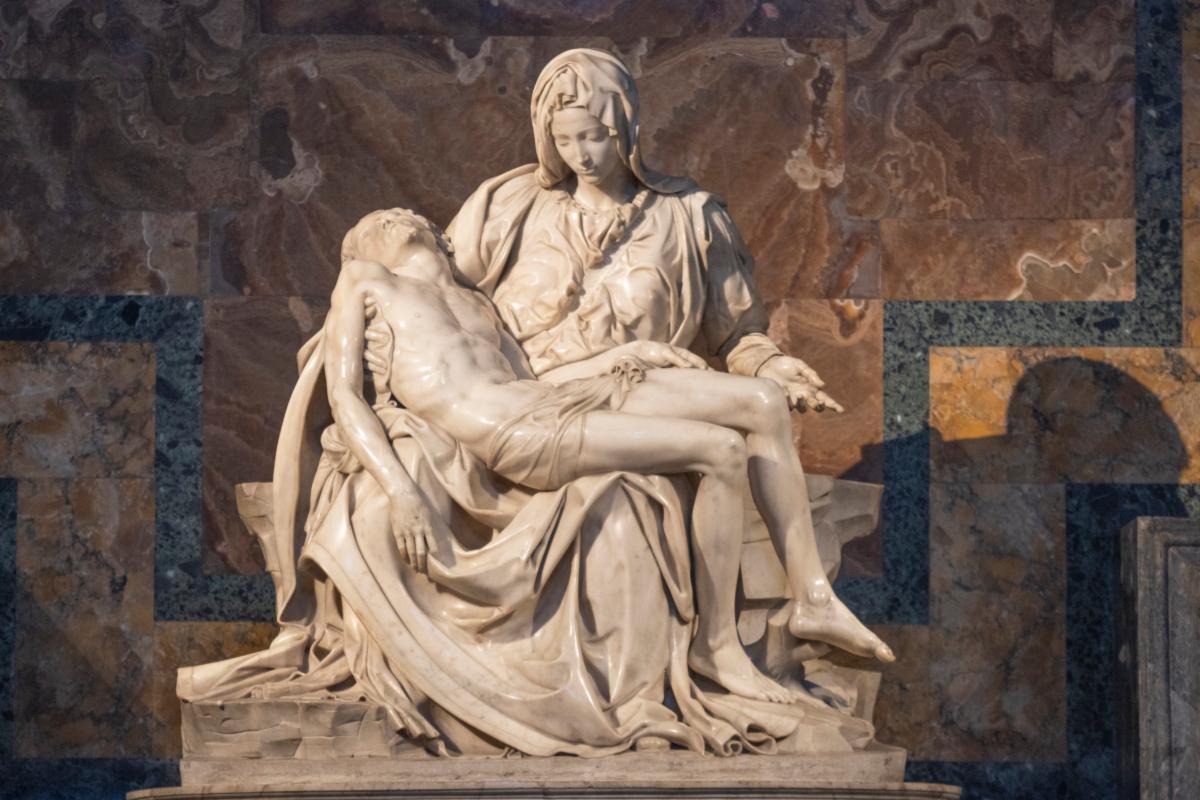
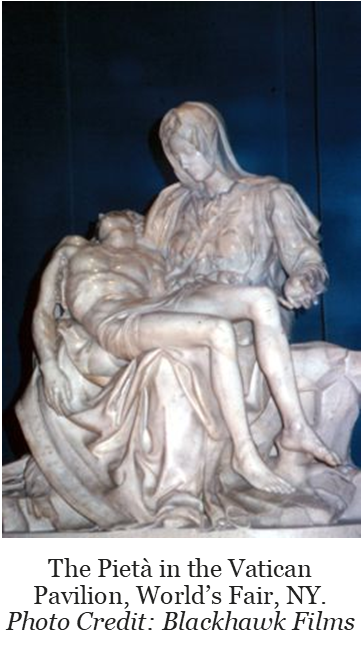
In 1498, a relatively unknown 24-year-old Italian artist started what would become and remains today, the most famous representation of our Mother Mary — and the only artwork Michelangelo ever signed. From a single piece of Carrara marble, he carved an expression of Mary’s love and sorrow that has resonated across the centuries. The Pietà, which is Italian for pity, captures the moment Christ was delivered from the agony of the cross into his mother’s loving arms. Rather than anguish, Mary’s face exudes tranquility and grace in her deep suffering. On September 15, we commemorate the feast of Our Lady of Sorrows, reflecting on the seven great sorrows of Mary’s life as the mother of Jesus. As Catholics, we unite our sorrow with that of Mary, finding strength in her example.
Throughout her seven sorrows — 1. The prophecy of Simeon, being told that her heart would be pierced with the pain of a sword; 2. The flight of the Holy Family to Egypt, literally running for their lives — becoming strangers, refugees; 3. The loss of the Child Jesus in the Temple for three days; 4. Meeting her Son as he carried the cross to Calvary; 5. Standing at the foot of the cross, witnessing Jesus’ crucifixion; 6. Receiving Jesus’ body, taken from the cross, and 7. Burying her Son — Mary bears unimaginable pain with trust in God and unyielding faith in what has been asked of her.
| The Pietà in St. Peter's Basilica | | For this reason, we have always turned to Our Lady as a lamp in the darkness — a Mother to comfort our own sorrows, wipe away our tears. Art has long been an expression of our emotions, and this is certainly true for The Pietà. The 5' 8.5" masterpiece evokes our own reflection on the Passion. Yet today, thousands of people visit St. Peter’s Basilica daily, stopping to reflect on Mary’s serene face as she bears pain that we couldn’t even fathom. |
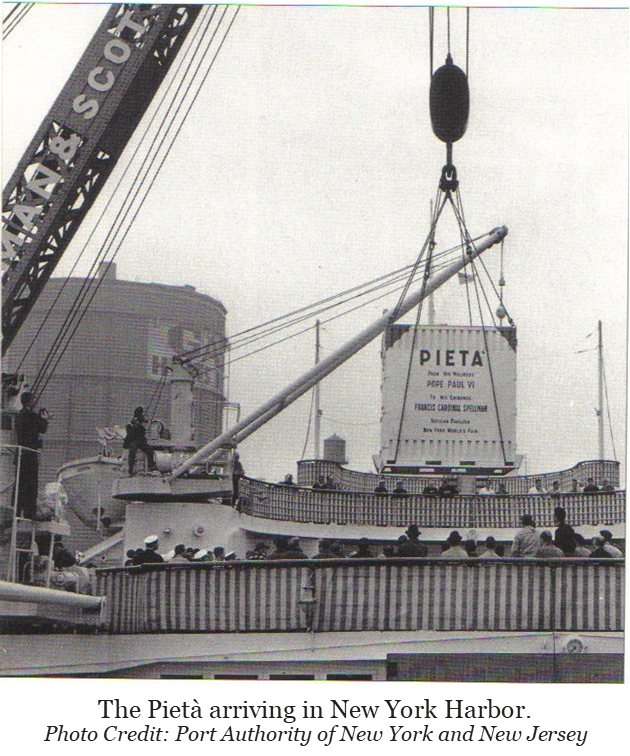
| | | Leading up to the 1964-65 Word’s Fair in New York, the Vatican agreed to let the Pietà leave St. Peter’s Basilica for the first and only time. (While The Pietà was still in the U.S., Pope Paul VI quietly signed an agreement that this would not happen again.) The Pietà’s journey to America took ten days on the Italian Line’s Cristoforo Colombo, after being packed in 400 pounds of foam, in a crate weighing almost six tons and insuring it for $10 million. The top of the crate was painted bright orange — should the ship sink, the priceless artwork would float to the surface and be easily spotted. Arriving at the newly constructed Vatican pavilion, The Pietà was installed behind bulletproof plexiglass and welcomed over 27 million visitors over the two years of the World’s Fair. (While it was in New York, a replica held its place back in Rome.) On October 4, 1965, as Pope Paul IV visited the Pietà at the World’s Fair (marking the historic first ever visit of a pope to the United States), he said, “As we gazed on this moving masterpiece, we could not but think of the religious convictions which moved the young Michelangelo to such heights and to such a magnificent result. We feel that these same religious convictions can move men in a similar way to seek peace and harmony among the peoples of this world.”
| | |
Not only were the early-mid 1960s a time of unrest in the U.S., following the assassination of President Kennedy, at the escalation of the Vietnam War, and amidst the Civil Rights movement, but this was also a tumultuous time for the Church as the Fair coincided with the final two years of the Second Vatican Council, signaling its own change and unease. As the second most visited exhibit (surpassed only by the General Motors Futurama exhibit) among the 140 at the famous World’s Fair, the image of Mary surely brought peace to the searching and sorrows of those who gazed upon her.
In September, as we reflect upon Mary’s strength and sorrow, consider meditating with a Chaplet of the Seven Sorrows. The devotion, which originated in the 13th century, can be prayed in one sitting or over a week, meditating on one sorrow each day. The special rosary unites us to Mary in her suffering, particularly during the Passion of Christ. Another way to honor Mary as we celebrate the feast of Our Lady Sorrows is through the practice of Visio Divina, contemplating sacred art as a method of seeking God and opening your heart to Him.
Perhaps like the millions who have gazed upon the Pietà throughout history, you might find peace and tranquility in the unrest of our world or in your own heart through Michaelangelo’s captivating portrayal of Mary’s strength and grace in her deepest sorrow. We unite our prayer with Mary, knowing, like us, that she has felt trouble over unexpected news, worry about her child, heartbreak over loss, and anchored herself in trust in the Lord to weather unimaginable storms. Pray for us in our sorrows, Mary, Mother of God, and guide our world to peace and harmony.
| | |
The Pope's Intention for
Prayer and Action for September:
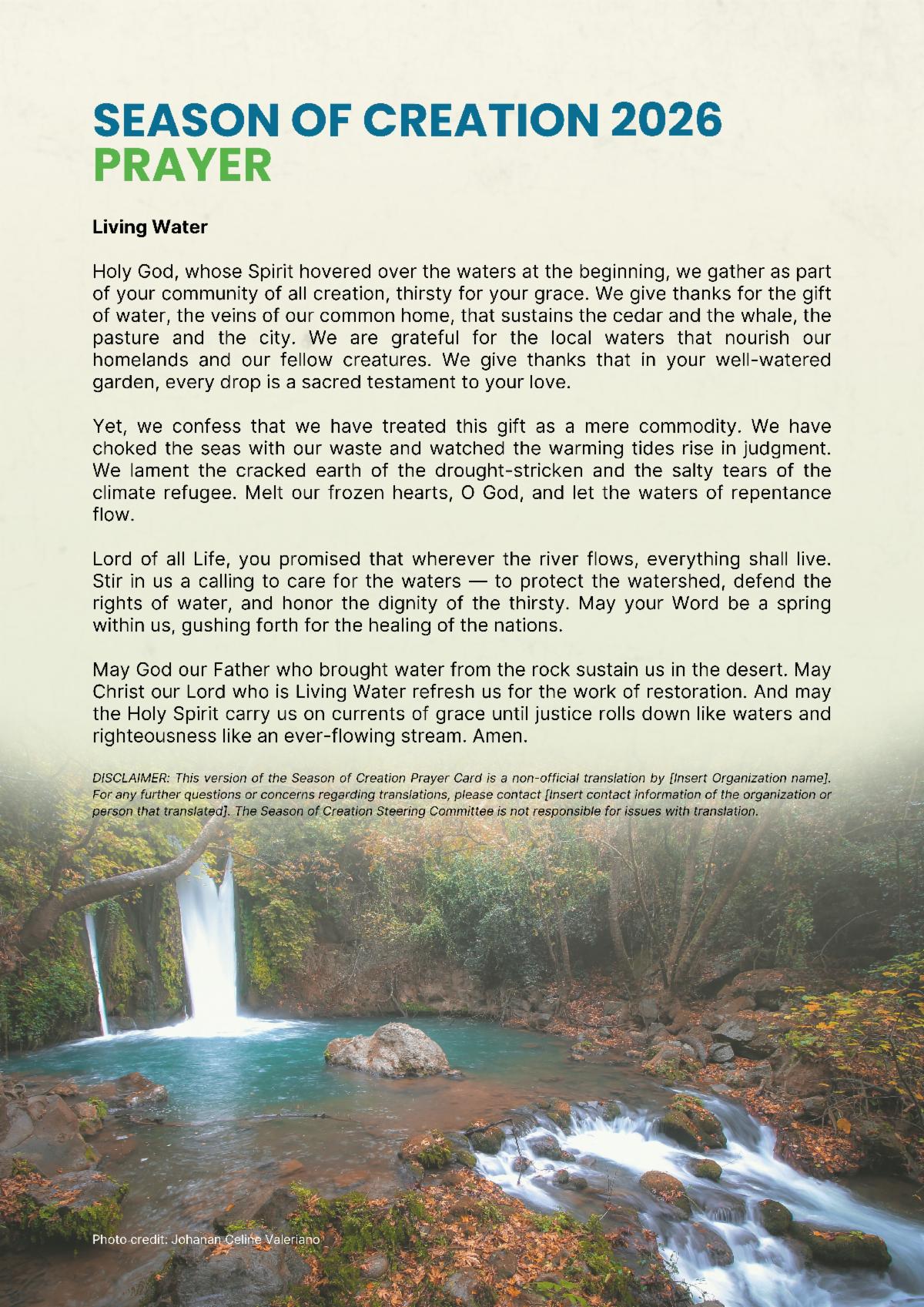
For the care of water.
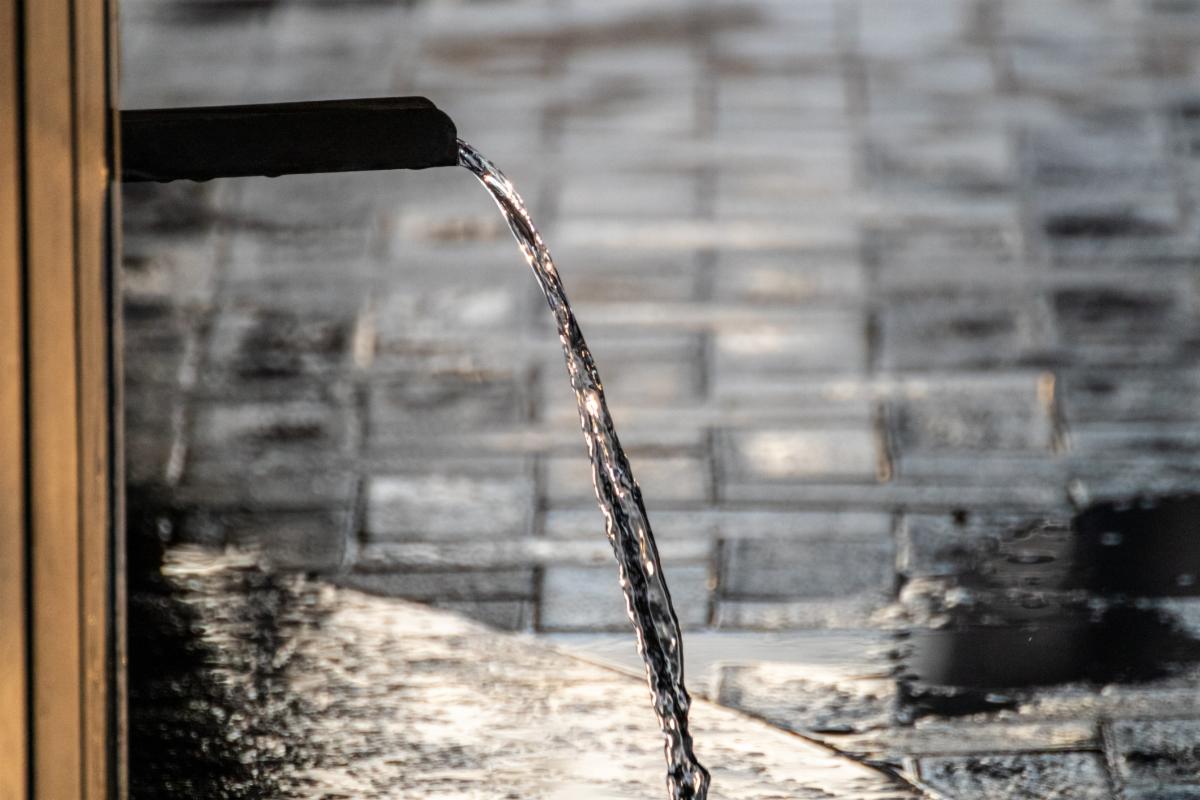
Let us pray for a just and sustainable management of water, a vital resource, so that everyone may have equal access to it.
| | | |
Current Mass Times
Saturday: 5 p.m.
Sunday: 7:30 a.m., 9:30 a.m., 11:30 a.m., 2 p.m. (Spanish), 5 p.m.
Monday-Friday: 9 a.m.
12:10 p.m. Mass on Wednesdays and Fridays returns September 16.
Watch a livestreamed or recorded Mass
Confession
Saturday: 10 a.m.-10:30 a.m. (English)
Sunday: 3 p.m.- 4 p.m. (Spanish)
| | | Elizabeth Connell Wright, Communications Director, is the editor of SJN's monthly newsletter. If you are interested in submitting an article to the newsletter or have a topic that you would love to see an article written about, please email ewright@saintjn.org. Thank you for reading our monthly newsletter! | | | | |