Sasakawa USA Newsletter November Highlights | | |
Included in this issue of the newsletter:
- Message from Sasakawa USA's Chairman Satohiro Akimoto
November Activities
- U.S.-Japan Research Exchange: Amb. Derek Mitchell and Ms. Min Mitchell
- US-Japan NEXT Alliance Initiative: Allied on AI Assurance: US States on AI Governance, National Competition with China, and US-Japan Alliance Implications
- U.S.-Japan Research Exchange: Ms. Kathryn Paik
- Japan US Military Program (JUMP): Japan Self-Defense Forces 71st Anniversary
- Washington Kenkyu Group: Discussion with Amb. Derek Mitchell
| | Message from Sasakawa USA's Chairman Satohiro Akimoto | |
The late Harvard University Professor Joe S. Nye, Jr. joined the Sasakawa Peace Foundation USA advisory board soon after I became president and remained a member until his untimely passing on May 6, 2025. I am deeply grateful for his guidance, which began during my days in Cambridge, Massachusetts and continued over many years.
Professor Nye coined the term “soft power” in his 1990 book Bound to Lead, in which he challenged the then-prevailing narrative of American decline. In contrast to the argument of Professor Paul Kennedy of Yale University in The Rise and Fall of the Great Powers that the United States was suffering from “imperial overstretch” and destined to follow previous great powers into decline, Professor Nye believed that such predictions were premature.
Professor Nye defined “soft power” as a country’s ability to achieve its preferred outcomes by influencing through attraction and persuasion rather than through coercion or payment. This attraction derives from values, culture, and ideals that others perceive or believe to be more desirable and wish to emulate. He argued that American power could not be measured by military and economic strength alone, as the United States also possessed significant power rooted in its ideas and institutions.
Originally, Professor Nye developed the term “soft power” as an analytic concept “to fill a deficiency in the way analysts thought about power,” but he said the term “eventually took on political resonance.” It became particularly influential in the context of international relations, including the evolving relationship between the United States and Japan.
I was recently reminded of this history during a visit to The National World War II Museum in New Orleans, where Sasakawa Peace Foundation USA, the Embassy of Japan, and the Japan Society of New Orleans co-hosted a Japan US Military Program (JUMP) event. Thanks to Mr. Mike Turner of the Japan Society of New Orleans, Rear Admiral Takaaki Hayamizu, Defense and Naval Attaché at the Embassy of Japan in the United States, and I received an illuminating tour of the museum. Walking through the exhibits was a solemn reminder of the war that the United States and Japan fought 80 years ago.
Today, the United States and Japan are natural allies. The two countries share vital geopolitical and geoeconomic interests, maintain the closest and most trusted security alliance, and enjoy deeply interdependent economic ties. In addition to military and economic interests, they are bound by shared values, culture affinities, and common ideals, sources of “soft power” that foster goodwill at the people-to-people level. The widespread admiration in both countries for Shohei Otani of the World Champion Los Angeles Dodgers is a recent and vivid example of this mutual attraction.
Since I became president, Sasakawa Peace Foundation USA has focused its programming primarily on diplomacy and national security. I am delighted to announce that we are now placing a stronger emphasis on soft power in our program activities. One of the first iterations of this new “soft power series” was a presentation by Ms. Hannah Williams of Wellesley College and our 2025 U.S.-Japan NEXT Alliance Initiative Summer Intern, on “Japanese Rap Music: Rhythm and Poetry: J-Rap as an Emerging Soft Power.” Sasakawa Peace Foundation USA is also currently exploring a collaboration with a leading Japanese chef in Washington, D.C., to highlight and take a deep dive into the richness of American-Japanese fusion cuisine. I believe Professor Nye would have taken great pleasure in seeing these new directions, which reflect the enduring importance of soft power in the U.S.-Japan relationship.
| | |
U.S.-Japan Research Exchange:
Amb. Derek Mitchell and Ms. Min Mitchell
| | |
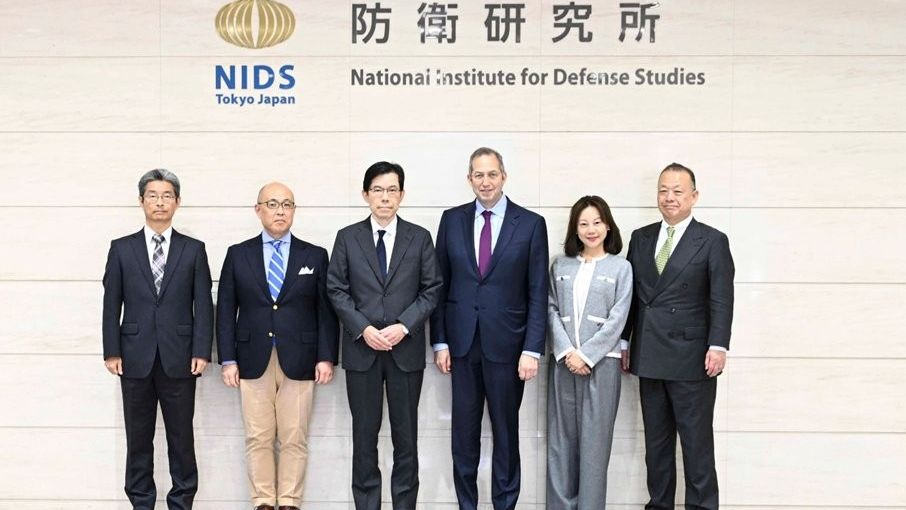
From October 26 to November 2, 2025, Amb. Derek Mitchell, a senior advisor (non-resident) at the Center for Strategic and International Studies and former president of the National Democratic Institute, and Ms. Min Mitchell, a media executive and veteran journalist, conducted a one-week research trip to Japan through Sasakawa USA’s U.S.-Japan Research Exchange program. With a strong background in democracy resilience, Amb. and Ms. Mitchell held numerous interviews with policy practitioners and experts in the Japanese government, non-profits, and the private sector to learn how Japan has been responding to threats of Foreign Information Manipulation and Interference (FIMI). During their stay in Tokyo, the fellows also had the opportunity to give a lecture on their findings and analysis on FIMI to a group of Diet members in the Liberal Democratic Party’s Research Commission on info-Communications Strategy. Additionally, Amb. and Ms. Mitchell travelled to Hiroshima on a cultural trip, where they visited the Hiroshima Peace Memorial Museum and Itsukushima Shrine. Their findings from their research will be published in a Sasakawa USA publication, which will be available on our website in the coming months.
Photo: Amb. Derek Mitchell, Ms. Min Mitchell, and Dr. Satorhio Akimoto at the National Institute for Defense Studies (photo courtesy of National Institute for Defense Studies)
| | US-Japan NEXT Alliance Initiative: Allied on AI Assurance: US States on AI Governance, National Competition with China, and US-Japan Alliance Implications | | |
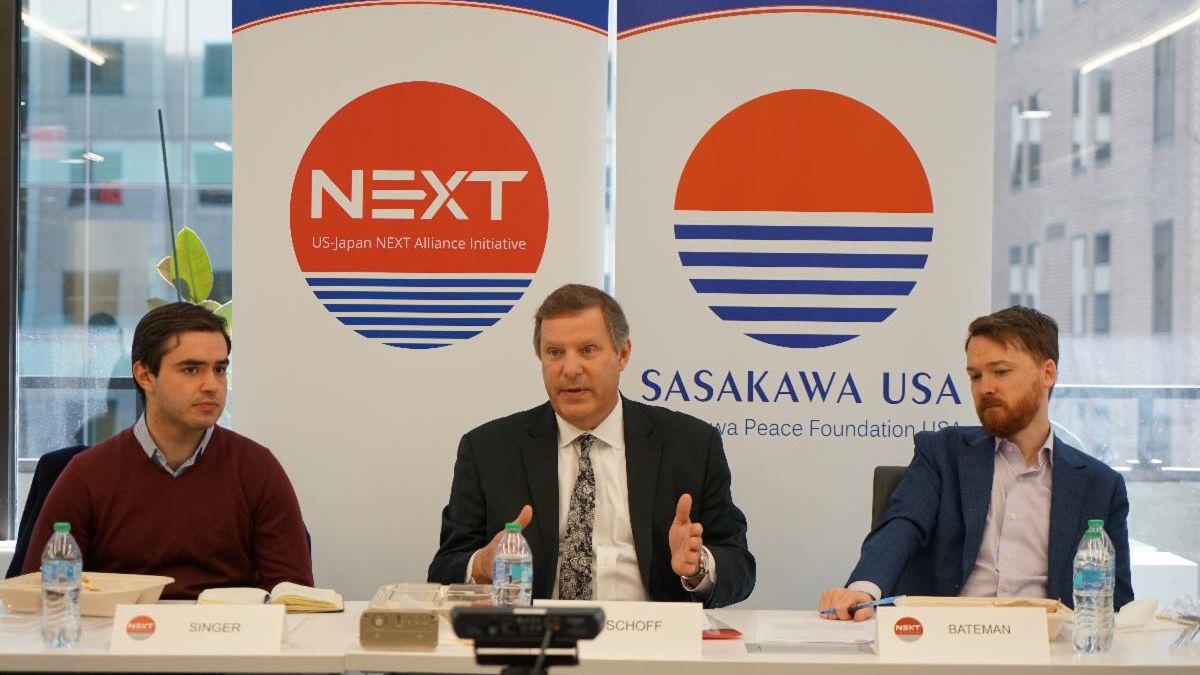
The US-Japan NEXT Alliance initiative hosted a bilateral roundtable dialogue on November 5 to discuss evolving American and Japanese AI governance approaches for AI safety and security, identify possible areas of collaboration, and help mitigate areas of divergence. Mr. Jon Bateman, Senior Fellow and Co-Director, Technology and International Affairs Program, Carnegie Endowment for International Peace; and Mr. Scott Singer, Fellow, Technology and International Affairs Program, Carnegie Endowment for International Peace spoke with participants about US state-based AI governance initiatives, using them as a jumping off point to consider current trends in AI governance and safety, how this fits with US security and competitiveness concerns vis-à-vis China and AI, and what are possible implications for the US-Japan alliance in areas of AI safety and security. A hybrid group of over 20 experts including current and former government officials, lab researchers, think tank scholars and engineers then built upon the opening remarks in a group dialogue. A summary of the event will be published soon.
Photo (left to right): Mr. Scott Singer, Mr. James Schoff, and Mr. Jon Bateman lead a discussion of US and allied AI initiatives.
| | U.S.-Japan Research Exchange: Ms. Kathryn Paik | | |
From November 2 to November 9, Ms. Kathryn Paik, Deputy Director, Senior Fellow, and Australia Chair at the Center for Strategic Studies (CSIS), conducted a one-week research trip to Japan through Sasakawa USA’s U.S.-Japan Research Exchange (UJREX) program. During this trip, Ms. Paik met with various Pacific Islands security experts in the Japanese government, non-profits, and the private sector to discuss how Japan can enhance its engagement with the Pacific Islands region, as well as how Japan can work with the United States and other partners to promote effective engagement with the Pacific that delivers on Japanese and U.S. national security objectives. Ms. Paik also had the opportunity to participate in a cultural exchange day trip to Kamakura. Her collective findings from this research trip will be published by Sasakawa USA and will be available on our website in the coming months.
Photo: Ms. Kathryn Paik and Dr. Satohiro Akimoto at I-House with Dr. Ken Jimbo.
| | Japan US Military Program (JUMP):
Japan Self-Defense Forces 71st Anniversary | |
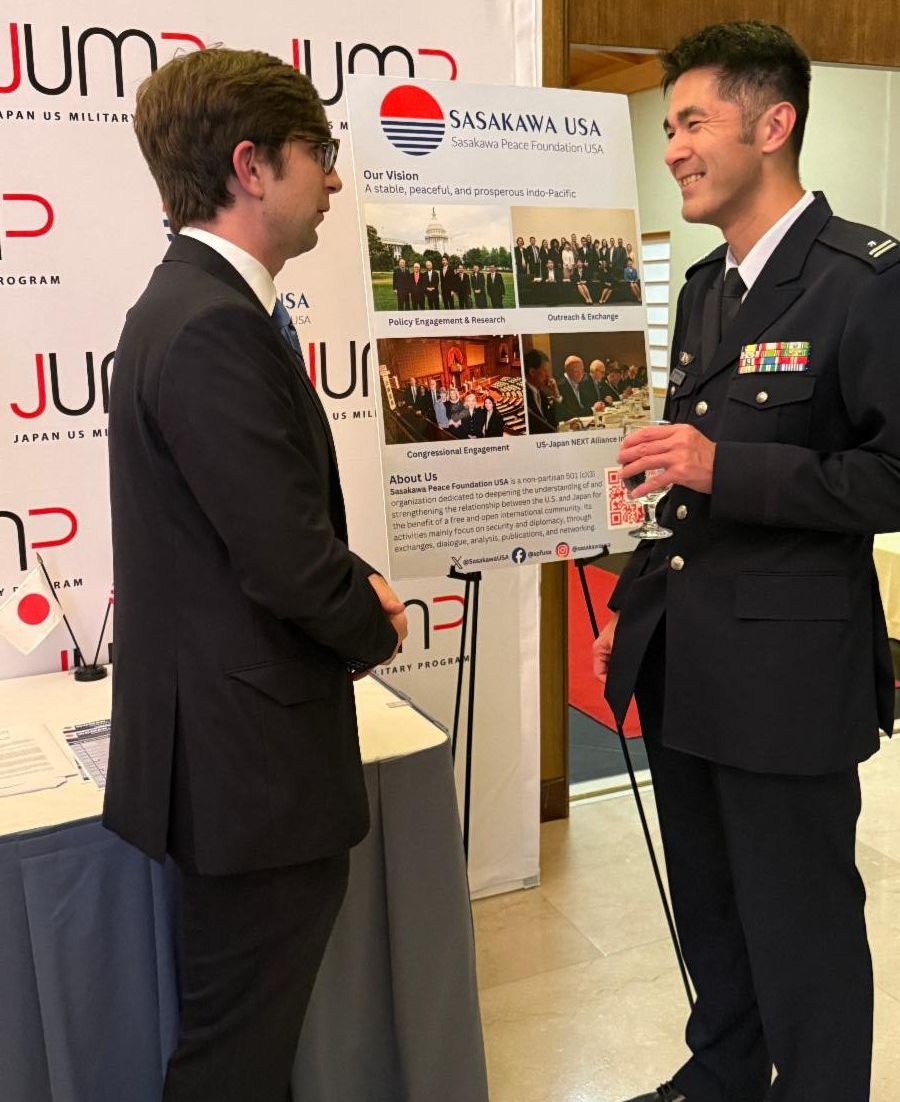
 | | On November 17, Sasakawa USA participated in a reception to mark the 71st anniversary of the Japan Self-Defense Forces (JSDF) at the Ambassador of Japan’s residence in Washington, DC. At this special event, Sasakawa USA showcased the Japan US Military Program (JUMP) to guests, which included U.S. servicemembers, JSDF members, and counterparts from many embassies in Washington, DC. The reception featured remarks from Ambassdor Shigeo Yamada and General Eric M. Smith (USMC), 39th Commandant of the United States Marine Corps, as well as a toast by Rear Admiral Takaaki Hayamizu (JMSDF), defense and naval attaché at the Embassy of Japan. All three speakers highlighted the strength of the U.S.-Japan alliance and its importance to the ensuring peace, security, and stability in the Indo-Pacific region.
JUMP is a partnership between Sasakawa USA and the Embassy of Japan, which honors U.S. military personnel and veterans for their contributions to the U.S.-Japan security alliance and engages them in high-level dialogue with U.S.-Japan alliance leaders. This JUMP material is distributed by Sasakawa Peace Foundation USA on behalf of the Embassy of Japan and additional information is available at the Department of Justice, Washington, DC.
Photo: Mr. John Seymour from Sasakawa USA discusses JUMP with a JSDF Officer.
| | |
Washington Kenkyu Group:
Discussion with Amb. Derek Mitchell
| | |
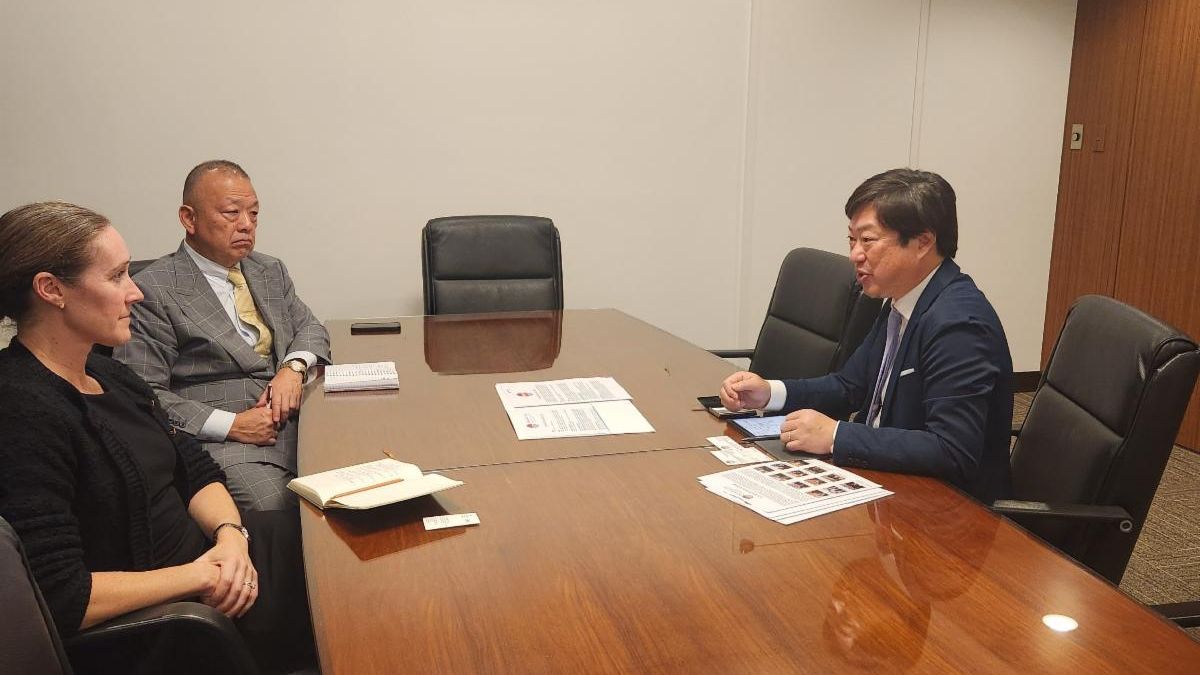
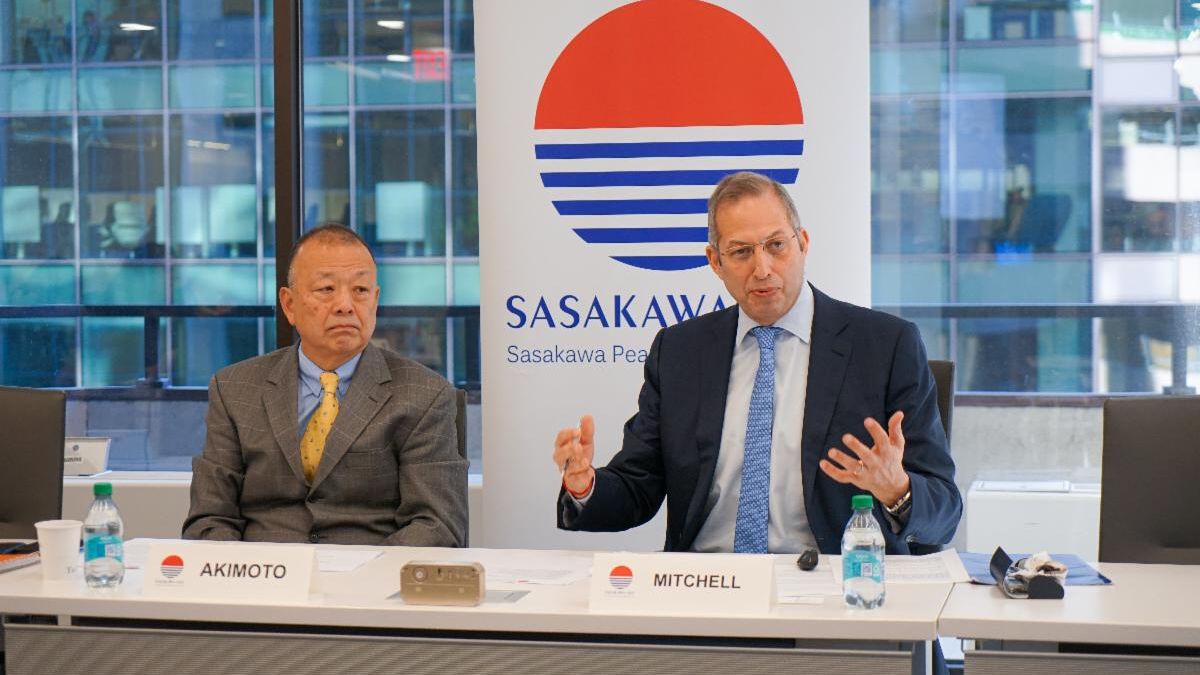
On November 24, Sasakawa USA hosted Amb. Derek Mitchell, a senior advisor (non-resident) at the Center for Strategic and International Studies and a distinguished senior fellow (non-resident) at Sasakawa USA, for a Washington Kenkyu Group discussion on Foreign Information Manipulation and Interference (FIMI). Building on his recent research trip to Japan as part of Sasakawa USA’s U.S.-Japan Research Exchange, Amb. Mitchell provided an overview of FIMI campaigns by authoritarian states and the changing policy responses by the United States under the Trump administration. Amb. Mitchell also highlighted the role of AI in FIMI campaigns and stressed that the language barrier that once shielded Japan from such campaigns is almost gone. His remarks were followed by a lively discussion with participants on his takeaways from his research trip to Tokyo and on ongoing FIMI campaigns targeting Japan.
Photo (left to right): Dr. Satohiro Akimoto and Amb. Derek Mitchell
| | |
Sasakawa Peace Foundation USA
1819 L Street, NW, Suite 300
Washington, DC 20036
+1.202.296.6694
| | | | |