| ||
 | ||
Heat, smoke, and power stress ReadyWhen: | ||
Next up · Free IFCPP webinar ReadyWhen the Lights Go Out: | ||
A national pathway A decade of field practice enters a national roomMajestic Collaborations was invited to help design and co-convene Americans for the Arts’ new Readiness, Response & Community Care pathway. We brought a decade of field practice through The Art of Mass Gatherings and a simple idea: the people who already know how to manage crowds, food, facilities, communications, volunteers, accessibility, and temporary infrastructure are part of a preparedness workforce hiding in plain sight. The pathway creates a national room for that idea to grow—connecting arts leaders, local agencies, preparedness practitioners, and cultural institutions around what our sector can safely and usefully contribute before, during, and after disruption. | ||
 | ||
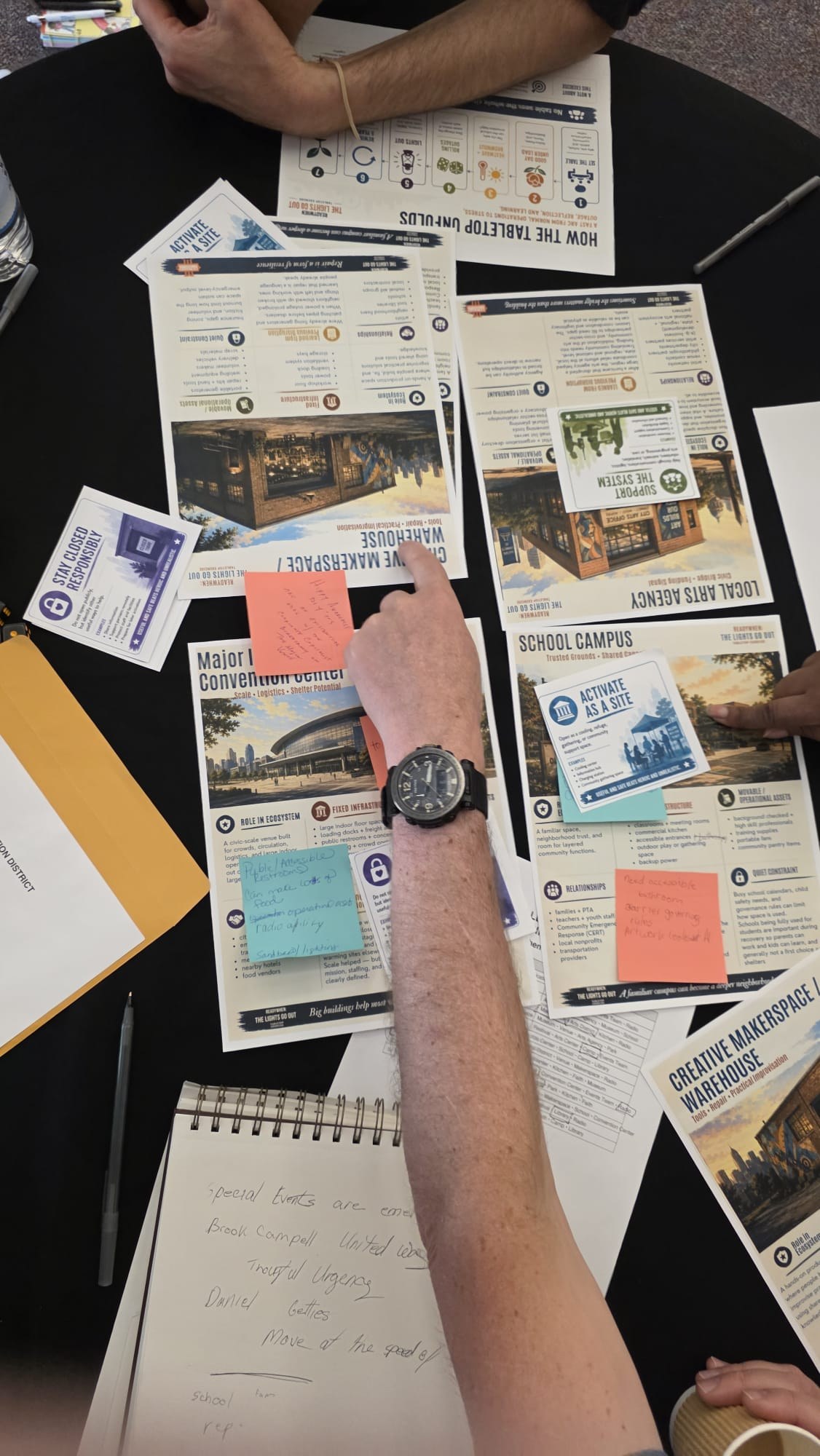 | ||
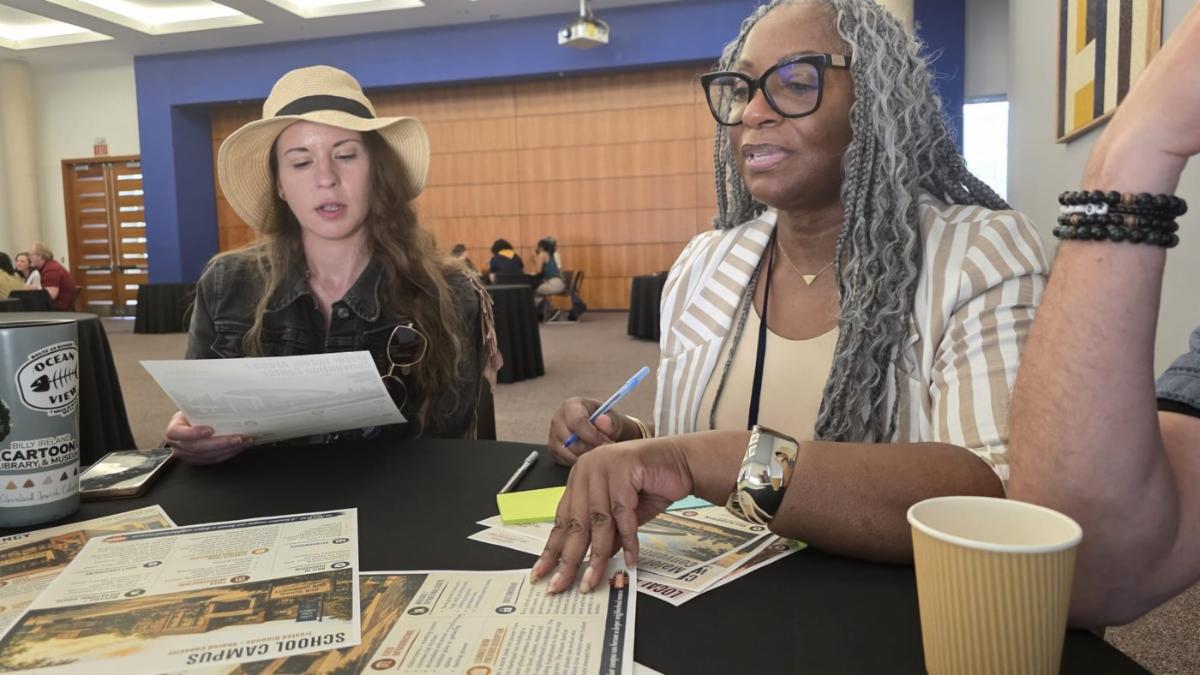
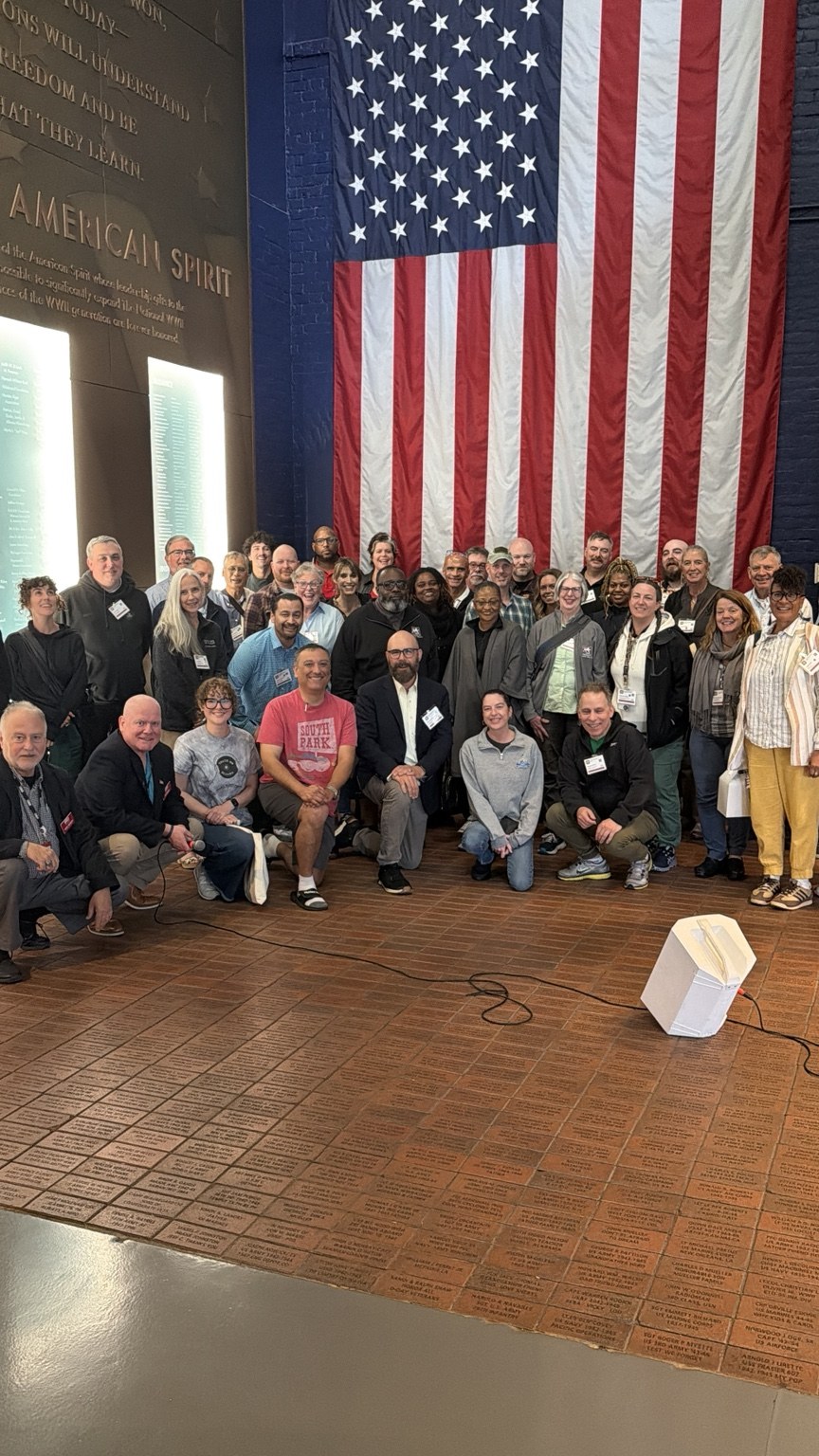
Albuquerque When the lights went outAt AFTACON, we conducted the first large-scale public test of ReadyWhen: The Lights Go Out. Participants gathered around imagined cultural and community institutions. As a heat wave intensified and electrical power became uncertain, they had to decide what their organizations could safely offer, where they depended on others, and whose needs might be overlooked.
Fun is not the opposite of rigor.One of the things I learned producing festivals was that people do some of their best learning, collaborating, and problem-solving when they are also having a good time. Somewhere over the last decade, as our work moved deeper into preparedness, emergency management, accessibility, safety, and resilience, I stopped treating that as a first-order design principle. ReadyWhen has brought me back around. The lanterns, dice, imagined institutions, changing scenarios, candy, and conversation aren't decoration around the learning. They help create the conditions for it. The stakes are real. That doesn't mean the learning has to feel grim. | ||
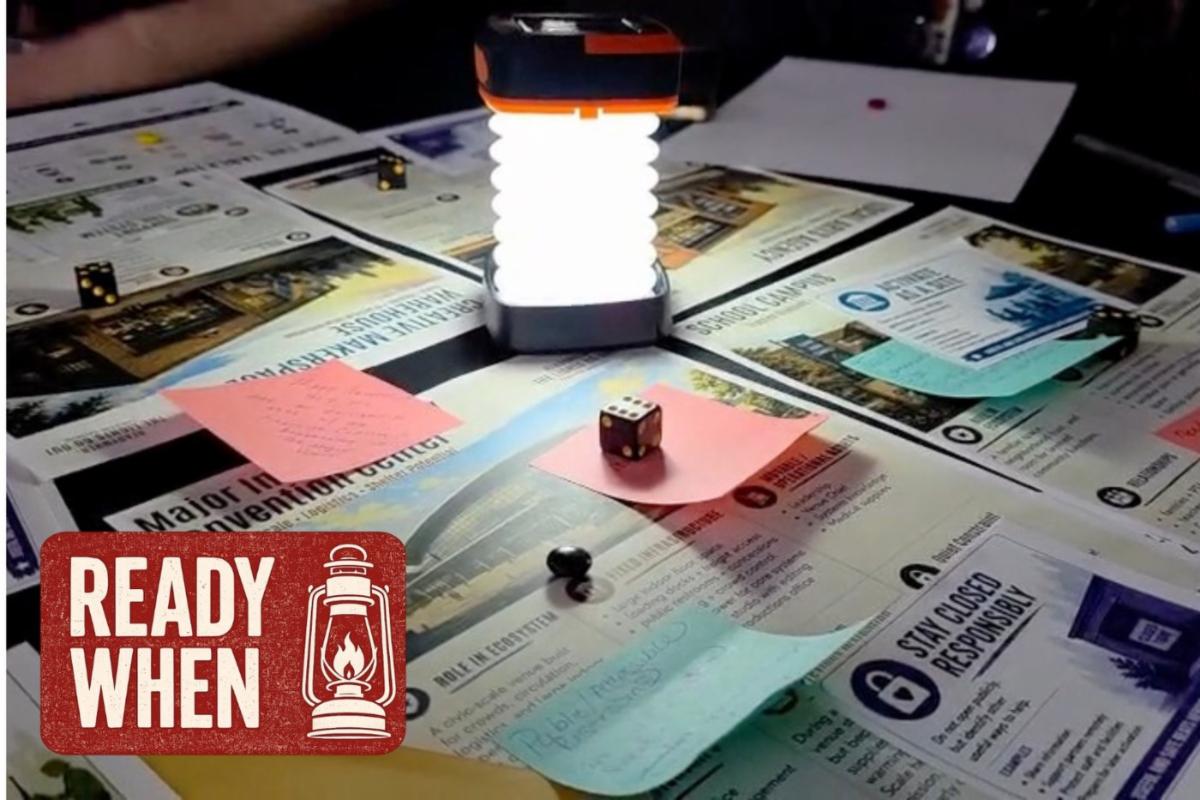 | ||
From playtest to full releaseThe tabletop looks great now, but Albuquerque was also a real playability test. We’re gathering what participants and facilitators taught us—what moved easily, what needed explanation, where the choices became most interesting—and using that feedback to build the full release version. The next step is a professionally printed and boxed ReadyWhen tabletop designed to travel well, set up easily, and be used in more rooms by more facilitators. We’re also developing an online version so geography doesn’t have to determine who gets to gather around the table. And the invitations are already arriving. We’ve heard from people interested in bringing ReadyWhen to Kerrville, Los Angeles, Denver, San Antonio, North Carolina, and other communities. One especially exciting potential partner has also approached us about developing an element—or a version—of the game that could help build preparedness within their own sector. It is early, but it points toward something we hoped ReadyWhen could become: a strong core experience that can be adapted without losing the ideas underneath it. How do we turn the people, places, relationships, and operational know-how we already have into greater preparedness before we need it? | ||
 | ||
Philadelphia Next stop: LEADThis August, ReadyWhen: The Lights Go Out travels to the Kennedy Center’s national Leadership Exchange in Arts and Disability Conference. LEAD is led by Betty Siegel, an early Art of Mass Gatherings presenter. Through that community, we met Jessica Wallach, who has become a brilliant and steadfast Majestic collaborator. Jessica has led substantial thinking and work on the LEAD adaptation alongside Mollie Quinlan-Hayes and Alexander Jones of Woodland Park Zoo—pushing the tabletop to ask not simply whether an institution can open its doors during disruption, but who can actually use what it offers, under what conditions, and whose needs might disappear from view when systems are under pressure. | ||
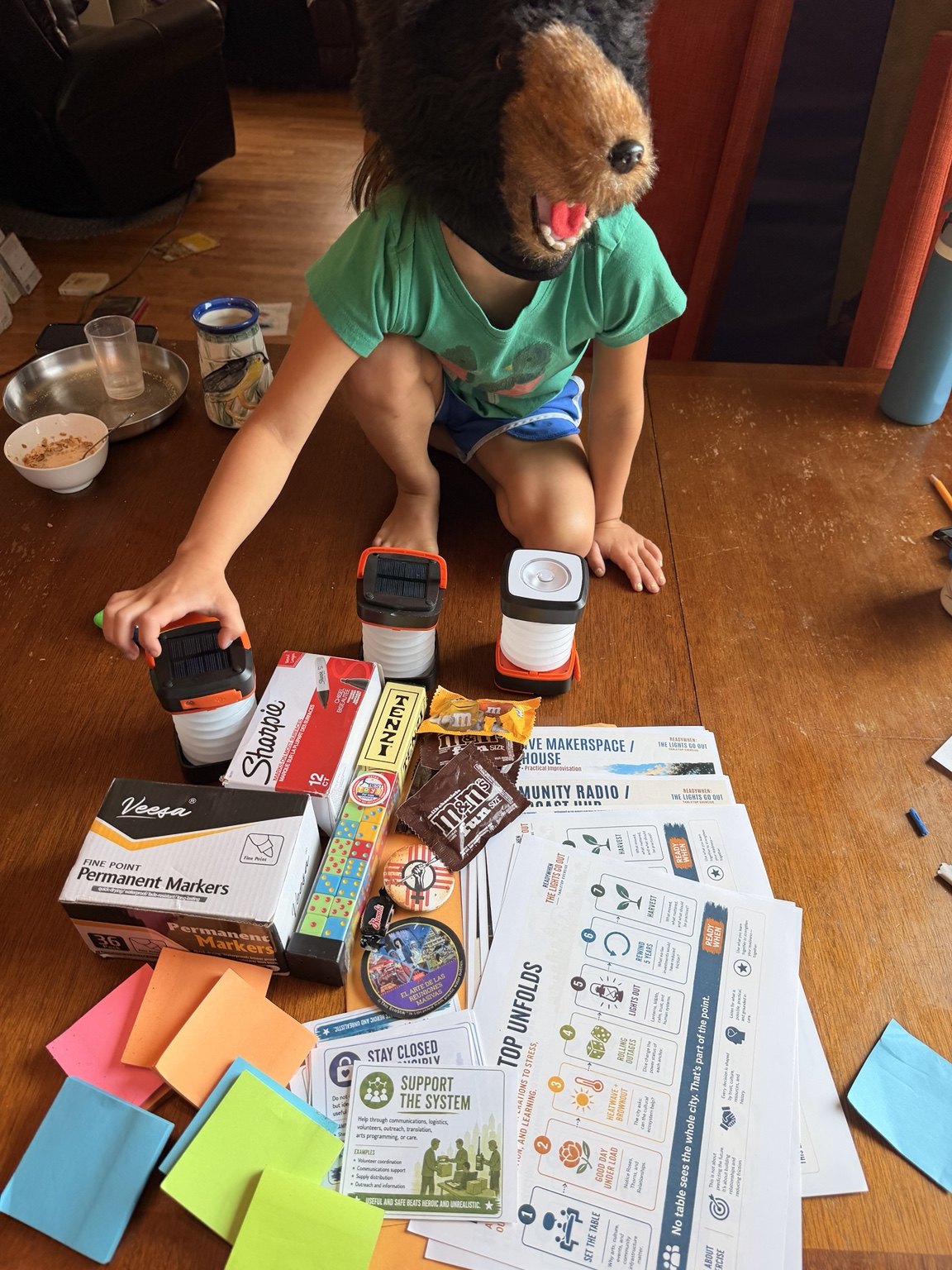 | ||
| Packed for Philadelphia, pending final bear approval. Several M&Ms remain unaccounted for. | ||
 | ||
 | ||
First graduates The certificate becomes realThis summer, our first cohort completed the ReadyWhen Foundations Certificate in Event and Emergency Operations in New Orleans. IFCPP brings the educational reach and professional credibility needed as we deepen our work with the people who care for the public, collections, facilities, and operations in important arts and cultural places. We’re seeing particularly strong interest from museum safety, security, facilities, and preparedness professionals—including many veterans bringing substantial operational experience into the cultural sector.
Sofia Young of Youth on Record, one of the first graduates, recently reflected on how ReadyWhen changed the way she sees her leadership, career pathway, and role in community preparedness. We’re also honored that The Art of Mass Gatherings has been selected for inclusion in the forthcoming Creative Forces / NEA toolkit. Read Sofia’s reflectionExplore the certificateA significant New York City announcement is coming soon. | ||
Liner notes Open the gatefoldMy five-year-old daughter has recently been learning how to use a turntable, which has reminded me of something I love about records. A record gives the music room. There is the big album cover—the artwork you can actually see. Then you turn it over, open the gatefold, pull out the sleeve. There might be lyrics, photographs, stories about where the songs came from, who produced them, where they were recorded, and those wonderful lists of names and credits that let you see more of the human architecture underneath the finished work. I’ve had the good fortune to know a little of that feeling from the other side, too—from records with my own group, The Reals, to mastering a project for Nathaniel Rateliff’s band, and helping produce the Five Points Jazz program that went on to receive an Emmy nomination. There is a particular moment near the end of making something: the audio is coming together, the art is being chosen, the credits and thank-yous are being assembled, and suddenly you can see the whole thing as something that is about to leave your hands and enter the world. ReadyWhen feels a little like that to me right now. One of the records my daughter likes is Taj Mahal singing “Freight Train.” In his performance, the recognition of Elizabeth Cotten isn’t something pasted on afterward. He brings her into the song—part talking blues, part musical lineage, part gratitude in motion. My father used to sing “Freight Train” to us at bedtime. Now I sing it to my daughter. As ReadyWhen begins to travel farther and be carried by more people, this feels like a good moment to name some of the people and places that helped shape the work. | ||
| ||
Where the work found a homeFor eight years, Tom Clareson and Performing Arts Readiness gave Majestic Collaborations a real home for this work: a place to develop The Art of Mass Gatherings, conduct festival and venue audits, create a podcast, collaborate with cultural organizations around the country, meet leaders working at these intersections, and begin giving ReadyWhen its first shape. We’re deeply grateful to Jan Newcomb, who led NCAPER before Mollie Quinlan-Hayes, and to Mollie for carrying that work forward with generosity and conviction. Their stewardship helped create the continuity, relationships, and national infrastructure that let this work keep growing. A recent video of Mollie sharing out from AFTACON struck me because she made the lineage and authorship of the work visible while simultaneously carrying the idea forward. That kind of generosity matters as work begins to travel. | ||
Inside MajesticNor would Majestic be Majestic without Molly North, my partner in the company and in life. Molly helped devise the Four Pillars—safety, sustainability, accessibility, and community engagement—and our original credo: to advance and enhance the power of gatherings. She is the kind of engineer who knows how to design the building and how to become a load-bearing wall when the structure needs one. Jenny Filipetti has become central to ReadyWhen’s development—from finding the name to helping the curriculum and online materials make some of their biggest leaps, and then making the work shine as an instructor in rooms like New Orleans. | ||
People who helped sharpen the workFor years, emergency-management and preparedness practitioners have been an inspiration and a source of thoughtful feedback. They have challenged assumptions, shared hard-won experience, opened doors, and helped us understand where the language of event operations and emergency operations really overlaps—and where it does not. One of the gratifying things about ReadyWhen now is hearing experienced practitioners recognize their own ideas and operational realities in it. That recognition matters: the work is stronger because it has been in conversation with people doing this work in the real world. Kelly Hubbard, Chris Soliz, Emma Stewart, Clara Decerbo, Nancy Smith, Chris Kelly, Collin Arnold, Darrick Hesson, Patrick Van Horne, Suu-Va Tai, Richard Cadena, Linda Davis, Aaron Levy, Jennifer Tarwater, Bradley Dean, and Nathan Morrow are among the people who have shared that experience with us. Emergency management has much to teach the cultural sector. The people who produce gatherings also hold knowledge that preparedness systems need. | ||
And the people carrying it forwardWe’re grateful to Mital Lyons-Warren and Ayanna N. Hudson for championing Readiness, Response & Community Care within Americans for the Arts—and to Mital for rolling up her sleeves in Albuquerque to help refine the tabletop and bring its first large public test across the finish line. We’ve been proud to shape that pathway alongside Mollie Quinlan-Hayes, Tom Clareson, and Michelle Dobbins. And ReadyWhen itself is increasingly being changed by the people who encounter it: Jessica Wallach, Alexander Jones, our New Orleans learners, our Albuquerque tables, our instructors, emergency managers, museum professionals, arts leaders, and the people now asking us to bring it somewhere new. | ||
Out into the worldReadyWhen is beginning to have a life beyond the rooms where we first made it. That is the exciting part. The tabletop changes when new people play it. The certificate gets stronger when new instructors and practitioners bring their experience. The ideas move through museums, venues, festivals, emergency-management offices, arts agencies, and communities we haven’t met yet. Nearly 1,800 people now receive these notes, and many of you hold roles much like the people named here: producing gatherings, caring for cultural places, managing risk, teaching, funding, welcoming the public, and building trust across institutions. I hope we get to meet around a tabletop game, at a music festival, in a training room, or while writing a grant together. The work is going out into the world—and more people are helping shape what it becomes. Matthew Ché Kowal | ||
| ReadyWhen.org · Majestic Collaborations Stronger together. Safer together. Ready together. |