Included in this issue of the newsletter:
- Message from Sasakawa USA's Chairman, Satohiro Akimoto
July Activities
- Policy Briefing: Japan's Economic Security Strategy in the New Era with The Hon. Akira Amari
- Washington Kenkyu Group: A Discussion with Dr. Kent Calder
- Washington Kenkyu Group: A Discussion with Amb. James Zumwalt
- Roundtable: Dr. Akimoto Joins Discussion at Groupe d'études géopolitiques
Publications
- Commentary & Analysis: Continuity or Change: U.S.-China Policy Under President Biden (Sadler)
- Japan Political Pulse: Prime Minister Suga's Hot Summer Continues (Akimoto)
Announcements
- Japan Political Pulse: New Contributor Dr. Daniel Smith
- Renewed Collaboration with the East-West Center in Washington
- Renewed Collaboration with the World Affairs Councils of America
- Congressional Program on U.S.-Japan and the Indo-Pacific: Applications Now Open
|
|
Message from Sasakawa USA's Chairman, Satohiro Akimoto |
|
The Tokyo Olympics passed the halfway mark on July 31 without any significant COVID-19 outbreaks at the Olympic venues. Thomas Bach, president of the International Olympic Committee proudly said on July 30 that out of the 350,000 PCR tests that had been administered, only 0.002% had turned out to be positive. It seems reasonable to say that as it has been billed, the Olympics has been safe so far. If the Tokyo Olympic games ends without significant COVID-19 outbreaks, it can be used as a model to continue to improve on to hold large-scale international gatherings in the future.
Japanese media coverage, which has been mostly negative about holding the Olympics amid a declaration of a state of COVID-19 emergency, seems to have become positive since the Olympic games begun. The Japanese public, who prior to the opening ceremony seemed to be bitterly divided over whether to hold the Olympics or not, seem to now enjoy watching the Games. The Japanese Olympians, who have won 17 gold medals, 5 silver medals, and 8 bronze medals as of July 31, have certainly contributed to the mood change.
The world is in the middle of the COVID-19 pandemic crisis. Roughly 199 million people have been infected and 4 million people have perished since the virus began to transmit. COVID-19 has quickly spread across the borders much like the Spanish flu from February 1918 to April 1920. New strains of COVID-19, such as the highly contagious Delta strain, continue to emerge to make it virtually impossible to prevent the virus from spreading without united efforts by the international community. The common challenges can only be beaten with the global exchange of information, joint research and development, and vaccine rollouts.
In other words, countries must be united under shared goals instead of solely focusing on one’s own country. COVAX, which is co-led by the Coalition for Epidemic Preparedness Innovations, Gavi, and the World Health Organization is an example of such internationally-minded efforts.
The Tokyo Olympics in the middle of the COVID-19 crisis has become a more subdued and limited pageantry than it was imagined when the International Olympic Committee (IOC) awarded Tokyo the international athletic event in 2013. However, because of the historic pandemic crisis, the Tokyo Olympics has ended up having much more significance as a symbol of international solidarity and cooperation to beat out a common global challenge as compared with the Olympics under normal circumstances.
Japan has been hosting the Tokyo Olympics in close coordination with the IOC. To prevent COVID-19 from spreading both during and following the Olympics, the number of foreign participants, including the Olympians, organizers, members of the media, and sponsors, was reduced to less than 90,000, less than half of the numbers originally anticipated. Various measures have been introduced at the Olympic venues based on available scientific and medical information, such as regular PCR testing and restrictions on leaving the Olympic venues. The Olympic Organizing Committee even expelled two Georgian Olympians from the Tokyo Olympic games after leaving the athletes' village to go sightseeing near Tokyo Tower.
Unfortunately, COVID-19 is not expected to stop threatening global citizens in the near future. It is also expected that COVID-19 will certainly not be the last pandemic, as new viruses may infect global citizens due to consumption of wild animals, destruction of the earth’s natural habitats, and global warming.
The Tokyo Olympics’ significance is symbolic evidence of global citizens coming together to hold a cerebration of universal humanity through combined efforts to combat a historic global pandemic crisis. The Olympians from over 200 countries and regions have been doing their part in competing for the medals. The organizers, members of the media, and sponsors have been doing their part in fulfilling their professional responsibilities. The fans around the world have been doing their part in cheering for the Olympians in front of televisions, computers, and smart phones. The Tokyo Olympics must be safely completed with joint support by the international community.
Lastly, despite the fact that there were lots of heated debates on and even rowdy demonstrations at the opening ceremony against the government’s decision to hold the Tokyo Olympics games during a declaration of a state of COVID-19 emergency in Tokyo, Japanese people in general have been supporting the Olympics in a civilized manner once the Games began. Mike Gattone, Senior Director of Sports Performance and Coaching Education for USA Weightlifting posted an Instagram message seeing Japanese fans waving to the bus leaving an Olympic venue; “Do wanna know how gracious and wonderful the Japanese people are? This is the scene pulling into the Village daily, even last night at 11 pm. This nation deserves so much credit for hosting this under the most unusual circumstances ever, and doing it all with grace, dignity, and honor.”
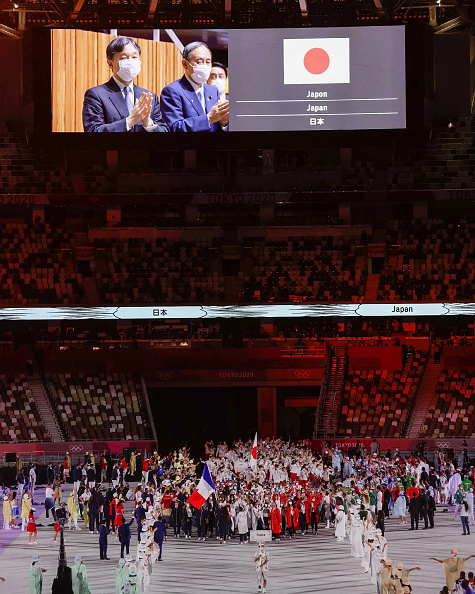
Photo: Japan’s Emperor Naruhito (L) and Prime Minister Suga (R) in attendance at the Tokyo Olympic Games opening ceremony. (Photo by STR/JIJI PRESS/AFP via Getty Images)
|
|
Policy Briefing: Japan's Economic Security Strategy in the New Era with The Hon. Akira Amari |
|
On July 9, Sasakawa USA was pleased to host a virtual event featuring The Hon. Akira Amari, Chairperson, LDP Research Commission on the Tax System, for an on-the-record discussion on Japan’s approach to economic security in an increasingly challenging geopolitical environment. In his presentation, The Hon. Amari explained the core components of Japan’s new economic security strategy: (1) to achieve “strategic autonomy” and “strategic indispensability” in global supply chains, (2) to enact a digital strategy that promotes democratic values as the international standard, and (3) to pursue cooperation with allies to create a secure and next-generation semiconductor strategy. Following The Hon. Amari’s presentation, Dr. Satohiro Akimoto, Chairman and President of Sasakawa USA, moderated a lively Q&A discussion with the audience. The video and recap of the event are available here. |
|
Washington Kenkyu Group: A Discussion with Dr. Kent Calder |
|
On July 8, Sasakawa USA's Washington Kenkyu Group welcomed Dr. Kent Calder, Interim Dean at Johns Hopkins University, School of Advanced International Studies, for a discussion on Asia in Washington. For this off-the-record, virtual event, Dr. Calder examined how Japan can refocus its diplomatic and economic strategy to the global political city of Washington, DC. Drawing on the framework introduced in his 2014 published book, Asia in Washington: Exploring the Penumbra of Transnational Power, he describes Washington’s centrality in international global governance, having an influence over global policy decisions, and an amassing strategic intelligence on topics from national policy trends to geopolitical risks. Following Dr. Calder’s presentation, the event continued with a lively discussion with the attendees, including Japanese representatives of the private sector, government, think tanks, and the media.
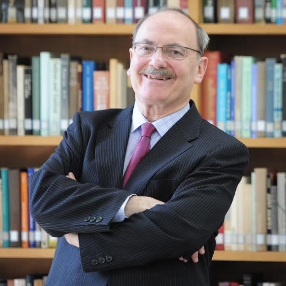
Photo: Dr. Calder
|
|
Washington Kenkyu Group: A Discussion with Amb. James Zumwalt |
|
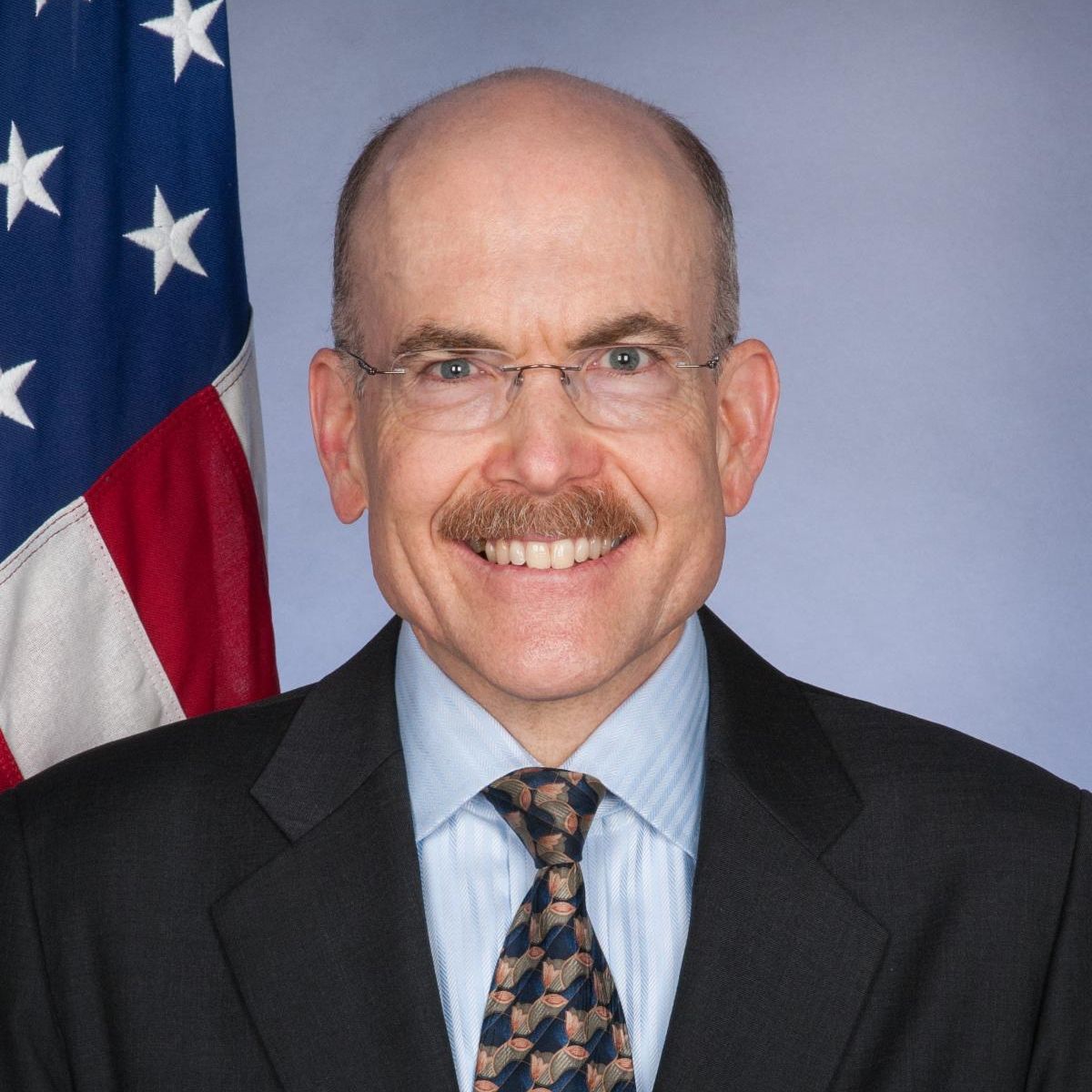
On July 27, Sasakawa USA's Washington Kenkyu Group welcomed Amb. James Zumwalt, Distinguished Senior Fellow (Non-Resident) of Sasakawa USA, for a discussion on the strategic importance of Asia-Pacific Economic Cooperation (APEC). For this off-the-record, virtual event, Amb. Zumwalt analyzed the mission, structure, and membership of APEC. Supported by his recently published article, “ Strengthening the U.S.-Japan Partnership in Asia: The Promise of APEC,” he proposed a workplan on how the United States and Japan can work together to promote economic security in the Asia-Pacific region. Following Amb. Zumwalt’s presentation, the event continued with a lively discussion with the attendees, including Japanese representatives of the media, think tanks, private sector, and government. Photo: Amb. Zumwalt
|
|
Roundtable: Dr. Akimoto Joins Discussion at Groupe d'études géopolitiques |
|
Dr. Satohiro Akimoto, Chairman and President of Sasakawa USA, joined the virtual roundtable discussion, “The EU Strategy in the Indo-Pacific Region,” hosted by Groupe d'études géopolitiques. The discussion was held with four European panelists assessing engagement strategies, particularly in terms of military engagement, by the EU, Germany, France and the U.K. Dr. Akimoto presented his views on how the U.S. and Japan see increasing military overtures by Europe in the Indo-Pacific region touching upon new development such as “ARC 21,” the first joint exercise among the U.S., Japan, and France on Japanese soil. |
|
Commentary & Analysis: Continuity or Change: U.S.-China Policy Under President Biden (Sadler) |
|
Sasakawa USA is proud to announce the publication of a new paper, “ Continuity or Change: U.S.-China Policy Under President Biden,” by Mr. Brent Sadler, Senior Research Fellow for Naval Warfare and Advanced Technology at The Heritage Foundation. In his timely overview of the Biden administration’s defense posture towards China, Mr. Sadler examines the present defense policy review underway within the Pentagon and the various challenges the Biden administration will need to address. Although Mr. Sadler believes Secretary of Defense Austin is intent on redeploying funding and military assets to countering China in the Western Pacific, he also cautions that there remains a major gap between his words and what may be achieved. Additionally, Mr. Sadler discusses the role that veteran State Department officials will play in crafting Biden’s defense policy on China. Altogether, Mr. Sadler warns that a robust and reinvigorated American presence in the Western Pacific will be required for a credible deterrence of China’s growing Pacific ambitions. You can read the paper here.
Photo: Mr. Sadler
|
|
Japan Political Pulse: Prime Minister Suga's Hot Summer Continues (Akimoto) |
|
In his new Japan Political Pulse article, “Prime Minister Suga’s Hot Summer Continues,” Dr. Satohiro Akimoto, Chairman and President of Sasakawa USA, reviews various factors that may impact the LDP and Prime Minister Suga’s political prospects for the fall’s Lower House and LDP Presidential election. In particular, the COVID-19 pandemic is presenting a difficult challenge in determining the best plan of action for deciding the impending election timeline. Dr. Akimoto predicts that now, with the opposition parties divided and no strong challengers, Prime Minister Suga could have a chance to reach a new full term for the LDP Presidency. You can read the article here.
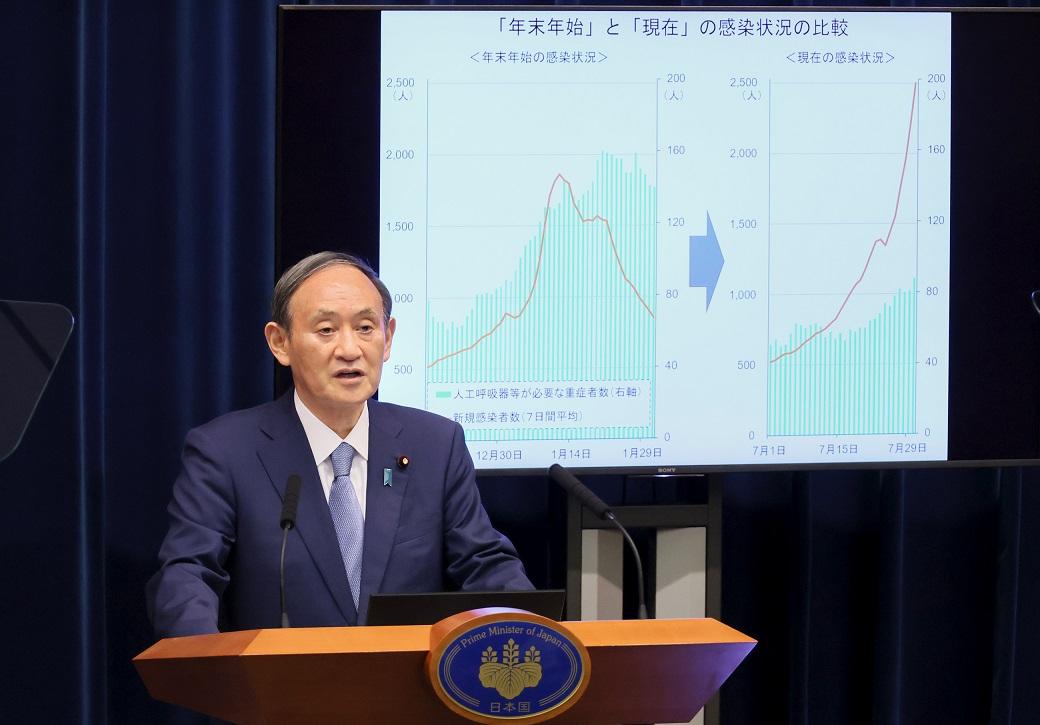
Photo source: Prime Minister Suga at a press conference regarding COVID-19 on July 30, 2021.
|
|
Japan Political Pulse: New Contributor Dr. Daniel Smith |
|
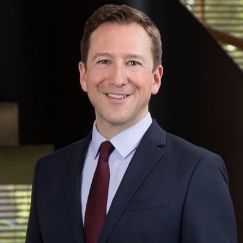
Sasakawa USA is pleased to announce that Dr. Daniel Smith of Columbia University will be contributing a series of articles to our regular political analysis column, Japan Political Pulse. Dr. Smith’s articles will examine the state of Japanese politics, with a particular focus on Japan’s upcoming parliamentary elections and its aftermath. Dr. Smith is the Gerald L. Curtis Visiting Associate Professor of Modern Japanese Politics and Foreign Policy at Columbia University’s Department of Political Science and School of International and Public Affairs. He is the author of numerous studies of Japanese and comparative politics. Notably, he is also co-editor of the ongoing book series on Japan’s national elections, Japan Decides.
Photo: Dr. Smith
|
|
Renewed Collaboration with the East-West Center in Washington |
|
Sasakawa USA is proud to announce the continuation of our partnership with the East-West Center in Washington (EWCW) through the Congressional Program on U.S.-Japan Relations and the Indo-Pacific (CPUSJ). EWCW has been a valued partner of Sasakawa USA for several years. CPUSJ is a bipartisan educational certificate program that aims to equip congressional staffers with the information and analyses necessary to appreciate the role of Japan and the U.S.-Japan alliance in U.S. foreign policy in the Indo-Pacific, now and in the future. |
|
Renewed Collaboration with the World Affairs Councils of America |
|
Sasakawa USA is delighted to announce the continuation of our partnership with the World Affairs Councils of America (WACA) through our The Alliance Working in America (TAWA) program. WACA has been a valued partner of Sasakawa USA for several years now. Sasakawa USA launched TAWA to reach out to regional leaders and influencers in U.S. cities outside of Washington, D.C. on the importance of the U.S.-Japan alliance to U.S. interests, both at the regional and national levels. For this year’s TAWA series, Sasakawa USA and WACA plan to co-host a program in Dallas-Ft. Worth, TX and Charlotte, NC. Sasakawa USA looks forward to working with WACA this year to create robust programming in each city. |
|
Congressional Program on U.S.-Japan and the Indo-Pacific: Applications Now Open |
|
Applications for the Fall 2021 Congressional Program on U.S.-Japan and the Indo-Pacific are now open. The program will consist of a series of seven, 75-minute interactive discussions, held weekly on Capitol Hill. Certificates of completion will be awarded to participants who attend at least four of the seven planned sessions. Speakers will come from government agencies, think tanks, universities, and other policy institutions. Session topics are set to include: The U.S.-Japan Alliance as the Cornerstone of Indo-Pacific Peace, Security, and Stability; U.S.-Japan Technological Partnership and Competition; Economic Challenges and Areas of Cooperation; U.S.-Japan Frontier Defense and Technology Cooperation; Vaccine Diplomacy; U.S.-Japan Engagement with ASEAN; as well as Great Power Competition. Please visit the Sasakawa USA website for more details. |
|
Sasakawa Peace Foundation USA
1819 L Street, NW
Suite 300
Washington DC 20026
202.296.6694
|
|
|
|
|
|
|